


A note on the words: unagi o-ju, also written unaju, is grilled eel laid over rice in a lidded lacquered box; unagi donburi is the same eel and rice served in a bowl instead. Kabayaki is the method of splitting an eel, boning it, skewering it and grilling it while it is repeatedly dipped in a soy-and-mirin sauce. Chazuke is rice with hot tea or broth poured over it, and tai chazuke is the version made with sea bream. A makunouchi bento is a boxed meal of rice with a set of small side dishes around it. Sho-chiku-bai, pine-bamboo-plum, is the usual Japanese way of naming three price grades of the same dish from cheapest to dearest. Sansho is the tongue-numbing green pepper of the Japanese prickly ash, the standard seasoning served alongside grilled eel. The Edo period ran from 1603 to 1868, Meiji from 1868 to 1912 and Taisho from 1912 to 1926, and the Great Kanto Earthquake struck the Tokyo region in 1923. Hangover Meshi is the name of this blog, and meshi means a meal.
Table of Contents hide
Chikuyotei on Tabelog (English) — opening hours, payment details and the Japanese address are kept up to date there, not here.
Hello, this is Hangover Meshi. I had some shopping to do in Ginza, and on the way back I searched for somewhere to have lunch and turned up an eel restaurant, “Chikuyotei.” Oh, there is a place like this, I thought — and then I looked into it a little and it is a seriously long-established place, ha ha ha.
An old house of eel cooking founded at the end of the Edo period. It began as a place where samurai checked their swords, but with the sword abolition edict of 1876, the ninth year of Meiji, it started a trade of serving sake and grilled eel. The shop it had at its founding burned down in the Great Kanto Earthquake, and in 1925, the fourteenth year of Taisho, it moved to its present place in Ginza 8-chome. In quiet, plain tatami rooms that still keep something of the old look, it goes on serving the taste it has served since it opened.
The one I called on this time is, I suppose, the Ginza branch, more or less straight out of exit A4 of Ginza Station (it was really A5, but that one is closed at the moment, ha). It is not the main house, but a shop with history — I was looking forward to it. And apparently you cannot book a table either, which makes it all the more precious!
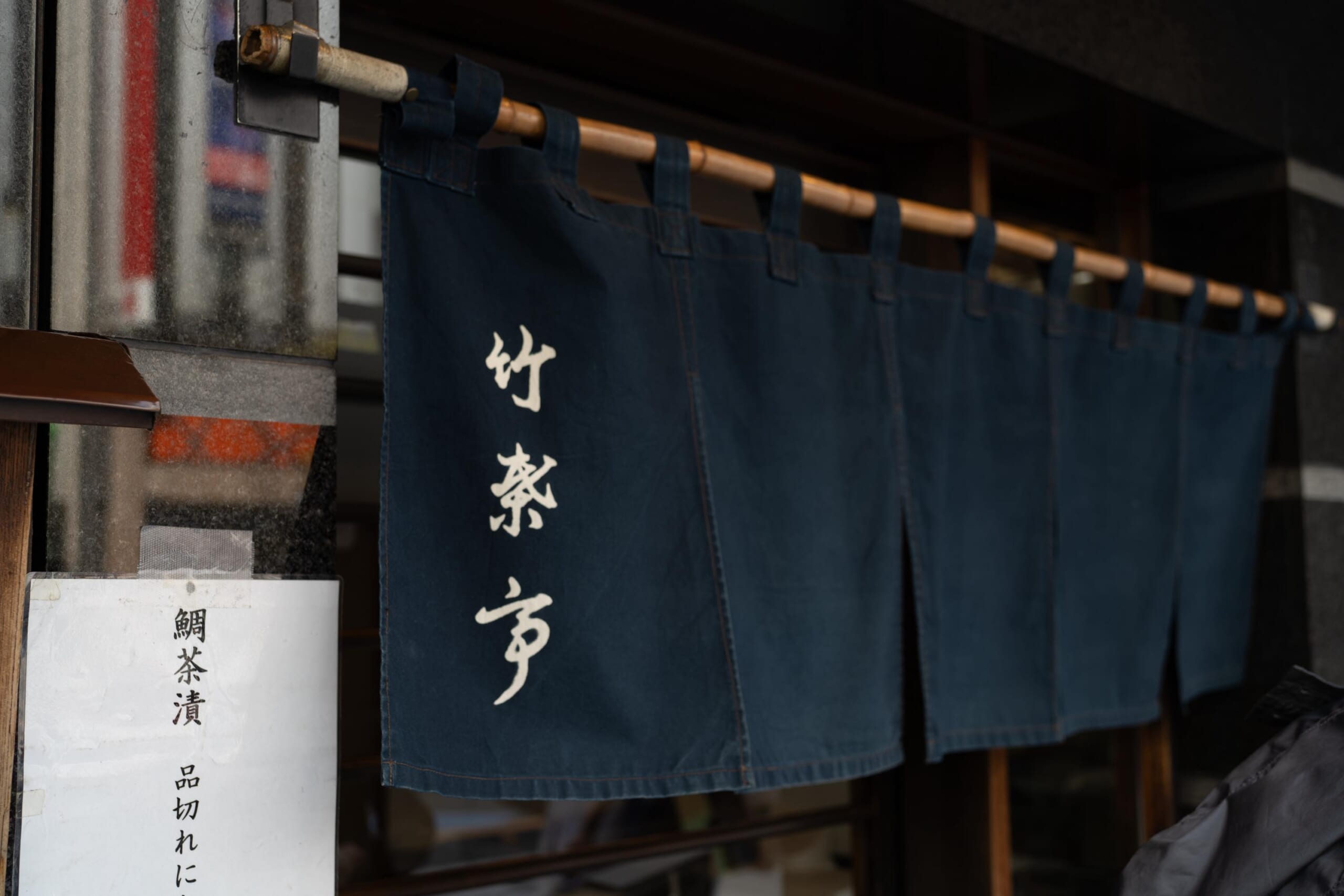
By the time I arrived, the tai chazuke had sold out. Is it a famous one, I wonder.
Unagi donburi (3,520 yen)
Unagi o-ju (4,290 yen)
Unagi kabayaki (from 3,300 yen)
Makunouchi bento (2,420 yen)
Three-tier Rikyu bento (3,630 yen)
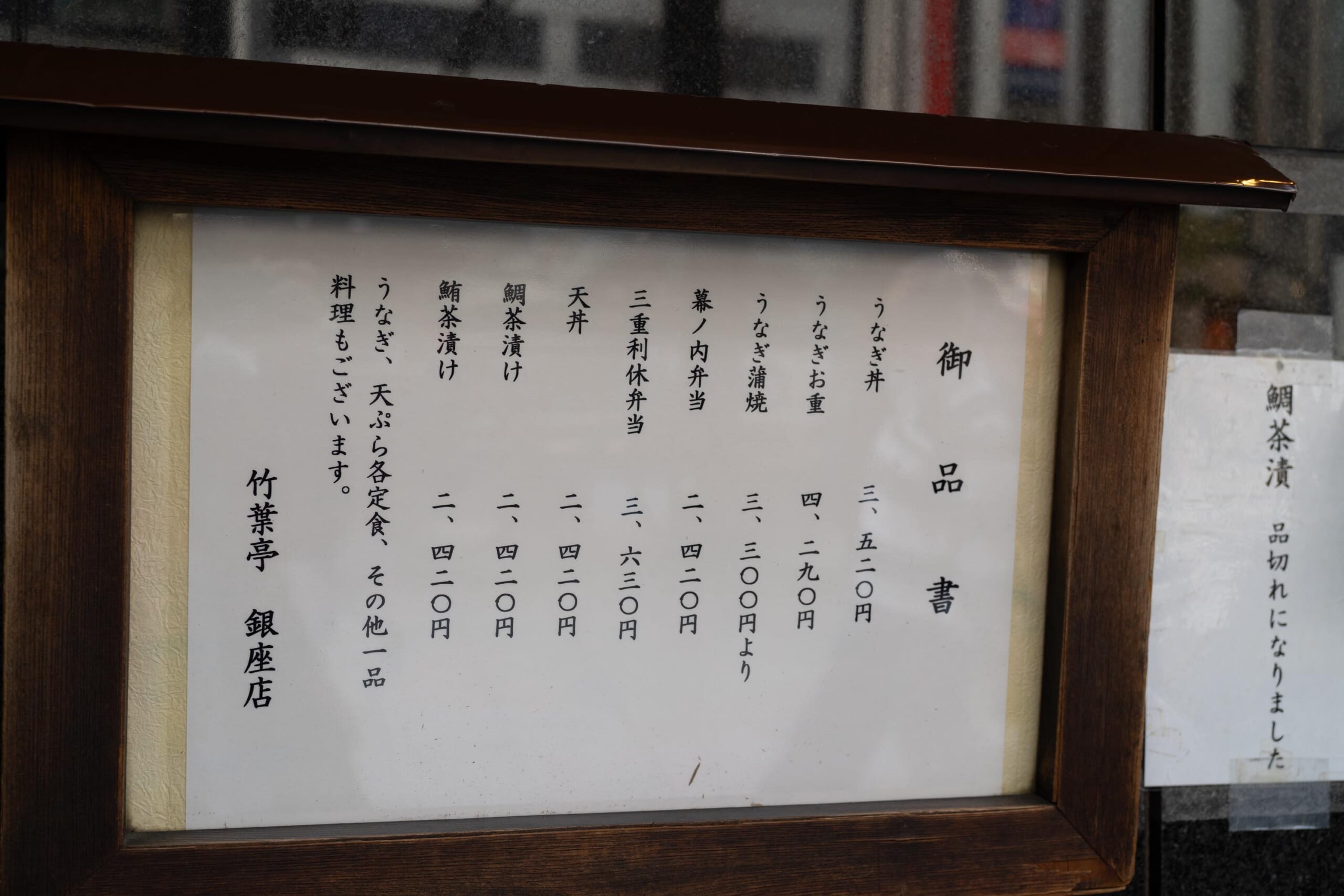
Quite a range, is there not. At this shop the eel box does not seem to come in stepped grades by how much eel you get, the sho-chiku-bai sort of arrangement.
This time I decided to try the unagi o-ju.
Right, I ordered and waited a while. They took me up to the second floor, where there were tatami seats and chairs and they said either was fine, so I took a chair — at lunchtime a chair is the easy option, ha.
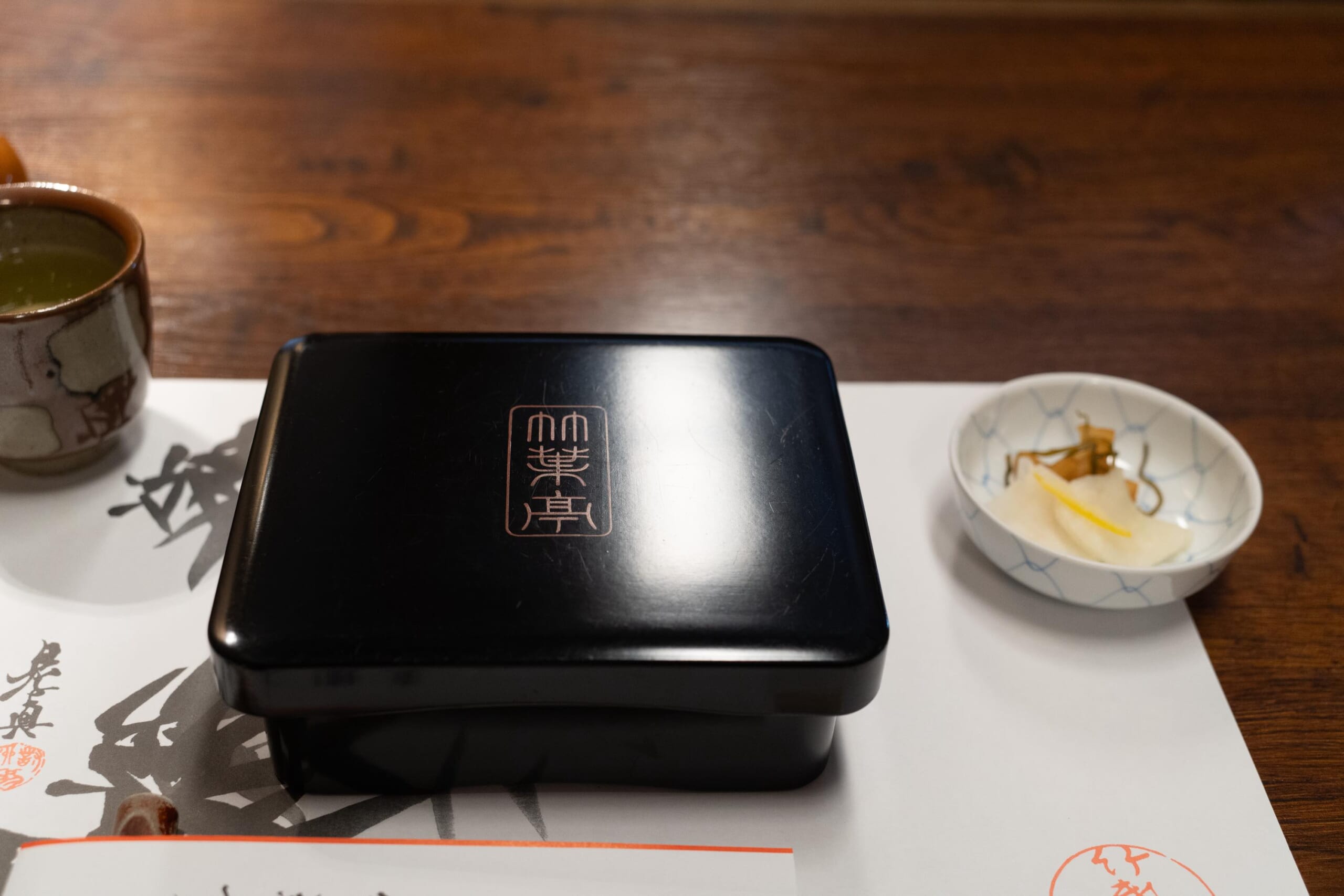
And here comes the box! A plain black lacquered box with the characters for “Chikuyotei” in the middle.
Let us open it!
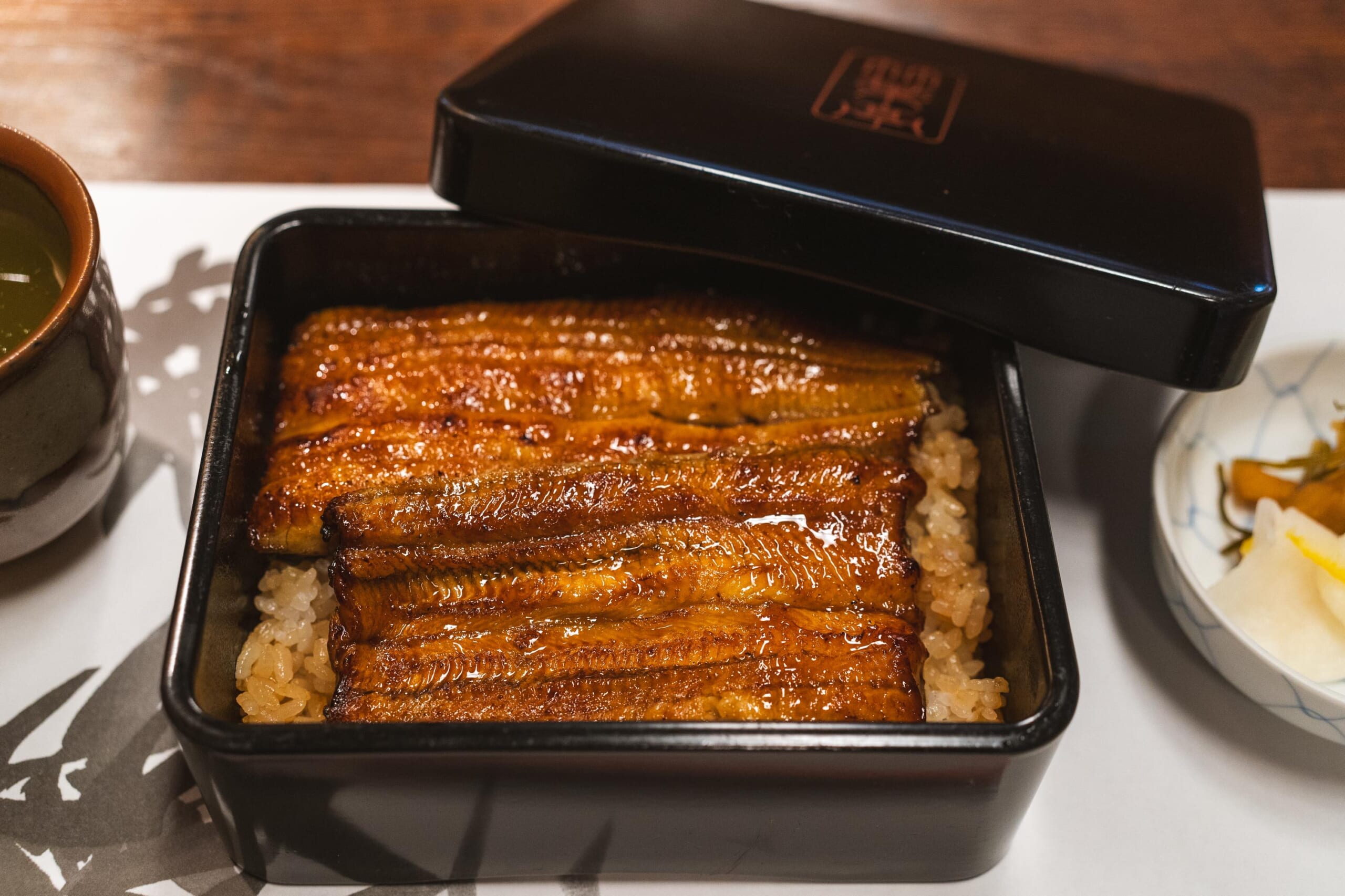
Ta-daa!
That looks good. Two fillets of eel. The sauce has gone on quite thoroughly and evenly all over the rice.

“It is very soft, so do watch out for the bones,” they advised me — and one bite in, it really is fluffy and soft! The sort of feel that melts away in your mouth. I can well believe there are people who forget to chew because it is too soft, ha. I made a point of chewing it properly.
The eel sauce is seasoned very lightly. Both the salt and the sweetness are held well back, so anyone who likes a heavy sauce might be thrown by it. For my part I liked it — you can taste the eel itself and the rice clearly — so I thought it was good. (Of course I like the heavy sort too, ha.) My impression was that a fair amount of sauce had gone onto the rice, but since it is light it comes out just right.
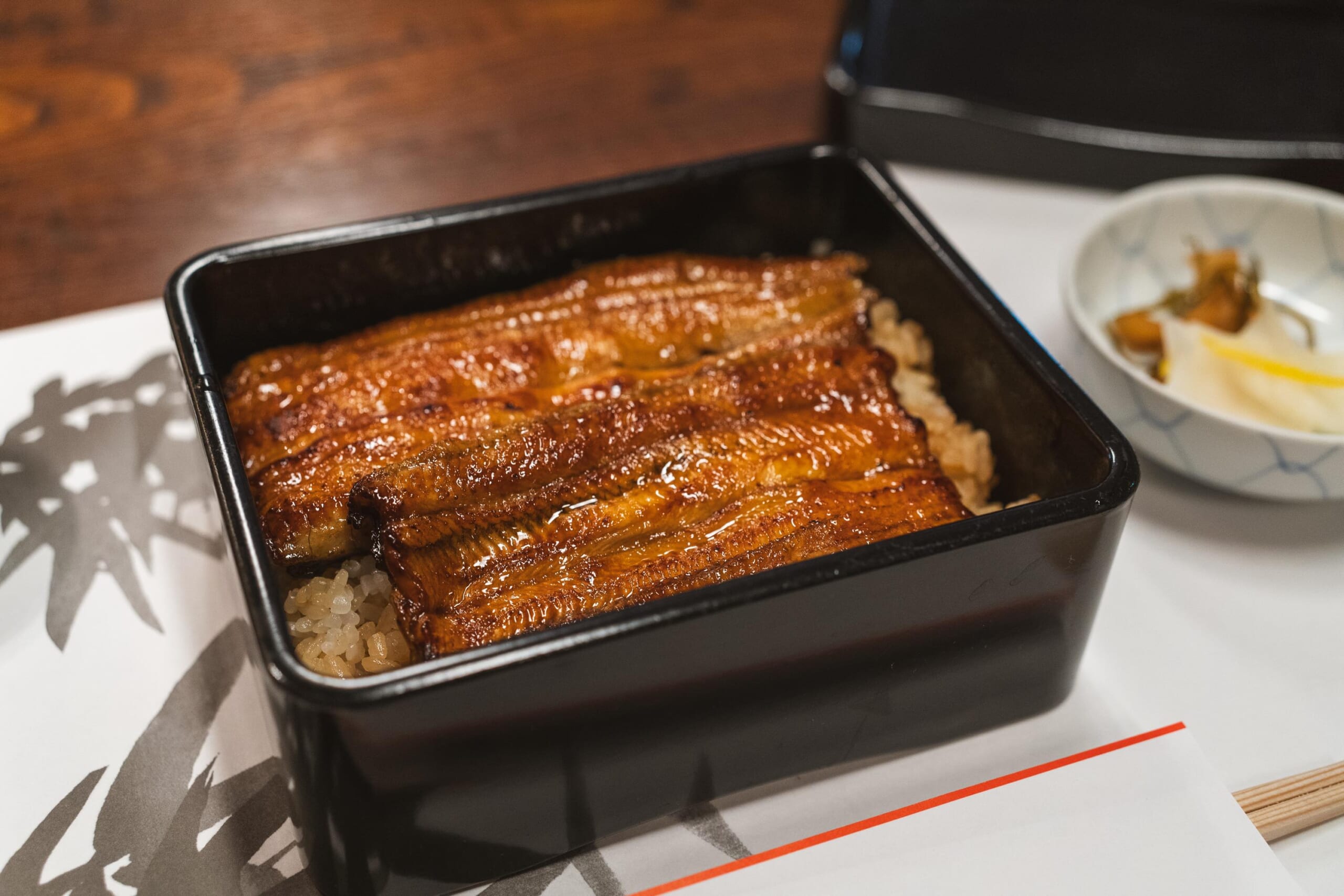
The fragrant smell of the sauce catching on the grill, and eel that falls softly apart. It works on your appetite while you are still eating.
Conversely, because the sauce is light I felt the sansho was a little strong. It is plenty good with no sansho on it at all.
Right — my first time here, and to think there is an old house like this in Ginza. The main shop seems to be somewhere else, so I thought I might go and try that one next time. I had thought I had been round a fair number of eel places, but there is so much I do not know. Which is exactly why the urge to go and try more eel never runs out, ha. A good shop.
Chikuyotei, Ginza (Unagi / Ginza Station, Higashi-Ginza Station, Ginza-itchome Station)
Tabelog lunch rating ★★★☆☆ 3.6
I ate here and paid for it myself. Nothing on this site is a comped meal.
One more for the road?


