


A note on the words: matsu (pine), take (bamboo) and ume (plum) are traditional grade designations in Japan, with matsu being the deluxe tier; hagoromo is the top-level course that adds sashimi. Nikogori is a savory jellied stock served cold as an appetizer (sakizuke), kisu is Japanese whiting, karasumi is cured mullet roe, and fukinoto, taranome and udo are spring wild mountain vegetables (sansai). In this article, the matsu course runs from shrimp through the seasonal dishes before finishing with a kakiage tendon.
Tempura Horikawa Hotel New Otani on Tabelog (English) — opening hours, payment details and the Japanese address are kept up to date there, not here.
Hello, this is Hangover Meshi. Now, thinking I’d like to treat myself to proper tempura for once, my search led me to this place: “Tempura Horikawa.” Where is it? Inside Hotel New Otani! And if you come in from the Akasaka-mitsuke side, it’s tucked way in the back on the opposite end. A tempura spot sharing a corner with Kyubey and a sukiyaki restaurant. Ah yes, it has that system where you exit the restaurant at the end to pay at a shared till at the entrance to that wing! I feel like quite a few restaurants in New Otani use this setup.
| Menu | Price | Note |
|---|---|---|
| Tempura set | 2,750 yen | The most accessible option; good for a casual hotel lunch |
| Tempura course: ume | 5,500 yen | |
| Tempura course: take | 7,700 yen | |
| Tempura course: matsu | 8,800 yen | The course enjoyed on this visit — running from shrimp to anago and finishing with kakiage |
| Tempura and sashimi course: hagoromo | 11,000 yen | The top-tier course with sashimi included |
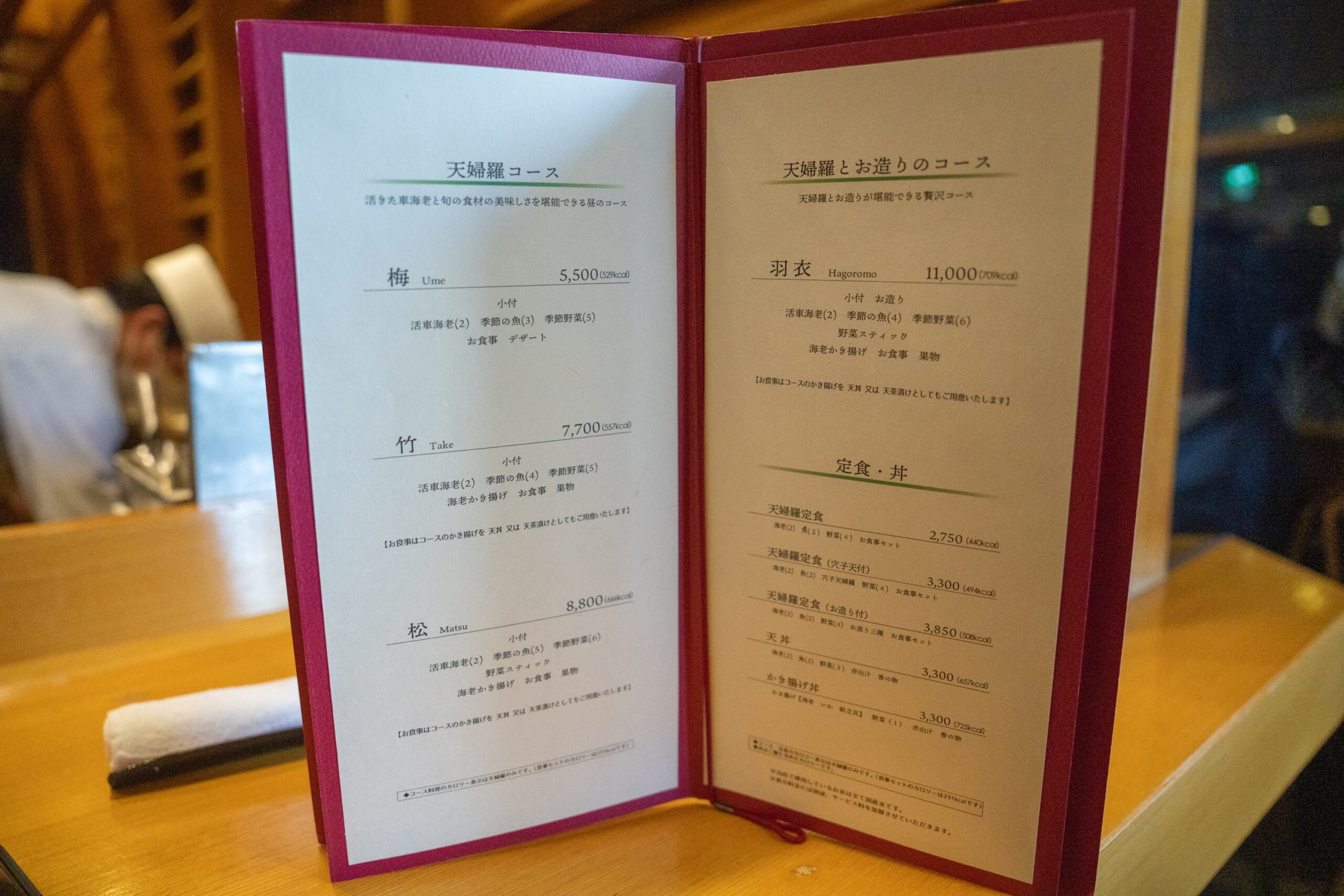
It seems you can have a set lunch from 2,750 yen. Being a proper high-end spot, the prices reflect it, ha.
This time I came because I really wanted a full tempura experience, so I decided on the matsu course (matsu, take and ume being the three standard tiers, with matsu as the deluxe grade).
Tempura course underway.
This time I’m drinking in the middle of the day! Beer!
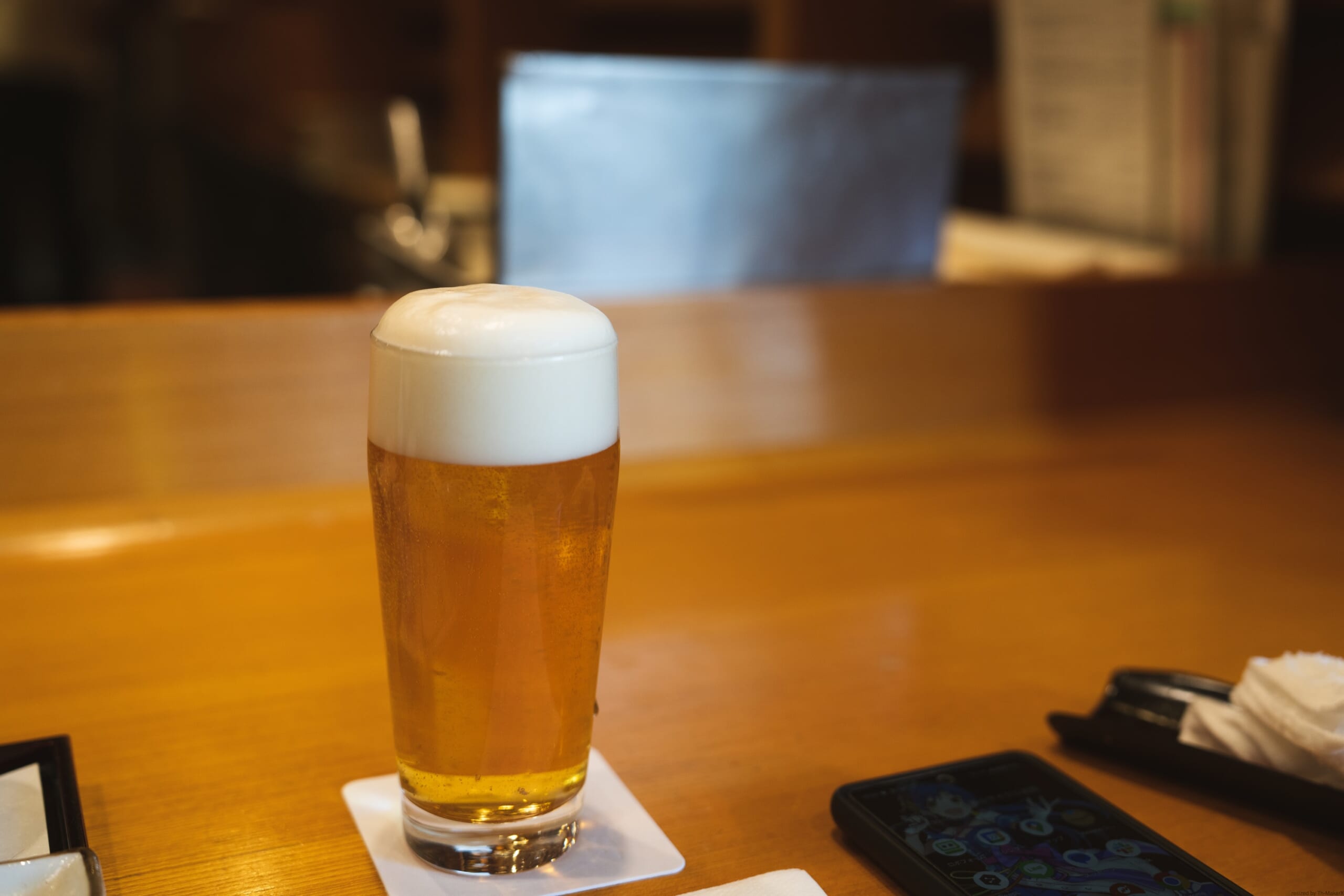
Midday beer tastes particularly extraordinary, ha.
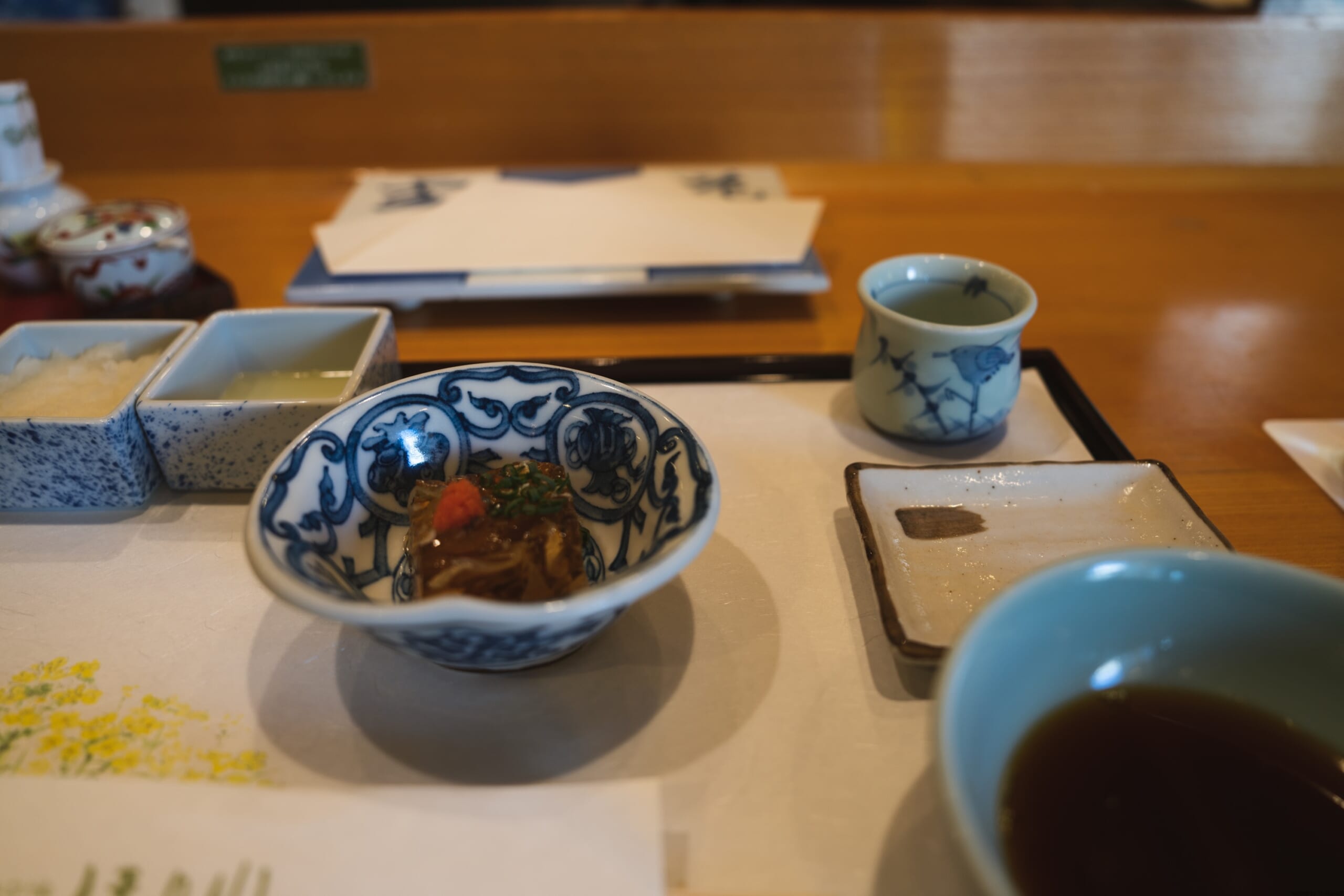
An accompaniment? A drink with the opening sakizuke of nikogori (savory jellied broth). Outstanding!
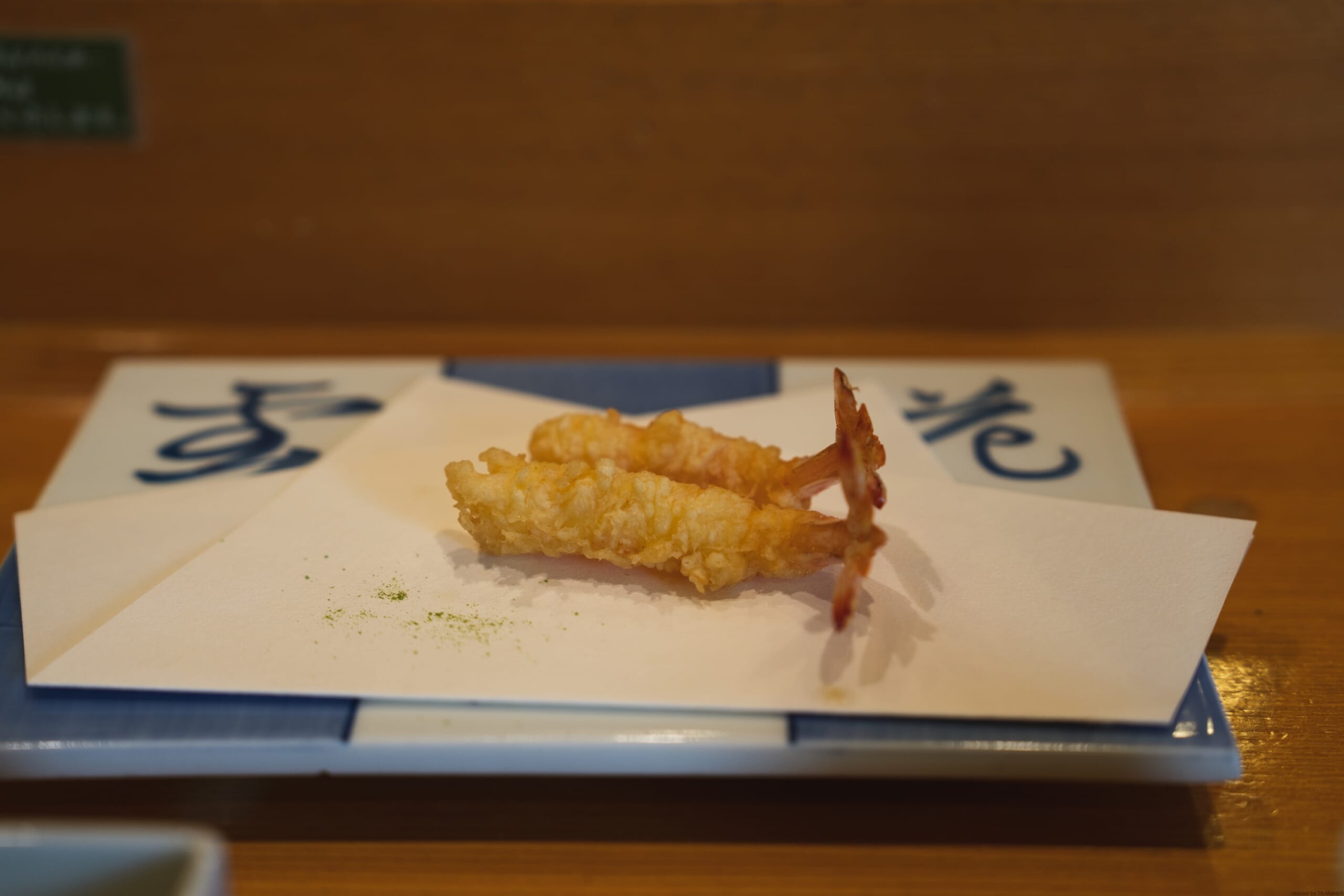
The first tempura: two shrimp!
Crisp on the outside, moist on the inside. Bringing out the sweetness of the shrimp to its fullest! Pure perfection!
One with salt, and one dipped lightly in tentsuyu, the sweet-savory tempura dipping sauce. High satisfaction!
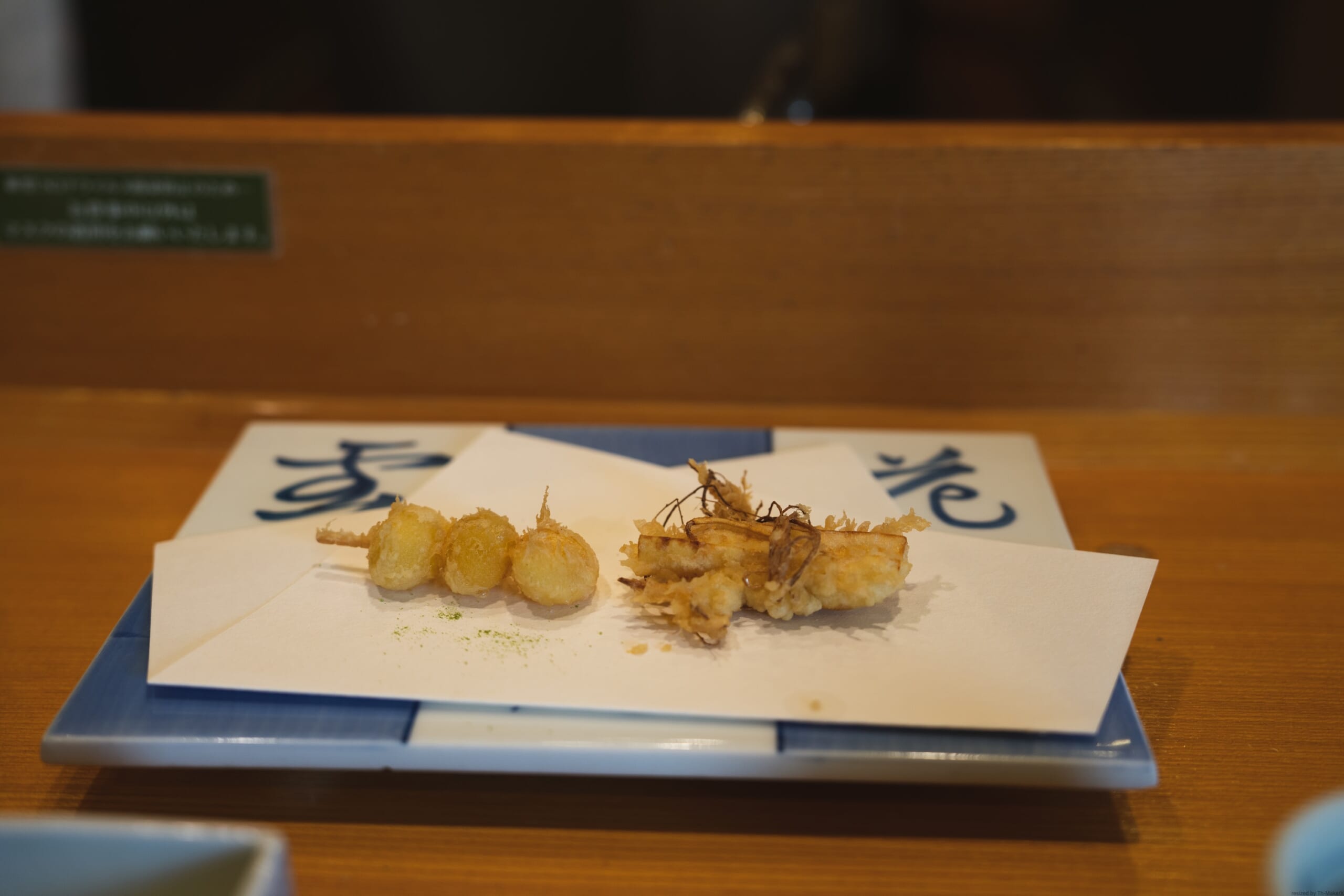
Next up, ginkgo nuts on the left and Korean ginseng!
I eat ginkgo nuts often enough, but I feel like I’ve never had Korean ginseng as tempura before.
The ginkgo nuts are sweet and delicious, while the Korean ginseng has a slight herbal medicine flavor and bitterness.
An intriguing flavor, almost like wild mountain greens (sansai).
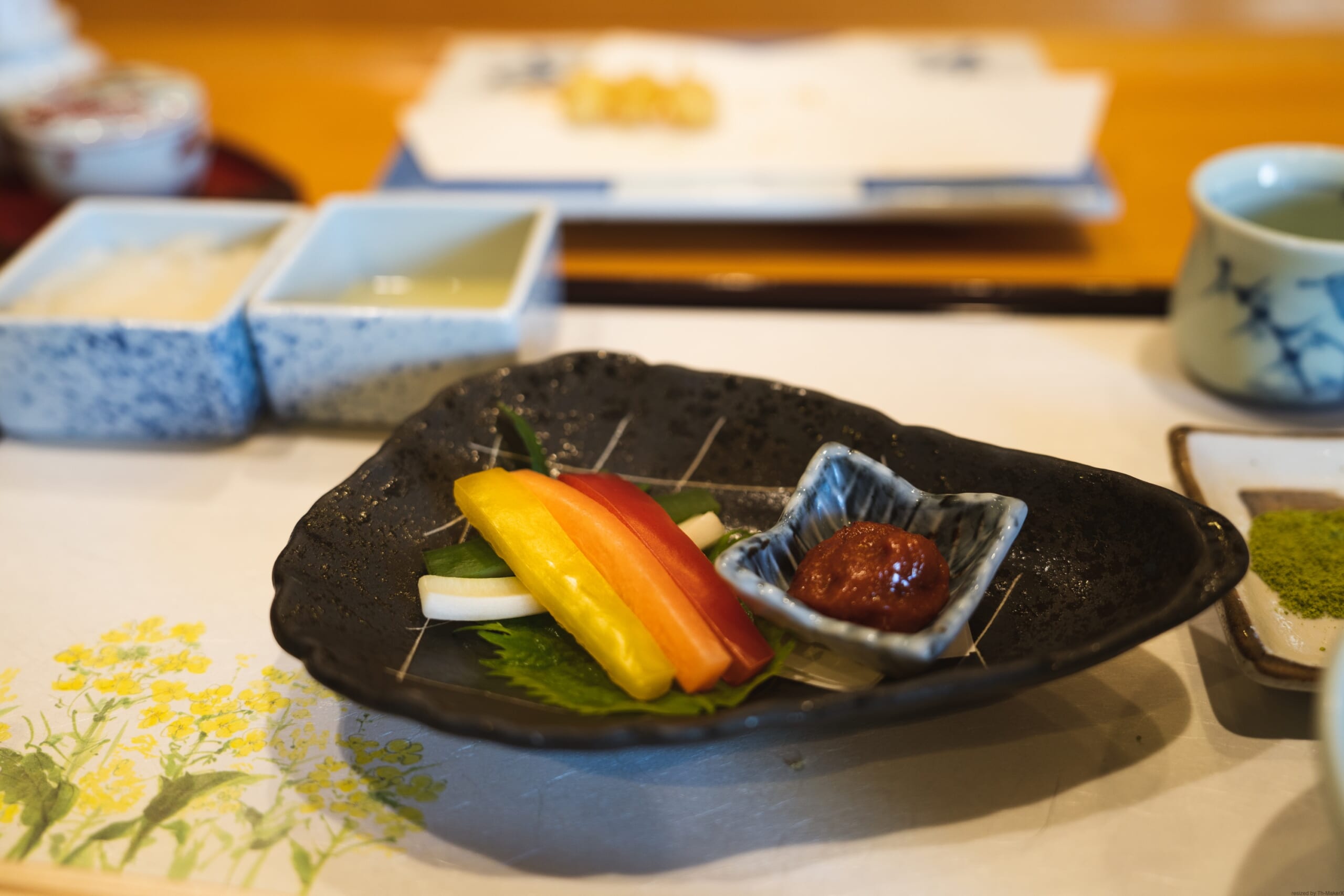
Vegetable sticks arrived for a little palate cleanser between bites.
Kisu (Japanese whiting), an absolute must in Edo-mae tempura!
A substantial, meaty piece of kisu. Steaming hot and flaky. White fish really goes wonderfully with tempura!
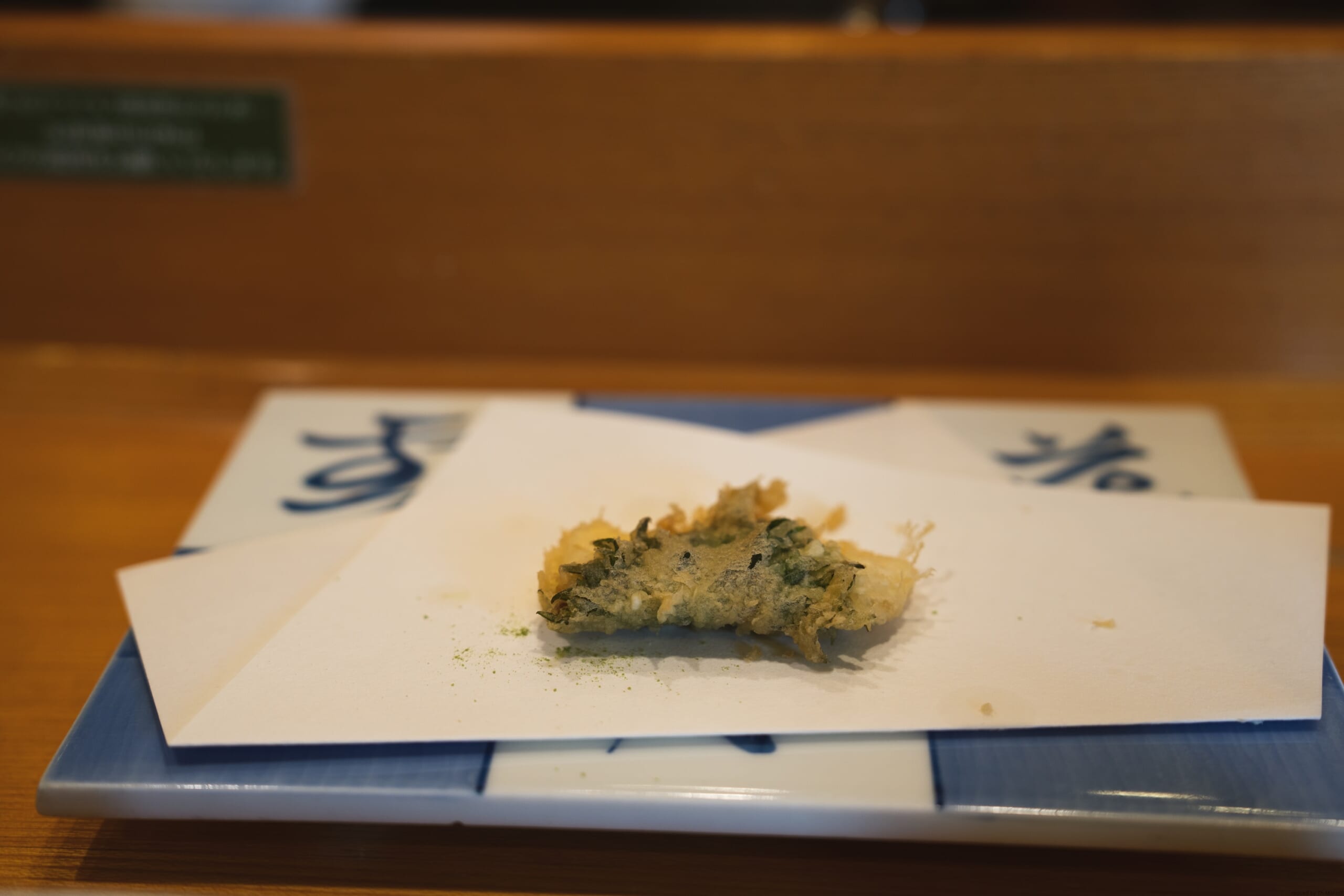
The second white fish tempura: sea bream wrapped in shiso leaf, they said.
The fragrant shiso accents the steaming-hot sea bream delightfully. I could have gone for another of these.
And this one: mochi sandwiched with karasumi (cured mullet roe), ha.
I see, so even things like this become tempura.
And karasumi and mochi really go together — fried as tempura, the mochi turns soft, making for an enjoyable contrast of textures with the crisp coating.
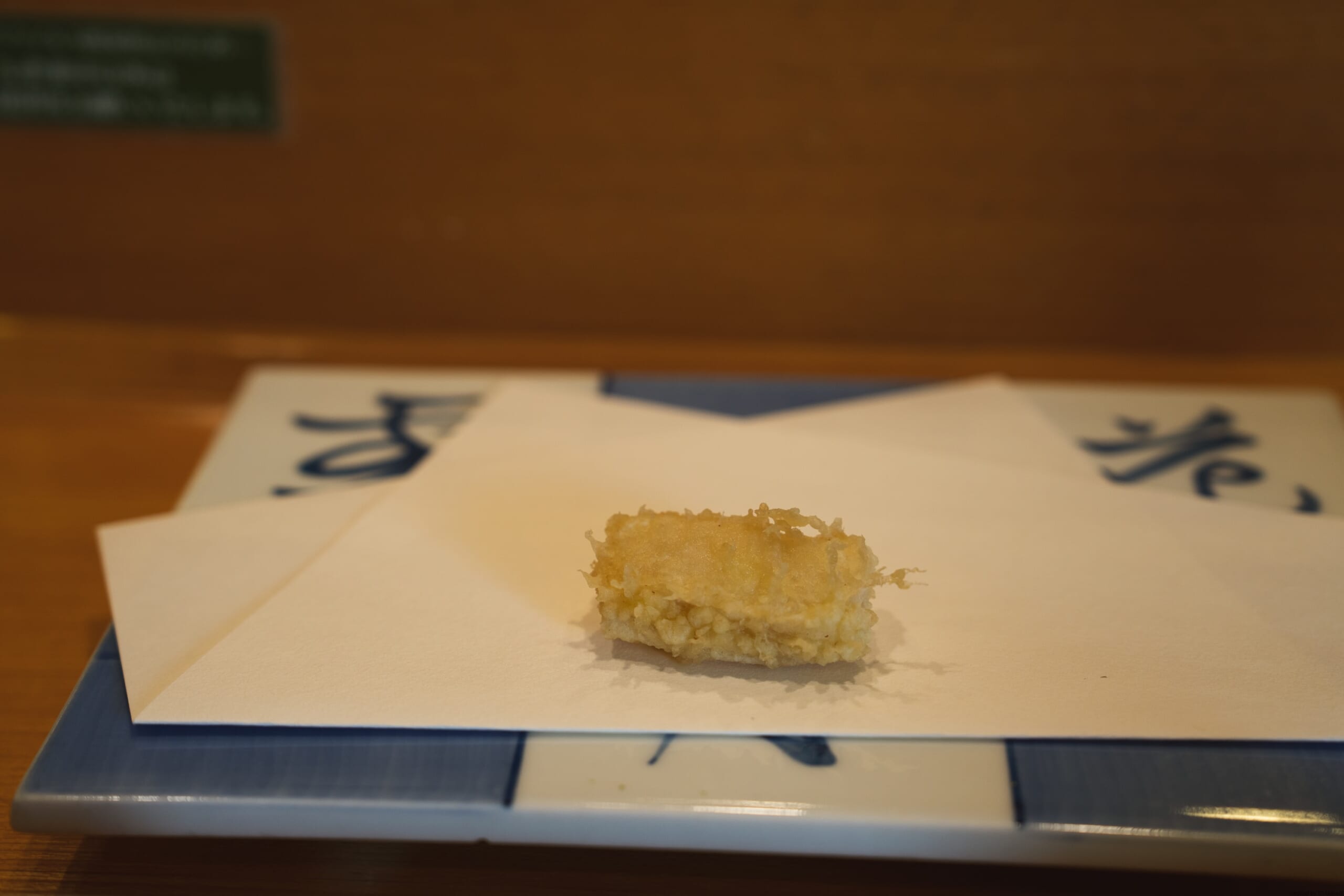
Fukinoto (butterbur buds). Tender and delicious. A combination of sweetness and distinct bitterness!
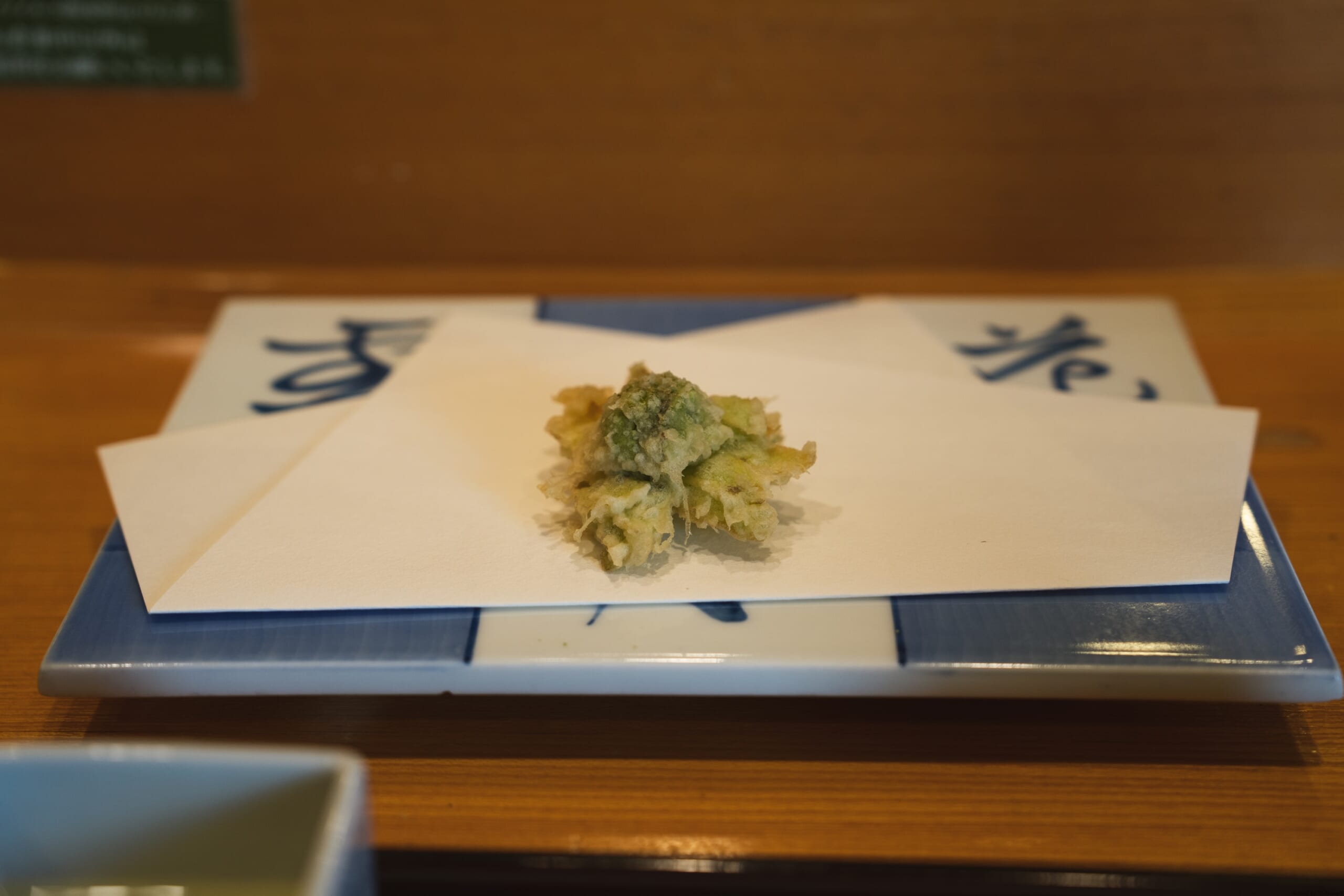
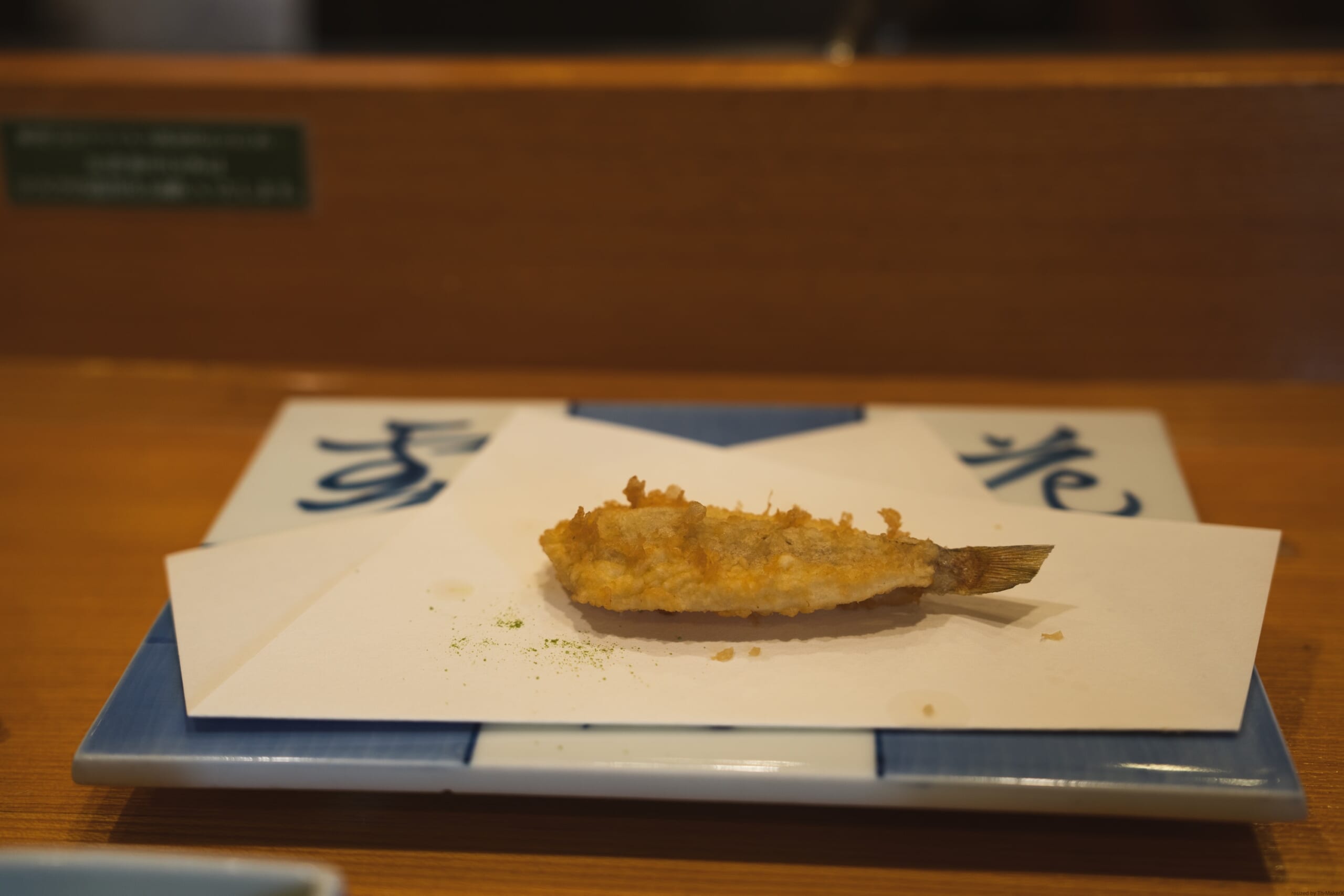
Wakasagi (pond smelt).
It had actually been placed upright looking as though it were swimming, but when I went to take the photo it flopped over, ha.
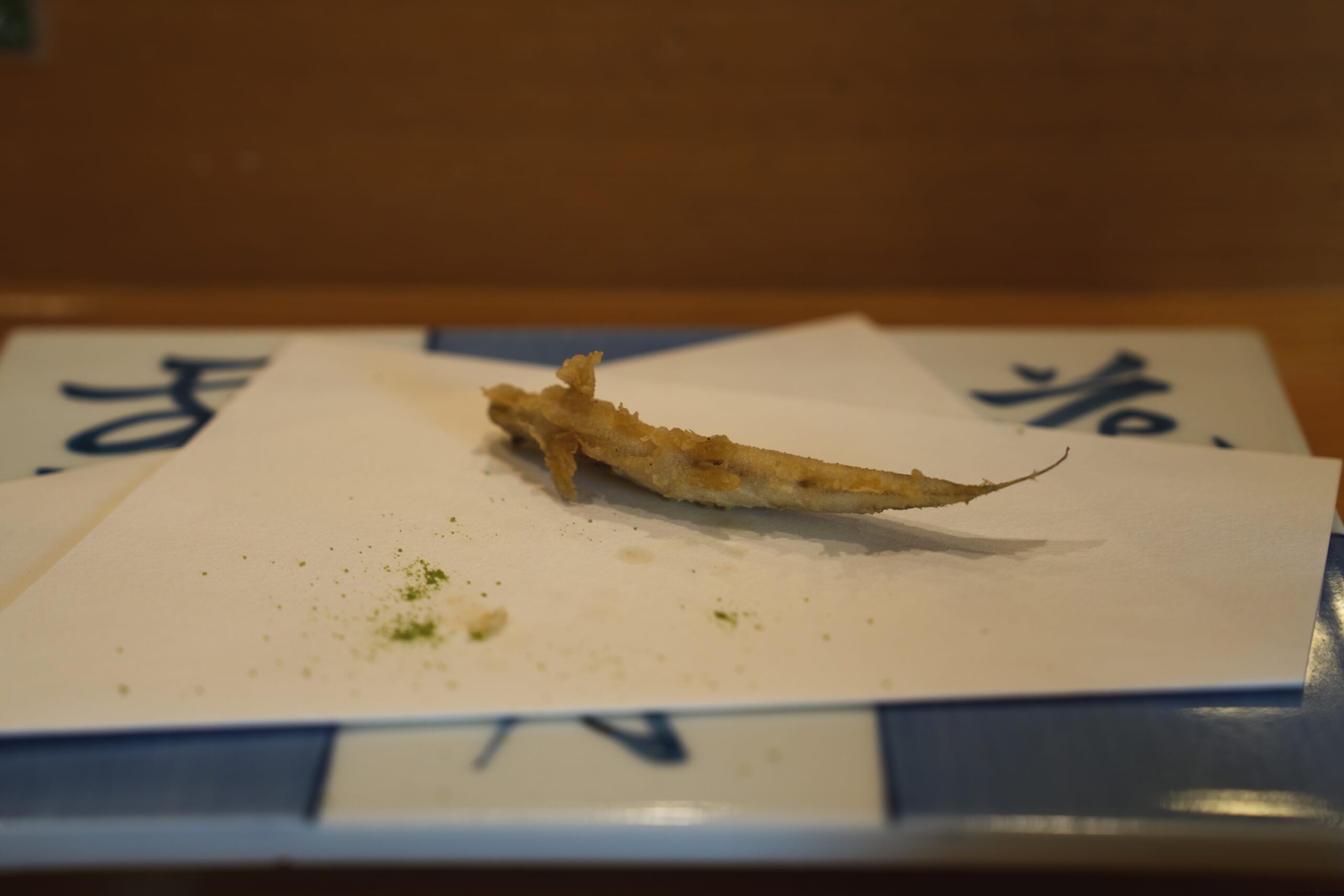
Oyster tempura.
With a squeeze of Meyer lemon. Oyster tempura is delicious in its own right, of course, but this lemon is great because it isn’t overly sour.
Even though it’s fried tempura, it eats much more lightly than something like deep-fried breaded oysters. Delicious.
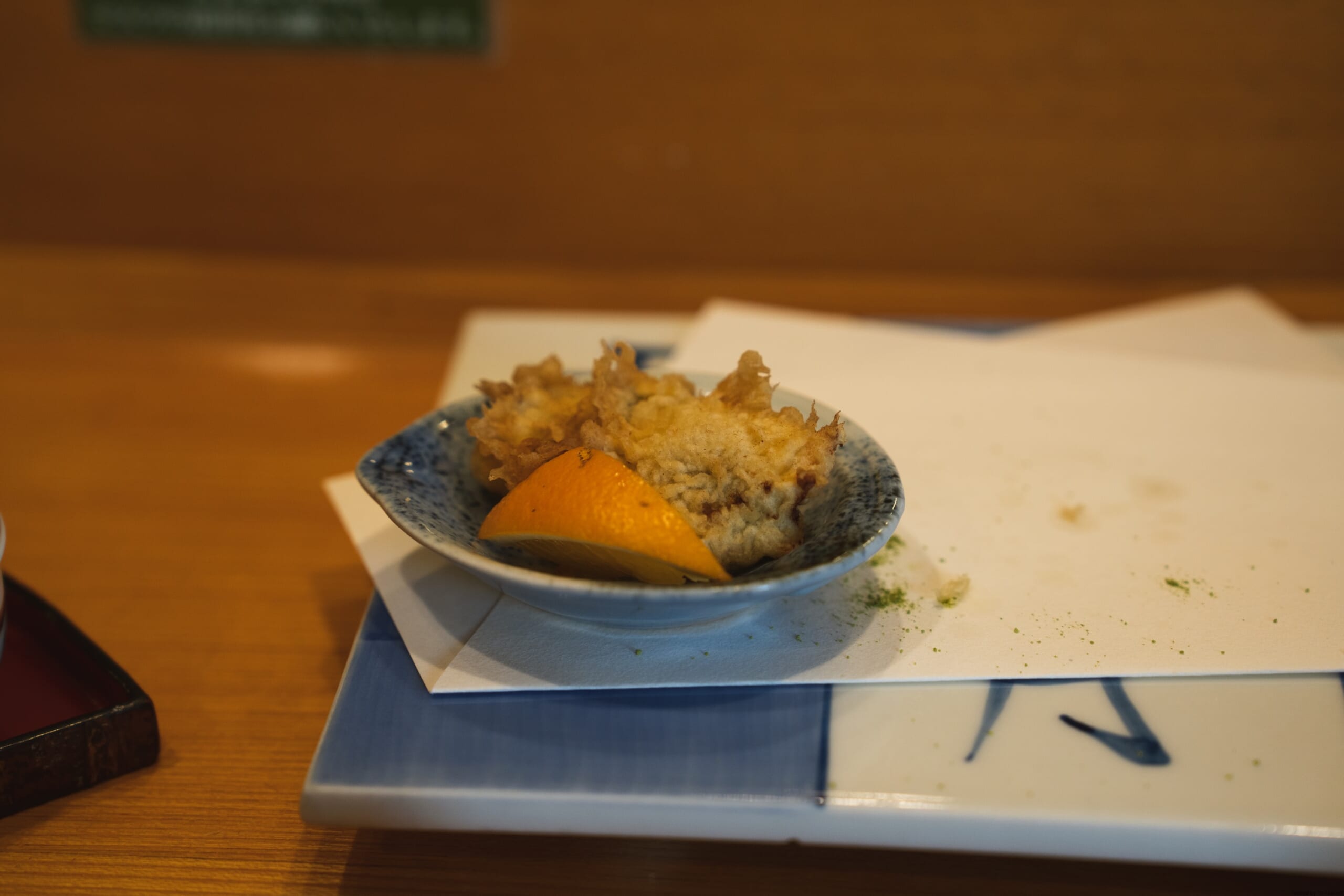
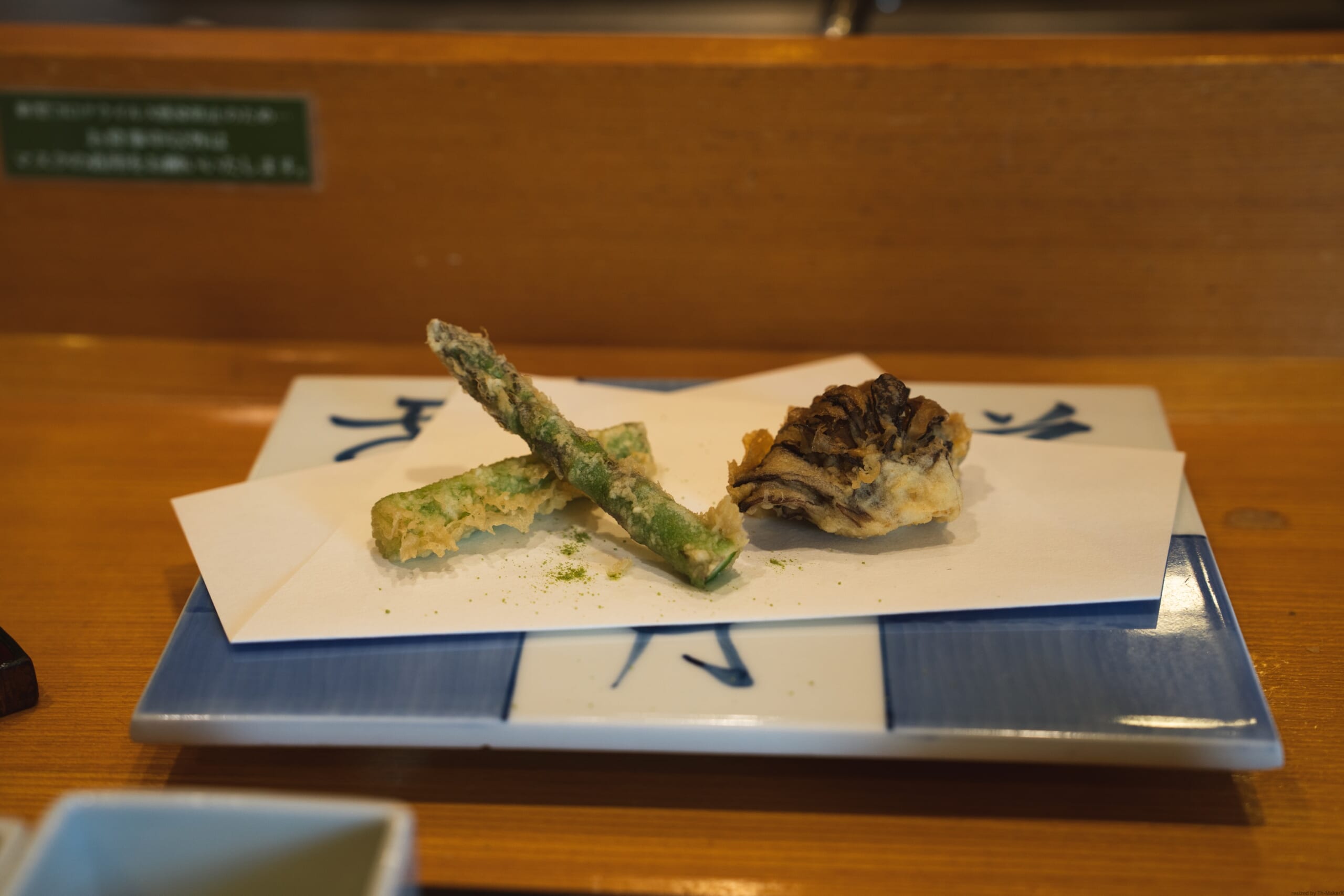
Asparagus and maitake mushroom.
Ordinary maitake tempura is often all batter, but the maitake here is fried beautifully crisp, which is impressive.
The asparagus is delicious too. Grilled or fried, asparagus is always good!
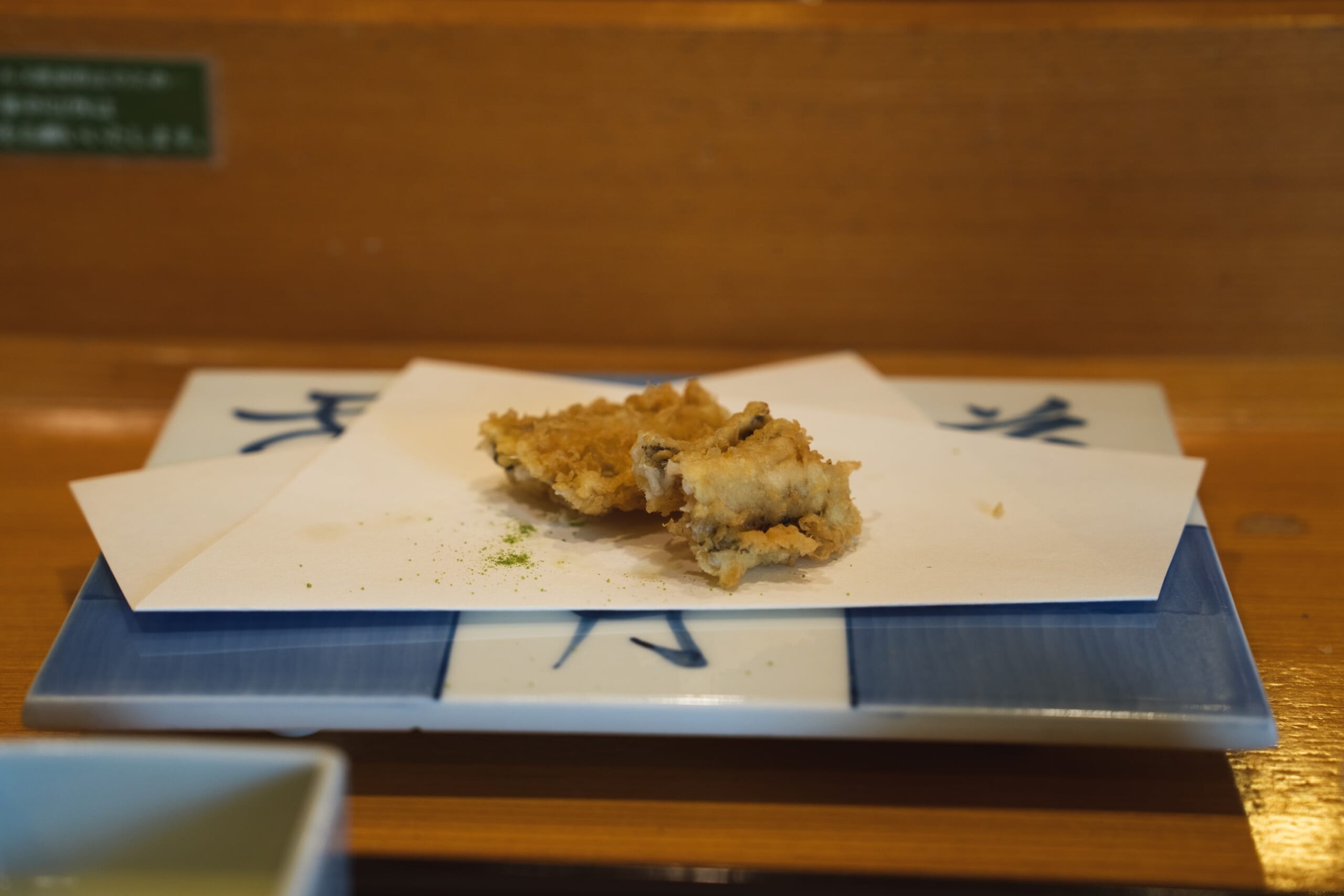
The finale of the course is anago (saltwater eel) tempura.
Choosing anago tempura as the final piece is an interesting touch. Plump, fluffy and delicious!
Come to think of it, anago is white fish too, so of course it works!
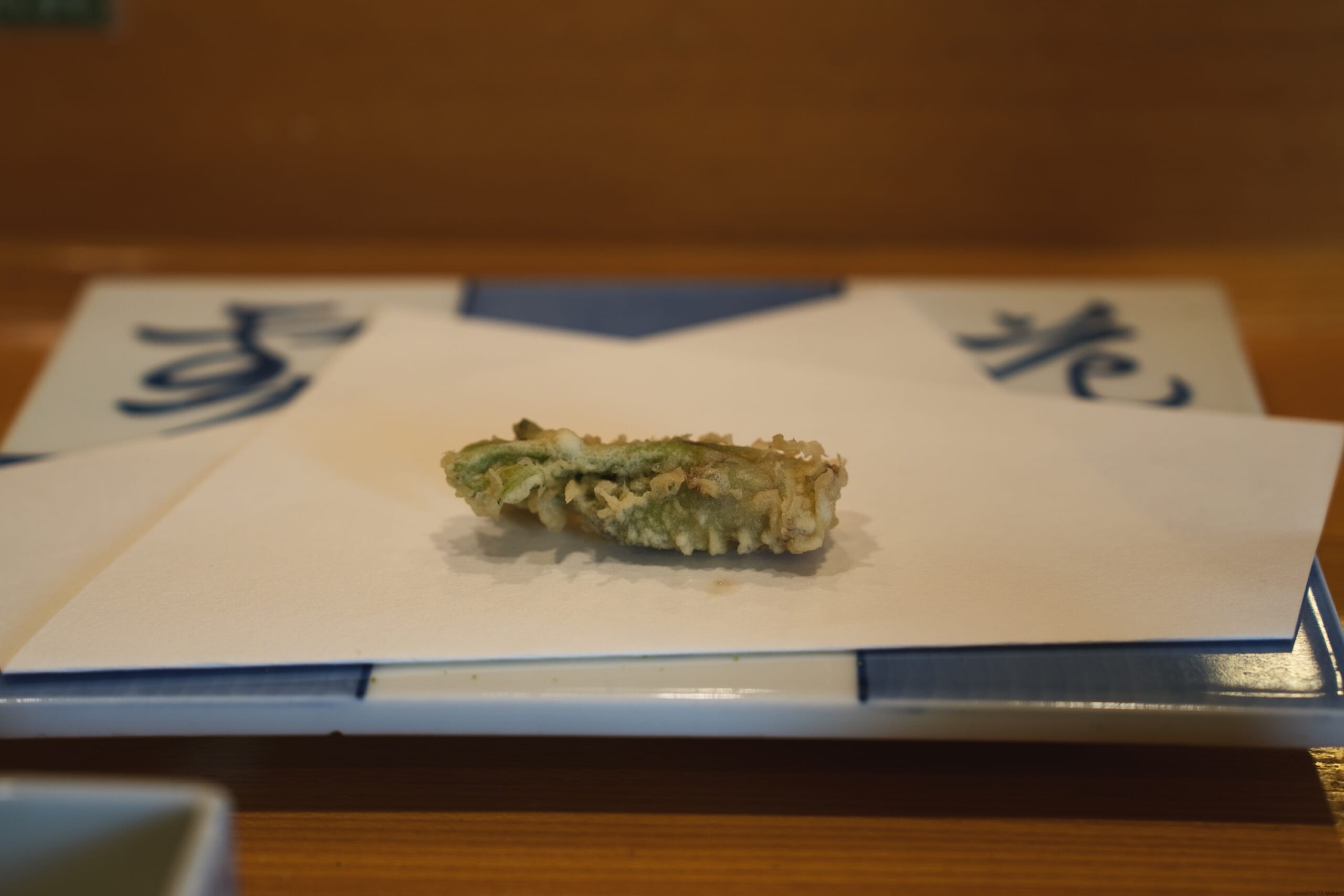
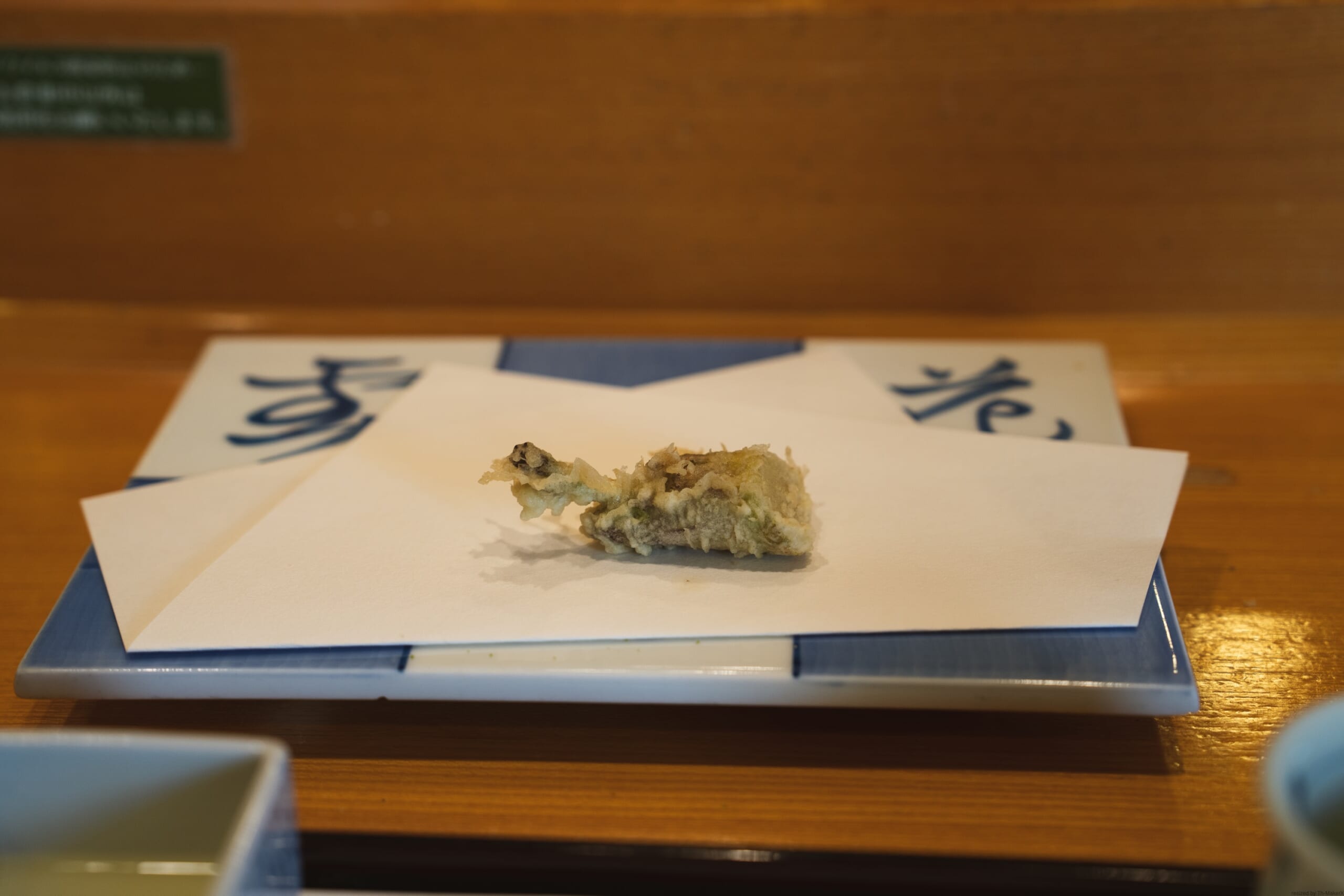
At this point they told me they could fry individual pieces if I wanted more, so I decided to order a few extra pieces of wild mountain greens (sansai).
Taranome (angelica tree shoots) and udo (Japanese spikenard)!
The distinct bitterness and savor of mountain vegetables is irresistible! Lucky to get to eat wild mountain greens! Spring is truly here.
Now, for the closing kakiage (mixed fritter), they said it could be served as tendon (over rice) or tencha (with tea poured over), so I asked for tendon.
Drizzling a touch of tare over the kakiage and placing it over rice.
I’d eaten quite a lot up to this point, yet it’s surprising how effortlessly it went down. Wonderful!
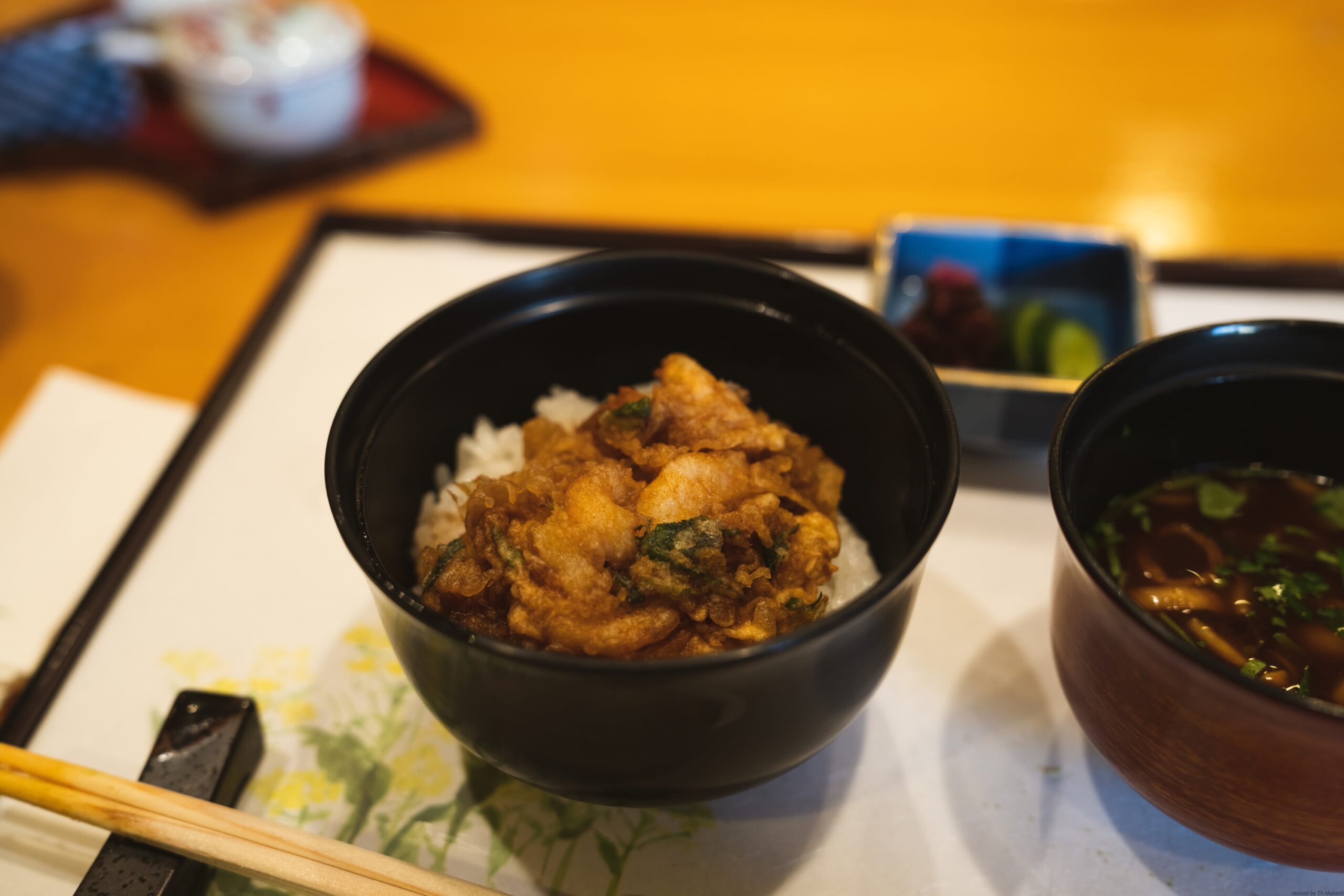
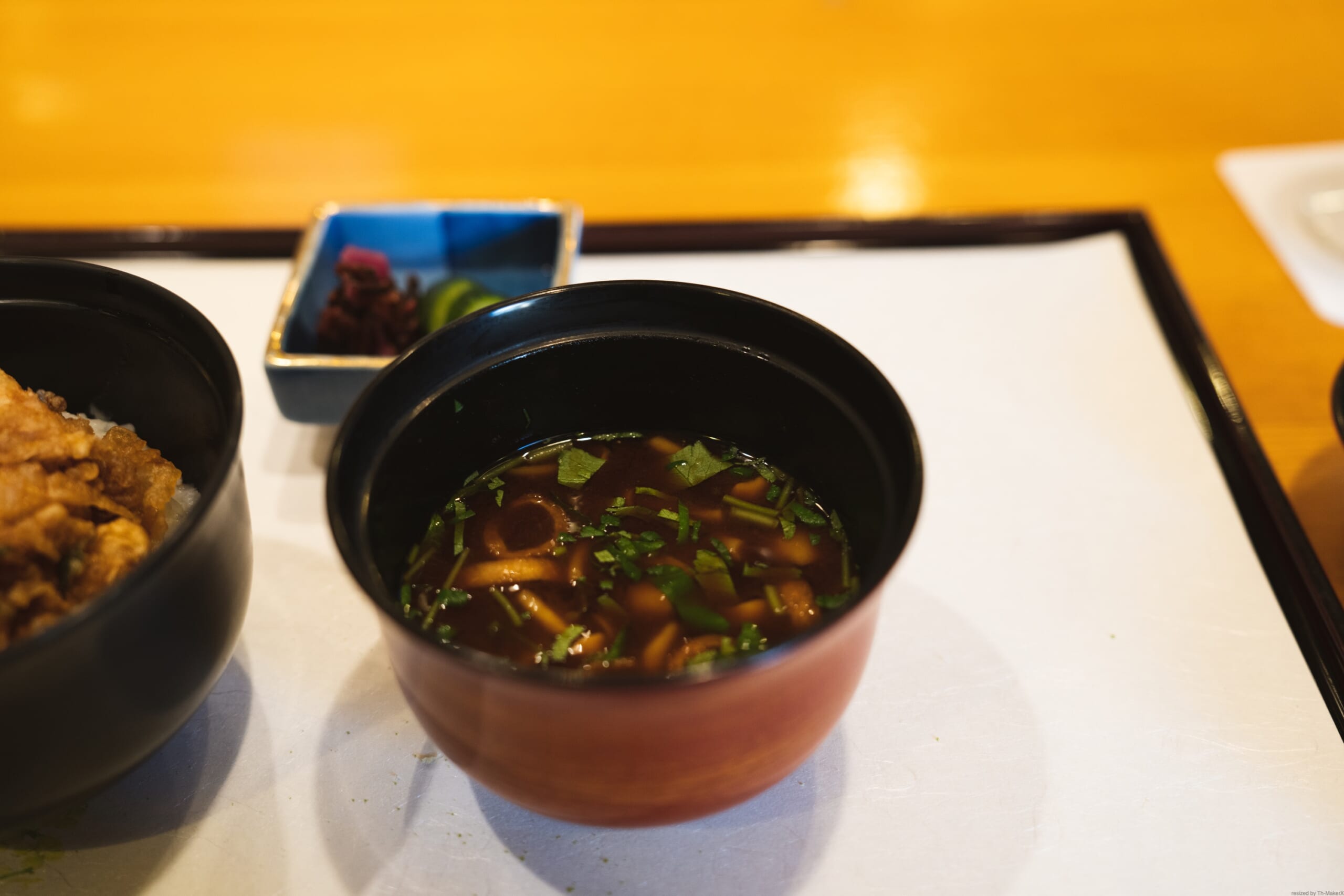
Finishing cleanly with red miso soup (akadashi).
As expected of a tempura restaurant inside a hotel. Completely satisfied with both the ingredients and the frying. It’s on the pricey side so it isn’t somewhere I can visit all the time, but sometimes you just crave really good tempura! Even without staying at the hotel, treating yourself to a casual hotel lunch once in a while is well worth recommending! Delicious! I’d love to come back.
Tempura Horikawa Hotel New Otani (Tempura / Kojimachi Station, Nagatacho Station, Akasaka-mitsuke Station)
Tabelog lunch rating ★★★☆☆ 3.6
I ate here and paid for it myself. Nothing on this site is a comped meal.
One more for the road?


