


A note on the words: tempura is seafood and vegetables fried in a light batter, served piece by piece straight from the pot at a shop like this. Sakizuke are the small dishes that open a Japanese meal, and suri-nagashi is a thin chilled puree soup. Tentsuyu is the warm dipping broth for tempura, and tare is a sweet soy glaze. Kuruma-ebi is Japanese tiger shrimp; kisu is a small white fish, sillago or Japanese whiting; anago is saltwater conger eel; katsuo is bonito and makogarei is marbled flounder; aori-ika is bigfin reef squid, and namerou is raw fish or squid chopped up with miso. Mizu-nasu is a juicy summer eggplant that can be eaten raw, and renkon is lotus root. Shiso is the green perilla leaf. Kakiage is a fritter of small pieces fried together, a donburi is a bowl of rice with something on top, tendon is a tare-glazed tempura donburi, and tencha is tempura over rice with tea or broth poured on. Shochu is a distilled spirit, here made from barley. Prices are as of this writing (August 2026).
Table of Contents hide
Tempura Fukutarou on Tabelog (English) — opening hours, payment details and the Japanese address are kept up to date there, not here.
Drinkers, thank you for waiting. It is Hangover Meshi time.
This time we had been going on about how badly we wanted tempura, and this is the shop we settled on. Tempura Fukutarou in Nezu. The catch is the hour — the reservation ends up being from six in the evening, so you have to set out a little early.
Lunch and dinner are both by reservation only. It is a serious place, named to Tabelog’s Tempura Top 100 for 2025, and what marks it out is the way it uses two different sesame oils — Kuki Taihaku, cold-pressed without roasting the seeds, which is light on the palate, and Kinsei-jirushi, lightly roasted and mellow. Something to look forward to.

Open the door and in we go.
Safely arrived, drinks ordered. Right then — let us enjoy the course.
Today it is the weekday tempura course, 14,300 yen.
Now then, this first.
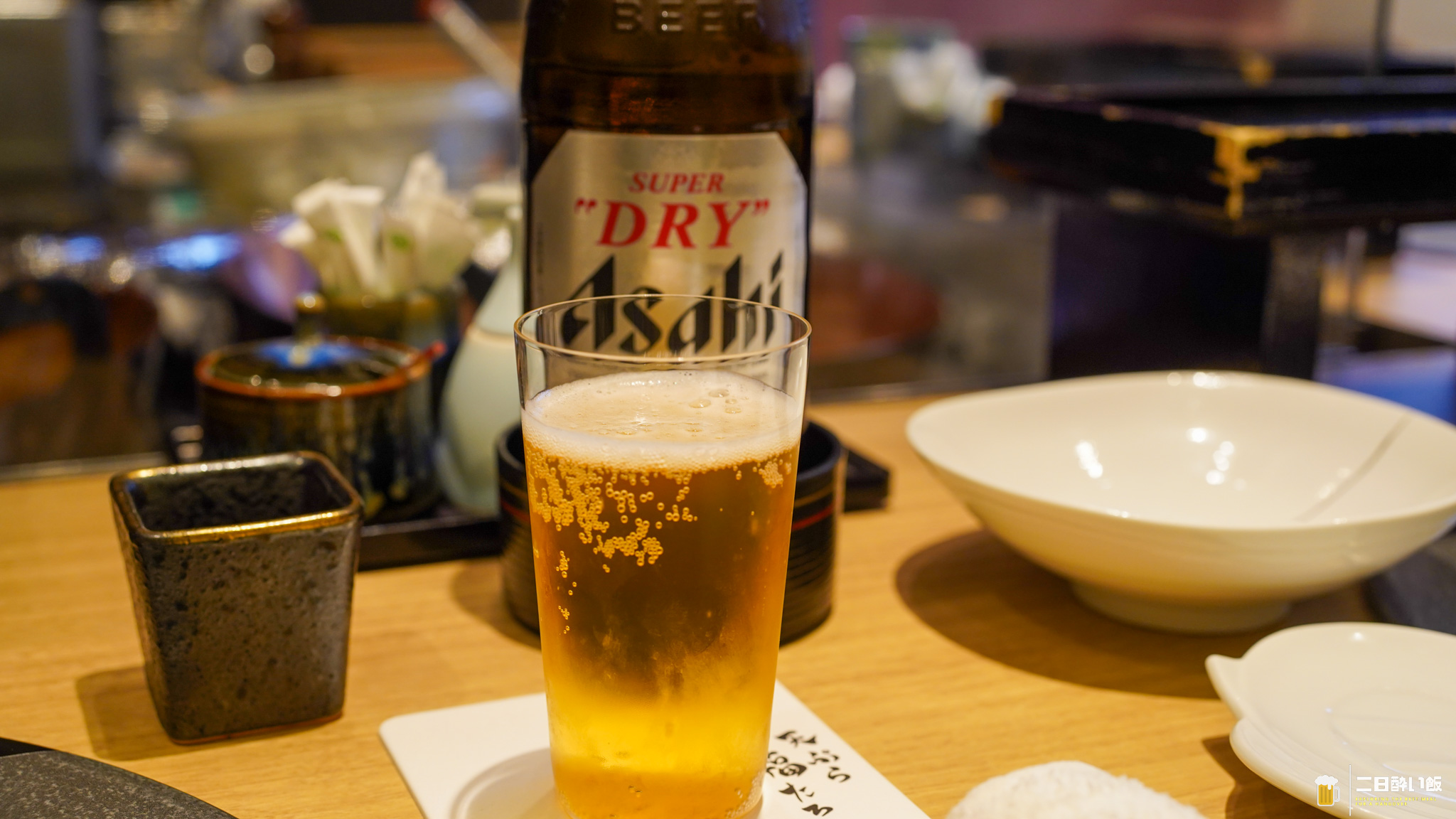
The greatest first drink in history: beer.
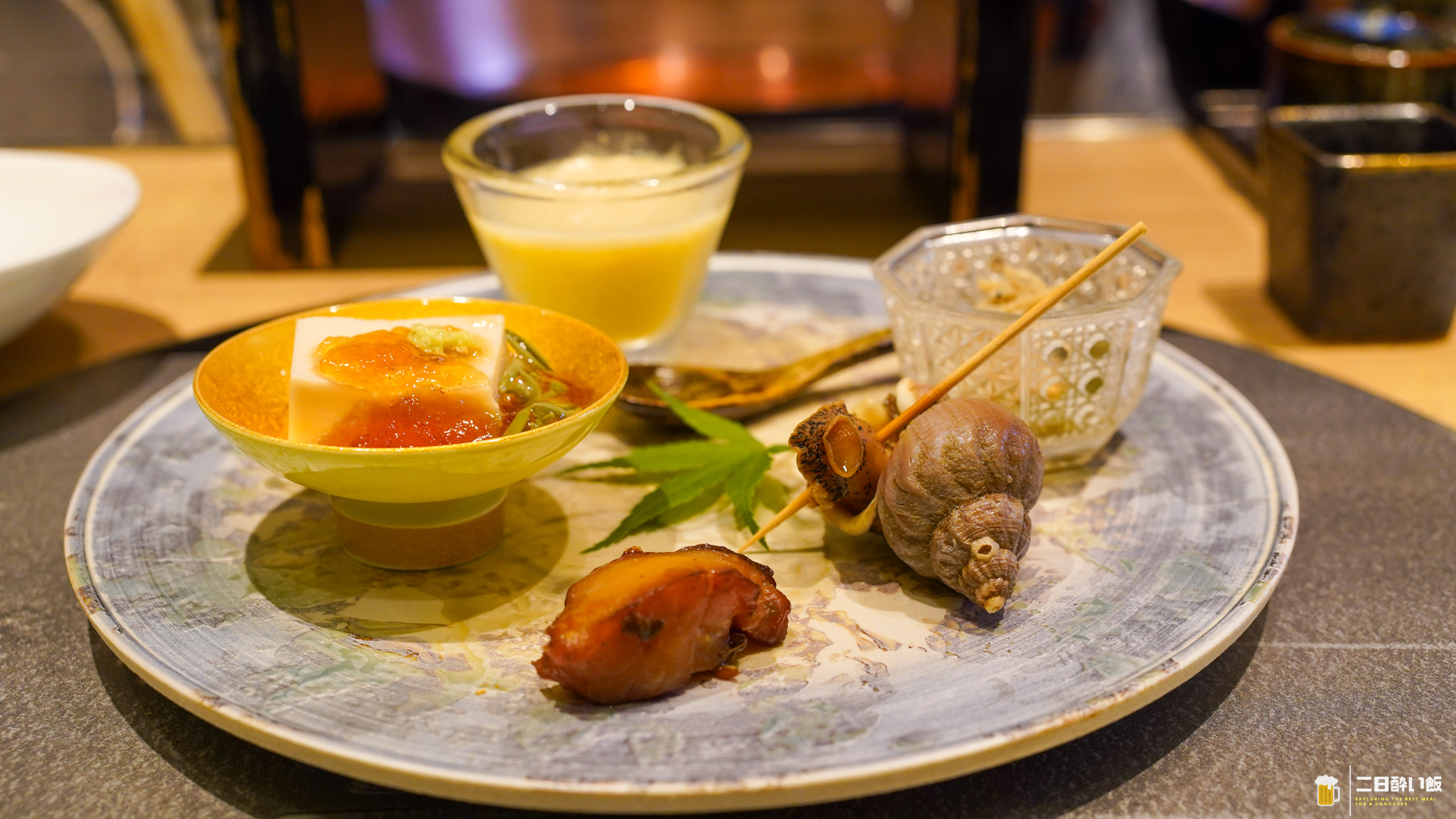
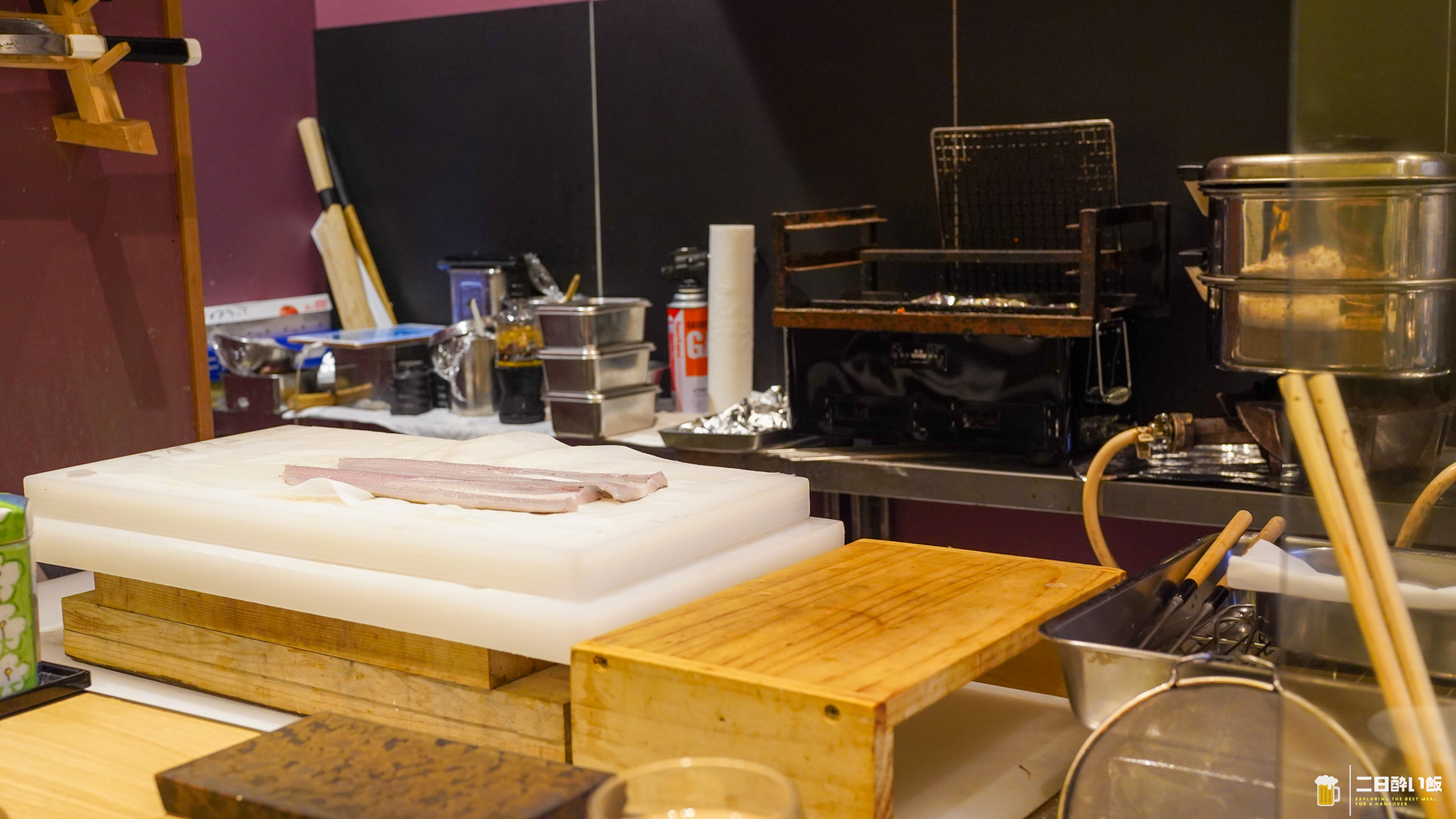
Before any frying, five sakizuke dishes in which you can see the owner’s background in Japanese cuisine — cold tofu under a jelly, a suri-nagashi, shellfish simmered sweetly. Each is a mouthful that pulls the drink along, and together they ease you gently into the tempura to come. While we ate them, they broke down today’s anago in front of us. Alive, of course.
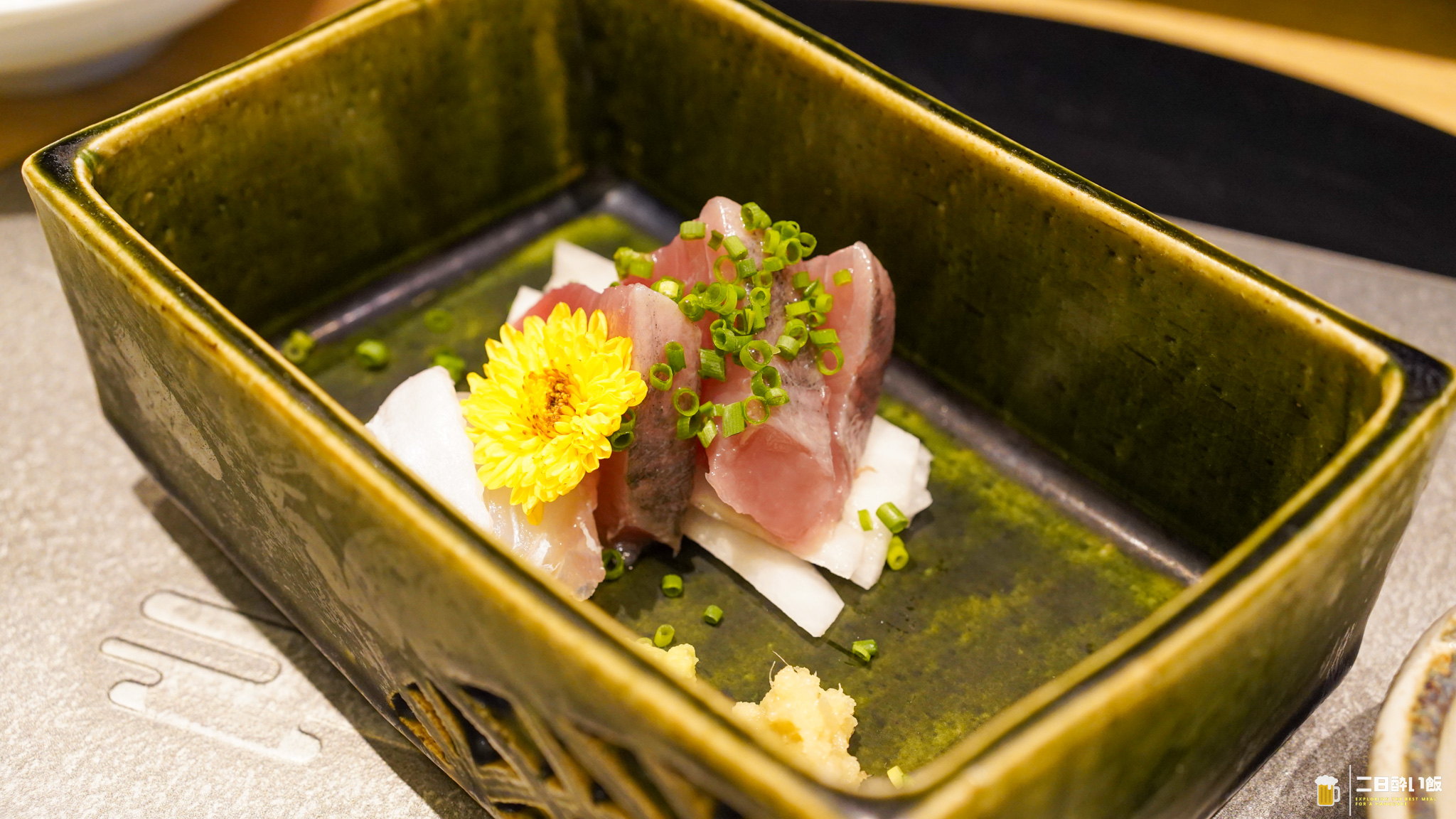
The sashimi is two kinds, katsuo and makogarei. Katsuo is deep red meat with a strong savor; makogarei, in season in summer, is a lean white fish that turns sweeter the more you chew. A study in contrasts.
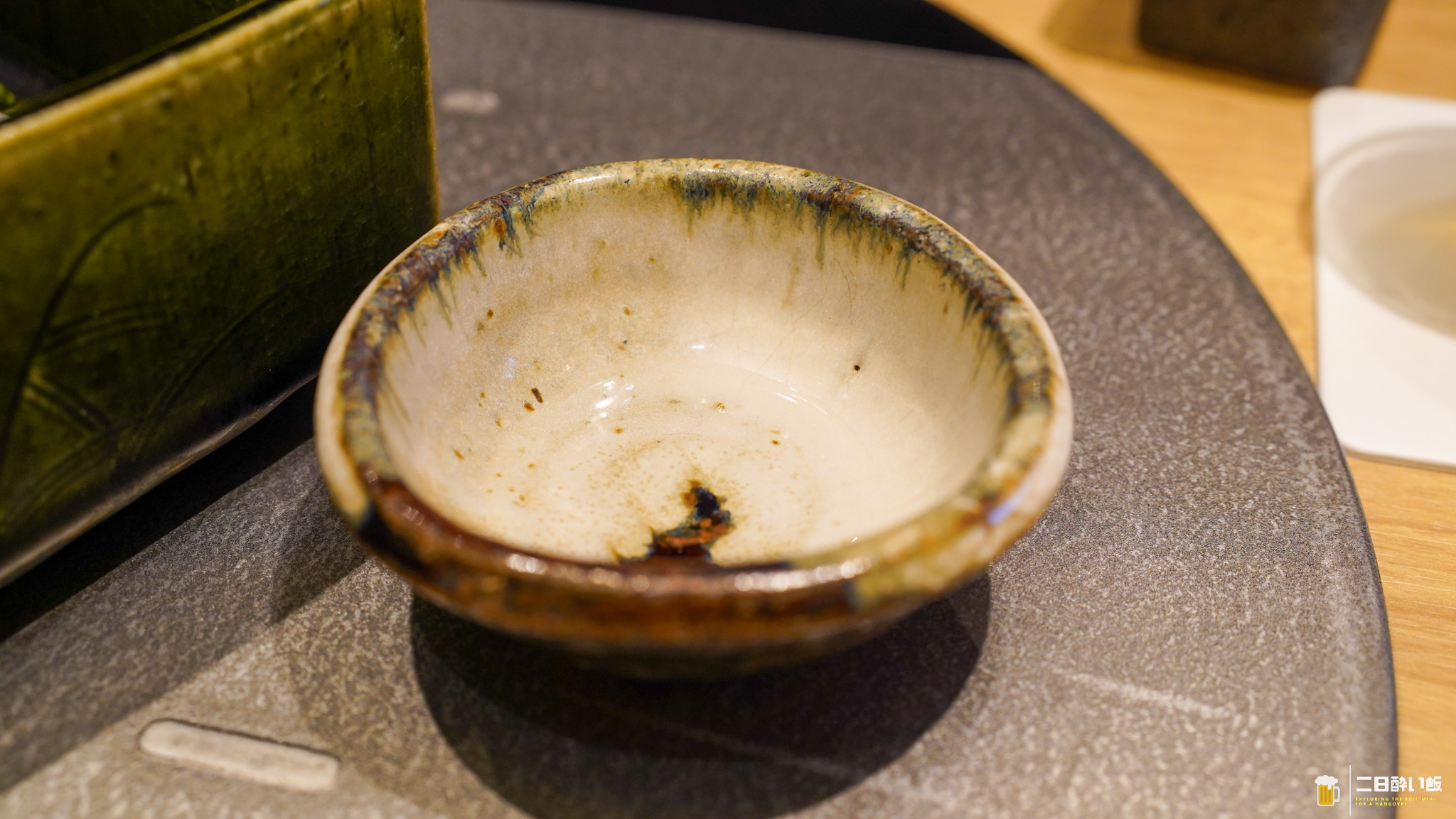
The incident happens at the soy sauce dish. What is poured out looks exactly like plain water. Put it in your mouth, though, and both the aroma and the salt are unmistakably soy sauce — it is called toumei shoyu, clear soy sauce. The idea, I take it, is that you can enjoy the color of the fish as it is. It scrambles your brain slightly, and it is delicious.
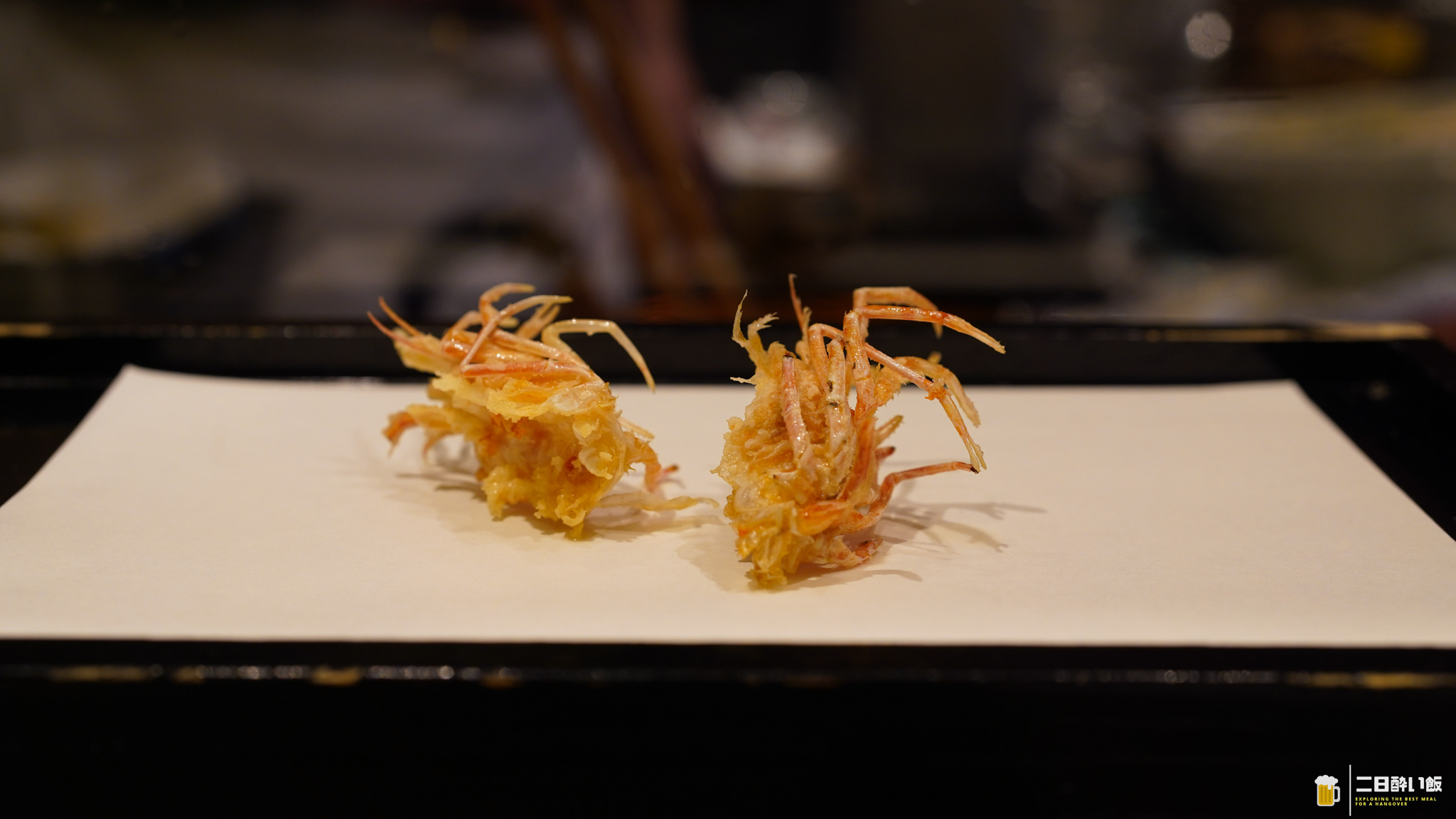
The course opens with kuruma-ebi, the shop’s calling card. The head and legs first. Each arrives fried in a different sesame oil. One is Kuki Taihaku, pressed without roasting so that the oil leaves no scent of its own. The other is Kinsei-jirushi, lightly roasted before pressing, which lends depth and aroma.
The same shrimp, given a different face by the oil alone — that is the story. Eating it, the head shatters crisply the moment you bite, and the faintly bitter savor of the miso spreads. Very good. And yes, the oil does seem to change how the aroma reads.
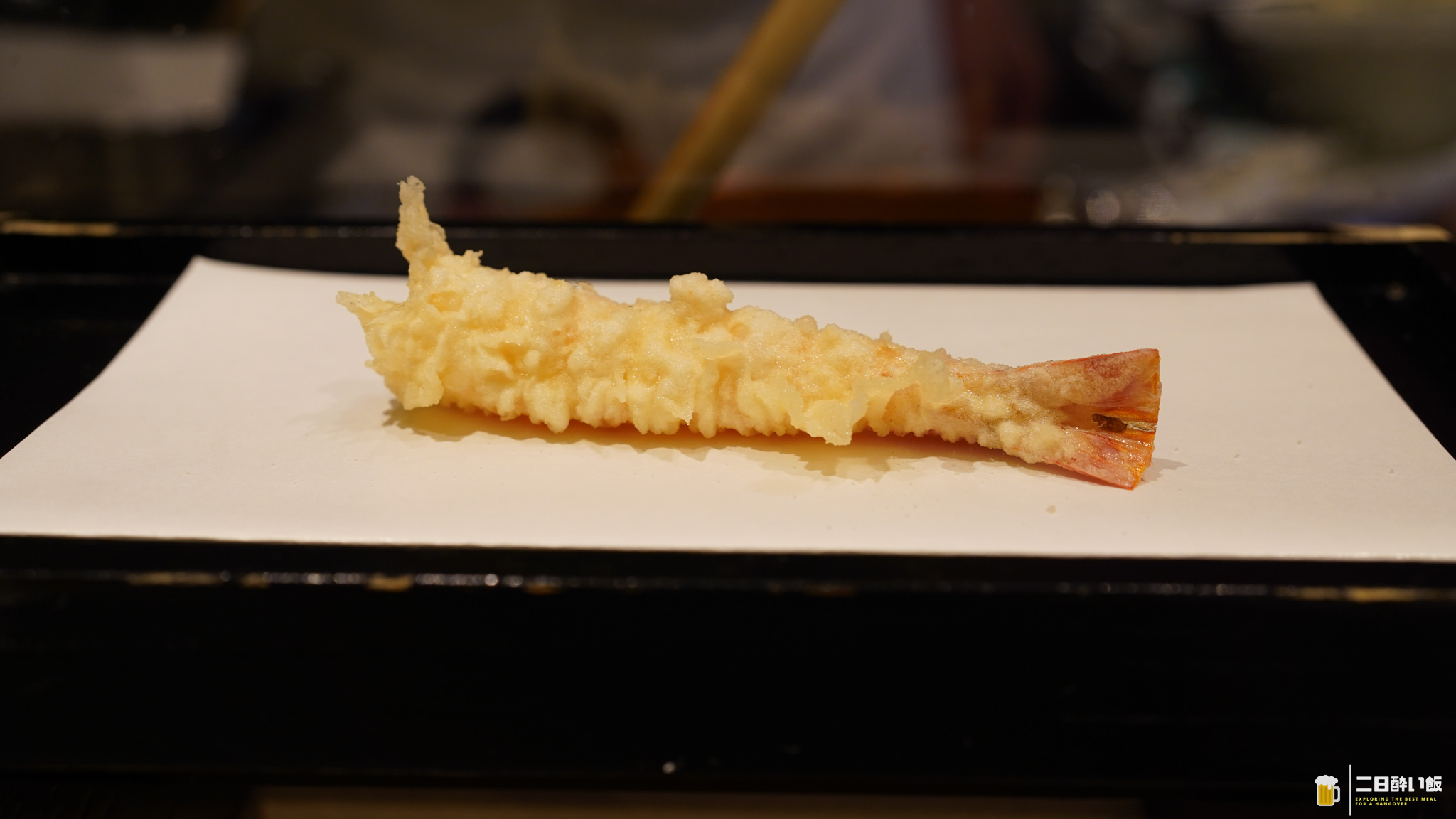
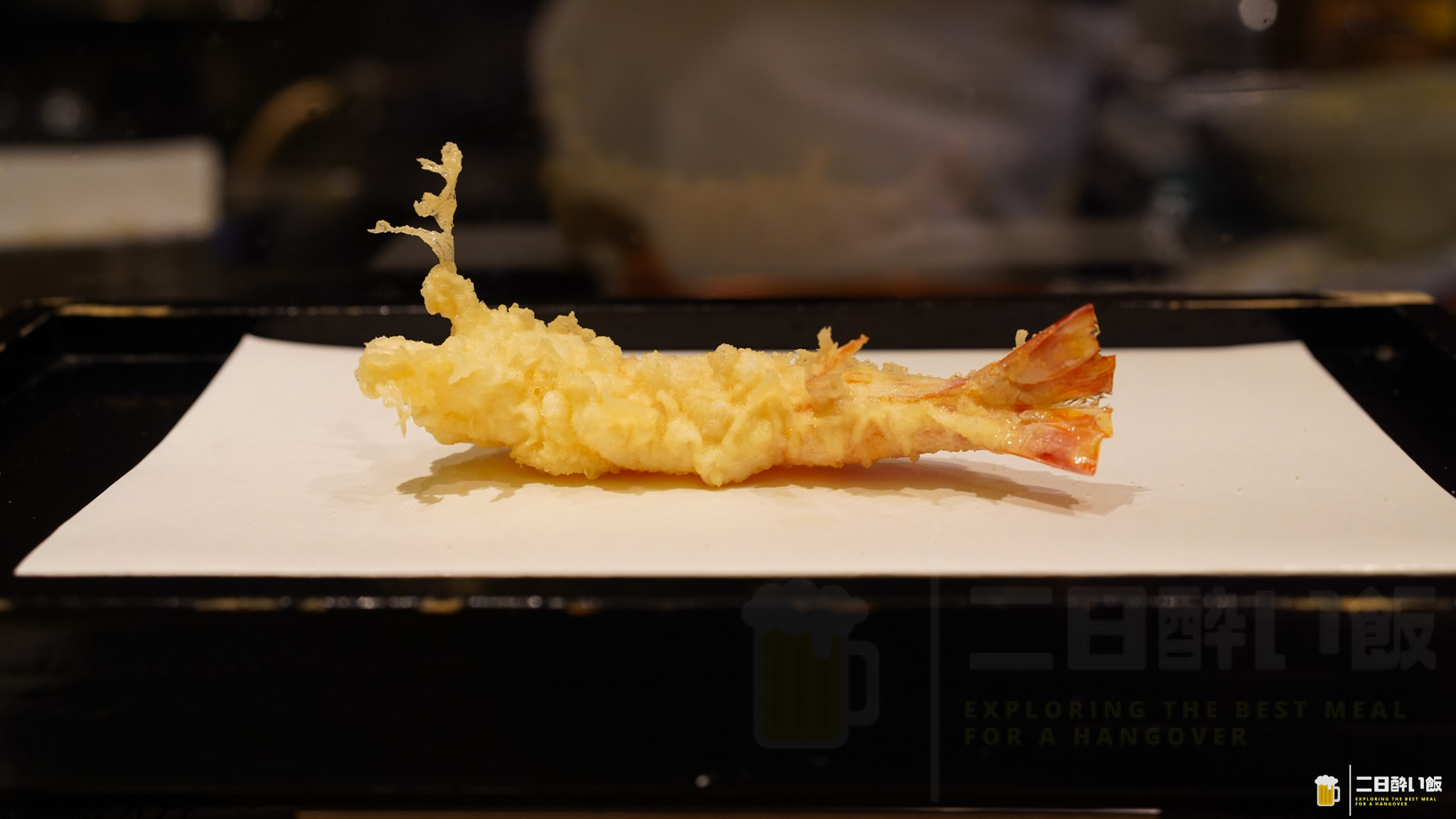
Then the bodies. The first has a light coating and the sweetness of the shrimp comes straight through. The second has more swell to its aroma, with a soft depth of sesame in the finish. The springy texture ought to be identical, and only the aftertaste differs, which is the interesting part. Once it has been pointed out, you cannot help playing guess-the-oil.
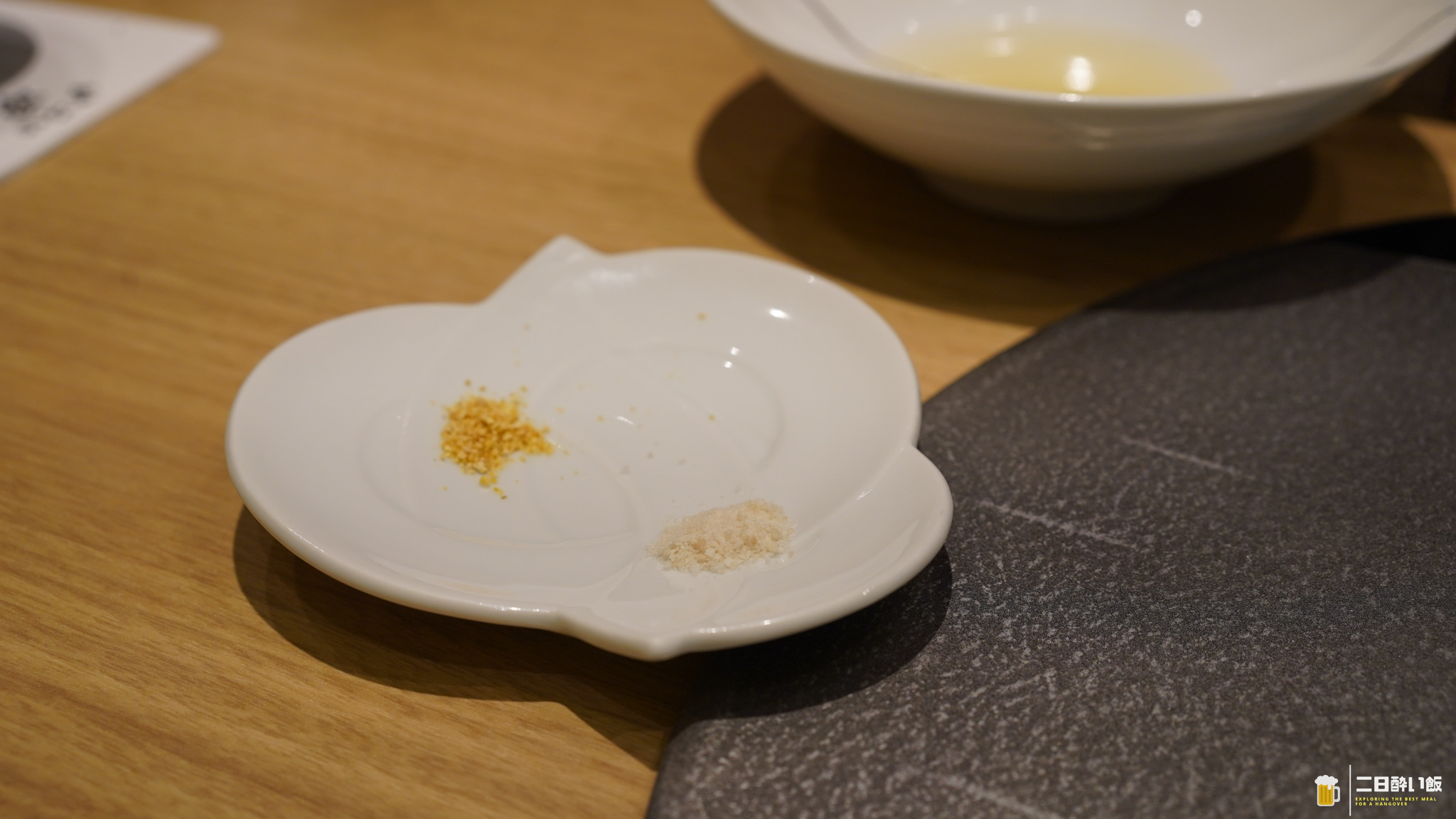
Alongside come tentsuyu and two salts: Aguni salt, roasted with sake to round it off, and a yuzu salt. I went with salt this time, and if you are chasing a delicate difference between oils, salt may be the clearest way to read it.
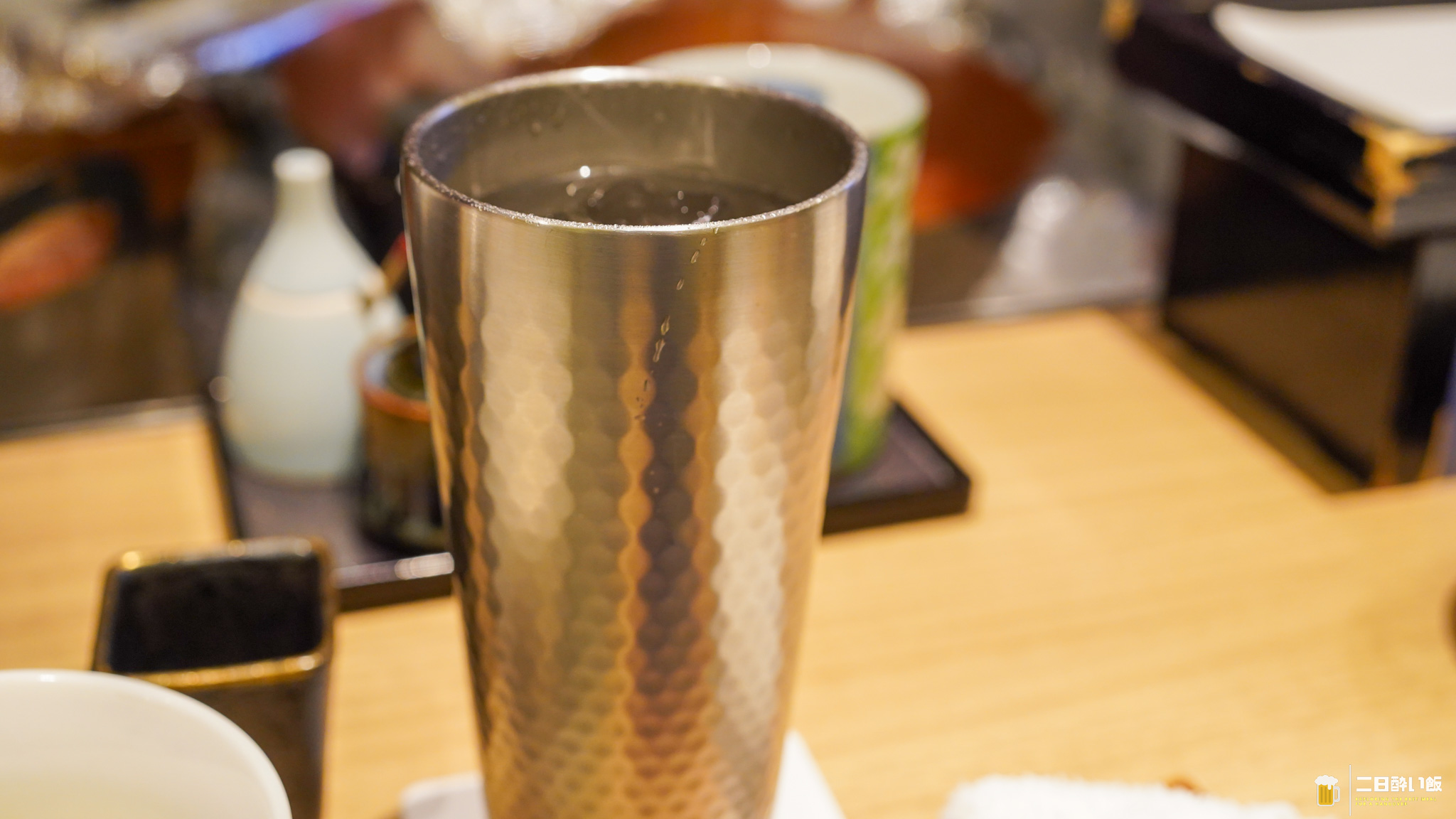
I could not resist ordering a barley shochu with soda.
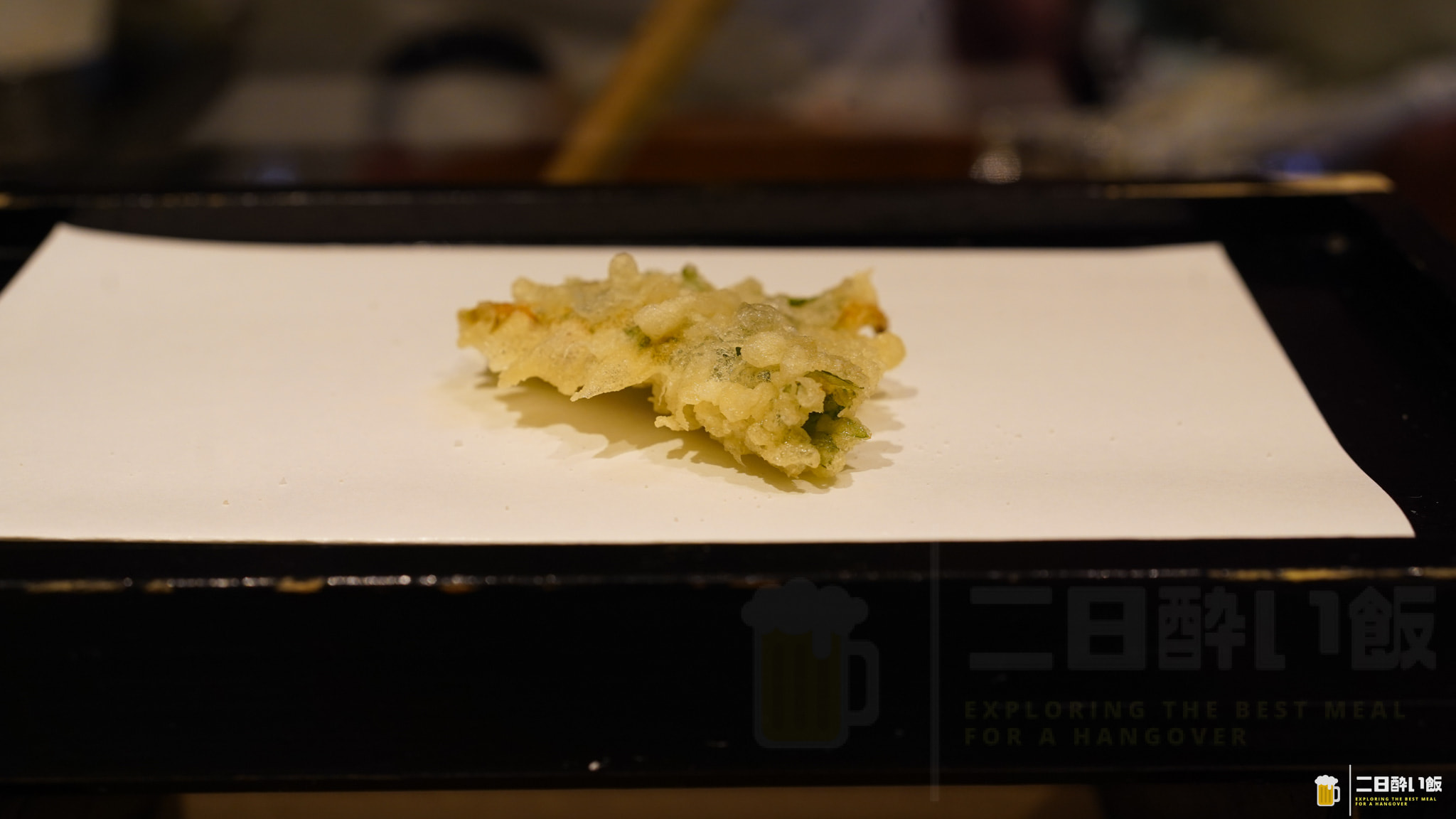
While the kuruma-ebi is still with you, the shrimp miso rolled in shiso arrives.
Under the thin coating the shiso splits with a snap and its green scent rises, and then the thick, sticky shrimp miso follows. It is a different thing from biting the head — deep savor with nothing but the miso concentrated in it, and very rich. With a shiso roll like this you would normally expect sea urchin inside. Honestly this was my first time eating this version, and I may well like it far better. The cool edge of the shiso tightens the finish so no heaviness lingers — only the sort of aftertaste that makes you reach for the barley soda.

Next up is new-crop lotus root from Ibaraki. It is called Hikari renkon, a brand from Inashiki said to be rated the best quality at market. Cut thick, it snaps cleanly, and the more you chew the more a juicy sweetness seeps out. Put a whole piece in at once and you will be fanning your mouth, but the new crop has little bitterness and stays light — you could almost call it a palate cleanser between fried things.
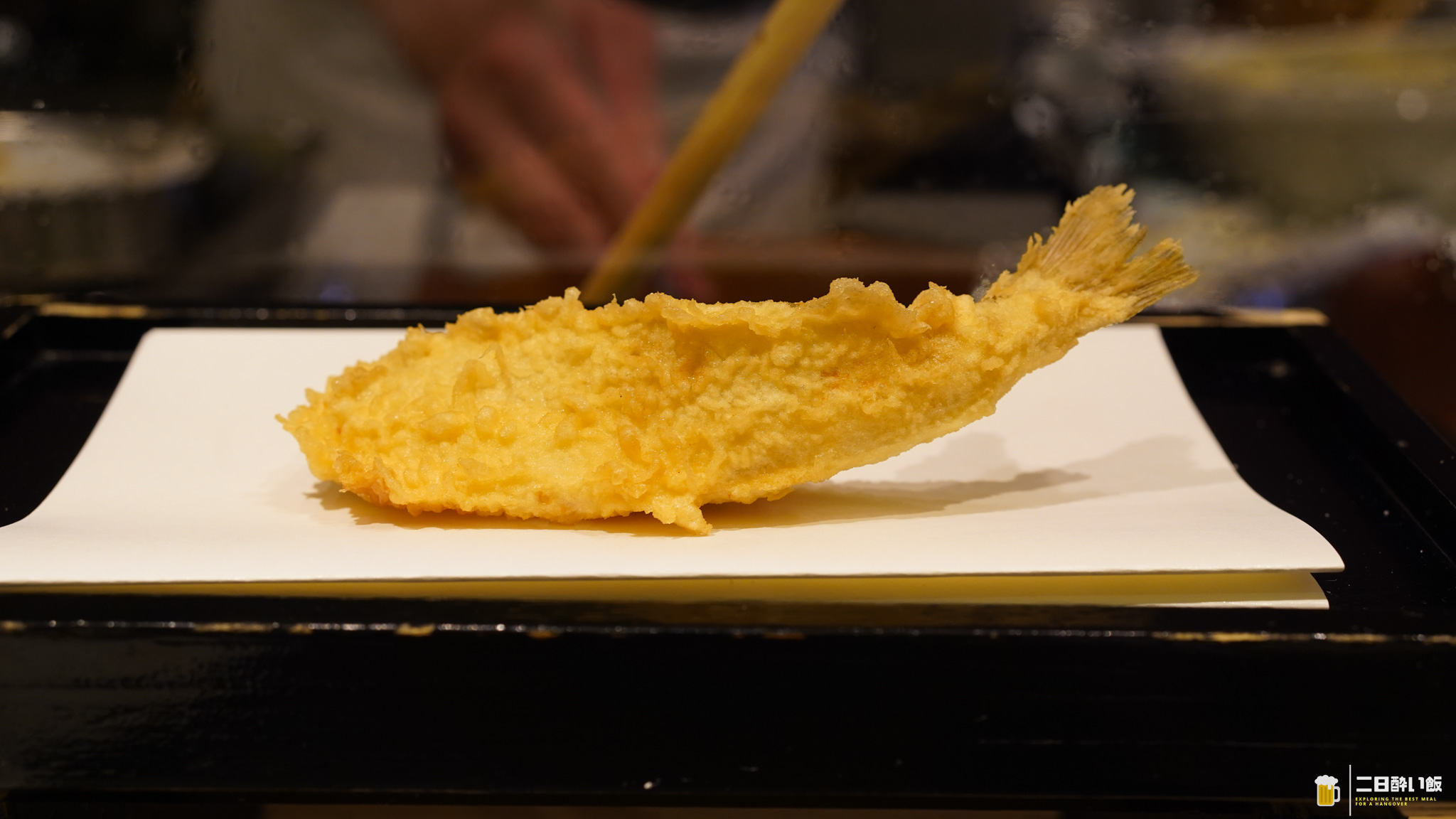
Kisu, sometimes called the queen of tempura.
And then what was set in front of me stopped my chopsticks.
Tempura kisu is normally butterflied along the back and fried flat. Here the flesh seems to be folded over on itself before frying, so it comes up as a three-dimensional fish with its tail fin pointing at the sky. I have been eating around for a long time, and this is the first time I have seen it folded like this. Exciting.
The benefit is not only in the look. Folding the flesh gives it thickness, so from behind the light crispness of the coating comes soft white flesh that falls apart, and an elegant sweetness after it. Kisu is supposed to be a lean fish, and yet the finish is surprisingly long. A mere fold, and yet what a fold. Break one convention and a familiar fish shows you another face. I am copying this next time I fry kisu myself.

A whole mushroom, fried. Bite into the thick cap with its cross-cut top and the hot juice trapped inside bursts out, with a concentrated savor quite unlike the raw thing. You see shiitake often enough, but mushrooms like this are rare. Delicious.
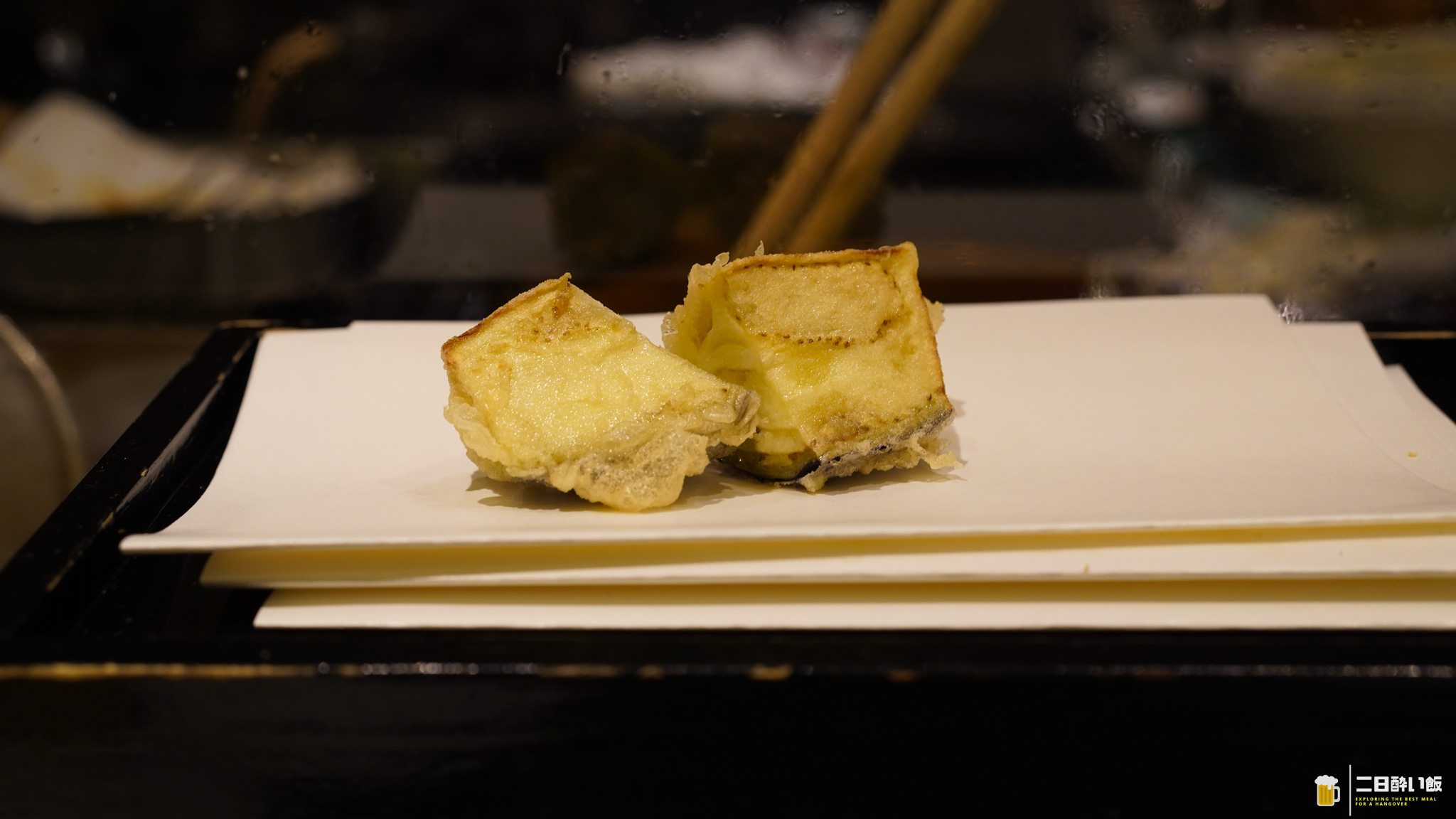
Then mizu-nasu. This summer eggplant is juicy enough to eat raw, and inside the coating it takes on heat and turns meltingly soft. Bite it and sweet juice comes flooding out, so light that you would never guess it had been through oil, and it vanishes off the tongue.

Aori squid, sometimes called the king of squid. The thick-cut body is sticky and sweet, and the fragrance of the thin coating pushes that sweetness along. The tentacles, they said, they had made into namerou. Turning them into namerou rather than frying them is a kindness to anyone who is drinking. It goes with the barley soda.
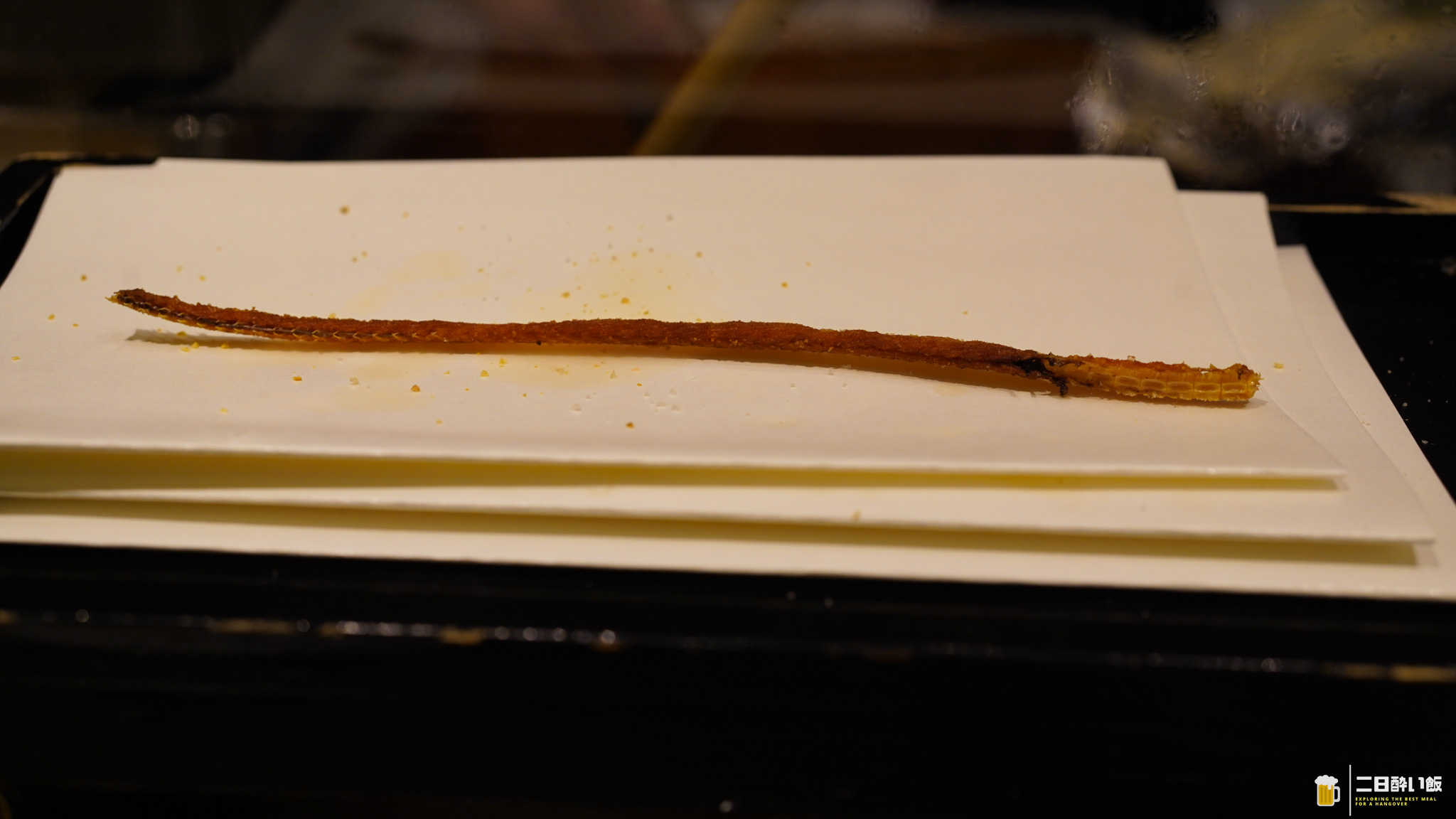
Crunch, crunch. A soft anago flavor comes through. Good.
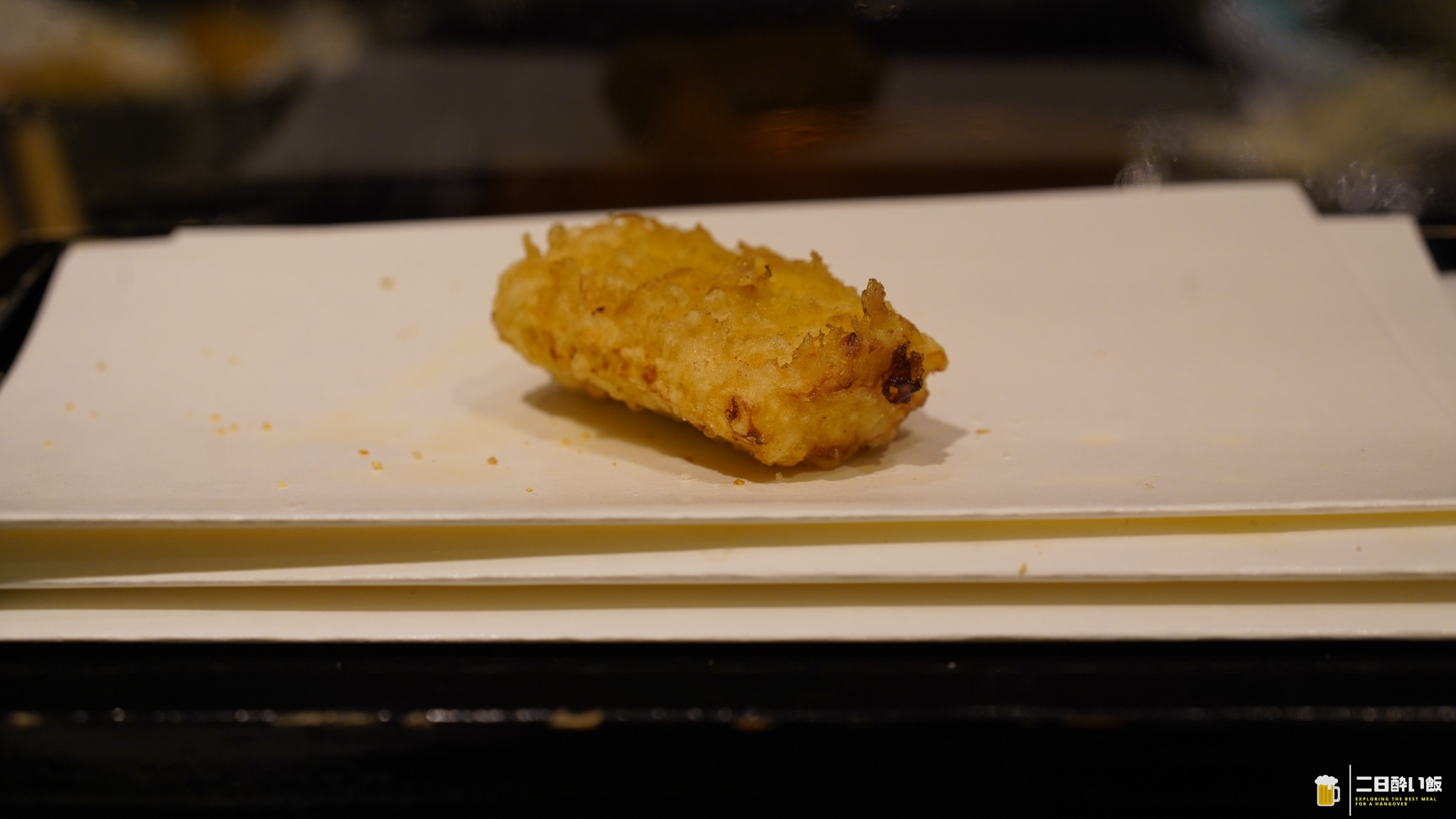
Of all things, tempura corn at this point. A piece cut off with the cob still attached. Bite it and the hot kernels pop, and sweet juice floods out. Frying takes the sweetness up a level into confectionery territory, and there is a pleasure in gnawing at it whole that is quite different from kakiage.
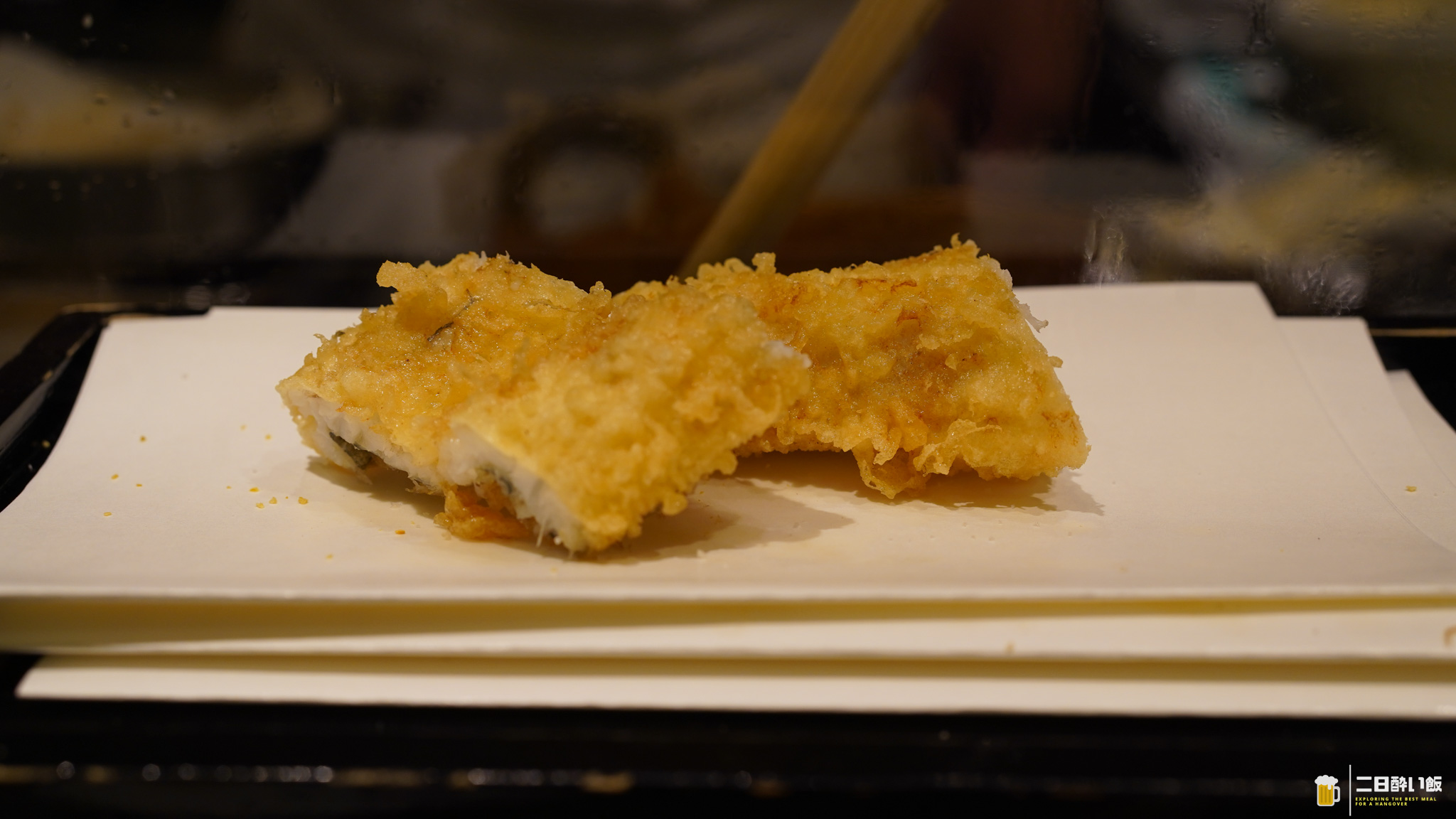
The lead of any tempura course has to be anago. This will be the one they broke down earlier. Freshly prepared, the result is a fine thing: put chopsticks to it and the coating splits with a dry crack, and pure white flesh appears with the steam. In the mouth it goes past fluffy into something that falls apart entirely. From behind the lean flesh, the refined sweetness that only anago has comes slowly after.
For the finish you get to choose between a kakiage donburi with salt, one with tare, and tencha. I asked for the salt version. My friend took the tare.

The kakiage is broken up lightly and tossed through the rice, tenbara style, which makes it a different, lighter thing from the tare tendon I usually eat. Salt draws the sweetness of the small shrimp up sharply, and the wasabi on top runs clean through your nose and washes away the last of the oil. The rice is Tentakaku from Toyama, and apparently they have even the water it is cooked in sent from there. Going back and forth between it, the miso soup and the pickles is the good part.


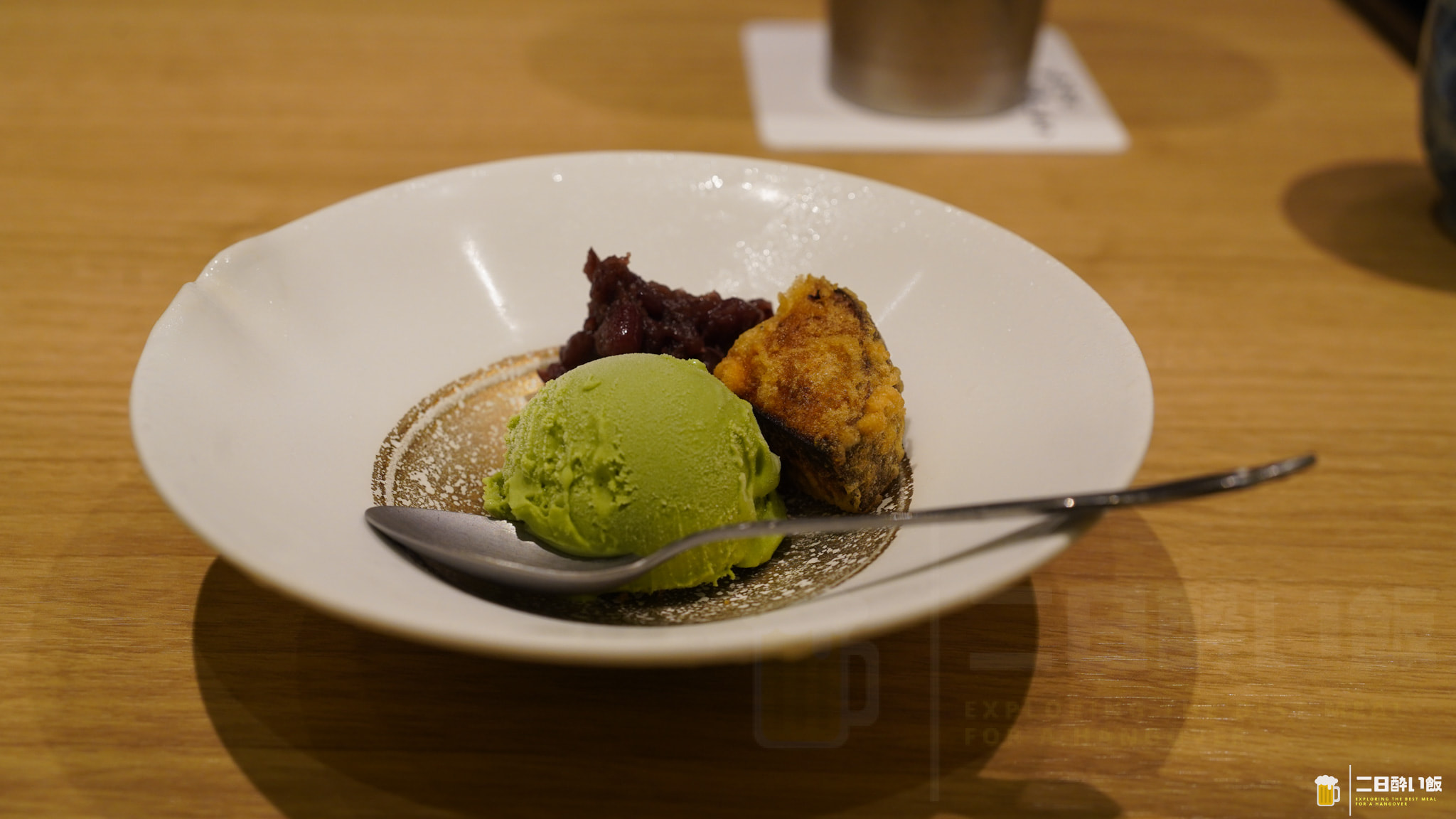
Dessert to close. Having sweet potato tempura in it is very much a tempura shop’s dessert.
So, looking back, a thoroughly satisfying course. The vegetables along the way were good too. The 25,300 yen course might be a touch grander again. Thinking it over, what makes this place formidable is the way it breaks one convention at a time. The guess-the-oil opening with two sesame oils; clear soy sauce that looks like water and tastes like soy. The folded kisu I had never seen; corn eaten off the cob; namerou from the squid tentacles. An owner who knows the forms of tempura inside out, deliberately shifting half a step off them — that playfulness is irresistible.
May you meet something good to eat today too.
Tempura Fukutarou (Tempura / Nezu Station, Sendagi Station, Todaimae Station)
Tabelog dinner rating ★★★☆☆ 3.8
I ate here and paid for it myself. Nothing on this site is a comped meal.
One more for the road?


