


A note on the words: unaju is grilled eel laid over rice in a lacquered box. Nodaya sells it by the farm the eel came from — kyosui, mirai, washo and others — and two people can order different farms and split each portion in half.
Nodaya on Tabelog (English) — opening hours, payment details and the Japanese address are kept up to date there, not here.
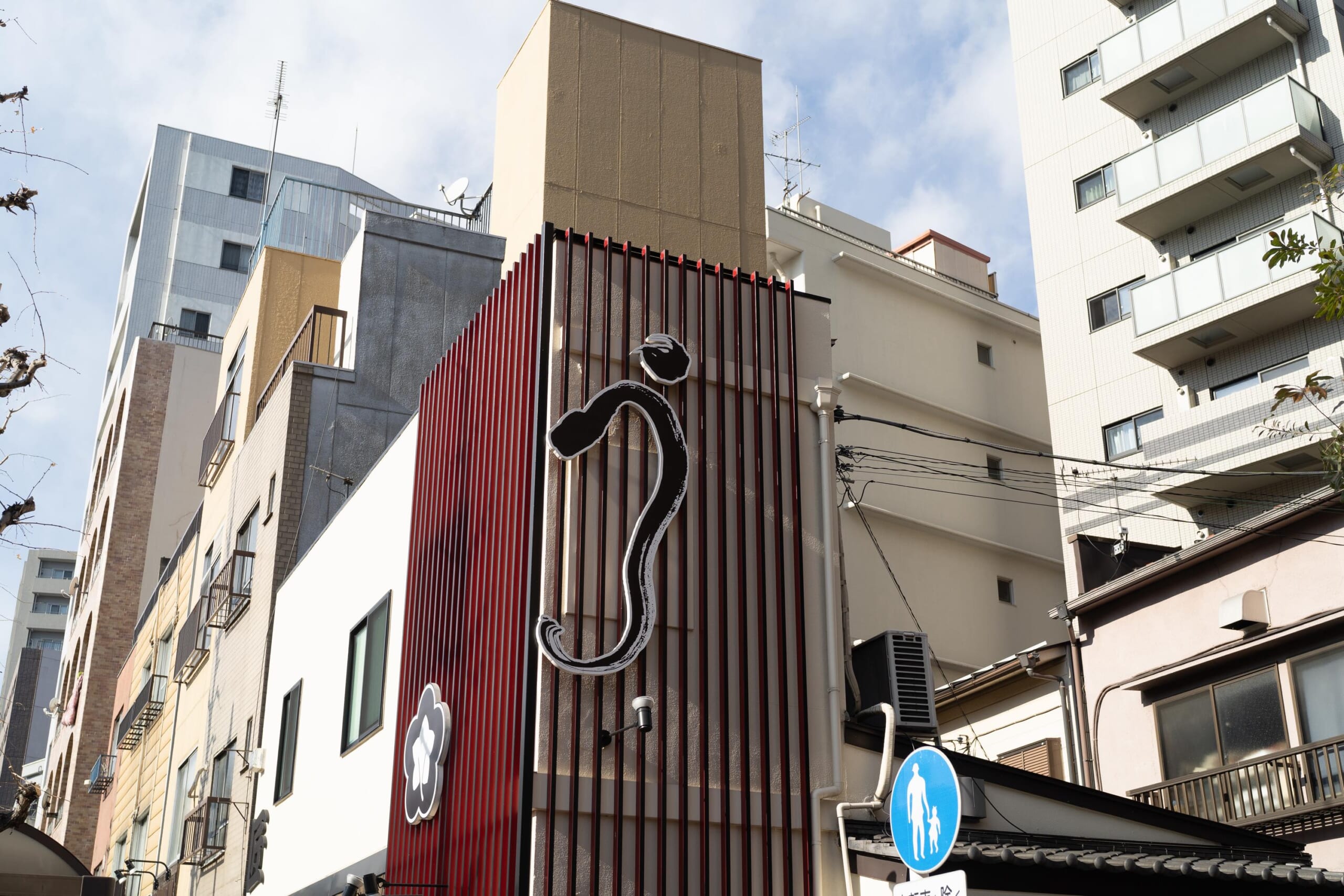
Hangover Meshi here. This time, an eel restaurant I have wanted to visit for the longest time: Iriya Kishimojin Monzen Nodaya. It is right by Iriya Station, north of Ueno. Eel really is a winter thing, so I booked and went. Very much looking forward to it. From the station, walk along the main road from the crossing just outside, and the good, fragrant smell of grilling eel reaches you almost at once. It smells wonderful.
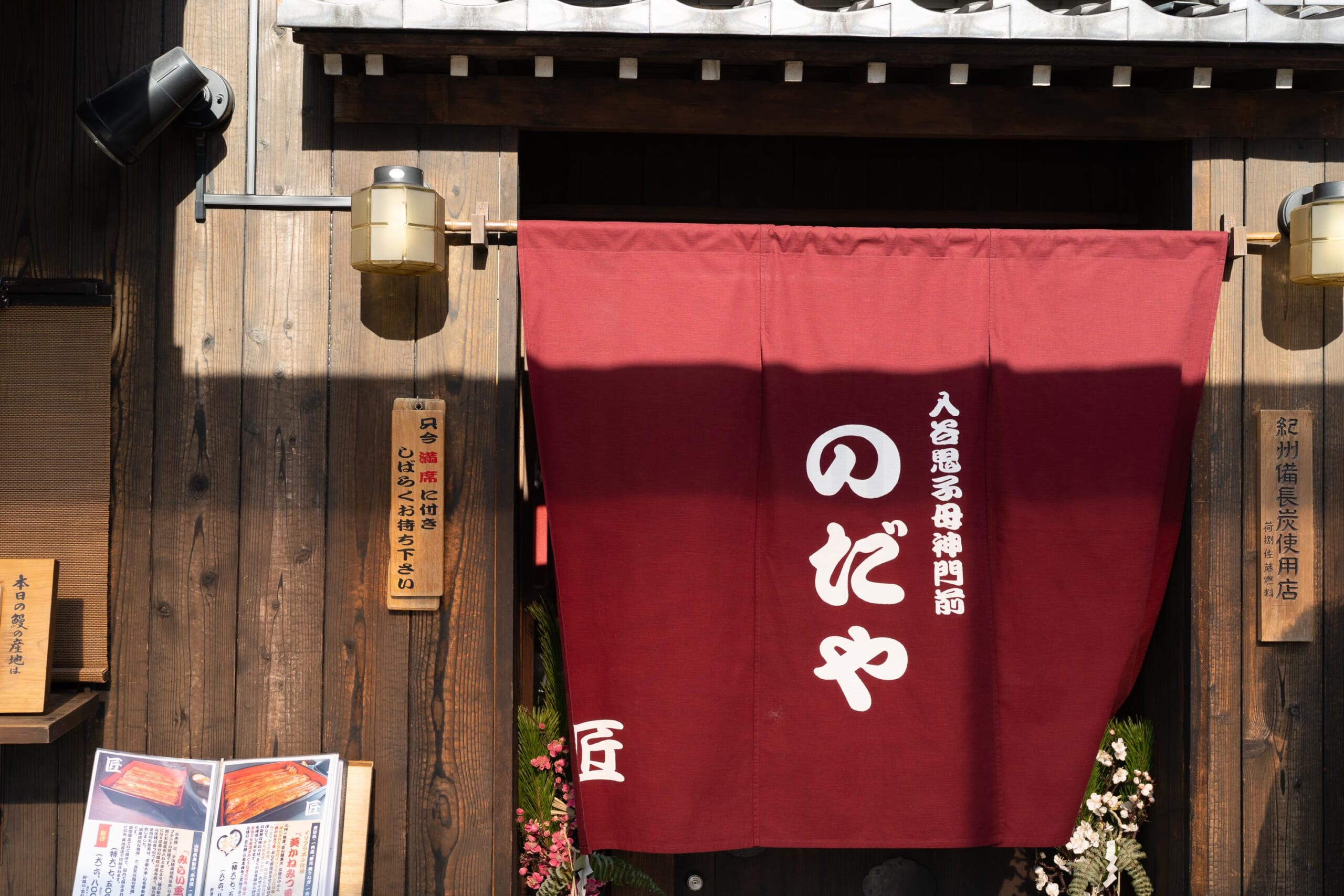
They post the day’s eel provenance and who is doing the grilling.

Washo ju, large 6,700 yen
Mirai ju, large 6,800 yen
Kyosui ju, large 7,800 yen
The eel in that day were kyosui, mirai and washo.
They mentioned you can do a half-and-half, and asking about it, the arrangement is that two people order different grades and split each in half. (Alone it may not be allowed.) I had been thinking kyosui would do, but since I was here I asked for the half-and-half with mirai. I would have liked the extra-large, but they only had large that day. A shame.
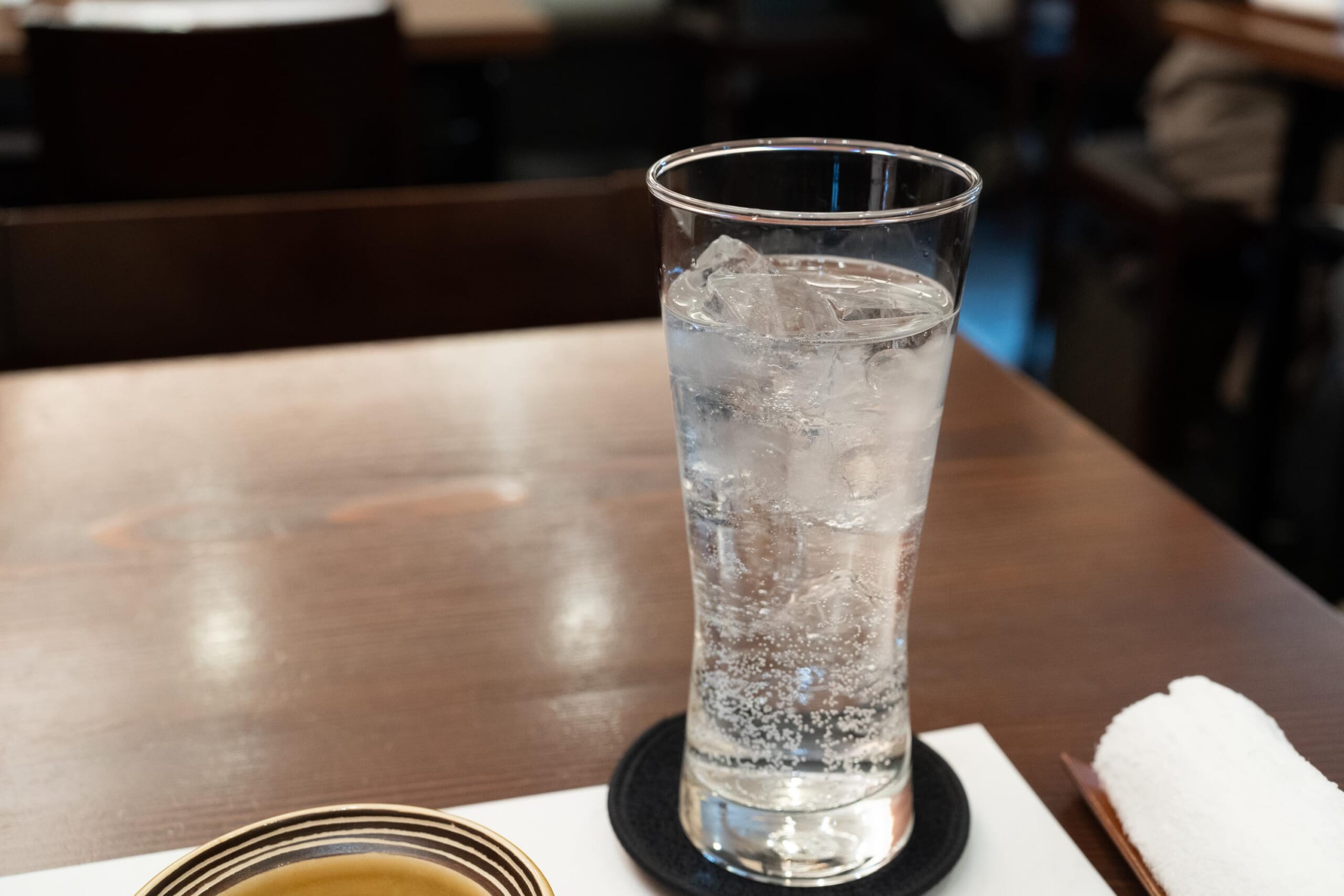
So, eel ordered, I asked for a drink and something to pick at while waiting. I ordered barley shochu with soda, and was told there is an otoshi — the small dish that comes with a drink — with a choice of crisp-fried eel bones or monkfish liver.
I went with the monkfish liver.

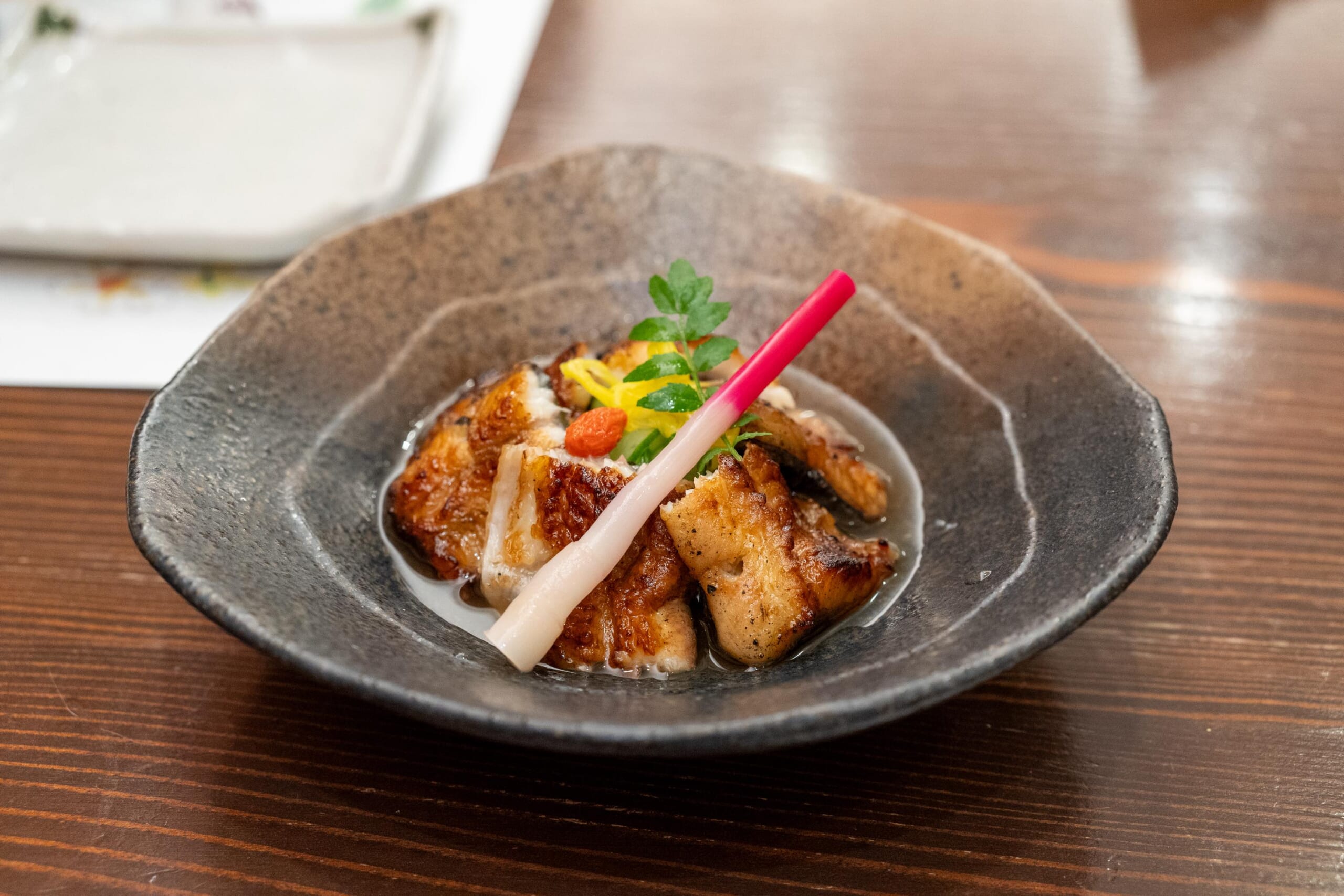
Crisply grilled eel and clean vinegar go together very well. Excellent as something to drink alongside.
I had been about to order eight pieces, but the staff gently pointed out that they are quite large, so four it was.
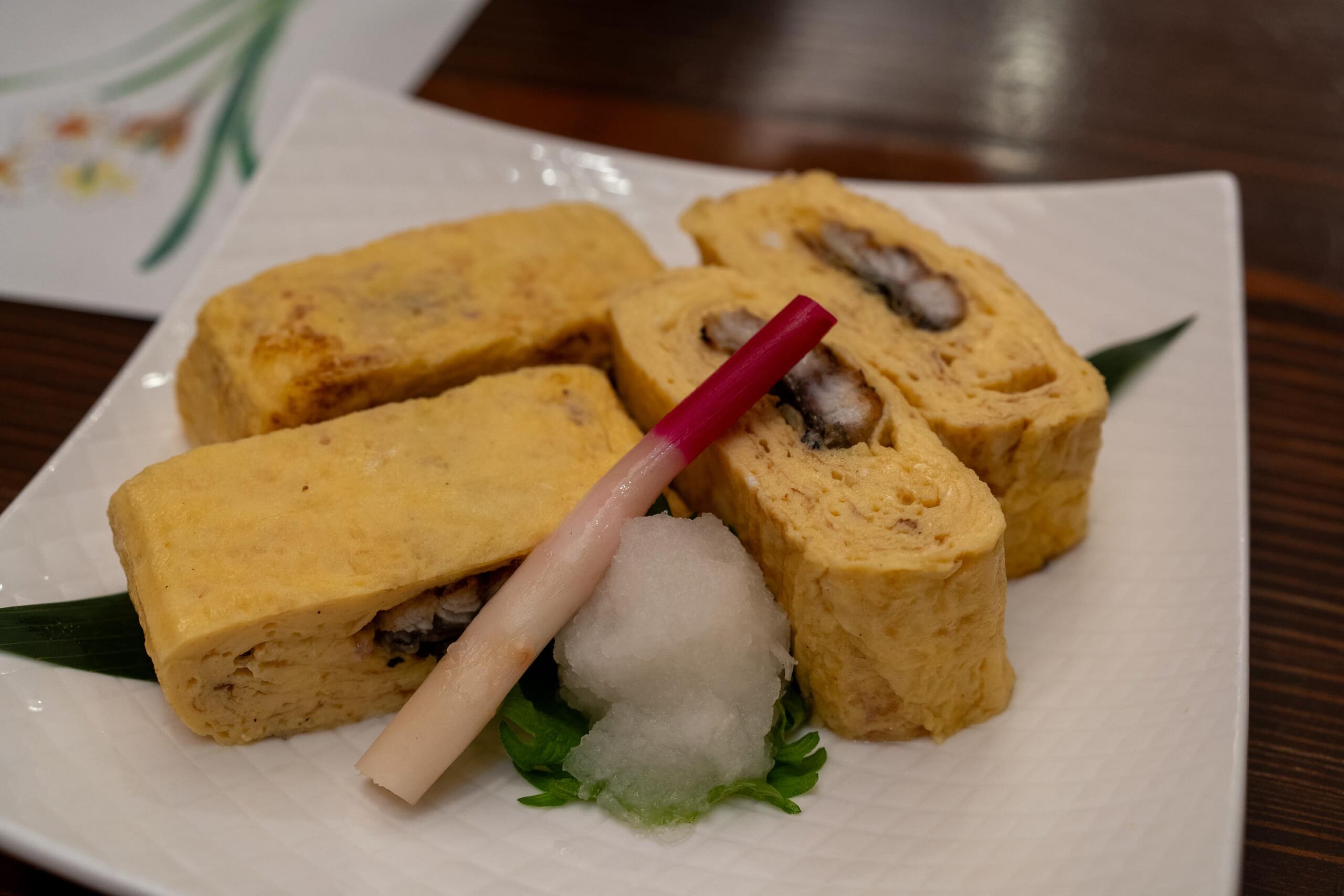
The right call. Thank you.
A big rolled omelette, with eel inside — but the dashi omelette part is quite thick and it is substantial. Four is already too much. Glad I did not go for eight.
And after drinking for a while, the unaju arrived.
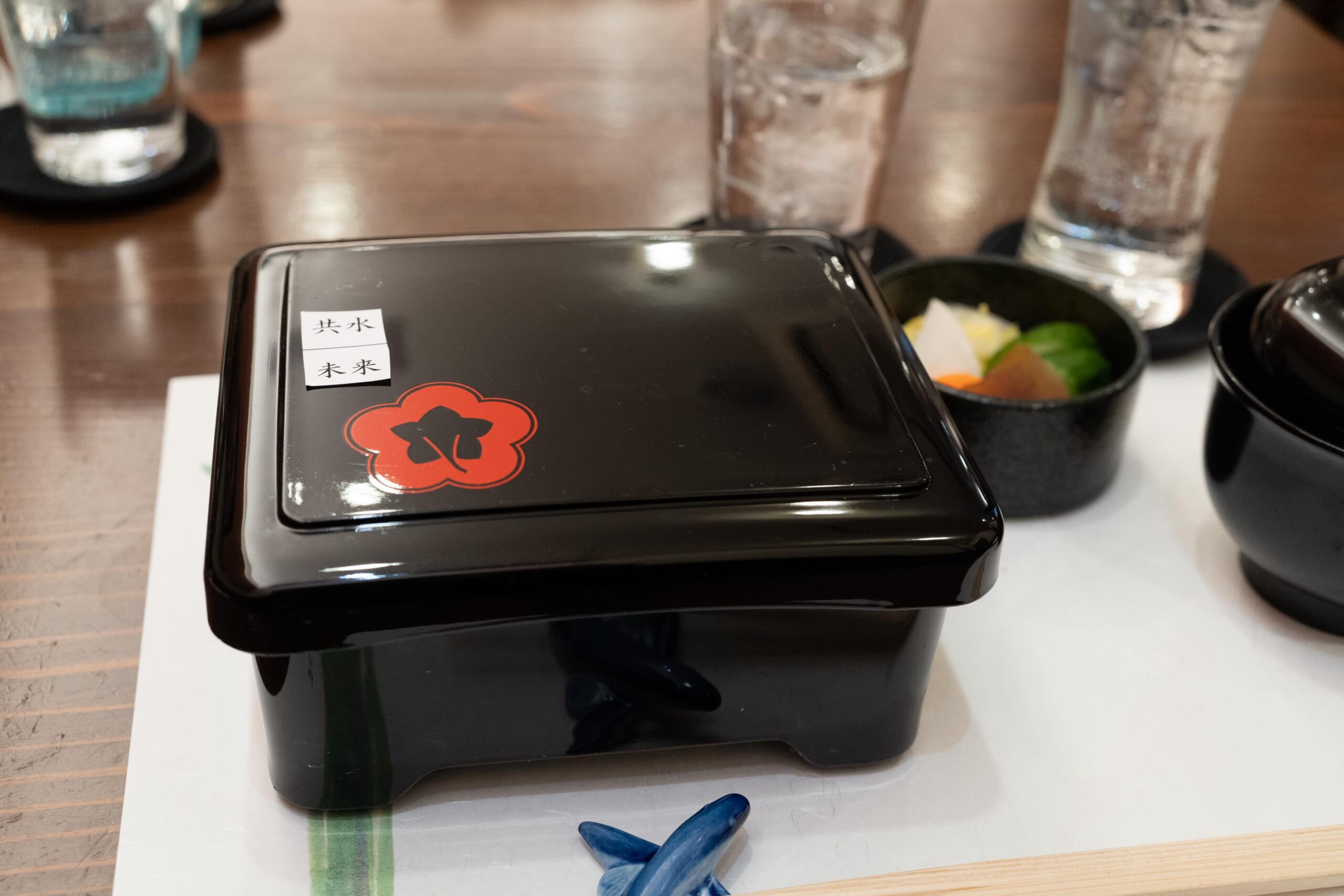
Lacquer black. Kyosui on top, mirai below. Telling you which is which on a paper slip is a very kind touch.
The fact that they have a slip printed for it suggests the half-and-half is fairly common here.
Lid off.
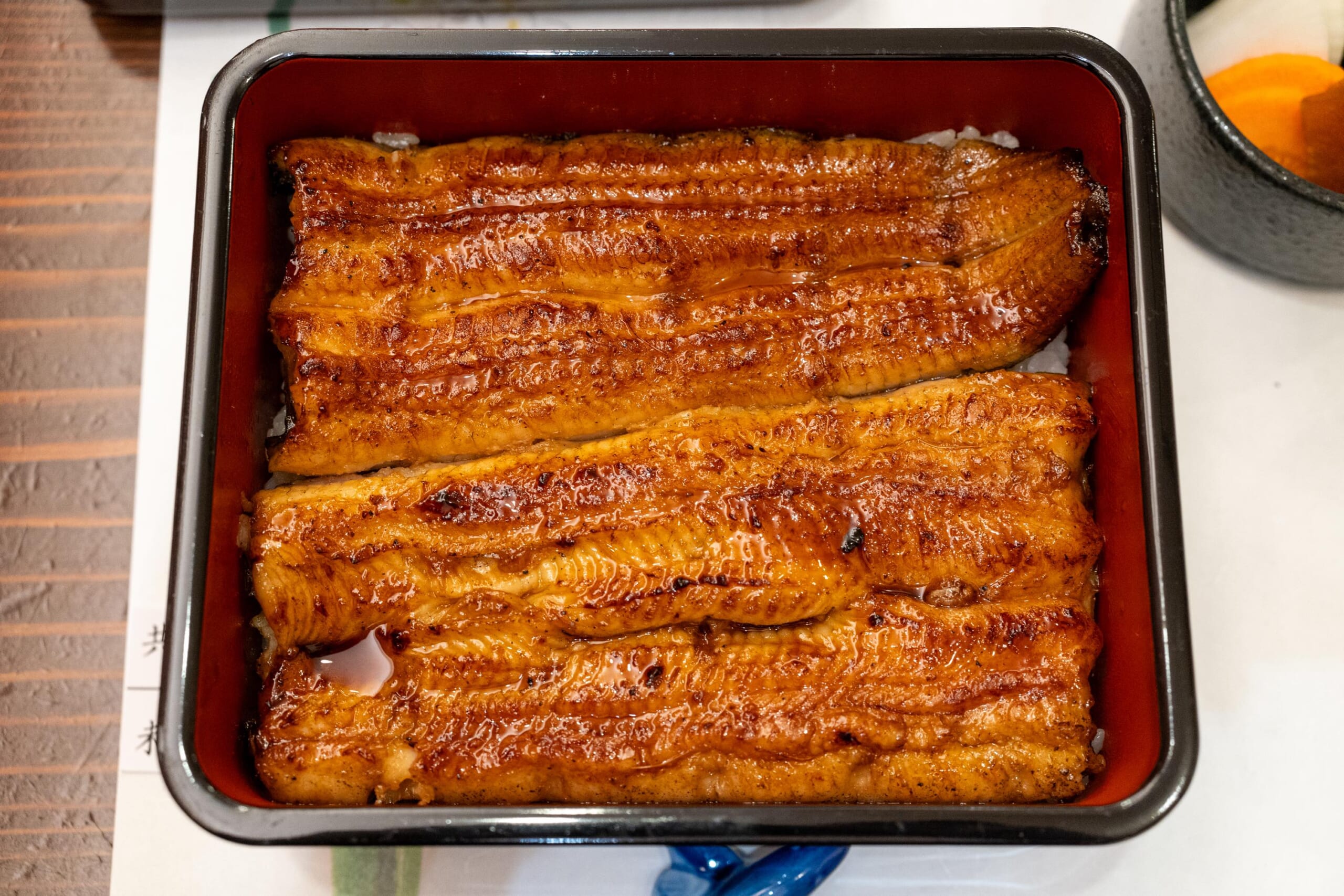
There it is.
The moment the lid comes off the smell comes up and straight through your nose.
Kyosui on top, mirai below.
The mirai below is an eel raised with lactic acid bacteria in the feed to improve absorption of nutrients. Lactic acid bacteria improving gut function — exactly like humans, then. It is said to be characterised by a light, clean texture and good-quality fat.
The kyosui above is the farmed eel said to come closest to wild — kyosui eel. It costs more, and you cannot be sure it will be there on any given day; a near-legendary eel. Kyosui is famous.
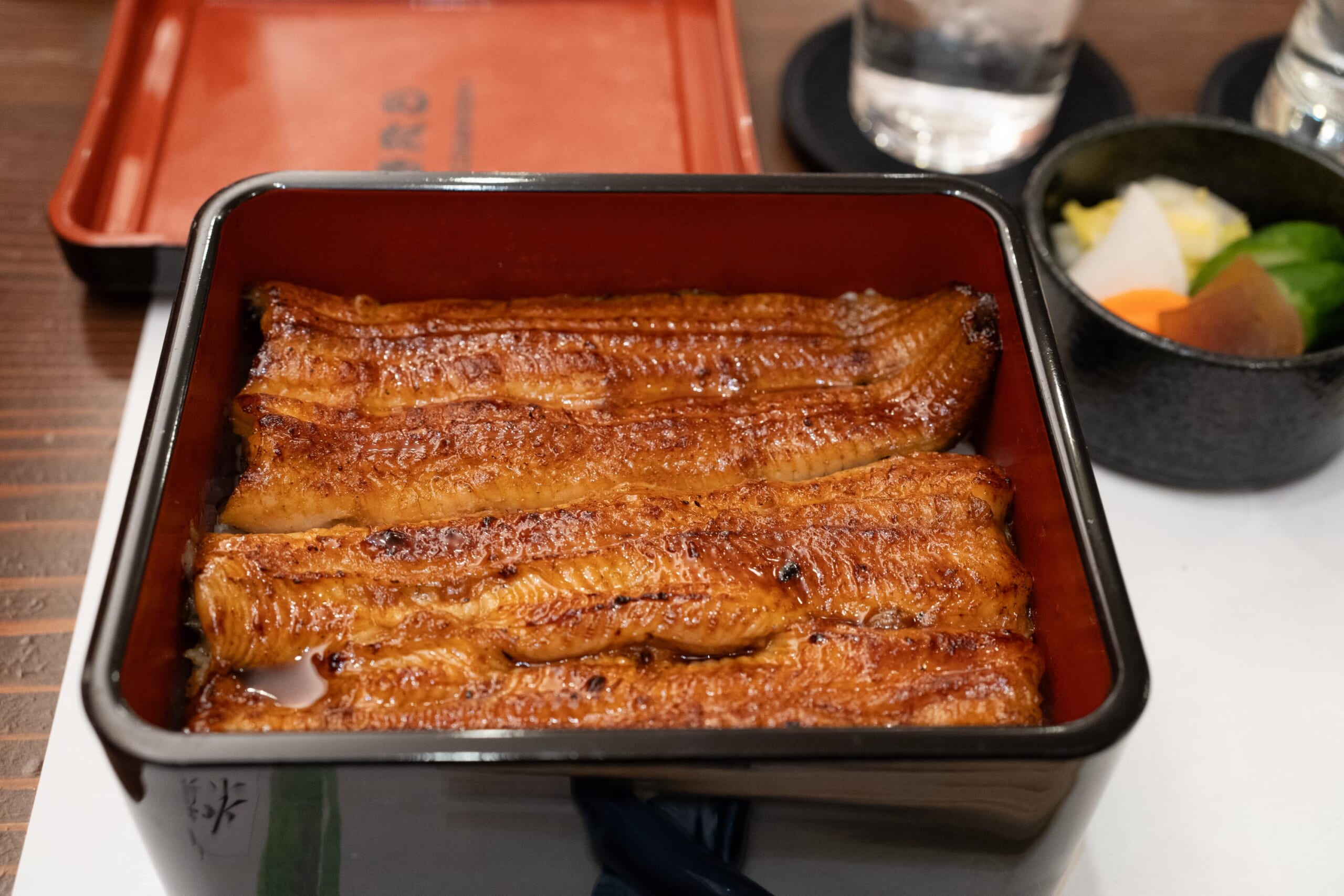
Eating each in turn, then — first the kyosui above. Very good indeed.
The eel flavour feels enormously concentrated. The plump, melting flesh brings a moment of pure contentment as it hits your mouth.
It goes well with this clean sauce too, which draws out the most from the eel and works beautifully with the rice. This is delicious.
And the mirai. Yes — this one has no off-notes, and there is a melting, refined sweetness to the fat.
It comes down to taste, but this one may feel the fattier of the two. Grilled just as plump, and very good.
If I had to say which I preferred in the end, it might be the kyosui.
Delicious.
Iriya Kishimojin Monzen Nodaya (Iriya) — menu
Unaju (current)
Prices differ by grade. Served with liver soup and pickles.
The near-legendary kyosui eel. The shop’s signature.
Jiyaki — grilled without steaming first.
Aoi Kanemitsu.
Washo eel from Miyazaki.
* The Mirai ju in this article’s title was on the a la carte unaju list when I visited in January 2025, but has since moved off a la carte and onto the omakase course.
Two people can order different grades and split each in half — a half-and-half. (Alone, they may not do it.) They have a paper liner printed for it, so this way of eating is evidently not unusual here. The eel depends on what they have bought in, so if there is a grade you are after, check when you book.
A la carte and snacks
Price as of my visit in January 2025. Crisply grilled eel and vinegar go together well.
Also as of my visit. There are eight-piece portions, but the dashi omelette is thick and four is plenty.
Comes when you order alcohol. Choose crisp-fried eel bones or monkfish liver.
About the shop
Evenings 17:30–20:00. Closes when they sell out.
If that falls on a public holiday, the following Tuesday.
03-3874-1855. The eel depends on what they have bought in, so if you are after a particular grade, check when you book.
Main house 20, annexe 5, upstairs 6. Upstairs is semi-private.
Evenings 10,000–14,999 yen (Tabelog).
VISA / Master / JCB / AMEX / Diners. PayPay accepted; other e-money not.
2-3-1 Shitaya, Taito-ku, Tokyo.
* Unaju prices are from the menu published on Hitosara; opening details from Tabelog. Uzaku and umaki are the prices at my visit in January 2025. ⚠️ Whether the published prices include tax is not clear from the source. Whether an extra-large exists, and its price, is also unconfirmed. Grades change with what they buy in, so please check the latest at the shop or by phone.
So — eel at Nodaya, a place I had wanted to visit for ages, and it was better than I had imagined. Good eel really is the thing to look forward to in winter. Being able to eat the mirai alongside the good kyosui made the half-and-half well worth doing. Next time, another grade perhaps, or the full kyosui. Plump, fragrant, and a moment of contentment the instant it reaches your mouth. If you want an unaju that stays in the memory, where tradition and invention meet, come here.
Iriya Kishimojin Monzen Nodaya (unagi / Iriya Station, Uguisudani Station, Ueno Station)
Tabelog lunch rating ★★★☆☆ 3.7
I ate here and paid for it myself. Nothing on this site is a comped meal.
One more for the road?


