


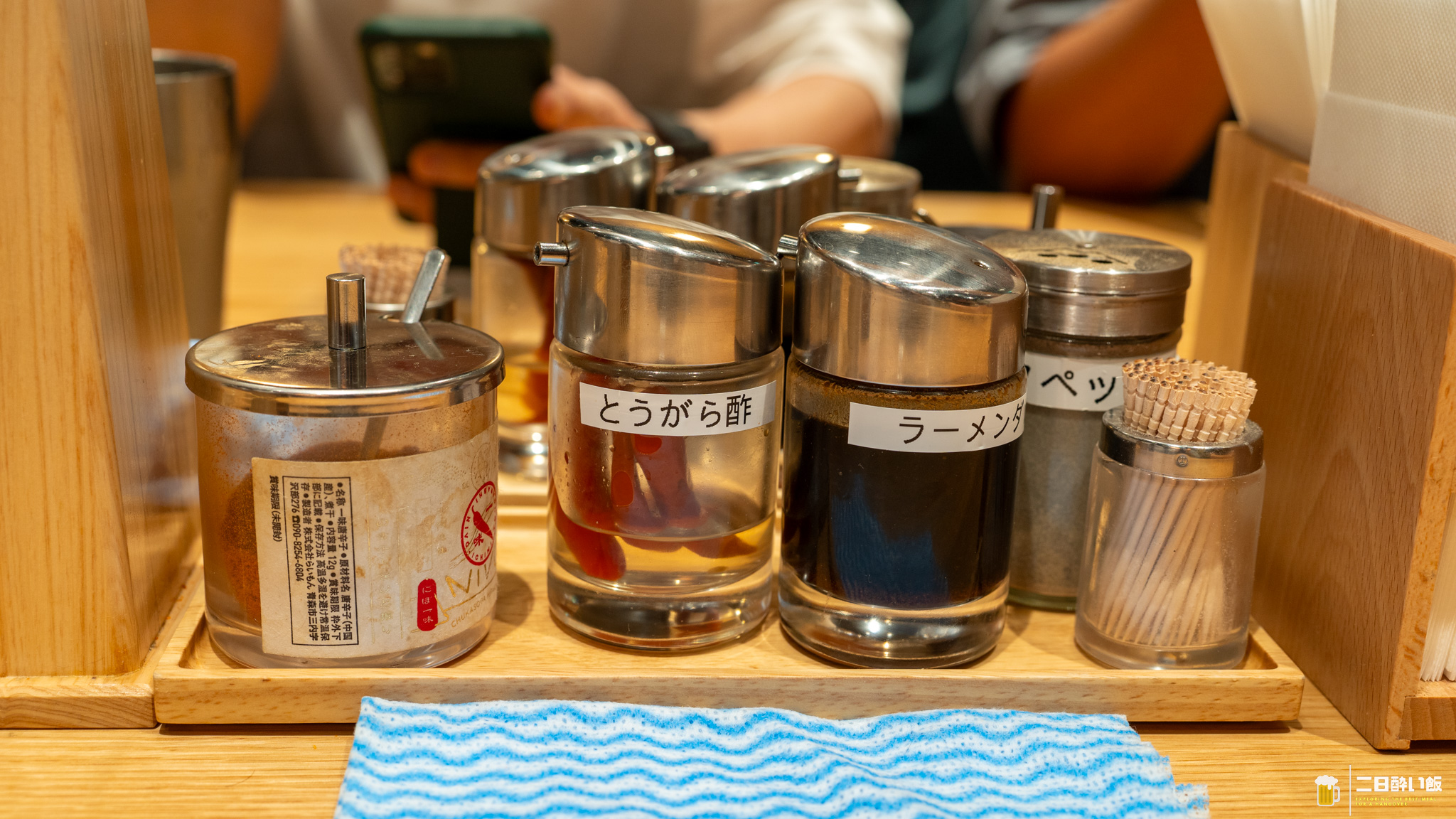
A note on the words: niboshi are small dried sardines used for ramen stock; here, four kinds centered on hirako niboshi (a type of flat dried sardine) are simmered in three stages for the rich koikuchi broth. The toku (“special”) bowl comes with three styles of chashu (pork toppings), including low-temperature pork belly you sink into the hot soup to make on-cha (“warmed chashu”), plus knotted menma (bamboo shoots simmered in niboshi stock), aosa (green sea lettuce) and a rich glazed egg, koku teri tamago. On the counter: nibo ichimi (chili powder blended with niboshi) and togarashi-zu (chili vinegar) for changing the flavor midway.
Tsugaru Niboshi Hirako Ya on Tabelog (English) — opening hours, payment details and the Japanese address are kept up to date there, not here.
Ramen lovers everywhere, thank you for waiting! It is time for Hangover Meshi (meshi means meal)!
Tokyo Station has so many well-known spots! Thinking I might start exploring them a little, the first place I picked was “Tsugaru Niboshi Hirako Ya”! I had been wanting to try the niboshi (dried sardine) soup here.
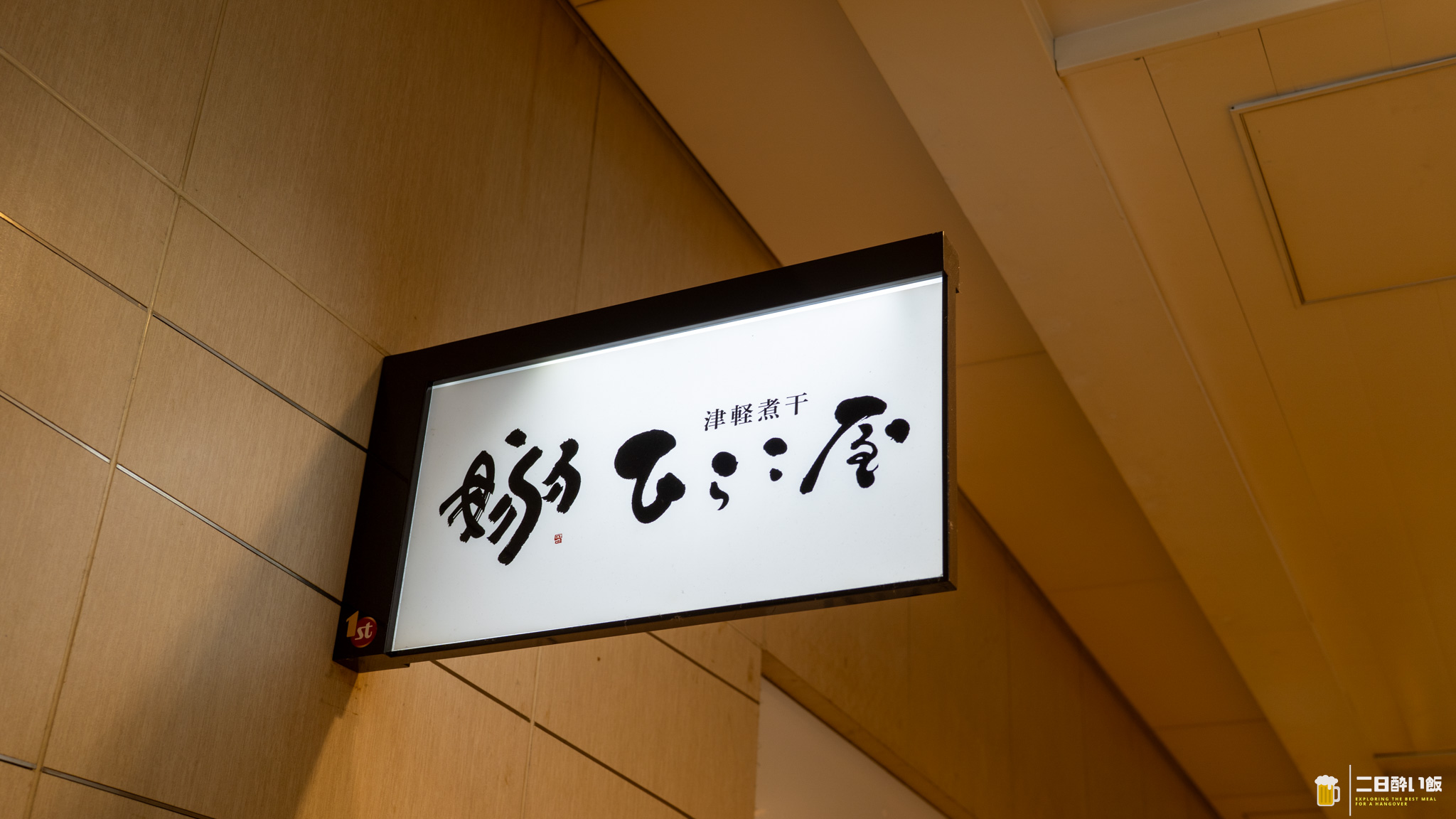
Hirakoya, a well-known niboshi ramen shop founded in Aomori in 2005, reportedly ran a limited-time pop-up on Tokyo Ramen Street in 2022 that drew huge lines, and then opened a permanent shop as ‘Tsugaru Niboshi Hirako Ya’ on B1F of Tokyo Station First Avenue (Ichibangai) in August 2025. It is famous for a soup simmered in three stages from four kinds of niboshi, centered on hirako niboshi (a large flat sardine). Apparently there is a huge line every single day.
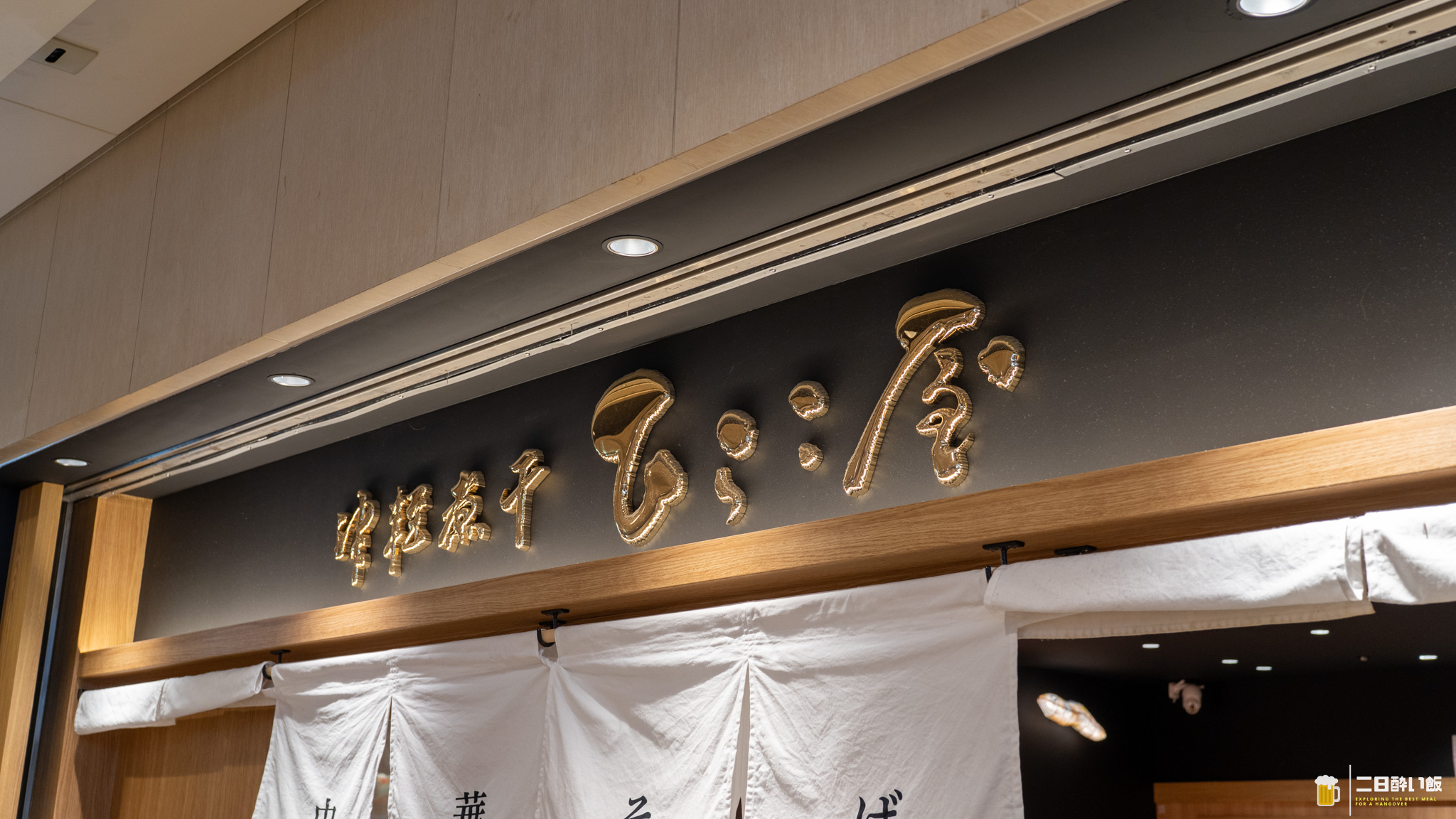
Still, I know a thing or two!
At ramen shops, you can surprisingly slip right in around 18:00 to 20:00. Probably.
So I headed over to Tokyo Station, and sure enough, it looked like I could walk right in! You buy a meal ticket first and then join the line, and as you would expect at Tokyo Station, the ticket machine takes transit IC cards too, which is handy.
Now then, once you take your seat, it has to be this first, right!
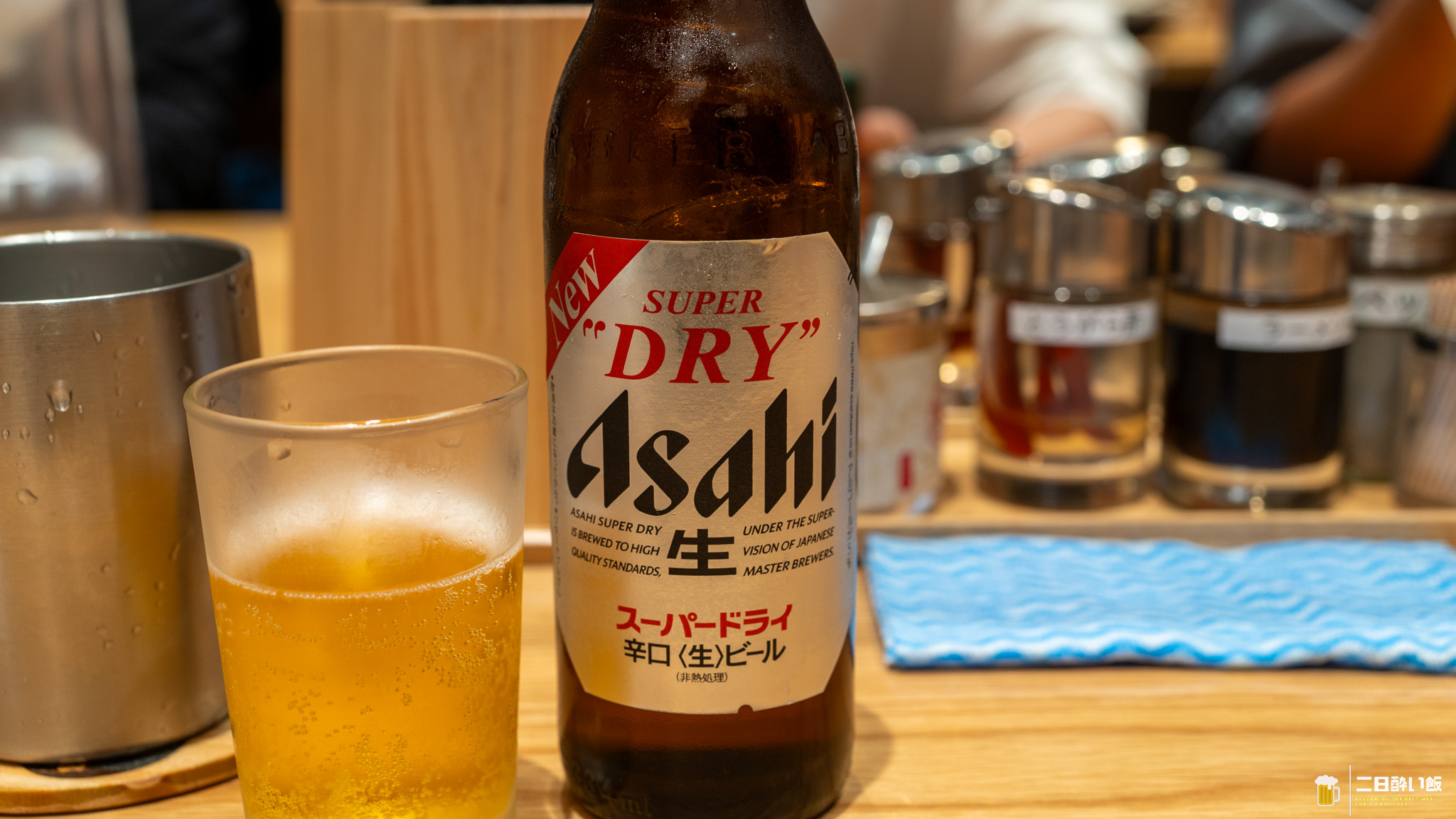
As always, a beer!!
Ahhhhh, that is good!
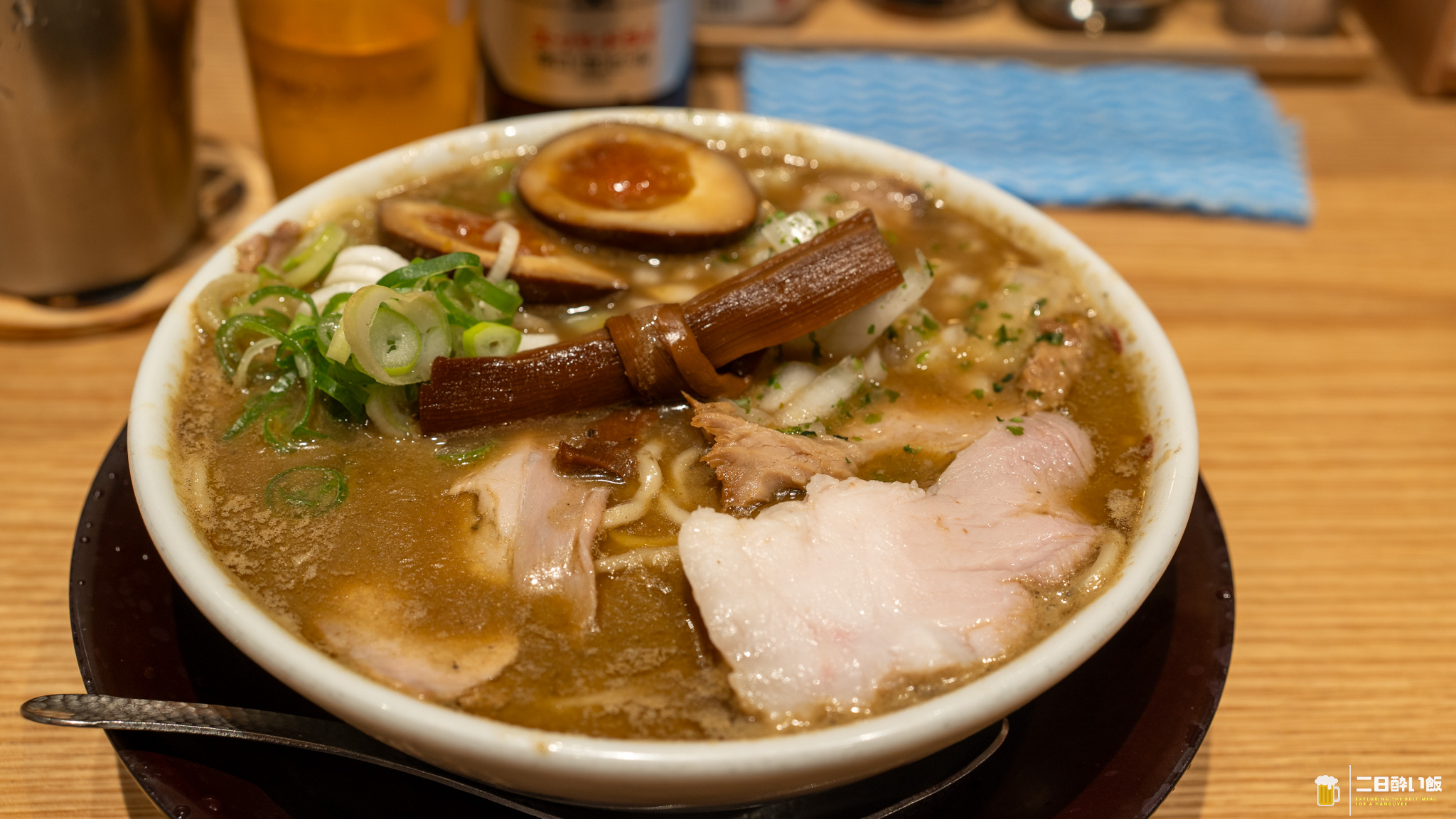
After a short wait, the ramen arrived!
Oh… the soup is super rich, ha.
First, a spoonful from the ladle. The aroma of niboshi bursts right up through the nose, and right after it a deep savory flavor settles heavily on the tongue. The saltiness is firmly on the strong side, and yet for all that richness it goes down effortlessly, which is the strange thing about it. So this is the much-talked-about soup simmered in three stages from four kinds of niboshi centered on hirako niboshi.
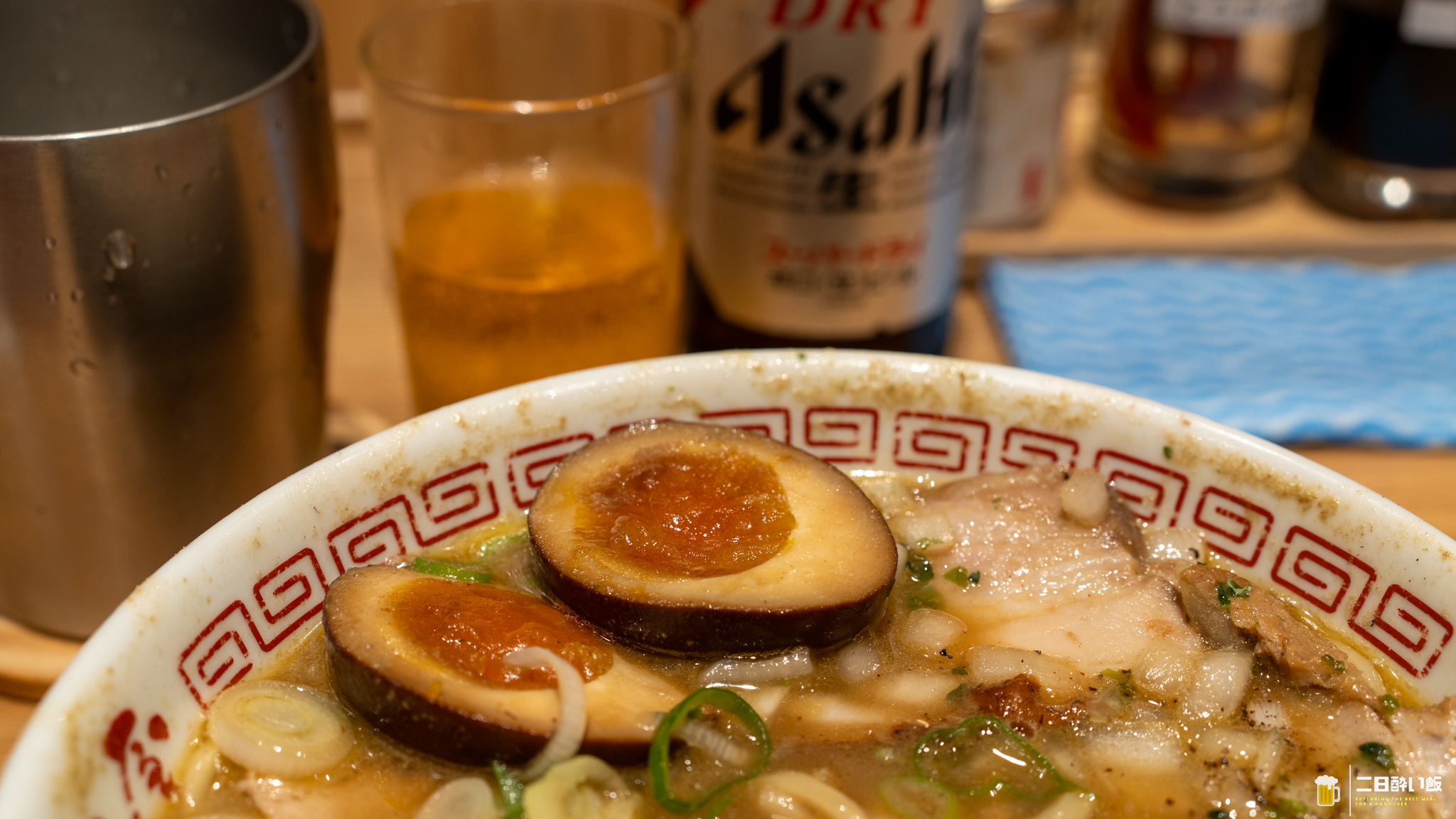
So this is Tsugaru’s rich niboshi!
The treat of the “Toku” (special) version is the three kinds of chashu (pork): one with a gentle waft of smoke, a thick slice of braised pork that falls apart, and low-temperature-cooked pork belly. Sink the belly into the soup to warm it — “on-cha” — and the fat melts out and grows sweeter. The “koku teri tamago” (rich glazed egg) has a thick, rich yolk. The crisp snap of the knotted menma (seasoned bamboo shoots) simmered in niboshi stock and the crisp bite of the chopped raw onion make great accents. The aroma of the aosa seaweed blends right in with the niboshi flavor too.
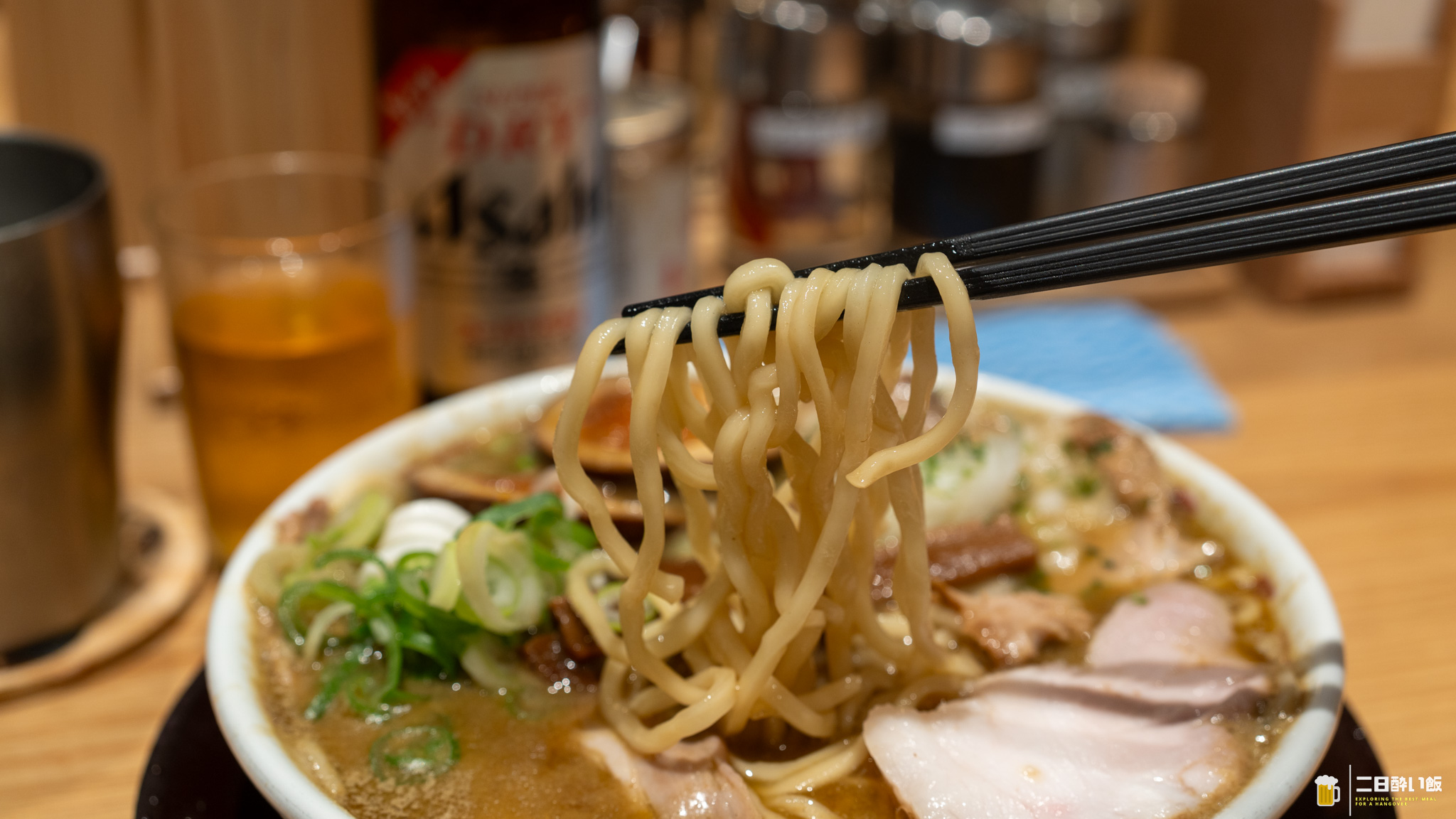
The noodles are medium-thick, hand-rubbed (temomi) and straight. Boiled just firm enough to keep a little bite, they have a chewy texture that lets the sweetness of the wheat spread gently as you chew. They carry plenty of that rich soup right into your mouth, so you can taste the deep niboshi flavor the whole way through.
Halfway through, it is time to change up the flavor!
My recommendation is to layer on more heat and niboshi with the tabletop nibo ichimi (niboshi chili powder), add some punch with black pepper, and then, once you are down to the last bit, pour in a big splash of togarashi-zu (chili vinegar) to finish crisp and refreshing. Just be warned: doing this makes the soup so easy to drink at the end that unless you use willpower to stop yourself, you will keep drinking it without end, ha.
Man, every bit as rich and delicious as rumored! That was so good!!!
Being able to taste this at Tokyo Station without going all the way to Aomori is something to be grateful for! The Toku Koikuchi Niboshi (special rich niboshi) has bold aroma, savory depth and saltiness all at once, and with three kinds of chashu plus knotted menma to enjoy, it is a deeply satisfying bowl. The tabletop condiments are well stocked too, so you never tire of it down to the last drop. Because the saltiness packs a punch, it goes wonderfully with a bottle of beer. Apparently the lines are huge at lunch, so early evening is the time to aim for!
Here is hoping I run into more good food today!
Tsugaru Niboshi Hirako Ya Menu
Koikuchi Niboshi (Rich Niboshi)
The signature rich soup, simmered in three stages from four kinds of niboshi centered on hirako niboshi.
Smoked chashu, thick-cut braised pork, low-temperature pork belly chashu, rich glazed egg (koku teri tamago), knotted menma, chopped onion, aosa seaweed and more
Assari Niboshi (Light Niboshi)
Nihachiboshi (8:2 Light-Rich Blend)
An 8:2 blend of light (assari) and rich (koikuchi). Available with or without pork backfat (seabura).
Spicy Niboshi & Maze-Nibo (Soupless Niboshi Noodles)
Rice set exclusively for the Spicy Niboshi Soba
Includes free finishing rice (oi-meshi) / no large noodle portion
Toppings
Rice dishes
The shop recommends pouring the leftover soup over it like rice porridge (zosui)
Drinks
*From the ticket machine and storefront sign at the time of our September 2026 visit. Prices include tax; limited items may sell out or rotate. Buy your meal ticket first before joining the line. Please check at the shop for the latest details.
Tsugaru Niboshi Hirako Ya (Ramen / Tokyo Station, Kyobashi Station, Nijubashimae Station)
Tabelog dinner rating ★★★☆☆ 3.7
I ate here and paid for it myself. Nothing on this site is a comped meal.
One more for the road?


