


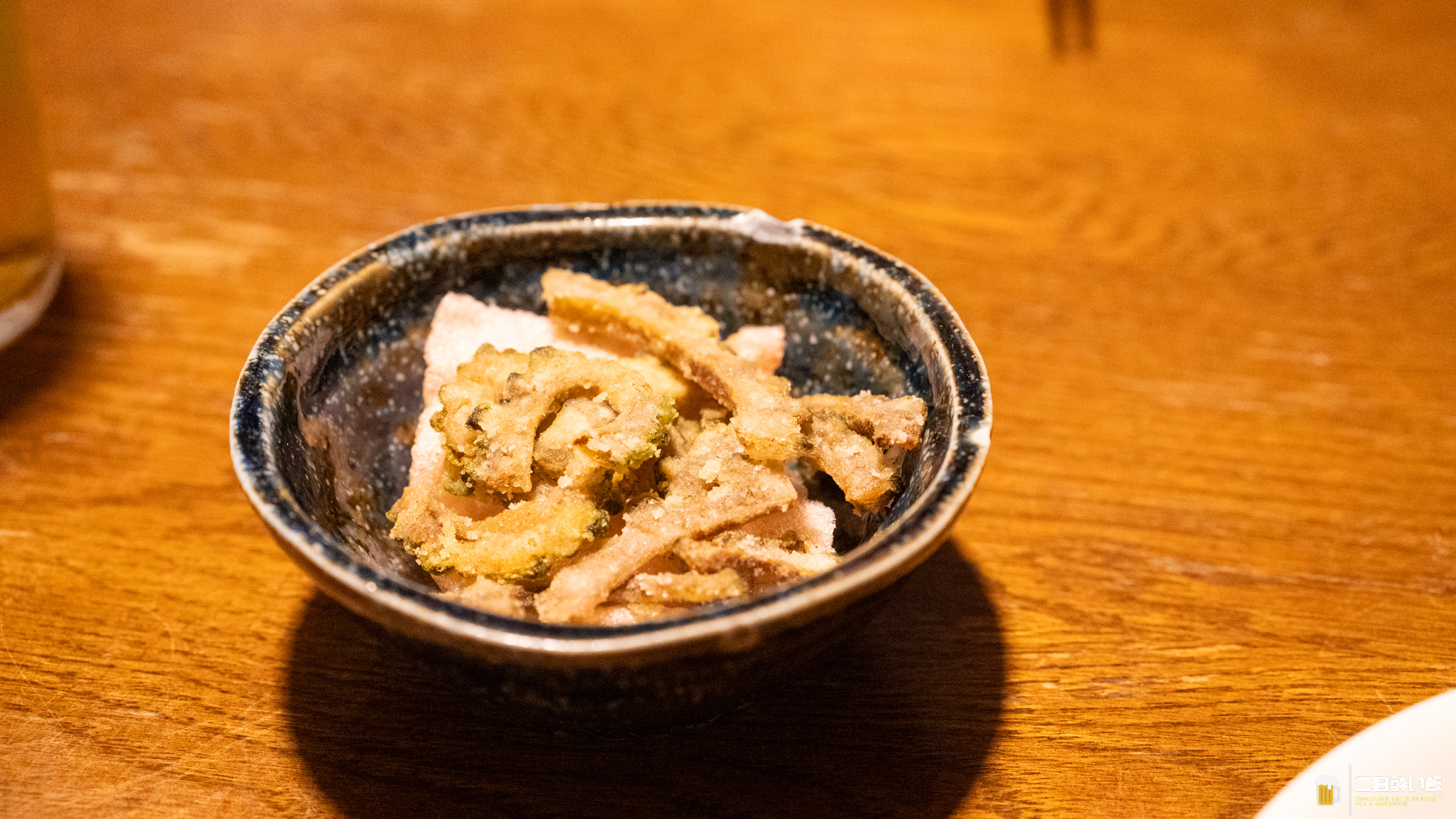
A note on the words: Aochu is the shochu of Aogashima, where many bottles reportedly carry the name of the toji (master brewer) who made them. Kusaya is a Hachijojima specialty of dried fish (here muroaji, mackerel scad), famous for its strong fermented smell. Ashitaba is a leafy green of the Izu Islands with a slight bitterness. Kame-no-te are goose barnacles, eaten by snapping off the shell to reach the small piece of meat. Muro menchi katsu is a fried cutlet of minced mackerel scad, and otoshi is the small dish served at the start of an izakaya meal, here bitter melon (goya) chips.
Aogashima Ya on Tabelog (English) — opening hours, payment details and the Japanese address are kept up to date there, not here.
To all you island lovers out there, thanks for waiting! It’s time for Hangover Meshi!
This time, I headed to “Aogashima Ya,” a spot in Shinjuku where you can eat the food of Aogashima island!
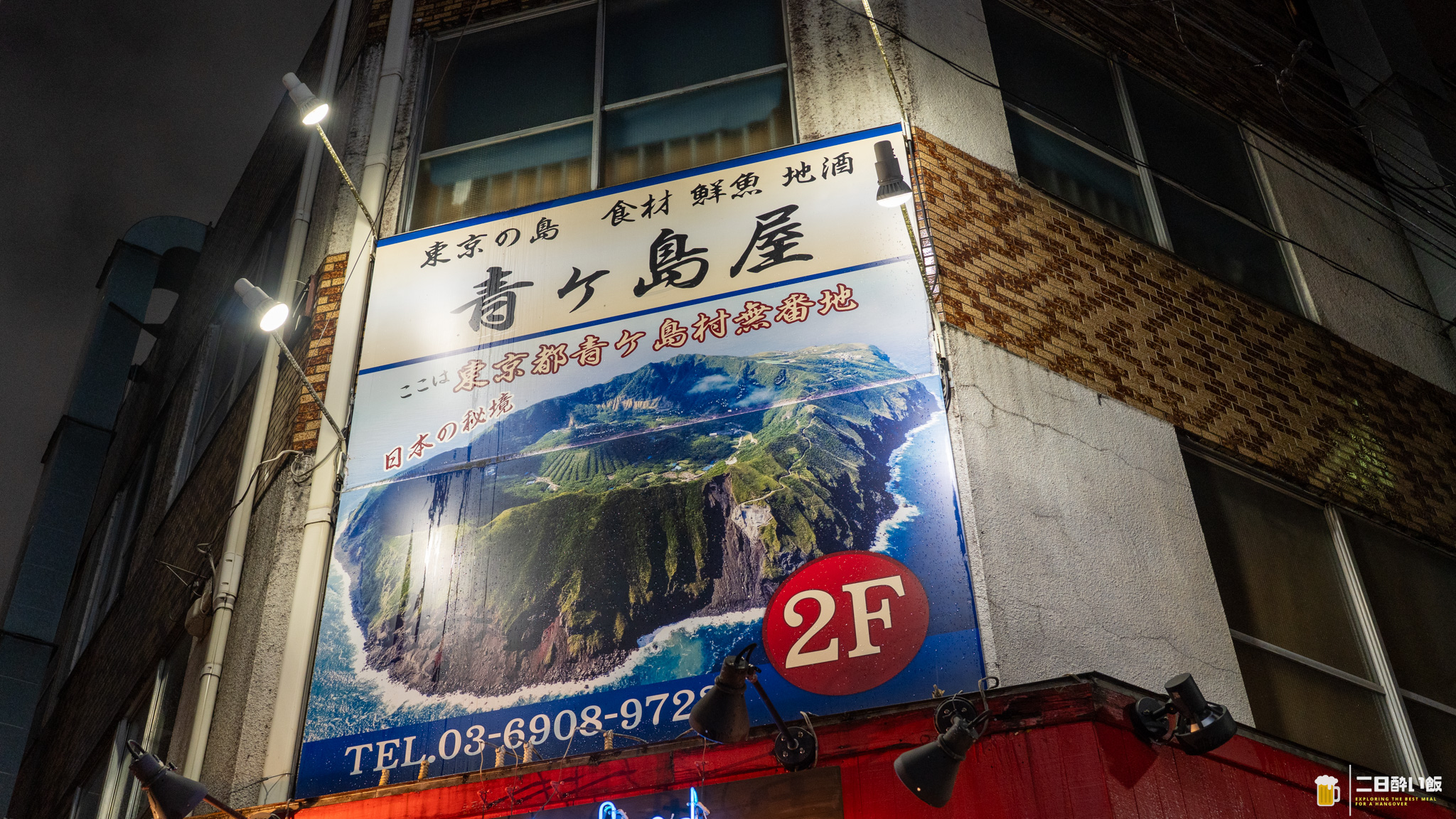
It’s on the second floor of the Toho Kanko Building in Nishi-Shinjuku. You can see the sign on the wall but can’t find the entrance, and you only finally get there after climbing steep stairs and heading all the way to the back of the corridor, ha.
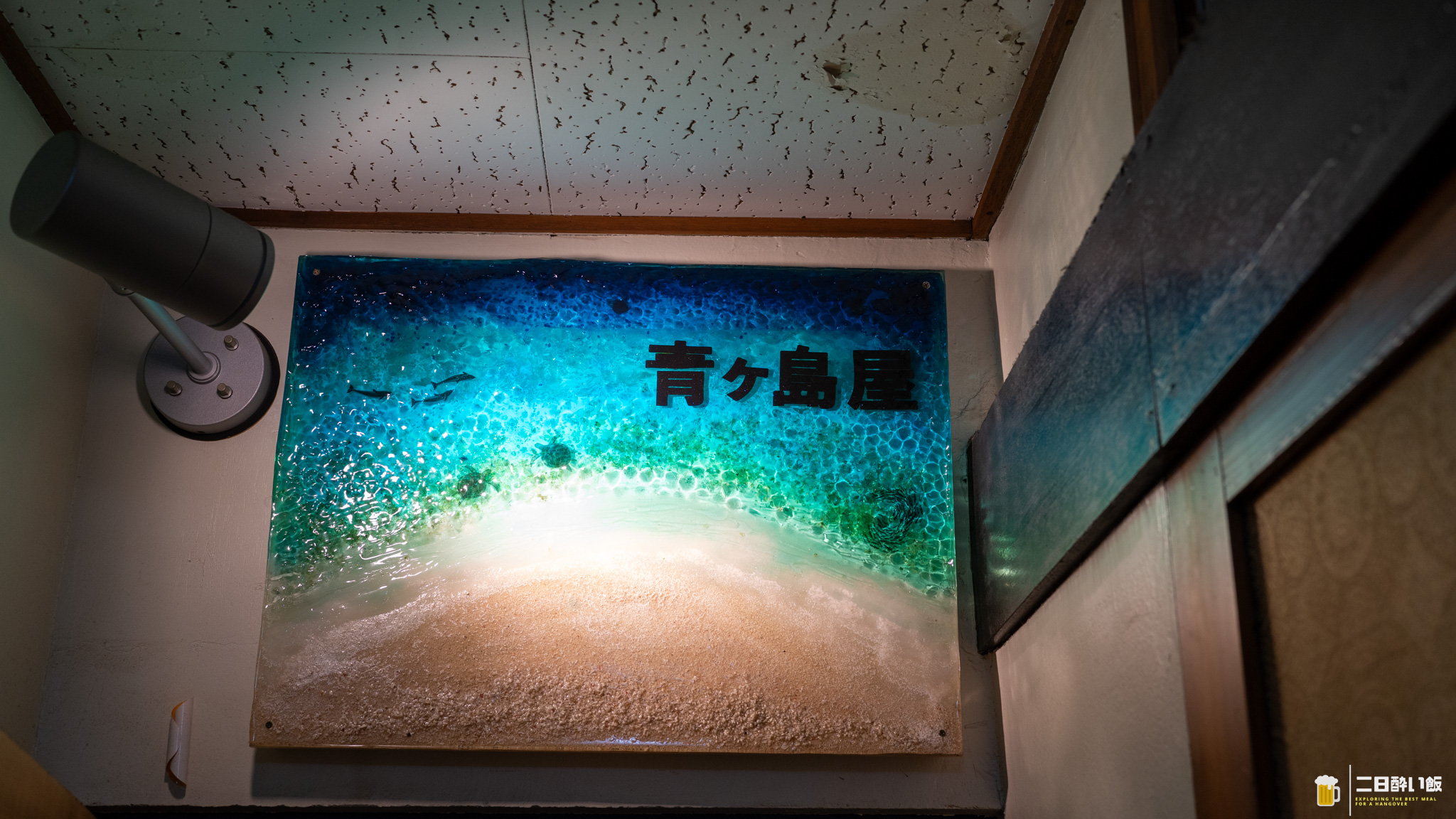
Aogashima has a population of around 160 people. I go as far as Hachijojima every now and then myself, but Aogashima is an island you can’t reach without taking an additional helicopter or boat from there! It is said to be the only restaurant in Tokyo serving its local food, and apparently an owner from the island has been running it since 2014. You can enjoy fish and vegetables not only from Aogashima, but also from Hachijojima, Kozushima, Miyakejima, and even Ogasawara — the Izu Islands!
To top it all off, you can even drink the ‘phantom’ shochu, Aochu! I was looking forward to this way too much.
This time, I was shown to a spot at the back that felt like a semi-private room.
Looking at the menu, let’s go ahead and order whatever we want to eat, one dish after another!
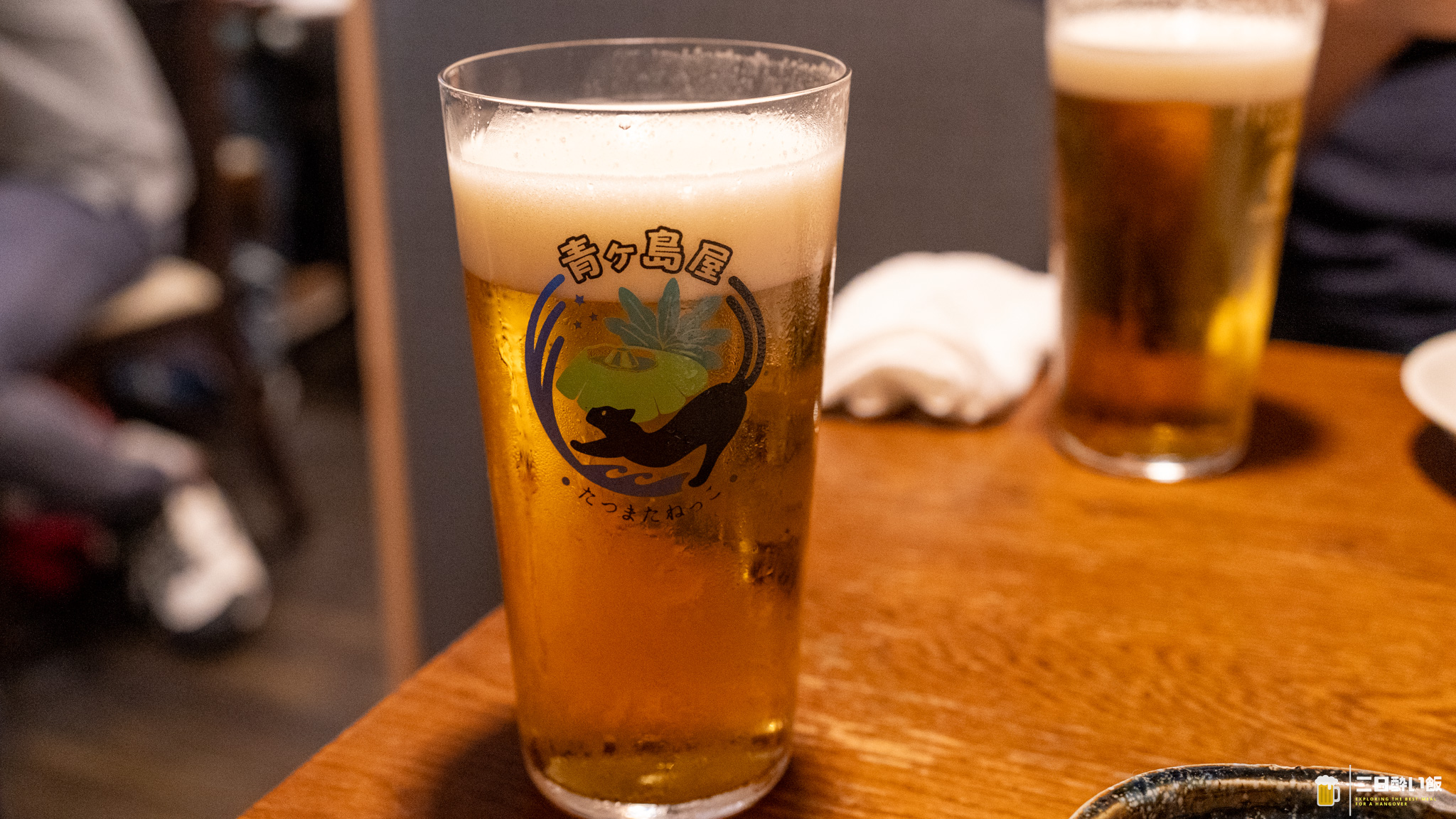
First, let’s start with a beer!!!
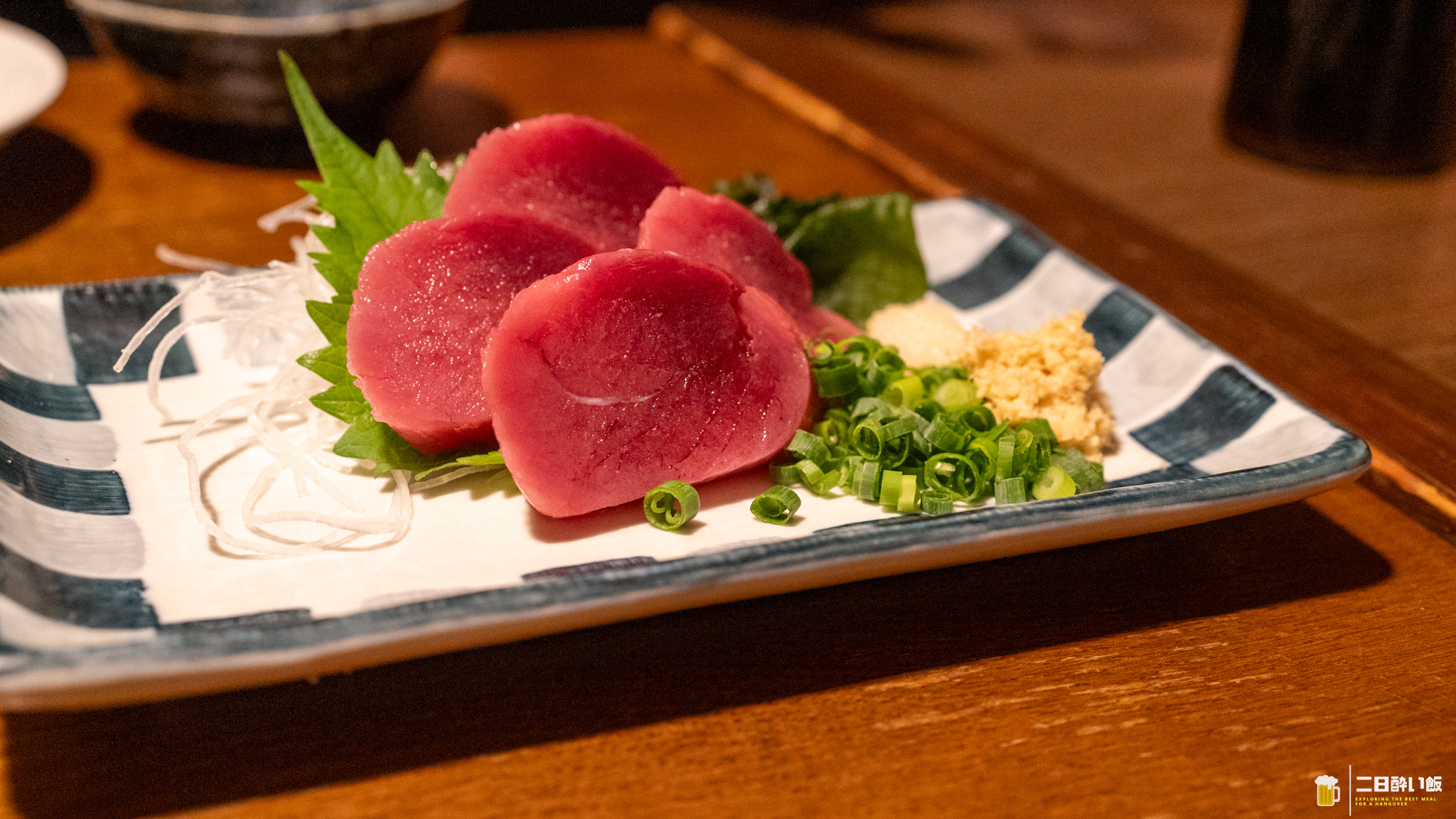
Sea turtle sashimi! Turtle eaten raw?? ha ha ha. There’s a bit of hesitation, but this is something I’ve never seen before! In fact, I’ve never even seen it at restaurants on Hachijojima. Apparently it is frozen on purpose, and they told us to thaw it in the soy sauce as we eat.
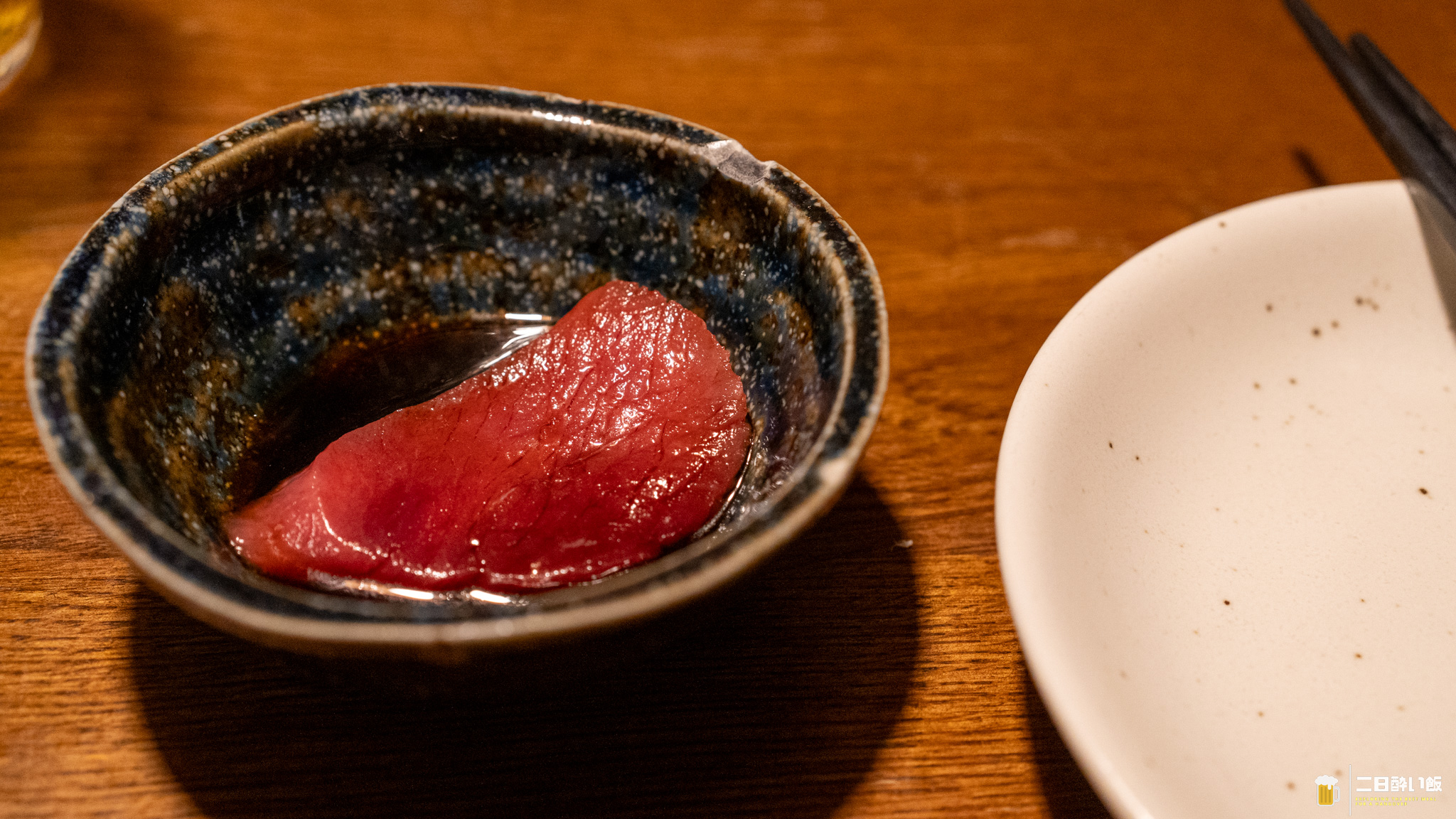
Taking the plunge and trying a bite, the fibers come apart with a springy chew, and what lingers afterward is only a light, clean umami. Almost no smell or off-flavor comes through at all. It might be closer to basashi (horse sashimi) than tuna? Garlic and ginger are served alongside it, and when you eat them together, it feels even more like basashi, ha.
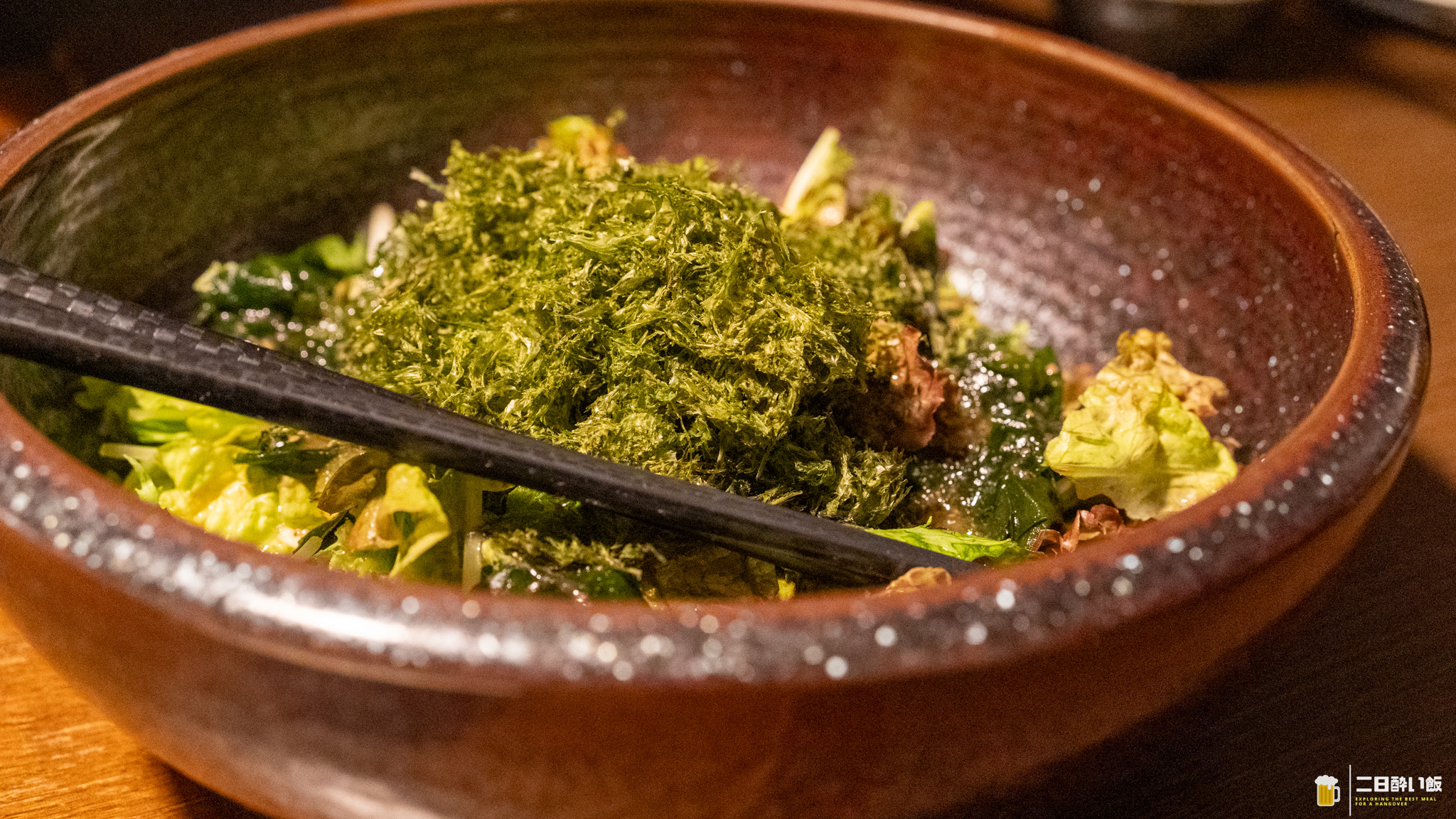
They told us to mix it all up thoroughly before eating! When you mix it, the aroma of nori gently wafts up, smelling delicious. The sticky nori clings to the crisp bite of the leaves, and the more you chew, the more the sea saltiness seeps out.
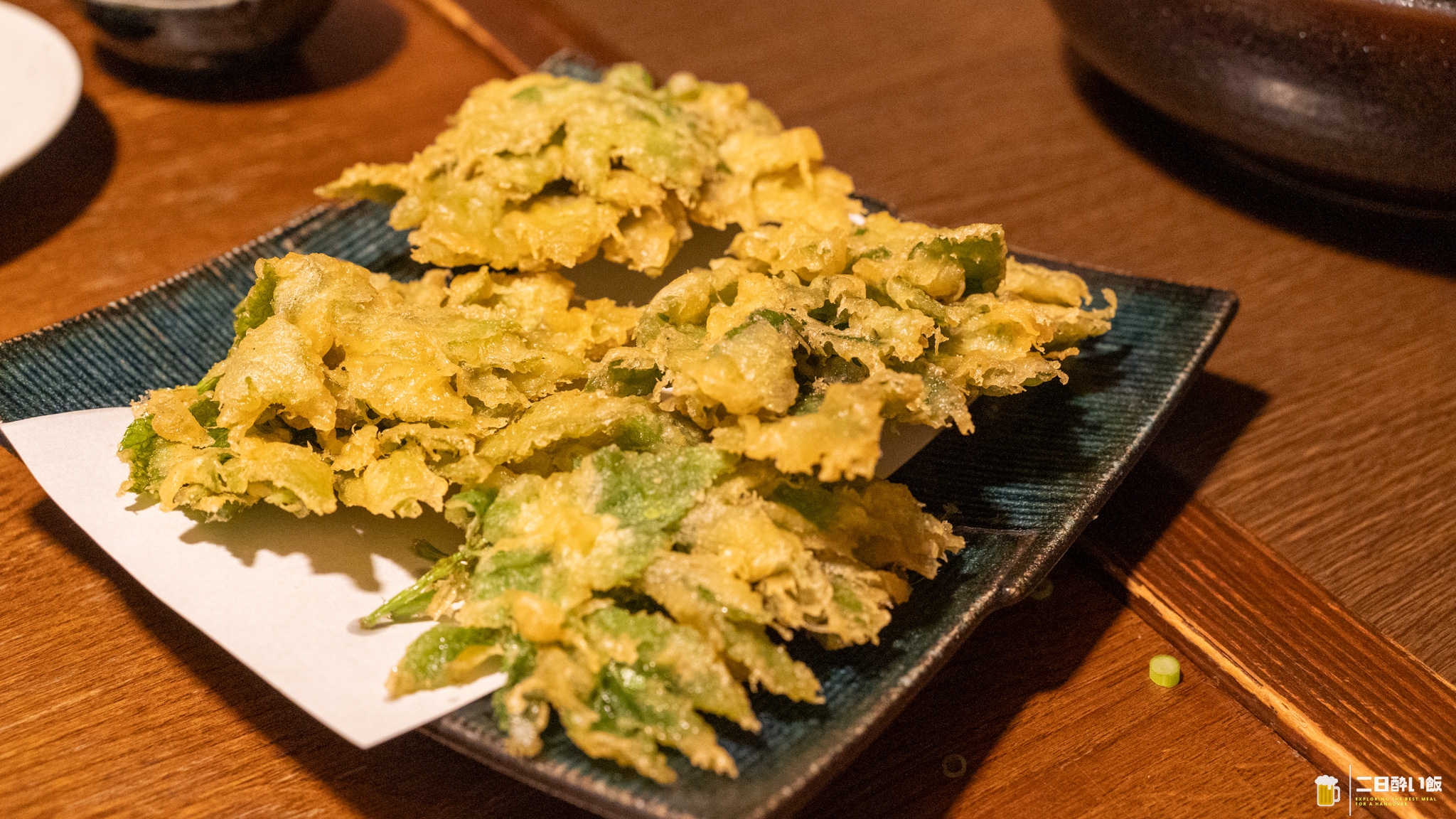
This is ashitaba tempura, also familiar from Hachijojima. Biting into it, it’s light and crisp, with the fresh green aroma of ashitaba rising into your nose a moment later. Ashitaba is inherently a slightly bitter leaf, but passing it through oil rounds out the bitterness, leaving behind only freshness! It really is delicious!
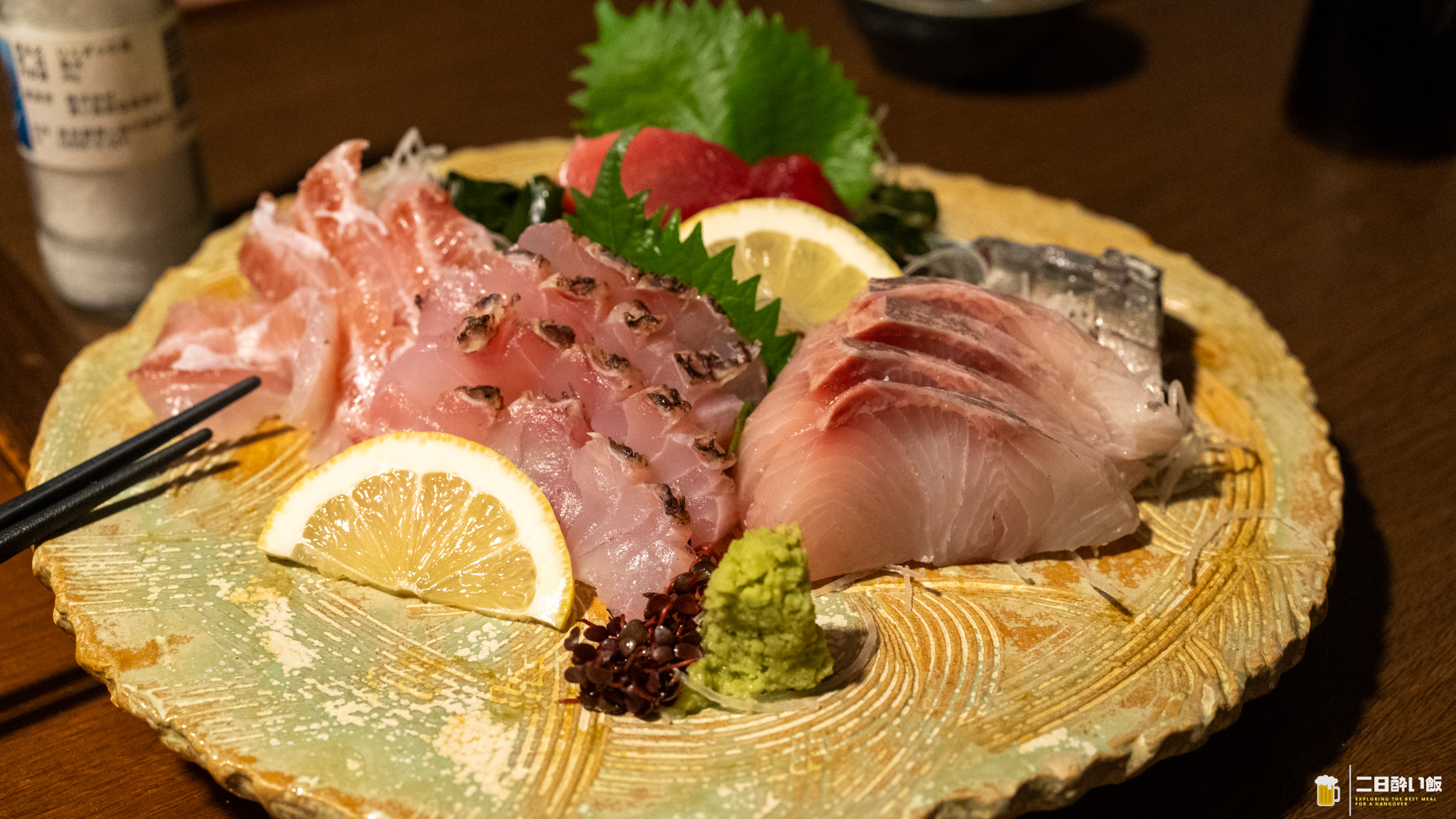
On this day, there were six varieties: tuna, matsudai (tripletail), himedai (crimson snapper), kanpachi (amberjack), shime-saba (cured mackerel), and yakishimo-zukuri with the skin seared. Every piece of island white fish is moist, and when you chew, a faint sweetness rises up afterward. The seared skin adds a savory toastiness that gives the flavor a distinct outline, resetting your palate after a series of white fish. The shime-saba is cured with vinegar, so it serves as a palate cleanser as well. The soy sauce is a house-special dashi soy sauce, slightly sweet. We were told the fish changes depending on what arrives that day.

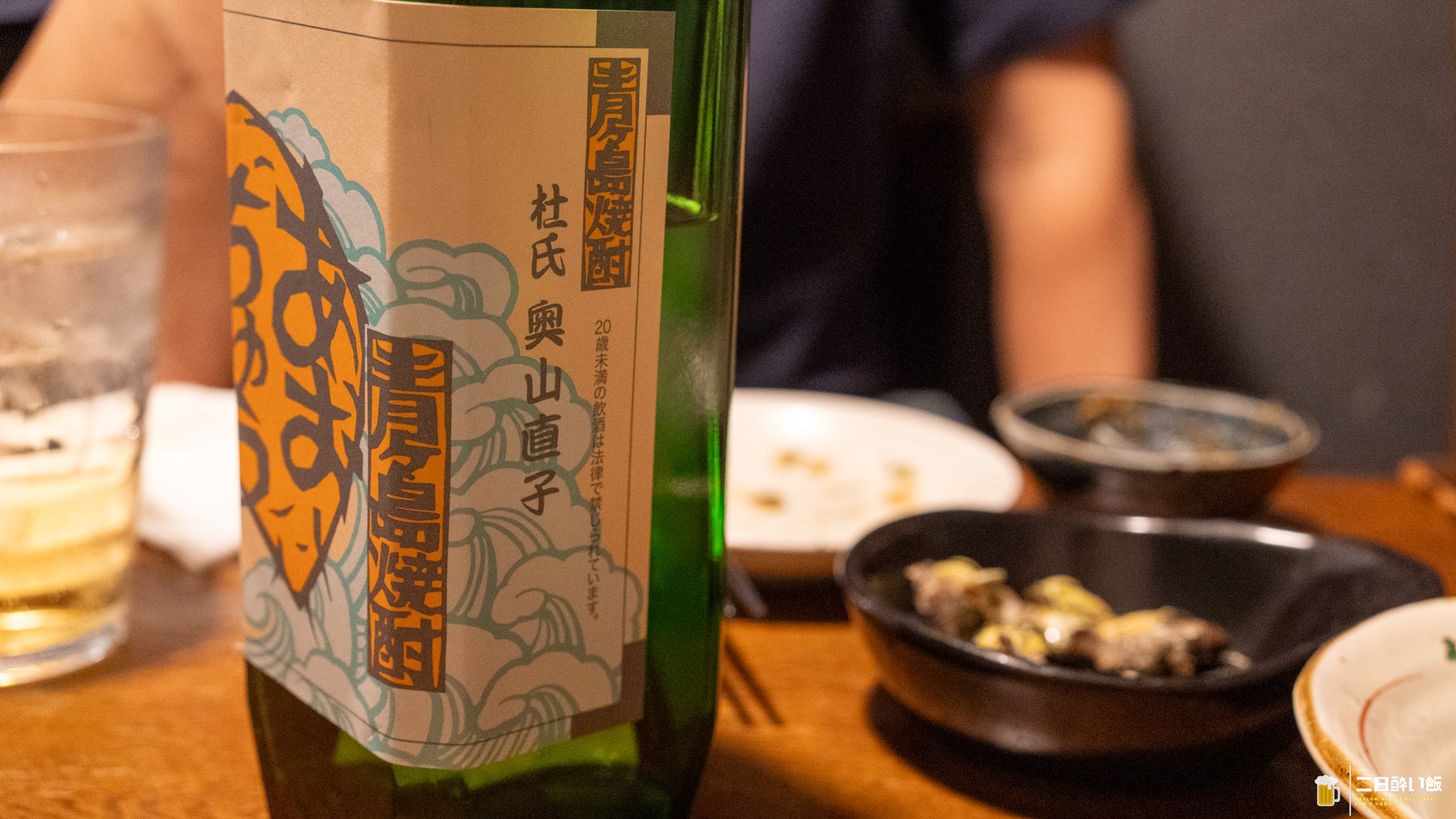
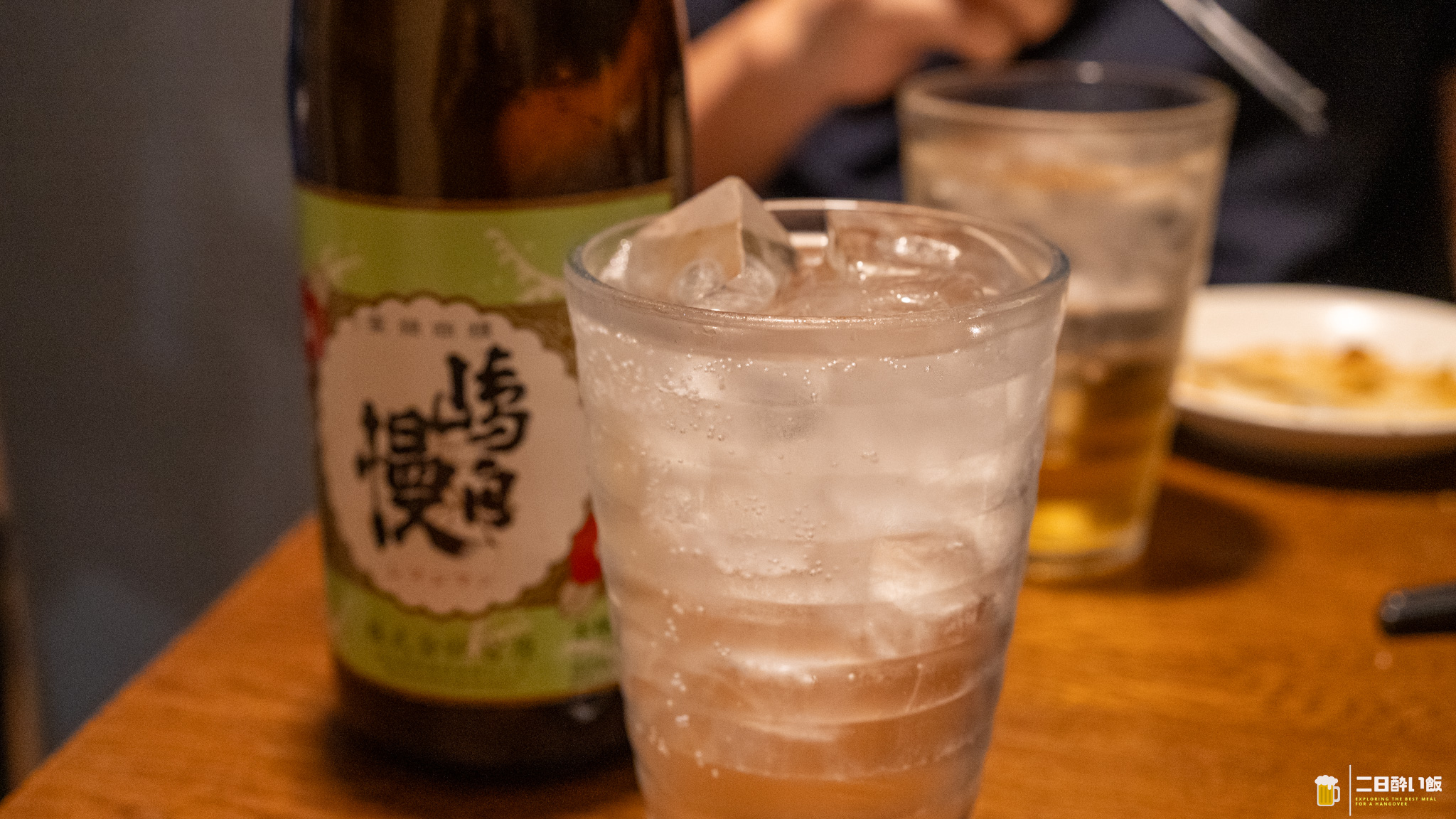
There is a notation of ‘Toji, Okuyama Naoko,’ and a toji is the master brewer who oversees the sake and shochu making. Apparently there are ten of them on Aogashima, and many of the brands are named directly after their makers!!
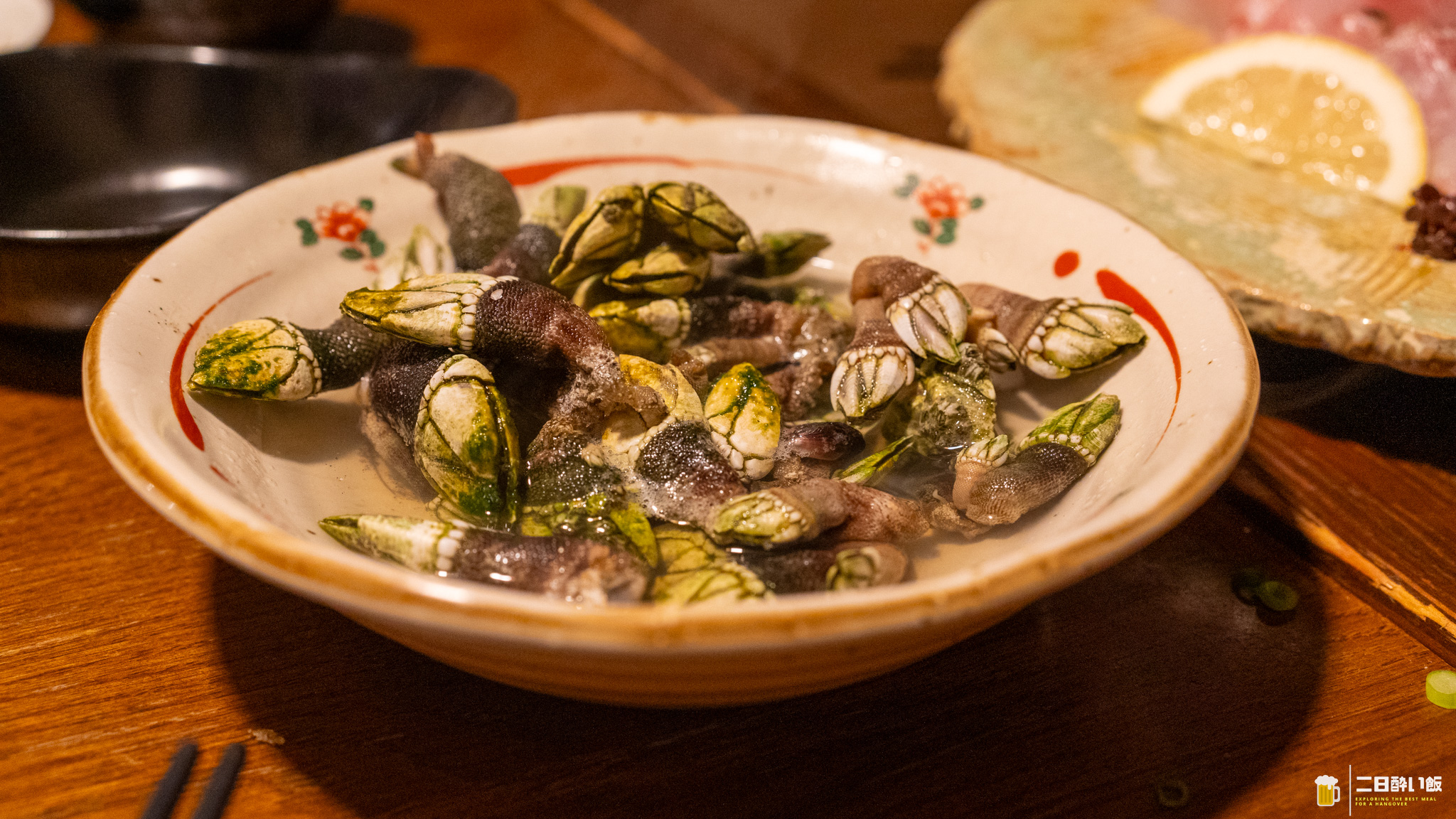
I’ve eaten these quite often myself; they belong to the barnacle family, and when you snap them open and peel back the skin, the meat that emerges is about the size of the tip of your little finger. Put it in your mouth, and a broth-like flavor right between shrimp and crab spreads out richly. These are actually really delicious — enough that if they sold them at the supermarket, I’d end up buying them on impulse.
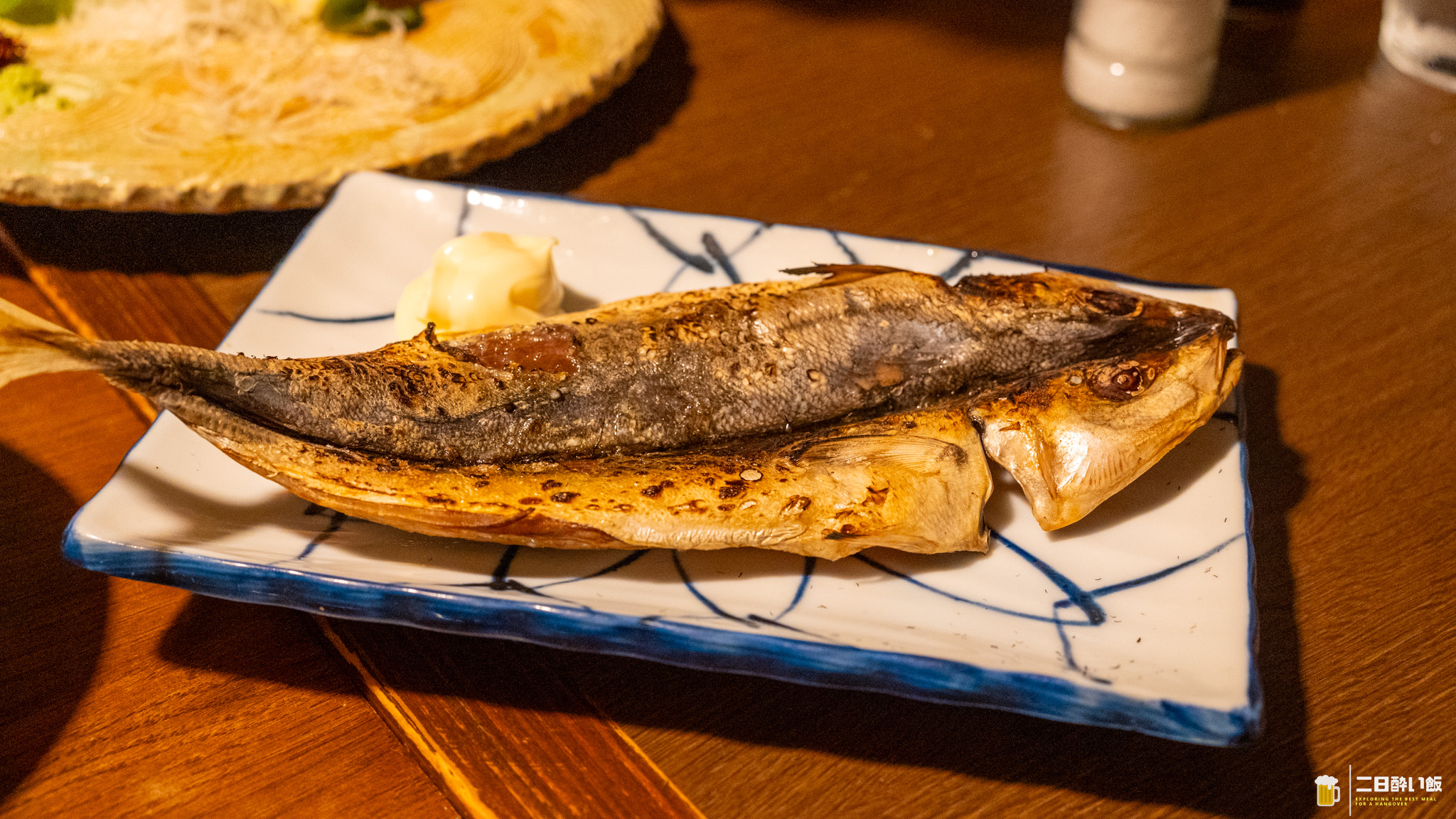
This is also familiar from Hachijojima: muroaji (mackerel scad) kusaya!
I knew what to expect, but the moment it was brought over, the air at the table changed completely, ha ha. A powerful fermented smell hits you head-on. That’s precisely why it’s so hard to do at home. But once you put it in your mouth, the smell and the taste are completely different things. It doesn’t have the sharp edge of saltiness of regular dried fish, and the flesh is plump and soft. The more you chew, the more a concentrated umami slowly oozes out, tasting like an aged cheese and intensely delicious. Dipping it into the mayonnaise served on the side rounds off the aroma, making it much easier to eat. Paired with Aochu, you simply can’t stop!
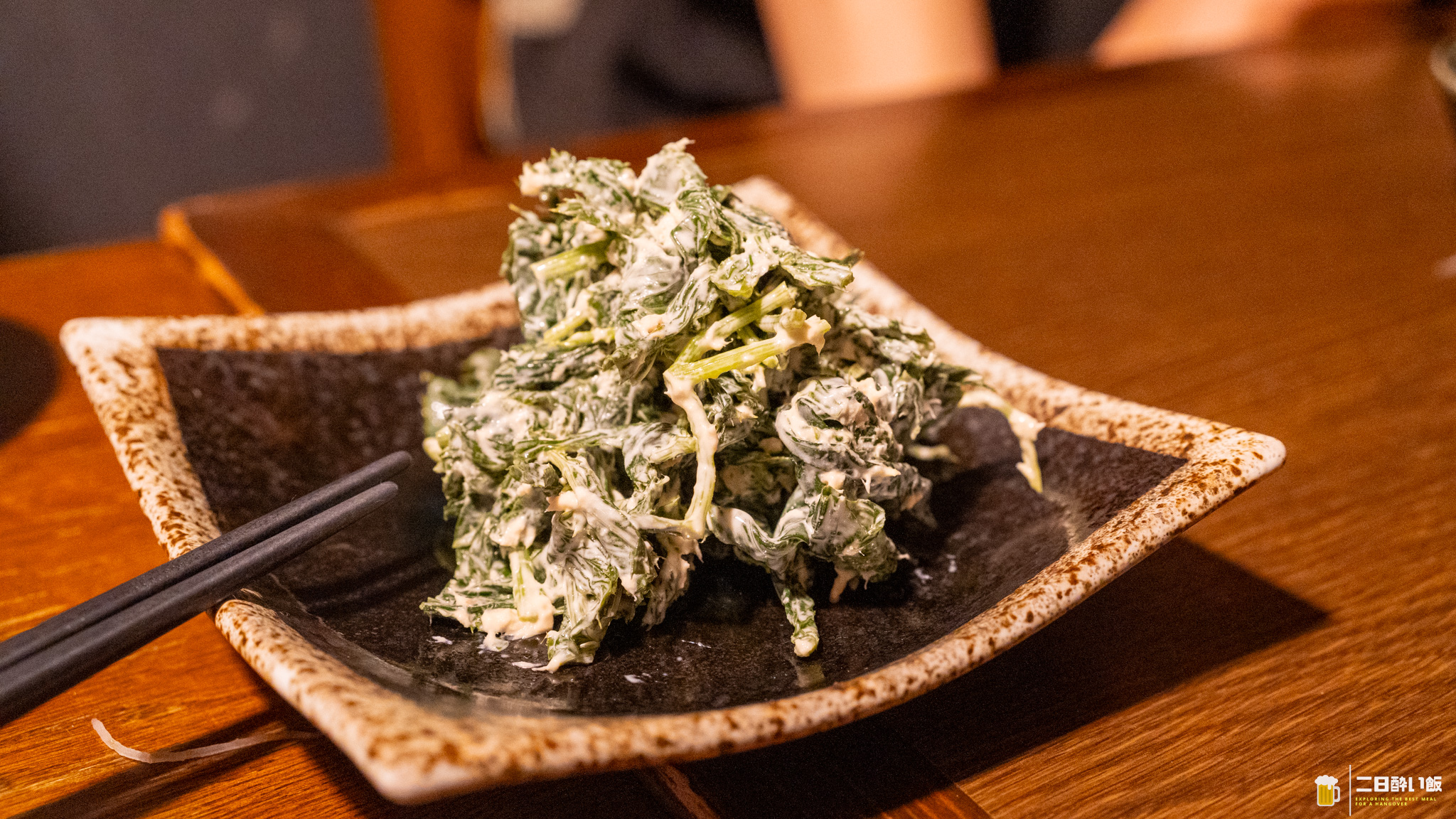
So there’s ashitaba tossed in mayonnaise too; this might be the first time I’ve ever seen it served like this among ashitaba dishes. The rich mayonnaise and savory saltiness of tuna cling to the crisp, crunchy leaves, making it delicious.
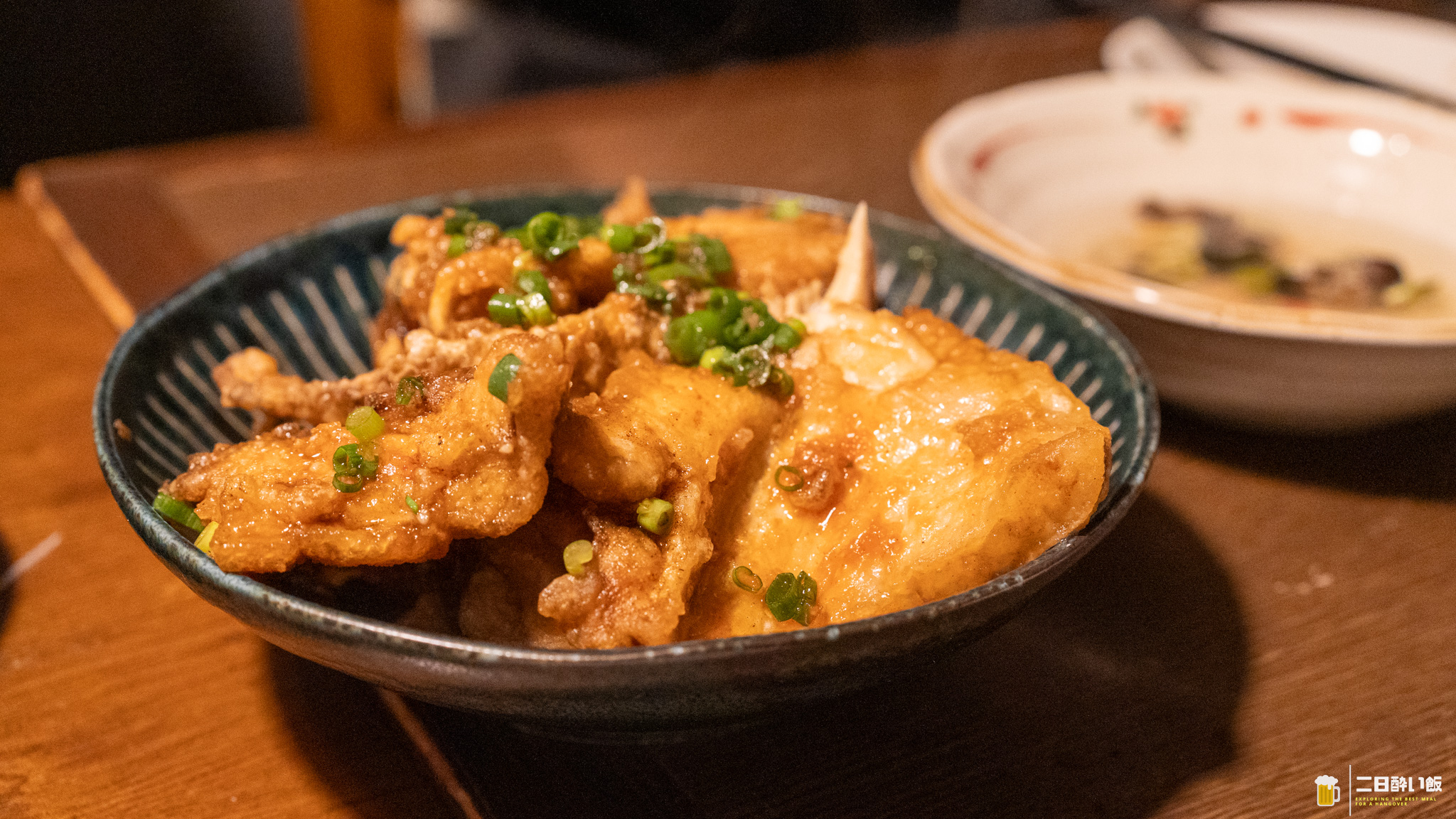
Moray eel isn’t something you often eat in Tokyo either. It’s a fish known as the ‘gangster of the sea,’ but the flesh itself is mild, sitting somewhere between chicken and white fish. There is a sauce-coated batter, and underneath it a thick, chewy skin. The true charm of moray eel is the gelatinous layer between skin and flesh, and cooking it brings out even more flavor. It’s a fish with a lot of small bones, so be prepared for that going in!
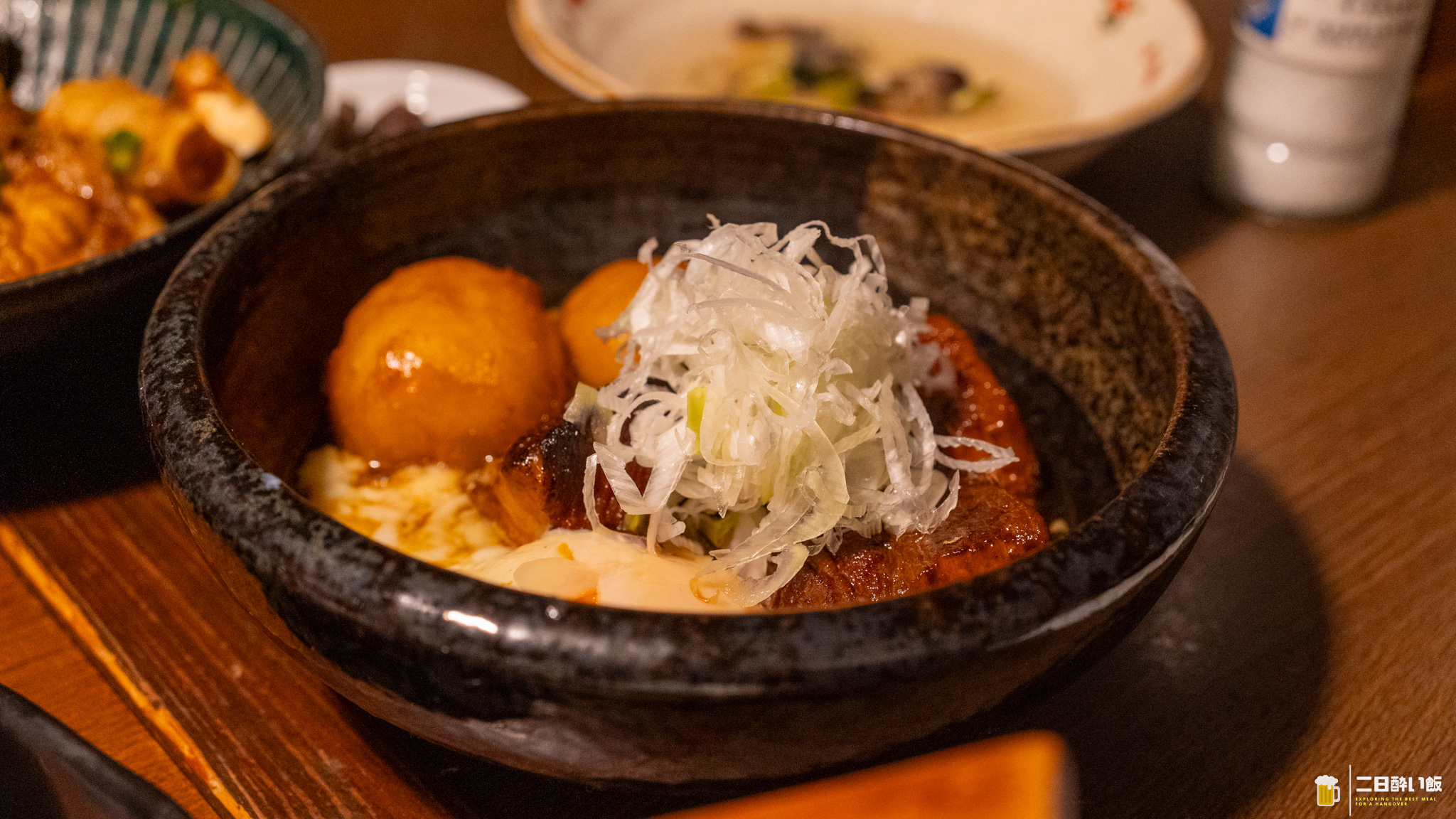
After having so much fish, time for a little pork. When you put your chopsticks into it, it falls apart tenderly, and the layer of fat melts away smoothly. The braising liquid is strongly sweet and savory, so alternating between it and the pungent sharpness of the shredded white leek balances it out just right!
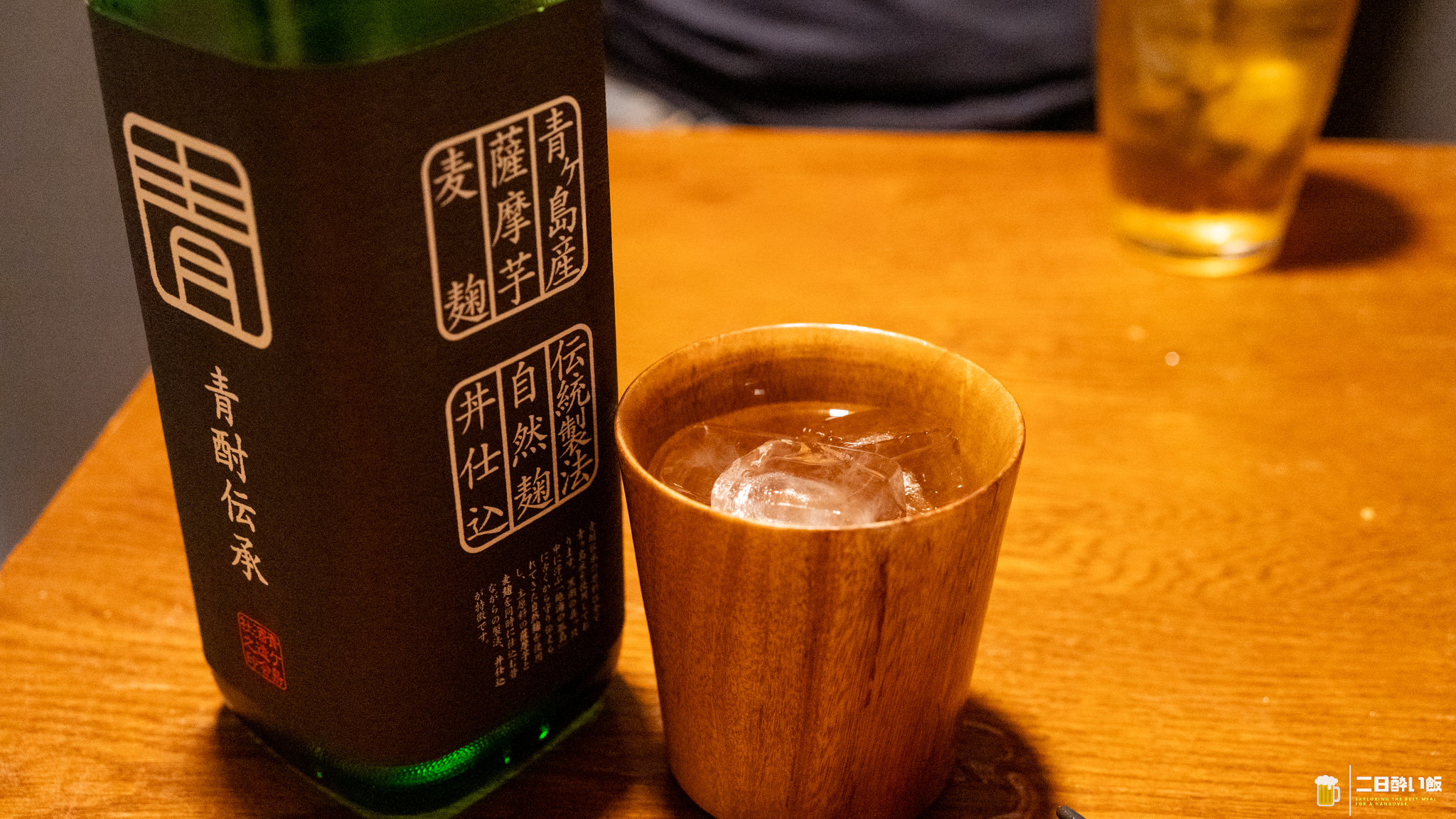
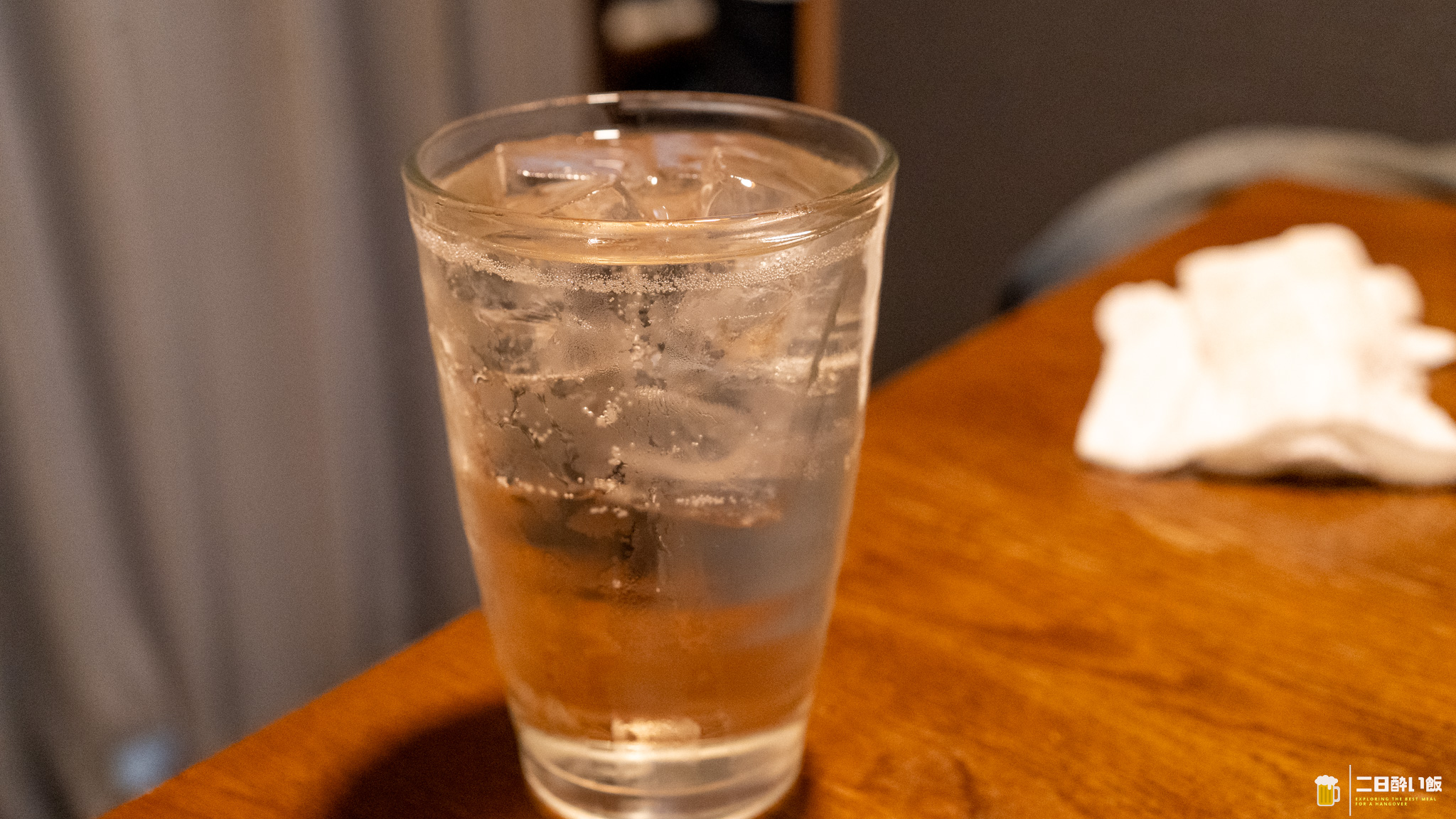
This shochu was introduced to us as ‘something you can’t drink even if you go to Aogashima!’ — an exceptionally precious pour. In fact, there’s even a note that says, ‘Please refrain from starting off right away with No. 8, Junko.’ A drink you can only reach after having several other shochu. Delicious!
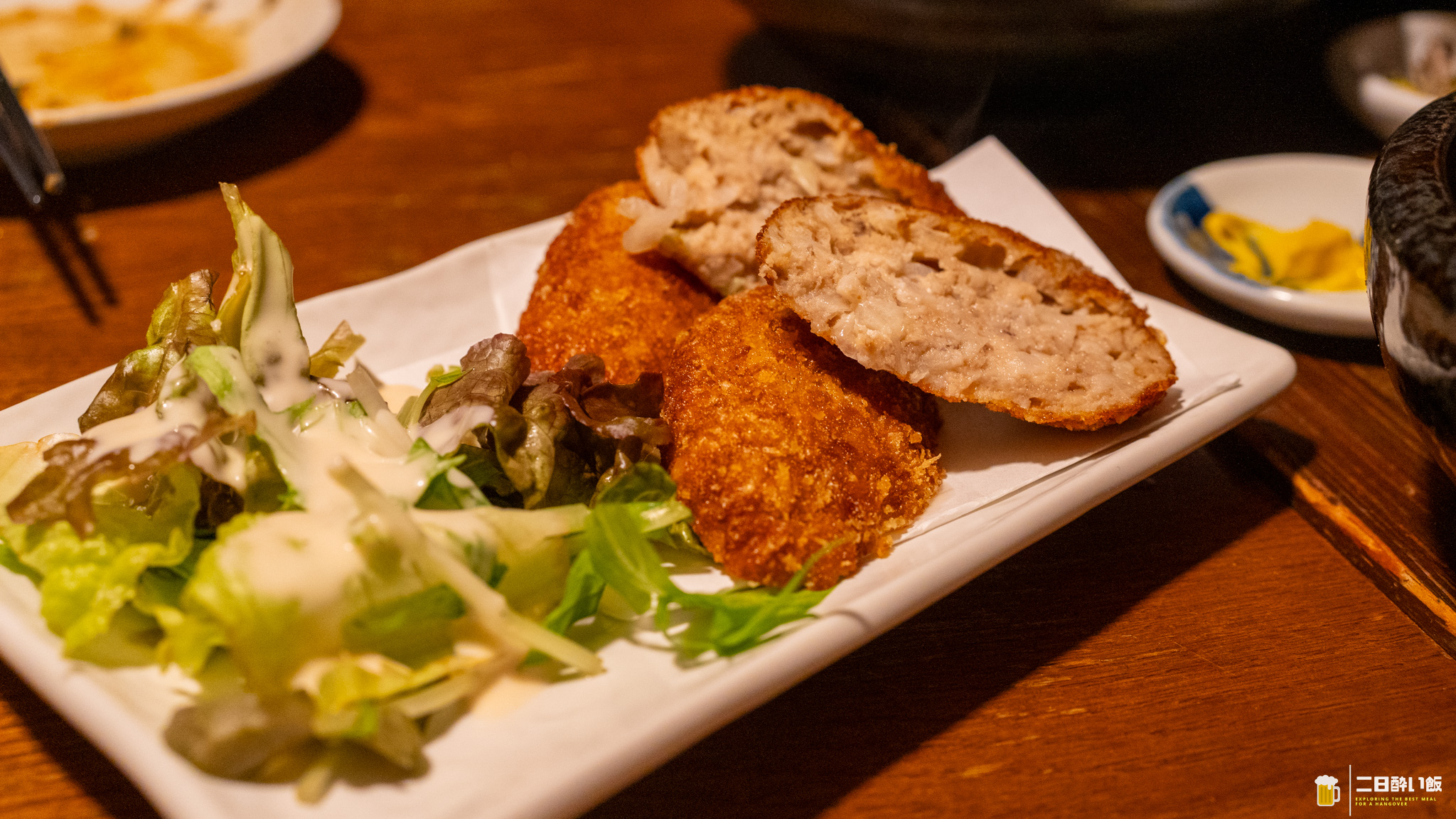
This is minced mackerel scad — the same fish used as the ingredient for kusaya — made into a menchi katsu cutlet. It’s produced by the women’s division of the Hachijojima fisheries cooperative, and apparently it’s a popular item at the island’s morning markets. The coating is crunchy, the inside breaks apart fluffily, and the sweetness of the onion and the savor of the fish sit side by side — delicious!
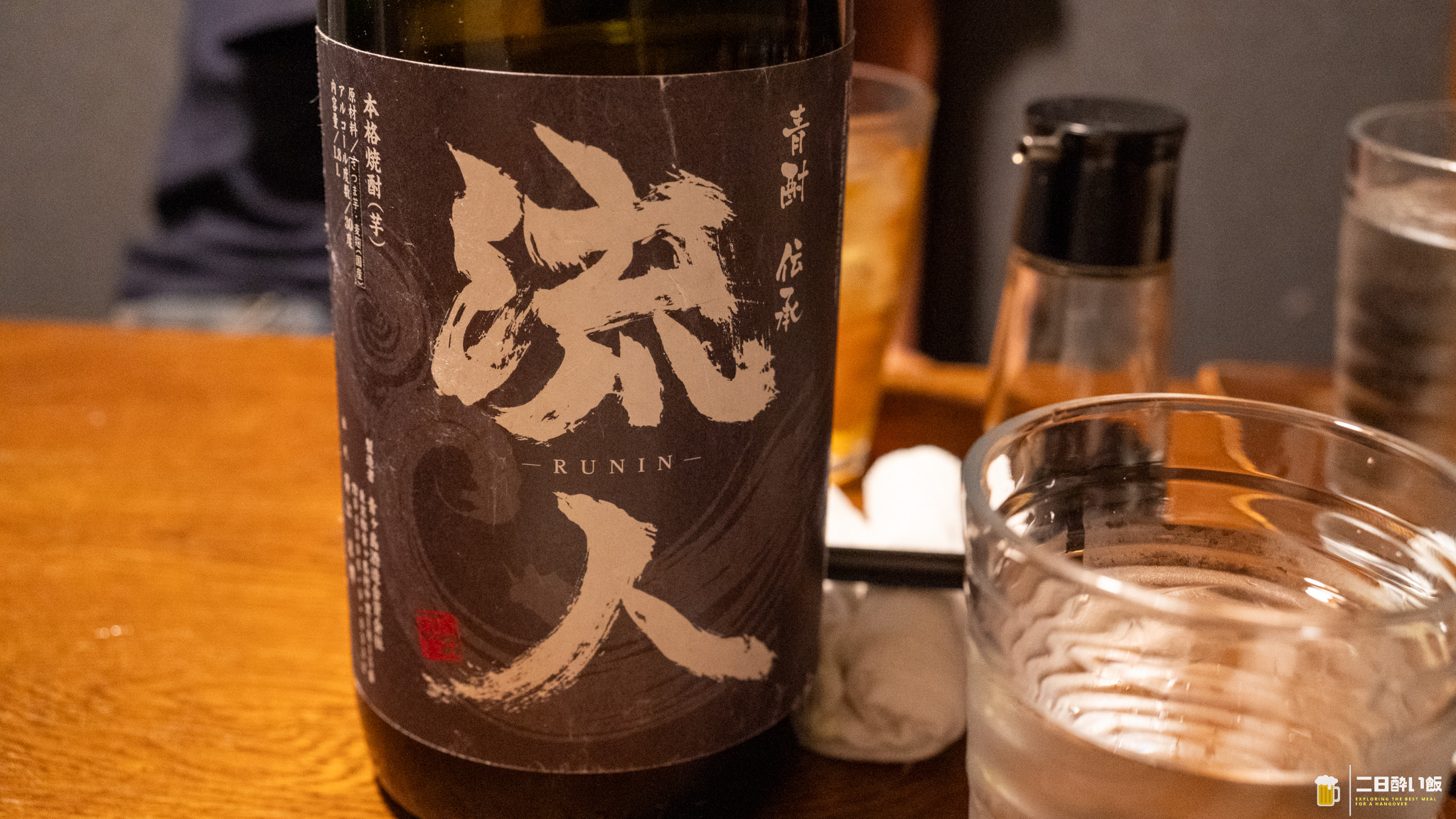
Honestly, thoroughly satisfied! Green sea turtle and kusaya are things you can rarely eat in Tokyo, after all! The staff were all so kind, and it was great fun having them tell us so much about Aogashima! The prices run somewhat high, but then again, this is an island dining table you normally wouldn’t be able to reach at all! The fact that it’s sitting whole on the second floor of a building in Nishi-Shinjuku is amazing. It was a wonderful place that offered a fun experience: drinking through the Aochu from the top down together while ordering dishes by the names of the islands!
May you meet something delicious today too!
Aogashima Ya (Regional Cuisine / Seibu-Shinjuku Station, Shinjuku-nishiguchi Station, Nishi-shinjuku Station)
Tabelog dinner rating ★★★☆☆ 3.7
I ate here and paid for it myself. Nothing on this site is a comped meal.
One more for the road?


