


A note on the words: kuchitori is the assortment of small starter dishes served first in a kaiseki-style meal. Tororo is grated mountain yam, prized as a topping for rice. Shigure-ni is meat simmered slowly in a sweet soy sauce with ginger. Saikyo-yaki is fish marinated in sweet white miso before grilling, and dashi-maki tamago is a rolled omelet seasoned with dashi stock. Ganmodoki is a deep-fried tofu fritter mixed with chopped vegetables. Ryokan is a traditional Japanese inn, and a ryori ryokan leans into its own kitchen as much as its rooms.
Table of Contents hide
Kyoyasai to Sumibi Ryori Ihoto on Tabelog (English) — opening hours, payment details and the Japanese address are kept up to date there, not here.
Hello, this is Hangover Meshi. On this day I was staying at “Fufu Kyoto,” and breakfast was at the restaurant inside it — “Kyoyasai to Sumibi Ryori Ihoto.” So off I went right away. It seems like a lot of the inns around here have their own restaurant attached. There’s even a word for it, ryori ryokan (literally a “cuisine inn”), so I guess a good number of places here work more like a restaurant with lodging attached than the other way around.
Fufu in the morning.
The breakfast course is called Fukuju Zen.
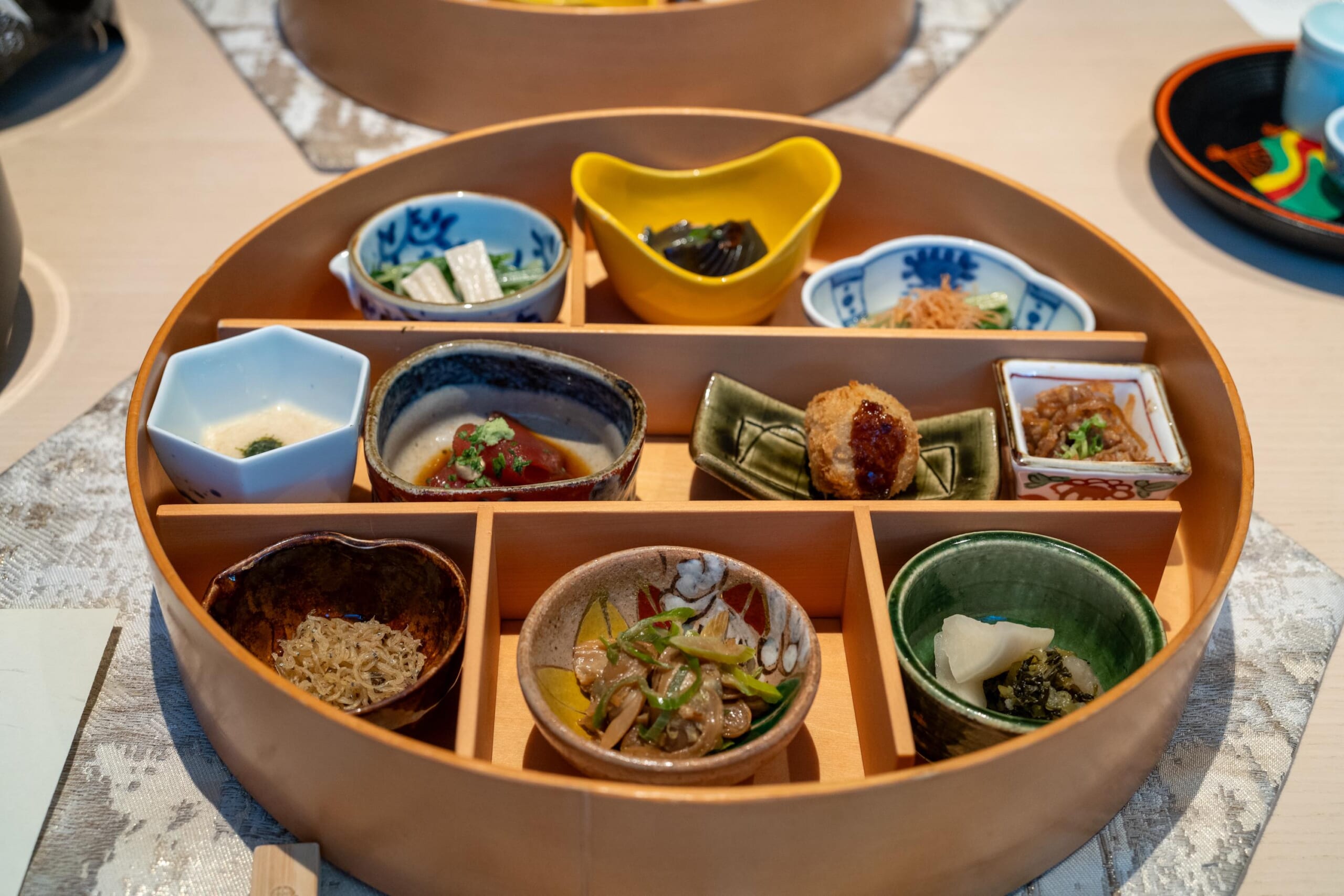
Right out of the gate, this is the volume you get! I’ve seen a lot of people post photos of this exact box, so I guess everyone gets the same one.
It looks gorgeous too, doesn’t it!
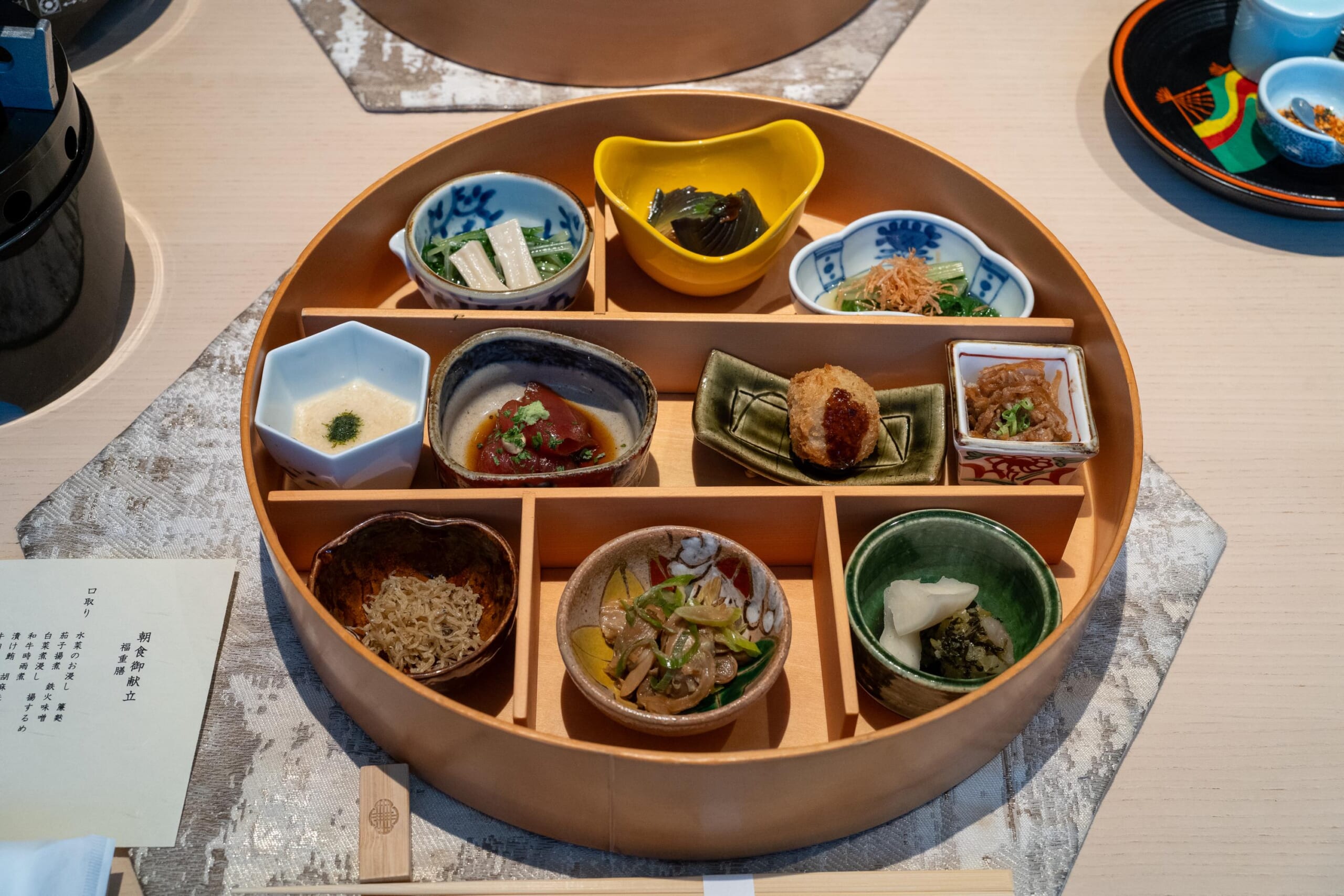
Starting from the top left: blanched mizuna greens with sudare-fu (wheat gluten shaped like a bamboo blind), then eggplant simmered after frying, and napa cabbage simmered in broth. Draped over the top is deep-fried dried squid sliced into thin threads — that one was really delicious. Moving to the middle row, from the left: grated nagaimo mountain yam, or tororo — obviously tororo is basically unbeatable alongside rice, so let’s have it together with the rice! Then marinated tuna, a beef croquette, and wagyu shigure-ni (beef simmered slowly in a sweet soy sauce with ginger). Down to the bottom row, from the left: chirimen sansho (tiny dried sardines simmered with sansho pepper), a simmered dish of Kujo green onion and clams, and Kyoto pickles.
Most of these are the kind of side dish that goes perfectly with rice — and of course they would be!
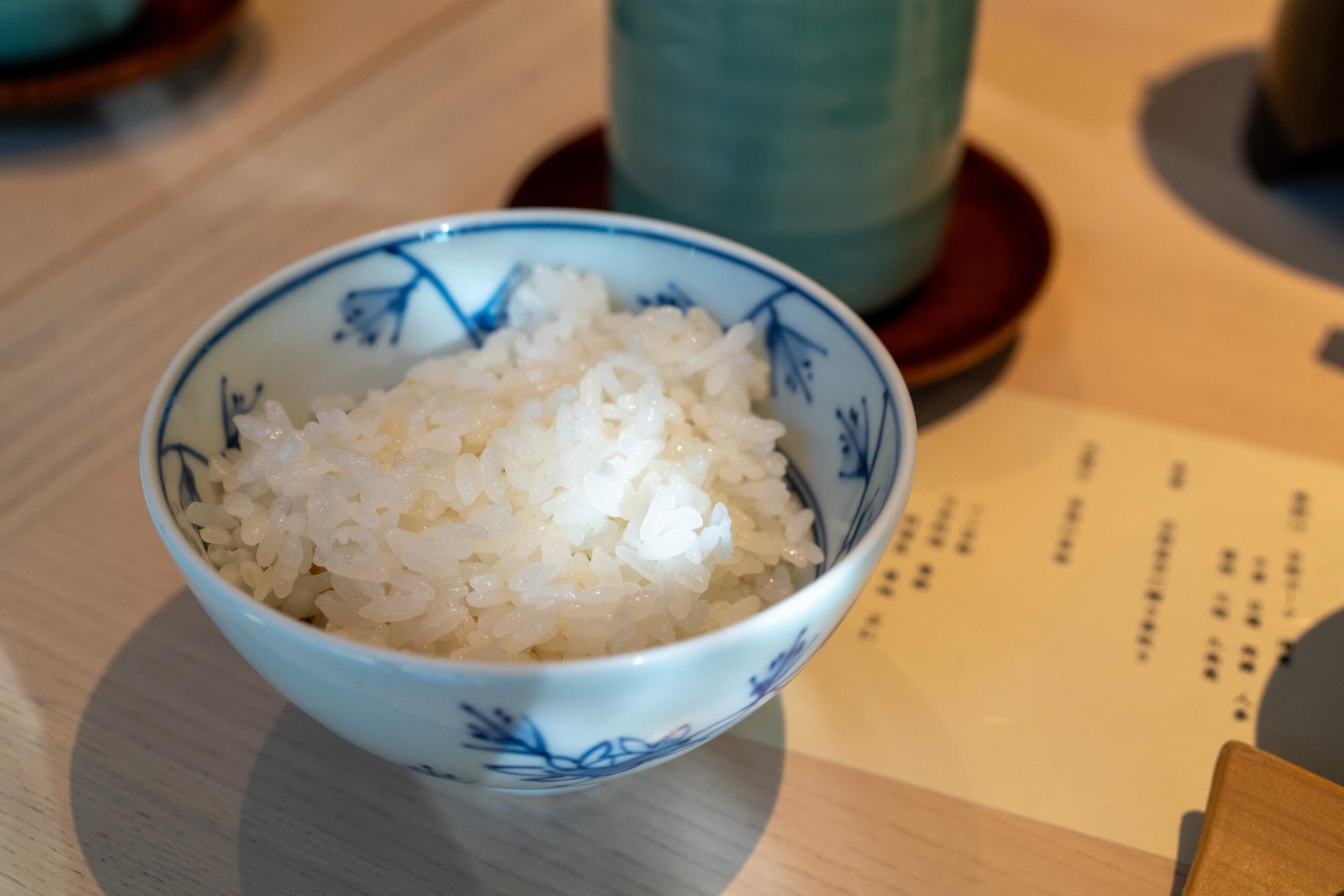
Just like yesterday, the rice here is unbelievably good…
This rice is a Kyoto variety called Kyo no Kagayaki, cooked in a traditional kettle. Every grain stands apart and it’s incredibly good…
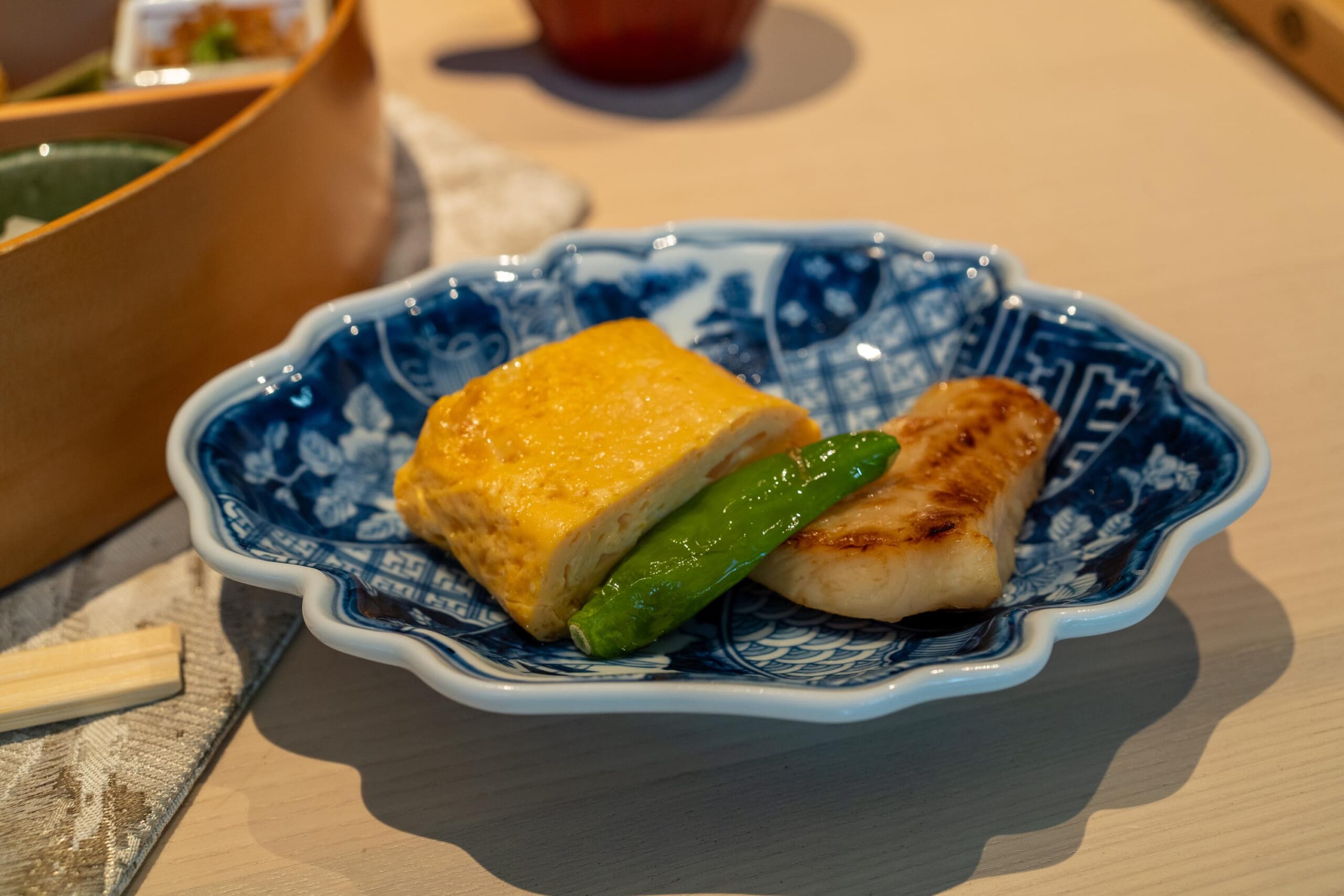
Saikyo-yaki (fish marinated in sweet white miso, then grilled) made with black halibut, plus dashi-maki tamago (a rolled omelet flavored with dashi)!
Saikyo-yaki for breakfast is great on its own, but that dashi in the tamago— wow!
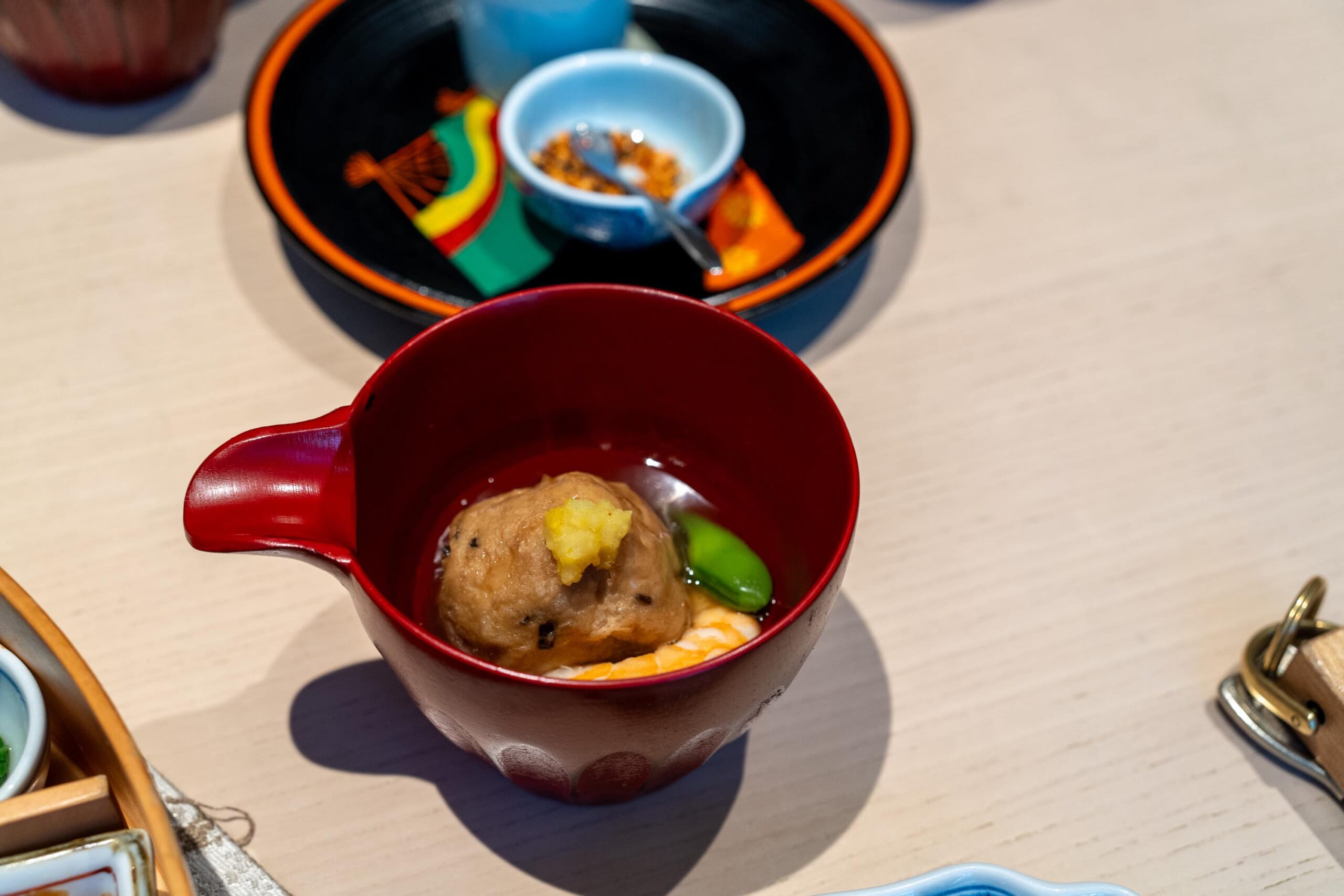
Shrimp and ganmodoki (a deep-fried tofu fritter mixed with vegetables), with green beans.
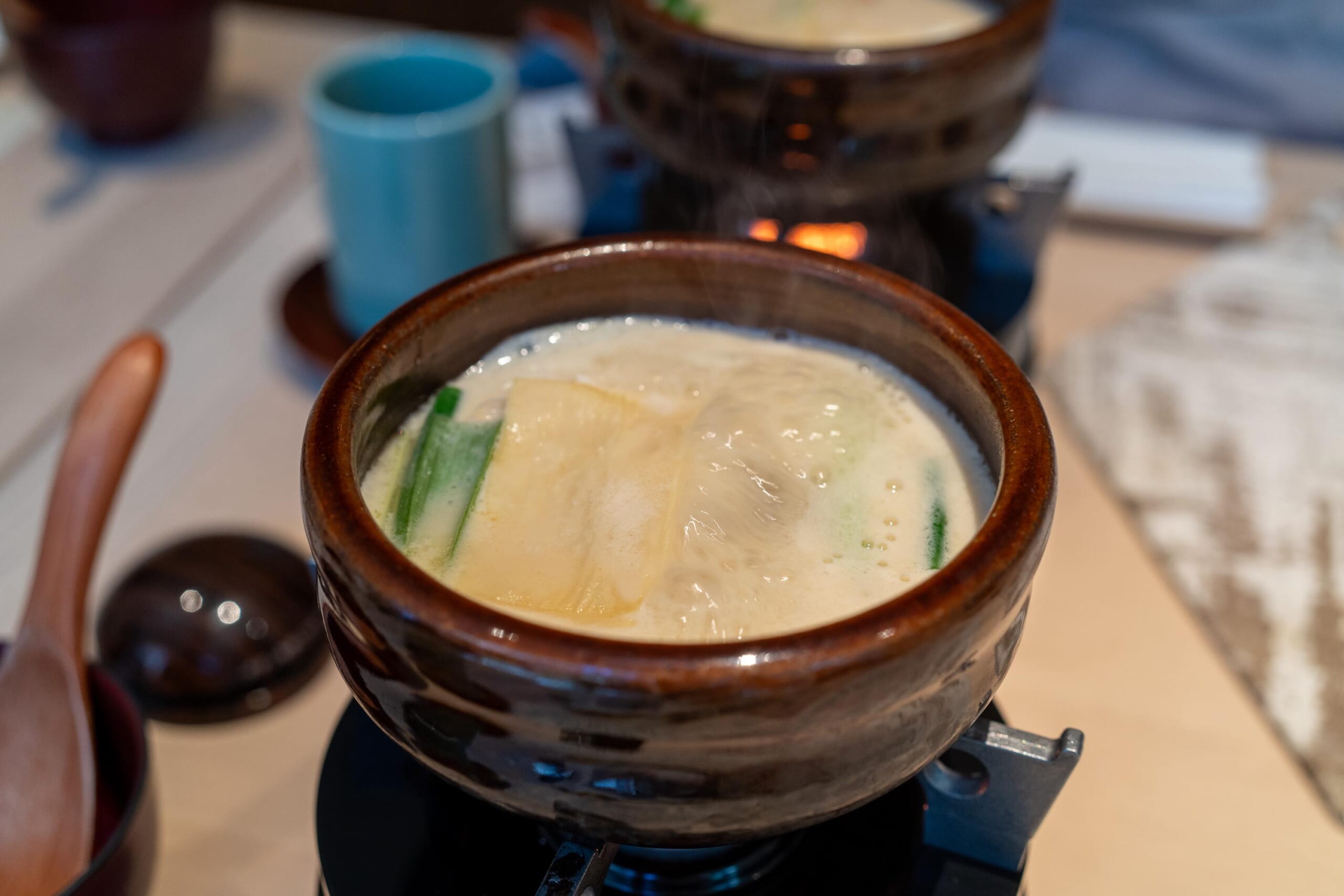
And then, this was the biggest surprise — Ihoto-jiru, a soup named after the restaurant itself. It’s ridiculously good.
It’s a bit like a Japanese-style stew, built on a white miso base with a leaning toward sweetness. Green onion, konnyaku and carrot go into it, and it’s wonderful. Partly because of that white miso base, the sweetness really stands out, and it’s a genuinely delicious soup.
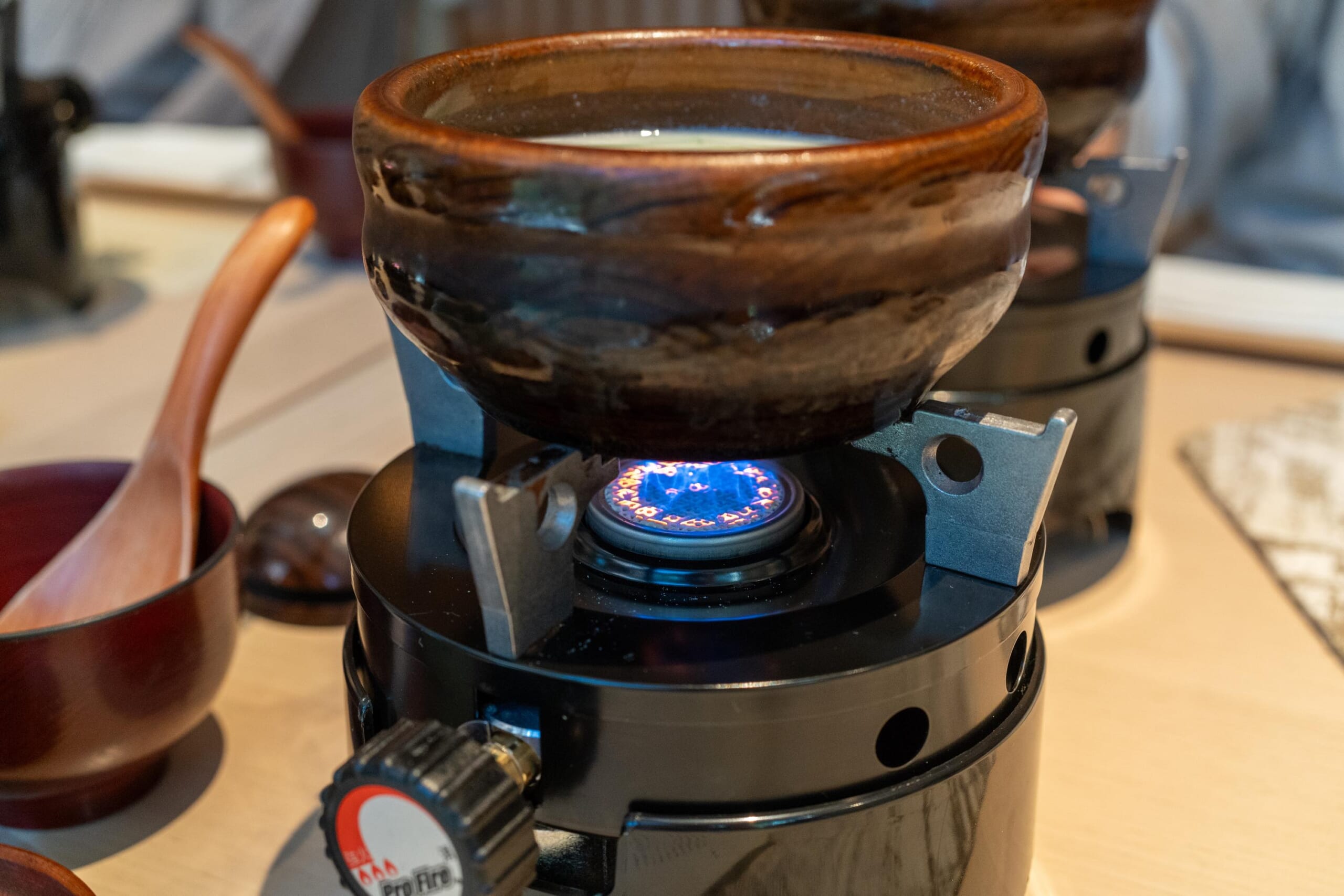
I kind of want one of these portable burners too lol
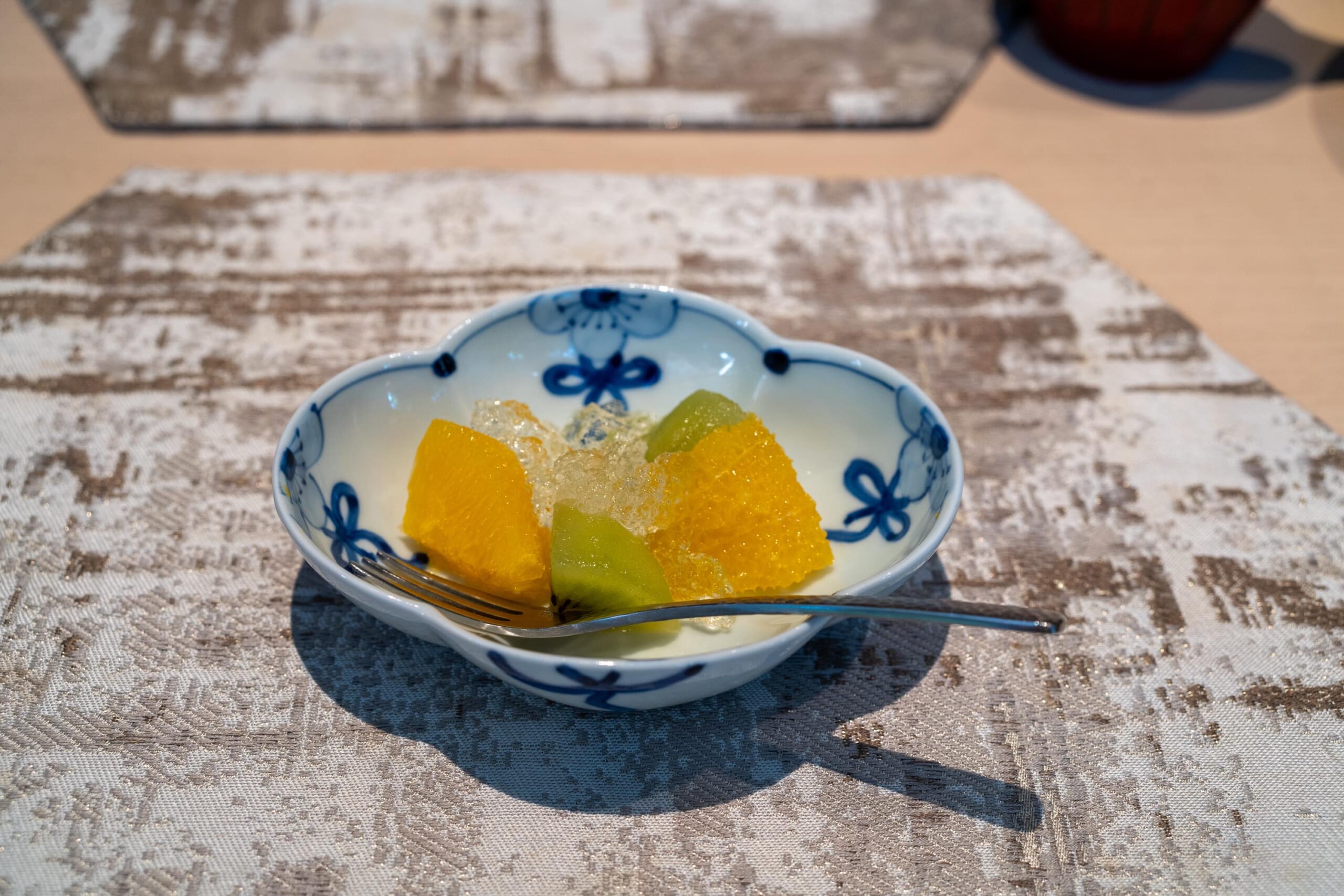
So, it was an elegant breakfast, but there was quite a lot of volume, and I was already full first thing in the morning ^^ Both the rice and the Ihoto-jiru were so good that it genuinely moved me — it really drove home that Kyoto is a city with excellent rice. Curious about the Ihoto-jiru, I looked it up afterward and found someone had worked out a copycat recipe — apparently adding butter gets you close. I’ll have to try that sometime.
Kyoyasai to Sumibi Ryori Ihoto (Japanese Cuisine / Keage Station, Higashiyama Station)
Tabelog lunch rating ★★★☆☆ 3.6
I ate here and paid for it myself. Nothing on this site is a comped meal.
One more for the road?


