


A note on the words: tonkotsu is the pork-bone broth of Fukuoka, boiled hard until it turns cloudy and rich, and Hakata is the old name for the city whose thin, straight noodles define the style. Chashu is the braised pork laid on top, and chashu men simply means a bowl with extra of it. Kaedama is a refill of noodles you order for the soup you still have left. Beni-shoga is the sharp red pickled ginger sitting on the counter for you to add. Yatai are the open-air food stalls that line the river in Nakasu. Prices are as of this writing (August 2026).
Hacchan Ramen on Tabelog (English) — opening hours, payment details and the Japanese address are kept up to date there, not here.
I want something good to eat today too. This is Hangover Meshi. Still in Fukuoka. I had been drinking and the question was where to go next, and I very much wanted to try one of the famous tonkotsu ramen shops. So I searched for the best-looking ramen shop nearest to where I was and found one called Hacchan Ramen! It looked as though there would be a queue, but since I am in Fukuoka I am willing to wait a little to eat! It was past midnight, but off I went.
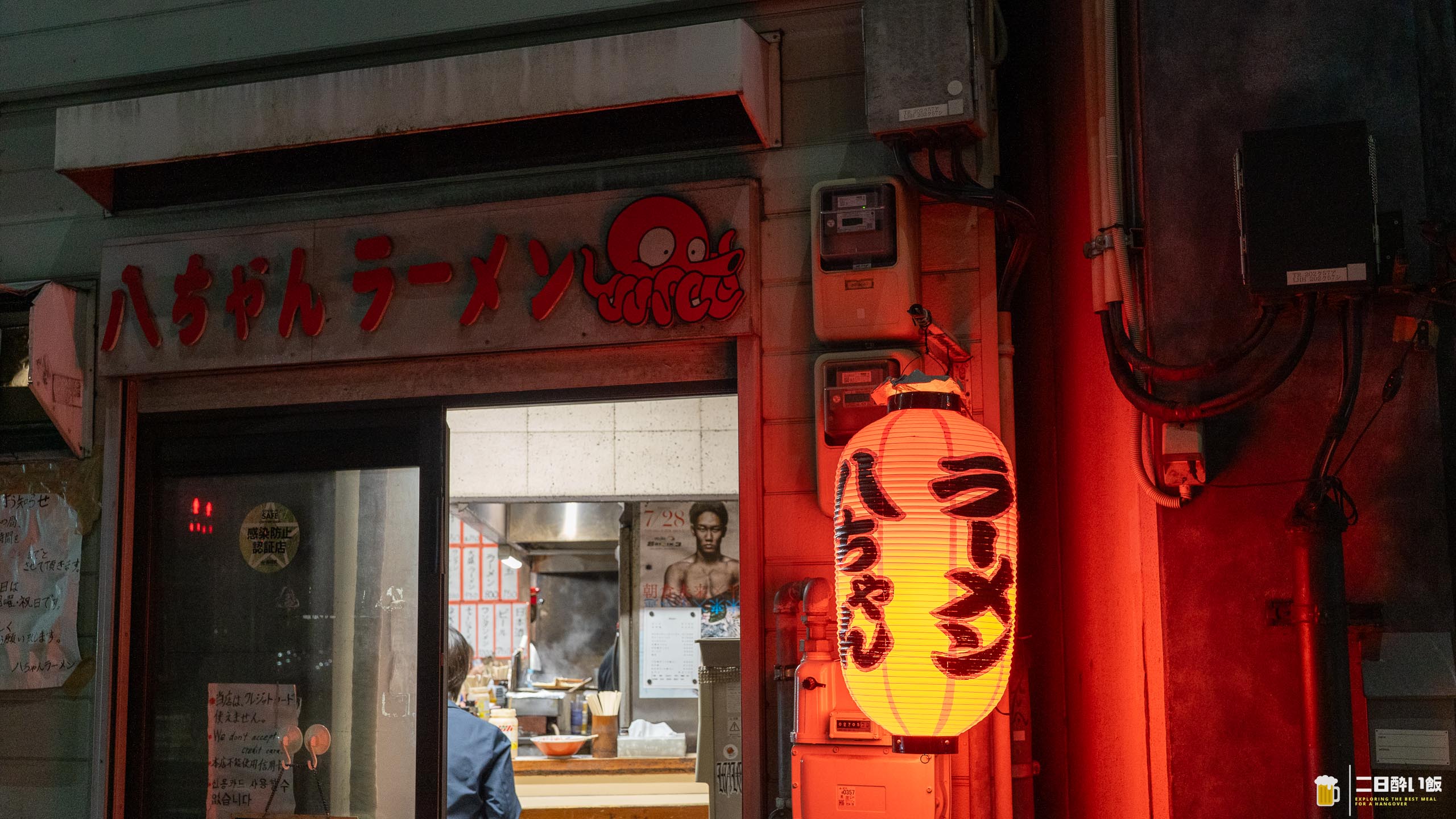
Another ramen shop with real character!
Counter seating only. The sort of place you go in, eat and leave. And even past twelve there are six or seven people queueing!
Wonton chashu men, 1,200 yen
Chashu men, 1,000 yen
Wonton men, 1,000 yen
Large ramen, 950 yen
Extra spring onion ramen, 900 yen
Ramen, 800 yen
Kaedama, 150 yen
Right, what to do — ramen or chashu men.
After some deliberation, chashu men!
Sitting down, there is a large bowl of red pickled ginger sitting on the counter!
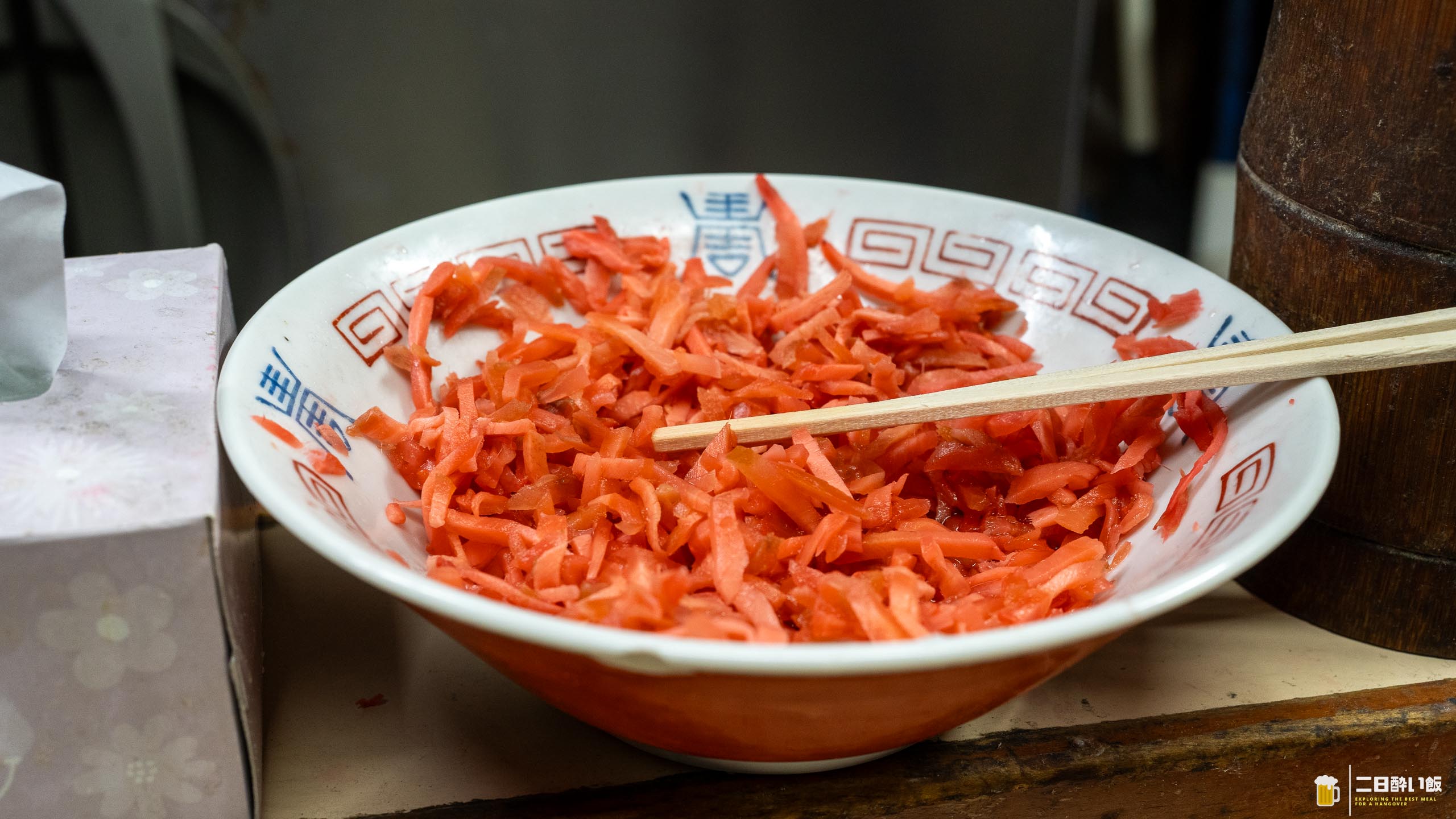
Excellent. It feels like the real thing.
And here is the chashu men that appeared!
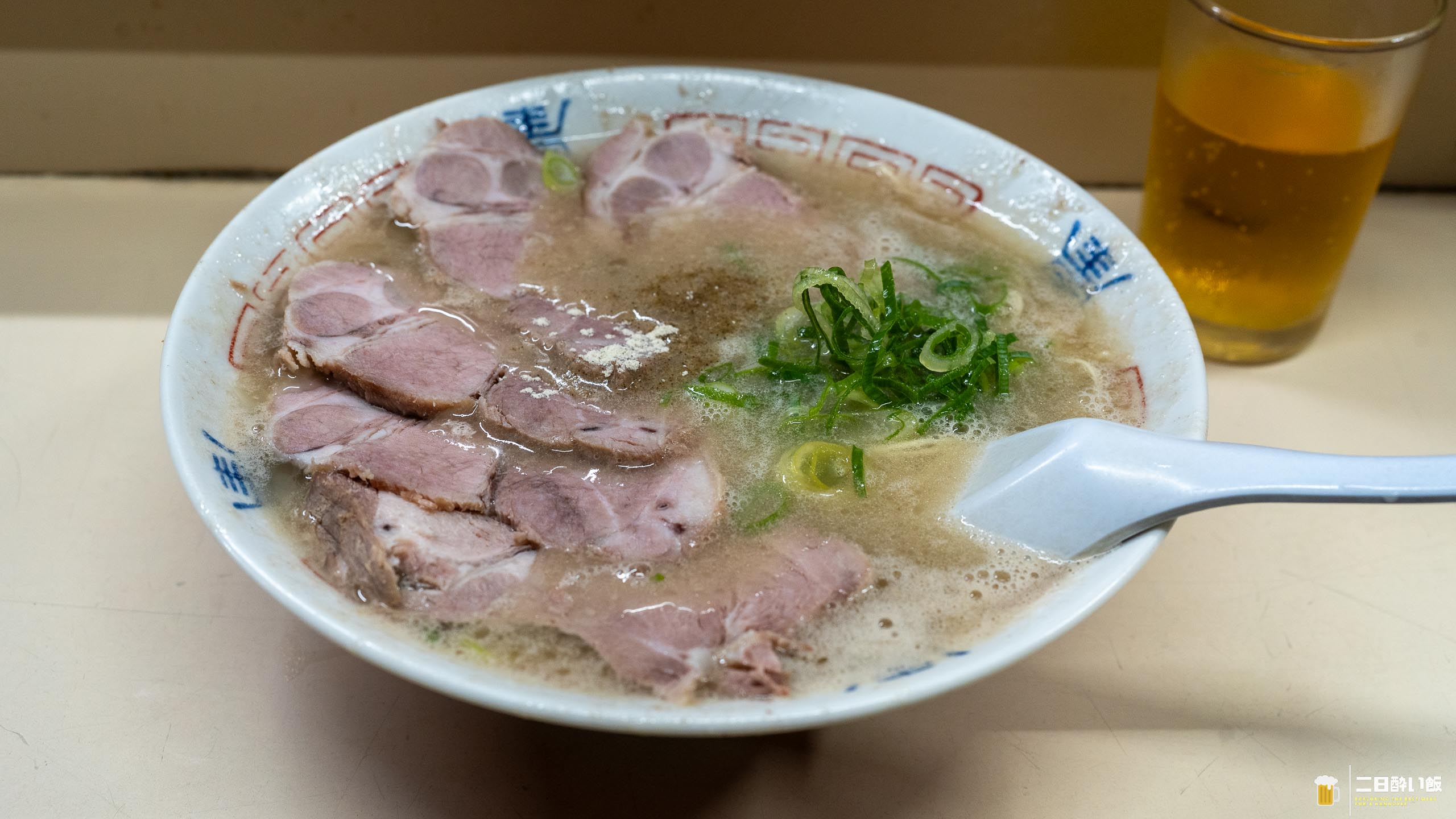
Oh! That looks extremely good. The toasted scent of the tonkotsu drifts up and works on the appetite.
The shop is known for a soup kept going in an iron cauldron, rich and yet clean with it. The smell rising the moment the bowl lands is enough to drink to! I had ordered a beer alongside in anticipation of exactly this, which turned out to be the right call!
The soup is a slightly cloudy beige. One sip and it is thick enough to cling to the tongue, and yet the finish is astonishingly light. None of the gaminess particular to tonkotsu, mellow, with something like sweetness to it. So this is what a long-established shop does, I thought — a convincing depth of savor. The faint foam on the surface is very tonkotsu ramen too!
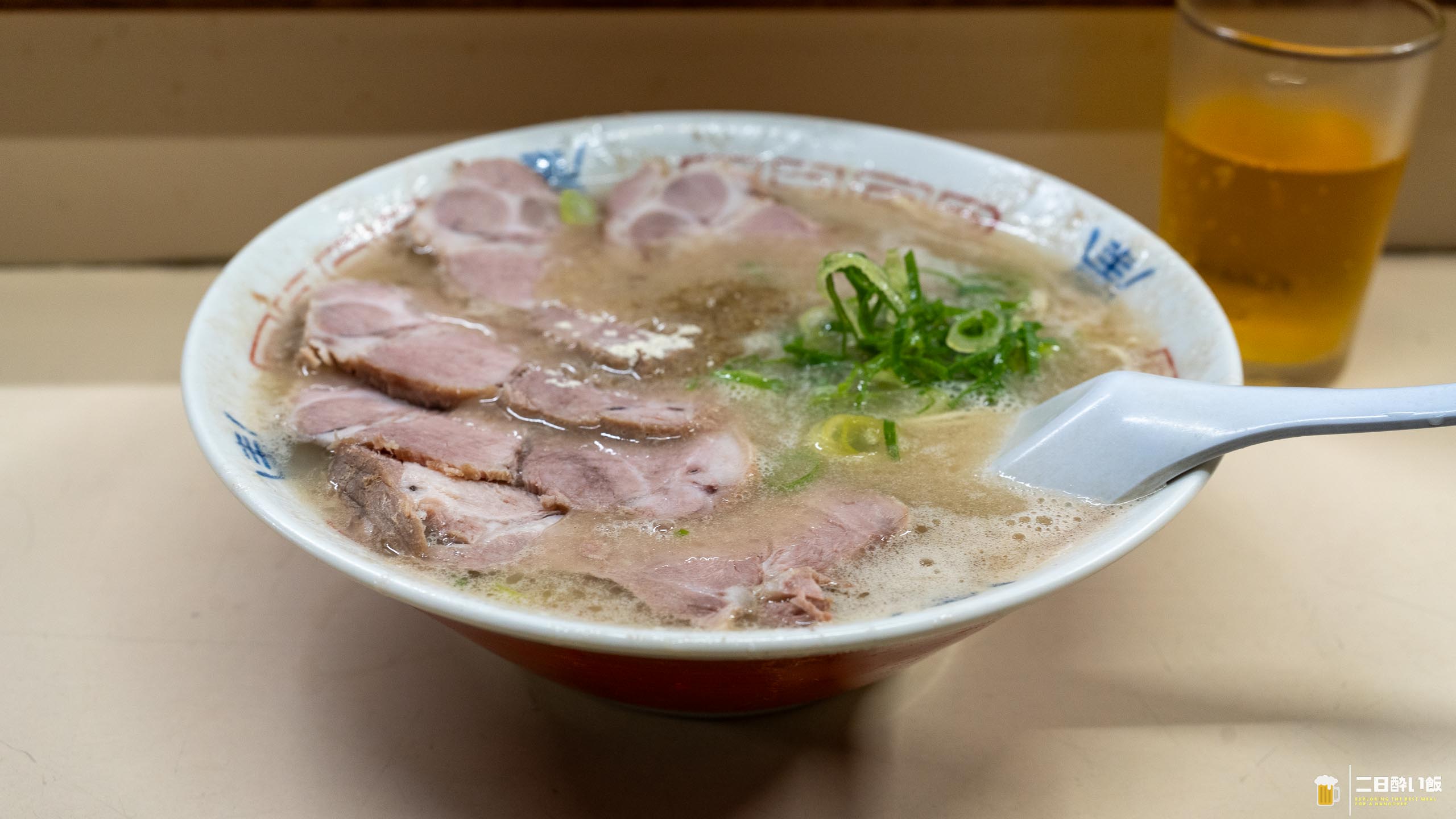
The noodles are apparently an extra-fine flat cut, which is unusual for Hakata ramen. They snap cleanly under the teeth and hold onto the soup and will not let go. Each time you draw them up, the savor of the bones and the scent of the wheat come at you in turn.
And the star that goes with it, the chashu, is remarkable. Thinly sliced, yet the fat melts at exactly the right pace, fusing completely with the soup the moment it dissolves on the tongue. The sweet-savory seasoning adds depth to the rich soup. Yes, good.
Spring onion and sesame, and the red pickled ginger I added, tighten up the aroma, and the further in you go the faster the appetite accelerates.
The spoon would not stop, and before I knew it I was close to finishing the soup entirely! I caught myself at the last moment and left just a little.
This kind of sinful satisfaction late at night is far too dangerous! A rich soup you could drink to the bottom — wonderful!
So, late-night tonkotsu ramen, and it feels quite different from the yatai stalls of Nakasu. The sheer richness of it as a tonkotsu was remarkable this time. And you drink it down all the same, which is frightening. A closing bowl at a yatai is good, of course, but a closing bowl at a famous shop is wonderful too! Very satisfied to have made it to a good ramen shop. Hacchan Ramen is open until late and comes highly recommended, so after a night of drinking it is surely worth taking a taxi to!
Hacchan Ramen (Ramen / Yakuin Station, Watanabe-dori Station, Yakuin-odori Station)
Tabelog dinner rating ★★★☆☆ 3.8
I ate here and paid for it myself. Nothing on this site is a comped meal.
One more for the road?


