


A note on the words: gyoza are the crescent dumplings Utsunomiya is famous for, served either fried (yaki-gyoza) or boiled in broth (sui-gyoza). Miso is fermented soybean paste — here made by a house that has been at it since 1625.
Miso to Gyoza Aogen, Paseo on Tabelog (English) — opening hours, payment details and the Japanese address are kept up to date there, not here.
Drinkers, thank you for waiting. It is Hangover Meshi time.
Utsunomiya means what? Gyoza.
This time, Utsunomiya. I would have liked to taste my way properly through the gyoza, but sadly the day was full, and once the business was done there was not much time before the bullet train I had booked. But I want gyoza. And for such moments there is a saviour: Miso to Gyoza Aogen, Paseo branch, in the station building called Paseo. As close to the station as it is possible to be, so no anxiety.
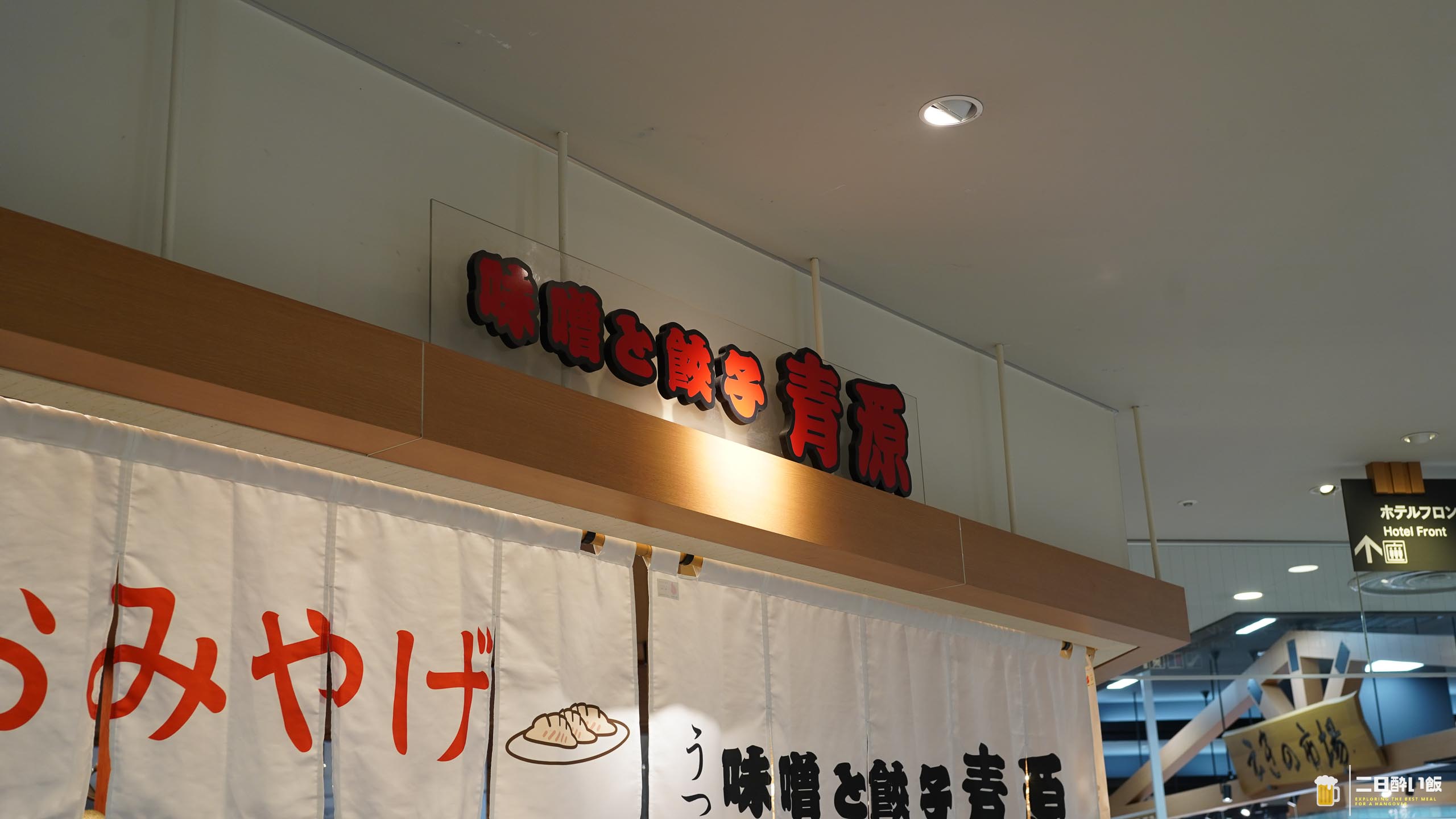
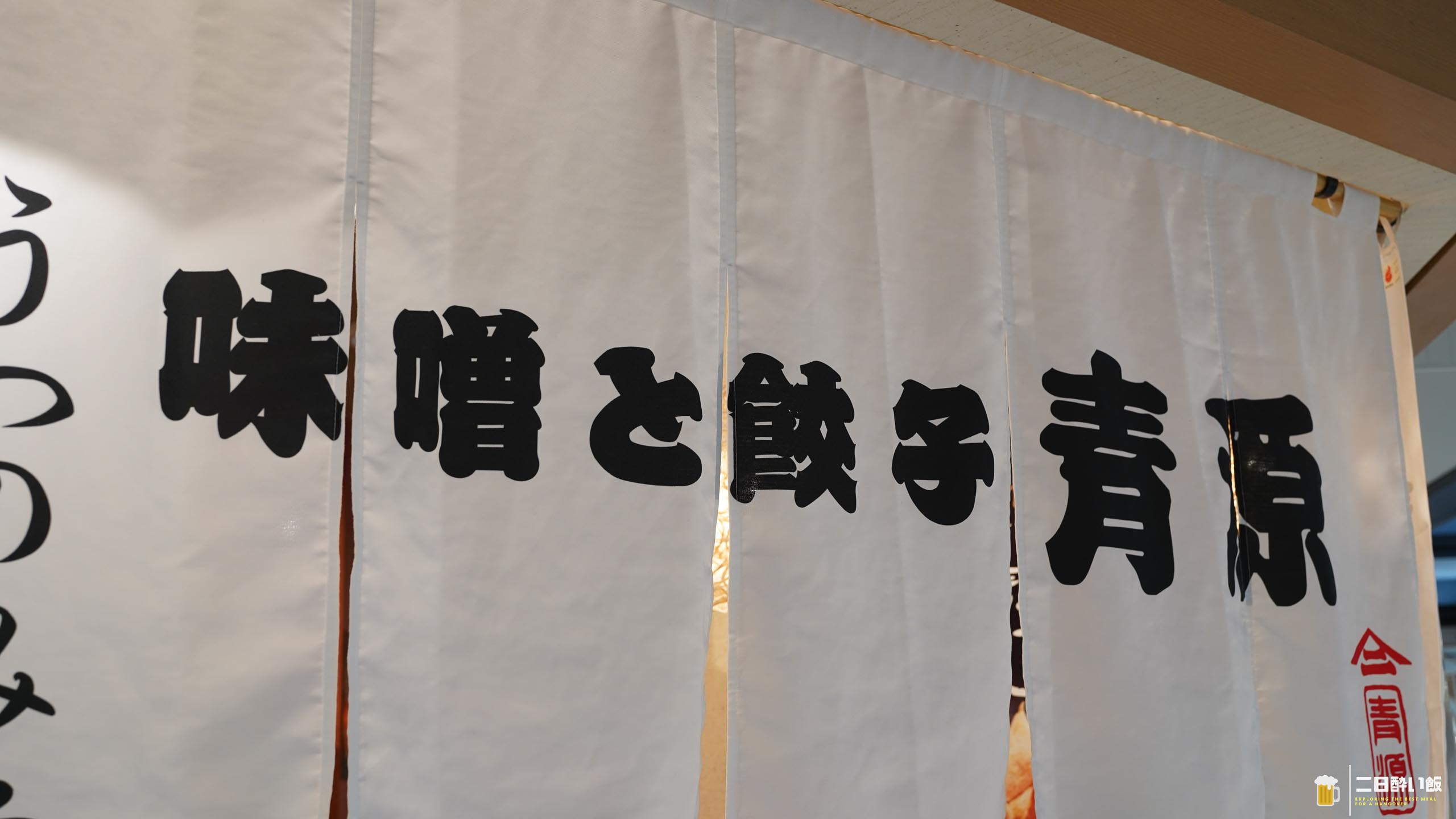
It is in the station, so it must be a famous gyoza shop, I thought — and then…
it turned out to be an Utsunomiya miso maker of more than four hundred years.
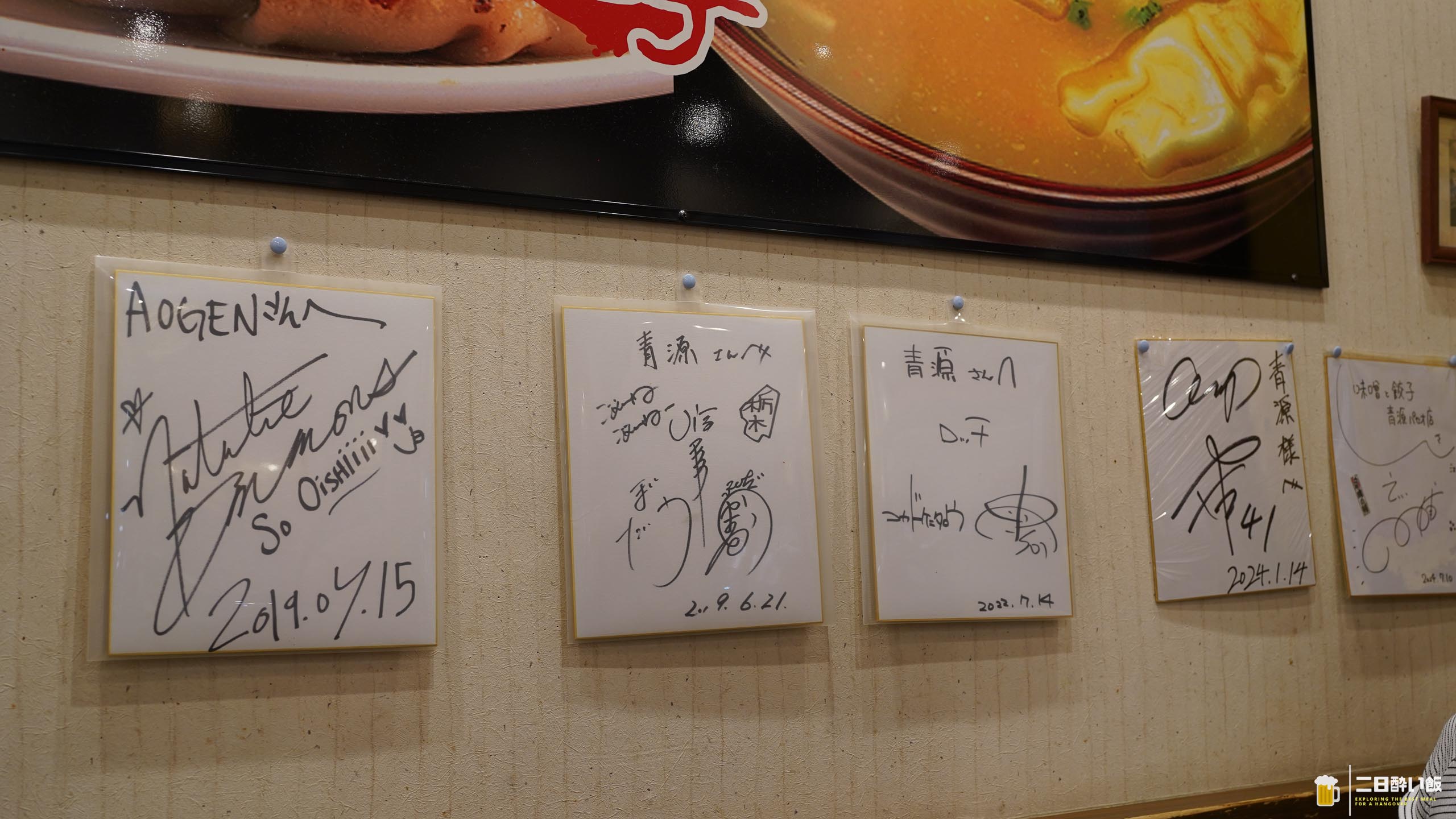
Founded in 1625, the second year of Kan’ei. Remarkable. And these are the gyoza that miso maker serves.
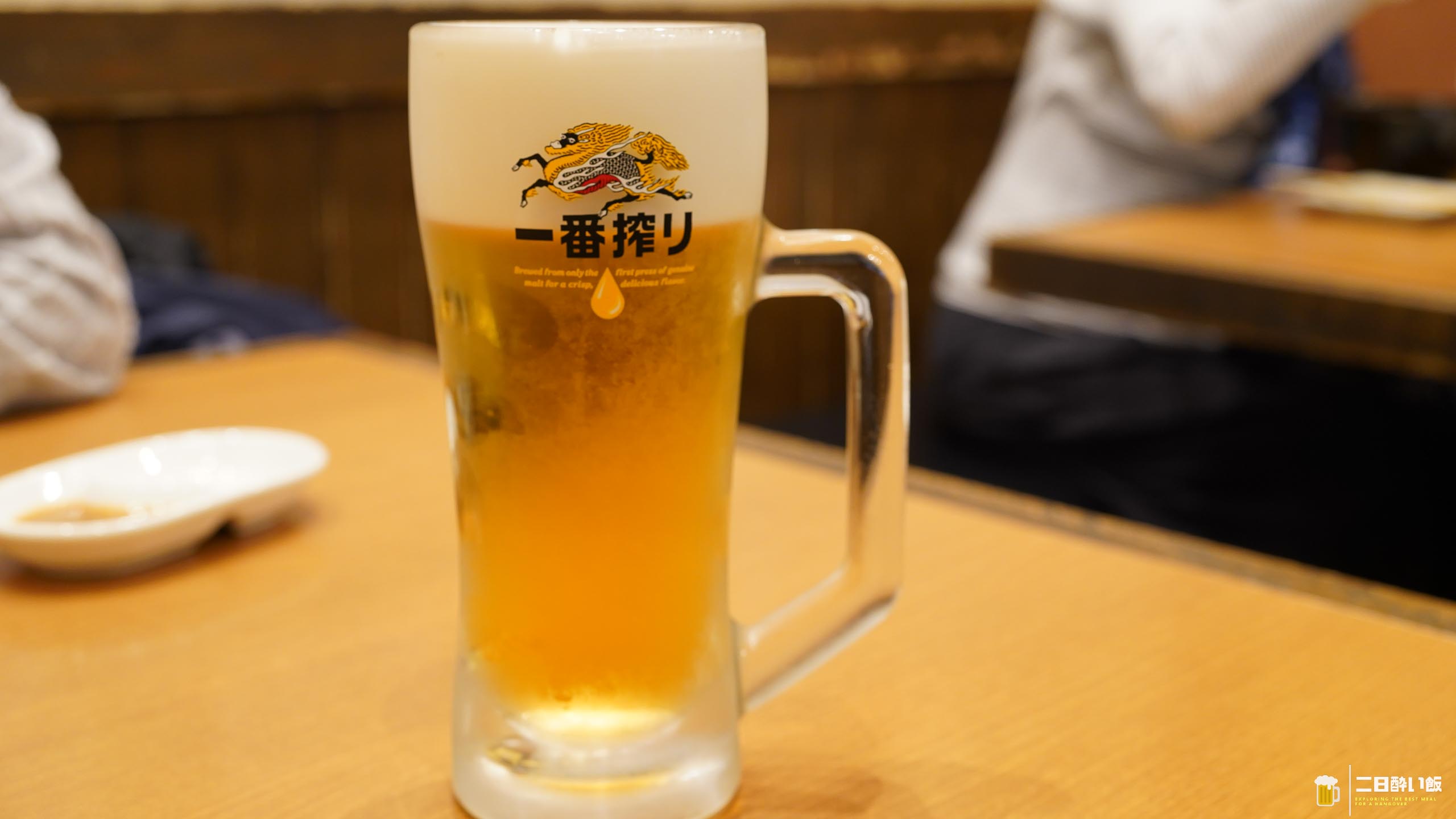
Right, the business is done, and nothing begins until this has been drunk.
And then, with an eye on the clock, I looked at the menu meaning to order something at random, and…
this will do nicely.
It turns out there is a set bringing together Aogen’s popular dishes — the plain gyoza, the spring onion and miso gyoza, and the red boiled gyoza — for 50 yen less than separately. If one is going to eat them anyway, this set is the better value.
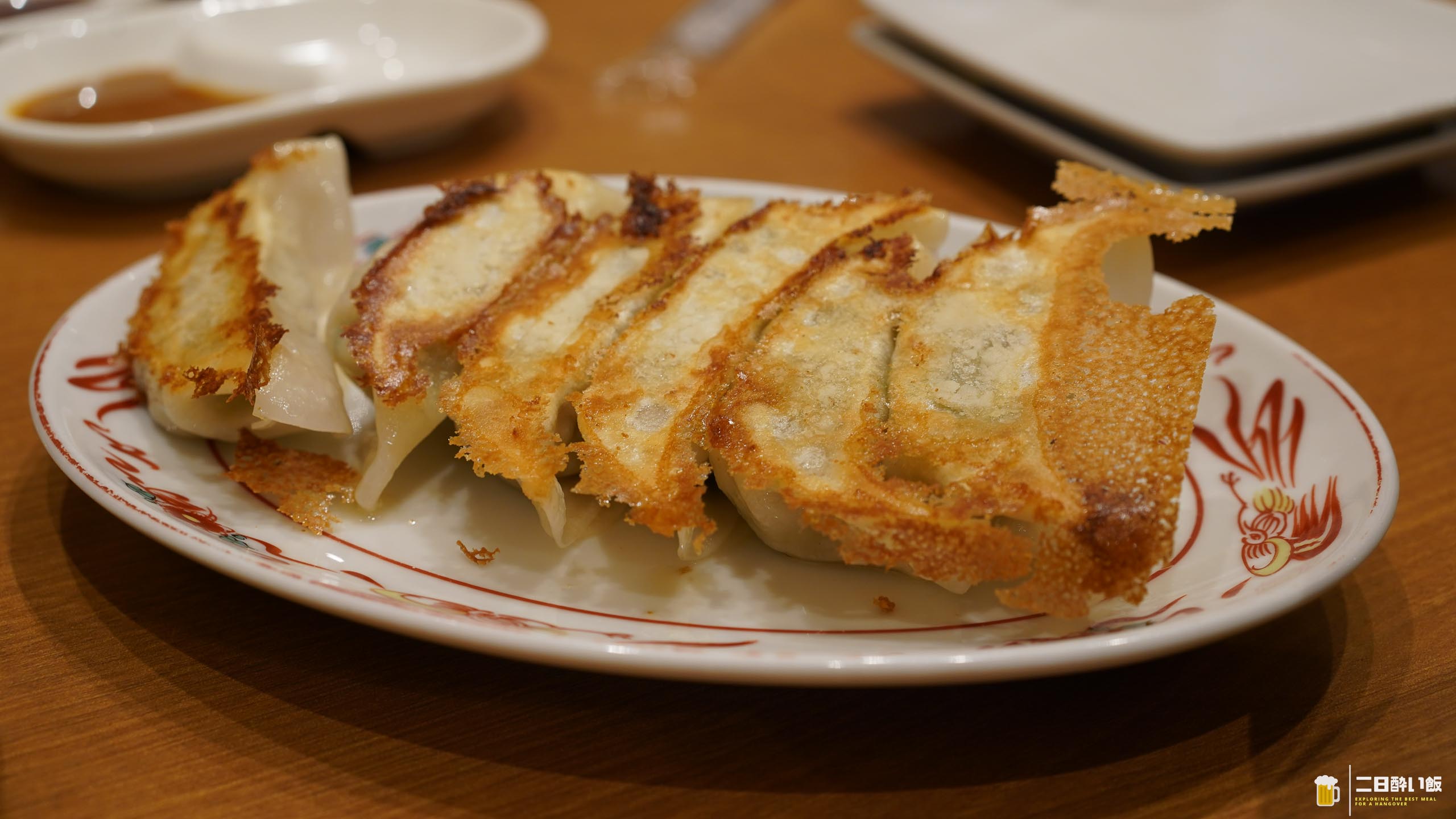
First, the fried gyoza. They are called Gen-chan yaki-gyoza.
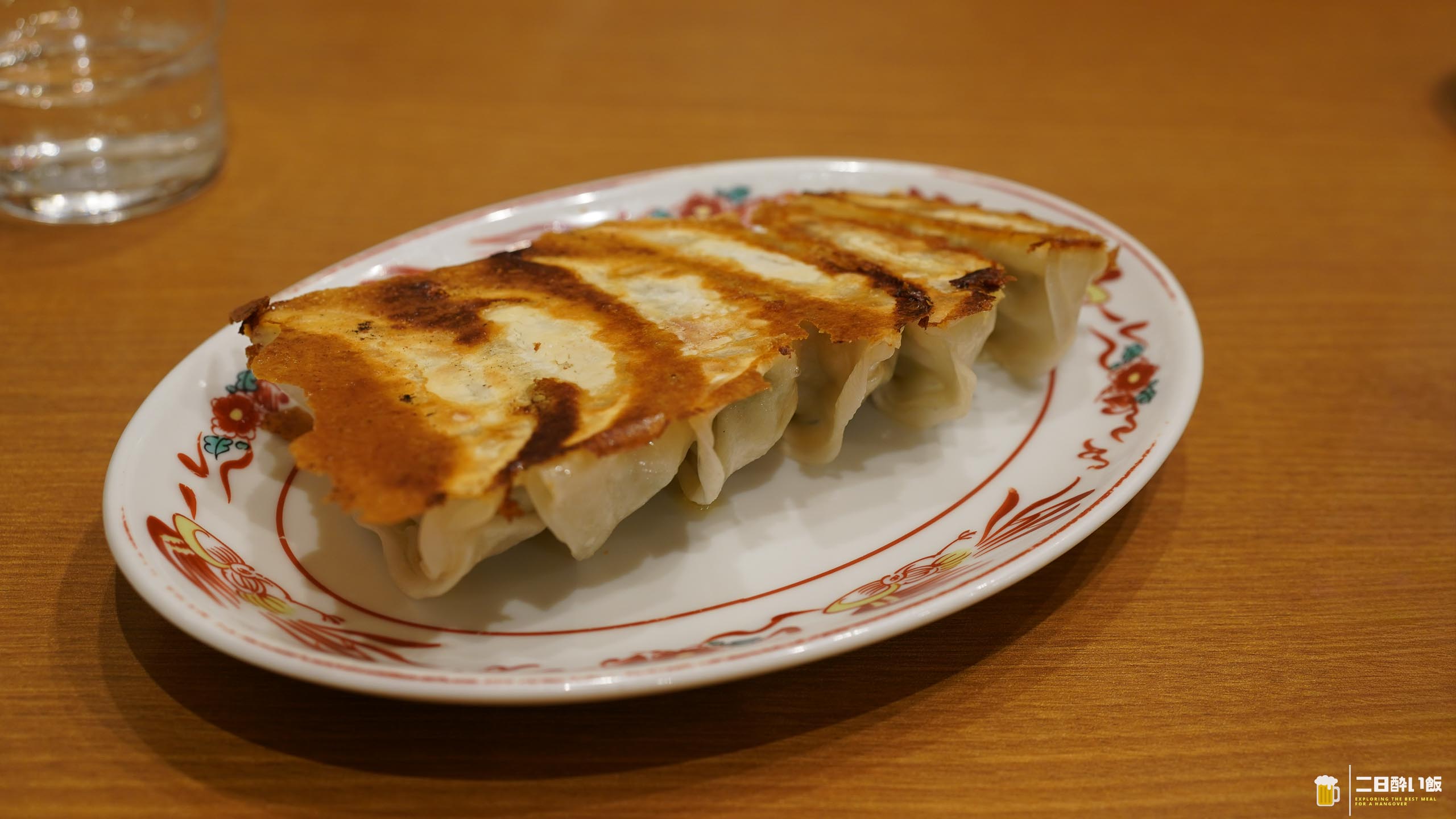
Fried to a good brown. Lift one with chopsticks and one face of the wrapper is crisp and toasty, the other soft and chewy. Bite in and, from a vegetable-led filling with plenty of cabbage, the savour of the meat and its juices flood out. Very good. The crisp bite of the vegetables keeps it light, and you feel you could eat any number. Dipped in the miso sauce alongside, it turns into a mellower, rounder thing than vinegar and soy would give.
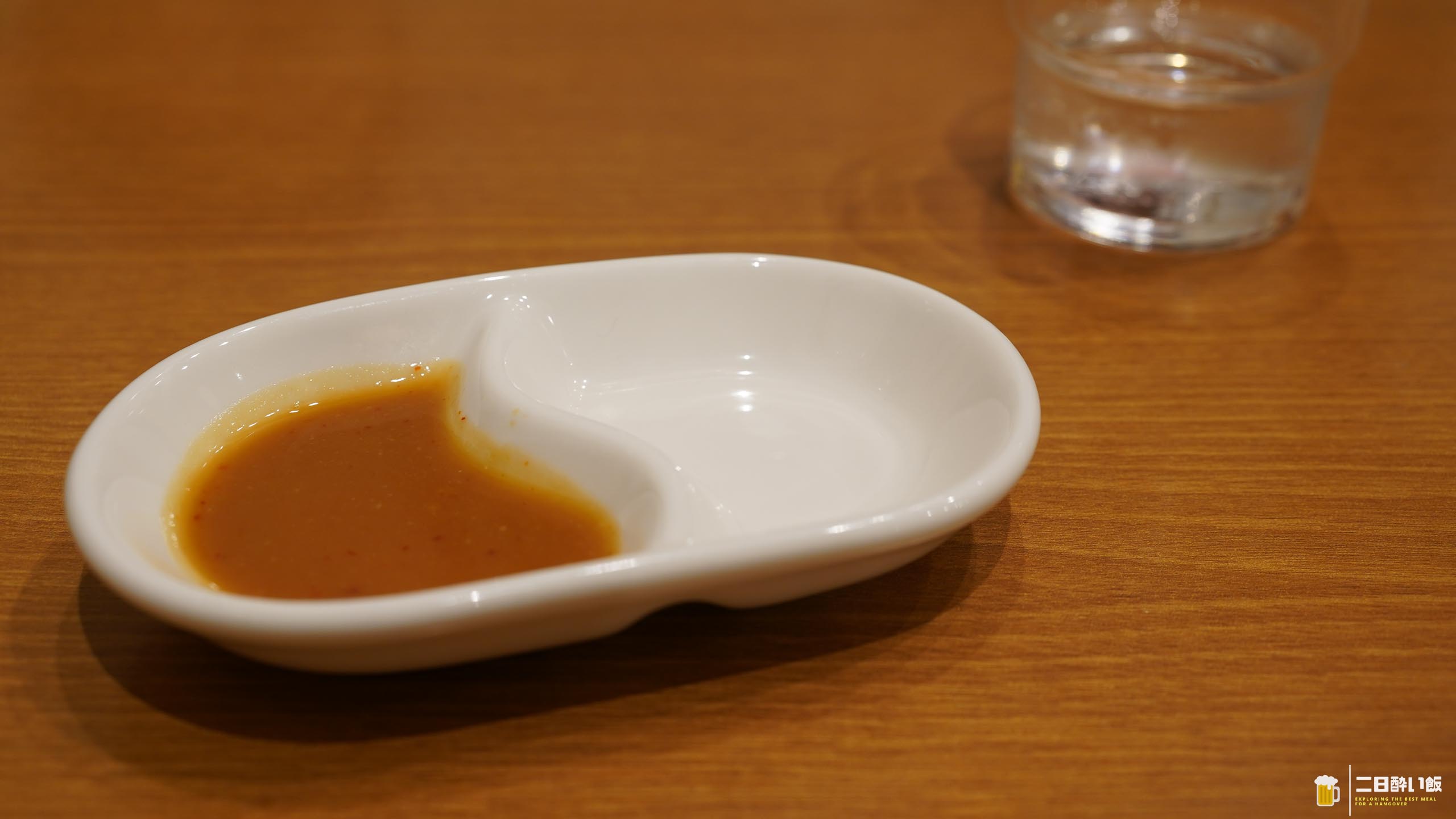
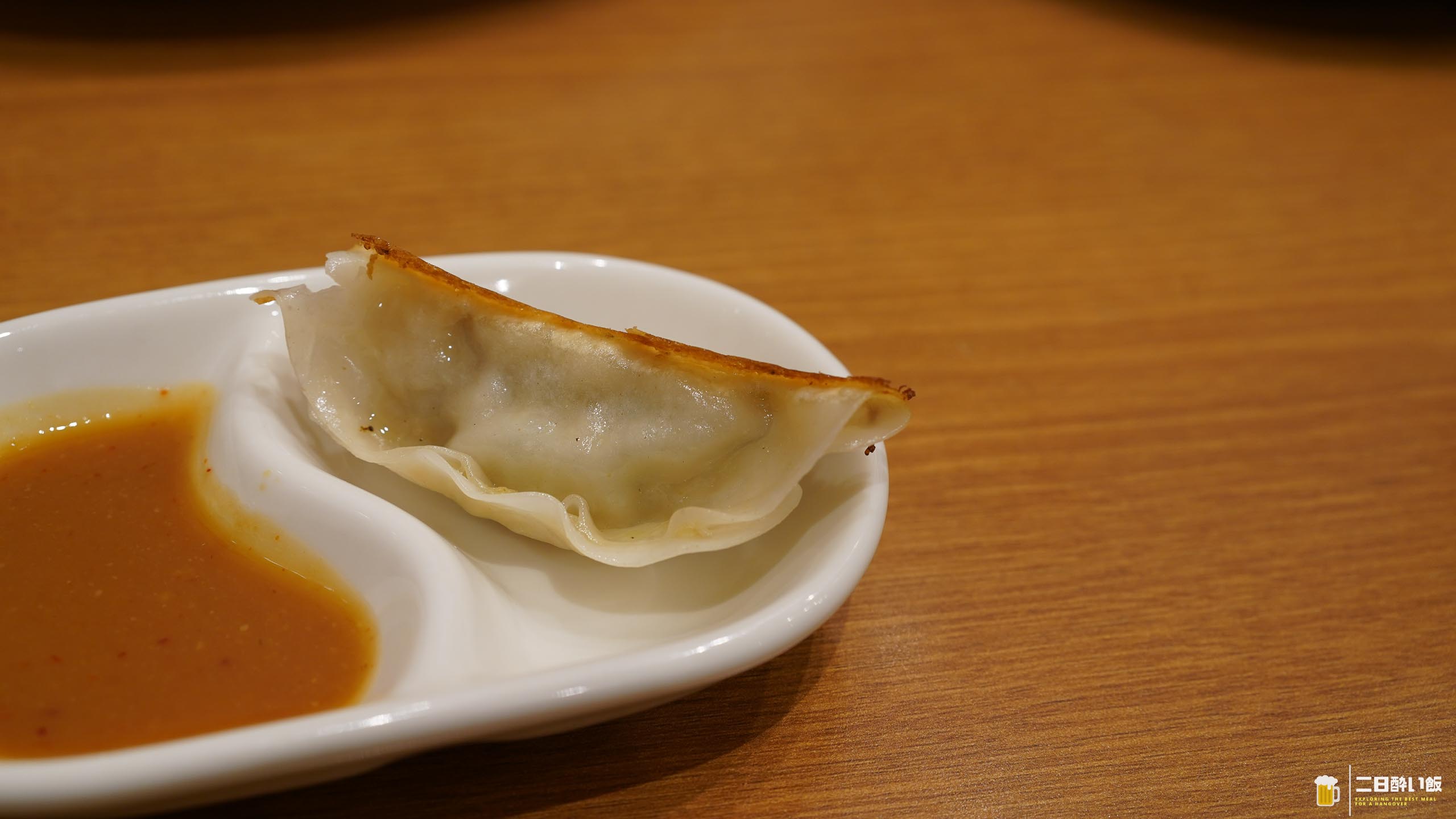
Next, the Aogen spring onion and miso gyoza.
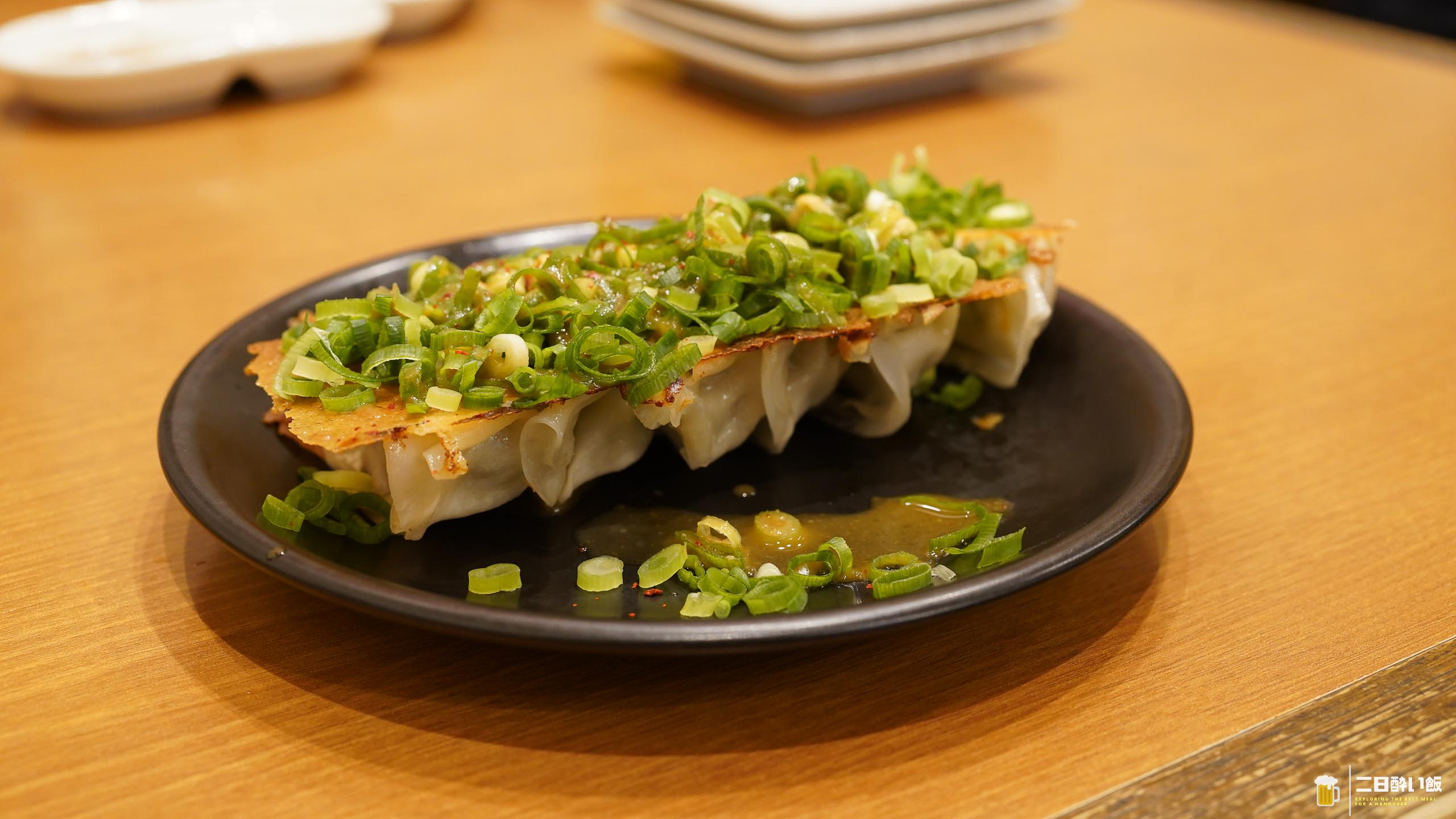
Gyoza under a mountain of chopped spring onion, with Aogen’s own miso sauce poured thickly over the top. Eating it, the onion on top is crisp and fresh and juicy, and its fragrance goes up through the nose. The gyoza hidden beneath are the same Gen-chan yaki-gyoza, the wrapper crisp and toasty, the vegetable-led filling giving up the savour of the meat as you bite. Add to that the sweet-salty depth of the thick miso sauce and it is another dish entirely. The miso really tells, and this may be the better one to drink with.
Last, the red boiled gyoza. There is a blue version too, but the red is the spicy one.
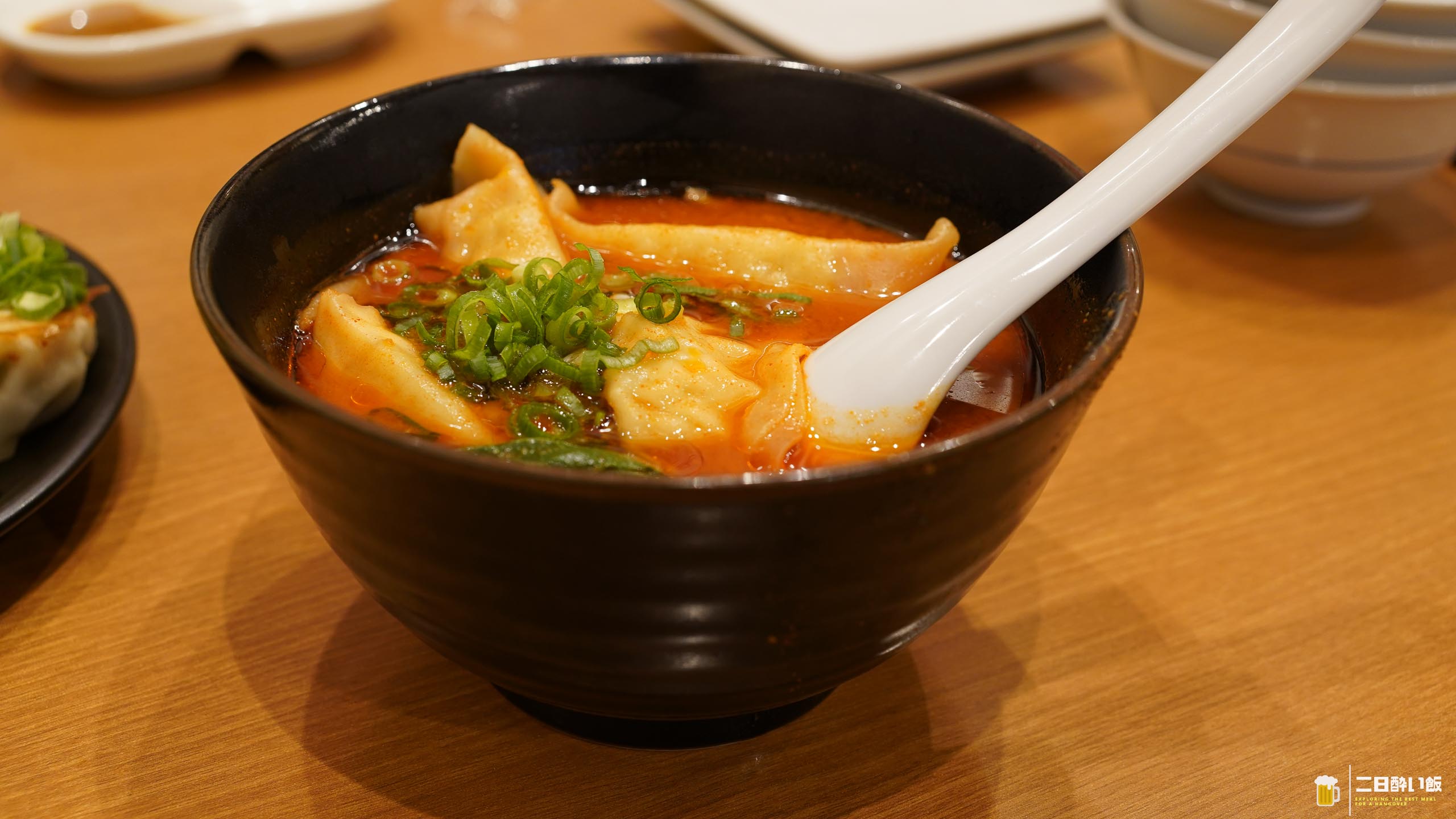
Smooth white boiled gyoza arrive sitting in a reddish, gently spicy broth. Take one on the spoon: the wrapper is soft, chewy and slippery, and goes down easily. Bite in and the savour floods out of the filling, with the prickle of chilli following on slowly. The heat is no more than a gentle warmth. Unless you are truly bad with heat, this should be manageable.
And then, checking the time, there was still a little left — so, one more plate of Gen-chan yaki-gyoza.
Right, time for the train. Hurry.
I had thought at first that I really wanted to take my time and go round the famous gyoza shops. But I am glad to have eaten gyoza made by a miso maker of four hundred years. The miso sauce is good, the gyoza are good, and the fact that this is inside the Utsunomiya station building is very good indeed. However little time one has, everyone wants the local speciality. I imagine this shop has rescued a great many people.
May you meet something good to eat today too.
Miso to Gyoza Aogen, Paseo (gyoza / Utsunomiya Station, Utsunomiya Station East Exit Station, Higashi-Shukugo Station)
Tabelog lunch rating ★★★☆☆ 3.5
I ate here and paid for it myself. Nothing on this site is a comped meal.
One more for the road?


