


A note on the words: Edomae means Tokyo-style sushi, from the days when the fish came out of the bay in front of the city. An omakase course is one where you eat what the chef decides to serve. Shari is the vinegared rice, nigiri the hand-formed pieces, and gari the pickled ginger between them. Toyosu is the wholesale fish market that replaced Tsukiji. Nodoguro is blackthroat seaperch, shiroamadai a white tilefish, kue a longtooth grouper, tachiuo a cutlassfish, and aji a horse mackerel. Uni is sea urchin roe and bafun uni the smaller, sweeter kind; kuruma ebi is a large shrimp. Shiokara is seafood cured in its own salted innards. Akami, chutoro and otoro are the lean, medium-fatty and fatty cuts of tuna. Shira-ae is a dressing of mashed tofu and sesame, irizake an old seasoning that predates soy sauce, and owan the lidded bowl of clear soup near the end of a meal. Prices are as of this writing (August 2026).
Table of Contents hide
Umi on Tabelog (English) — opening hours, payment details and the Japanese address are kept up to date there, not here.
Everyone here for the sushi, thank you for waiting. It is Hangover Meshi time.
Today I thought I might go and eat some rather good sushi! And so, to Umi, the celebrated Edomae sushi restaurant in Gaienmae, Minami-Aoyama. Two Michelin stars for ten years running, which is a remarkable record. The fish comes from Ishiji, the long-established wholesaler at Toyosu; the shari is cooked from Hitomebore, an organically grown rice held in cold dormancy, in a clay pot from the Kumoi kiln in Shigaraki. A top sushi house said to take that kind of care over every detail.
I have a feeling this article is going to be a long one lol
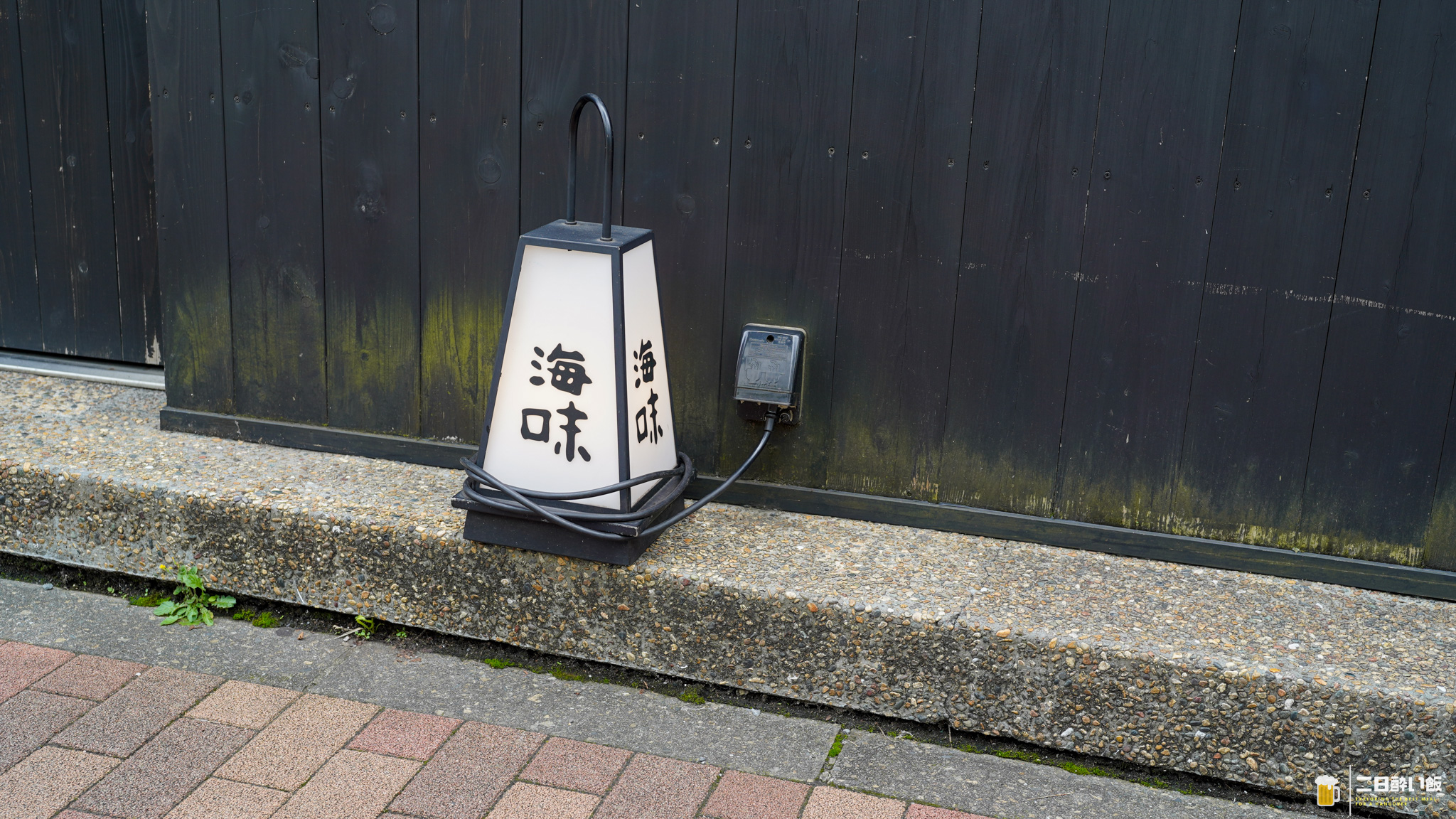
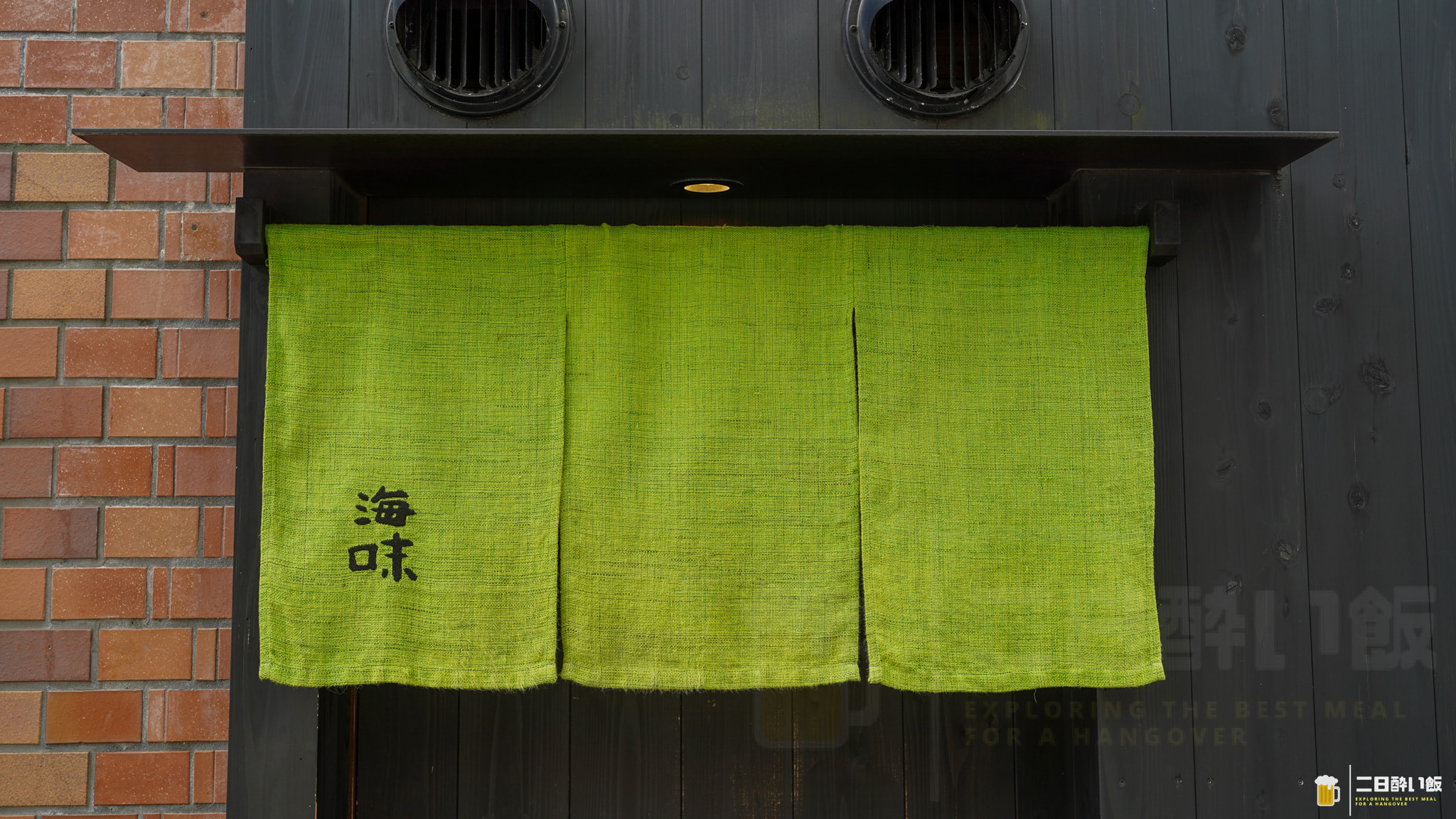
Once in a while there should be room for the happiness of going out for sushi this good at lunchtime, no?
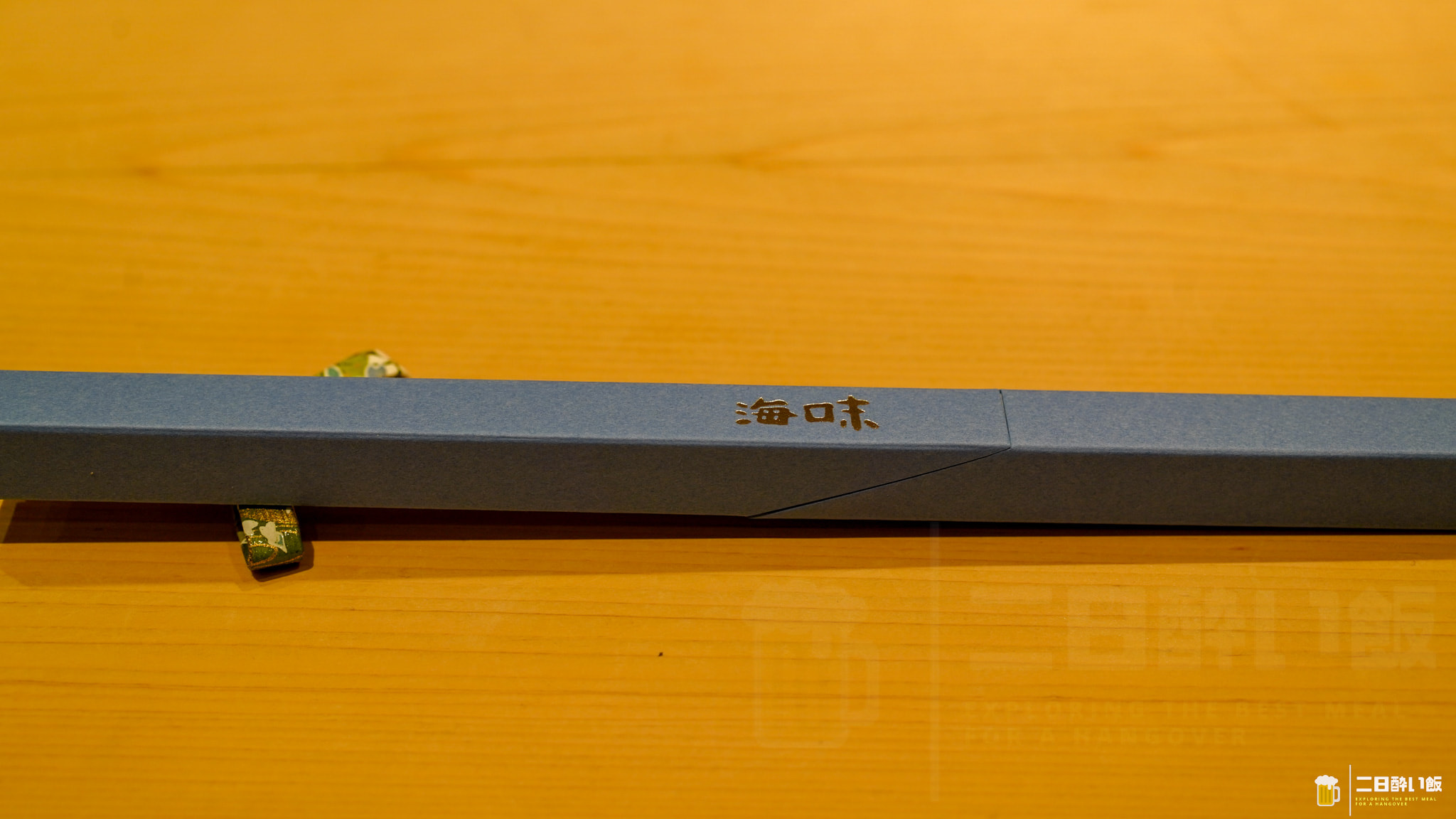
Inside, there were chopsticks in a chopstick case. This turned out to be a setup, though I did not notice at the time lol
Today it is the omakase lunch course, 29,800 yen! I can hardly wait.
Right, let us drink, let us drink! Let us get on with it in the middle of the day!
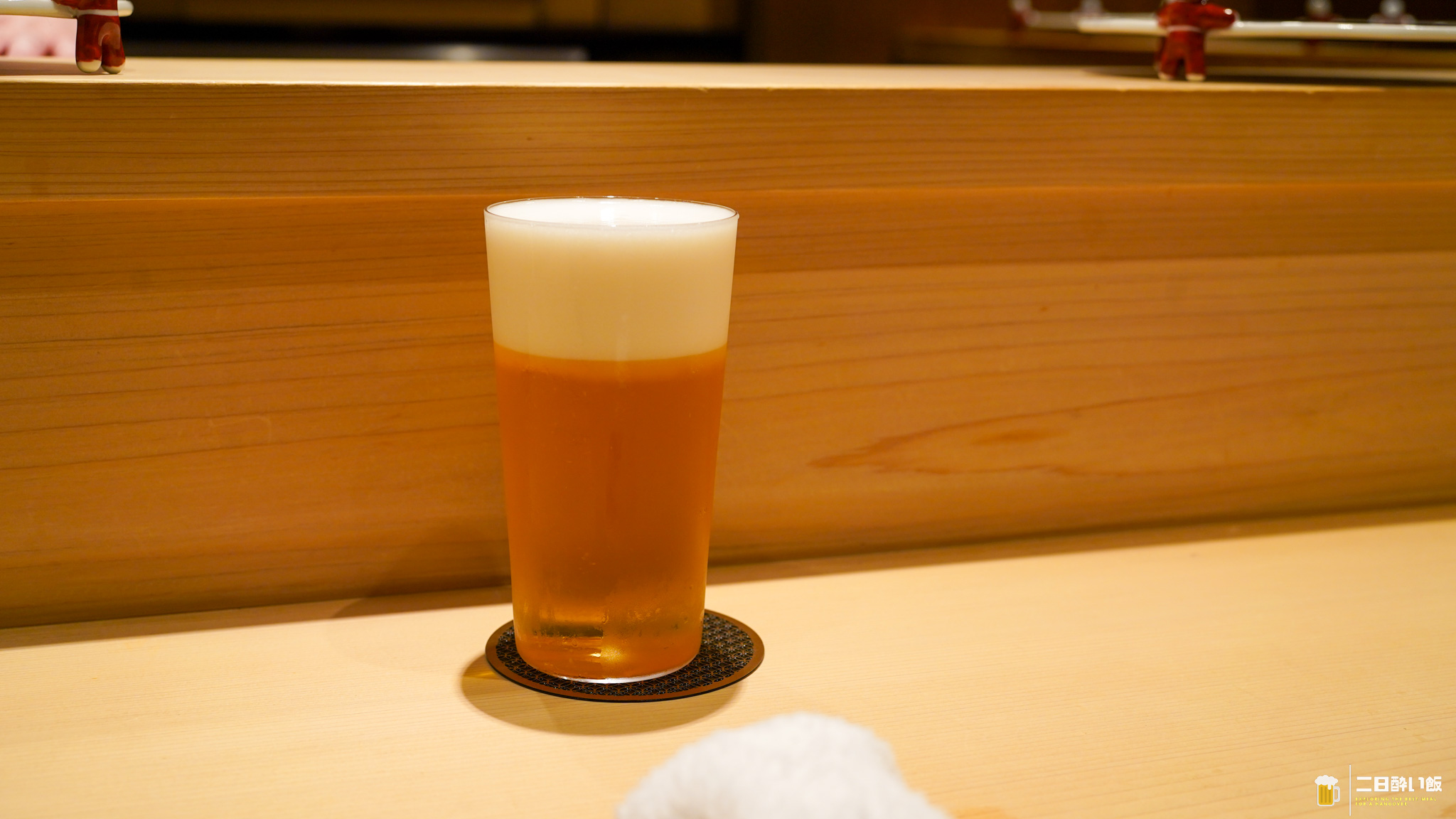
If we are naming the strongest first drink on this earth: beer.
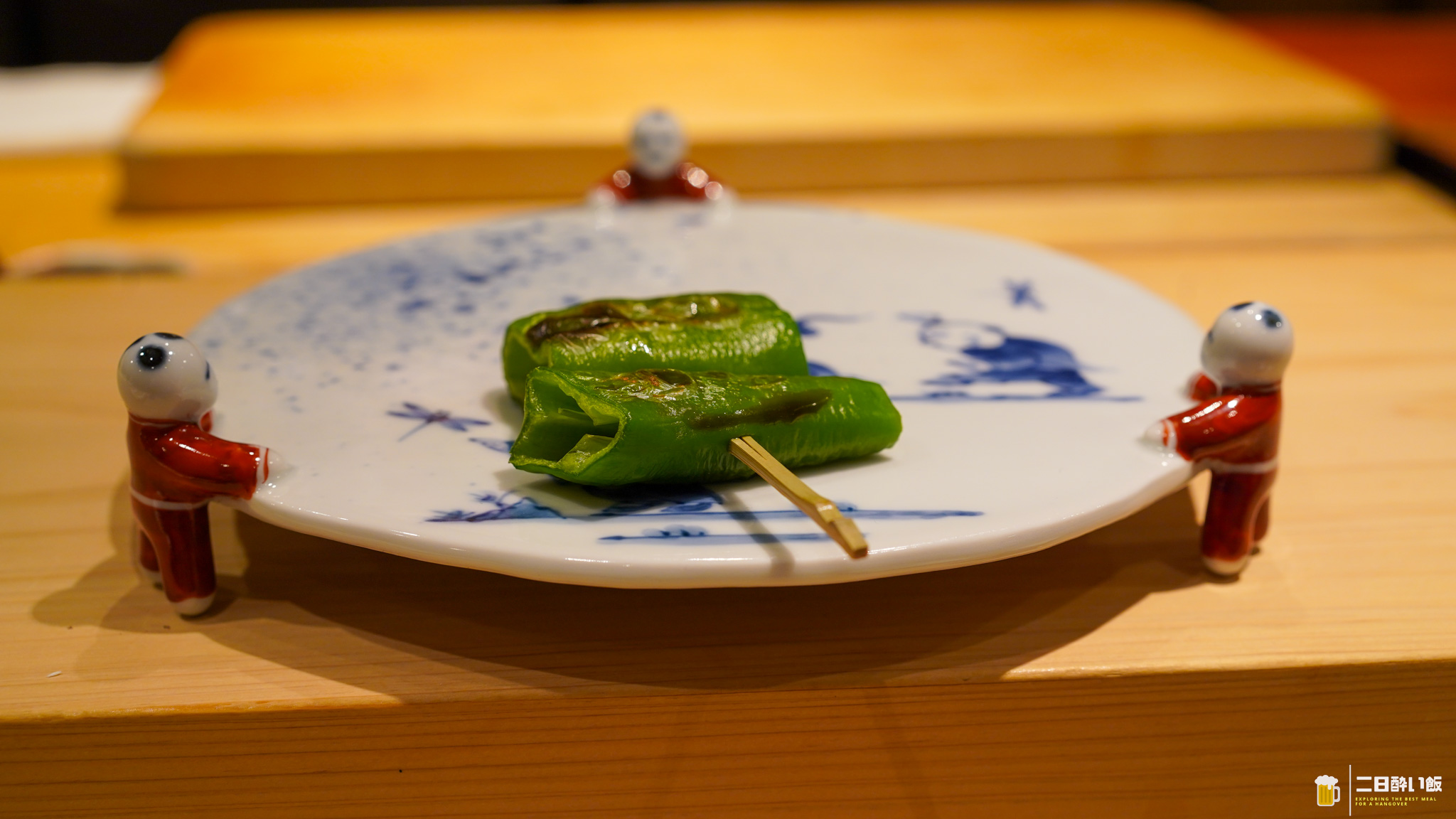
First, this. A thick-walled Manganji pepper with few seeds and no heat. The toastiness of the grill marks lets nothing but the sweetness stand up in an Edomae opener.
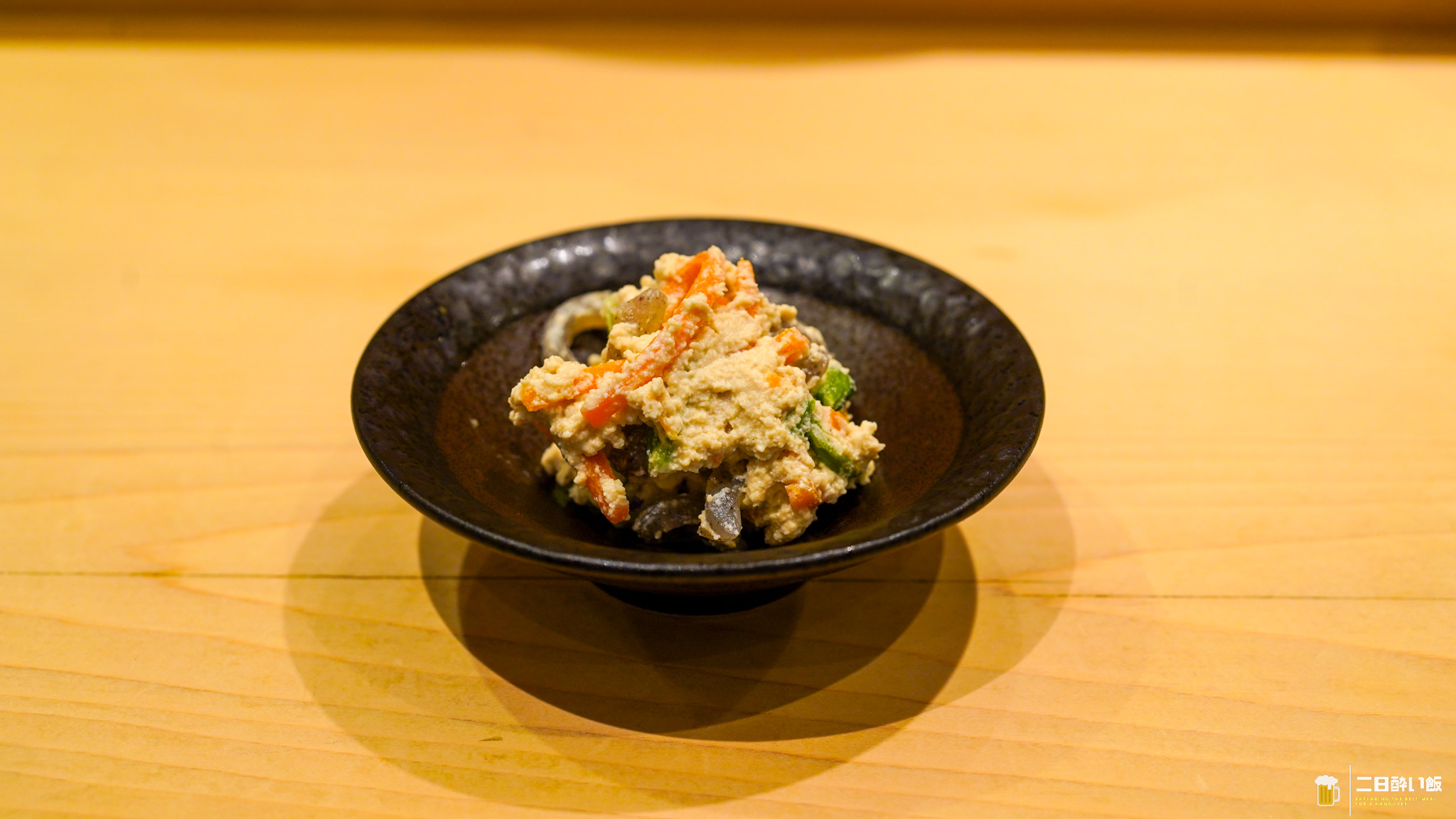
Next, komatsuna from Ishikawa in a shira-ae dressing of tofu and sesame, generously wrapped around carrot and other colorful vegetables. Together with the pepper before it, an unbeatable companion to beer.
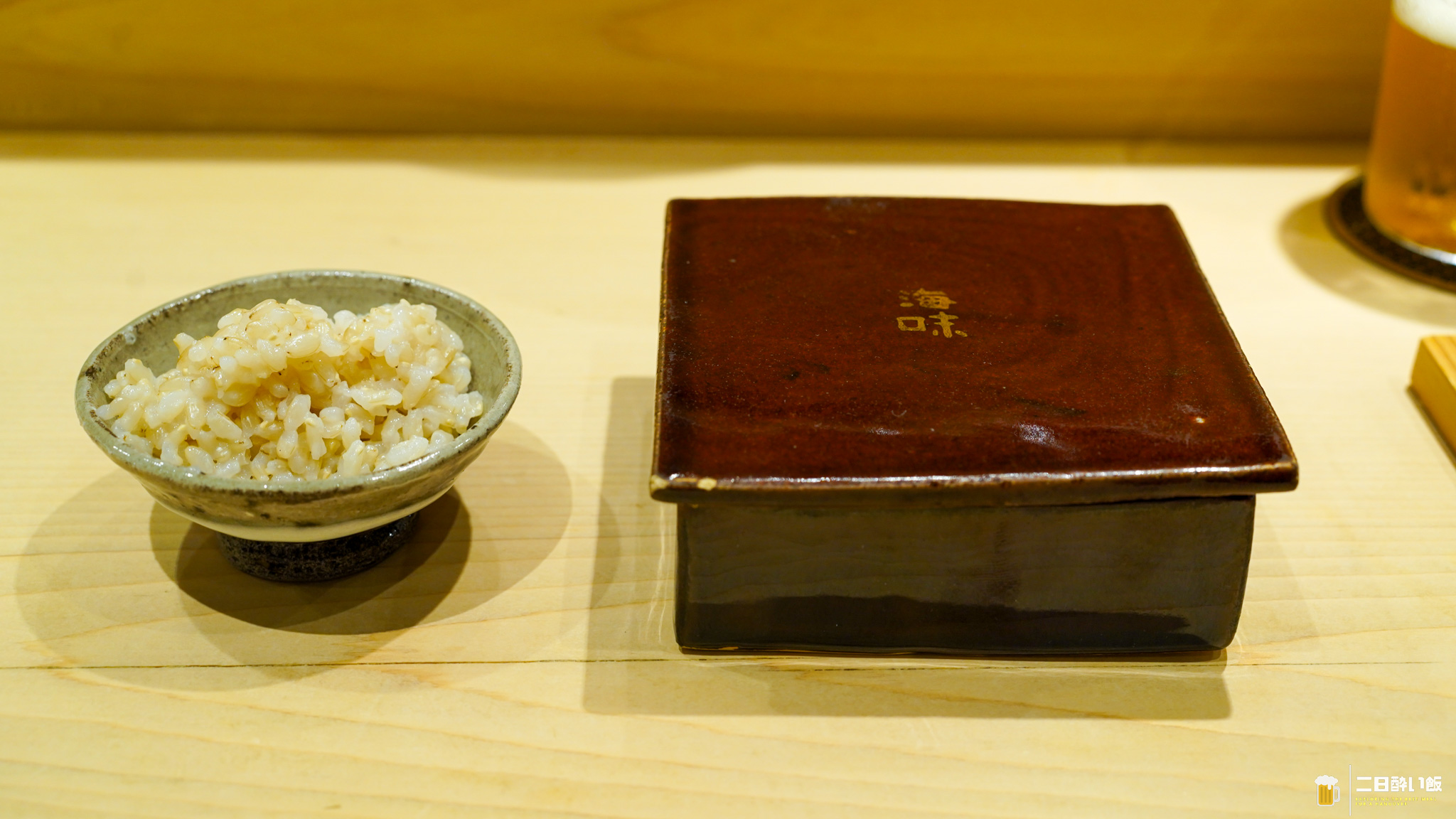
The next dish — I lifted the lid and got a shock lol
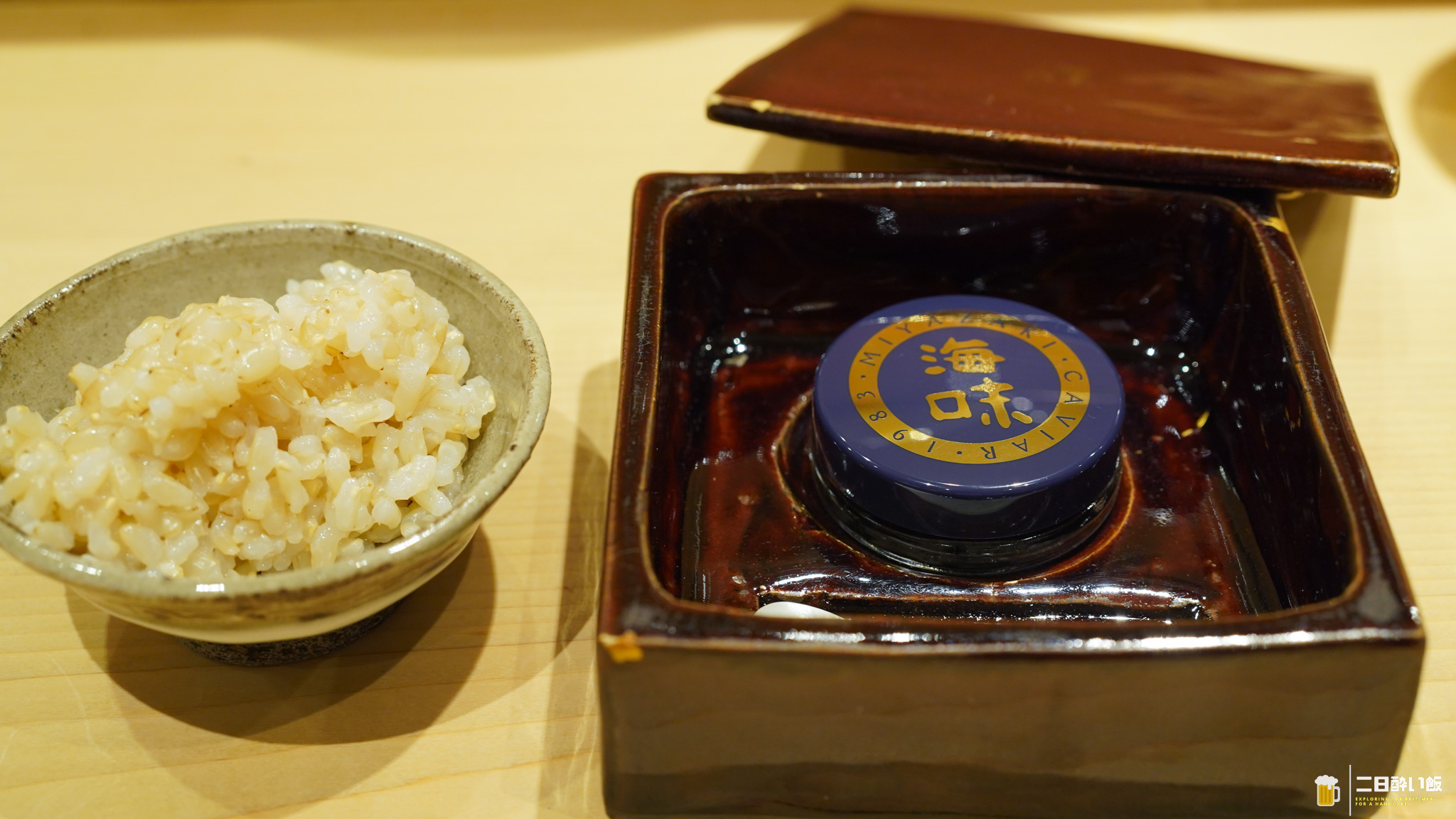
The brown rice that becomes the base of the shari here, paired with caviar from Miyazaki that the chef calls his “house caviar”! C-caviar…?! lol lol lol
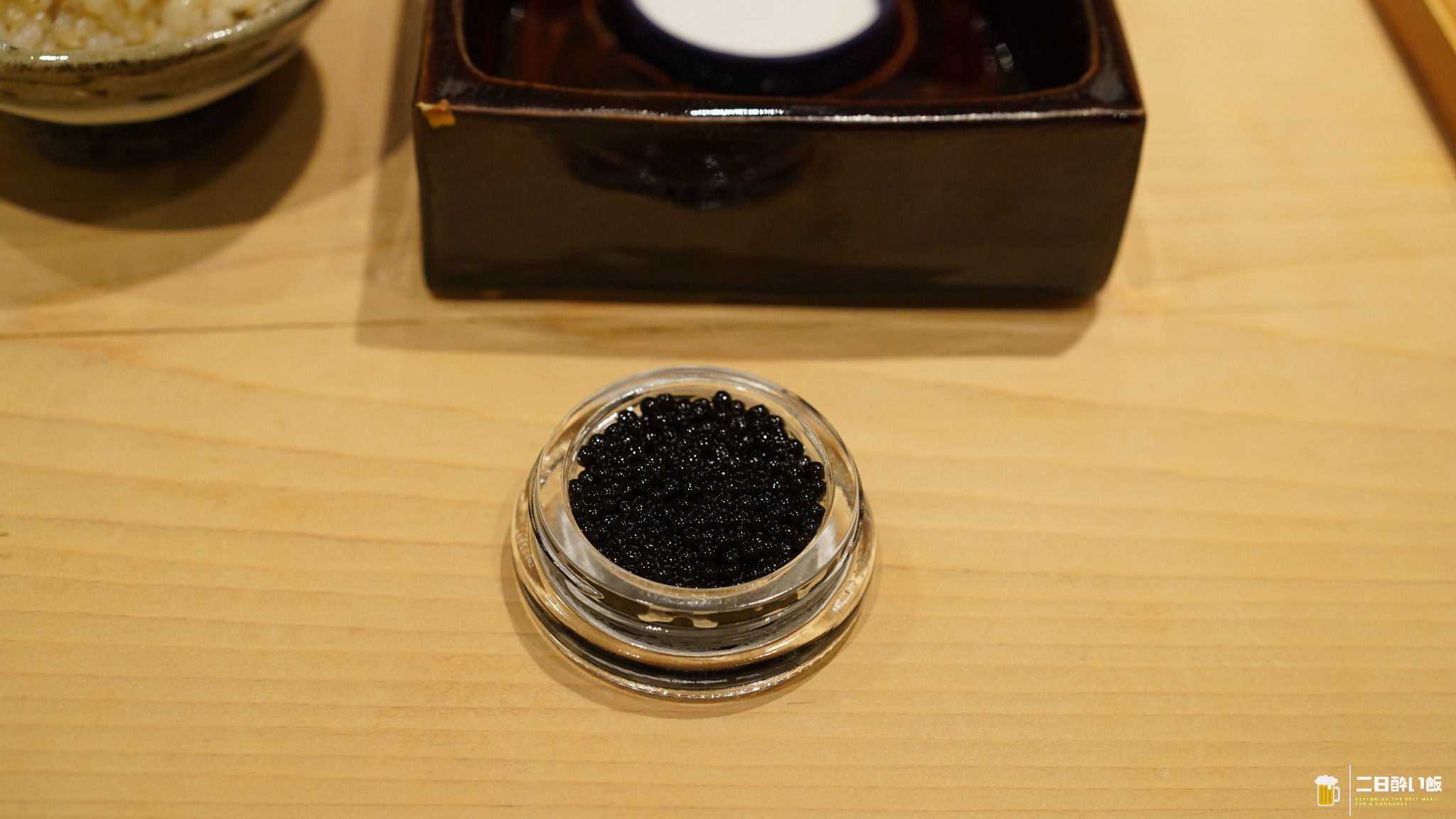
Taking a little of the caviar on its own, the savor is dense; in the mouth it pops bead by bead, and the sea air rising through the nose and the creamy finish carry on for a long time. This is a fine thing indeed.
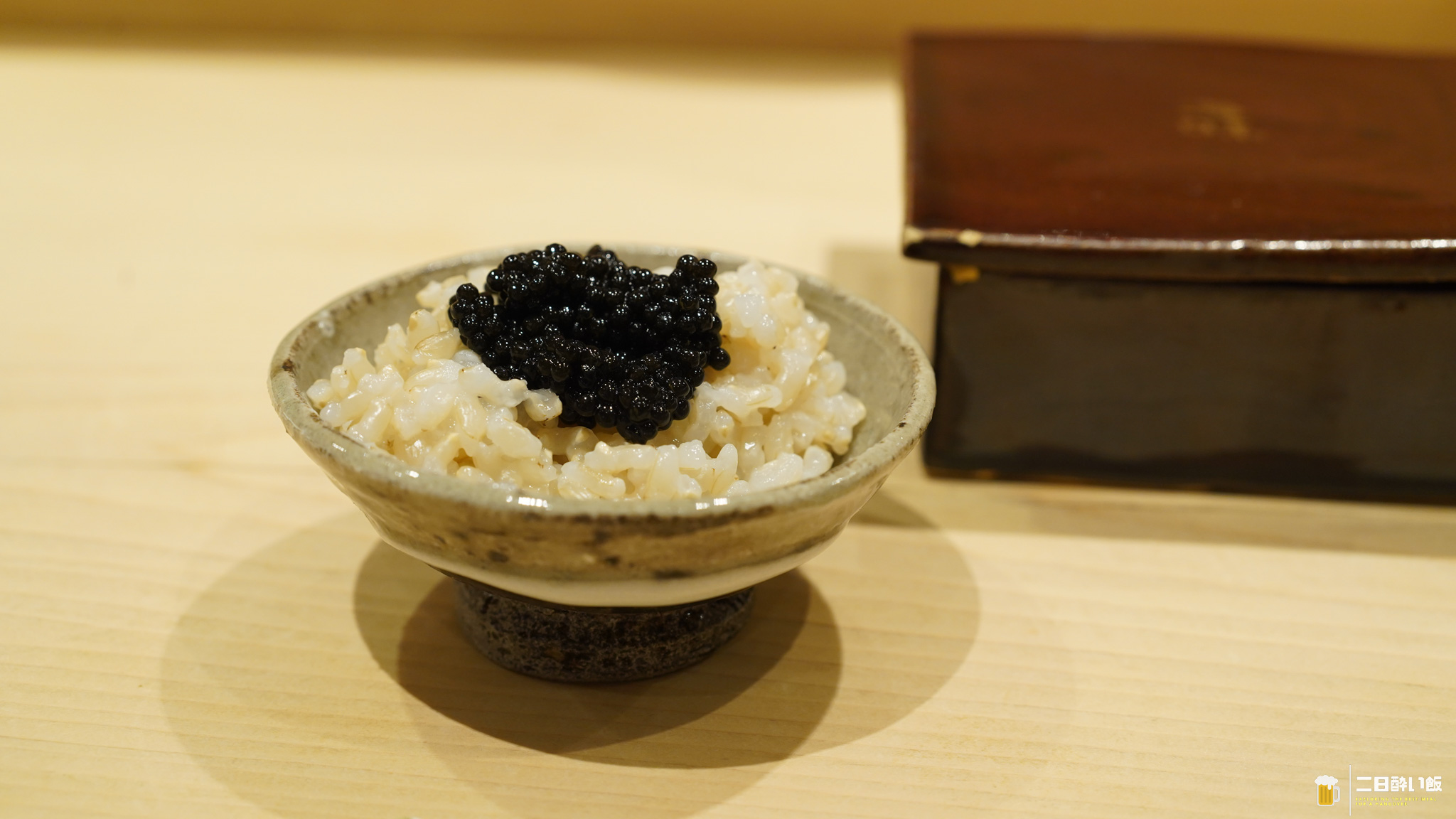
The brown rice is the very grain that becomes the shari, and the more you chew the more a faint sweetness and toastiness rise up. Eaten together, the firm, separate grains of the rice are wrapped in melting caviar, and the two kinds of bead, Japanese and Western, layer over each other in the mouth.
This is extremely good!
And we have not reached a single piece of nigiri yet… lol A course with a remarkable sense of abundance!
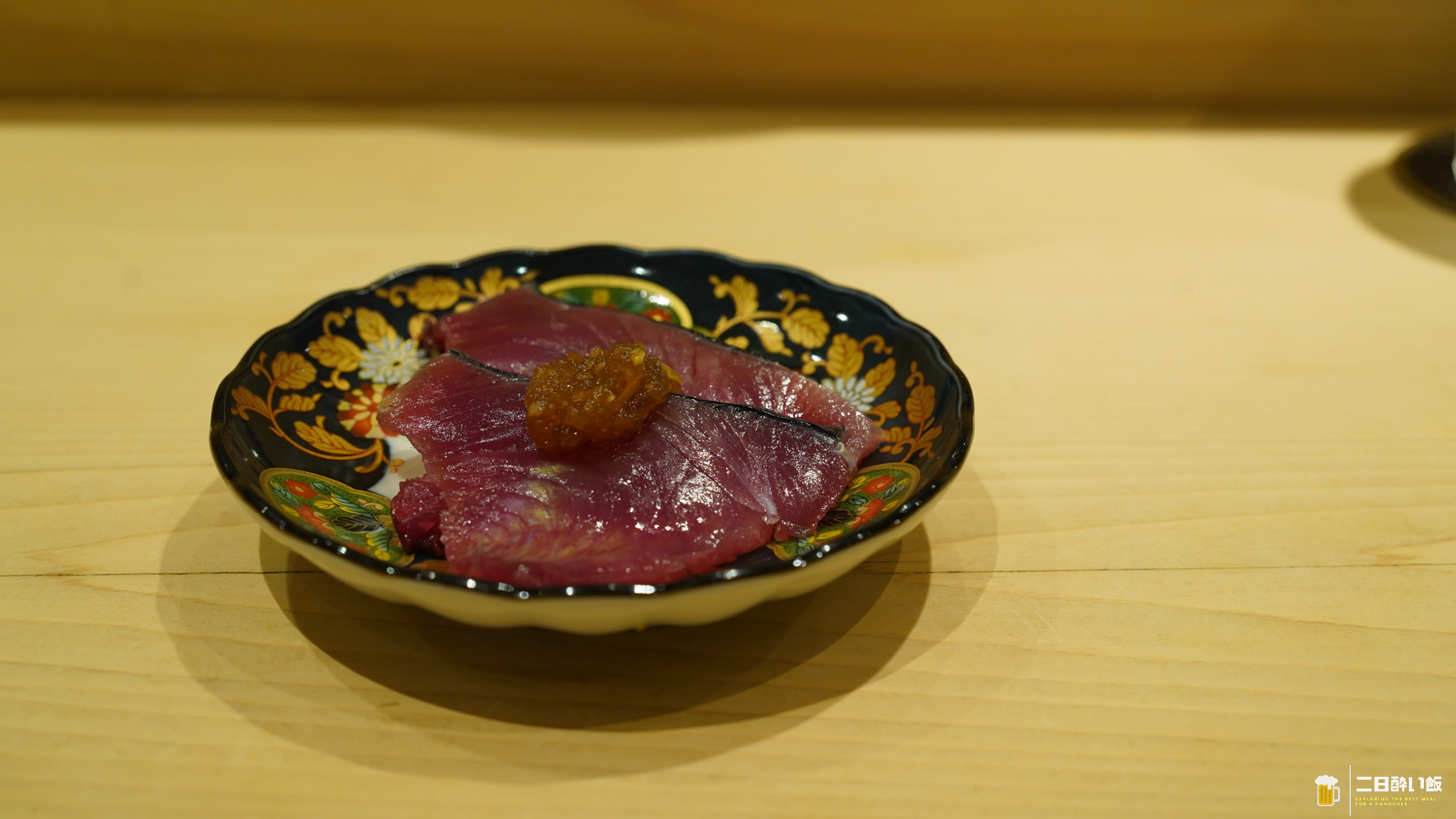
A plate of bonito landed at Makurazaki in Kagoshima and then smoked. Not straw-seared, not tataki — smoked slowly until it has the rich texture of ham. The smoke rises through the nose as you chew, and the thickly cut flesh has a strong sheen; the fat on it is irresistible.
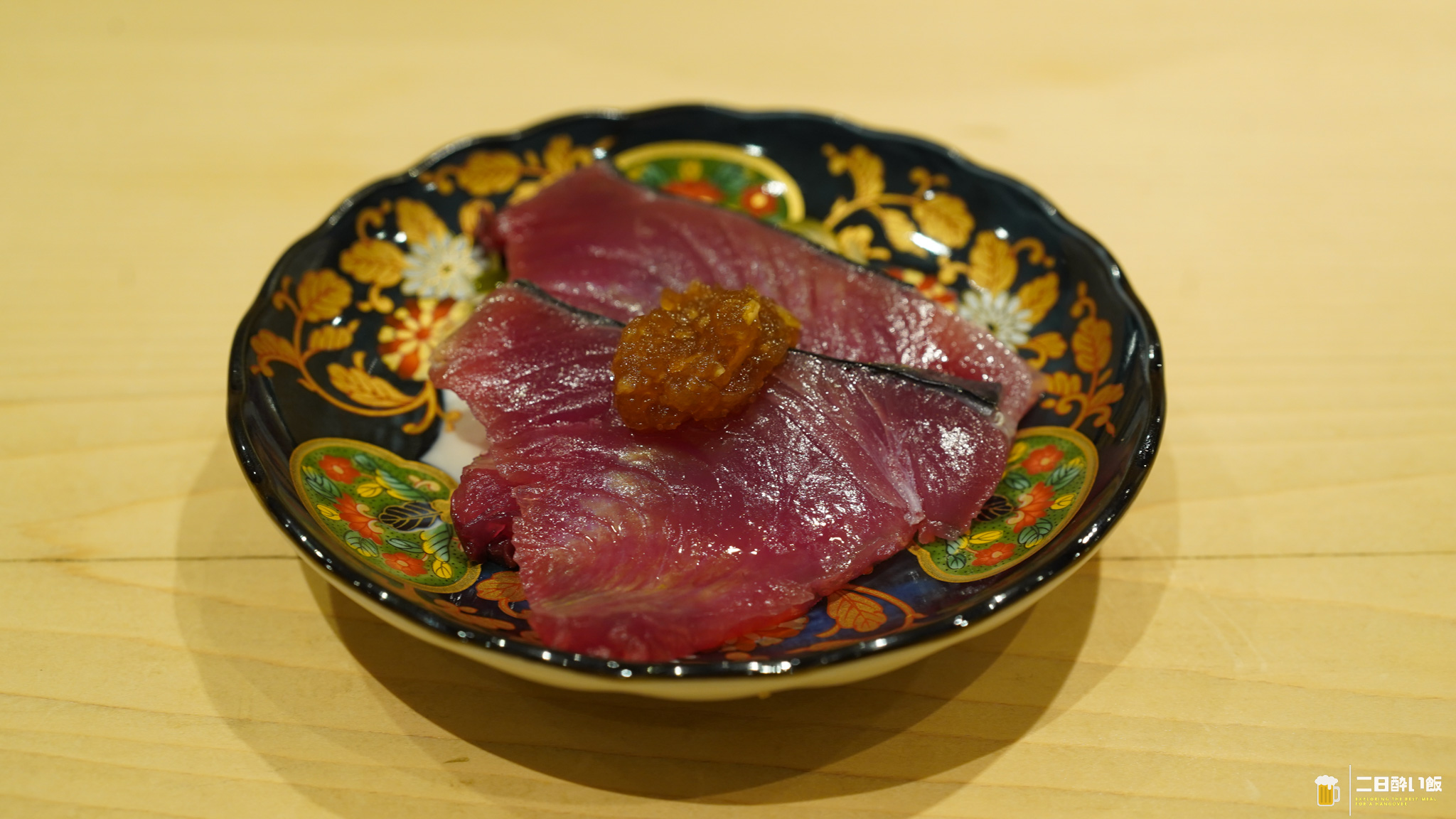
The house-made onion soy served alongside washes the smoked fat away with the sweetness and bite of finely chopped onion, tightening the finish and lightening it. I could not resist and ordered a barley shochu with soda!
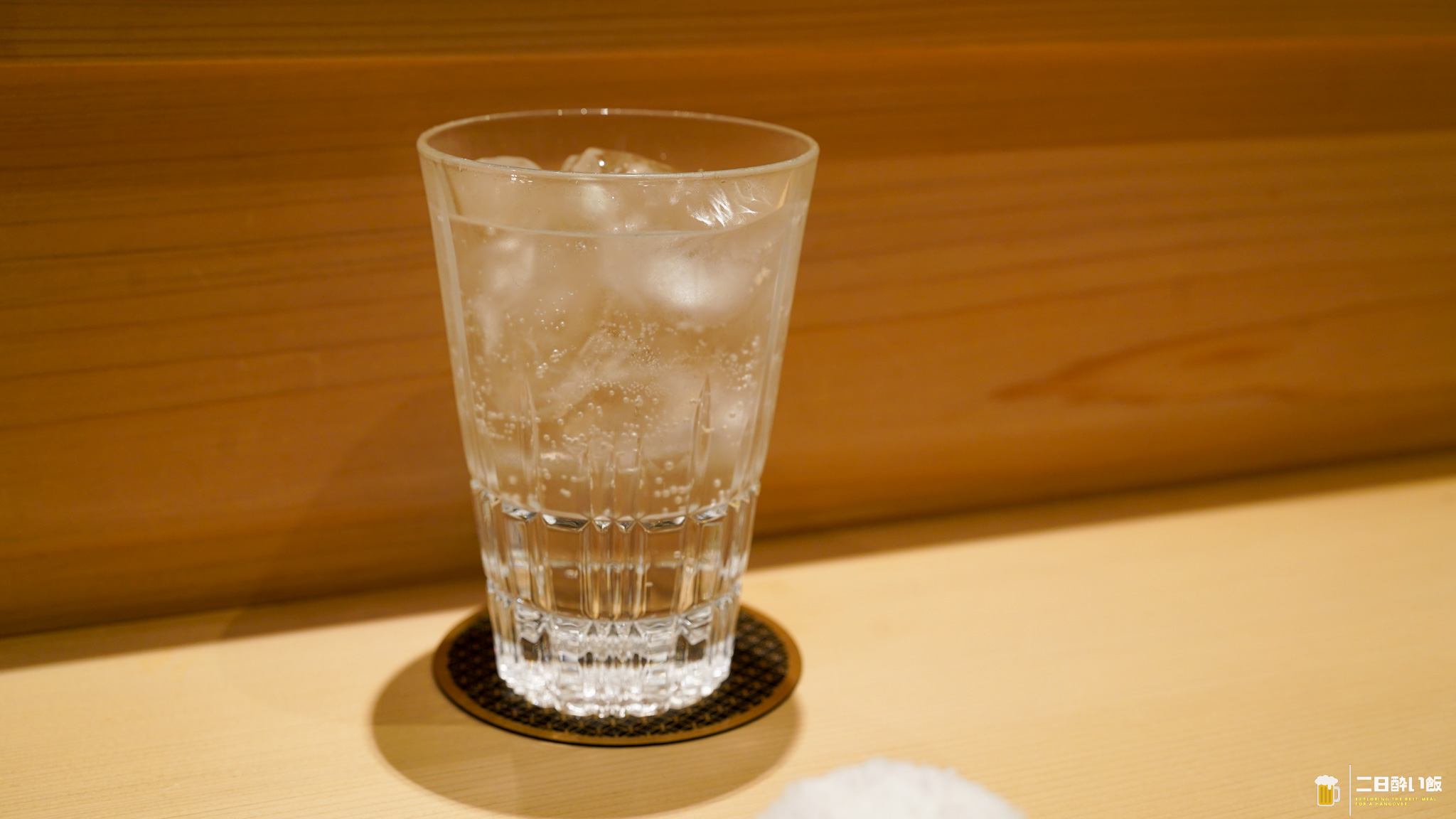
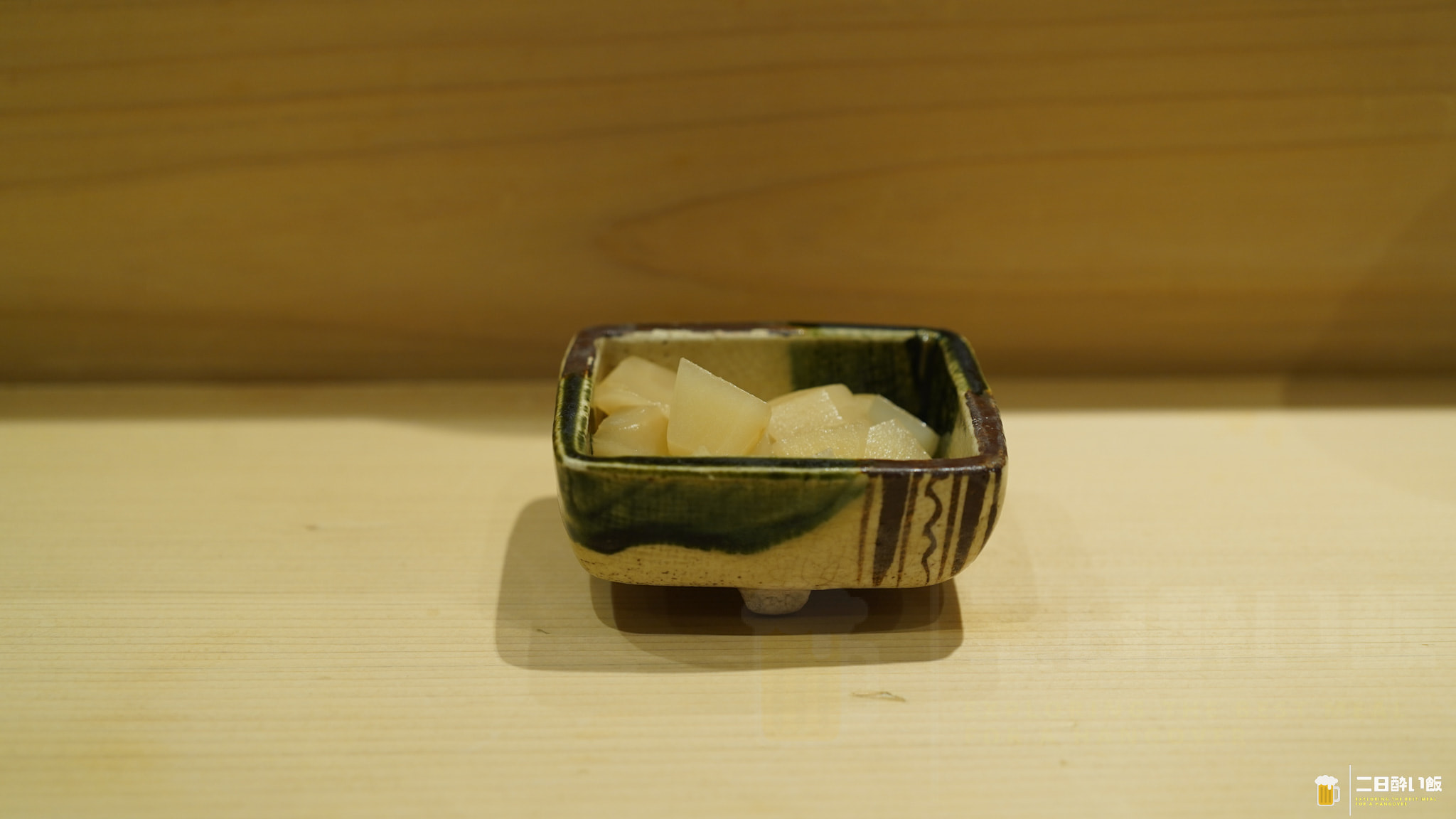
The gari is set out, and from here the nigiri begins! I can hardly wait!
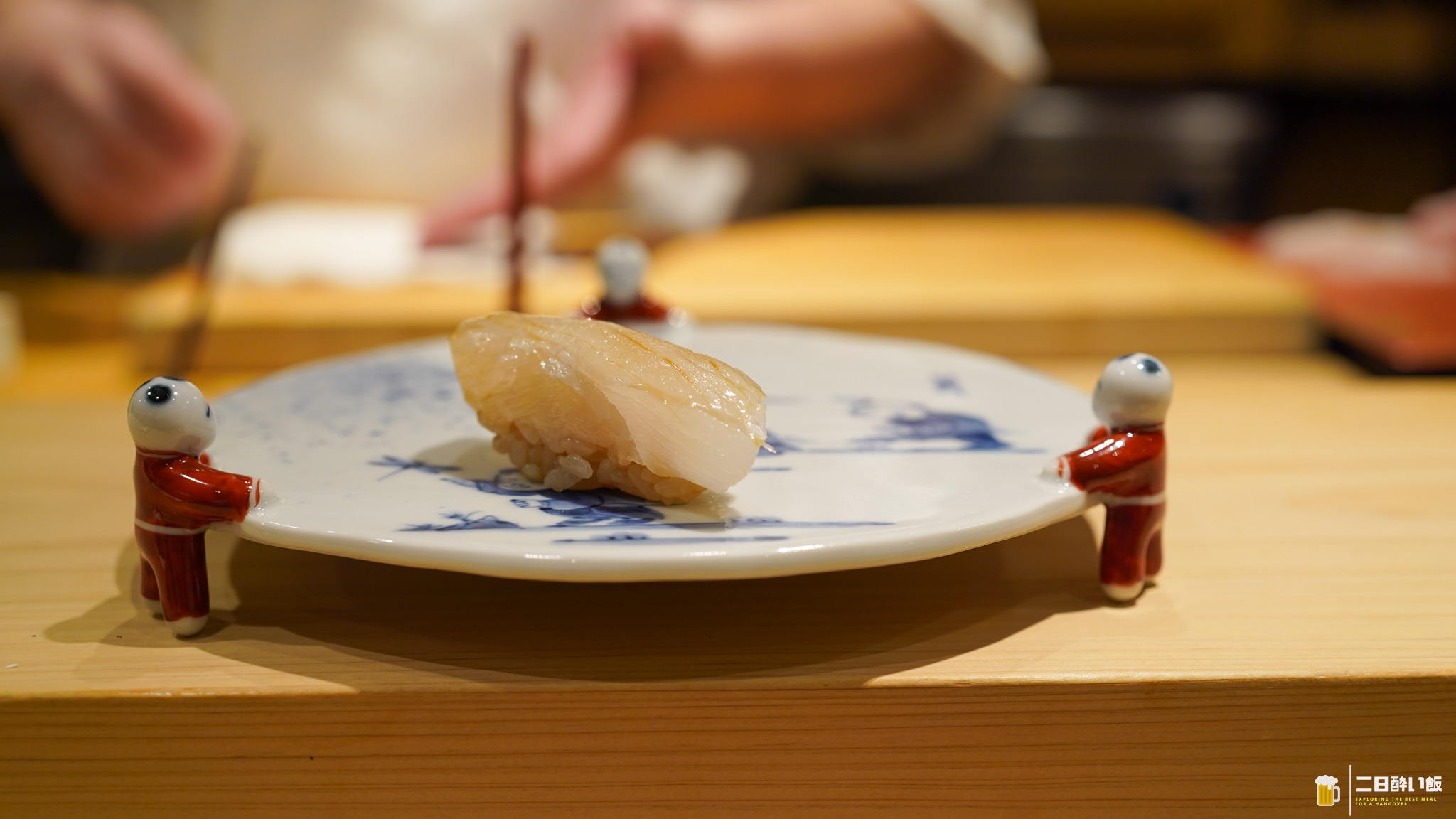
First, a piece of wild kue from Uwajima in Ehime, aged three weeks. Kue takes years to grow and is a rare, expensive fish; freshly cut it is lean, but the deeper the fat gets the longer it is held. The refined fat carries a savor strong for a white-fleshed fish without ever being heavy, and there is a collagen stickiness near the skin. That said, whether by individual fish or by cut, there were moments where the aging brought a faint characteristic scent and some sinew — which is perhaps just what a wild fish is.

Shiroamadai from the Goto Islands in Nagasaki, lightly cured with salt and then laid against kombu to draw savor into it. The flesh is springy and soft, a gentle sweetness spreads through it, and the kombu adds depth. Rather than soy it is served with irizake, an old seasoning made by simmering sake with umeboshi and katsuobushi. It lets you taste the delicate sweetness of a white-fleshed fish to the full!

Nodoguro from Tsushima in Nagasakiiiii!!
The chef says this one is handled under the name Beni-hitomi. It is a fish whose savor gathers in the skin, so he sears the skin over charcoal before forming the nigiri. This is how it is done over the coals.
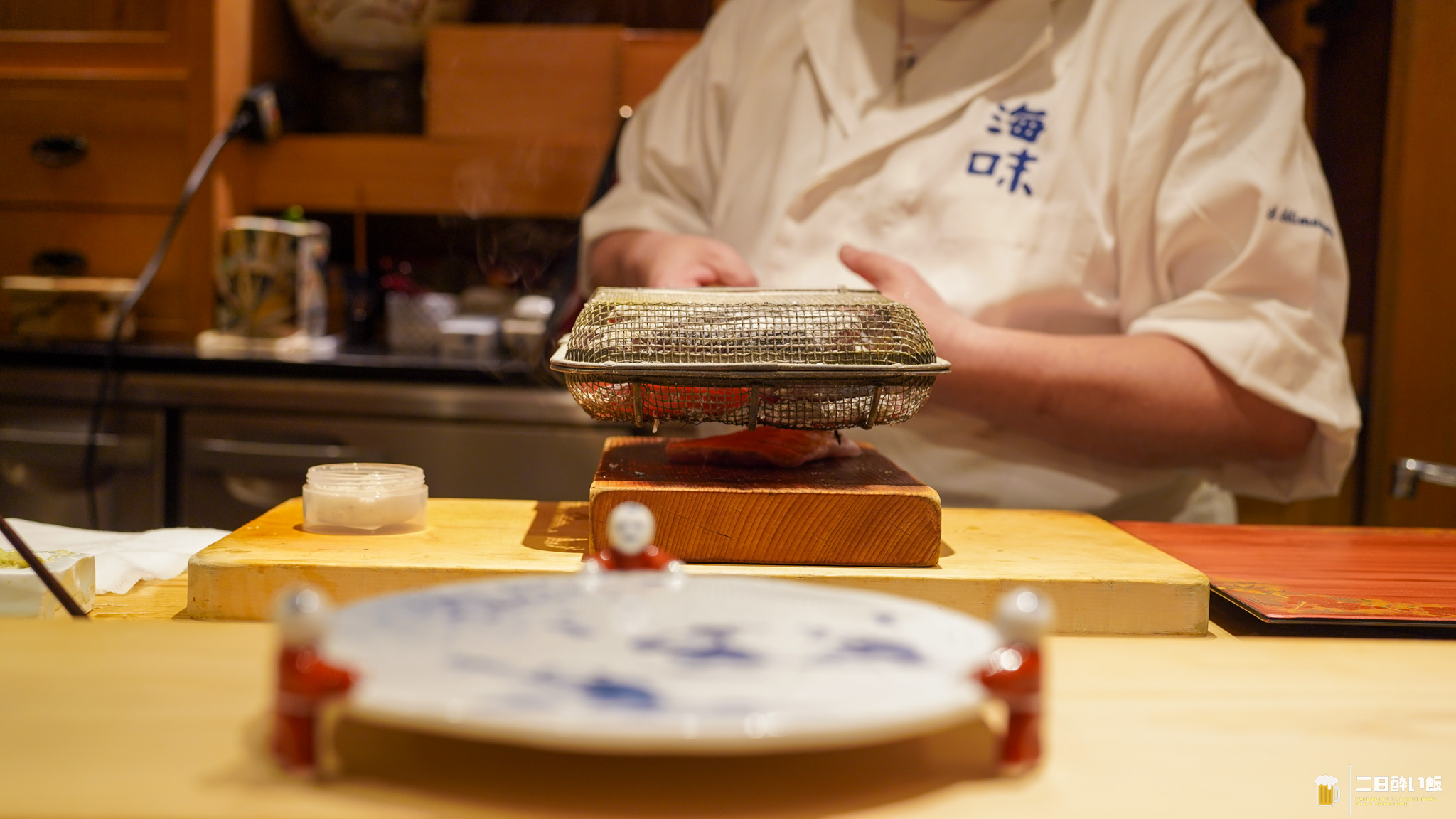
Searing melts the fat under the skin, and a rich sweetness rises with the toastiness. The salt scattered on top tightens the weight of that fat and lightens the finish, and it is simply delicious. The fat on this fish really is wonderful. I love nodoguro!
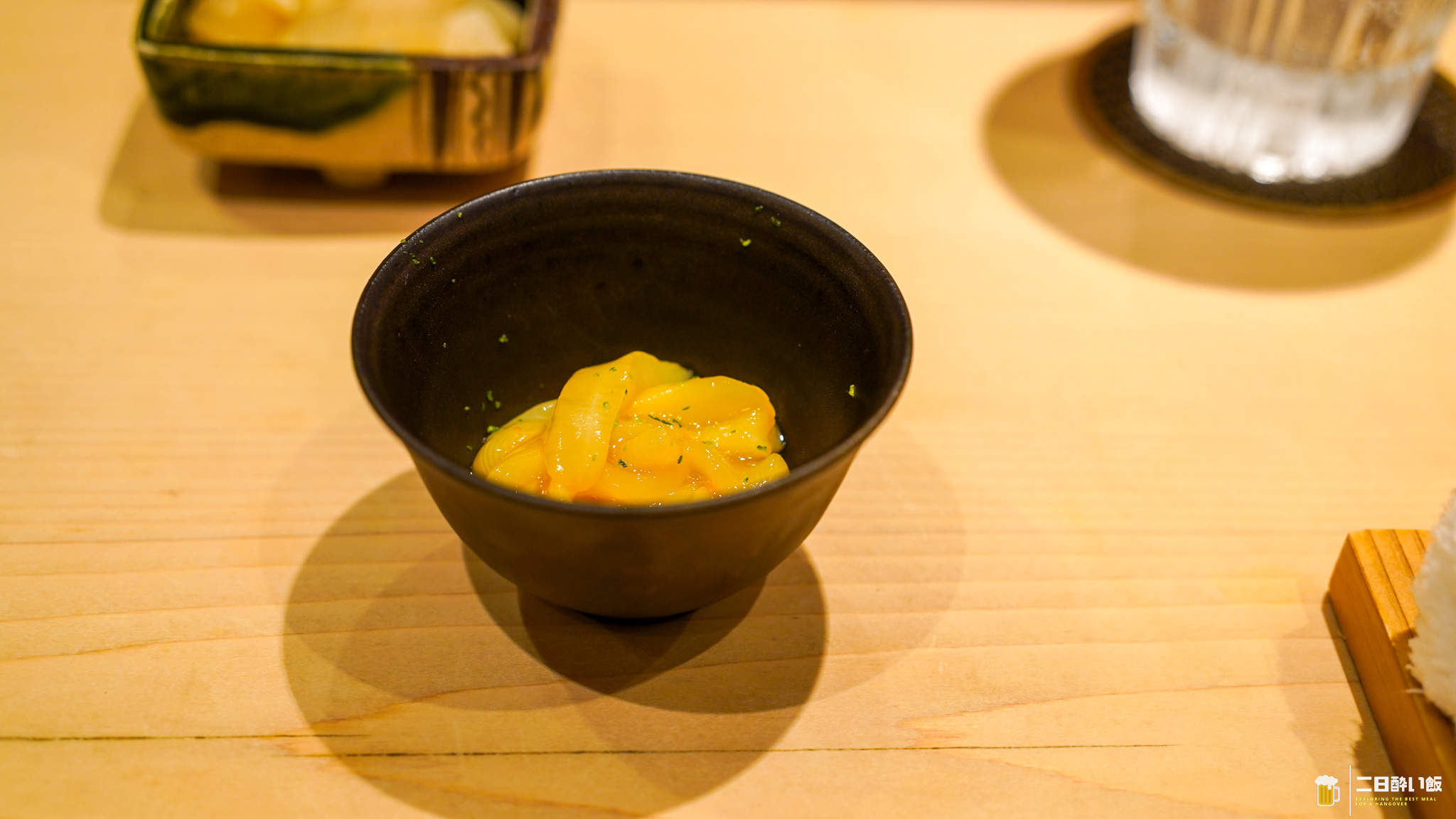
Shiokara of squid from Hakodate with purple sea urchin. The fermented savor of the squid and the sea air of the urchin layer over each other into something thick and rich. A fine snack alongside a barley shochu and soda!
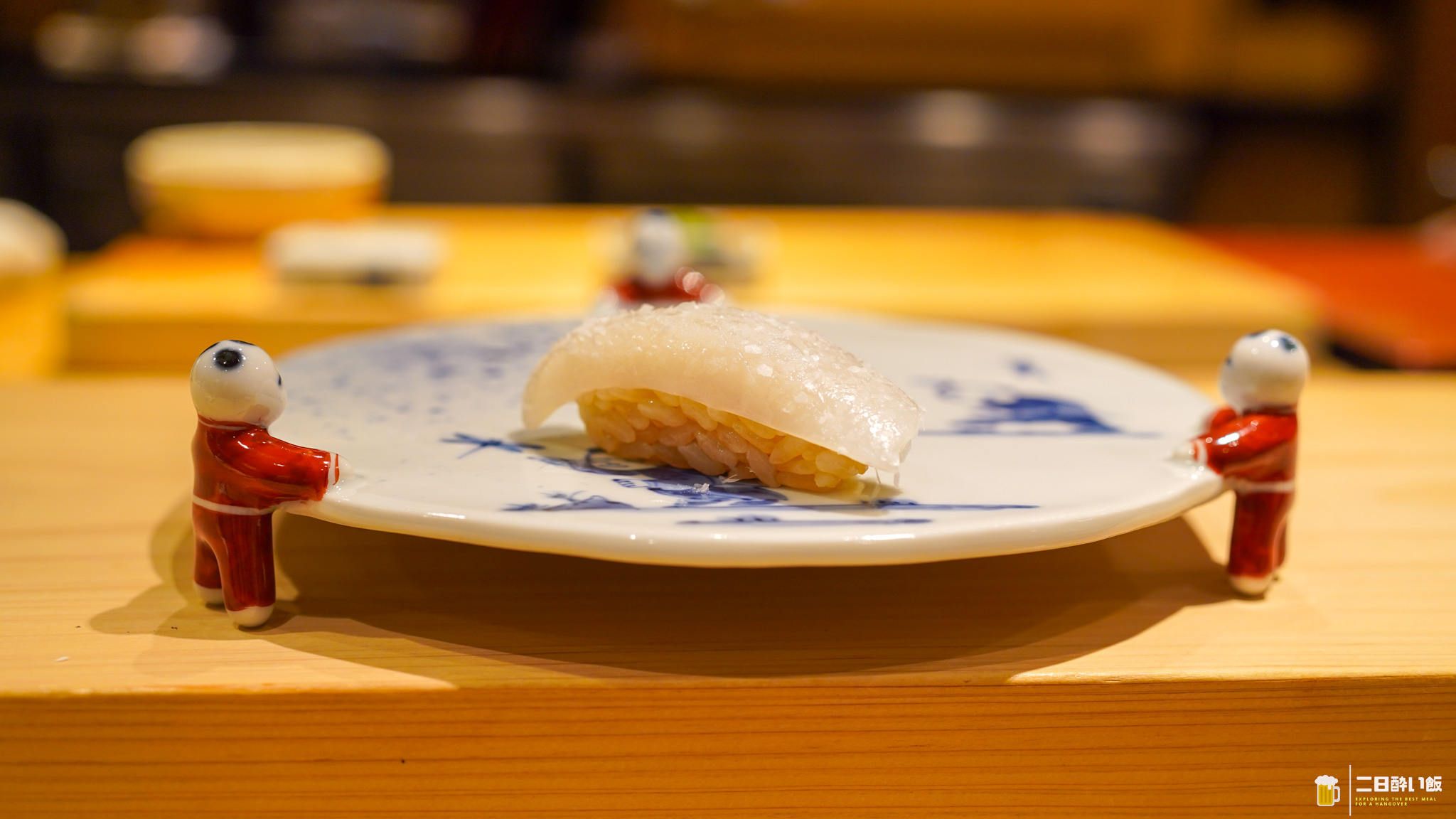

The aji from Izumi is a line-caught resident fish that grows without migrating through the inner sea, known as “golden aji” — apparently a very rare branded horse mackerel. The moment it is in your mouth the sweetness of the fat opens out softly. The fat has a clinging quality, and the flesh pushes back with real spring as you chew. Delicious!

Tachiuo from Takeoka in Chiba. Takeoka tachiuo is enormously thick and the flesh is fluffy! Searing the skin makes the sheen and the toastiness stand out further. The sweetness of the fat spreads slowly as you chew and a faint salt lingers in the finish — wonderful! This is dangerous; the barley soda keeps going down.
And then a beautiful, delicious-looking block of tuna appears!
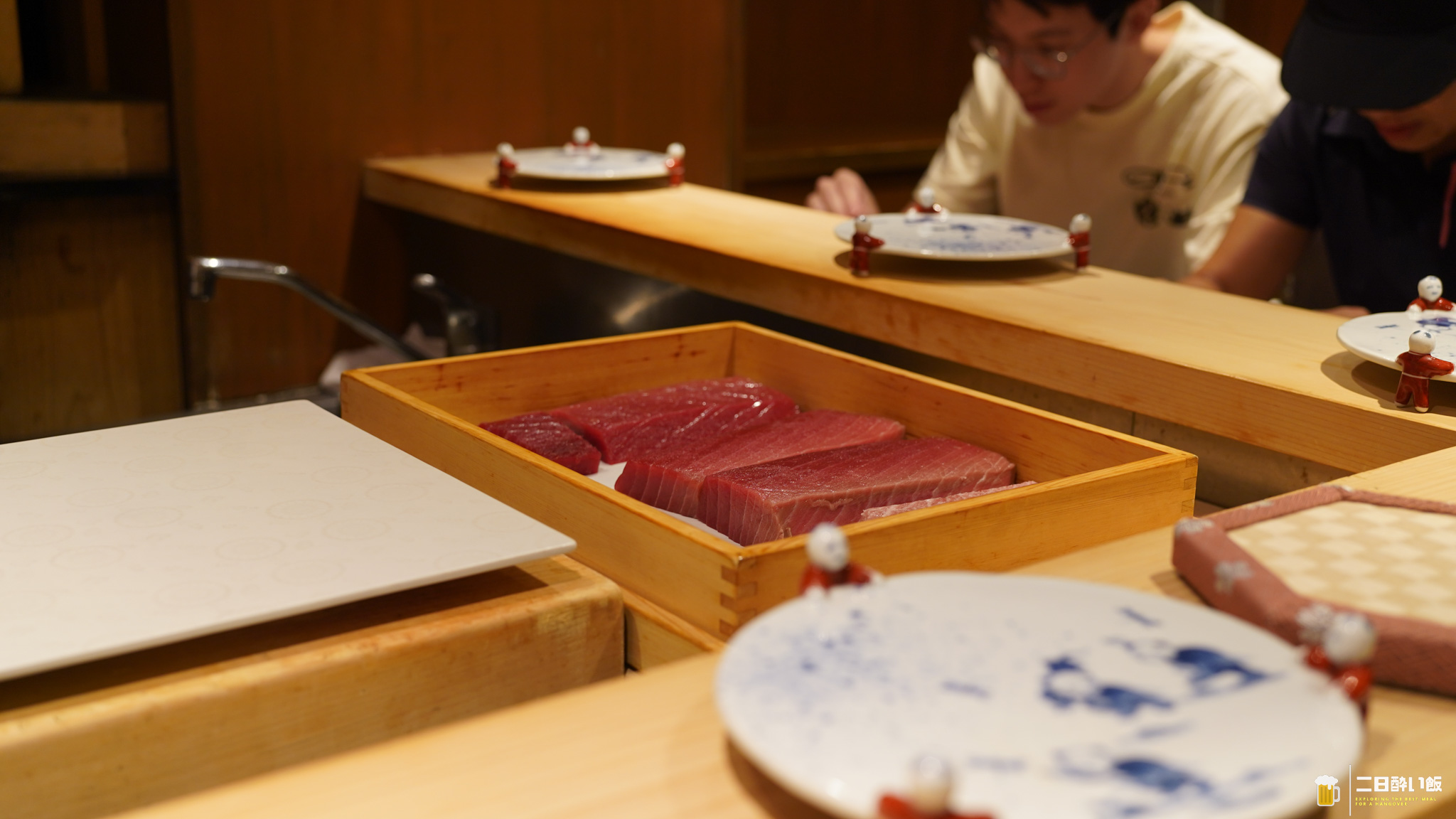
The tuna is being prepared! Ahhh, it looks wonderful!
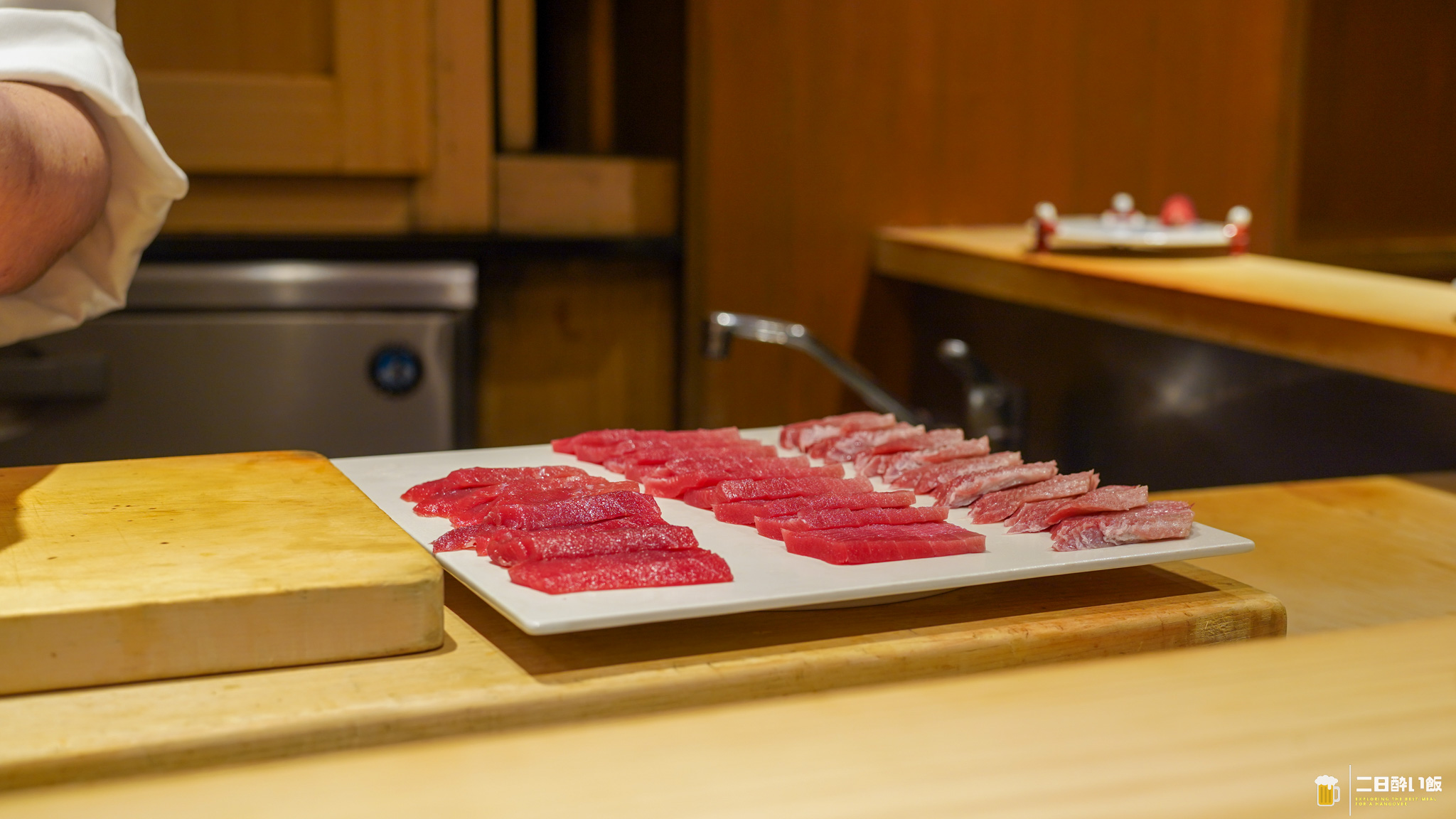
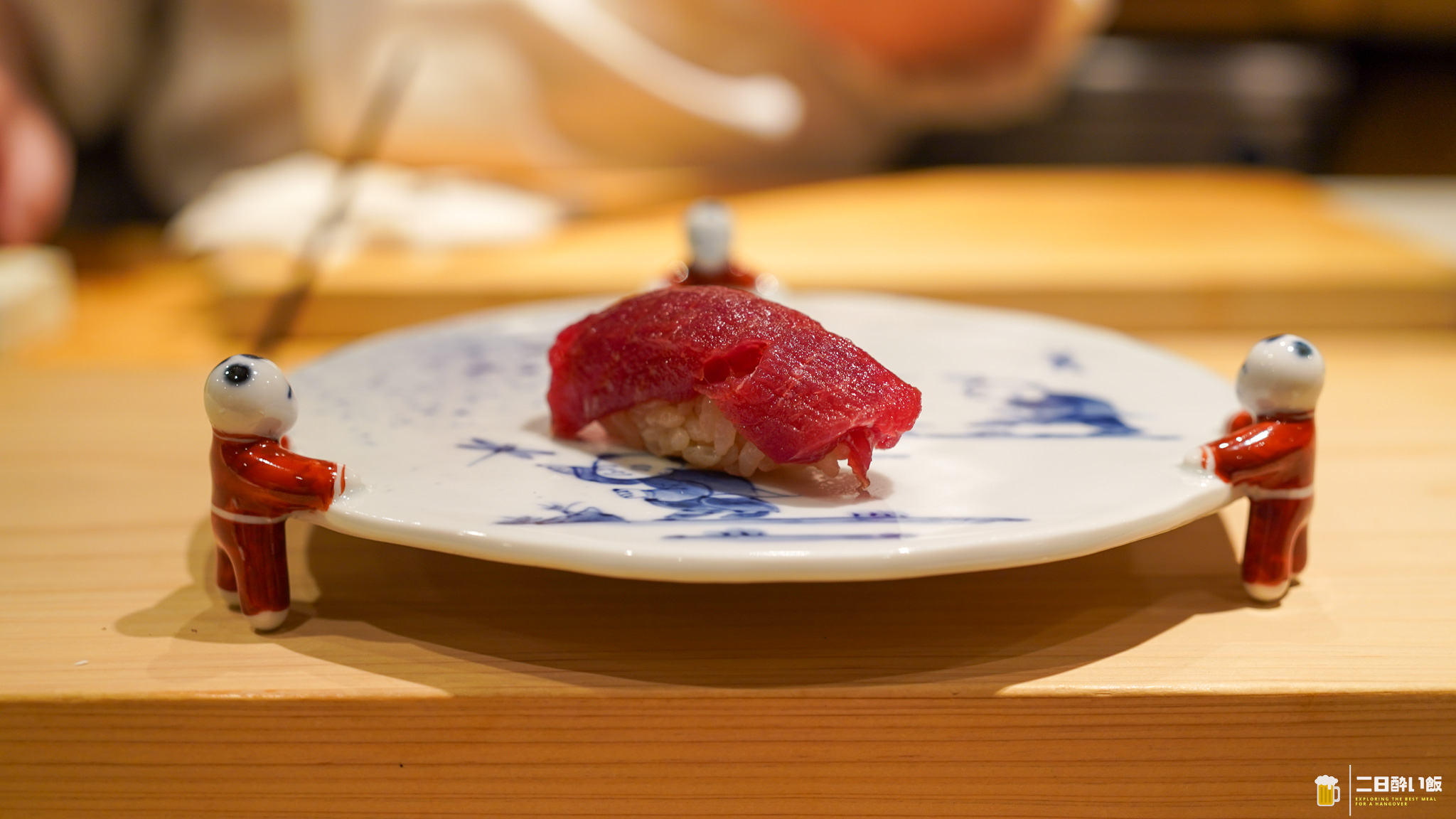
Ugh, it looks far too good!
Bluefin caught on a longline off Shimane, briefly marinated. The fish weighed 205.4kg, apparently. Enormous lol The akami is a vivid red, the acidity a little forward, and over it the savor and the sweetness of the marinade fold together into something complex and delicious. This akami is the best!
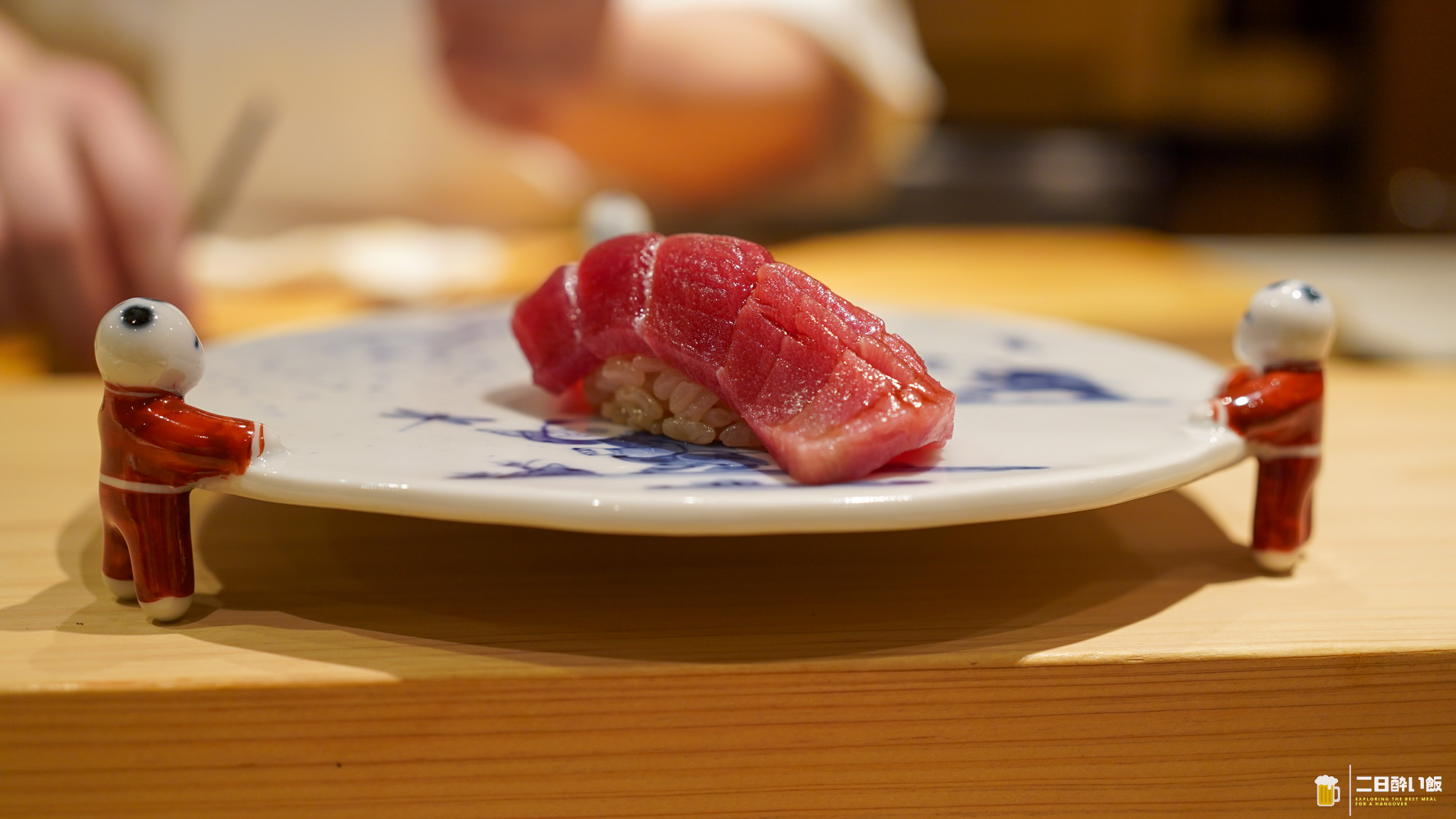
The treasure: chutoro.
This one is different — a tuna caught on a longline at Shimonoseki in Yamaguchi, this one 173.6kg (a little smaller than the last^^ though still large lol lol). The chutoro cut. Marbling runs faintly across the face of it, and it has a moister sheen than the akami. Eaten, the sweetness of the fat spreads thickly, and from behind it the savor and acidity of the lean meat come chasing after. Delicious. I do always end up feeling chutoro has the best balance of all.
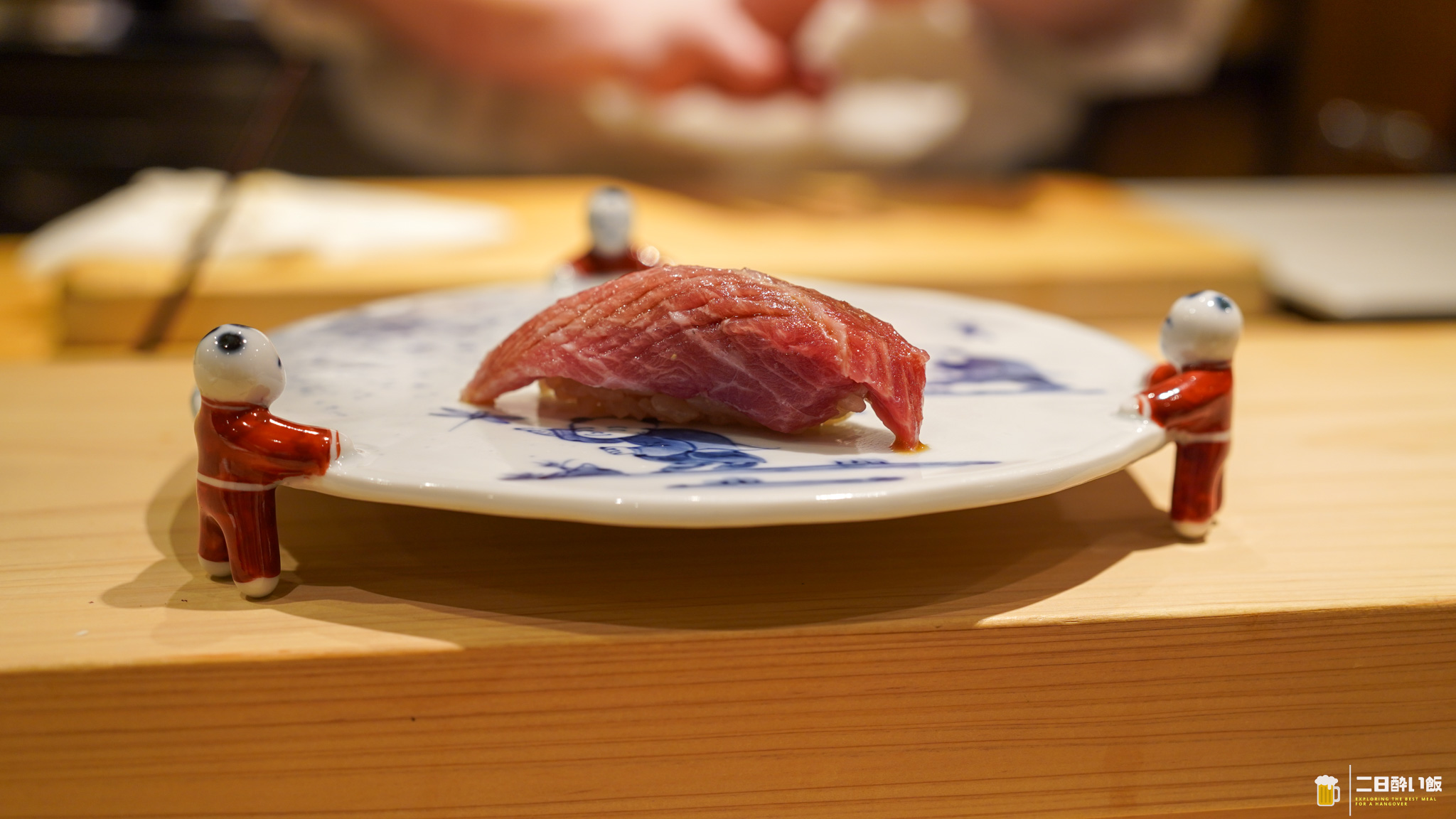
This is from the same fish as the akami. Bluefin otoro from off Shimane!
The fat runs in layer after layer of pale pink and white marbling, and with the hidden knife cuts made properly it melts away from the moment it enters your mouth! Only the sweetness of the fat stands forward, and rather than chewing it is closer to the sensation of it coming apart on the tongue!!!
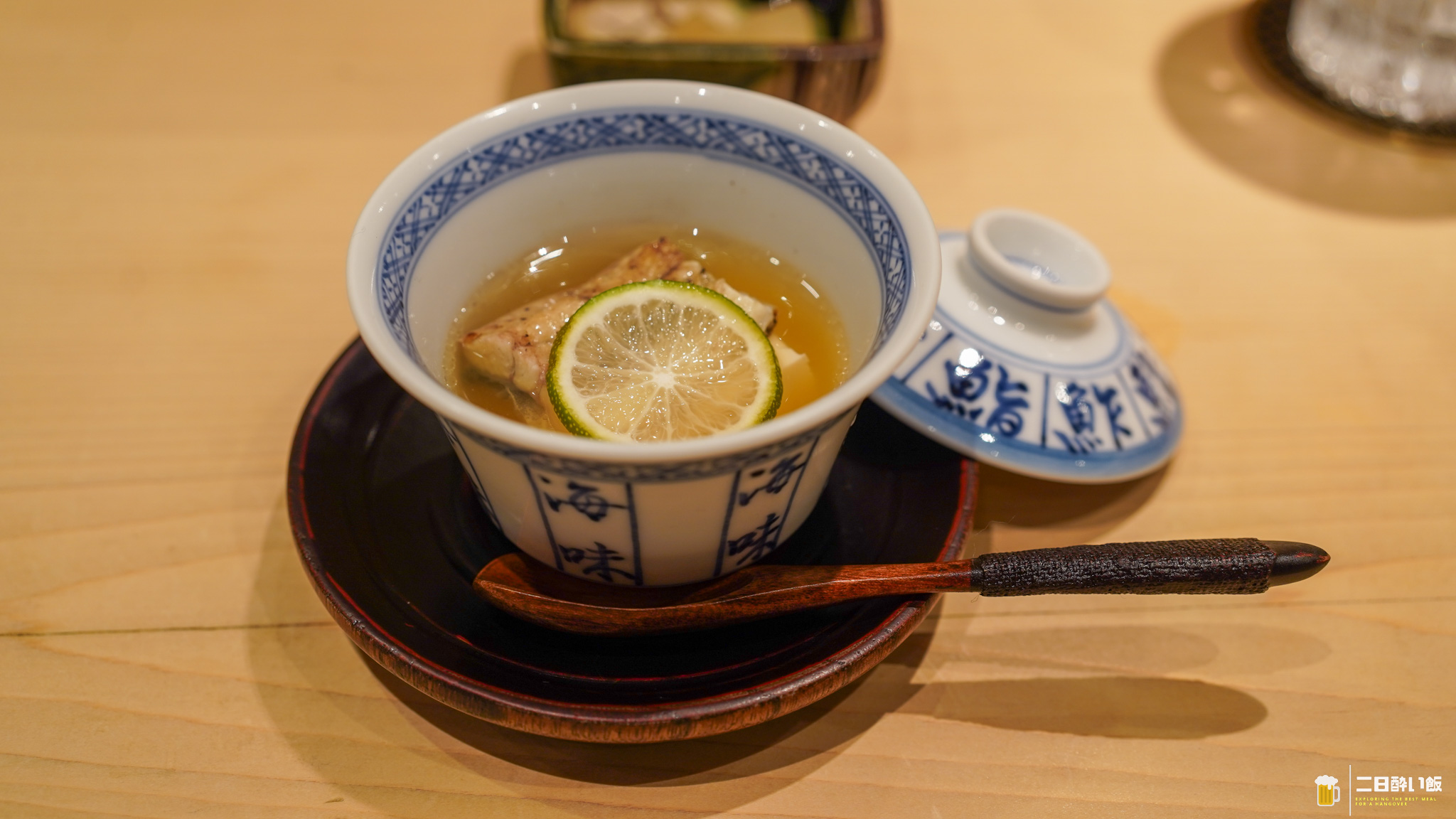
An owan of eel from Mikawa in Aichi with Kyoto ingredients! Plump flesh as the centerpiece, soaked in dashi, layering with the refined scent of the broth. It cleans up the fat of the otoro!
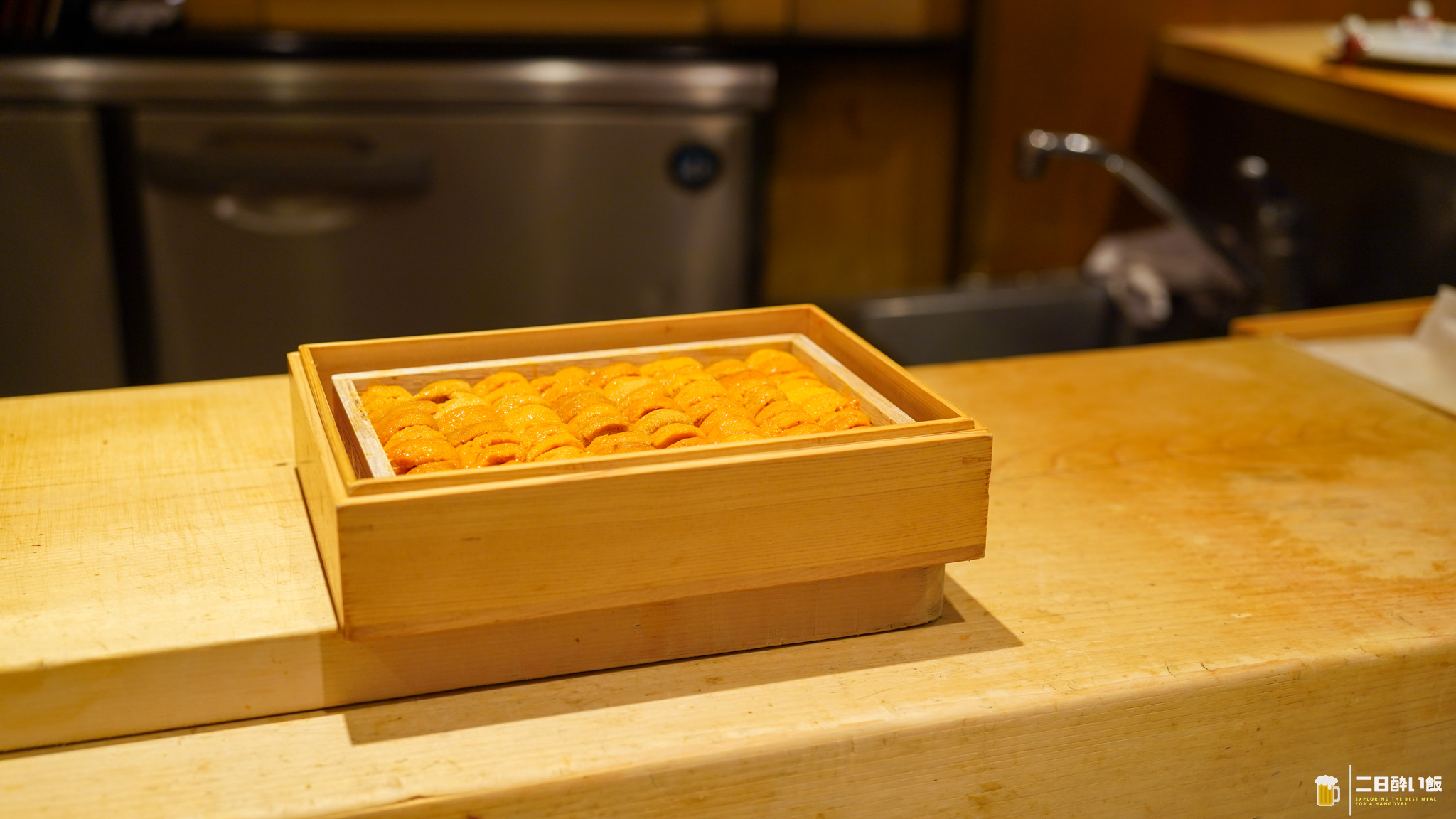

Uni! Another great favorite of mine.
This time the uni is bafun uni from Rishiri Island in Hokkaido. Well — not a trace of anything off (as you would expect). The toastiness of the nori comes first, and after it the sea air and a dense sweetness arrive folded over each other.

I am running out of words. Delicious!

The moment you bite through the shell, the spring of something freshly boiled pushes back against your teeth. Then the flesh comes apart and a sweetness seeps out across the tongue. The clear savor of the shrimp goes wonderfully with the shari! It is large, so if you ask they will cut it in two.

And last, a magnificent futomaki using every remaining cut of the tuna!!

Akami, chutoro and otoro together — can such luxury be allowed? The filling spills out at the ends and there is a great deal of it, so here they ask “who wants some?” and you raise your hand lol I would love to have had room, but sadly I was quite full. The salaryman-looking gentleman next to me took it on.


A sweet tamago like castella, and Crown Melon! Sweet and delicious.

And that is the end! Well, that was a considerable amount of food. Completely full!
It costs a fair amount, of course, but a thoroughly satisfying lunch! In the end I think I had a beer and three or four barley sodas lol Once in a while one needs the happiness of eating something this good. And by the way — that chopstick case from the beginning. At the end it was handed to me along with a towel for wiping the chopsticks, and I was told to take it home if I liked lol lol
They give you the chopsticks! lol lol lol
Now I can remember it whenever I like! I want to go again! Recommended!!!
May you meet something good to eat today too.
Umi (sushi / Gaienmae Station, Omotesando Station, Nogizaka Station)
Tabelog lunch rating ★★★★☆ 4.5
I ate here and paid for it myself. Nothing on this site is a comped meal.
One more for the road?


