


A note on the words: sanma is Pacific saury, an oily autumn fish Japan usually eats salt-grilled whole; tsukemen serves the noodles and dipping broth in separate bowls; kaeshi and tare are the concentrated seasoning bases behind a bowl of ramen; paitan is the cloudy white broth from long-boiled bones. Prices are as of this writing (August 2026).
Sanma Chuka Soba Kissui, Ikebukuro on Tabelog (English) — opening hours, payment details and the Japanese address are kept up to date there, not here.
Noodle lovers, thank you for waiting. It is Hangover Meshi time.
Ikebukuro this time, drifting about having missed the lunch hour. Which surely means the famous shops are reachable? — so I toured the well-known ramen places on the west side, and found them heaving! Trudging off dejected, I spotted an interesting shop.
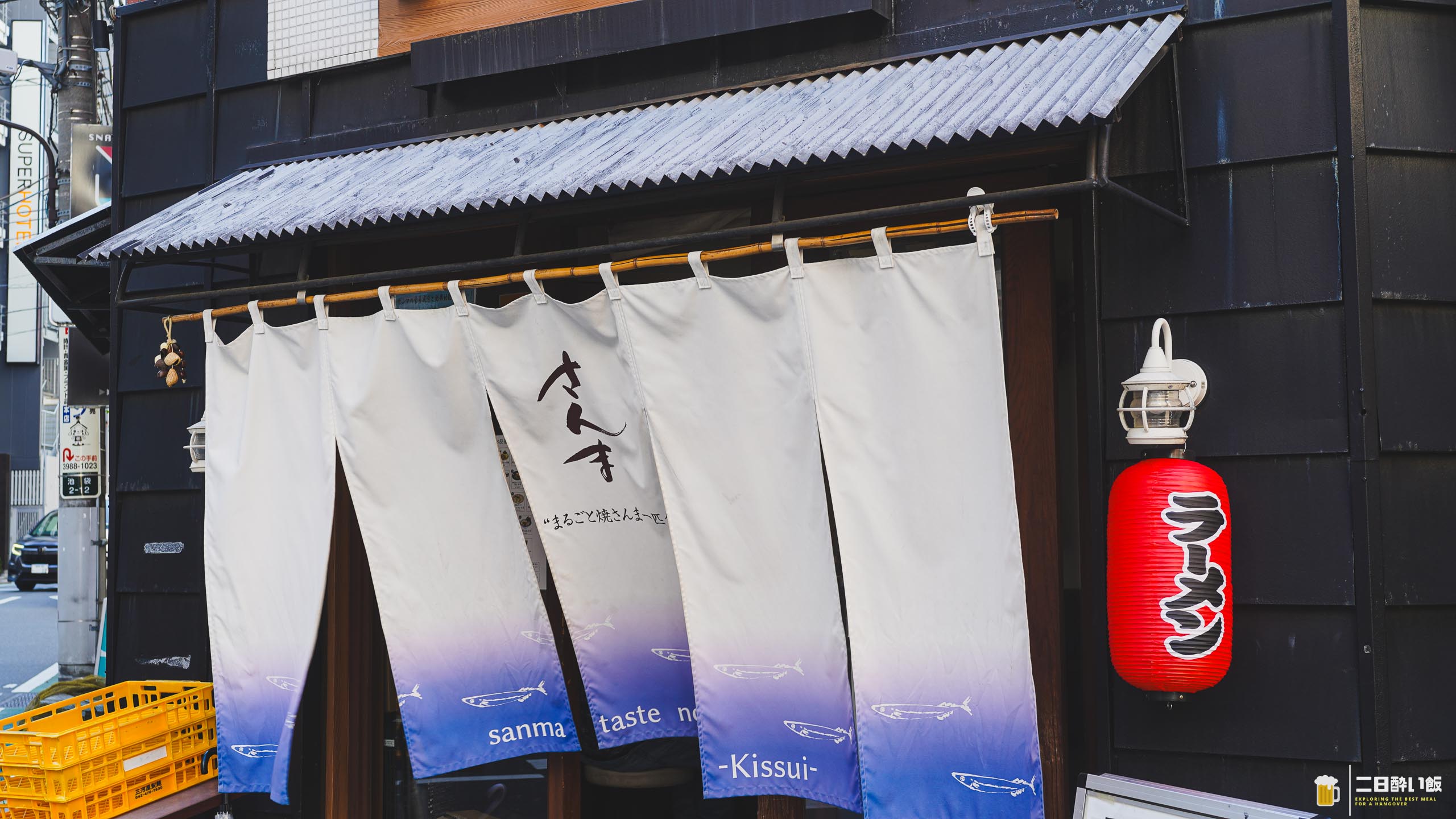
Above the noren curtain with the saury on it…!
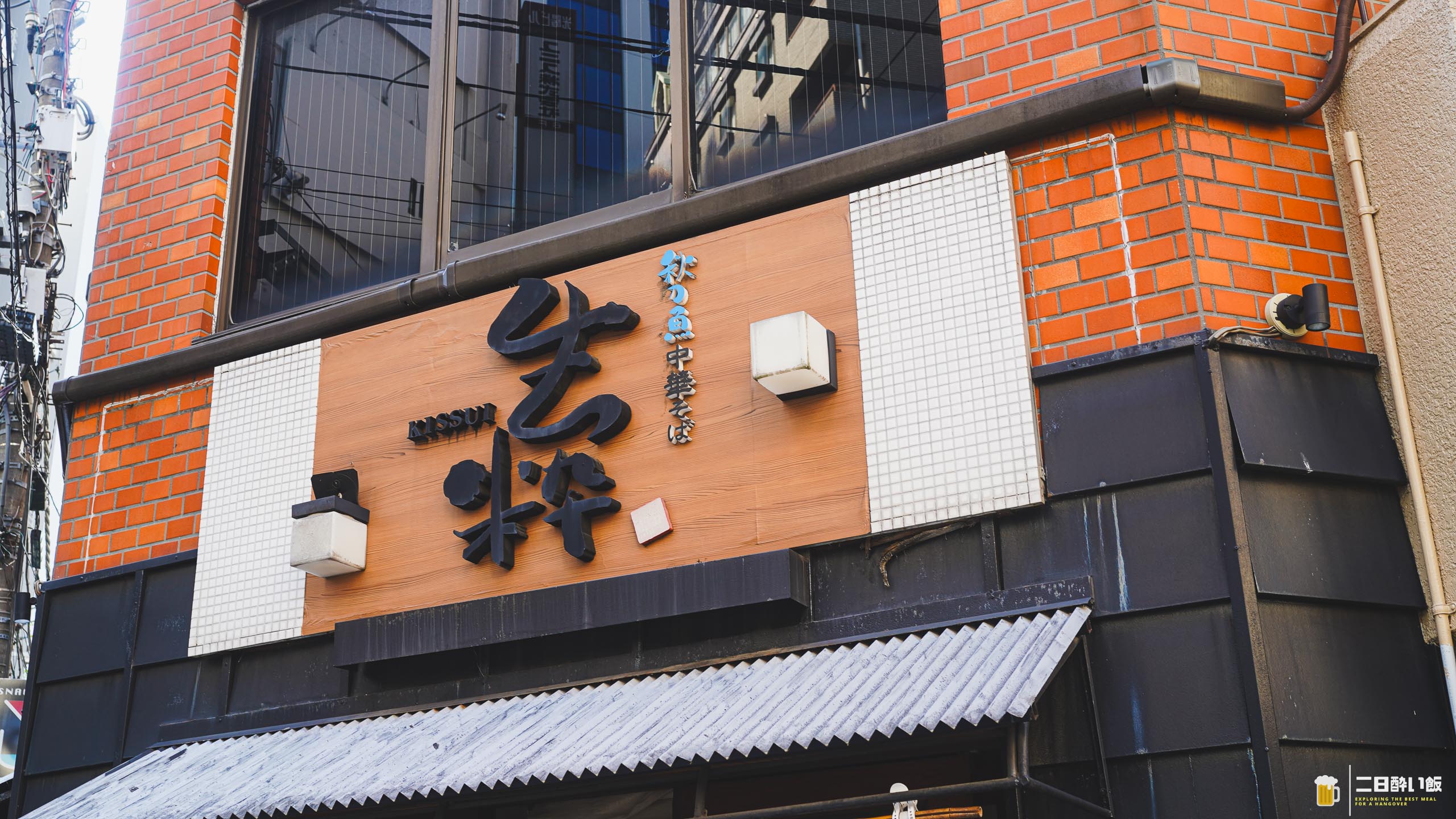
“Sanma Chuka Soba Kissui”! Saury ramen — a genre I had never heard of!
Sounds fun! In I went.
Seafood paitan ramen — 900 yen
Seafood paitan tsukemen — 1,000 yen
Rich hot-stone tsukemen — 1,000 yen
Shio soba — 900 yen
Shoyu soba — 900 yen
The ticket machine is immediately on the right as you enter. What to buy? I studied the menu…
…and each item carries little saury marks indicating how strong the saury flavour is — and the tsukemen are consistently higher. (Ramen two marks, tsukemen four — double!) So tsukemen it must be: I chose the “extra-rich hot-stone tsukemen”!
No beer this time, I suppose. Though I want one.
— and while I was thinking that, the tsukemen arrived!
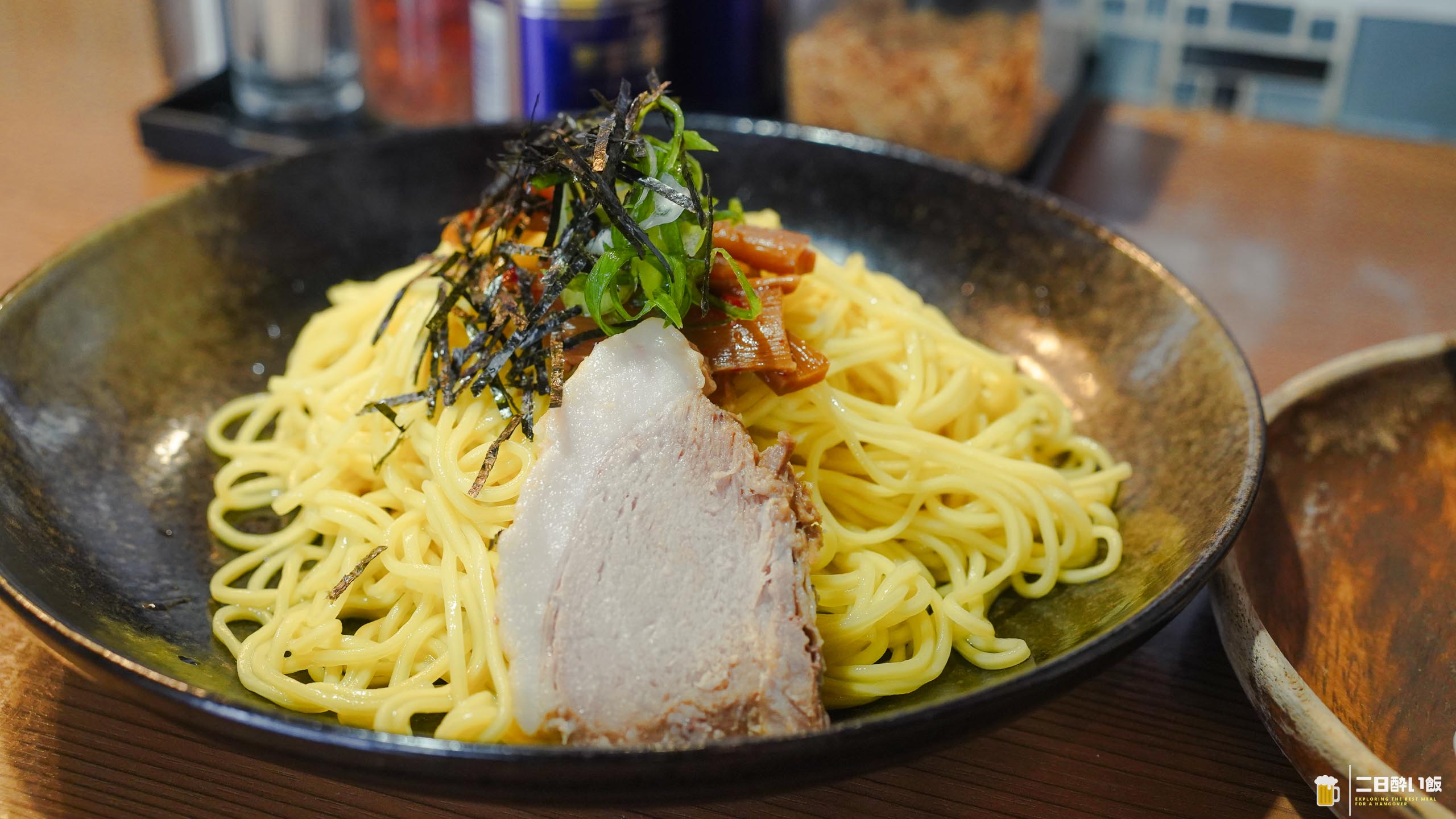
Every dish here is built on saury kaeshi (the seasoning base).
The tsukemen carries a stronger saury flavour than the ramen, so expectations are high!
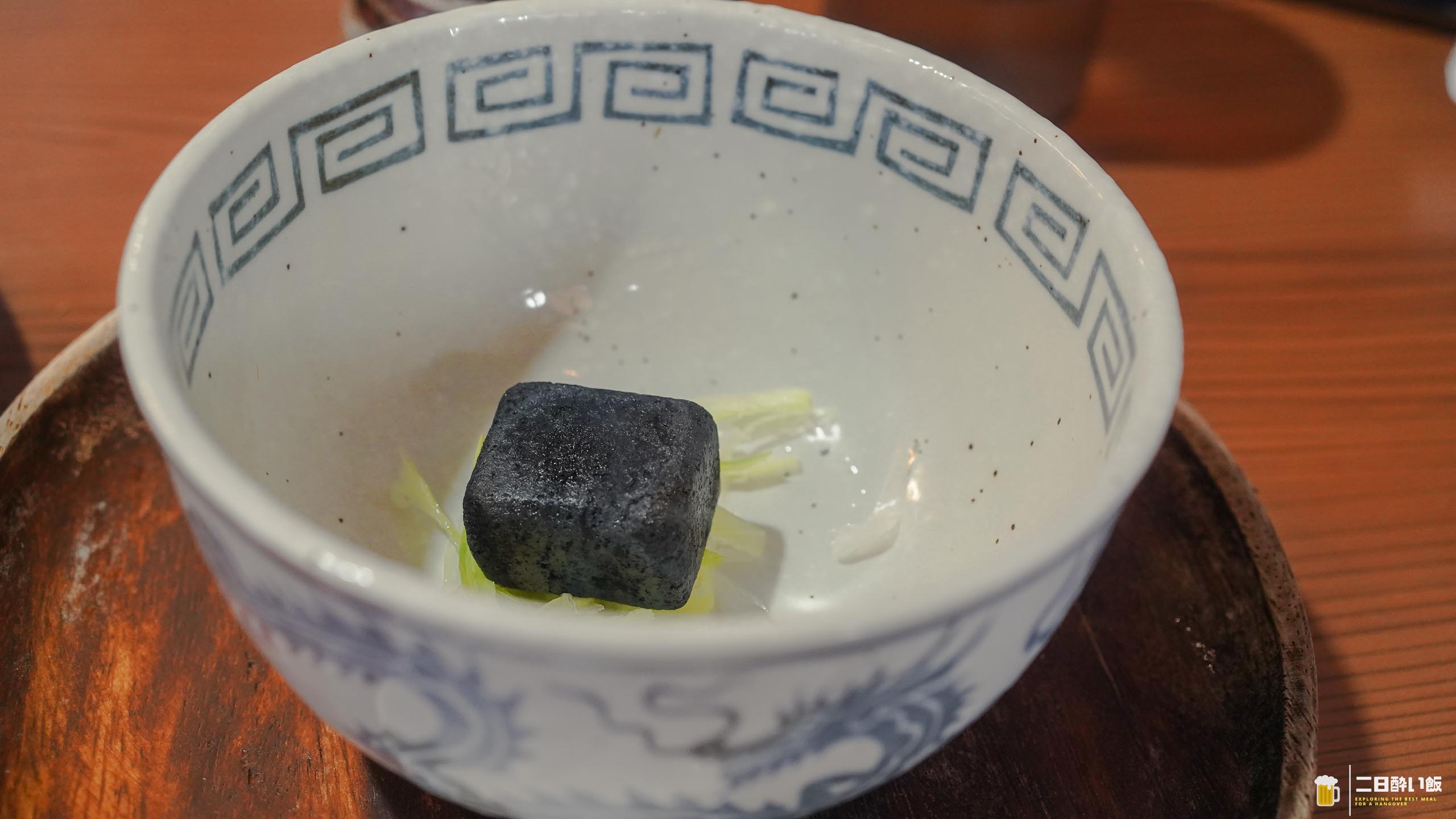
First there is a small piece of theatre. Onto a hot stone hissing away in the bowl, you pour the house tare yourself — a dark, tangy version of the shoyu-soba kaeshi — warming it as you go. As the tare hits, steam bursts up carrying the toasty smell of grilled saury.
Oh! What a smell!
The tare is built by salt-grilling saury delivered straight from Chikura fishing port, then steeping it with wine, Shaoxing wine, tamari soy and several other ingredients. That is combined with a double soup — a seafood paitan simmered seven hours from chicken and pork, plus Japanese dashi — and boiling it hard on the hot stone is said to draw the richness out to its maximum.
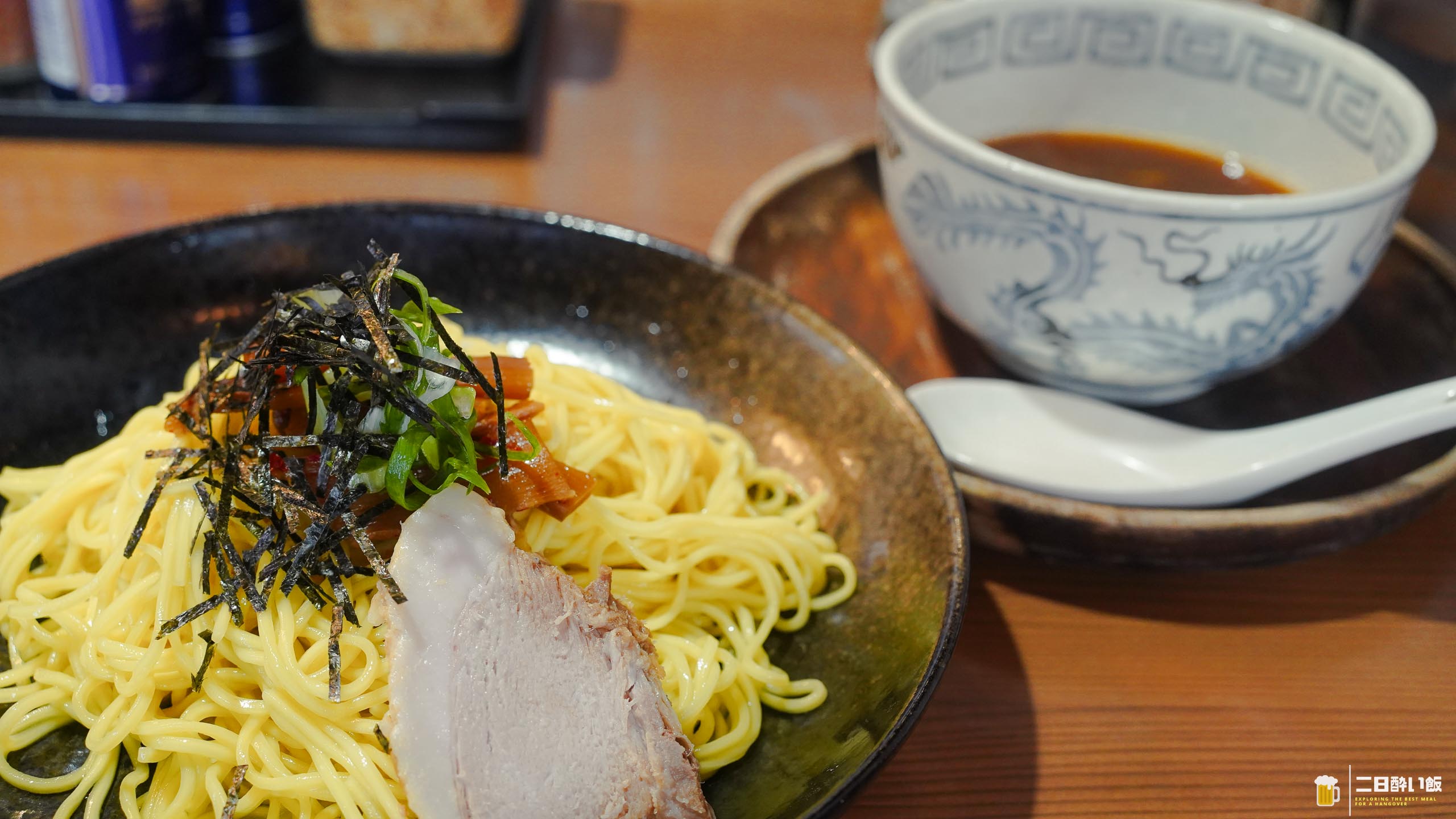
The noodles are medium-thin and straight, tightened crisply in cold water.
First mouthful and the powerful toastiness of salt-grilled saury rushes up through the nose! A wholly new sensation — and good! After it come the bitterness of the skin, the savour of the flesh, the edge of the soy and the fragrance of the Shaoxing wine, drifting off in turn. I have not tried the other dishes, but the saury flavour here is overwhelmingly dense.
The saltiness runs a little high, which adds welcome punch. And the hot stone has real power, so the bowl stays hot almost to the end — another distinctive feature. The noodles are ordinary chuka-soba noodles, but something thicker and heartier might suit it even better?
Above all, that saury tare is delicious! Getting that much flavour and stock out must take an awful lot of saury! Ikebukuro having ramen shops this unusual is part of what makes it interesting. An extravagantly saury-driven, maximally rich hot-stone tsukemen — if you are ever nearby, why not try it?
May you meet something good to eat today too.
Sanma Chuka Soba Kissui, Ikebukuro (ramen / Ikebukuro Station, Kanamecho Station)
Tabelog lunch rating ★★★☆☆ 3.4
I ate here and paid for it myself. Nothing on this site is a comped meal.
One more for the road?


