


A note on the words: anko is monkfish (anglerfish), a prized Japanese delicacy celebrated for its tender white meat, collagen-rich skin, and rich liver (ankimo), traditionally eaten in winter but savored here in summer. Anko nabe is monkfish hot pot simmered at the table in a delicate, lightly sweetened soy broth (warishita) along with udo—a crisp white mountain vegetable whose color indicates when the pot is ready. Tomoae is boiled monkfish meat dressed with rich monkfish liver and miso, nikogori is jellied broth encasing tender monkfish cuts, and ojiya is a concluding rice porridge cooked in the savory remaining broth with beaten egg and scallions.
Table of Contents hide
Ise Gen on Tabelog (English) — opening hours, payment details and the Japanese address are kept up to date there, not here.
Hello, this is Hangover Meshi. Hot as it is, having hot pot precisely because of the heat has its own charm, I think. So this time I headed to “Ise Gen” in Kanda for monkfish hot pot (anko nabe)! I had wanted to visit at least once. It’s a shop continuing since the late Edo period, and from the building’s facade alone you can tell it’s a historic institution! I hurried over to make my reservation time, but even walking only about five minutes from the nearest station, Awajicho, I was already starting to sweat a little. Stepping inside, I was guided to a seat on the second floor. When I gasped about how hot it was, they kindly turned up the air conditioning for me.
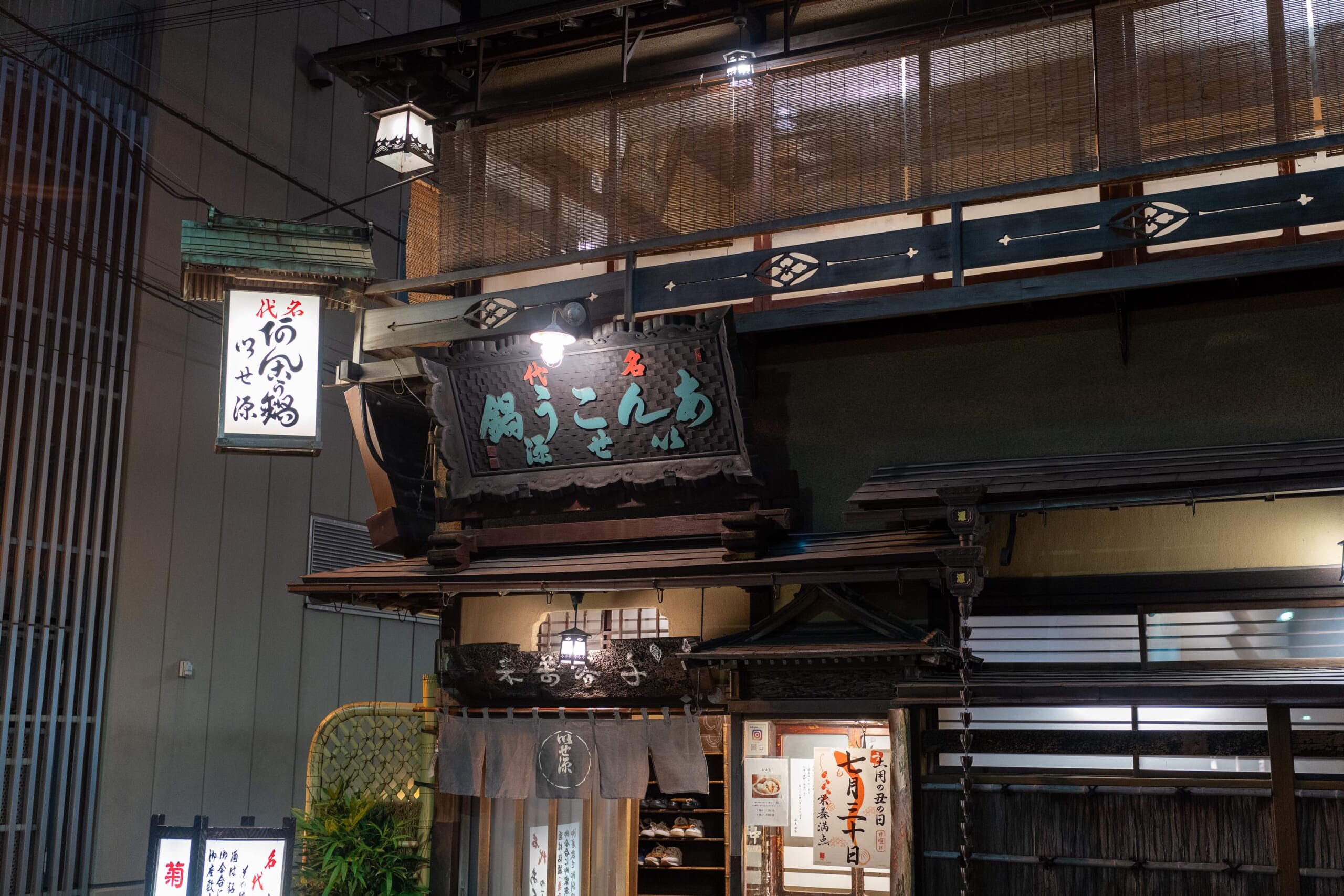
The interior structure of the shop is traditional as well. Apparently it was rebuilt in 1930 (Showa 5), so it survived the war—remarkable!
Gen course — 10,000 yen
Aya course — 12,000 yen
Shiosai course — 8,000 yen
Takumi course — 15,000 yen
The most classic and popular option is the 10,000-yen course, so that is the one I reserved.
Now then, the course got underway straight away, and the first drink was, naturally… beer!
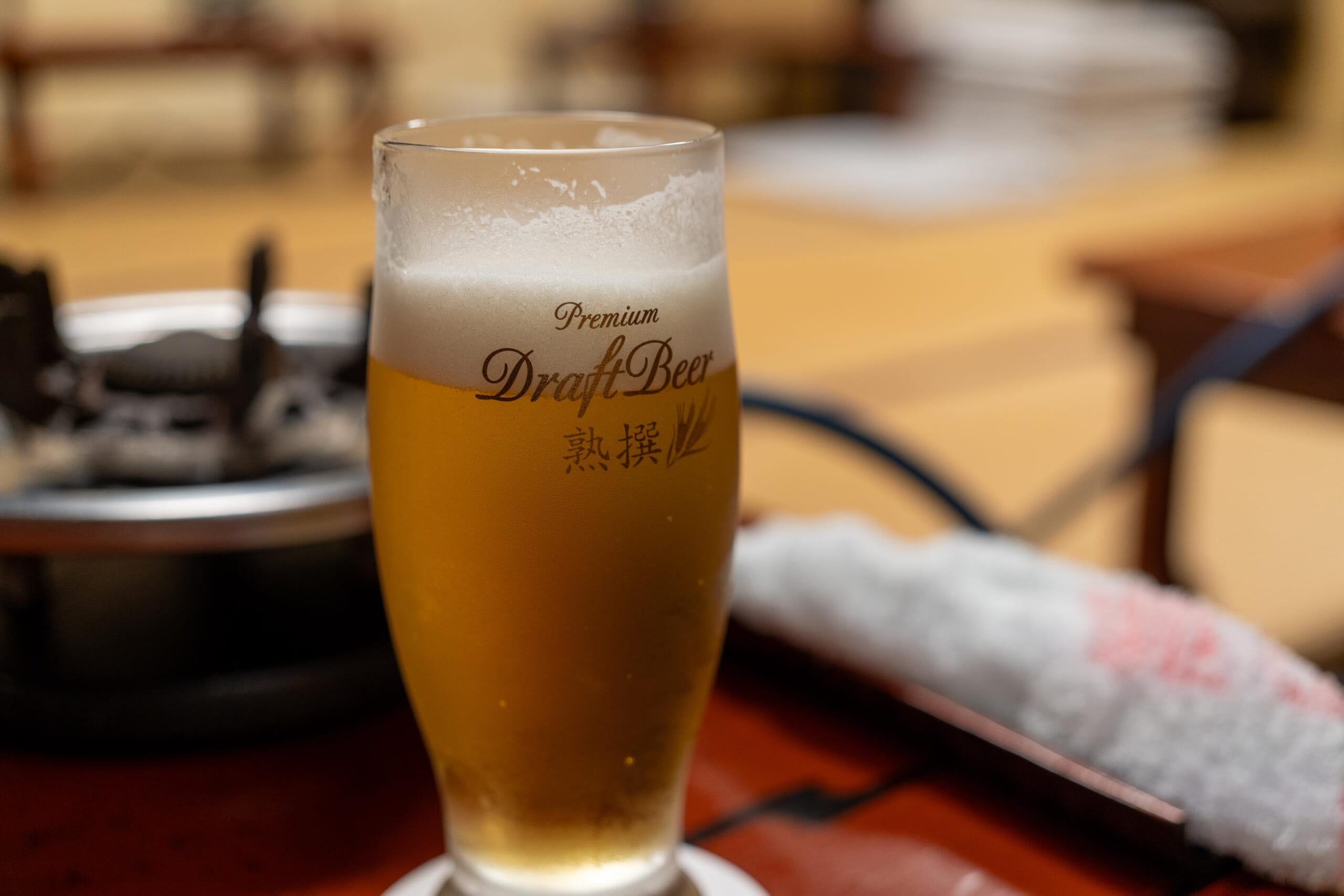
Chilled beer, delicious!! The heat finally began to settle down.
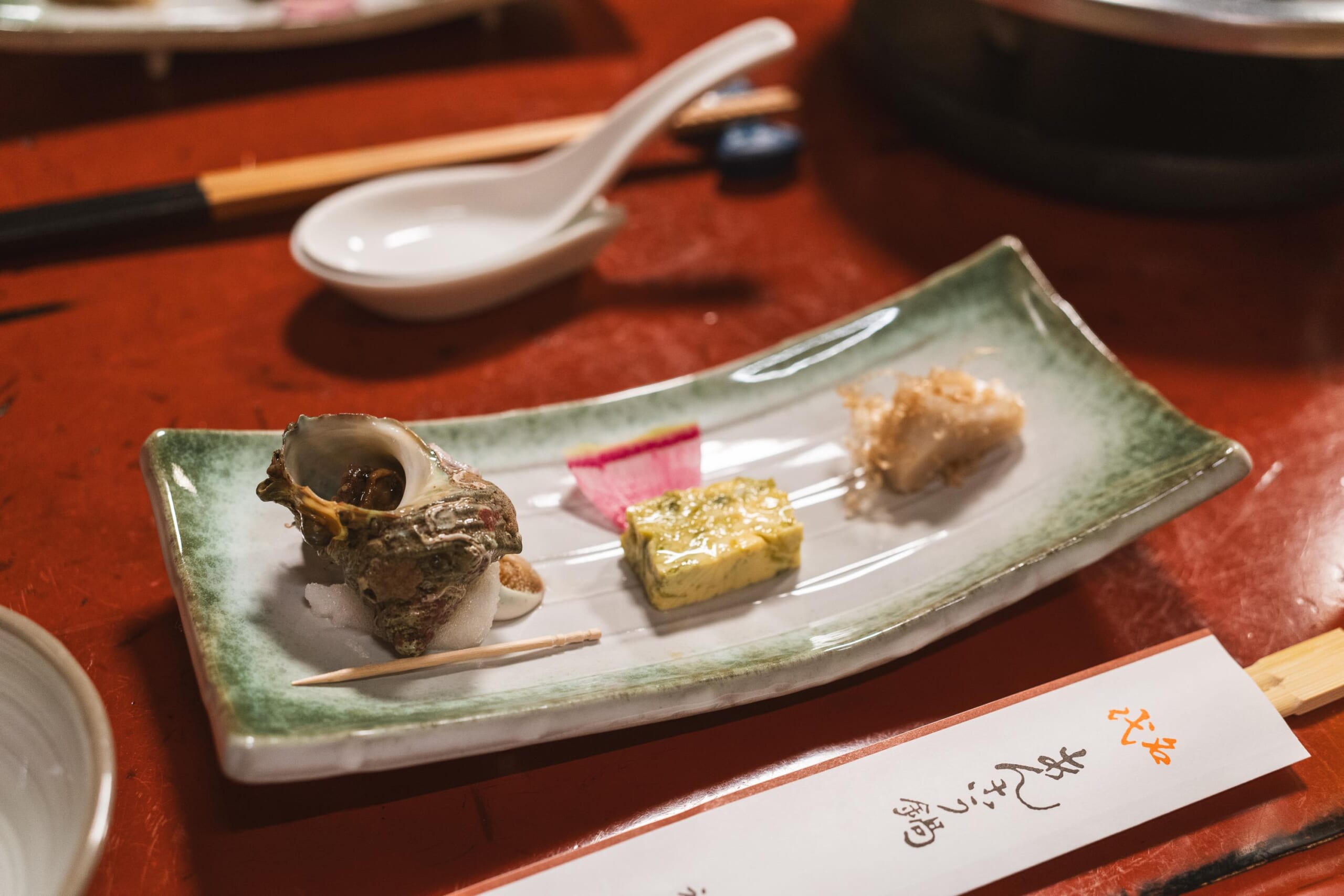
From left to right: hime-sazae (small turban shell), aosa seaweed tofu, and a simmered dish. These make wonderful snacks to go with beer. The turban shell was delicious.
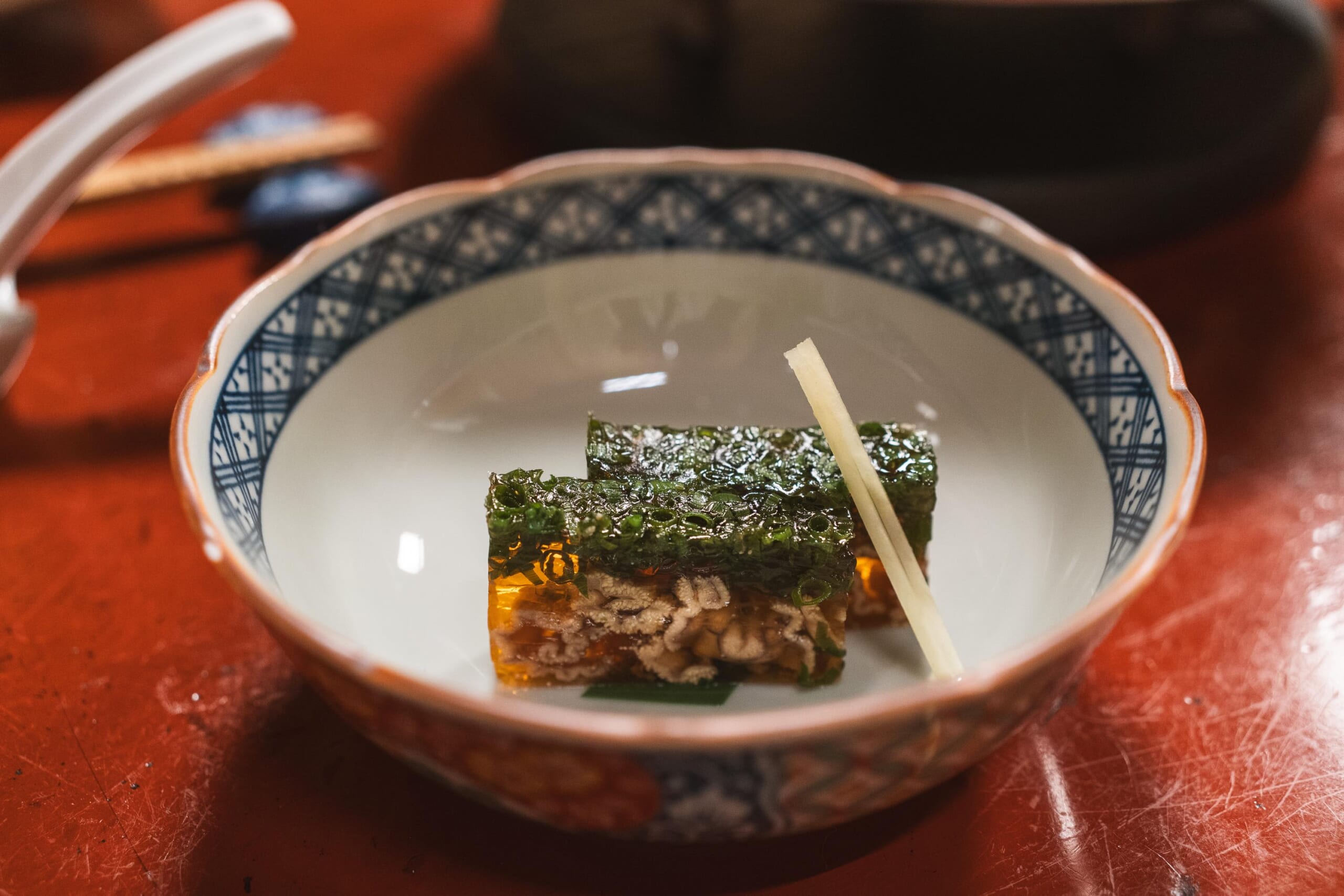
What is set inside the nikogori (jellied broth) is, of course, monkfish. Jellied broth goes so well with sake and drinks!
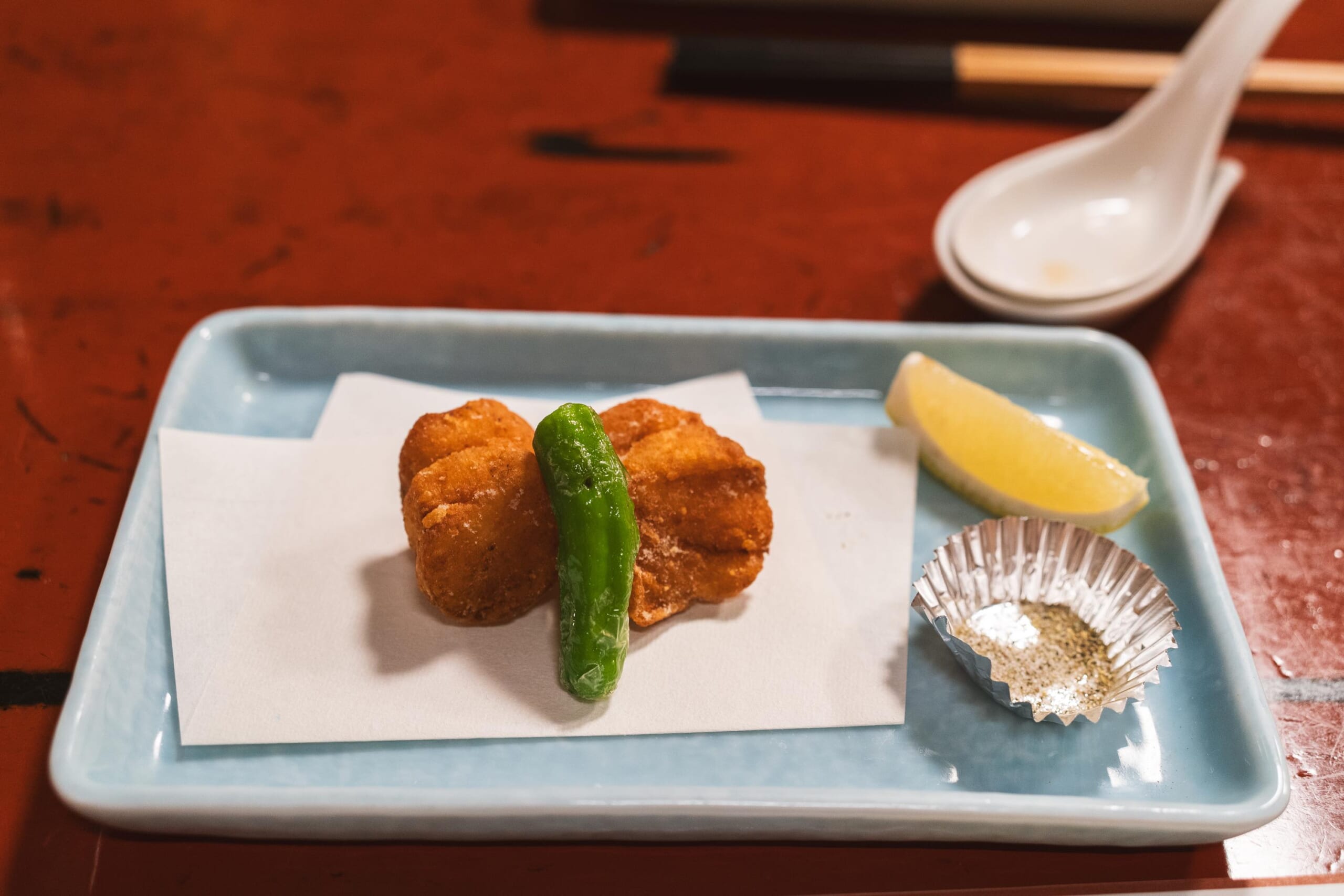
The flaky, tender bite of the white meat might even be close to blowfish (fugu).
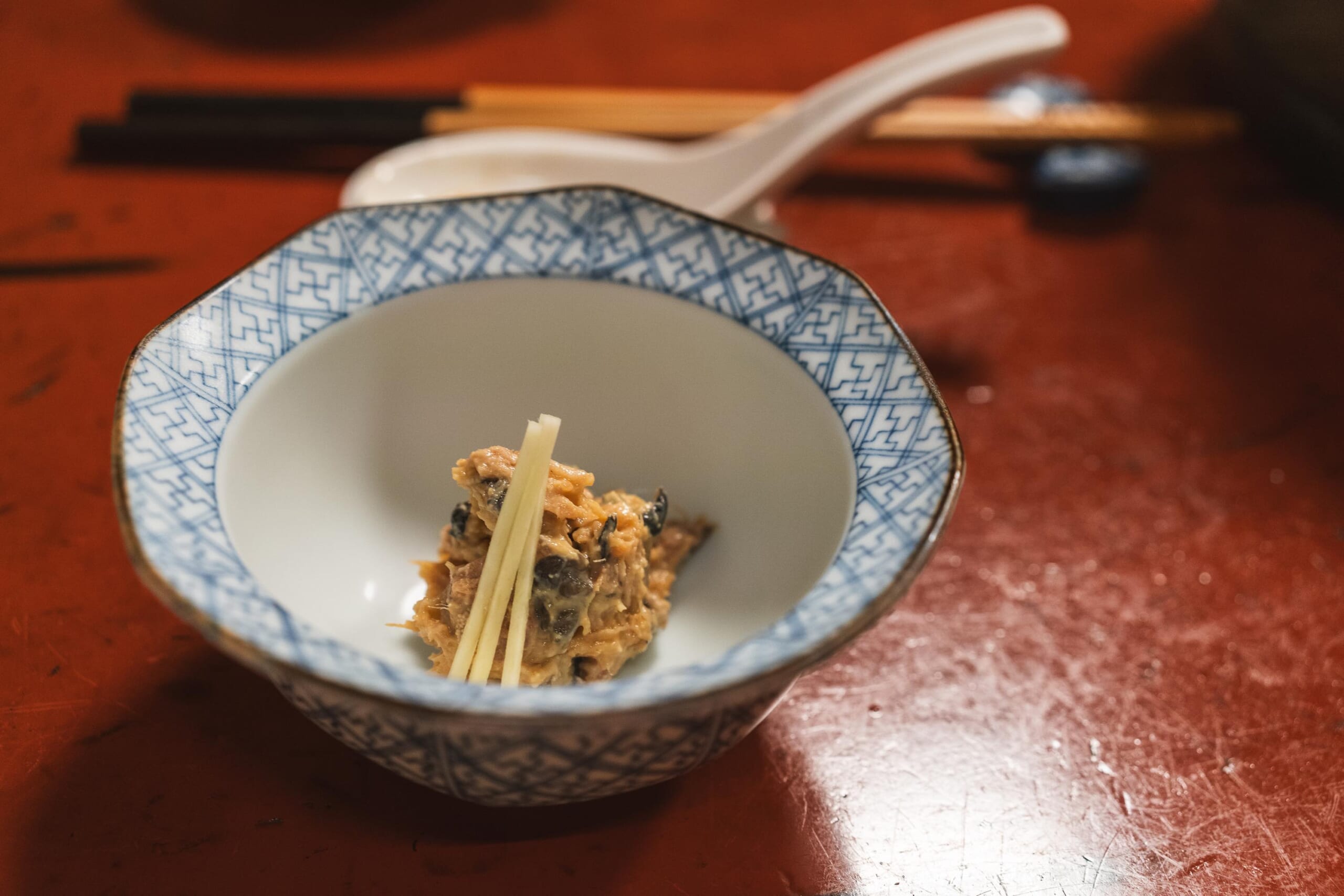
Tomoae is apparently made by dressing boiled monkfish with monkfish liver and miso. With a seasoning that carries a touch of sweetness, the rich umami of the liver pairs marvelously with alcohol! Superb. To go with it, they had a barley shochu called “Ise Gen,” so I switched over to that. It matches wonderfully.

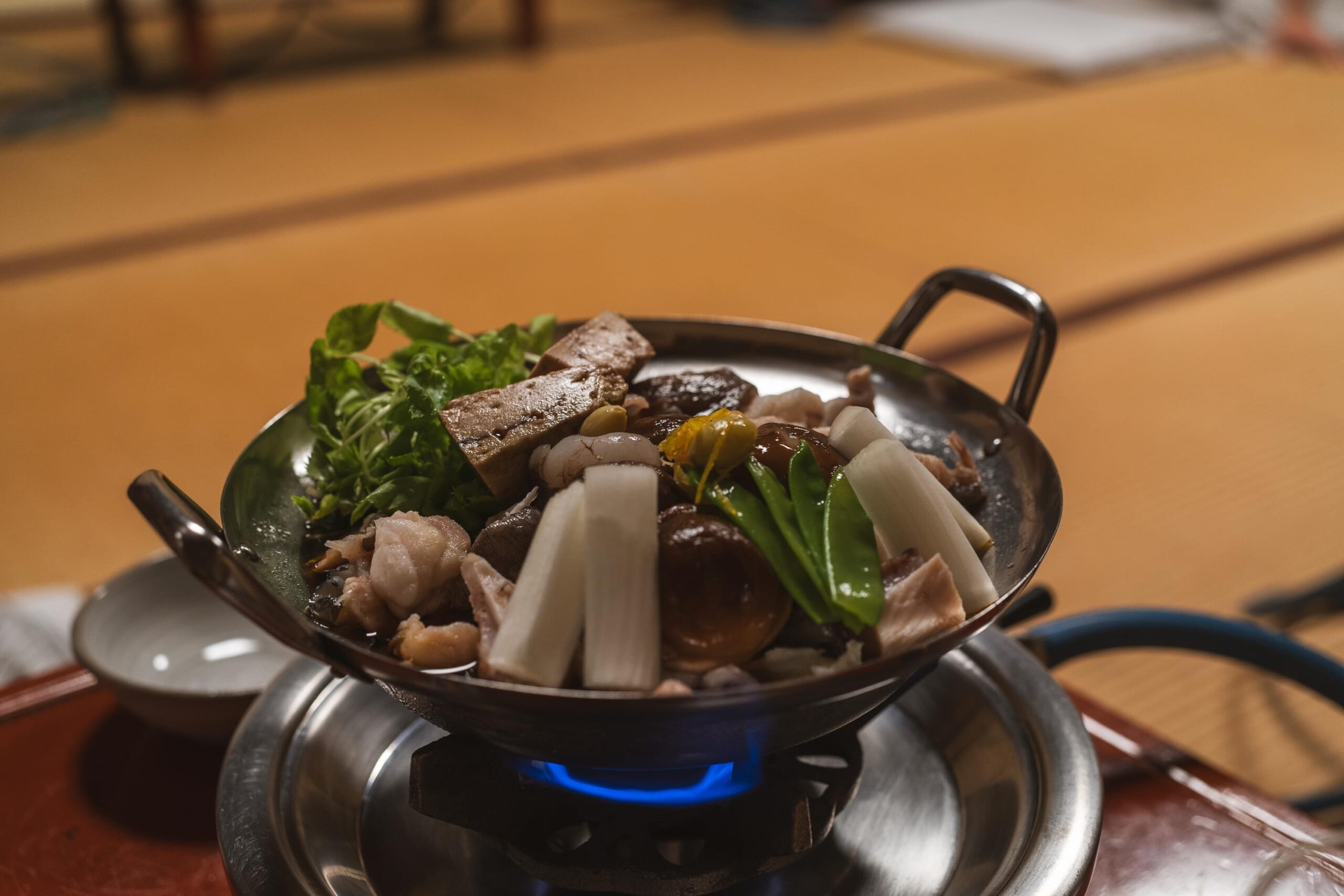
Promptly it was brought over! Anko nabe (monkfish hot pot)!
It’s arranged so beautifully, making a wonderful impression visually. The white, daikon-like sticks are udo (a mountain vegetable), and they say that when these soak up the broth and turn brown, the pot is ready to eat. Judging when it’s ready by watching the color of an ingredient feels so elegant. It really brings home that this is a dish with deep history. As it simmered for a while, a wonderful aroma drifted up. Ingredients like mitsuba (wild parsley) can be eaten relatively quickly, so I started with those.
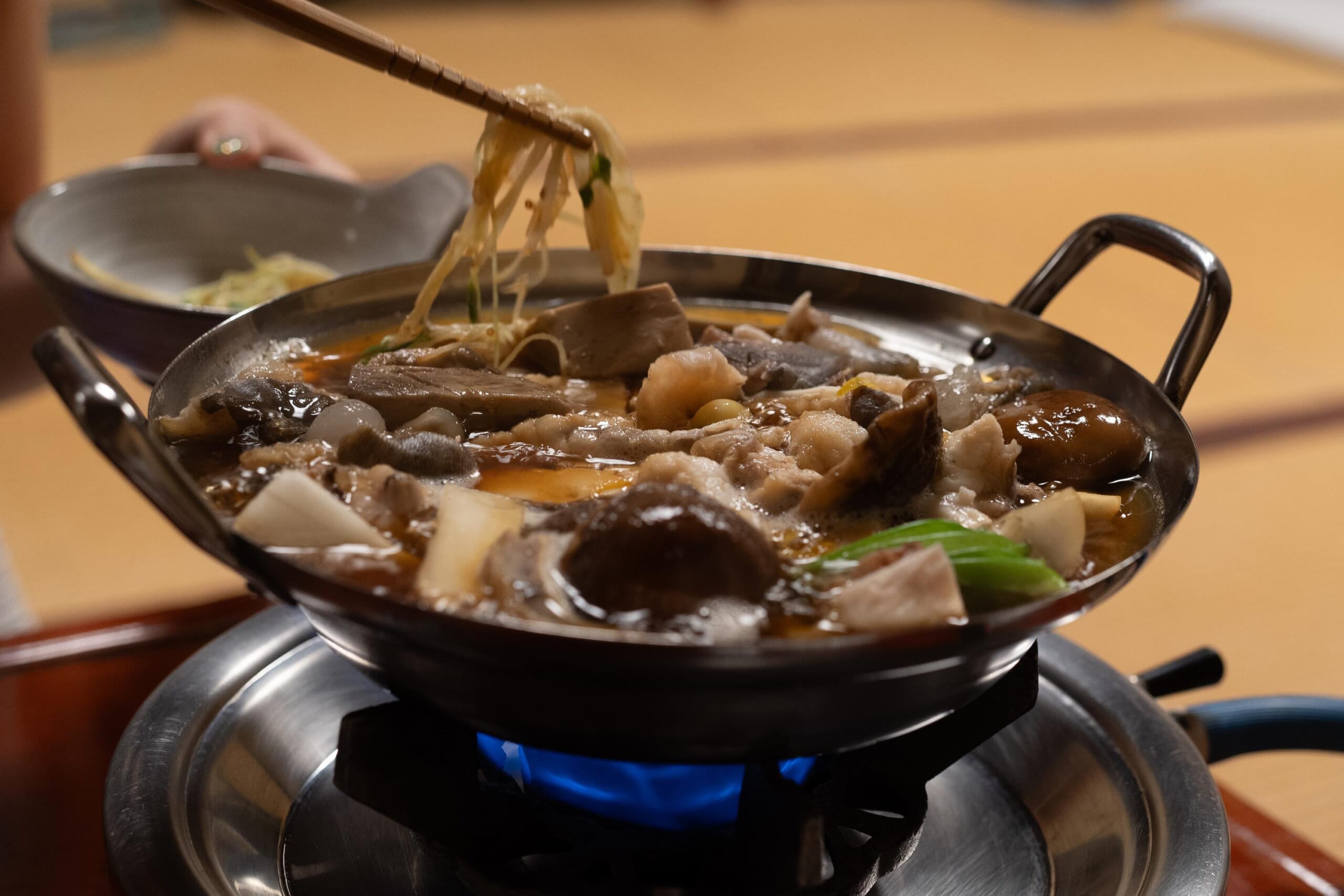
In my imagination, I had expected the liver to dissolve more, turning the whole thing into a thick, orange broth, but that wasn’t the case at all. Rather, the light, slightly sweet warishita (seasoned broth) creates an elegant depth of flavor. It’s much cleaner and lighter than expected, making it very easy to eat.
The chunky pieces of monkfish liver (ankimo) are already guaranteed to be superb, but they truly are delicious. Incidentally, though I forgot to take a photo, ankimo with ponzu, a citrus-based sauce, was served as well, and it kept the shochu flowing!
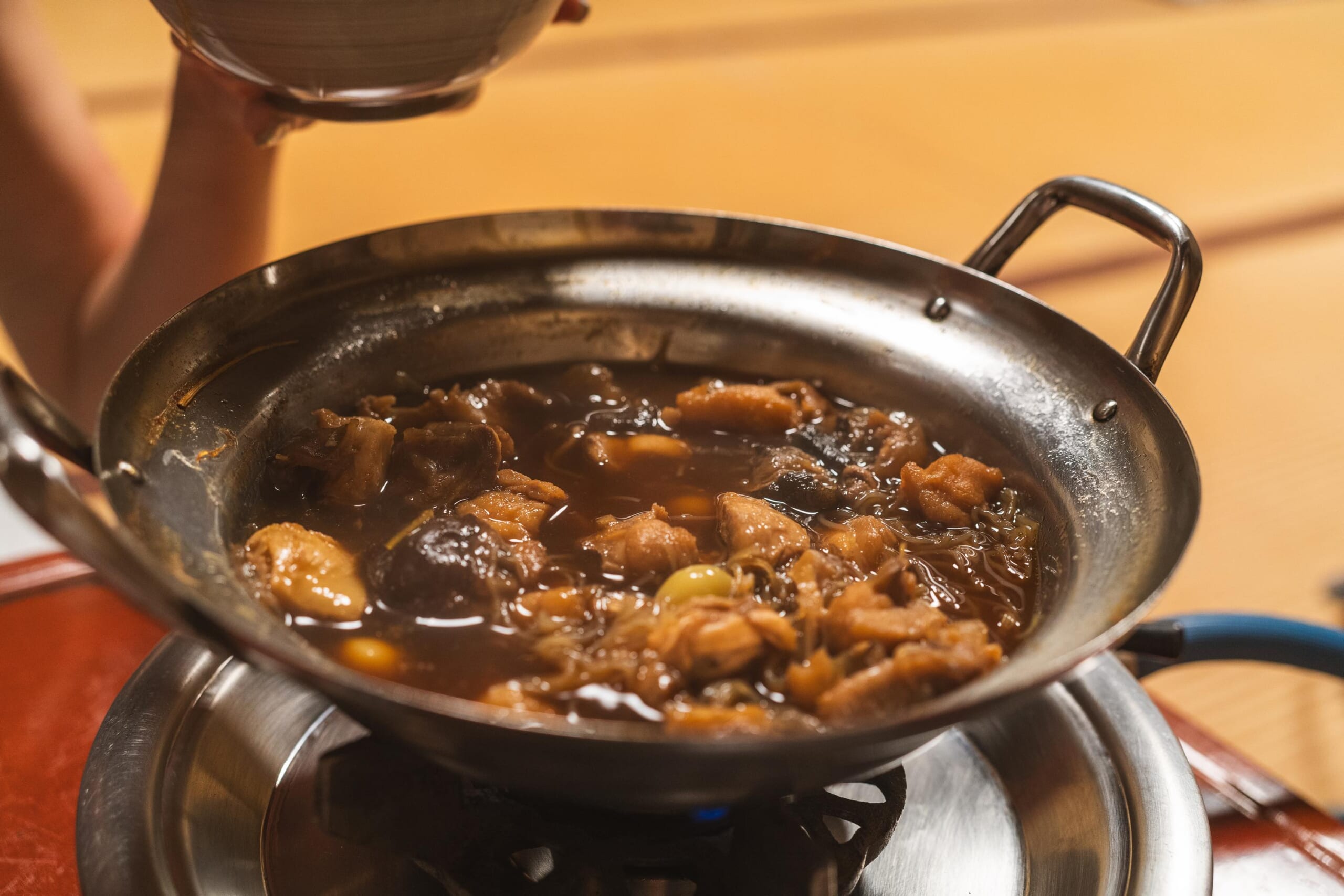
And once the ingredients are finished, they prepare an ojiya, or zosui (rice porridge cooked in the remaining broth), for you.
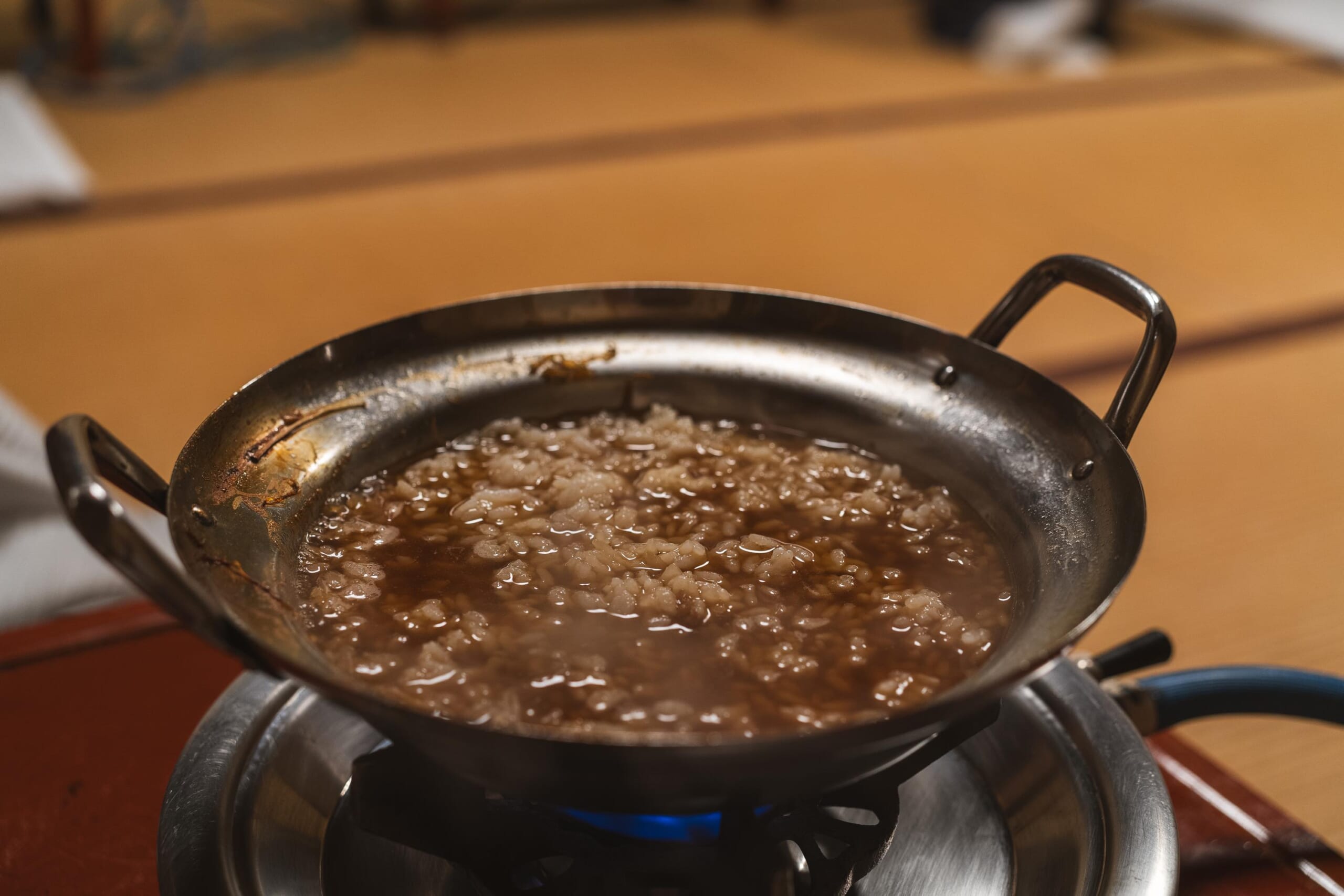
Adding the rice,
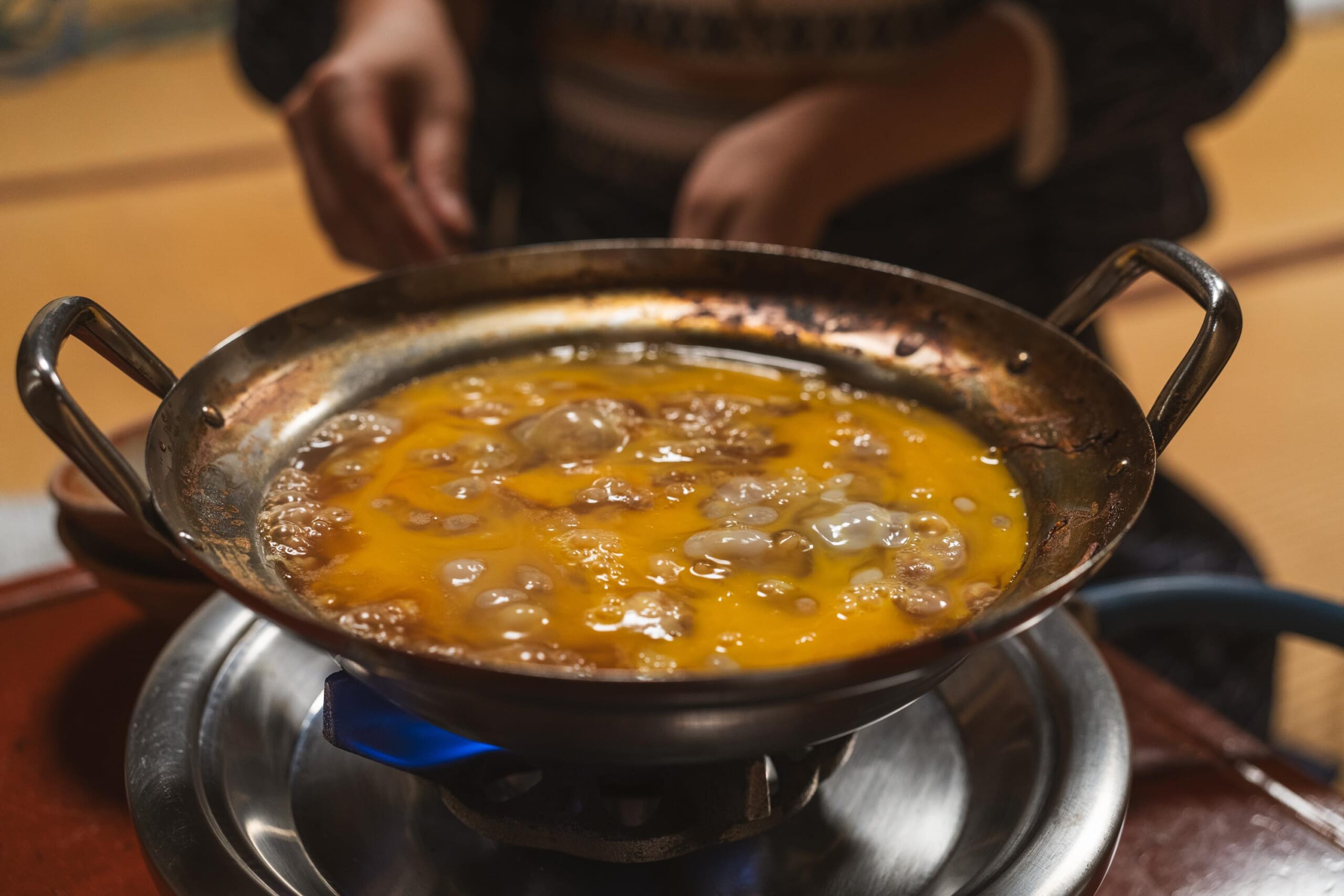
pouring the beaten egg all over the top,
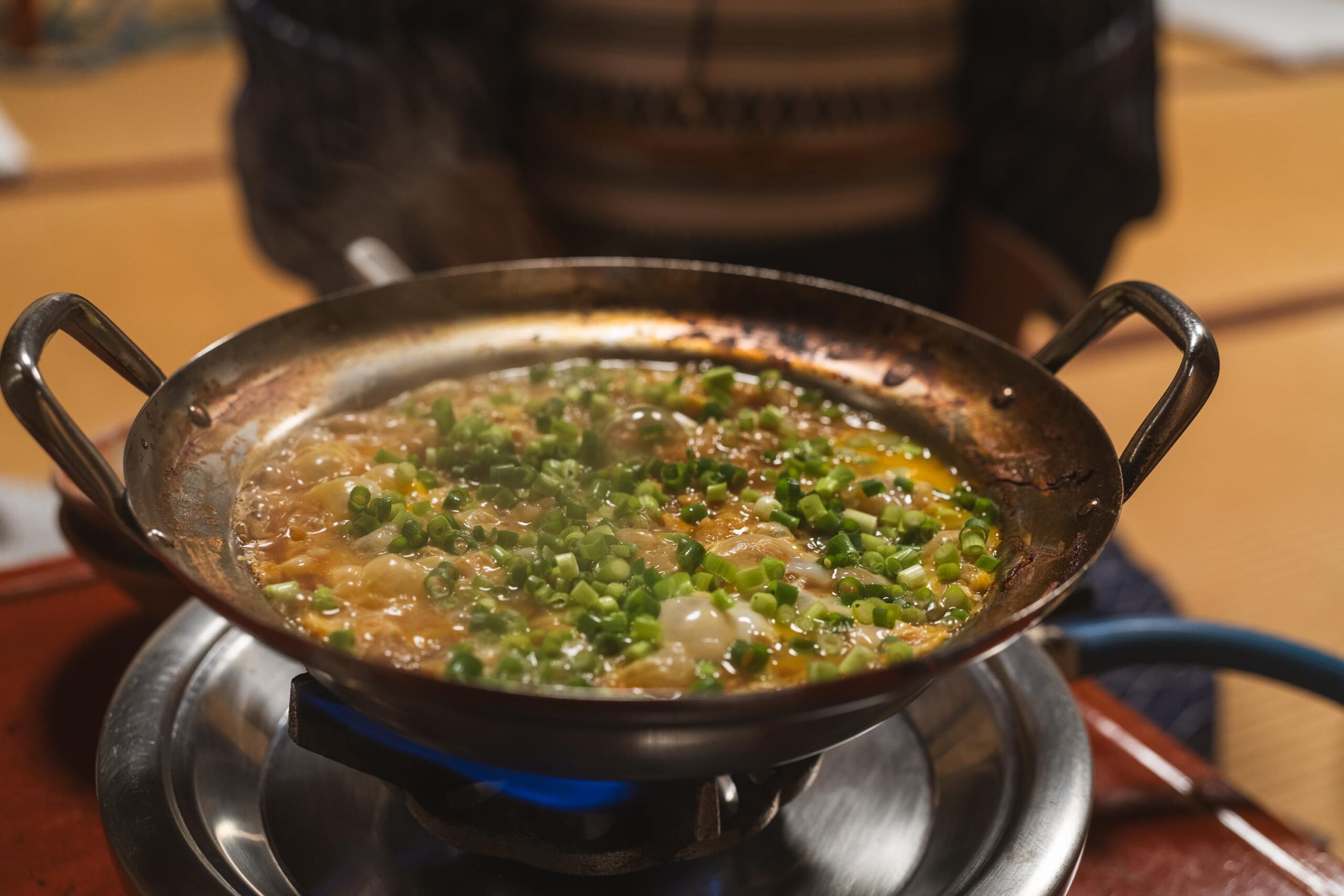
and scattering chopped scallions over it…
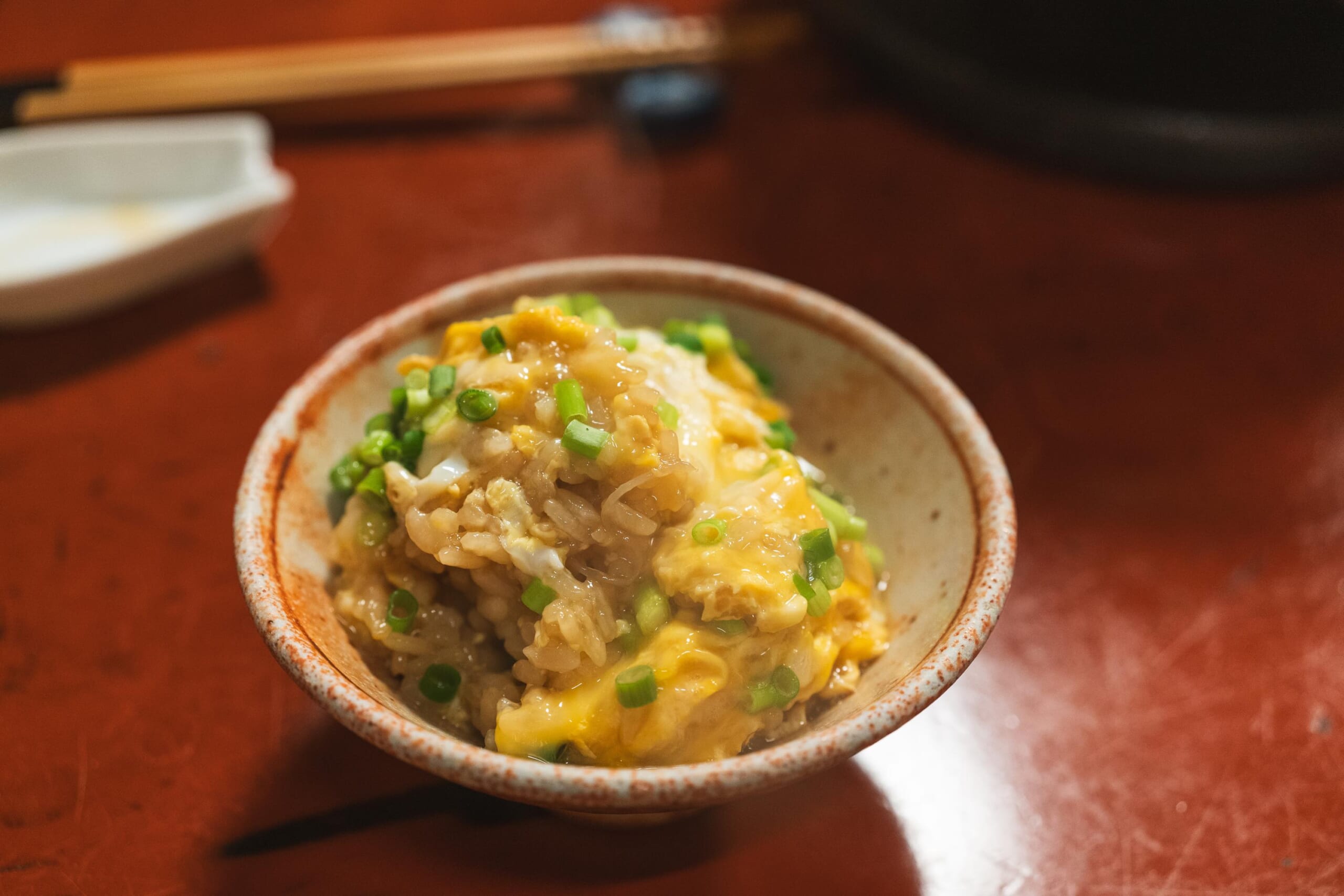
So good! This is delicious! It might rank among the very best ojiyas I’ve ever had. If anything, it feels like having the hot pot just for the sake of eating this porridge, ha! It is packed with the elegant warishita broth and the umami of monkfish. Yet it never feels overly heavy or salty—truly refined.
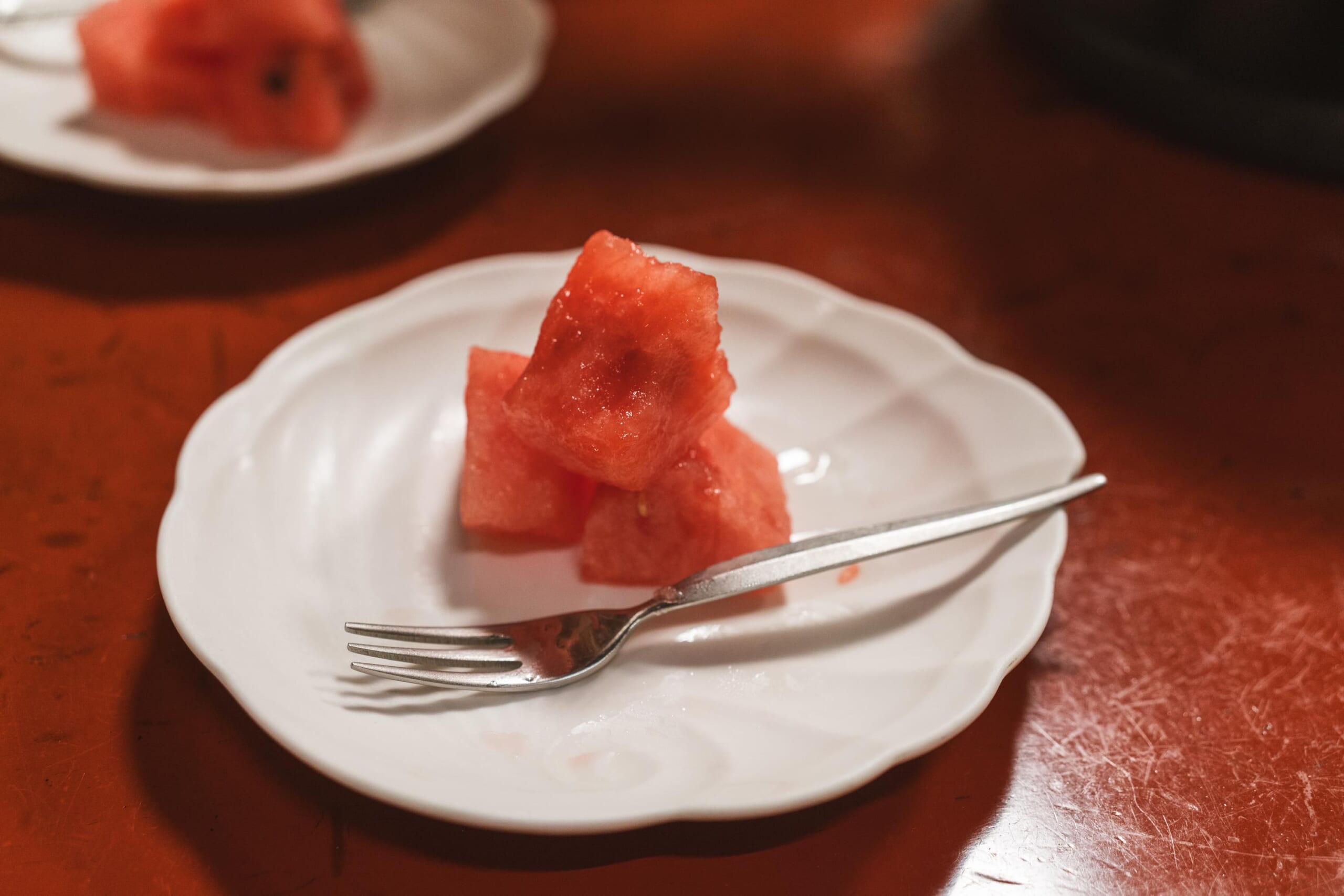
Dessert was watermelon. My first watermelon of the year! It cooled down a body flushed warm from the hot pot.
Man, hot pot in summer—isn’t it great? The dining room is kept thoroughly cool, so enjoying hot pot inside a cool restaurant on a scorching day feels somehow luxurious! Down by the entrance, there is an unusually low window where you settle the bill, and that detail also gives off such a wonderful old-architecture vibe. Savoring truly elegant monkfish hot pot while soaking in that historic atmosphere—what’s not to love? Maybe I will come back again in the winter.
Ise Gen (Monkfish / Awajicho Station, Ogawamachi Station, Shin-Ochanomizu Station)
Tabelog dinner rating ★★★☆☆ 3.6
I ate here and paid for it myself. Nothing on this site is a comped meal.
One more for the road?


