


A note on the words: soba are Japanese buckwheat noodles, and shin-soba refers to noodles made freshly from the season’s autumn harvest. Juwari soba is crafted purely from buckwheat flour with no wheat flour added, known for its rich aroma and hearty texture, served here cut thick (futo-uchi). Sarashina is refined, delicate white soba milled exclusively from the inner core of the buckwheat grain. Tennuki is crisp tempura served floating in hot dipping broth without any noodles, and kakiage is a crunchy deep-fried fritter of mixed seafood and vegetables.
Table of Contents hide
Sohonke Sarashina Horii Honten on Tabelog (English) — opening hours, payment details and the Japanese address are kept up to date there, not here.
Hello, this is Hangover Meshi. The temperatures have completely dropped, turning slightly chilly lately. One cannot help wondering why the temperature swings are so drastic! But when it comes to autumn, it has to be autumn’s shin-soba (the season’s new buckwheat noodles)! So I paid a long-overdue visit to Sarashina Horii in Azabu-juban. Lunchtime is always busy here. When I got there all seats were taken, but turnover is fast so you can eat without waiting very long.

Thick-cut juwari soba from new buckwheat — 1,500 yen
Tennuki (tempura without noodles) — 1,310 yen
Soba inari — 350 yen
Ooh, look at that — thick-cut shin-soba, and what’s more, it is juwari soba (made from 100% buckwheat flour, with no wheat flour added)! Juwari soba seems like it might be good for you too.
Besides, I happen to like thick-cut soba anyway, so this is just right. It looks like you can get a large portion for an extra 500 yen, but these days a regular portion satisfies me, so I ordered the regular. Even though the shop name itself practically shouts, “Our recommendation is sarashina!” (the refined white soba milled from the buckwheat heart), I have hardly ever eaten sarashina here. I just end up ordering the thick-cut every time.

Before long, the soba arrived.
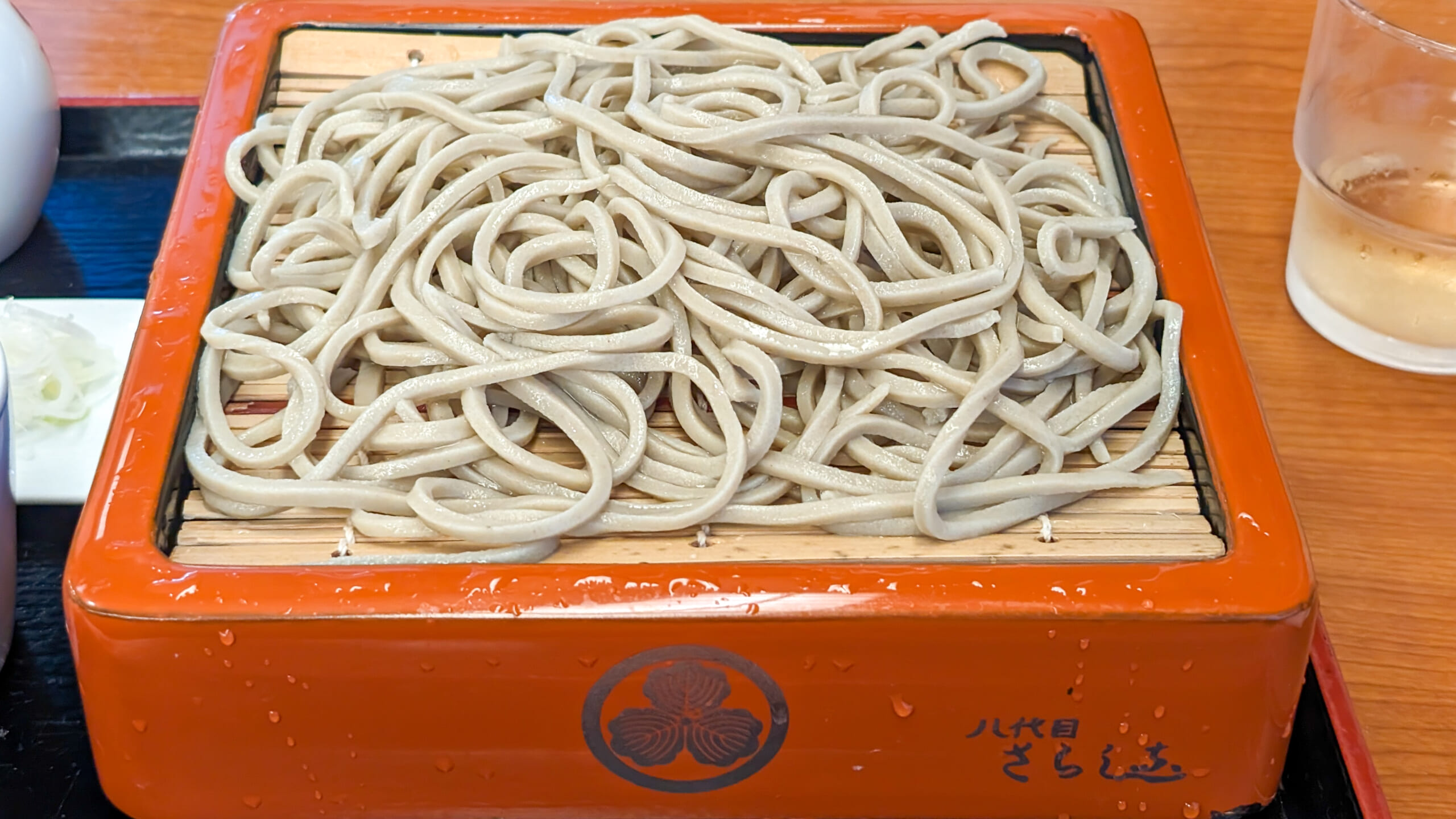
Ta-da!
The color is rather pale; perhaps they remove the hulls after all.
Taking a bite, it shows what juwari soba is all about. The aroma of the buckwheat drifts right up. Being thick-cut, the more you chew, the more the aroma blooms, which is delicious. I really think soba comes down to how thoroughly chilled it is, and here it is properly cold, going down smoothly and tasting wonderful. As always, the sharp, dry-leaning dipping broth is crisp and pairs well with the noodles. In the past I used to use up all the dipping broth, but lately using barely half — perhaps that is a sign of growing up, ha. A single serving was thoroughly satisfying! It was delicious.
This time they had the thick-cut juwari soba so I went with that, but as the upcoming season gradually gets colder, warm soba becomes all the more tempting. Sarashina Horii does delicious kakiage (fritter) soba too, so when it gets a little chillier I look forward to coming back for tensoba — hot soba topped with tempura!
Sohonke Sarashina Horii Honten (Soba (Buckwheat noodles) / Azabu-juban Station, Roppongi Station, Akabanebashi Station)
Tabelog lunch rating ★★★☆☆ 3.5
I ate here and paid for it myself. Nothing on this site is a comped meal.
One more for the road?


