


A note on the words: soba are buckwheat noodles. Kikouchi refers to 100% buckwheat noodles made without any wheat flour binder. Sarashina, the word the shop carries in its name, refers to white noodles made purely from the refined inner core of the buckwheat grain. Zaru means chilled noodles served on a slotted bamboo tray, gozen is a set meal, and ten- indicates an accompanying assortment of tempura.
Table of Contents hide
Nagasaka Sarashina Nunoya Tahee Azabu souhon ten on Tabelog (English) — opening hours, payment details and the Japanese address are kept up to date there, not here.
Hello, this is Hangover Meshi. So hot! Wanting soba or hiyashi chuka (chilled Chinese noodles), I wandered through Azabu-juban. There were fewer spots that seemed to have hiyashi chuka than I expected, and thinking that if I kept walking this might end up being the last soba shop around, I dropped into “Nagasaka Sarashina Nunoya Tahee Azabu souhon ten” for the first time in a while. On hot days, cold soba is definitely the way to go.
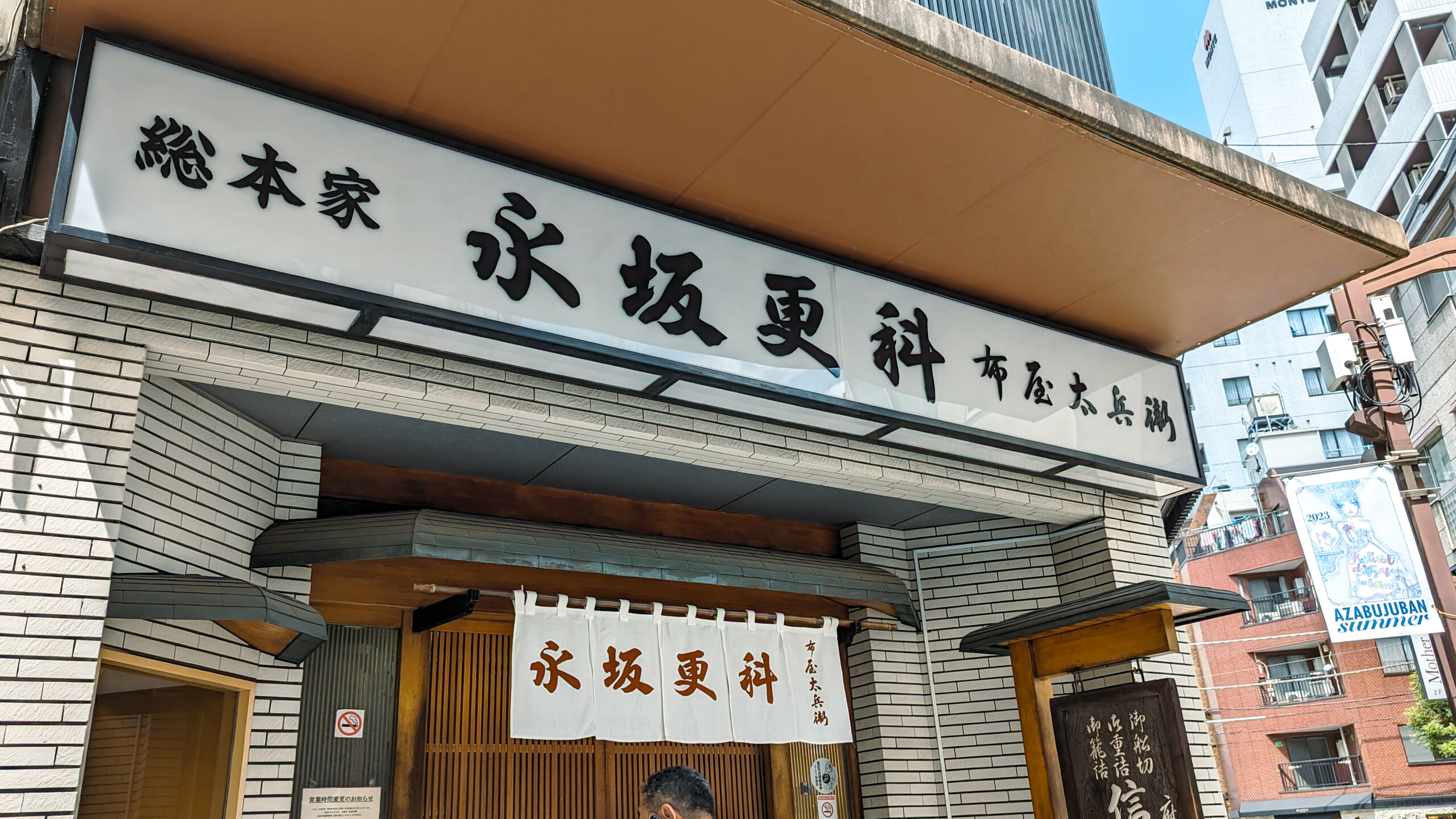
Inside was fairly crowded, but I was able to slip right in, which was great!
Gozen soba — 1,160 yen
Kikouchi soba (pure 100% buckwheat soba) — 1,160 yen
Tahee zaru — 1,160 yen
Ten-gozen — 2,520 yen
Ten-kikouchi — 2,520 yen
Tenzaru — 2,520 yen
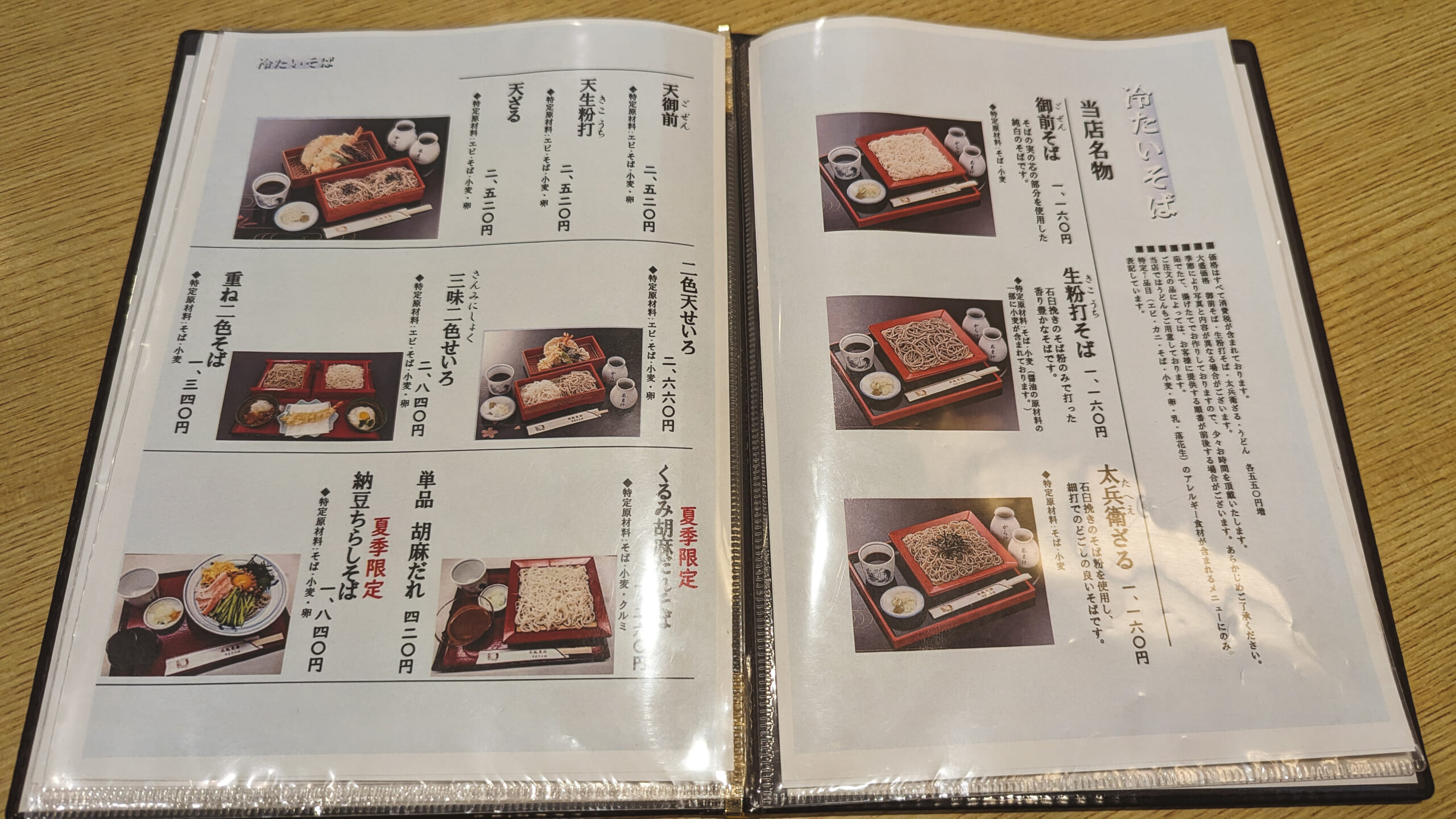
I love kikouchi soba, but somehow when I visited previously I mistakenly ordered the Tahee zaru. I like thick soba noodles, and “Tahee” is written with the character for “thick” — does that not sound like it would be thick, ha? So this time, I took a very close look at the menu to be sure. Thinking just a plain zaru tray on its own might feel a bit sparse, I chose the ten-kikouchi with tempura.
Well, after a short wait, the soba arrived. Soba comes out fast, which is great!
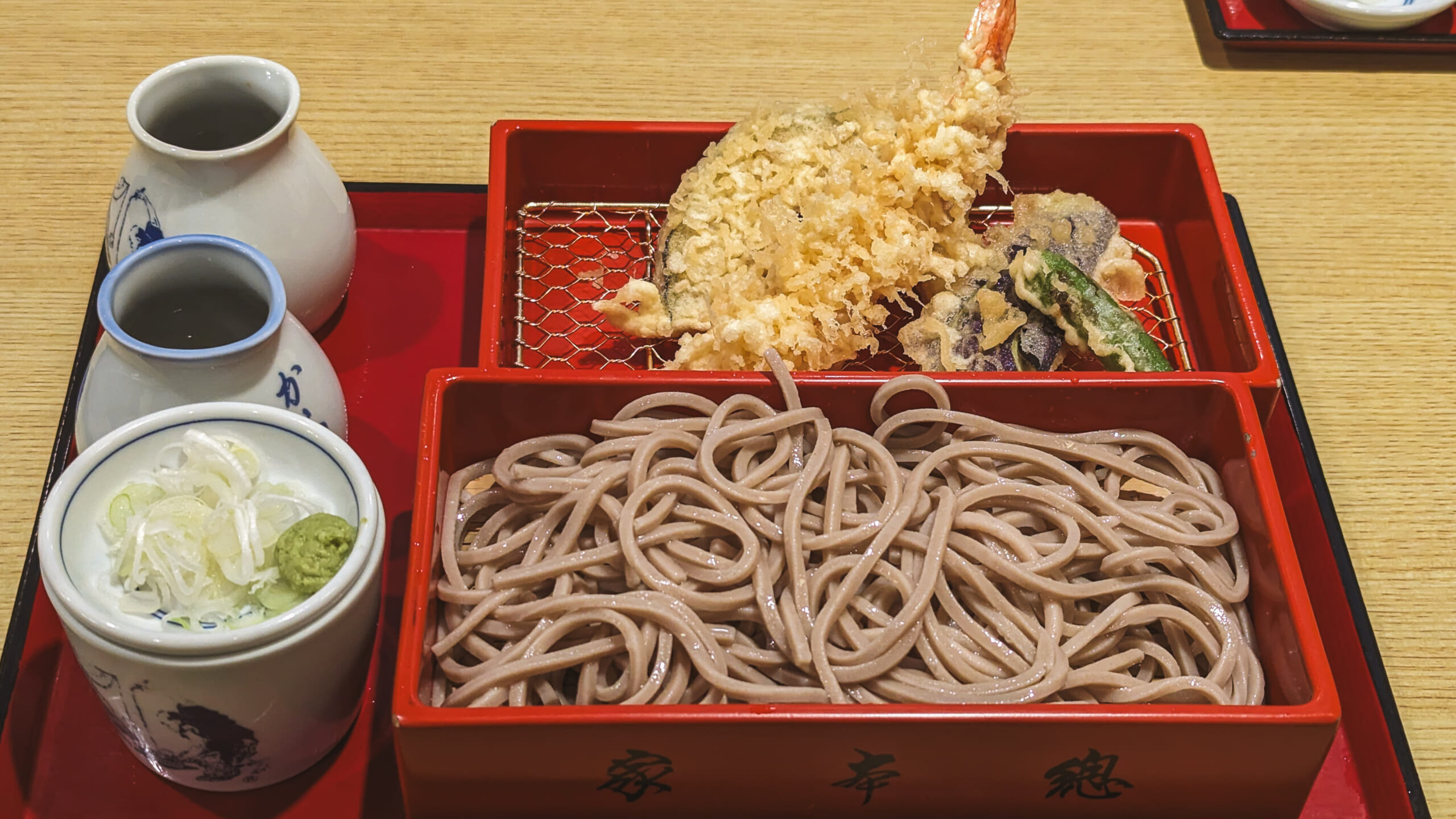
Ten-kikouchi! In the past, paying 2,500 yen for lunch would have made me think, “What on earth?!”, but with rising prices and everything around getting more expensive, it is scary how it does not bother me as much anymore. The tempura includes eggplant, shishito peppers, shrimp, and kabocha squash. The dipping sauce comes in two types: amakuchi (sweeter) and karakuchi (sharper). The soba is an extra-thick, rustic inaka-soba style, which is my absolute favorite. It is easy to taste the buckwheat flavor, and with a chewy, rugged texture almost like Ramen Jiro noodles, it is very satisfying and thoroughly enjoyable!
I always use only the karakuchi dipping sauce, and this time as well I stuck to just the karakuchi.
Yep, delicious.
And so, returning after a while, the soba was as delicious as ever. Maybe I will do a tour of the soba shops around Azabu-juban again! Not just soba, but I might want to go around trying hiyashi chuka too. The heat is going to continue for a while yet, but I want to keep eating cold dishes so I do not let it beat me.
Nagasaka Sarashina Nunoya Tahee Azabu souhon ten (Soba / Azabu-juban Station, Akabanebashi Station, Roppongi Station)
Tabelog lunch rating ★★★☆☆ 3.4
I ate here and paid for it myself. Nothing on this site is a comped meal.
One more for the road?


