


A note on the words: champon is a hearty noodle dish of thick noodles cooked with stir-fried vegetables, meat and seafood in a rich pork-bone broth, with kaedama being a second helping of noodles ordered to go with the broth you have left. Junjo translates to pure-hearted, the shop’s moniker for its clean, drinkable tonkotsu broth that avoids excessive grease or gameyness. Yaki ramen is ramen noodles stir-fried with Worcestershire sauce and tonkotsu broth, a classic Hakata street-stall creation, and yakimeshi is street-style Japanese fried rice.
Hakata Ramen Shin-Shin Fukuoka Kuko Ten on Tabelog (English) — opening hours, payment details and the Japanese address are kept up to date there, not here.
People of Kyushu, thank you for waiting! It is Hangover Meshi time!
With my long trip to Fukuoka coming to an end, it was time for one last bowl of ramen while waiting for the flight home! I headed once again to Ramen Runway (the ramen zone inside Fukuoka Airport). Last time it was Tonsoba Tsukiya, but this time I went with Shin-Shin. The reason: a taxi driver recommended it to me while heading home after bar-hopping through Nakasu!
The original shop was founded in Tenjin by an owner who trained at a street-side yatai food stall in Fukuoka. The shop touts a “junjo (pure-hearted) broth that is easy to drink and finished to the last drop,” and apparently the Tenjin location draws quite a queue.
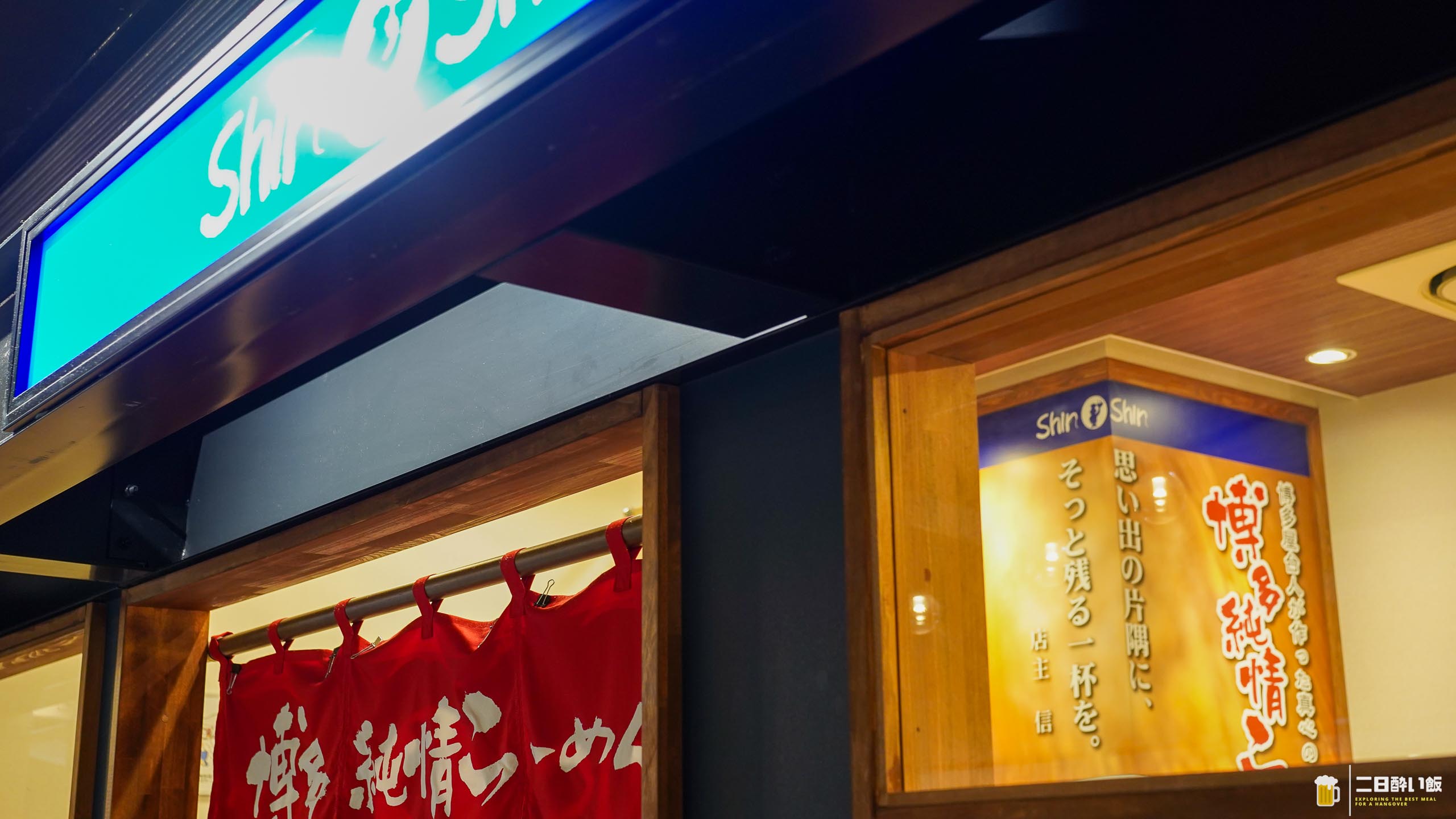
Even at the airport branch, the queue is alive and well! There were five or six parties in line. Time to join them.
Once inside, what first? Time for a drink!
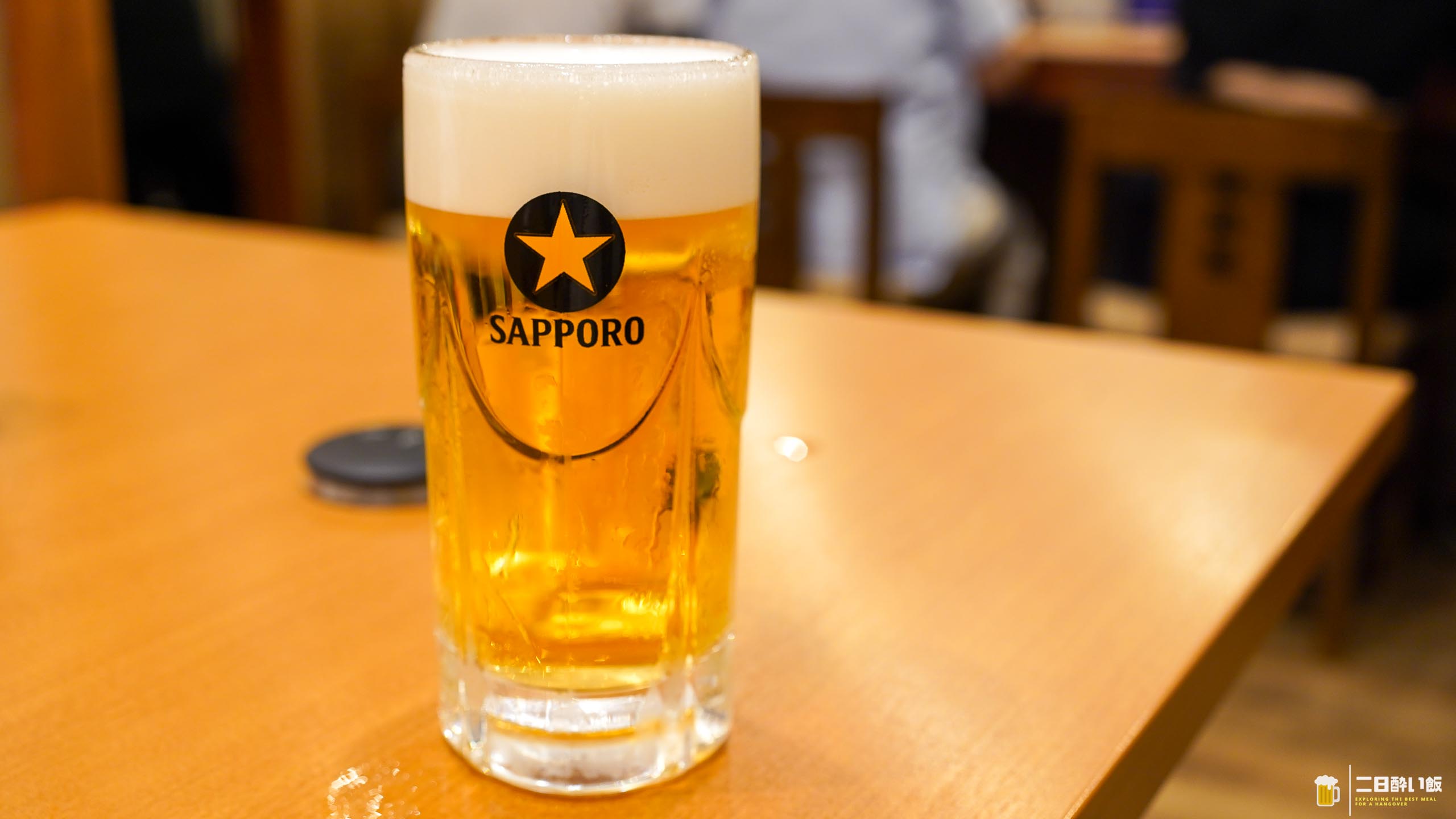
Beer
While the junjo ramen is not to be missed, what caught my eye was the Hakata champon! How does it differ from Nagasaki champon? I was just too curious! A tonkotsu pork-bone base seems a given, but I wondered. Sharing seems the way to go!

From the black bowl, cabbage and bean sprouts mound up generously. Squid, pork belly, red-and-white kamaboko (steamed fish cake), and even kikurage (wood ear mushroom) make an appearance, while the noodles only peek through the gaps in the toppings — packed with ingredients, which is delightful!
Rising from the bowl is the savory aroma of stir-fried vegetables. Tasting the broth, despite its milky opacity the mouthfeel is mellow and creamy at first sip, followed gently by the sweetness of stir-fried vegetables and the savory richness of seafood. Yes, a truly delicious champon!

The noodles are thick champon noodles. Chewy with good bite, they absorb the broth and take on a satisfying heft in the latter half. While thin noodles are the hallmark of Hakata ramen in general, with a soup this substantial, thick champon noodles really suit it best!

I didn’t do it this time, ha, but apparently you can order a kaedama (second helping of noodles) of the ultra-thin ramen noodles. That might have been fun to try too. Wondering what sets it apart from Nagasaki champon, they say a requirement there is using noodles made inside Nagasaki Prefecture with toaku (a traditional lye water); in flavor, the two taste much alike! Perhaps being able to order kaedama is what makes it Hakata champon, ha!

With chashu and kikurage, and a sign saying it’s the number-one favorite, I went with the ramen topped with a nitamago (seasoned soft-boiled egg). Now, let’s taste this junjo broth right away…!
Surprisingly light at first sip! Just as you think it feels light for tonkotsu pork bone, two or three seconds later the savory depth wells up steadily. Needless to say, there is virtually no gamey smell. The impression is simply that of an exceptionally good broth.
The noodles are ultra-thin and straight. Naturally, the firmness can be specified. That sensation with Hakata ramen of slurping thin noodles straight back in one breath is fantastic. Because it follows the Hakata style that assumes a kaedama noodle refill (150 yen), the portion of noodles is on the modest side. But honestly, I think this is plenty, ha.
The kikurage makes a great textural accent, and the chashu is tender and delicious. In the second half, dissolving beni-shoga (red pickled ginger) into the white broth adds a sharp, refreshing edge that makes it wonderful all over again.
Utterly satisfying! While frothy cappucino-style ramen or heavy, pungent bowls are great in their own right, a cleaner, “old-school” tonkotsu ramen like this (as the taxi driver called it, ha) is delicious too. I felt I could see why it draws lines. Since you can easily eat here at the airport, if it catches your interest, why not give it a try?!
Here’s hoping for another encounter with good food today!
Hakata Ramen Shin-Shin Fukuoka Kuko Ten Menu
Hakata junjo ramen
The shop’s signature is “Hakata junjo ramen.” Ultra-thin noodles in a tonkotsu broth meant to be drained to the last drop.
The original flavor. Said to be the foundation of Hakata junjo ramen, with a light yet rich broth.
Topped with a soft, runny nitamago (seasoned egg); the shop’s number-one favorite.
Heaped with karashi takana (spicy pickled mustard greens). A piquant favorite loved by Fukuoka locals.
A classic topping, said to be called negi-yama (scallion mountain) in Hakata.
Generously topped with chashu pork; a hearty bowl focused on substance.
The all-inclusive version featuring nitamago, kikurage, scallions and chashu together.
A starter set for a quick toast. Can be added to any other ramen for +530 yen.
Hakata champon
The other flagship dish rivaling the ramen.
Mellow flavor. The classic style of tonkotsu champon.
An ultra-rich version said to recreate the closing dish of Hakata’s famous motsunabe (offal hotpot).
A rich champon said to have enjoyed unchanging popularity since the shop’s founding.
For spice lovers. The sign notes it delivers savory depth alongside heat.
You can order kaedama noodle refills (150 yen, using ramen noodles) for champon as well. A secret house tip: save some broth and order kaedama to enjoy ShinShin twice in a single bowl.
Brothless noodles and yaki ramen
A Hakata street-stall specialty combining Worcestershire sauce with tonkotsu pork-bone broth.
Yaki ramen made with generous helpings of mentaiko (spiced pollack roe).
Special noodles in a savory tonkotsu-based sauce. Mix in the side dish of takana, kikurage and shinachiku (seasoned bamboo shoots) to your taste. Onsen tamago (soft-poached egg) +160 yen; extra noodles 1.5x +150 yen / 2x +260 yen.
Chewy thick noodles said to have originated at the street stalls.
A dish where rich sauce coats the noodles.
Rice dishes
Yakimeshi (fried rice) is a signature side born from street-stall origins. Almost all varieties offer a half portion.
Standard yakimeshi, said to carry the flavor born and raised at street stalls.
The number-one favorite side dish. If pairing with noodles, this portion is just right.
With Hakata’s specialty mentaiko (half portion 540 yen).
A dish said to have been promoted from staff meal to the regular lineup (half portion 540 yen).
The half-yakimeshi series: negi, takana, mentai, kimchi, and makanai miso at 540 yen each; chashu is 580 yen.
Hakata street-stall dishes
Dishes for drinkers. If having a drink before boarding, this is the section to look at.
Small dishes posted as “Speed is life!” that arrive before your beer.
Gyoza with chewy skins, said to retain the same flavor since the shop was founded.
Made with 100% pork from the Shimabara Peninsula; said to be a thick sausage despite the name ham.
An iron-plate dish of offal and generous vegetables stir-fried with house-made miso.
Drinks
Otoko Ume sour / strong lemon sour / strong grapefruit sour / Kyoho grape / honey apple / peach / black oolong-tea highball
Two local Fukuoka sakes. The choice for savoring a parting taste of Fukuoka at the airport.
Items marked with a star (Akaboshi, Super Dry, Murao, Kanhokuto, Shigemasu, FEVER-TREE) are excluded from the 3-item combo set. Paper aprons are available upon request to staff.
※ From the storefront menu at the time of visit in August 2026. Prices include tax; offerings are subject to change. Please verify the latest details on the official site or at the shop.
Hakata Ramen Shin-Shin Fukuoka Kuko Ten (Ramen / Fukuoka Airport Station)
I ate here and paid for it myself. Nothing on this site is a comped meal.
One more for the road?


