


A note on the words: basashi is raw horse meat sliced thin like sashimi, a specialty of Kumamoto prefecture in Kyushu, eaten here with the sweet soy sauce of Kyushu. Akami is the lean red meat, kone is the rare cut taken from beneath the mane that resembles white fat and is rich in collagen, and futaego is a rare, crunchy cut of belly meat from along the ribs. Otoshi is the small starter dish served with drinks as a seating charge, shochu is distilled Japanese liquor served here with soda, and natsumero refers to nostalgic Japanese pop songs from decades past playing on the stereo.
Table of Contents hide
Yoridokoro Tsumugi on Tabelog (English) — opening hours, payment details and the Japanese address are kept up to date there, not here.
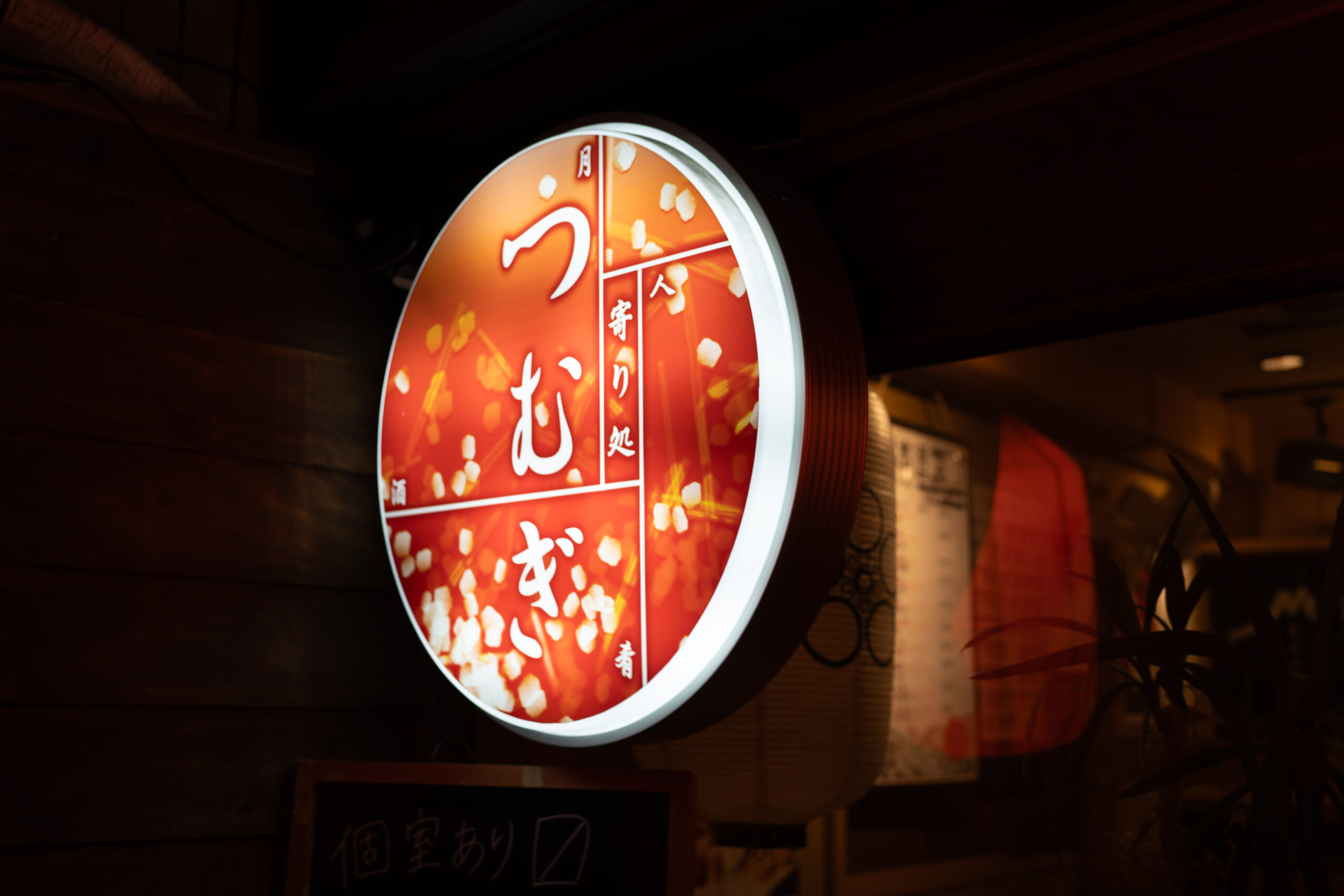
Hello, this is Hangover Meshi. My drinking crawl around Ueno continues. Next, I wandered a bit further from Ueno toward Yushima Station. Looking for a promising spot to drop into, this shop caught my eye: “Yoridokoro Tsumugi”. The sign has a warm glow that makes you just want to stop by. “Yoridokoro” literally means a place to drop in, and it really lives up to the name. I had no idea what kind of shop it was at first, but stepping inside, it seems to be an izakaya serving the food of Kyushu and Kumamoto!
Besides that, the natsumero (old popular songs) playing in the shop took me back so much that it really pumped me up, ha.
Three-cut basashi platter — 3,500 yen
Three-cut basashi platter, half — 1,800 yen
Two-cut basashi platter — 2,500 yen


It looks like they have oden, drinking snacks, and basashi from Kumamoto! I do not usually eat tempura of shako (mantis shrimp), so I wondered about giving that a try, but since I cannot eat all that much, I decided to pick out snacks that go well with drinks.
So, first off, my usual: shochu with soda.
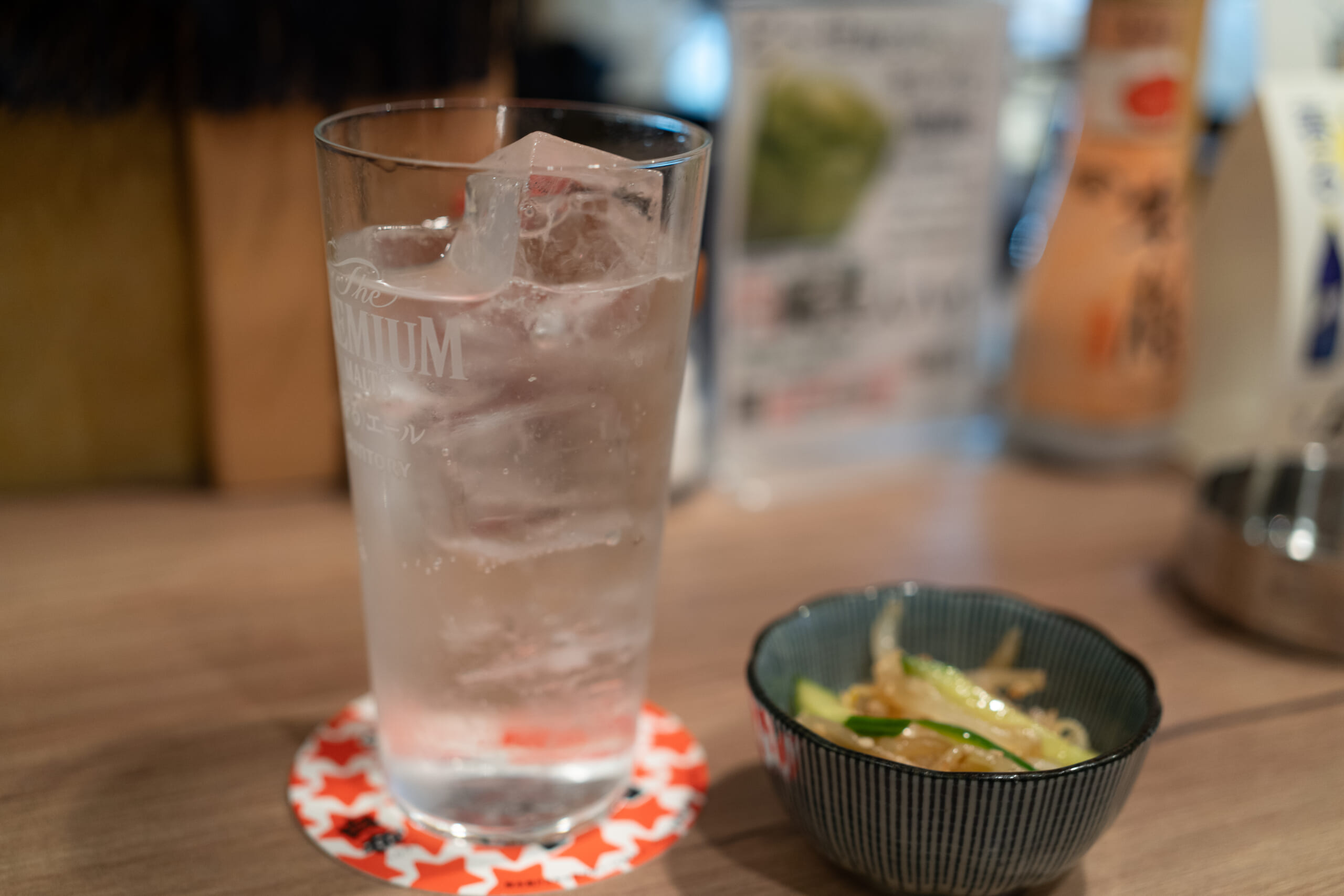
The otoshi, cucumber in vinegar, was delicious! And when it comes to snacks that go with shochu and soda…!

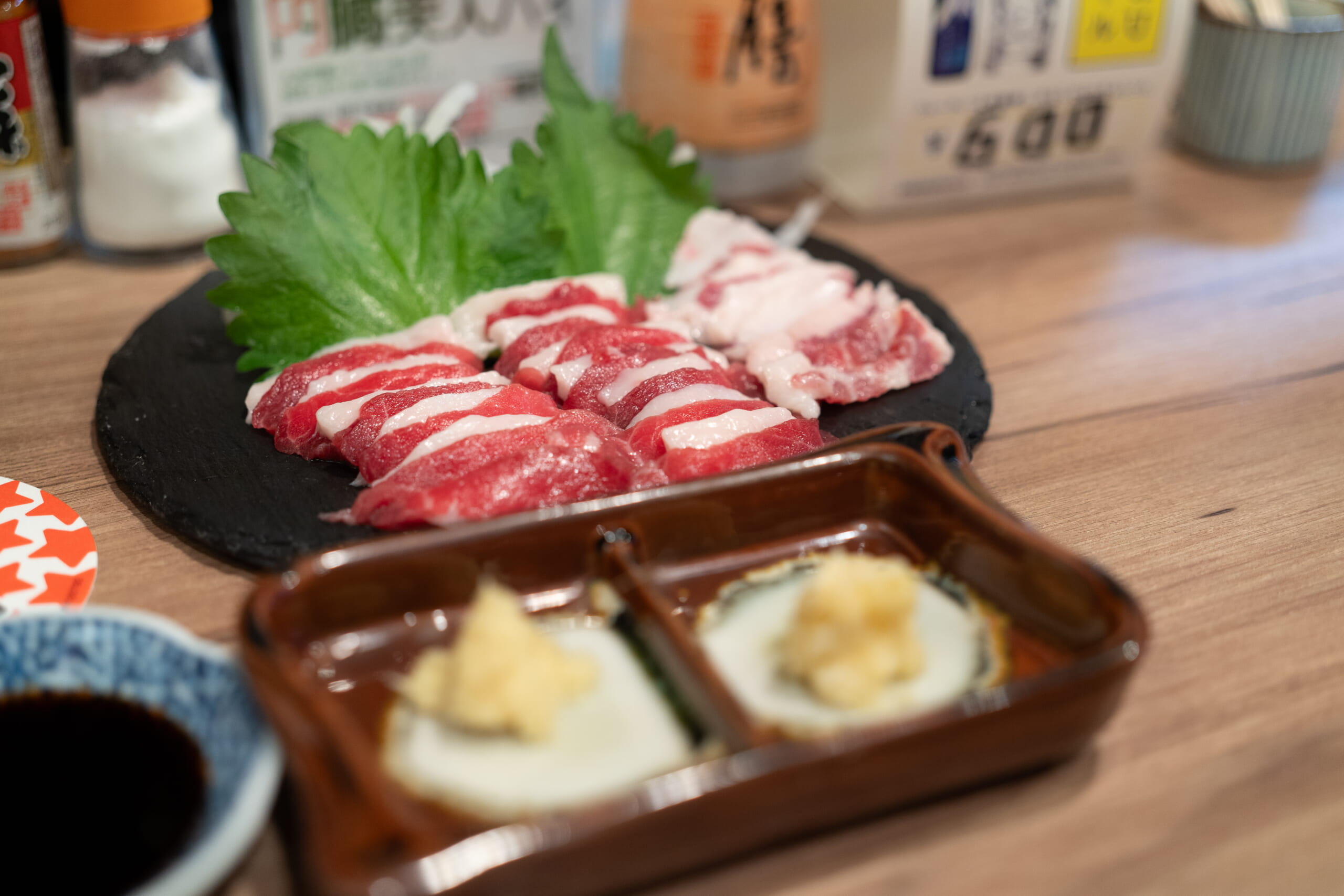
You can see right away how plump and beautiful the basashi looks!
They say the cuts are akami, kone, and futaego. Kone is the section beneath the horse’s mane, a rare cut, and futaego is the rib belly meat from the abdomen, which is apparently another rare cut with very little yield. Kone is packed with collagen, and at a glance it looks white like pure fat, but it tastes delicious when eaten together with the akami. For the record, the column on the far right is futaego, and in the left and center columns, the red slices are akami while the white parts that look like fat are kone. At first glance it looks like a single piece of meat, but akami and kone are layered alternately so you can eat them together, which is wonderful.
And taking a bite, the basashi is delicious. The rich flavor of the lean akami pairs incredibly well with the sweet soy sauce of Kyushu. Honestly, you might hardly need any condiments at all. The pairing with the plump, collagen-rich kone is spot on too.
The futaego is a cut with quite a crunchy, firm chew. This one is completely fine without condiments too. But as a garlic lover, having garlic with it might be even better! Man, it goes so well with shochu!
All in all, I think I drank about five glasses of shochu just with the basashi. And another thing: the natsumero playing in the background hit on songs from an era that really struck a chord, sparking lively conversation and keeping the drinks flowing. The basashi was outstanding, but the soundtrack made a great drinking companion too. This time I only had basashi, but it was so good that I would love to try other dishes next time!
Yoridokoro Tsumugi (Izakaya / Yushima Station, Ueno Hirokoji Station, Ueno Okachimachi Station)
Tabelog dinner rating ★★★☆☆ 3.5
I ate here and paid for it myself. Nothing on this site is a comped meal.
One more for the road?


