


A note on the words: soba is the buckwheat noodle, and juwari means it is made from buckwheat alone with no wheat flour to bind it. Uchitate, freshly cut, is soba served within minutes of being made; jukusei, aged, is buckwheat held back deliberately so the flavor deepens, and this shop serves the two side by side. Inaka, meaning rustic, is the darker coarse-ground style, and Benkei here is the shop’s name for a very coarsely milled soba. Tempura is seafood and vegetables fried in a light batter, dipped in tentsuyu, a broth of dashi, soy and mirin. Kamaage is soba served straight from the pot in its own cooking water. Takeshita-dori is the crowded teenage shopping street in Harajuku. Prices are as of this writing (August 2026).
Book a table at Takenoshita Soba on AutoReserve (English)
Right, this is Hangover Meshi. A day off came up out of nowhere, so I thought I would go and eat something good! Somewhere likely to have a line, but close enough that the first-thing-in-the-morning dash would give me an advantage — and looking around, I found a promising soba shop in Harajuku. The name: Takenoshita Soba. It appears to serve aged soba, and had the feel of a place that would draw a line, so off I went.
Takeshita-dori is packed at all hours lol
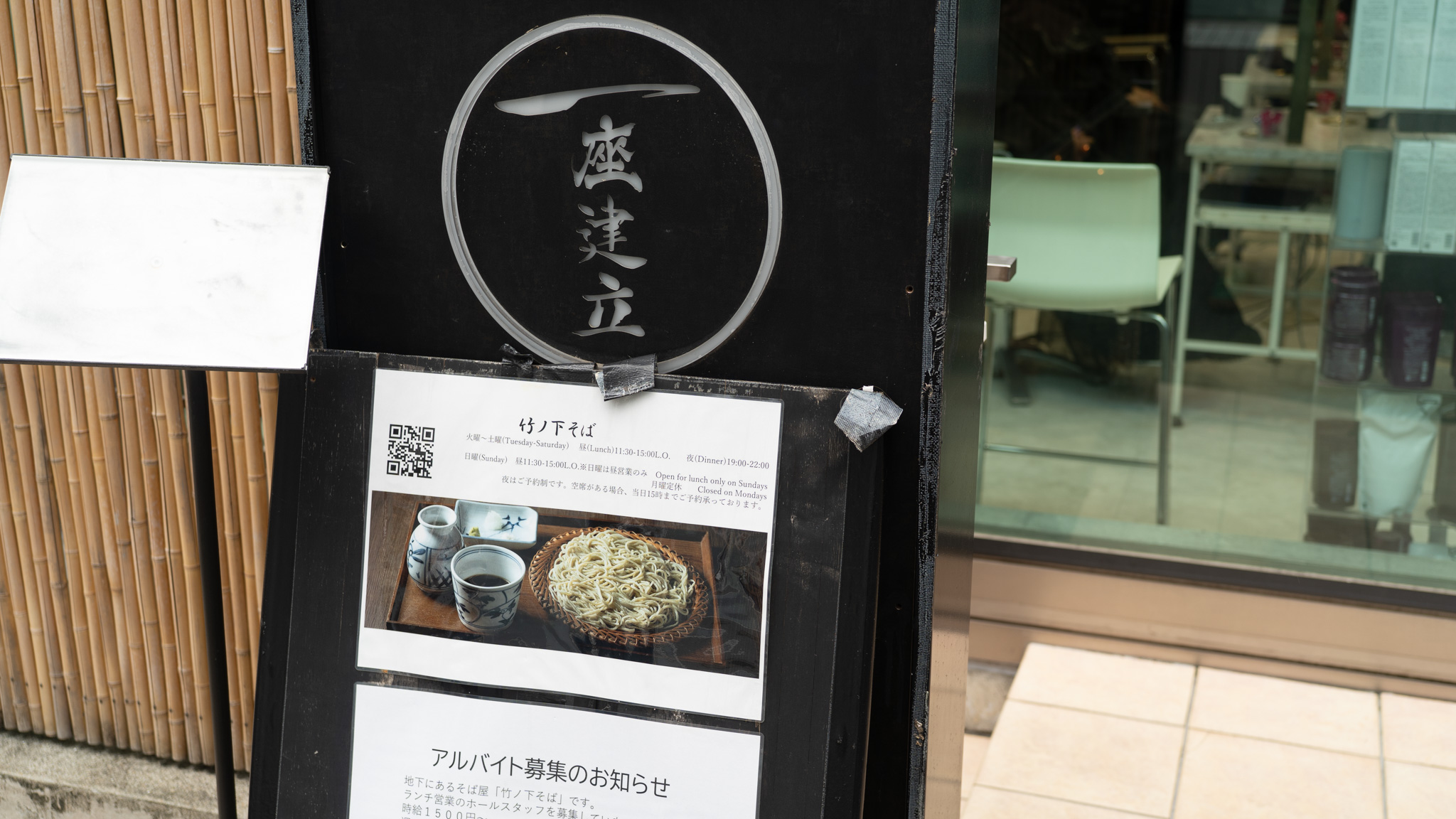
Turn smartly left partway along that packed street and there is — a Korean potato place, perhaps? — with a great crowd around it; push through that and you come to the soba shop^^. You go down into a basement, and since I arrived right at opening there was nobody there. That was when I saw the notice on the door: you could have booked through tablecheck^^; Well, I was first in anyway, so I got straight in!
Freshly cut versus aged, side by side: 7,980 yen
Kamaage with spicy daikon: 1,680 yen
There was a good deal of soba on the menu, but tucked in among it was “freshly cut versus aged, side by side”, marked as best booked in advance. Might I be able to have it, I wondered, and asked the staff — yes, you can! With tempura, or with grilled duck, it comes to 10,980 yen; a touch dear, but since I was here I went for the tempura!
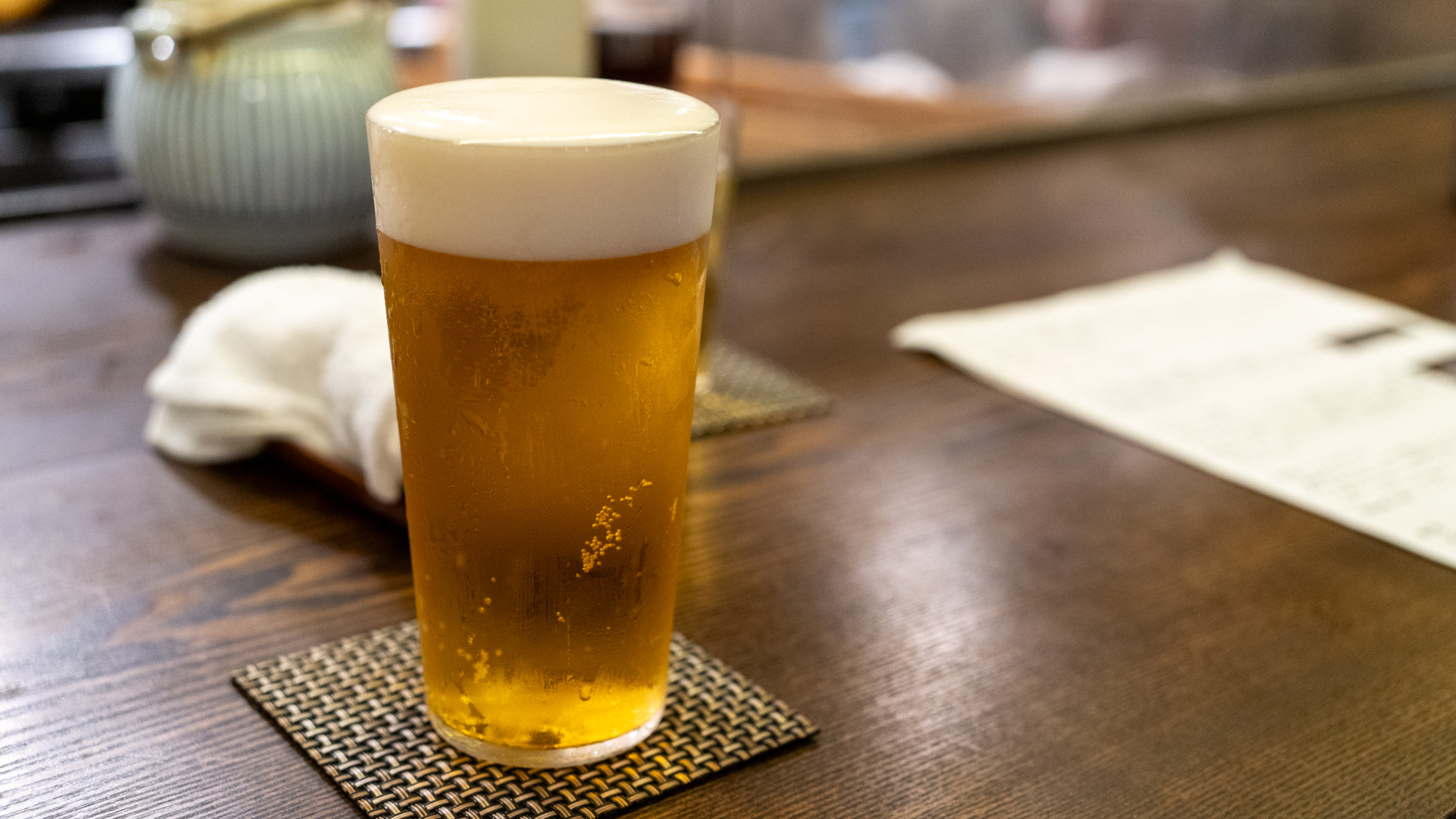
First, a beer!
Buckwheat groats dressed in dashi: those from Minamiaiki in Nagano, used for the aged soba, and those from Fukushima, used for the freshly cut.
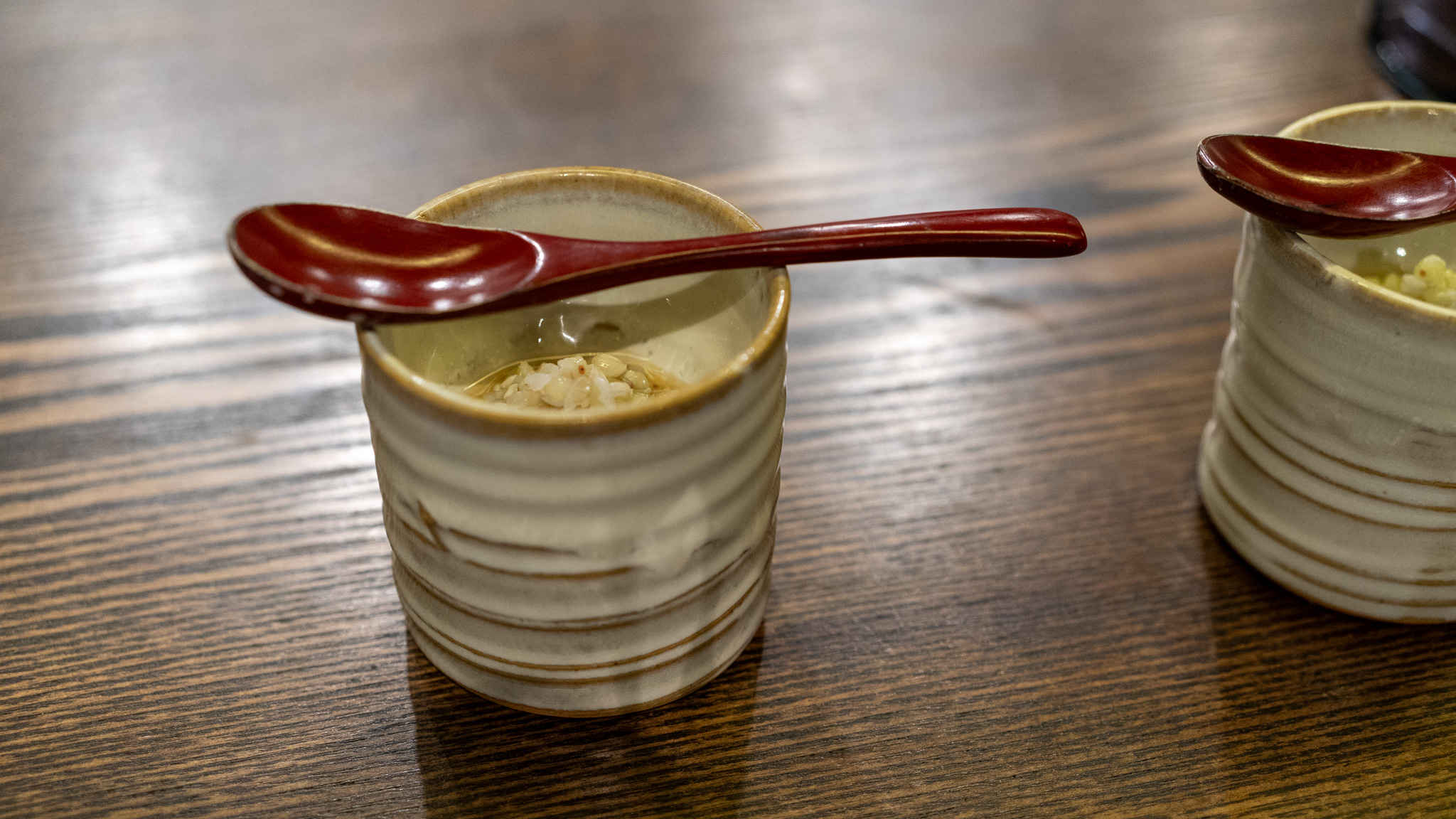
This is the aged one.
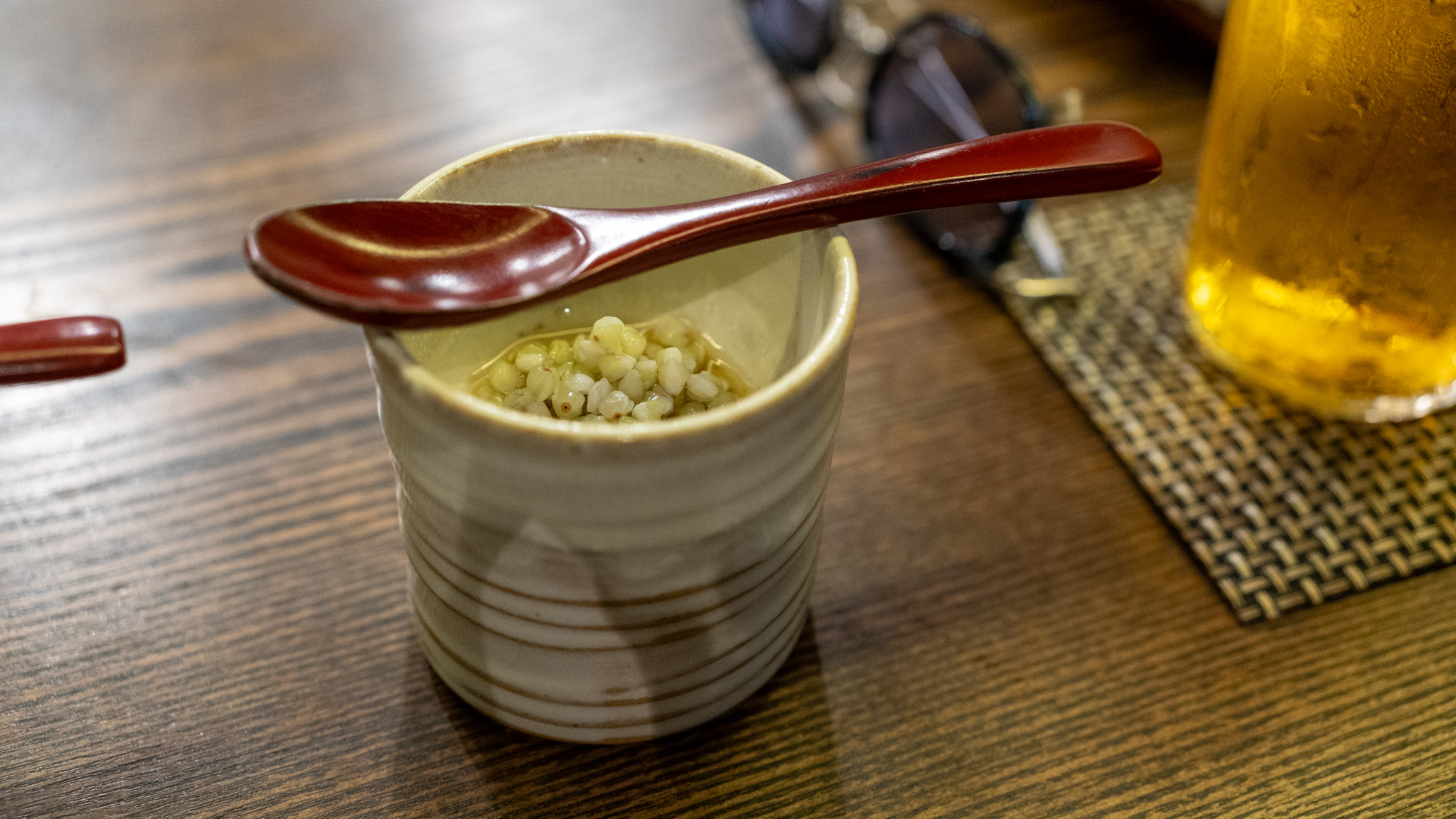
And this is the freshly cut soba.
They are clean-tasting and good, but the difference between them is very fine. The card says to enjoy how flat the flavor is before aging, and tasting them side by side you can make out the difference quite well! Eaten separately you might not notice much^^ In that sense the side-by-side set is interesting.
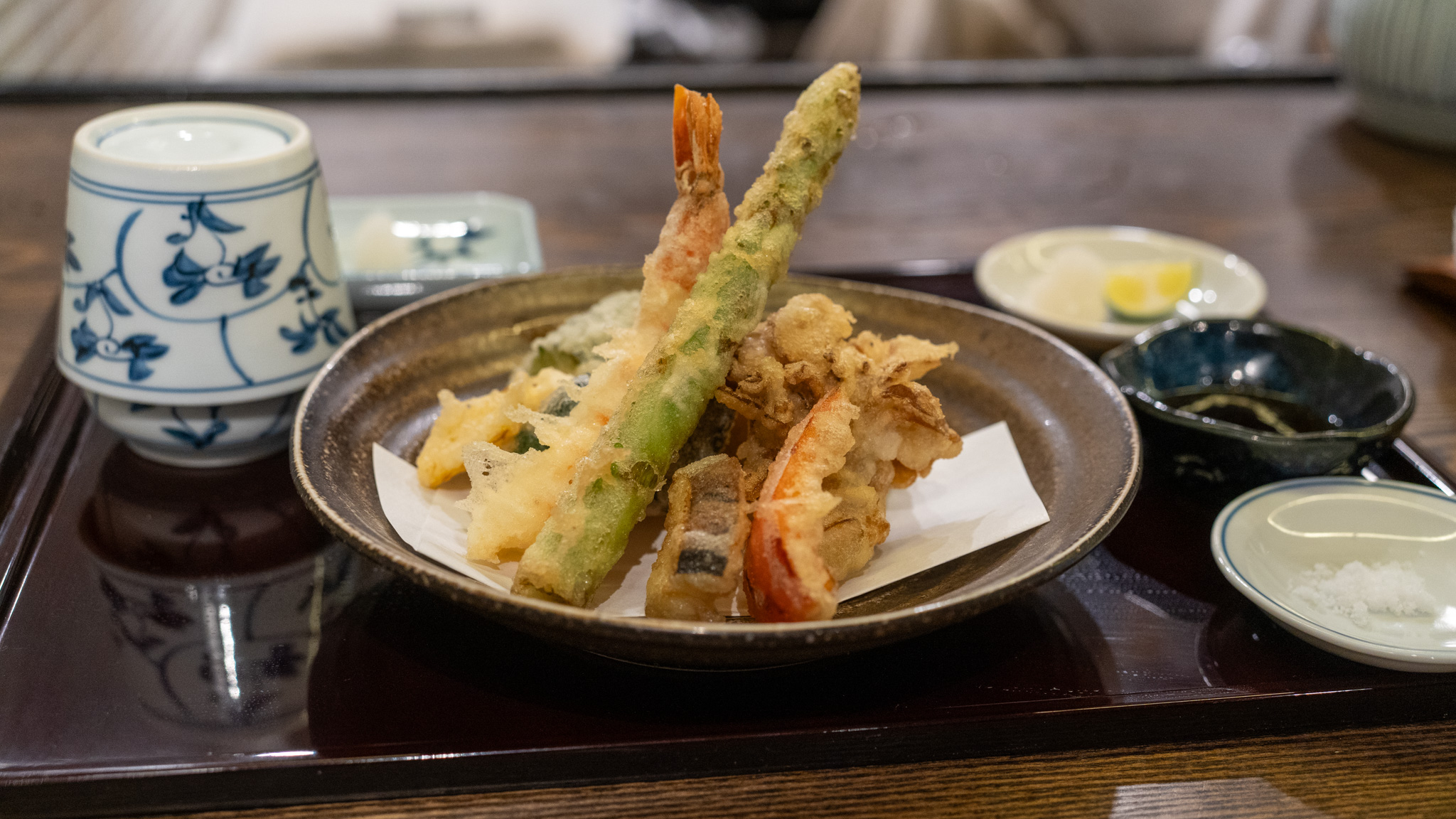
Next, the assorted tempura!
Reasonably substantial! Asparagus, shrimp, bell pepper, corn, zucchini, sweet potato, bitter melon and squash. It is mostly vegetable tempura, and every piece is excellent. Soba shops always have good tentsuyu, after all! I end up using the dipping broth rather than the salt! Sudachi and grated daikon come with it too, so it eats cleanly.
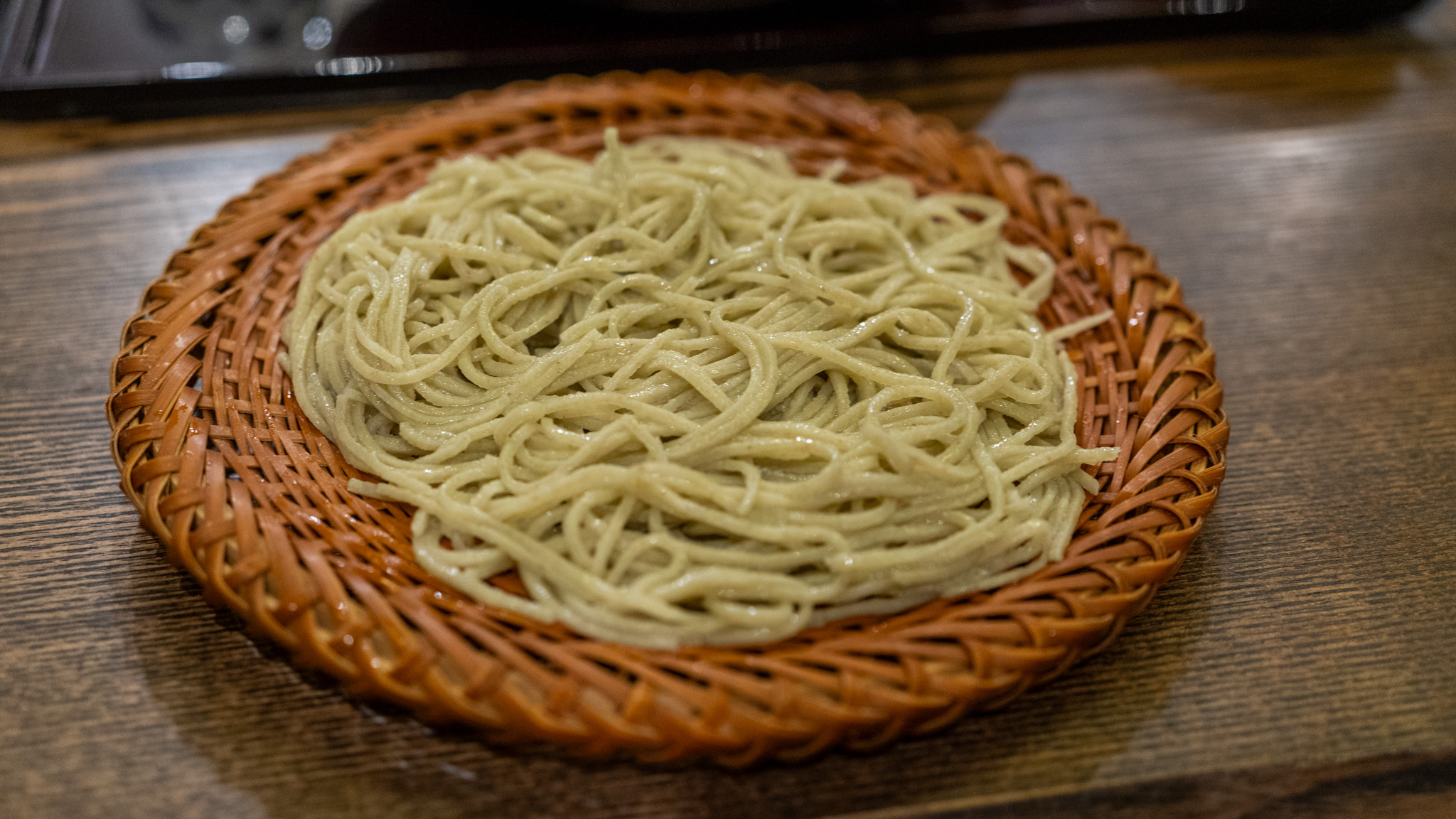
Freshly cut juwari — all-buckwheat — from Fukushima.
They keep it dormant in the fridge and then boil it at full heat all at once, apparently. There is a saying that freshly cut soba should be eaten within five minutes lol so I got straight to it. Properly chilled, with real bite and a rising aroma. Excellent!
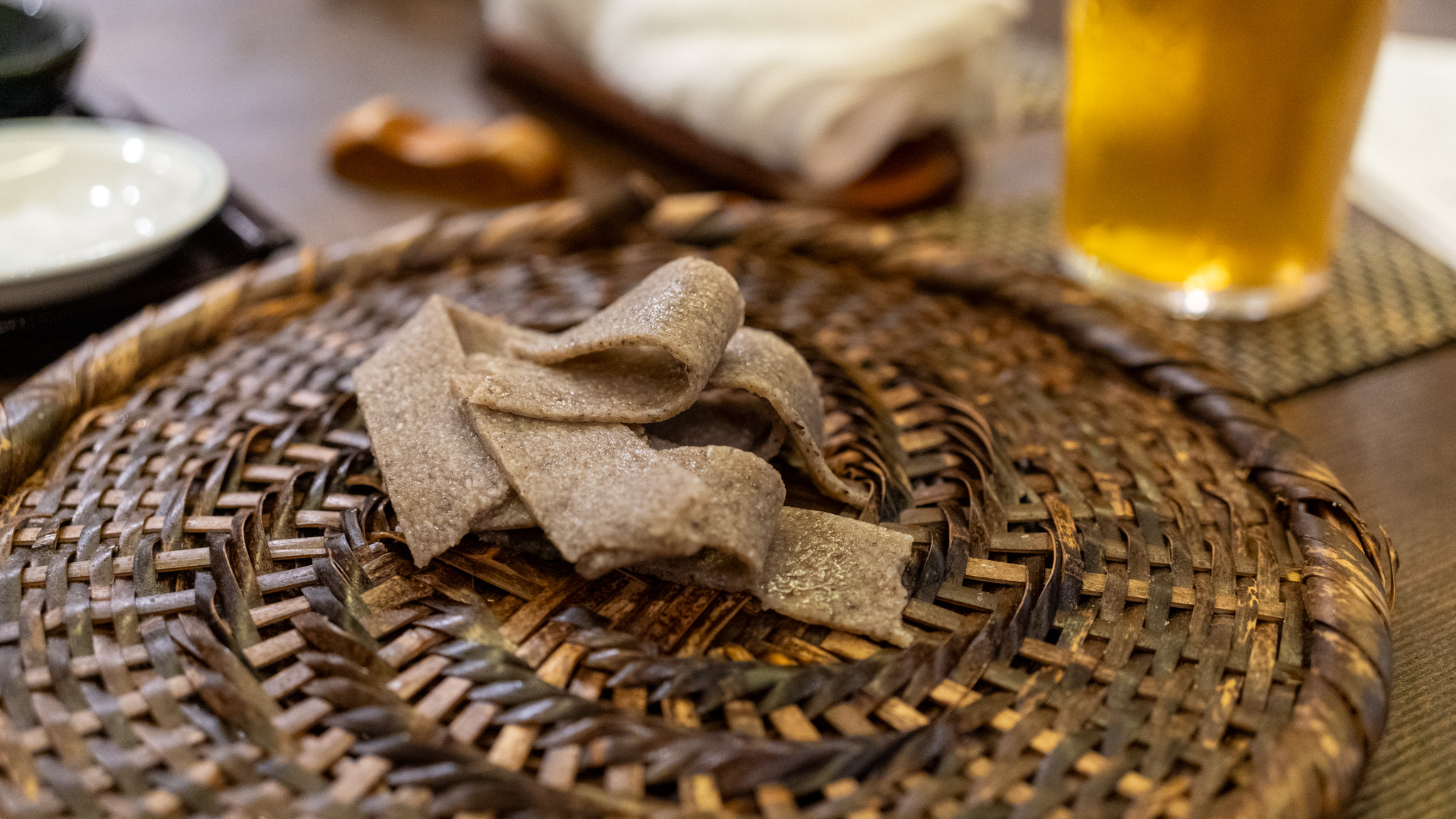
A soba called Benkei, ground extremely coarse.
The grains are too coarse to make into thin noodles, apparently. One taste and the buckwheat character — the sheer soba-ness — is strong. You can see why they recommend salt with it. Salt does seem right for pushing the flavor of the buckwheat itself to the front. The grainy quality makes sense, and so does the nuttiness.
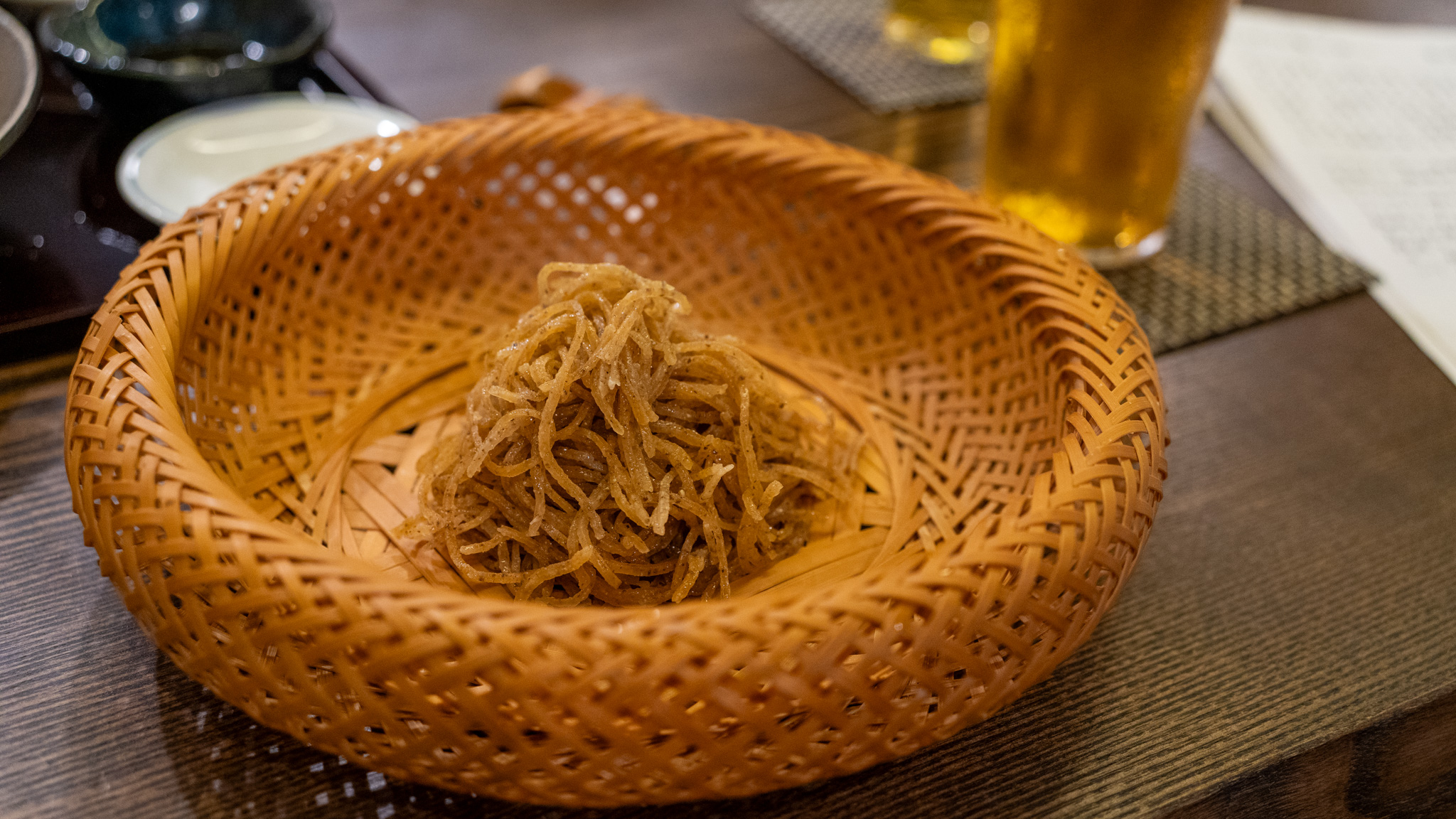
And this is the inaka. This is the aged soba.
A soba that looks as though it might crumble apart. To draw out water while developing viscosity, they apparently cut it, chop it fine and knead it again! Putting it under strong stress is what brings the flavor and aroma out. On the tongue it is very mellow, but the aroma is superb. It is the scent of buckwheat, yet there is something like brown sugar in it, which is fascinating. Tasting them all side by side like this makes the differences perfectly clear.
For a place I turned up at on a whim, I did end up spending 10,980 yen on lunch lol but I feel it was a lunch worth the money for the chance to taste good soba side by side. Aged soba and freshly cut soba. Each has its virtues, but the sort of experience where the comparison itself makes the difference plain is rare, so I am glad I had it. Incidentally, the tempura raises the satisfaction considerably, so I recommend adding it!
Takenoshita Soba (Soba (Buckwheat noodles) / Harajuku Station, Meiji-jingumae Station, Kita-sando Station)
Tabelog lunch rating ★★★☆☆ 3.7
I ate here and paid for it myself. Nothing on this site is a comped meal.
One more for the road?


