


A note on the words: tsukemen is ramen served the other way round, with the noodles in one bowl and a small bowl of concentrated broth beside them to dip each mouthful into. Nodogoshi is the Japanese word for the way something feels sliding down the throat, a quality prized in its own right, and nama-men means fresh, undried noodles. Kombu is kelp and dashi is the stock drawn from it, so kombu water is water in which kelp has been steeped until it turns faintly thick and sweet; katsuo is dried skipjack tuna, the other half of that stock. Chuka soba is the older name for a plain soy-sauce ramen. Jiro refers to a Tokyo genre of very large, garlicky, pork-fat bowls, and tsuminaki means “without sin”, and seimen means noodle-making while kenkyujo means laboratory. Moshio is salt made by boiling seawater together with seaweed, sudachi is a small green citrus sharper and more fragrant than a lime, and Kumamon is the official mascot character of Kumamoto Prefecture.
Table of Contents hide
Fuki Seimen Kenkyujo, Roppongi on Tabelog (English) — opening hours, payment details and the Japanese address are kept up to date there, not here.
Hello, this is Hangover Meshi. I had not walked through Roppongi in a while when a new ramen shop caught my eye — although when I looked it up, it seems to have been open since around the summer of 2023. I do have a vague feeling I have seen it before, but the last thing my memory has standing on this spot was this one (in Japanese). ^^ From the look of it, a tsukemen shop? The name is Fuki Seimen Kenkyujo. I went to peer at what was on the menu and was told to please take a ticket, which settled lunch for me, ha.
Inside there are photos of Kumamon and so on. The noodle boxes had Fuki Seimen written on them, so is this a place that makes its own noodles? Being able to eat the taste of Kumamoto in Roppongi sounds like it could be a fine experience.
Katsuo-kombu-sui nodogoshi nama-men 1,300 yen
Chuka soba 1,200 yen
Tsuminaki Jiro 1,500 yen
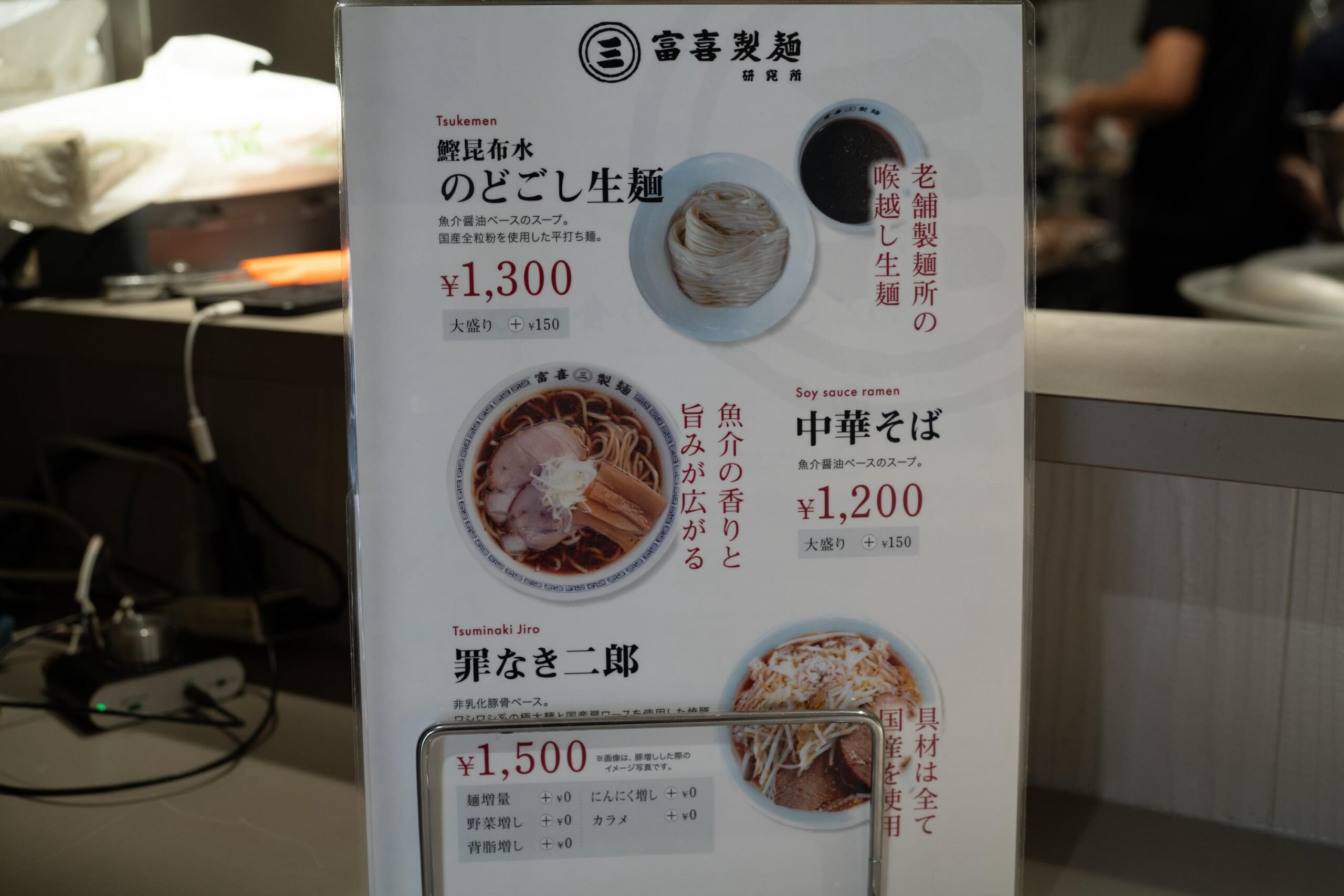
Right, tsukemen. Well, tsukemen it is. The nodogoshi nama-men is the one they push hardest. Then a plain chuka soba, and a Jiro, ha.
You can eat Jiro-style here? I wish I had known that sooner. Not that eating Jiro carries any sin or guilt for me in the first place, but this time I went with the basic “nodogoshi nama-men.”
Now to wait a while for them to boil. Fairly sturdy noodles, perhaps — the boiling takes its time.

And here is what turned up! Look at the shine on these noodles!
Do they not look good? Flat noodles, or rather noodles with a flattened shape to them. Folded up neatly, and very appetizing.
That shine is the katsuo-kombu dashi water they are sitting in.
There was a proper guide to how to eat it, so I followed that.
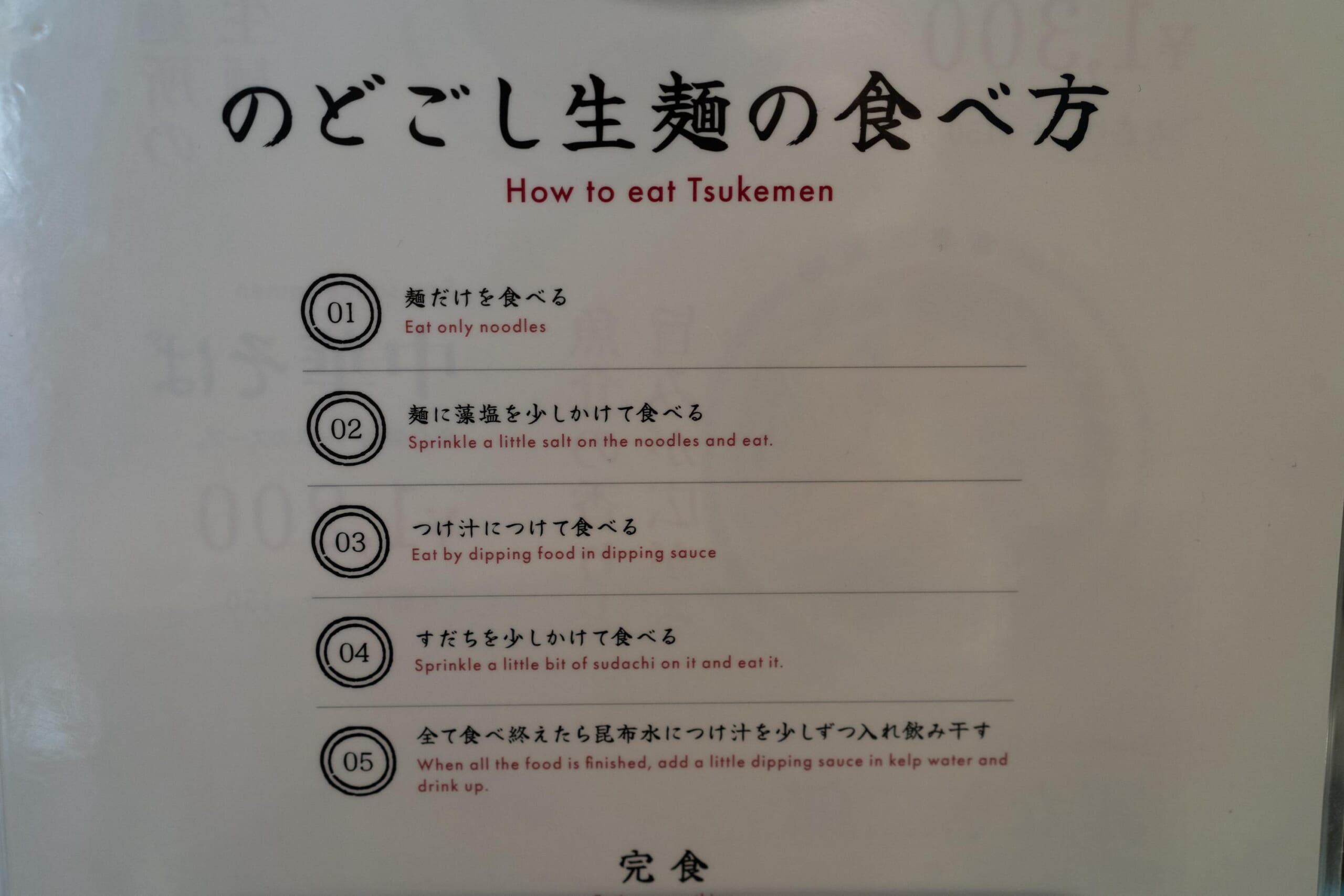
First, the noodles on their own. Kombu water, the pure flavor of the dashi, and the noodles — that is about all of it, I think. Whether there is a little salt in there or not is hard to say. This alone is plenty to enjoy the noodles with. That slippery way they go down is irresistible. Delicious!

Next, a little of the moshio salt they set out. Properly salted it is good, but it is plenty good without the salt too.
Then I dipped them in the seafood-and-soy dipping broth.
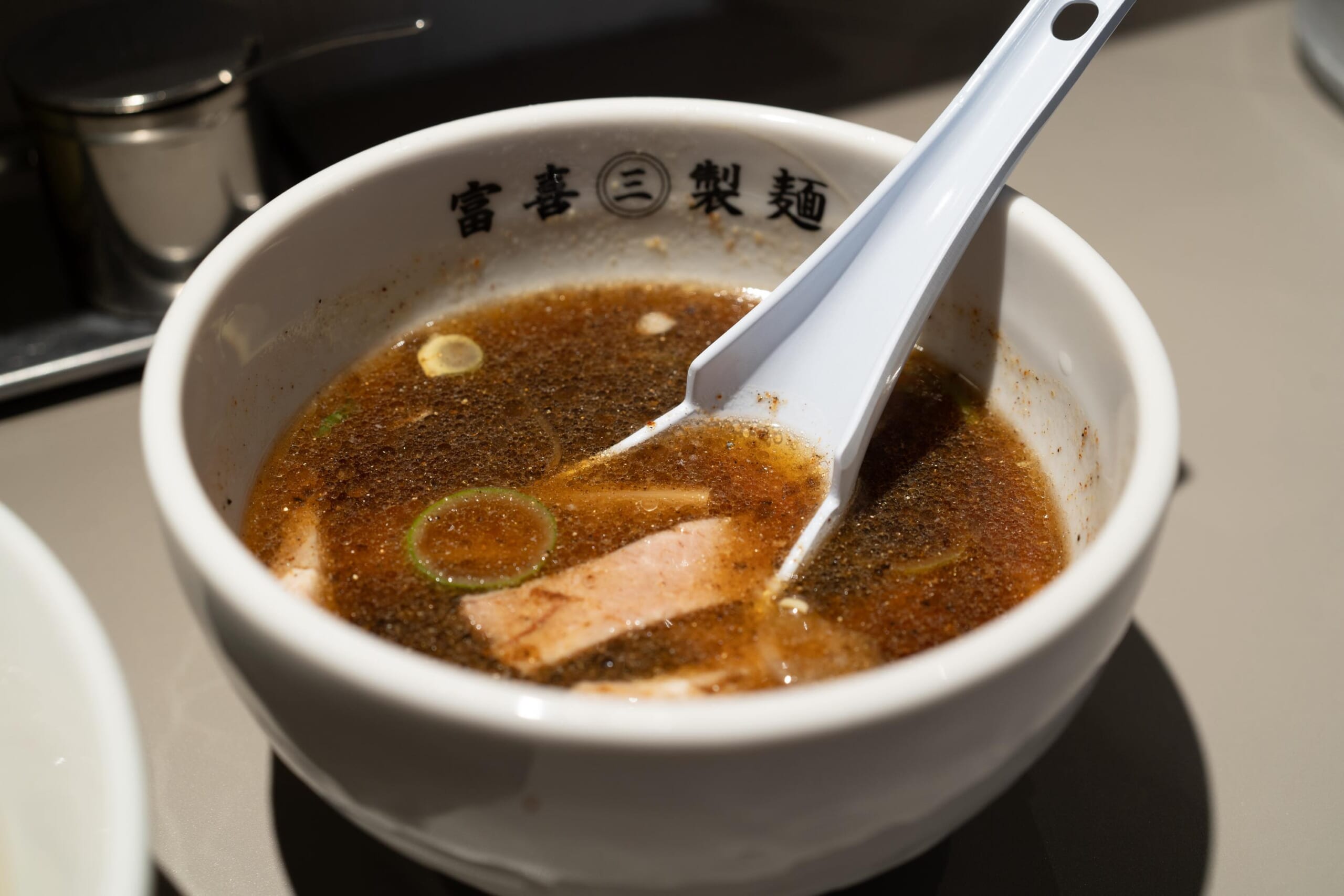
A light dipping broth. Sipping a little of it on its own, it is not heavy at all, quite a clean one.
It goes with the noodles perfectly, of course. Because the whole thing is built around how the noodles go down, the flavor is made to be eaten lightly, I suppose.
How to put it — these noodles are good. Partway through I squeezed some sudachi juice over them, which made it lighter still and even better! More sudachi made it easier to keep eating.
At the end I poured the kombu water into the broth and drank it down. Finished!
Thick, heavy, chewy tsukemen is of course delicious too, but I thought this one, built on the way the noodles go down and on good dashi, was seriously good. The dipping broth and the dashi are set up to show the noodles off. Next time maybe I will try the Jiro!
Fuki Seimen Kenkyujo, Roppongi (Ramen / Roppongi Station, Roppongi-itchome Station, Azabu-juban Station)
Tabelog lunch rating ★★★☆☆ 3.5
I ate here and paid for it myself. Nothing on this site is a comped meal.
One more for the road?


