


A note on the words: nouvelle chinoise is Chinese cooking reworked with French technique. Bao is a steamed bun, char siu is Cantonese roast pork, superior stock (shang tang) is the clear master broth of Cantonese cooking, and Jinhua ham is the cured ham that gives it depth. Mapo tofu is tofu in a spicy bean-paste sauce, XO sauce is a rich Hong Kong condiment of dried seafood, and caoguo is black cardamom, used in medicinal broths. Wagyu is Japanese beef and kuroge wagyu the black-haired breed; Nagoya Cochin is a prized breed of chicken; Ezo abalone comes from the northern seas. Sawara is Spanish mackerel, wakasagi is pond smelt, botan shrimp is a large sweet raw shrimp, aori-ika is bigfin reef squid, and yodare-dori is Sichuan poached chicken in chili oil. Nagaimo is a mild mountain yam, matsutake a prized autumn mushroom, sansho Japanese pepper, yuzu a fragrant citrus, and daikon the large white radish. Wasanbon is a fine traditional Japanese sugar, annin tofu is almond jelly, and chimaki is glutinous rice steamed in a leaf. Prices are as of this writing (August 2026).
Renge equriosity on AutoReserve (English) — opening hours, payment details and the Japanese address are kept up to date there, not here.
I want to eat something good today too. This is Hangover Meshi. Now then: one of the highlights among this year’s end-of-year parties. We held our looking-back-on-the-year gathering at Renge, the nouvelle chinoise restaurant in Ginza. Very much looking forward to it. The style is based on Shanghai cooking with elements of Japanese and Western cooking worked in, focused on oil and salt: they use ten kinds of oil and eight kinds of salt, chosen dish by dish to draw out as much as possible of what each ingredient has. I had been curious for a long time and never found the chance to go. What luck, to hold an end-of-year party somewhere like this. Looking forward to it.
The restaurant is on the ninth floor of a building, so up in the lift.
Inside is a warm space built around wood grain. This time, since we wanted to talk properly, we asked for a semi-private room.
The house standard course, for enjoying nouvelle chinoise, 25,000 yen
And the course is the standard course, 25,000 yen. Just right for a once-a-year end-of-year party.
So, sitting down, there is a stylish sheet of paper with the menu on it.
On the back is the origin of the word Equriosity, which is part of the restaurant’s name.
It is a coinage imagined from Equation, Curiosity and Inquiry.
We serve food based on techniques not bound by the frame of Chinese cooking, and on the equation of what is delicious.
Something to look forward to. You can feel the care behind it.
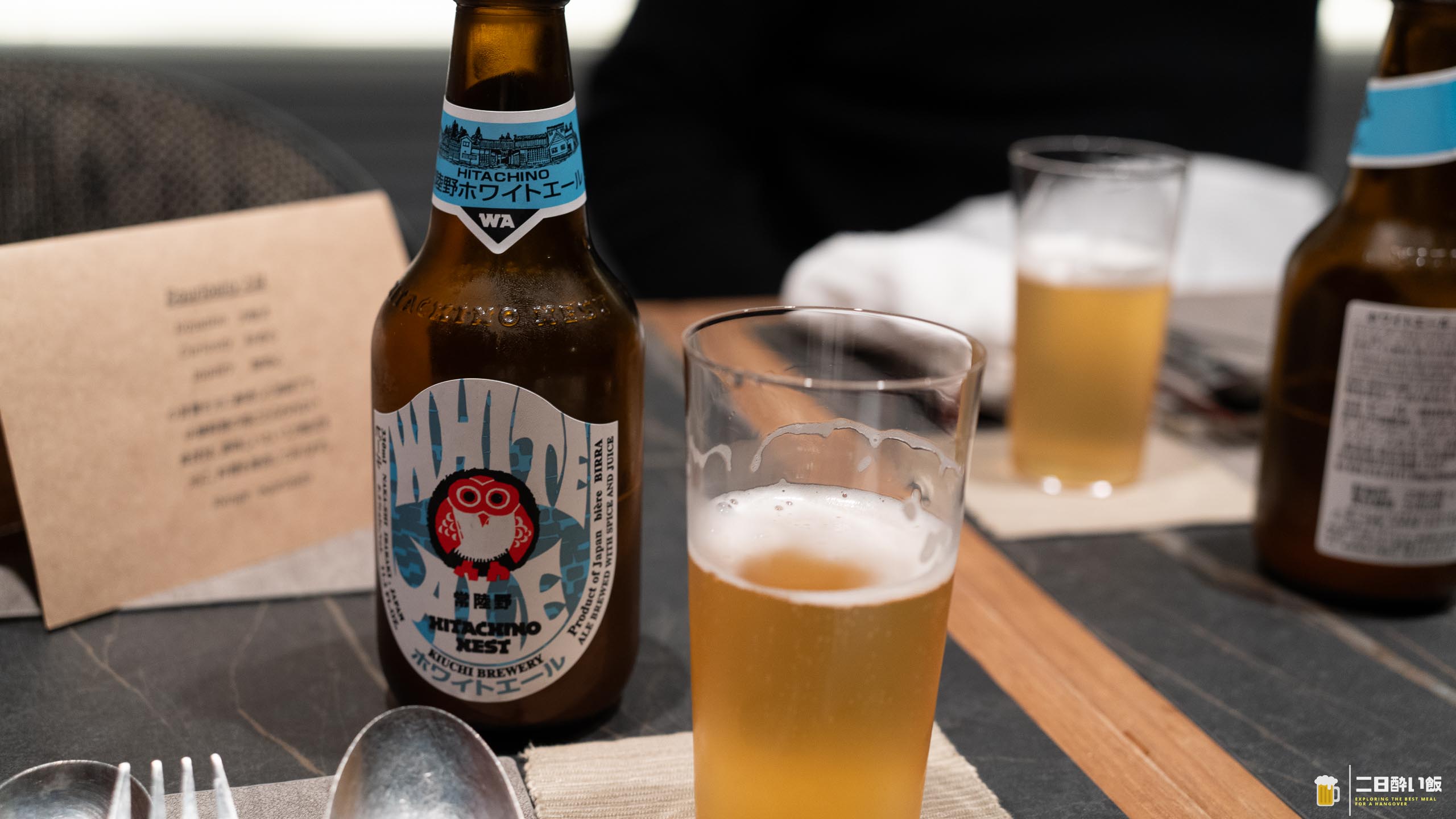
First, a toast with Hitachino white ale. A very easy beer to drink.
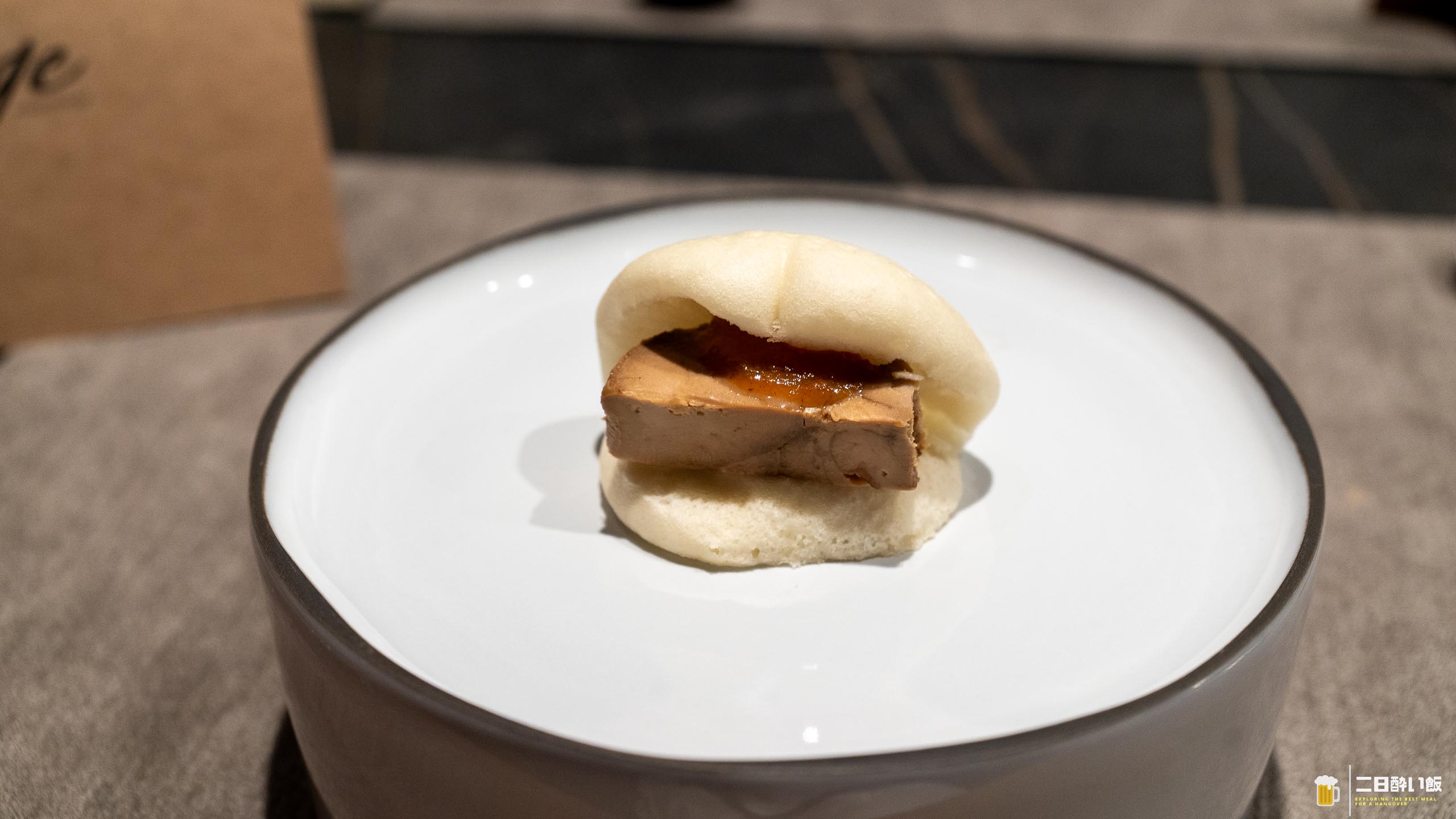
Straight in with a bao that looks very good.
The sort of char siu bun you often see in a Chinatown, except that the filling is foie gras, which is quite a luxury. The sauce is persimmon, I think. Eating it, it is soft and light, and the rich, creamy salt of the foie gras and the sticky, elegant sweetness of ripe persimmon melt together in the mouth. Very good. That foie gras is that thick and yet there is no heaviness at all — a superb balance.
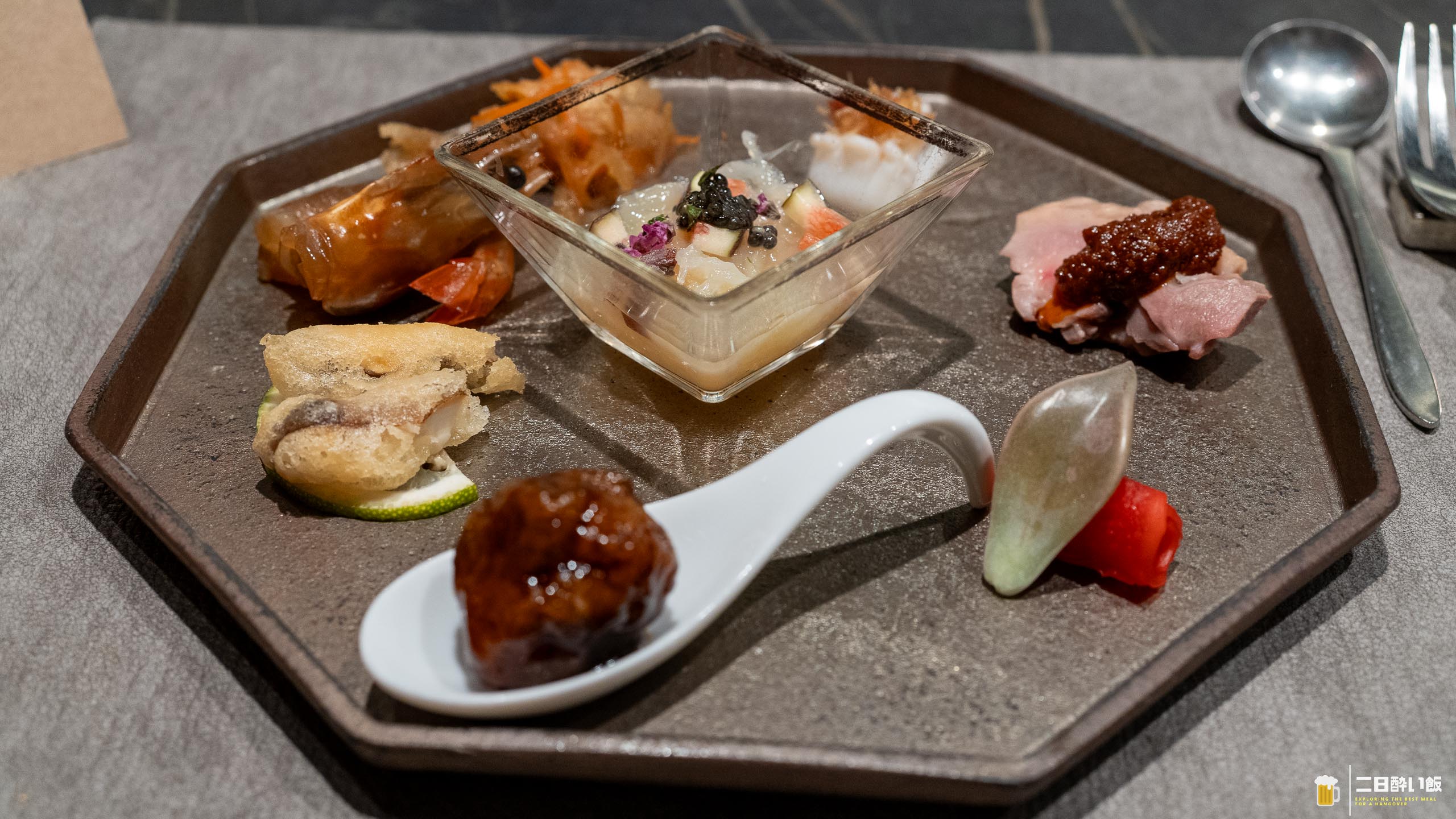
All of it looks extremely good.
In the middle is a cold dish of jellyfish and fig; the yuzu sauce and the caviar go together unexpectedly well and it is good. In the spoon below is wild boar and nagaimo in a black vinegar sauce. Going clockwise from there, bottom left is matsutake fritter — perhaps because the coating traps the scent of the matsutake, the aroma is wonderful. Above that, botan shrimp marinated in green chili soy sauce. The sticky, sweet shrimp and the light heat are good. Then wakasagi with sansho, and aori squid with house XO sauce, and on the right, yodare-dori made with guinea fowl from Iwate. Then graparaleaf and Benikururi daikon pickled in sweet vinegar. Graparaleaf is — what is it — a leaf rather like aloe or a cactus, served with the sweet-vinegared daikon.
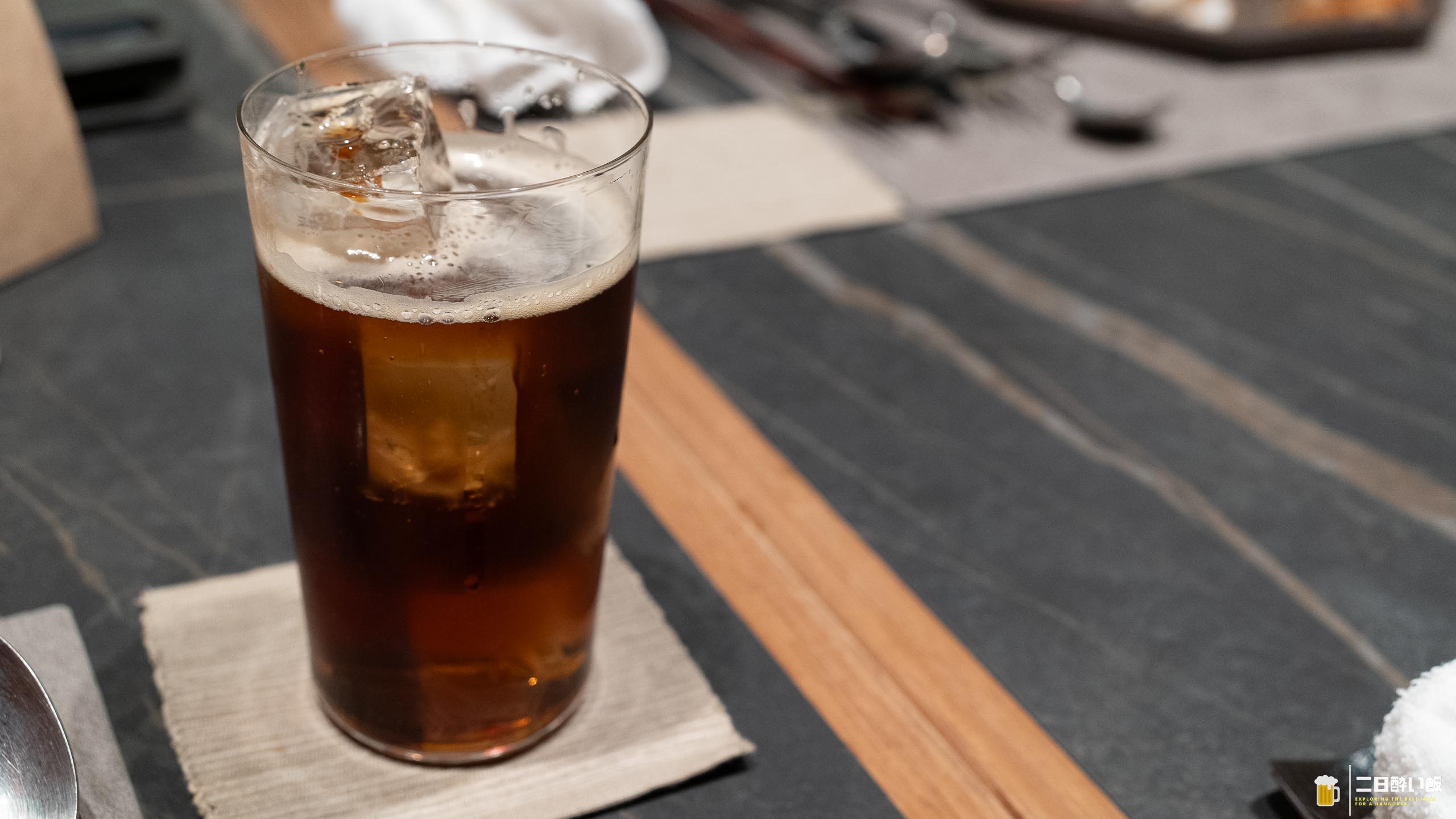
Around here I moved on to a Dragon highball.
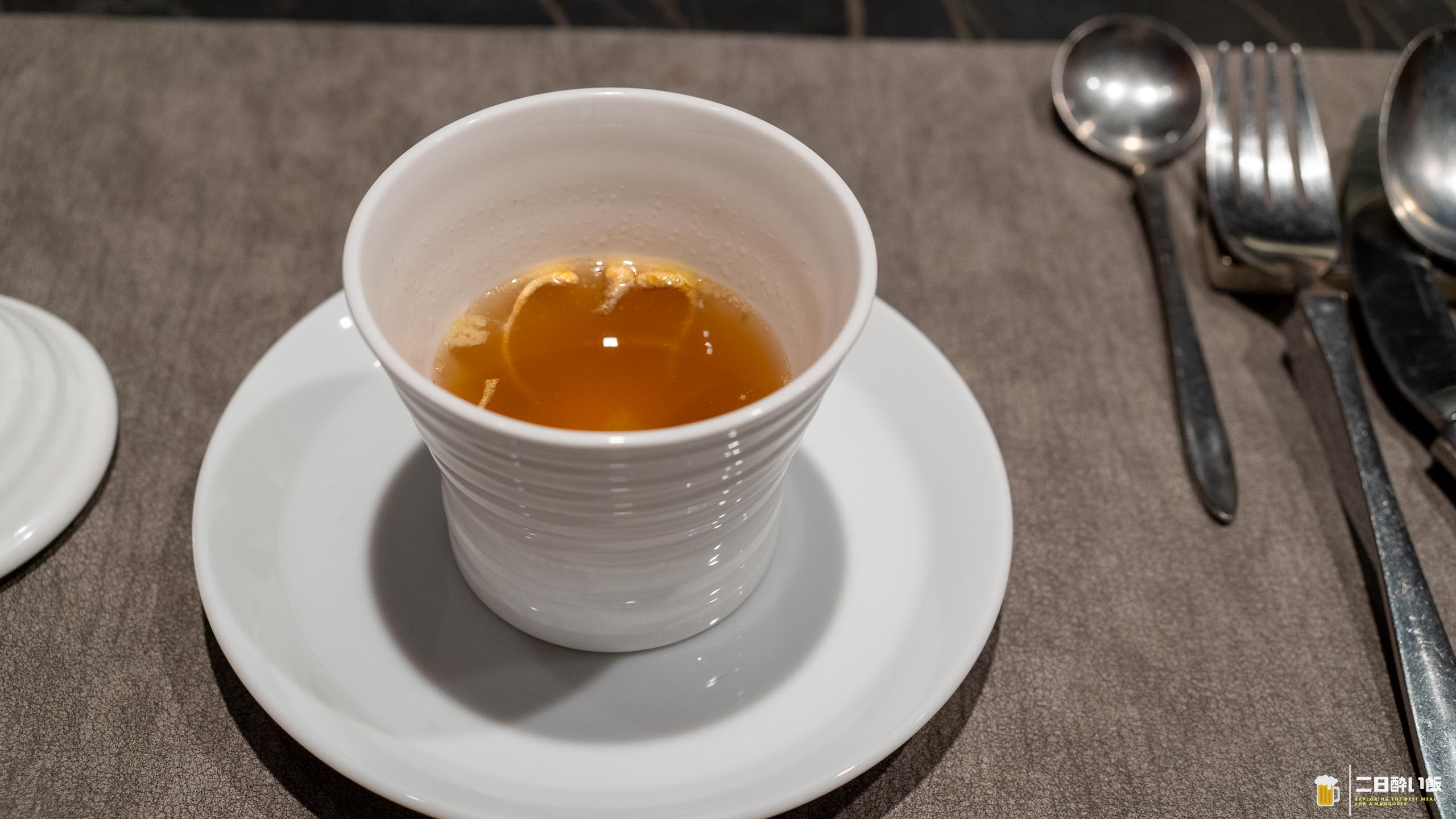
Soft-shell turtle soup. Caoguo is the thing you sometimes find in a medicinal hotpot.
At this point a deep, restorative soup that puts you at ease sinks into the stomach. Everything that comes out, one after another, is good.
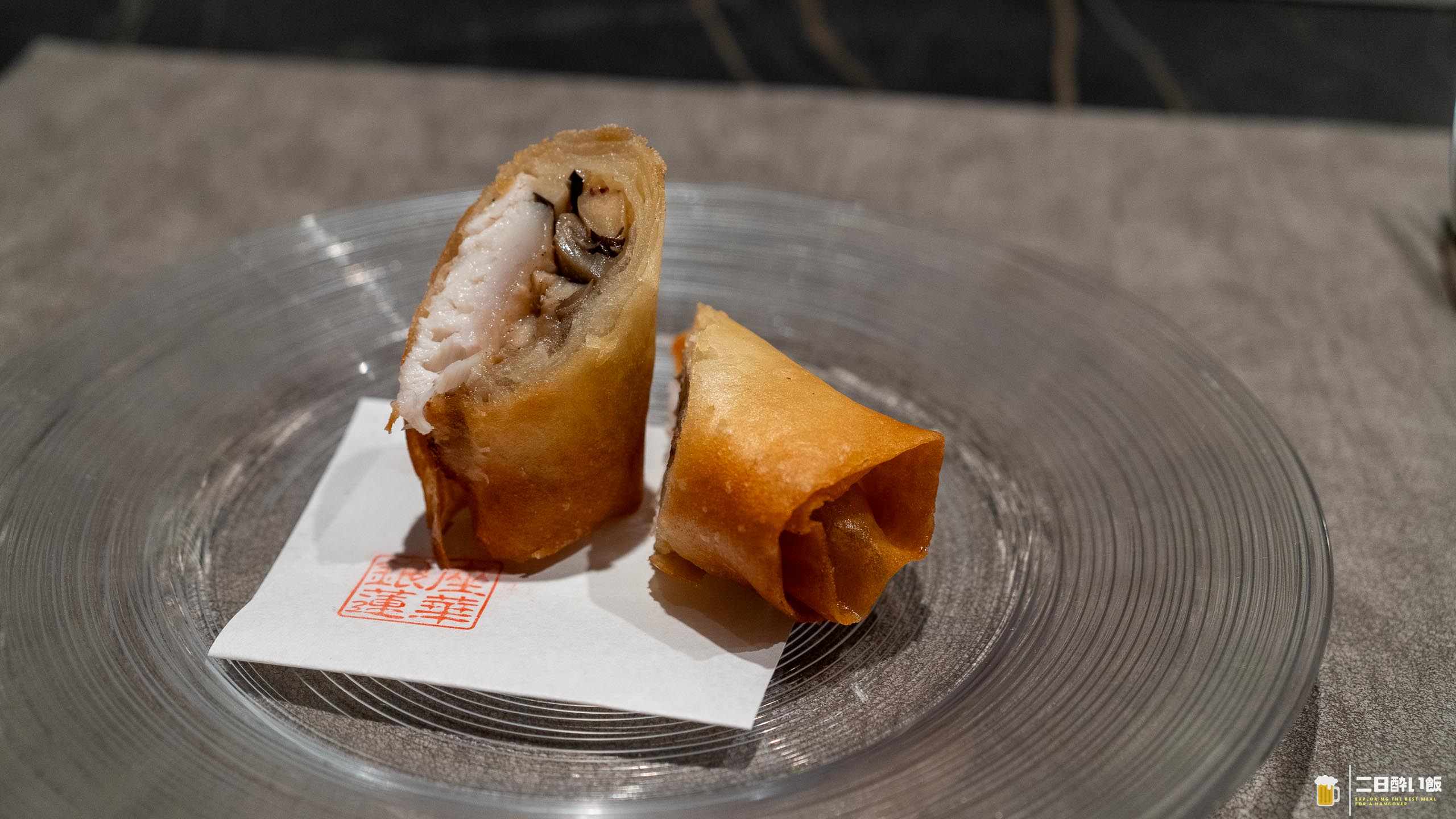
Spring rolls of sawara and mushroom. Fried crisp. Savor floods out of the filling.
Very good. The cooking of the sawara is remarkable. Slightly raw at the center, judged exactly right. The contrast between the very juicy filling and the crisp skin outside is extraordinary. And there is almost no oil at all soaked into the paper underneath.
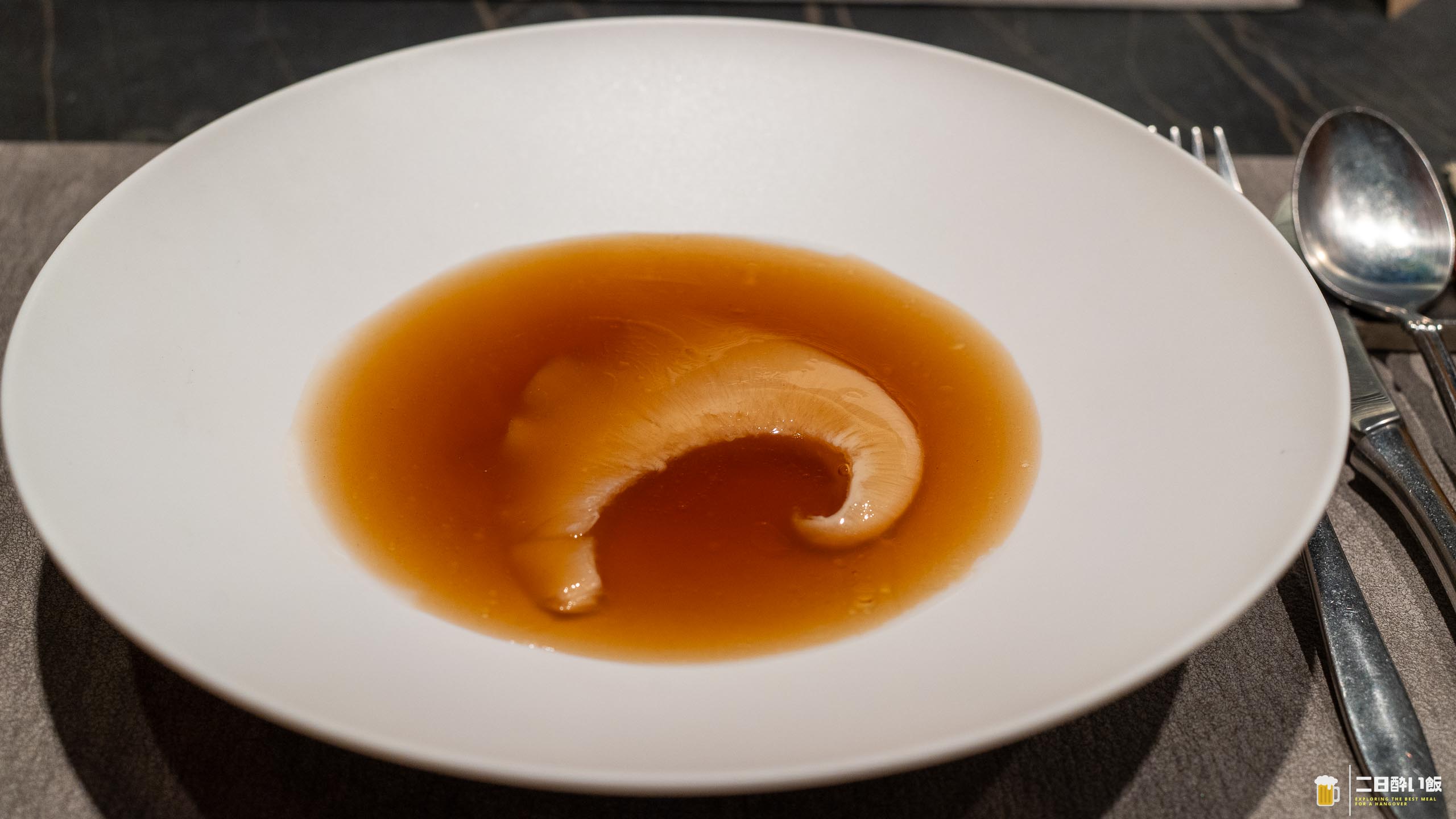
Shark fin.
I had not expected shark fin soup, which made it all the more welcome. A great fat piece of fin in the soup. Irresistible.
The broth of a shark fin soup is outstandingly good — I love it. One sip of the golden superior stock and a strong savor strikes you right in the brain. Is that the savor of Jinhua ham? A clear, deep flavor. The fibers of the fin, having drunk up all that broth, hold both a springy resilience and a pleasant, clean bite. A dish to leave you in the finest afterglow.
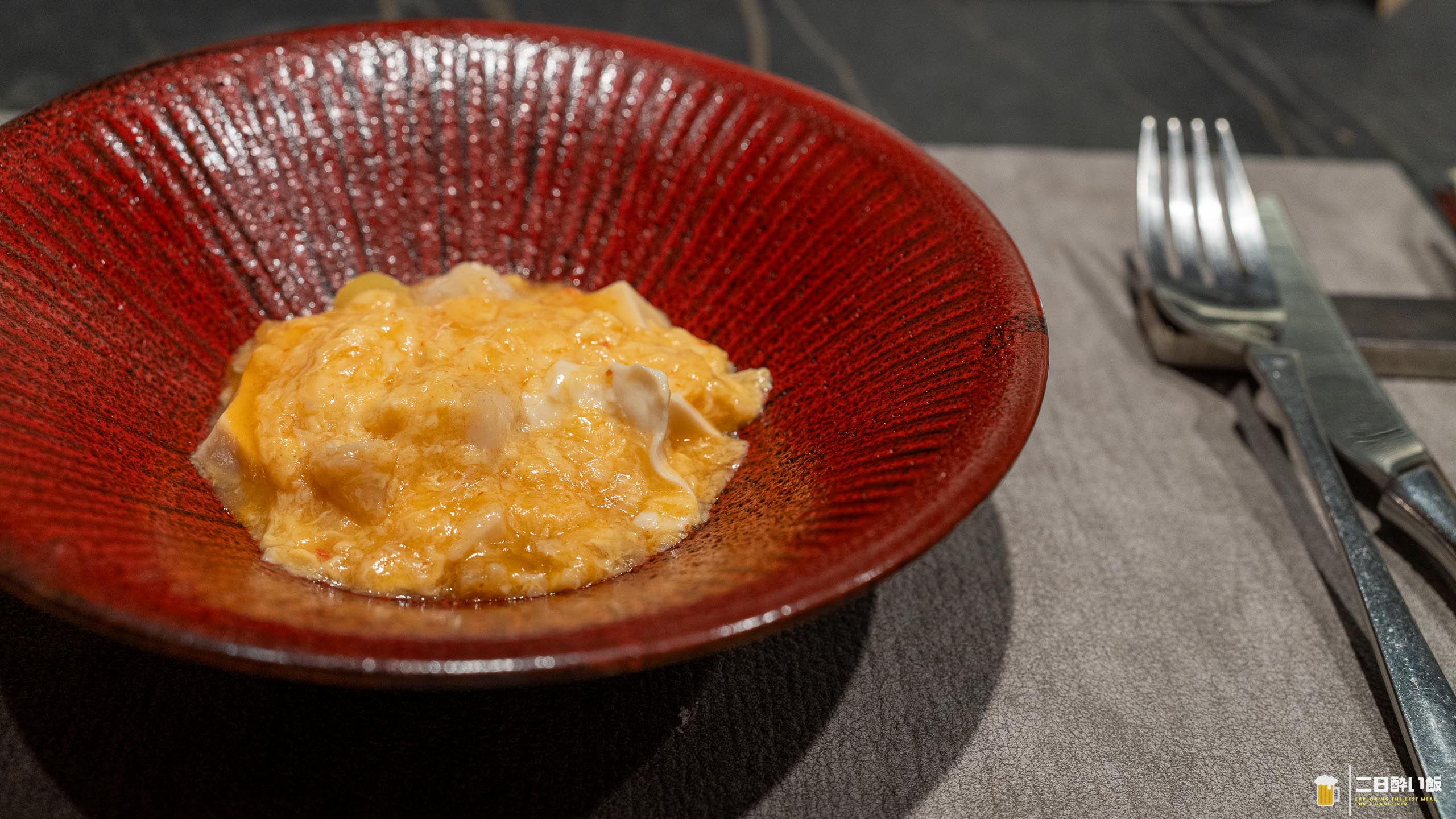
Is this really mapo tofu? So it looks.
It is mapo tofu with plenty of snow crab, shellfish and ginkgo nuts, and eating it there is not much of the mapo tofu about it, but it is rich and very good. The savor of the crab and of the miso comes to the front. There is not much heat, and it is more like a dish in which complex flavors have been bound with egg. Very elegant. It hardly seems Chinese.
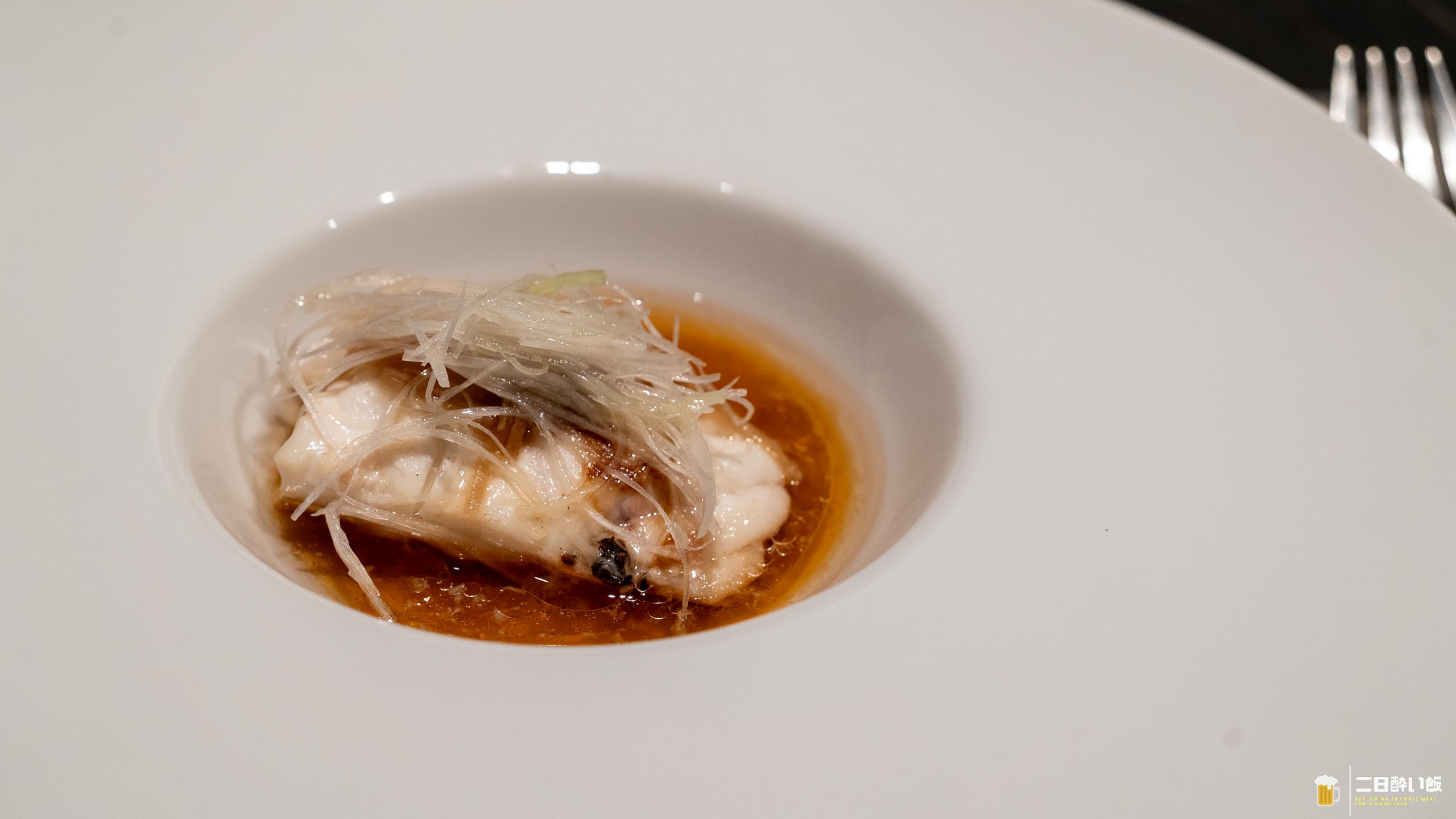
Sea bass, was it? I have forgotten what it was.
The fish course, steamed with aromatics. And this too is extremely elegant. As with French cooking, everything is packed into the fish course. I feel more technique in it than in a meat course, which is why I like it. Soft, delicate fish with shredded scallion, and I imagine hot oil poured over it, judging by the look of it. Eating it, a lovely aroma spreads through the whole mouth. It is a dish with a mellowness, a roundness, to the flavor. Genuinely comfortable to eat.
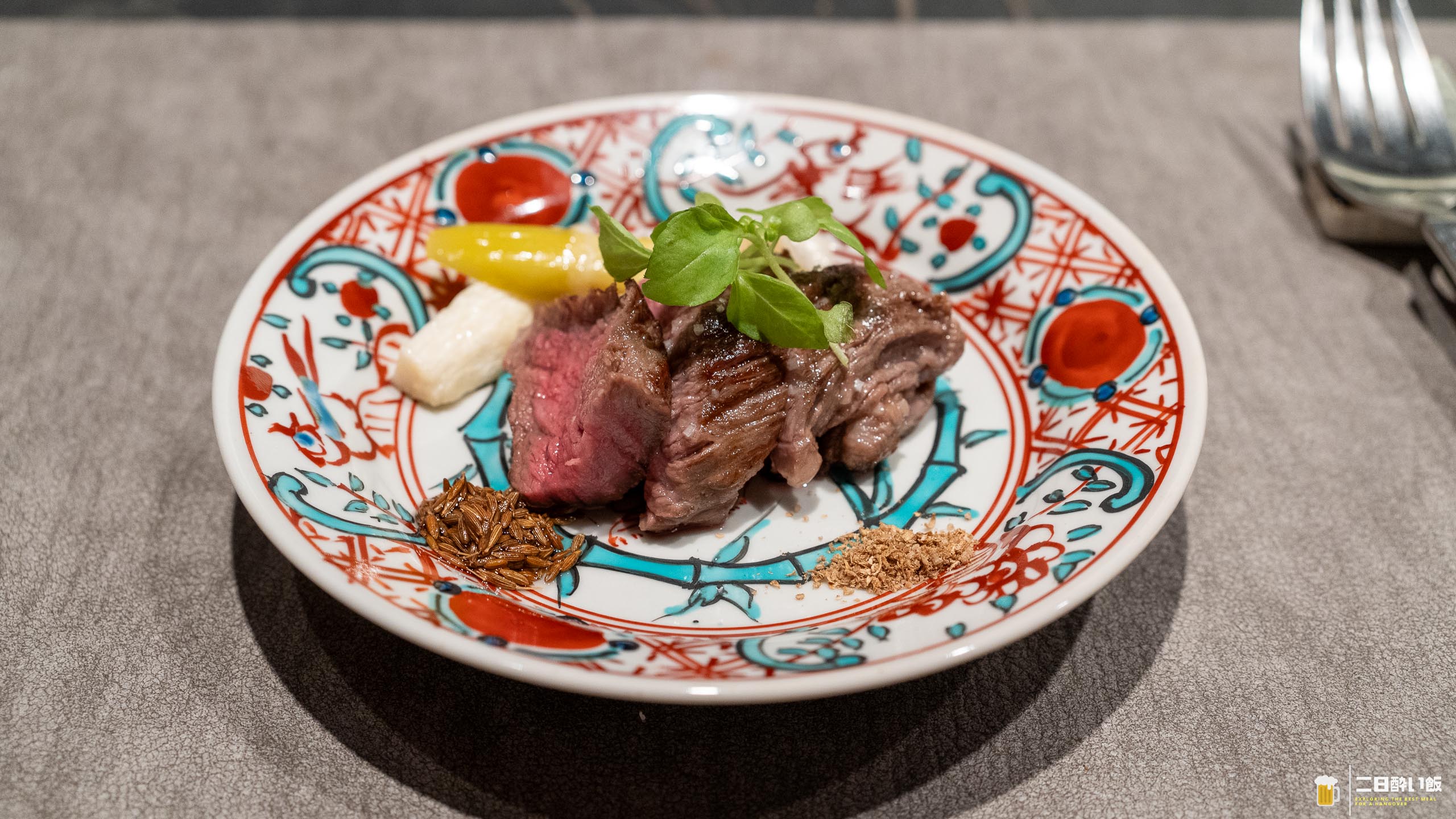
Grilled kuroge wagyu, served with cumin and other spices.
It is extremely good, but it does rather feel like good meat, grilled — I might really have wanted something more emphatically Chinese. Still, it was good to discover that cumin and wagyu actually go together. I do not normally put cumin on wagyu.
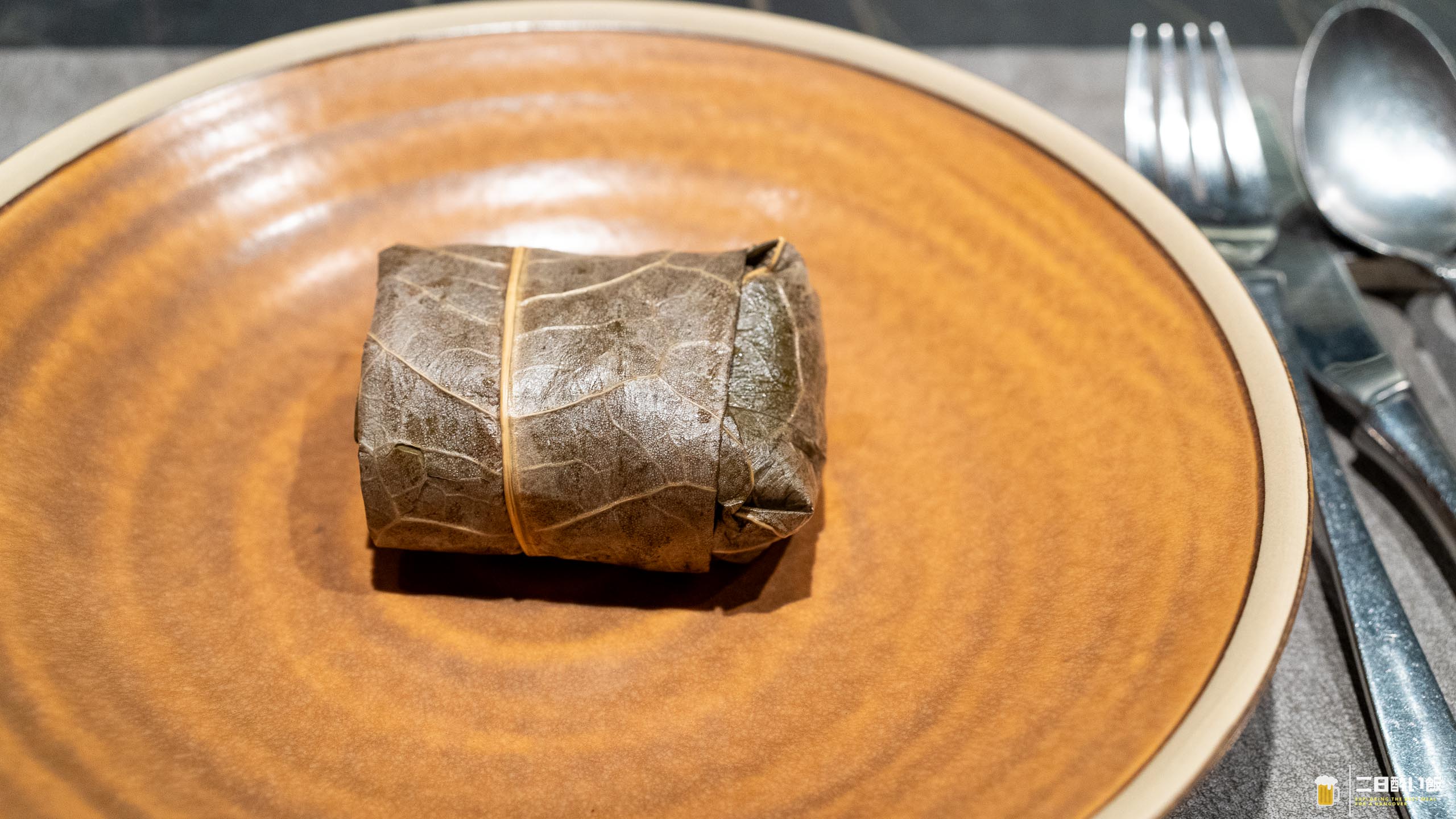
At the end they ask whether you would prefer fried rice or noodles, and choosing fried rice gets you this.
Fried rice wrapped in a lotus leaf. Fun to look at as well. I thought it was a chimaki.
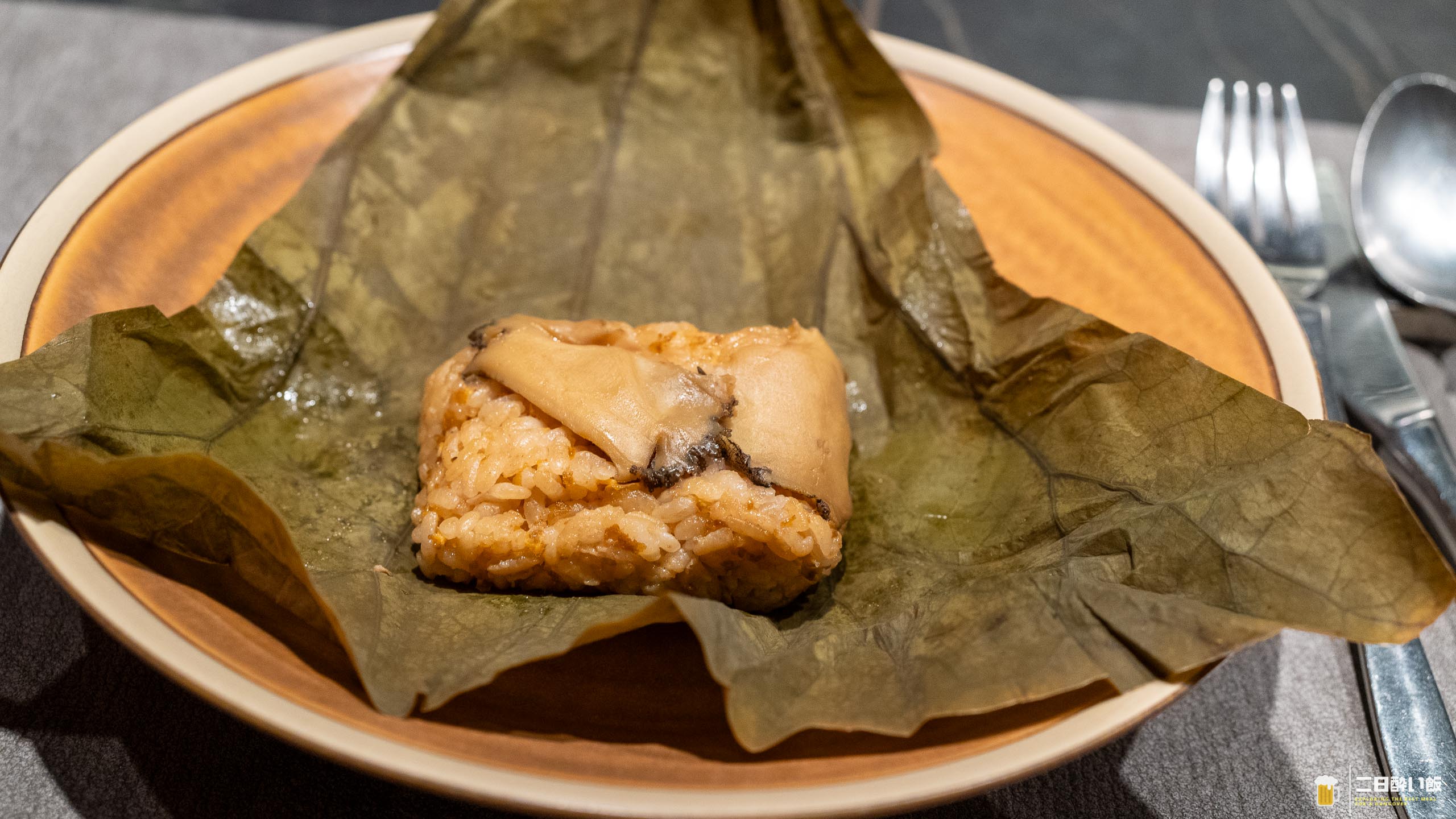
The moment the lotus leaf is opened, the aroma is wonderful. What rises with the steam is a dense smell, fragrance mixed with the scent of the sea. At the center of it is thick, springy Ezo abalone. Bite and your teeth go in cleanly, and at once a bouncing texture and a deep savor pour out. Beside it, fried rice finished with Nagoya Cochin egg. The rice is moist, and yet each grain still has real presence. Mixed with the savor of the abalone it turns luxurious at a stroke. The faint green note of the lotus leaf tidies up the finish cleanly, which makes it just right to close on. The quantity was exactly right too.
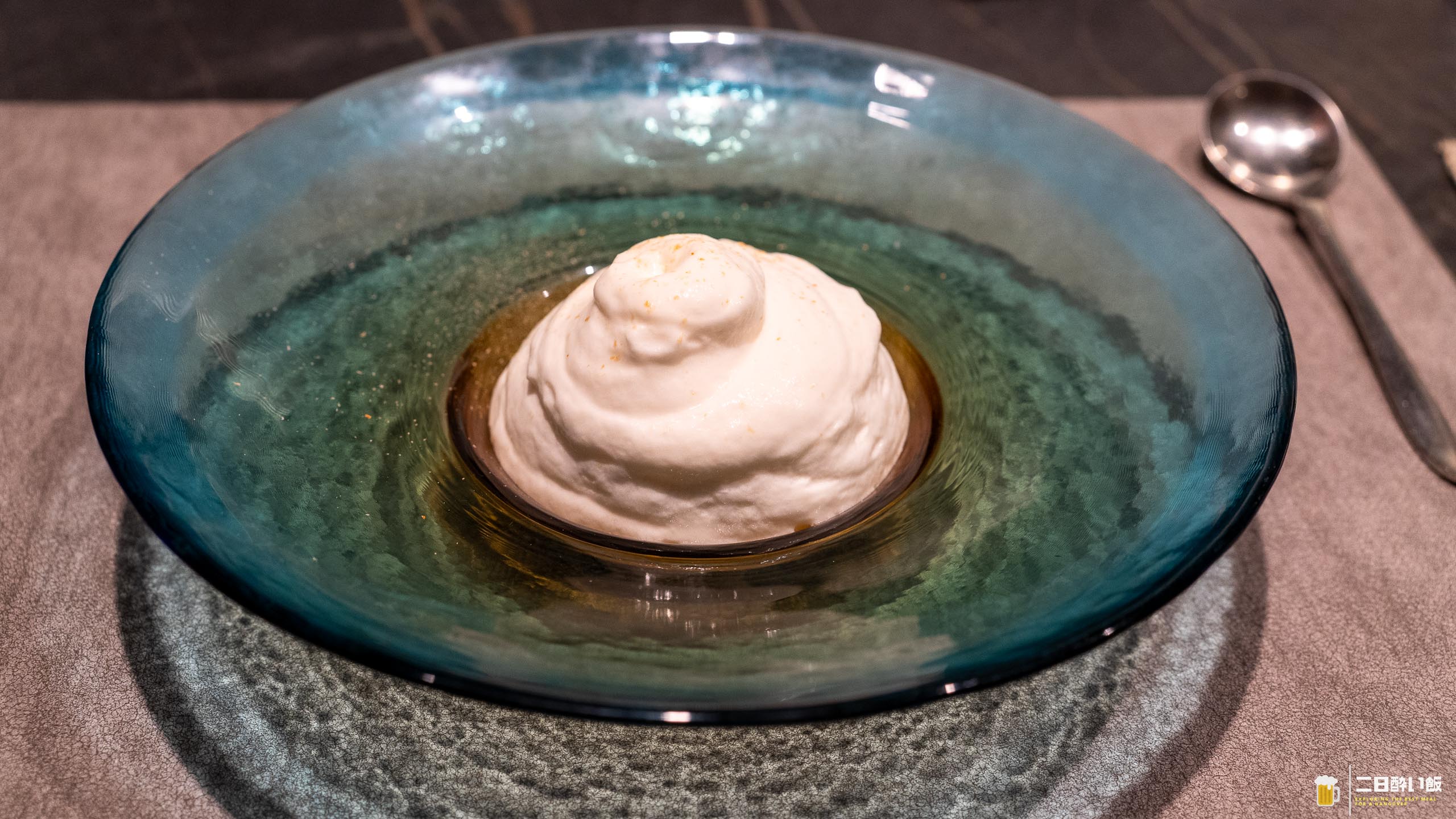
Annin… tofu?
An annin tofu like a soft cream. Eating it, it is a dessert in which the word elegant has simply become a flavor. The wasanbon annin tofu is restrained in sweetness and yet lacks nothing, so faint that it melts and vanishes the instant it goes in. It is the aroma that just lets you recognize it as annin tofu. The chestnut ice cream inside is rich too, and eating the two alternately gives you a loop of rich, then cool, then rich again, which is interesting. Very good.
So, this time, Renge equriosity in Ginza. We visited a nouvelle chinoise restaurant of a sort one rarely gets to, and
the satisfaction is very high indeed.
If you can eat Chinese food this good, a year can be closed off properly. Very good; thoroughly satisfied.
Strongly recommended, so do consider it for an anniversary or the like. I shall go again in a different season.
Renge (Chinese / Ginza Station, Uchisaiwaicho Station, Shimbashi Station)
Tabelog dinner rating ★★★★☆ 4.0
I ate here and paid for it myself. Nothing on this site is a comped meal.
One more for the road?


