


A note on the words: shkmeruli is Georgian chicken simmered in a garlic and sour-cream sauce, said to come from the village of Shkmeri in Racha. Pkhali is a cold appetizer of vegetables pounded into pastes with walnuts. Adjaruli khachapuri is a boat-shaped cheese bread topped with egg yolk and butter, stirred together and scooped up with the crust. Khinkali are large pleated dumplings, eaten by holding the knot and slurping the juices. Abkhazura is spiced minced meat wrapped in caul fat and roasted. Qvevri are clay jars buried underground to ferment Georgian amber wines such as Mtsvane and Kisi. Ajika is a spicy paste of chili, garlic and walnuts.
Table of Contents hide
GEORGIAN HOUSE on Tabelog (English) — opening hours, payment details and the Japanese address are kept up to date there, not here.
To all the drinkers out there, thank you for waiting! It is time for Hangover Meshi (meshi = meal)!
Georgia’s ambassador to Japan (Georgia the country, in the Caucasus) is quite popular here these days, and recently I saw the ambassador introduce a Georgian restaurant called GEORGIAN HOUSE. When it comes to Georgian food, shkmeruli became famous in Japan through a collaboration with Matsuya (a Japanese beef bowl chain), and I had always wanted to try the real thing at least once! The place is in Honjo-Azumabashi, and since it is a bit out of the way for me I had not been able to make it over, but I finally made it!
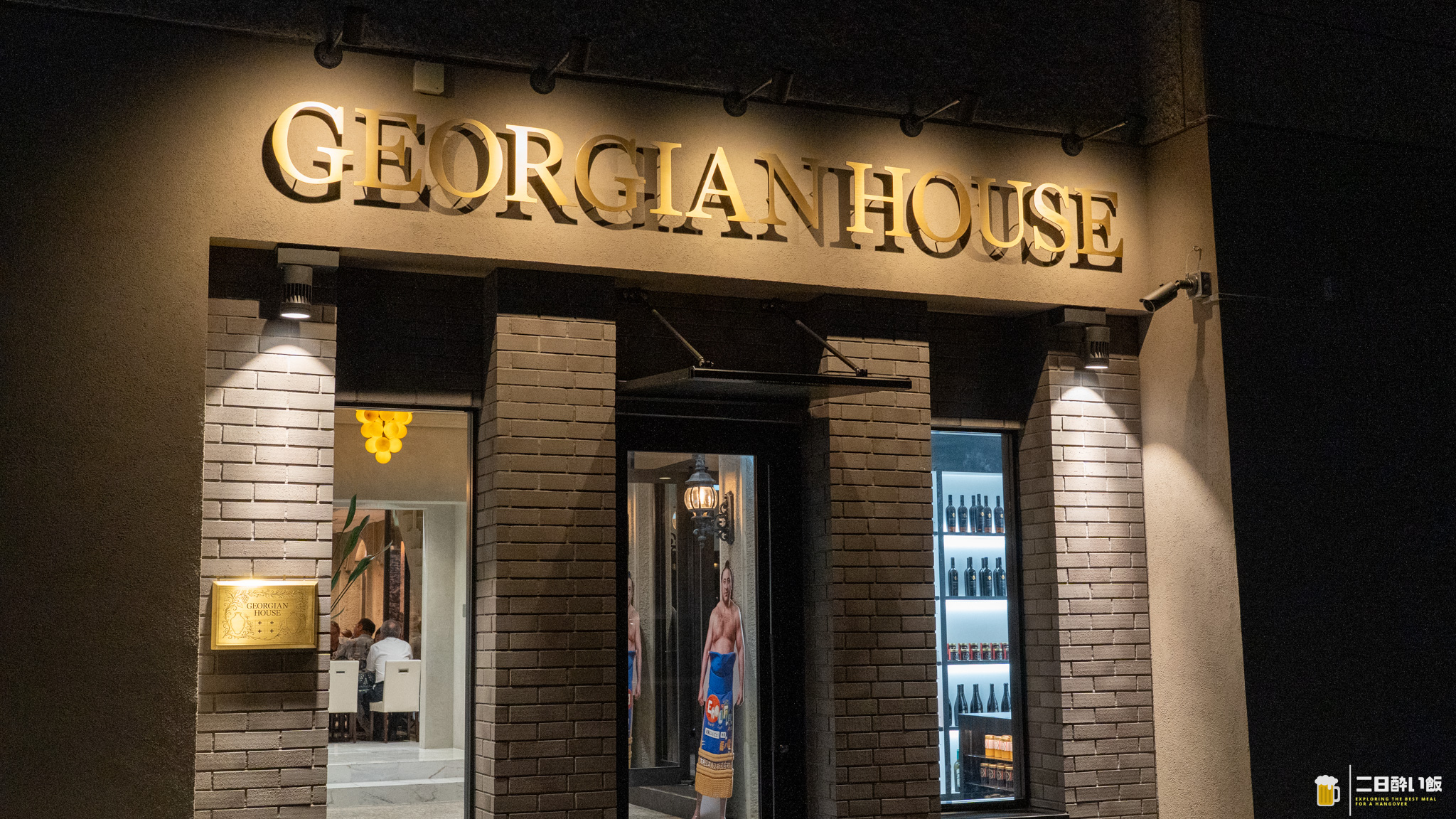
It was opened in February 2026 by former ozeki Tochinoshin (ozeki is sumo’s second-highest rank; he is from Mtskheta, Georgia), just a one-minute walk from Honjo-Azumabashi Station. It has three floors and spans some 520 square meters, with room for about 120 guests. It is seriously spacious.
Inside, the marble and white monochrome design gives it a real upscale feel!

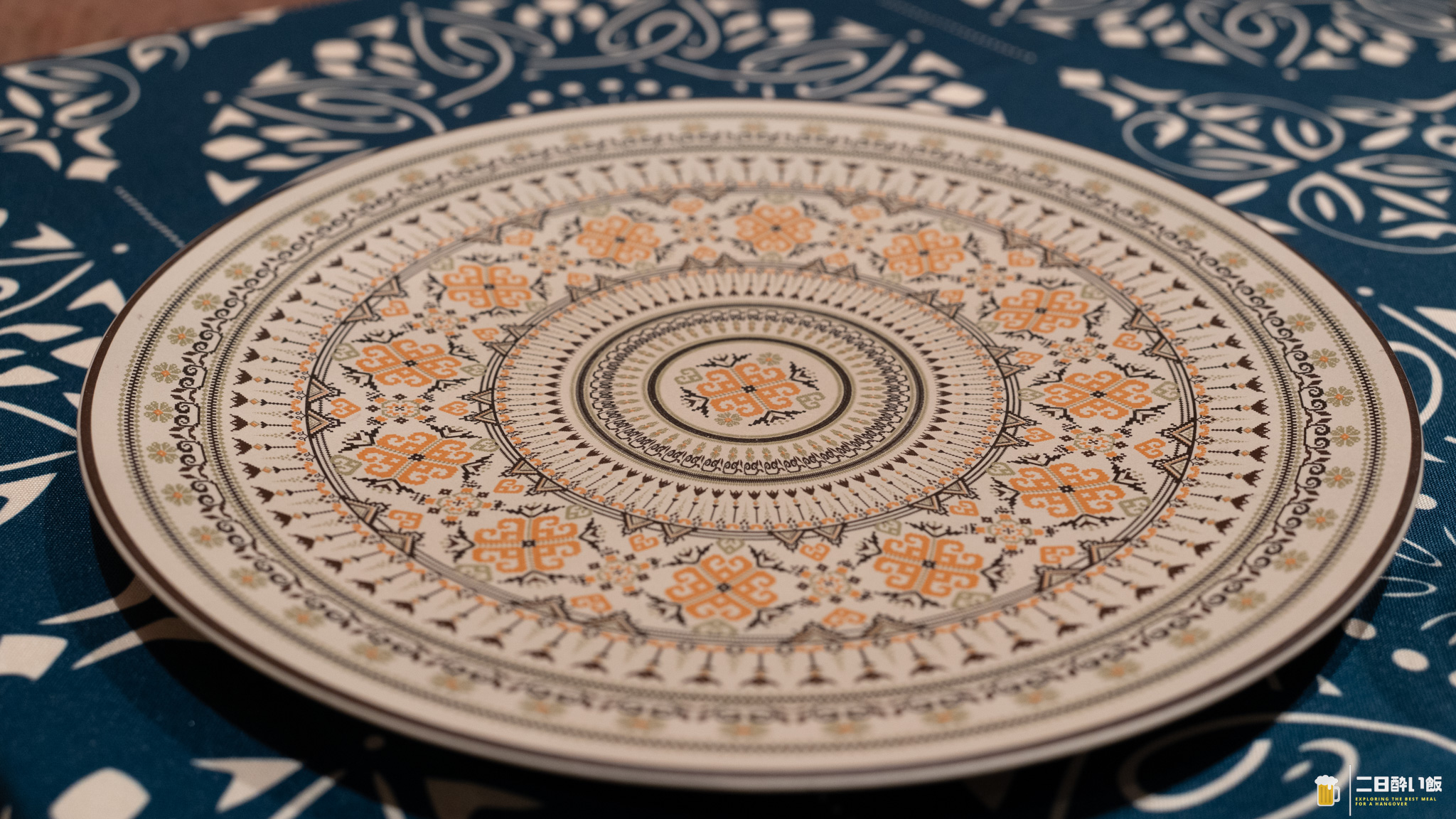
You can order by scanning a QR code on the web with your phone! Honestly, very convenient.
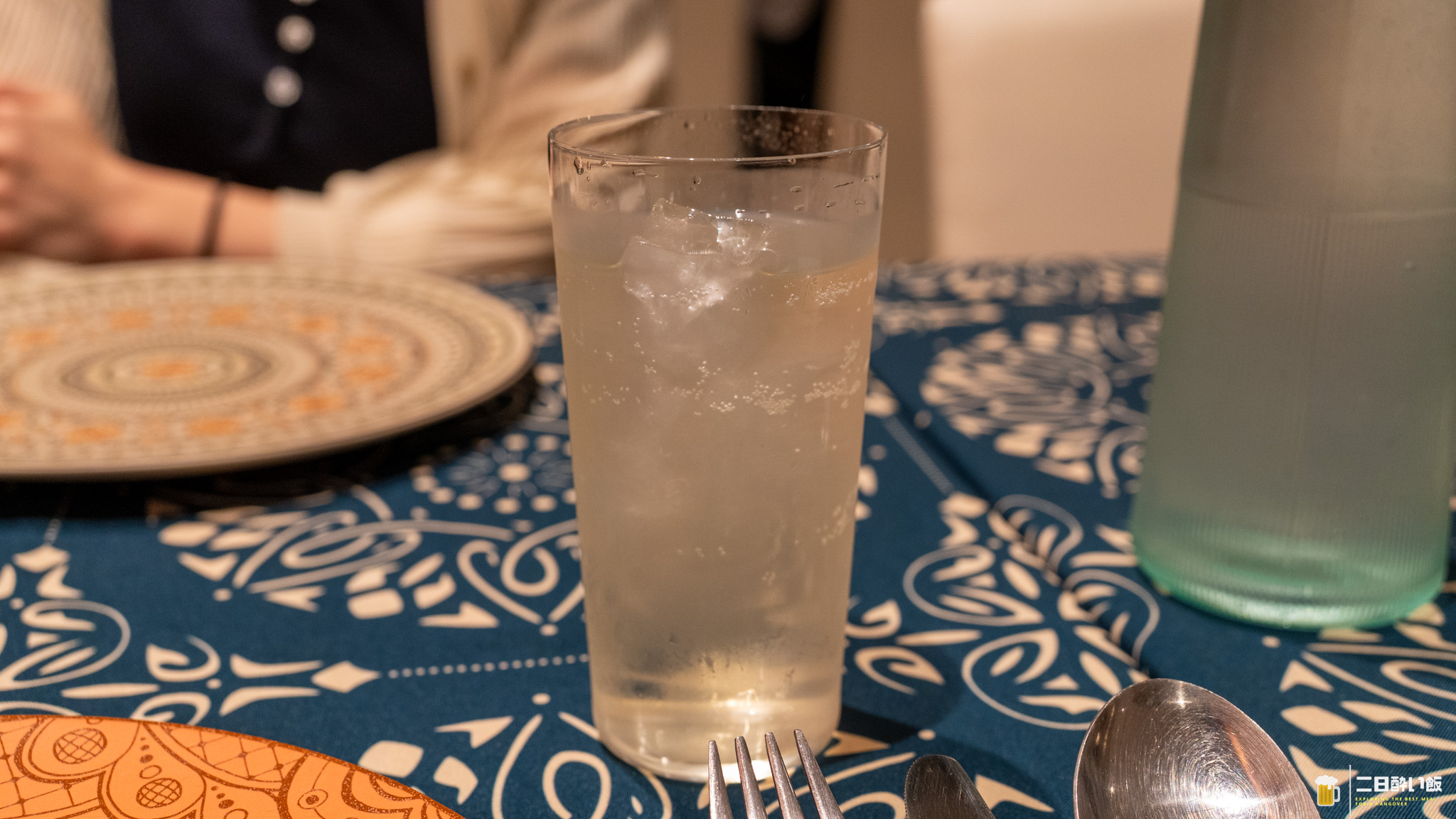
First, cheers with a Hakushu (Japanese whisky) highball!
The whisky list pretty much only has Yamazaki and Hakushu, so it is a bit on the pricey side (1,600 yen), ha.
By comparison, wine is reasonable at 7,590 yen for a bottle. I figured their message was: ‘You came to eat Georgian food, so drink Georgian wine!’
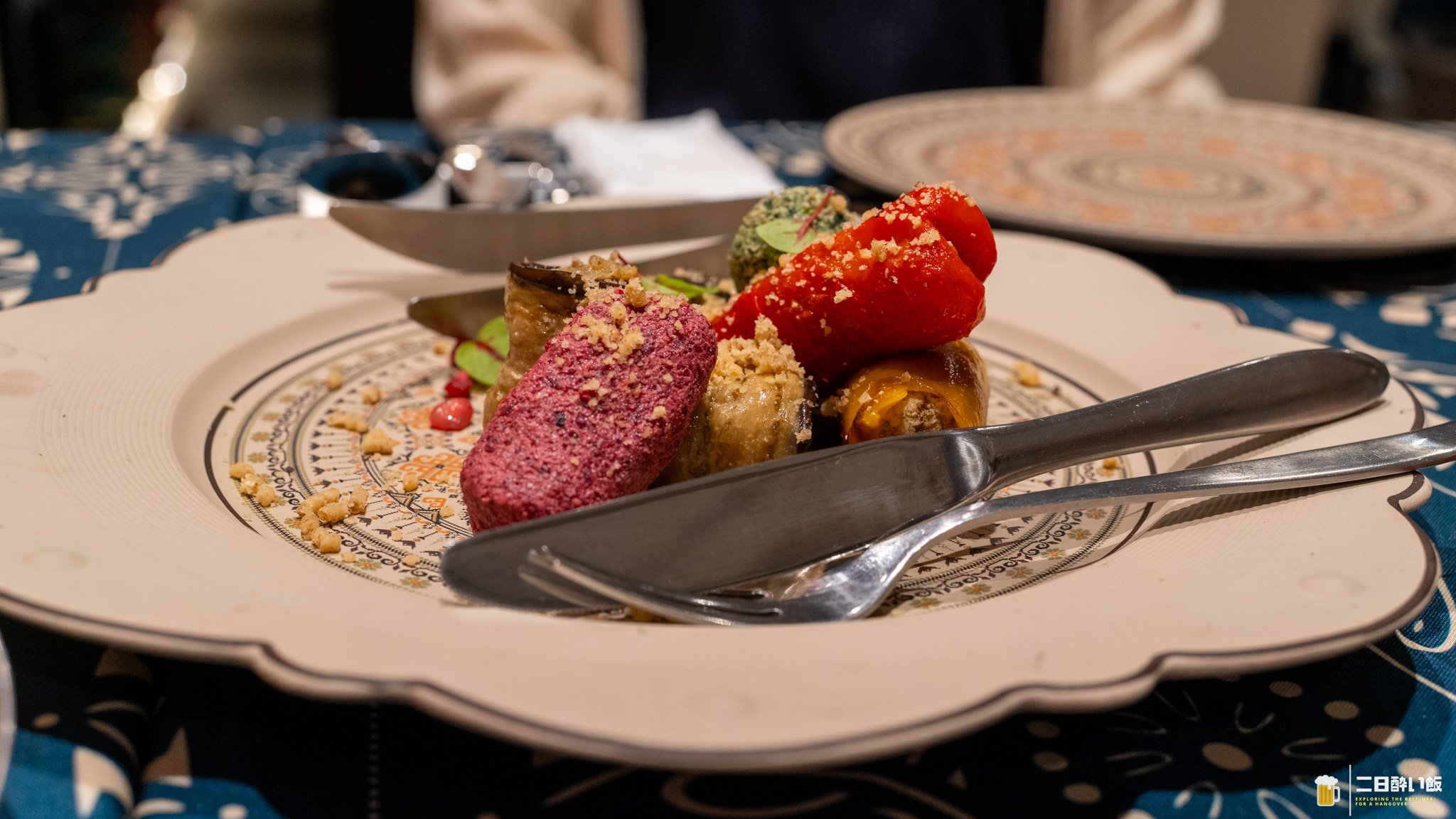
The pkhali platter. Pkhali, they say, is a Georgian appetizer along the lines of ‘boiled vegetables dressed with walnuts.’ Red from beets, brown from eggplant, yellow and red from bell peppers. Bite-sized balls of vegetable paste and boiled vegetables are lined up in a neat row, with crushed walnuts scattered generously over them.
It crumbles softly in your mouth, bringing the rich depth of the walnuts, followed by the sweetness of the beets and vegetables. A scent that seems to be cilantro drifts gently up through your nose. Even though it is made entirely of vegetables, it has a satisfying, gentle heft and is delicious!
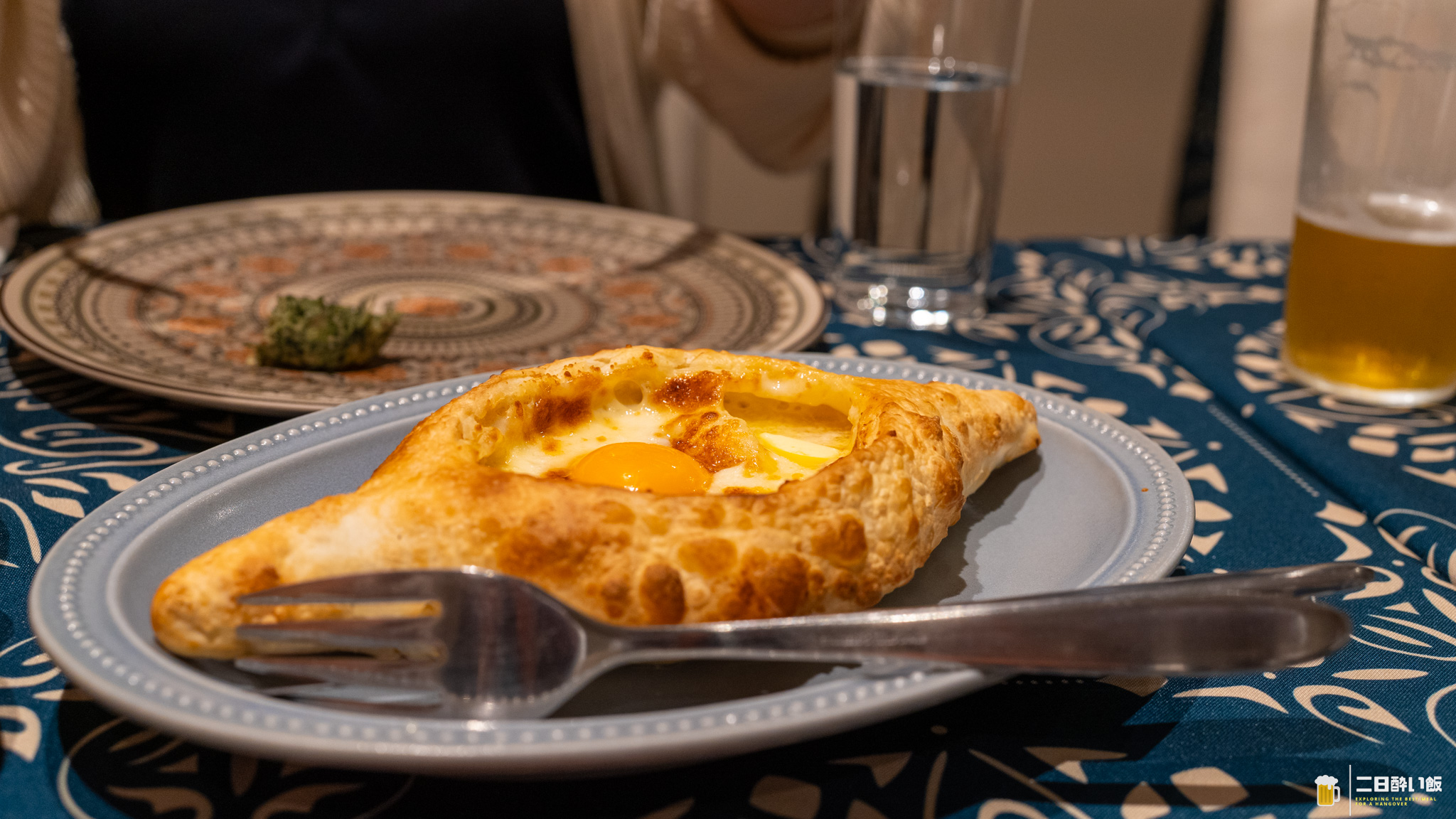
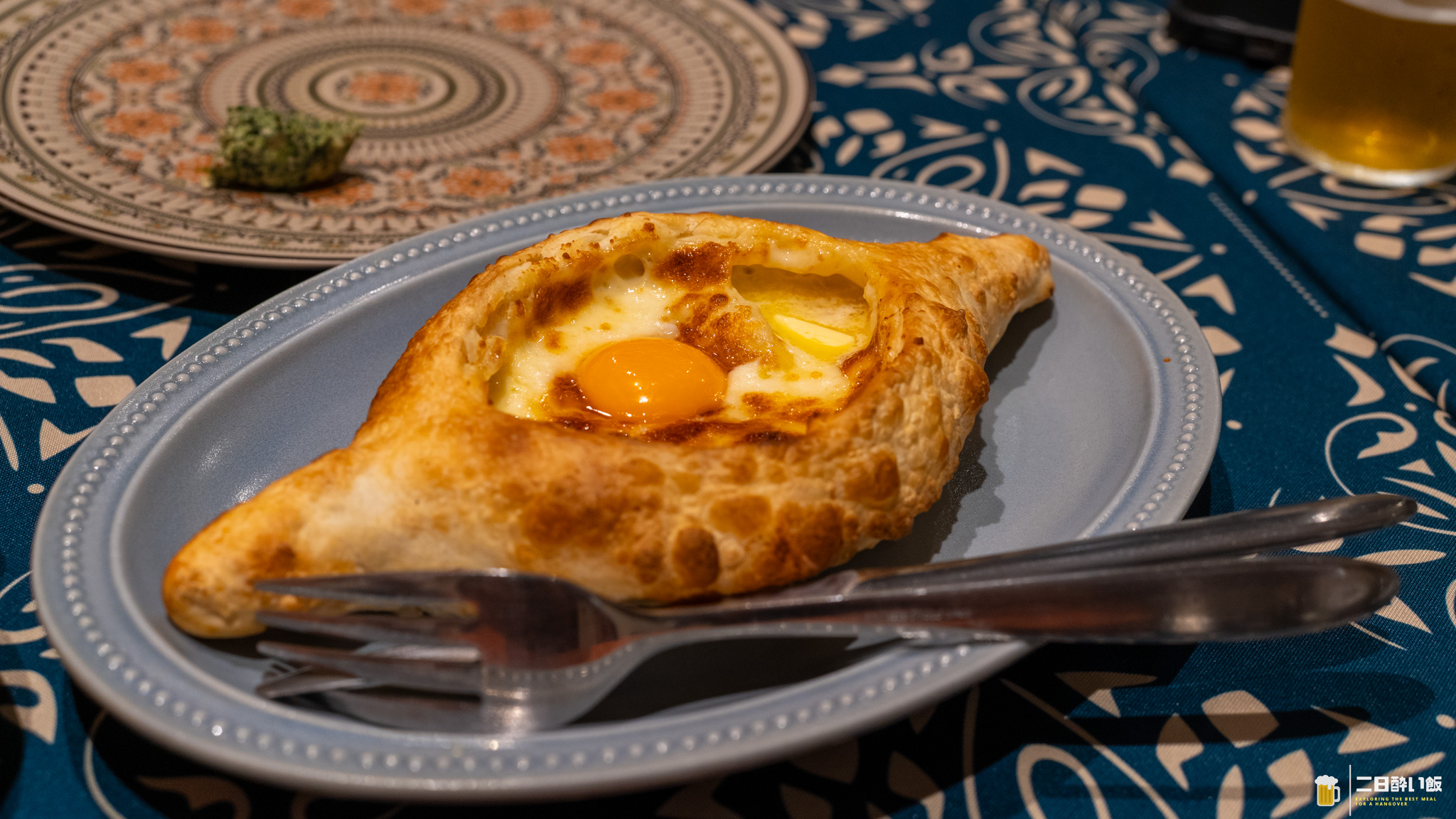
In the center of the boat-shaped dough, an egg yolk and butter steam away, melting softly. They told me to swirl the filling together until it becomes liquid, then tear off pieces of the crust to dip and eat.
The richness of two kinds of cheese combined with the creamy egg yolk makes it deeply rich and substantial. The baked crust is crisp, like a pizza, but the bottom is soft and chewy. It is quite hearty! I think having one per person would be too much.
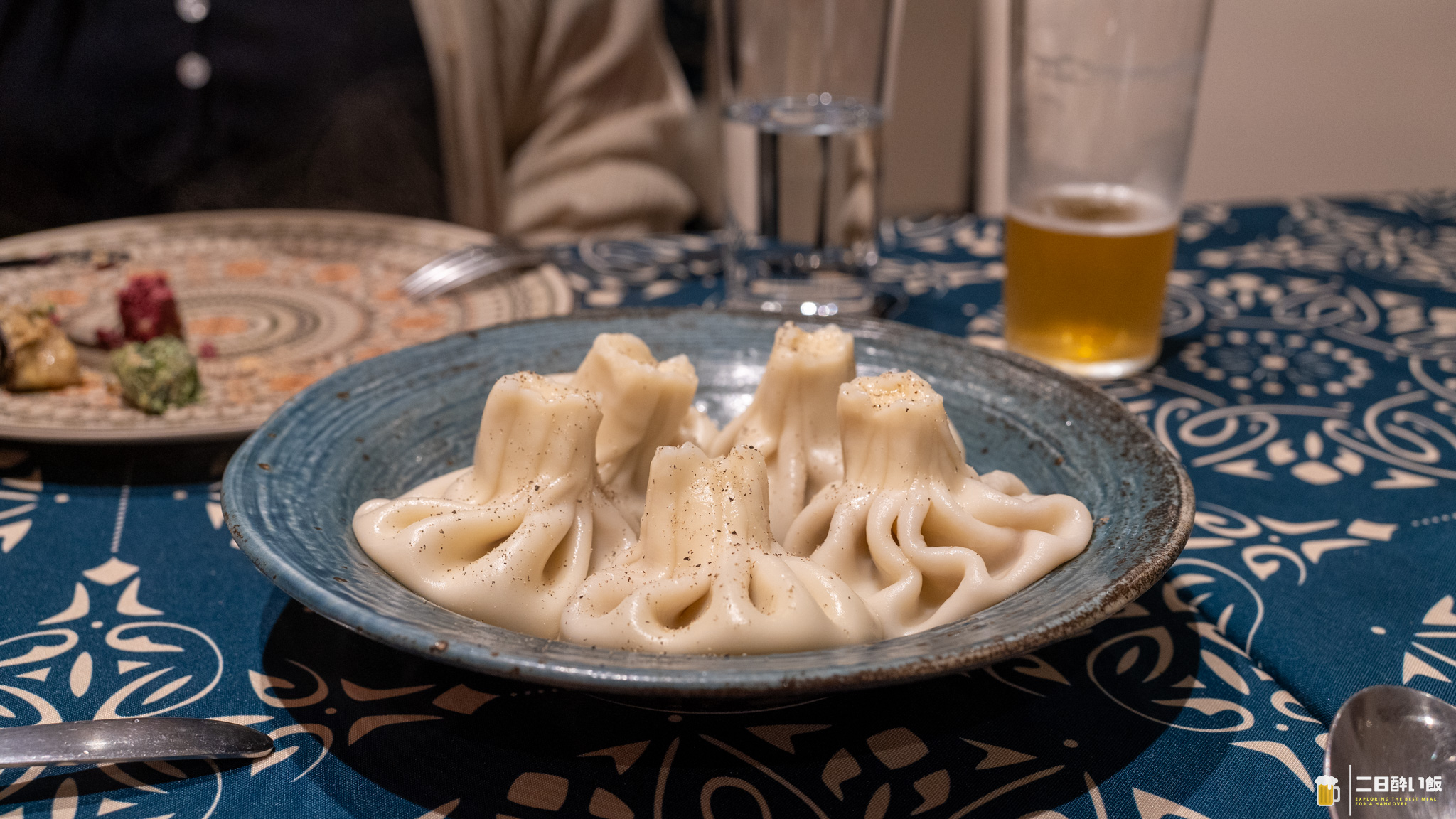
Five white dumplings (khinkali) dusted with black pepper. At first glance, they look like oversized xiaolongbao!
There is so much broth inside that if you do not slurp it, it will spill right out. The way to eat it: first, pick it up by the twisted knob on top and turn it over. Then take a bite from the edge and savor the direct, juicy rush of flavor from just beef and onion, ha. The skin is thick and delightfully chewy. Delicious! The knob you hold stays firm, but they said you can either eat it or leave it, whichever you prefer.
I wonder if many people in Georgia leave the knob behind? I went ahead and ate the knob too, and the slightly hot, doughy feel of it was tasty as well.
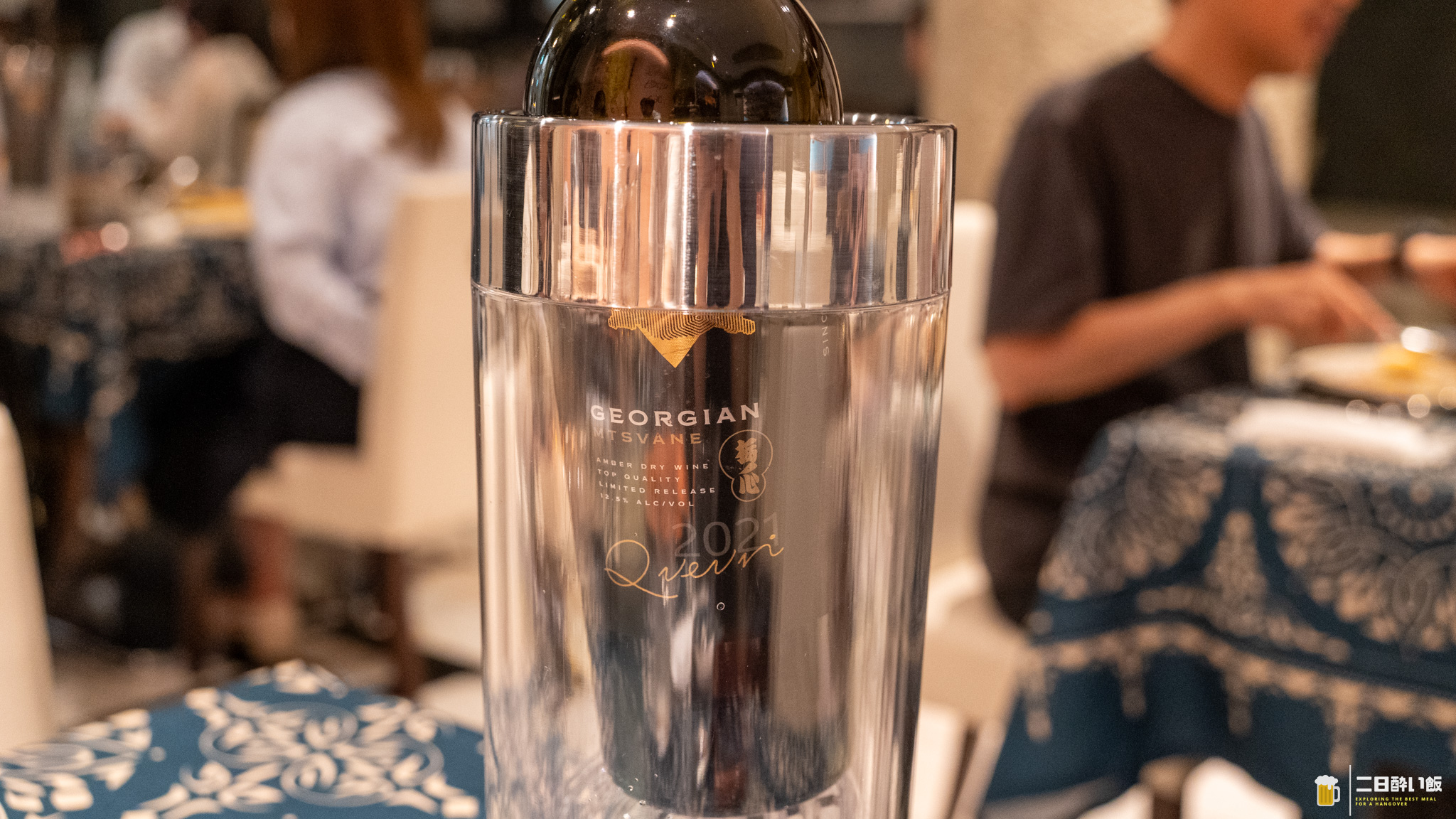
Here comes the Georgian wine! I ordered the Mtsvane Qvevri (amber, also called orange wine: white grapes fermented with their skins)!
Georgia is said to be the birthplace of wine. The method of packing white grapes with their skins into unglazed clay jars and fermenting them buried in the ground is called qvevri, and it is on UNESCO’s list of intangible cultural heritage.
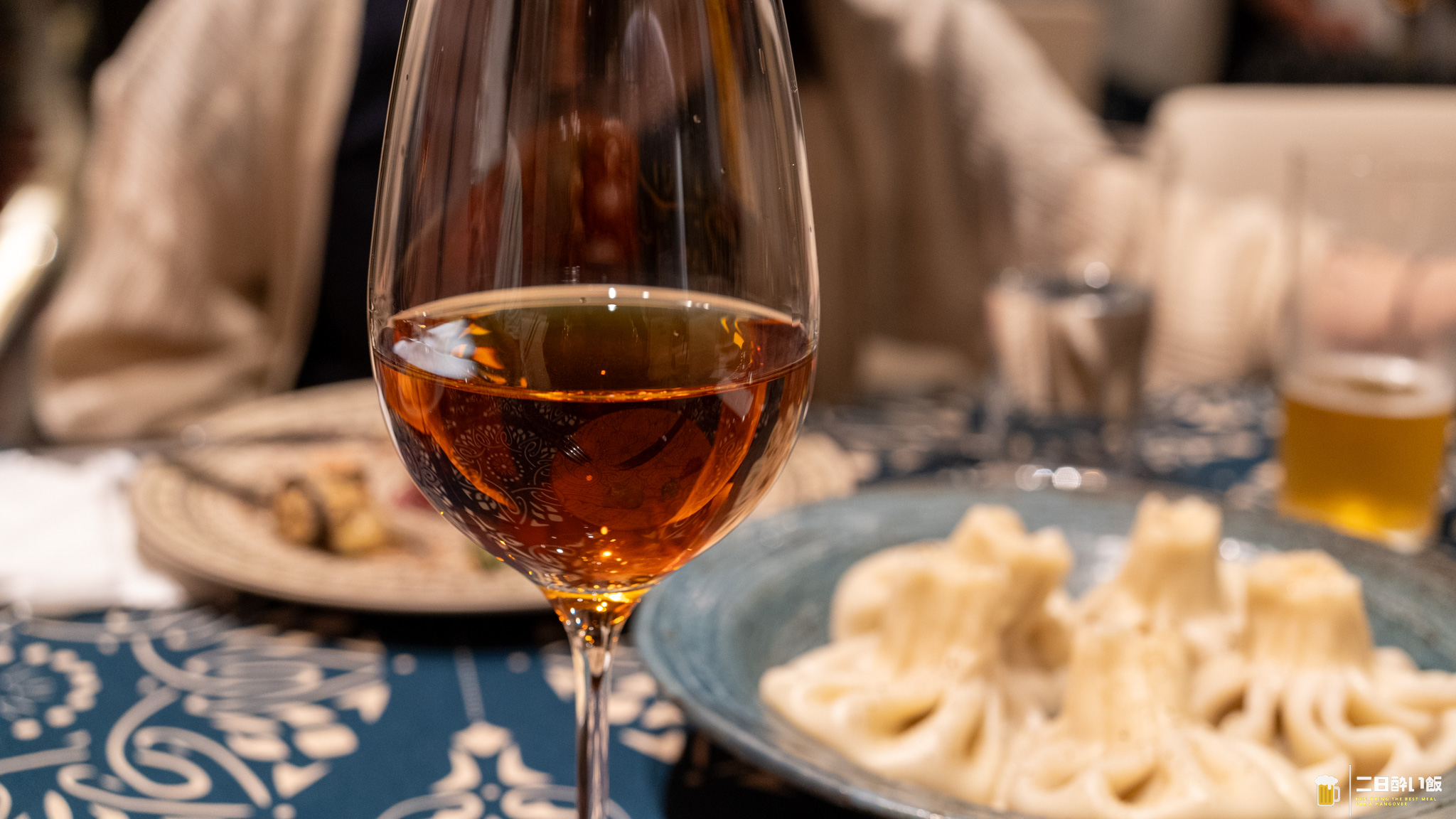
What came out was neither white nor red, but a deep amber. A gorgeous color. An aroma reminiscent of apricot and dried persimmon rises, and when you take a sip, a faint astringency lingers on the tongue. There is no sweetness; maybe it is closer to an astringent black tea? At 6,900 yen for a bottle, it feels quite reasonable.
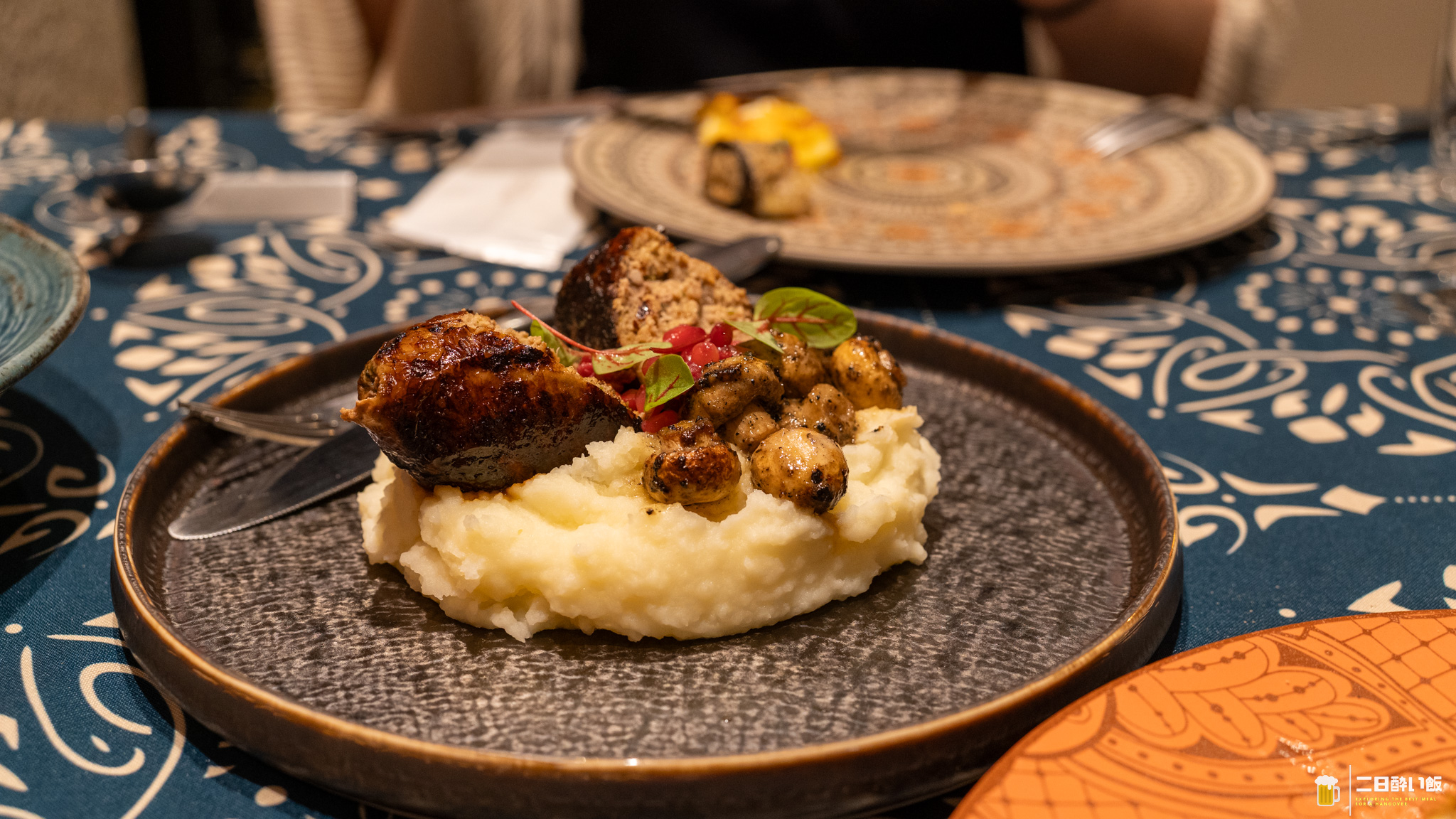
A browned chunk of meat set against the red of pomegranate. Mashed potatoes underneath, with mushrooms on the side. It is said to be a dish originating in Abkhazia, made by wrapping ground meat in caul fat and roasting it; when you cut into it, the inside is crumbly and coarse. Biting into it releases the juicy sweetness of the fat, followed closely by the aroma of spices. Then the astringency and acidity of the Saperavi red wine sauce come into play, making it delicious! Scooping it up together with the mashed potatoes rounds off the edges and makes it much easier to enjoy!
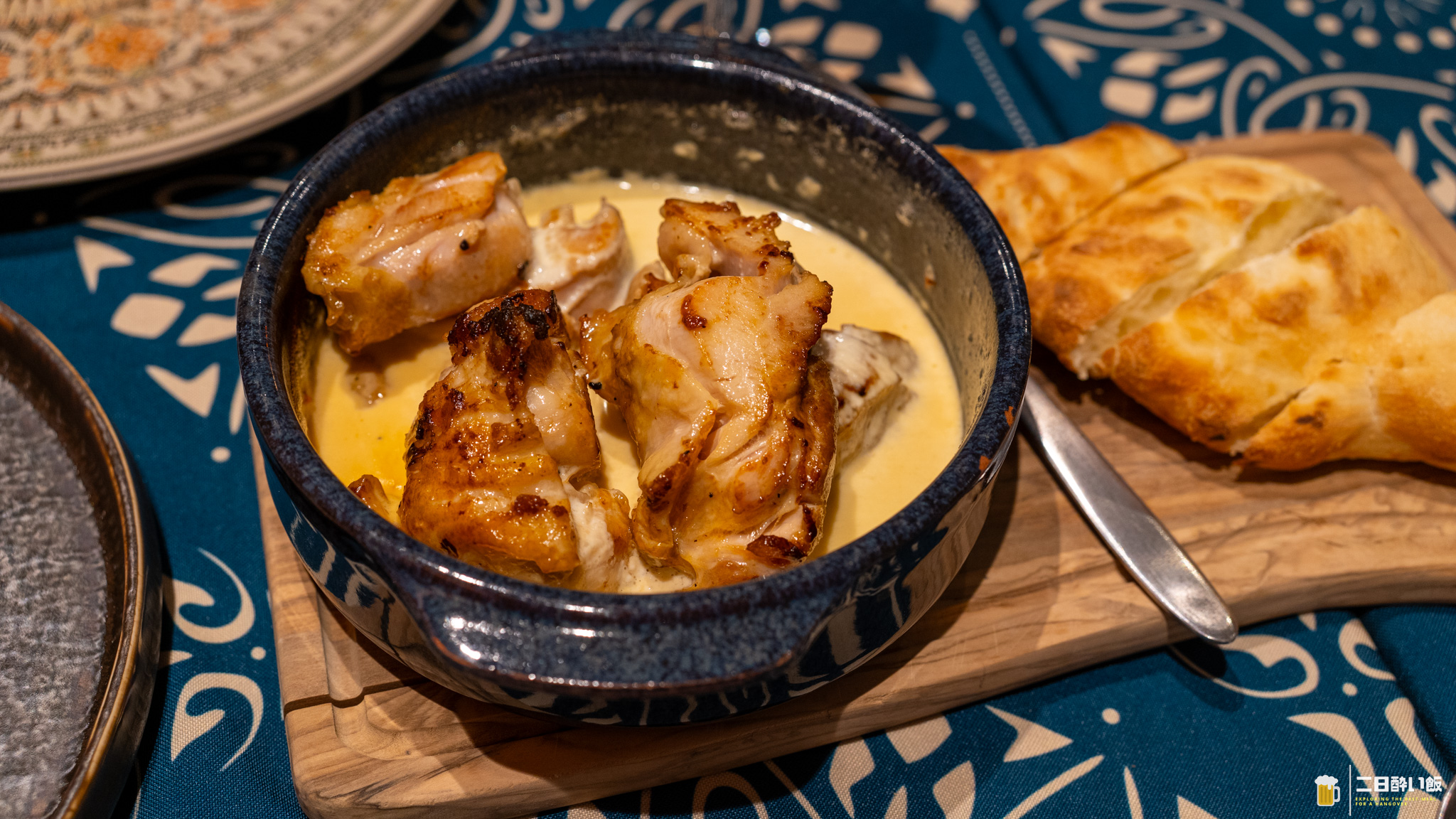
A small pot filled with white sauce, with browned pieces of chicken resting generously inside. The bread served alongside is the outer crust of an Adjaruli khachapuri. Or maybe they make the Adjaruli khachapuri by hollowing out the middle of this very bread. At last, my first encounter with proper shkmeruli!
I had cooked it at home following the embassy’s recipe, but I never knew whether I had gotten the flavor right, ha.
A local dish from Shkmeri village in the Racha region, where a generous amount of minced garlic is simmered with sour cream and milk. The sauce was thinner than I expected; after the sweetness of the milk, the garlic comes through gently. The garlic is definitely there, but it is softer than I thought. Somehow, it is much more refined than I imagined. I thought it would pack a heavier punch, but that was not the case at all!
Something to take back to my own cooking next time!
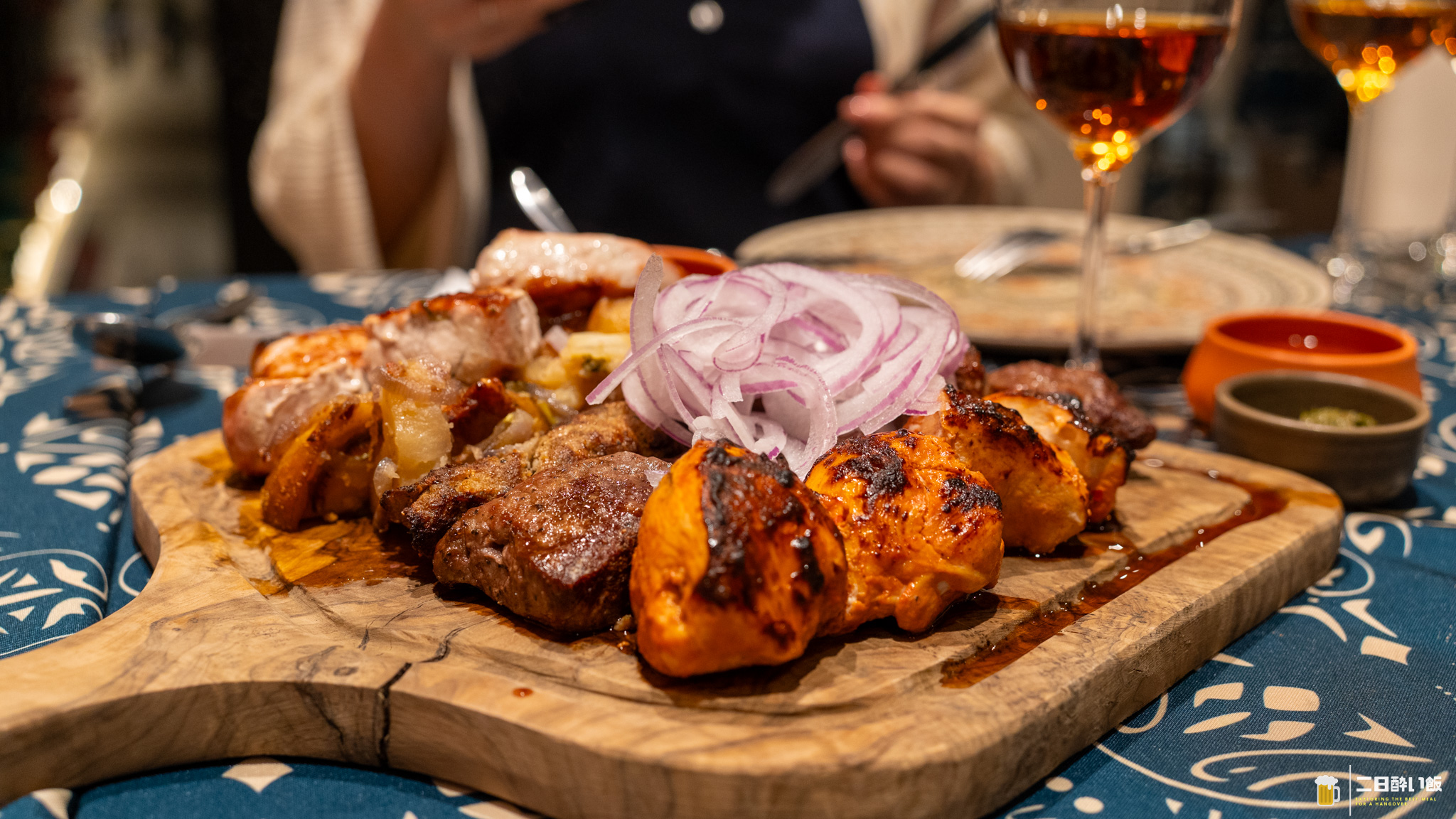
And finally, the Tochinoshin Plate! A hearty spread of meat named after the owner!
A massive heap of meat on a single olive-wood slab. A mound of thinly sliced red onion sits on top, with meat juices trickling along the grain of the wood. Four varieties — chicken, pork, beef, and mixed-meat kebab — four servings in all.
The chicken, roasted bright red from its marinade, has crisp charred edges. The pork belly is cut thick, with tender white fat melting softly. The kebab is shaped into cylinders with a coarse texture, letting the spices stand out distinctly.
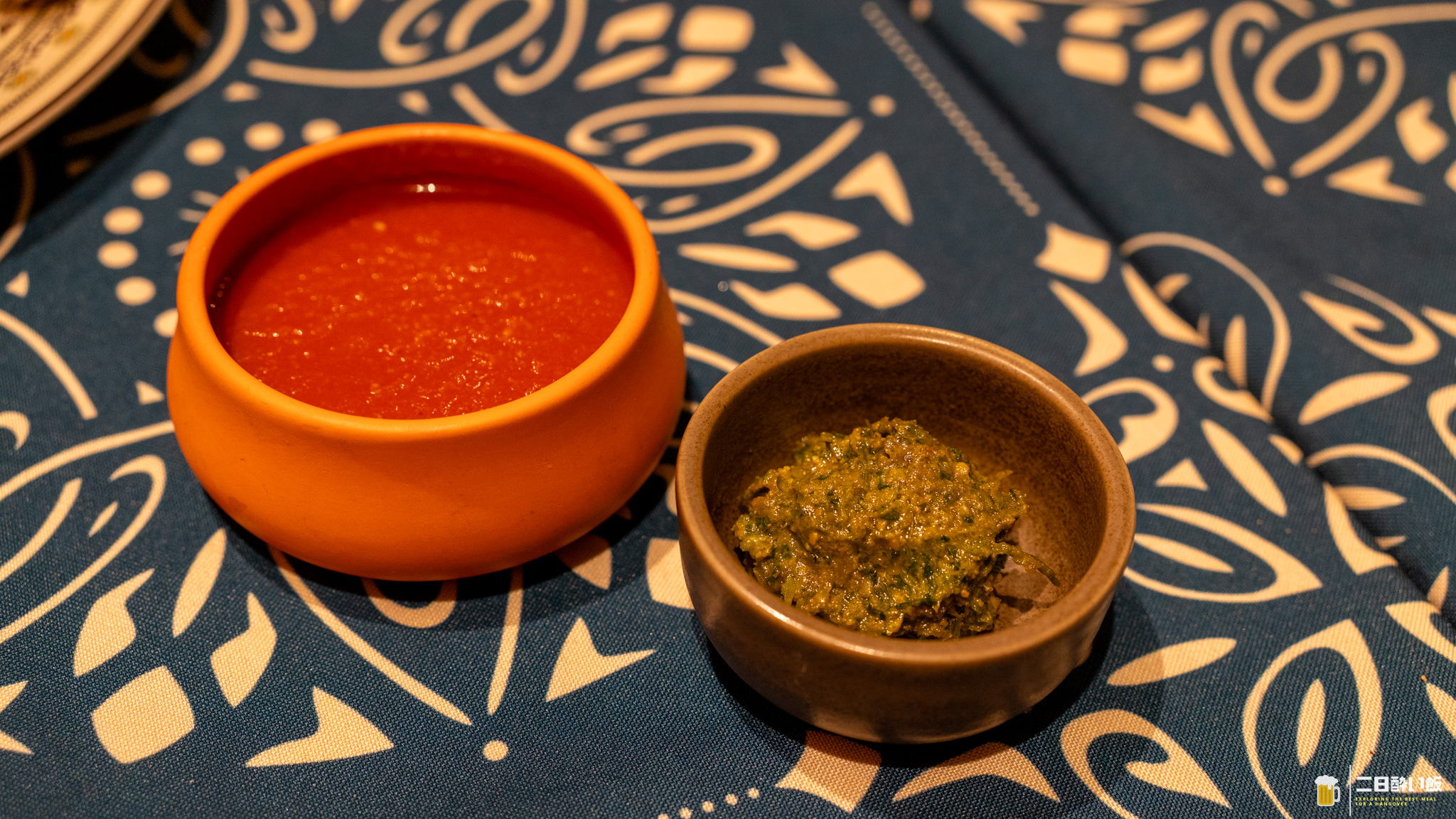
I added two small bowls of sauce here! The tomato sauce and ajika sauce are 300 yen each, and I am so glad I ordered them, thinking, ‘We definitely need sauce for this!’ The tomato sauce is smooth and light with the texture of seeds remaining, offering a refreshing tartness. The green ajika is a coarse dip made by crushing green chili peppers, garlic, and walnuts; just as the sheen of oil suggests, it is rich and hot. Adding a dab onto the meat completely transforms the flavor, so I highly recommend it!

To pair with this, the second bottle of wine: Kisi Qvevri (6,900 yen).
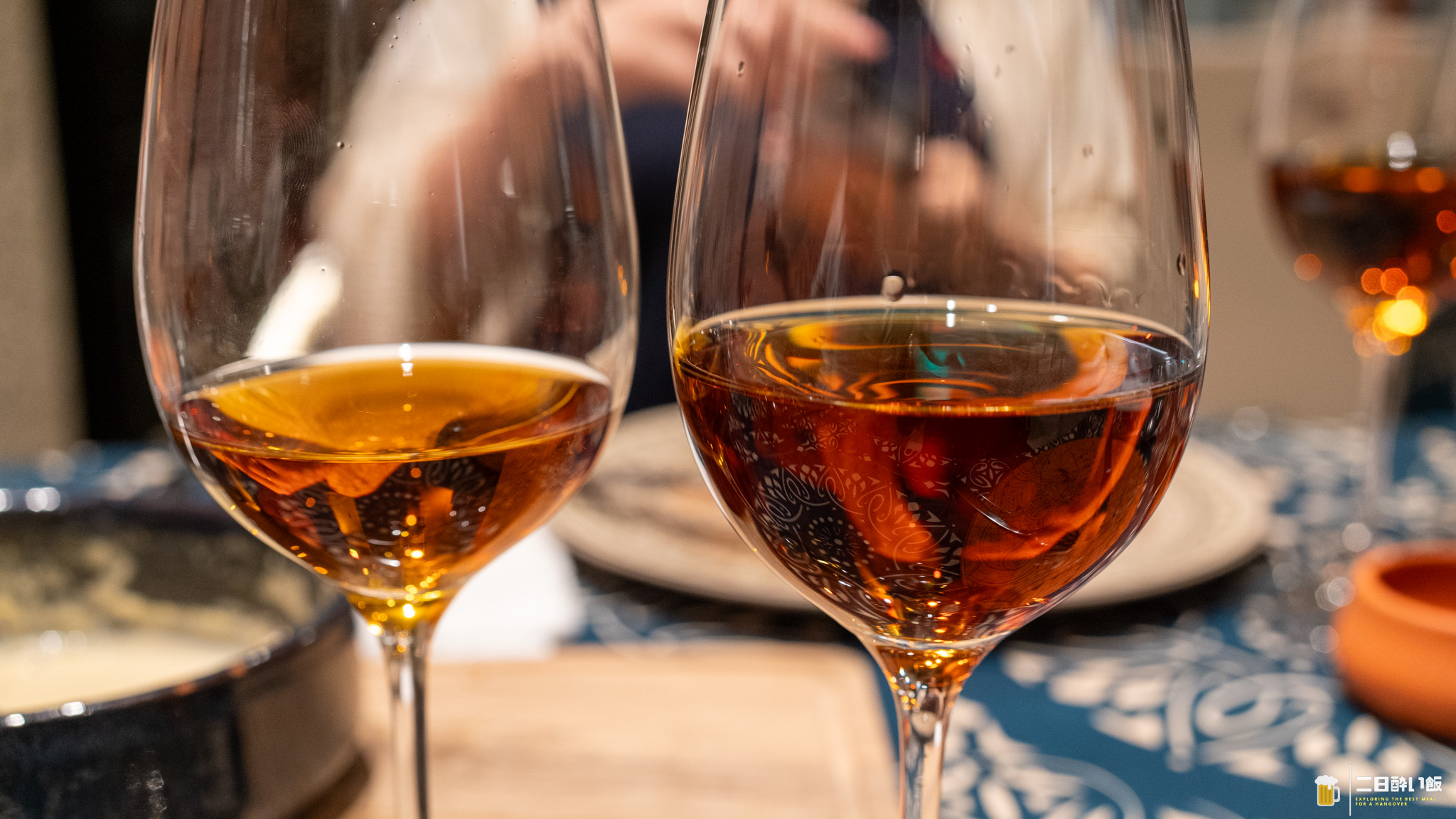
Lining up the two amber qvevri wines side by side with the Mtsvane, you can see that once poured into a glass, the colors are quite different. Where the Mtsvane is a clear gold, this one is a reddish, deep amber. The aroma leans away from fruit and more toward black tea and dry leaves, with the tannin coming strongly to the front. If Mtsvane is a crisp and refreshing bottle, Kisi is a sturdy, full-bodied one. For pairing with charcoal-grilled meat, I think this is the one! Delicious!
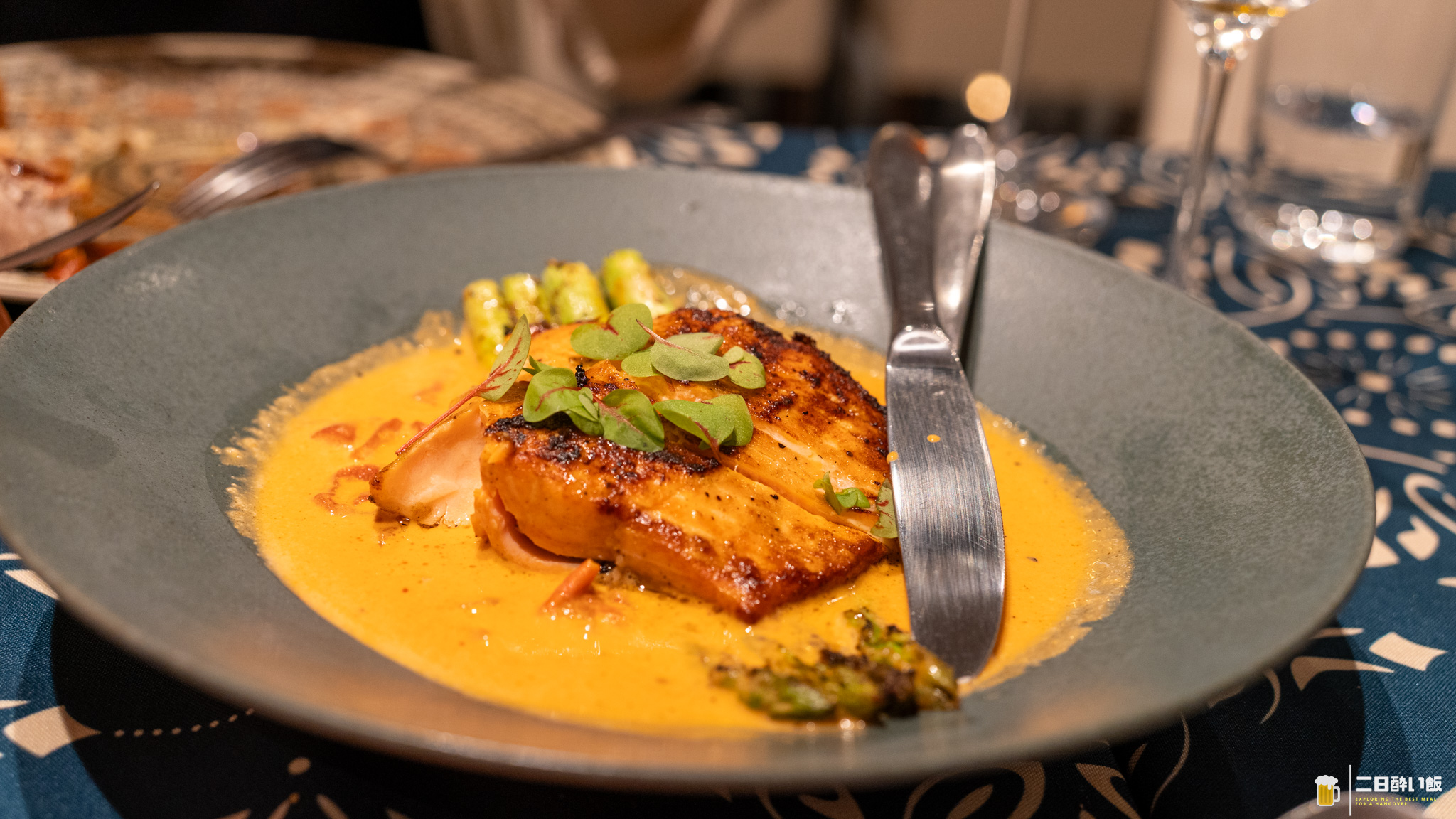
Finally, I just had to know what Georgian fish dishes were like, so I ordered the charcoal-grilled salmon!
A thick-cut slice of salmon sits proudly on a plate coated in amber sauce. The fragrant charred surface looks so appetizing! It is served with grilled asparagus and fresh green shoots.
The grilling was magnificent: while the savory aroma of charcoal stands out, the flesh retains a blush of red toward the center and flakes apart tenderly. The sauce is a rich, thick creamy tomato with a prickle of spice following the deep savor. For a fish dish, it is surprisingly hearty. This is delicious!
Thoroughly satisfied!
Man, everything was so delicious that we ended up polishing off two bottles of wine! If you are sharing with several people, drinking wine together is definitely the economical route! Naturally, Georgian wine pairs exceptionally well with the food! Every dish was wonderfully refined, and I thought this was a great spot to get to know Georgian cuisine. It is a bit out of the way, but I would love to come back.
Here is hoping to encounter more delicious food today!
GEORGIAN HOUSE Menu
Cold appetizers
An appetizer of boiled or sautéed vegetables blended into pastes with spices, herbs, garlic, and walnuts. Each color features a different vegetable.
A chilled cheese appetizer from the Samegrelo region. Sulguni cheese stuffed with mint and cottage cheese, served in a yogurt sauce seasoned with ajika.
A salad made with red kidney beans and capers.
A classic home-style salad representing Georgia.
Hot appetizers
Chicken simmered in garlic white sauce. A local dish from Shkmeri village in the Racha region, made by simmering browned chicken with a generous amount of minced garlic and sour cream.
A meat roll originating in Abkhazia. Ground meat wrapped in caul fat and roasted, paired with a Saperavi red wine sauce.
Grilled salmon served with grilled asparagus in a rich, spicy creamy tomato sauce.
A spicy stew characteristic of the Samegrelo region.
Crisply roasted fried chicken simmered in a walnut sauce.
Chicken livers lightly sautéed in butter.
A traditional Georgian beef stew.
A vegetable dish of eggplant, tomato, bell pepper, onion, and garlic simmered with herbs and spices. Served either warm or chilled. Vegan and gluten-free.
Mushrooms topped with cheese and baked.
A stew made with mushrooms, onion, and white wine.
A comforting dish of red kidney beans slow-simmered with onion, herbs, and spices. Vegetarian.
Khinkali
The signature dish of Georgia. Large dumplings filled with rich broth. Served 5 pieces per order.
A juicy dumpling with mixed ground meat, onion, and accented with spices. No fresh herbs used.
Khinkali filled with cheese, characterized by its savory saltiness.
Khinkali filled with mushrooms.
The local way is to hold the top knob (knot), sip the broth, and leave the knot on the plate. Seasoned with black pepper before eating.
Khachapuri
In Georgian, ‘khacho’ means cheese and ‘puri’ means bread. Shapes and fillings vary by region.
The boat shape characteristic of the Adjara region. Baked with two types of cheese spread across the crust, finished with an egg yolk and butter on top.
The circular shape characteristic of the Imereti region. Dough stuffed with two types of cheese is rolled thin, brushed with butter, and baked; noted for its chewy texture.
A thin flatbread stuffed with spiced lobio (stewed beans).
Mtsvadi (charcoal skewers)
Charcoal skewers essential to Georgian feasts. Sauces can be ordered separately.
A mixed grill platter named after owner Tochinoshin. Chicken, pork, beef, and mixed-meat kebab served generously on a single wood slab for four.
Aromatically roasted lamb chops.
Beef tenderloin skewers. Seasoned with spiced Svaneti salt and grilled slowly over charcoal.
Pork belly skewers. Grilled with salt alone and served with a tomato-and-yogurt marinade sauce.
Chicken breast skewers.
A spicy skewer of mixed ground meat shaped into a cylinder.
Soups
A chicken soup beloved by people of all ages.
A beef soup rich with Georgian spices.
Side dishes
A spicy, rich homemade dip made by grinding green chili peppers, garlic, herbs, spices, and walnuts.
A tangy sauce blending fresh tomatoes and spices.
If sharing skewers, the restaurant recommends adding a few kinds of sauce. At 300 yen, it keeps things flavorful right to the end.
Desserts
A layered Georgian cake made with natural honey.
A traditional chilled dessert made with grape juice in Georgian homes.
* From the tabletop menu during a visit in August 2026. Prices exclude tax; a 10% service charge will be added separately (tax-included prices are 1.1 times the listed price). Menu items may change, so please check the official site or at the restaurant for the latest information. Drink menus have been omitted.
GEORGIAN HOUSE (European / Honjo-Azumabashi Station, Tokyo Skytree Station, Asakusa Station (Tobu / Toei / Metro))
Tabelog dinner rating ★★★★☆ 4.0
I ate here and paid for it myself. Nothing on this site is a comped meal.
One more for the road?


