


A note on the words: unaju is grilled freshwater eel brushed with tare (a seasoned soy-based sauce) served over rice in a traditional lacquered box, while unadon serves it in a round bowl. Kimosui is a delicate clear soup made with the liver of the eel, typically ordered alongside unaju to cleanse the palate.
Table of Contents hide
Kikuya on Tabelog (English) — opening hours, payment details and the Japanese address are kept up to date there, not here.
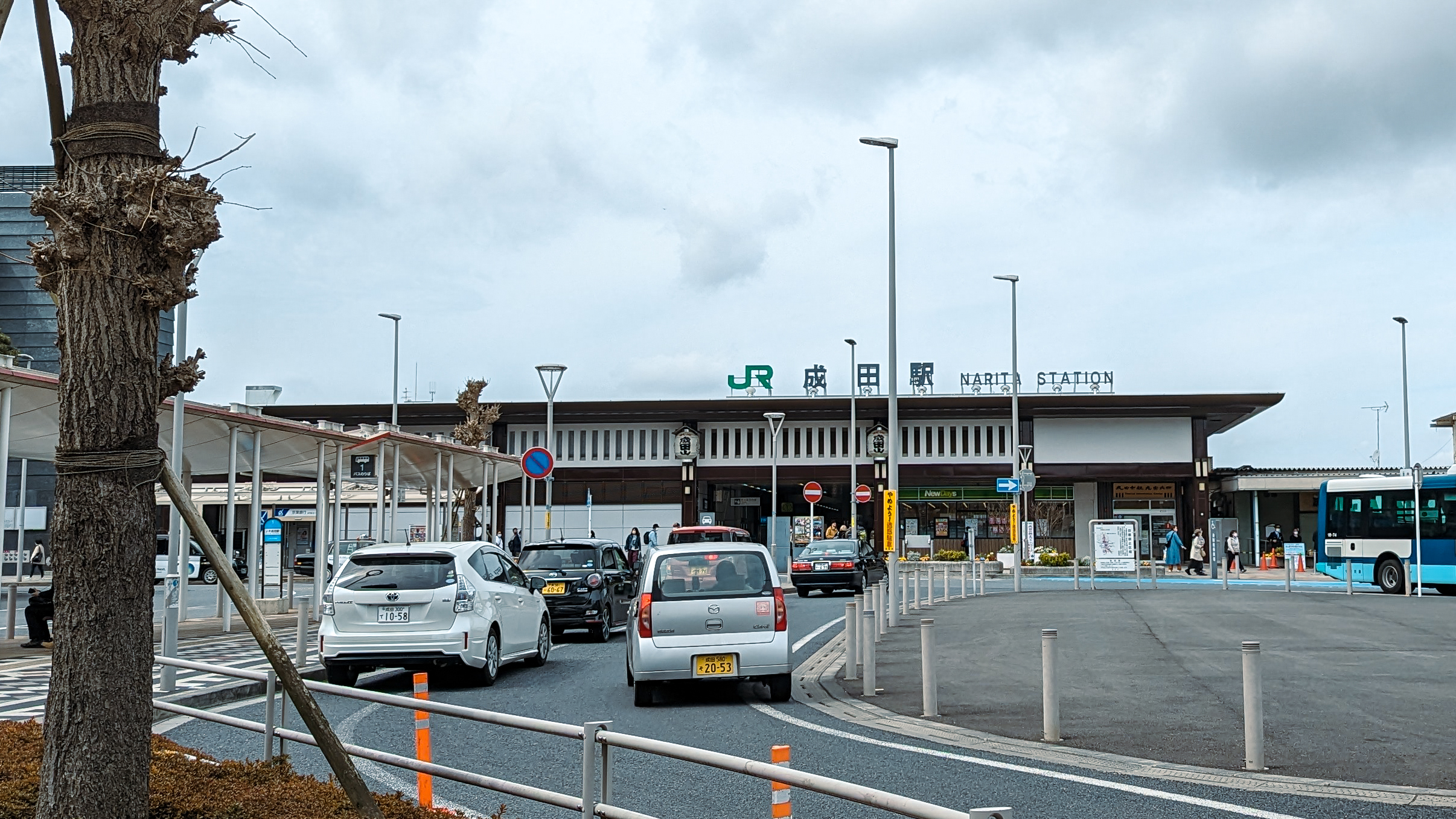
Hello, this is Hangover Meshi. Having suddenly run out of things to do with free time on my hands, I wondered about taking a trip somewhere a bit farther out, and Naritasan popped into my head. I vaguely recalled there being eel restaurants along the temple approach. So without further ado, I transferred trains toward Narita Station! It took over an hour.
Sure enough, walking down the temple approach, there were eel restaurants. However, the famous one was insanely crowded and looked impossible to get into, so I headed to “Kikuya” nearby. This one also seems to be a historic eel restaurant, and it was crowded.
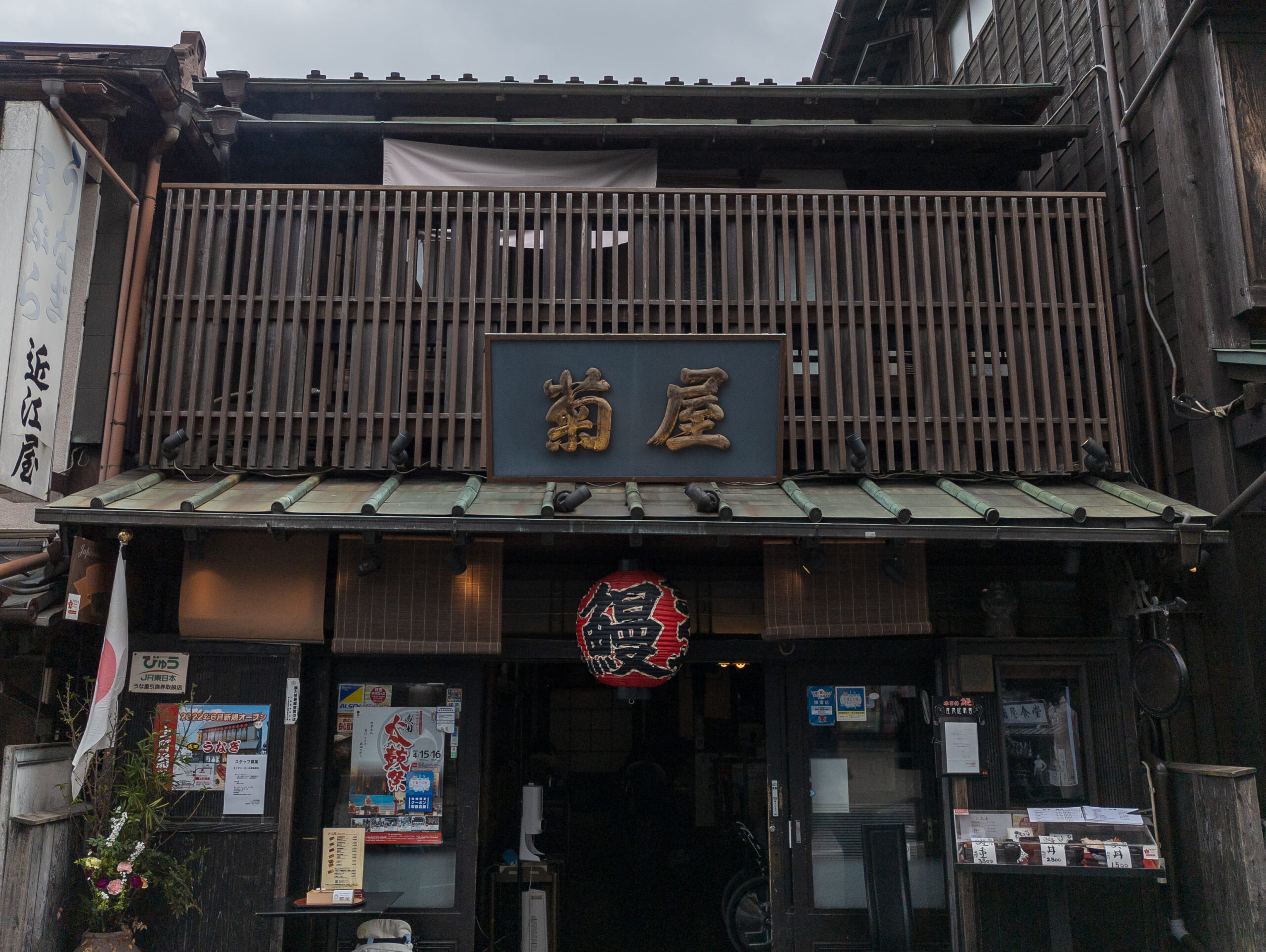
Domestic nidan (double-layer) unadon — 7,100 yen
Nidan unadon — 6,150 yen
Domestic unaju — 4,850 yen
Unaju — 4,150 yen
Domestic unadon — 3,350 yen
Unadon — 2,850 yen

It seems unadon and unaju are each divided into domestic (Japanese-raised) eel and other origins. An additional charge is required to upgrade to kimosui (clear soup with eel liver).
A double layer sounds tempting too, but I bet it’s the kind where eel is sandwiched between layers of rice, so it probably doesn’t look that different.
Here, I went with the domestic unaju upgraded with kimosui!
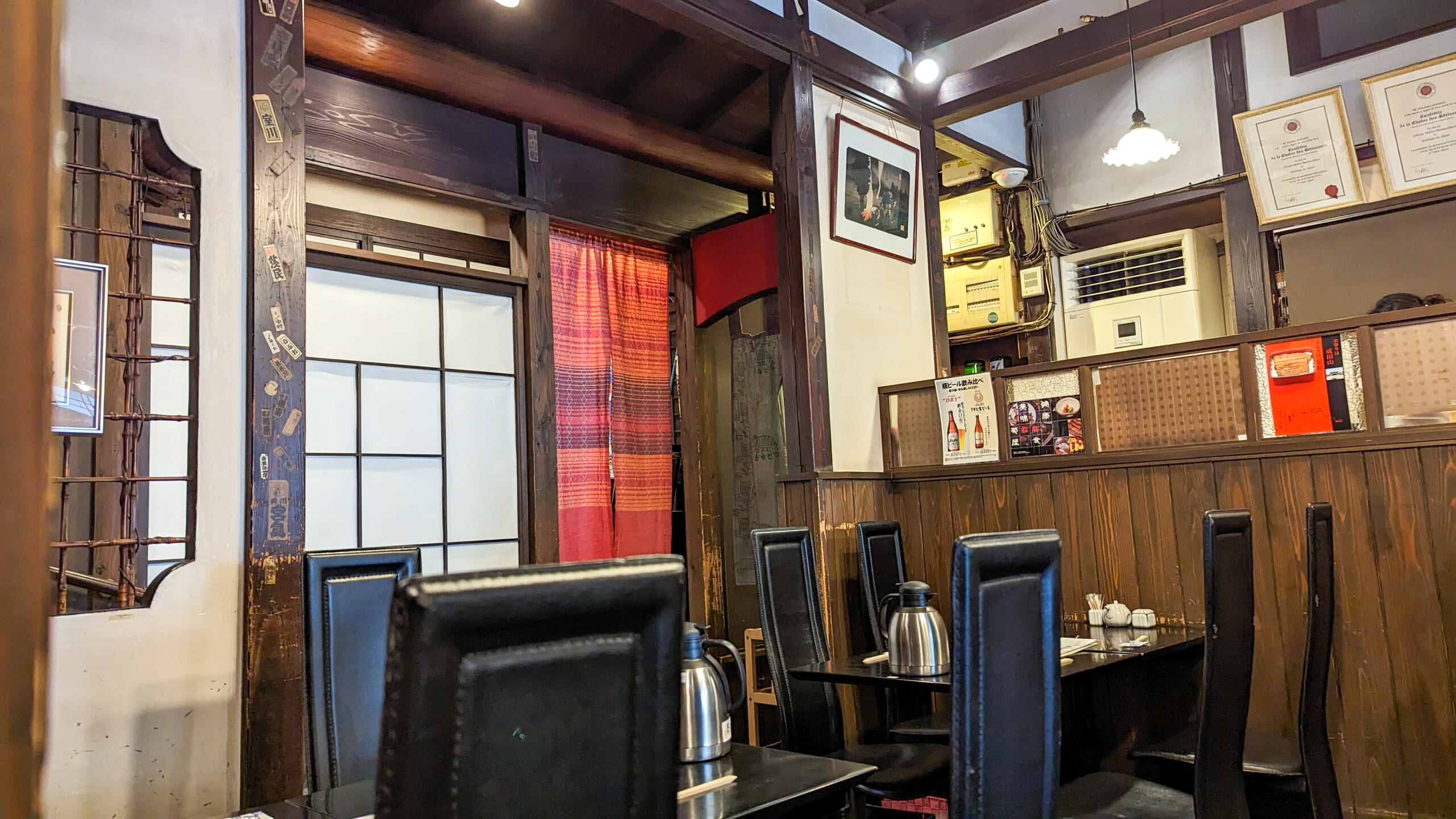
Now then, I had a beer and waited a while for the unaju.
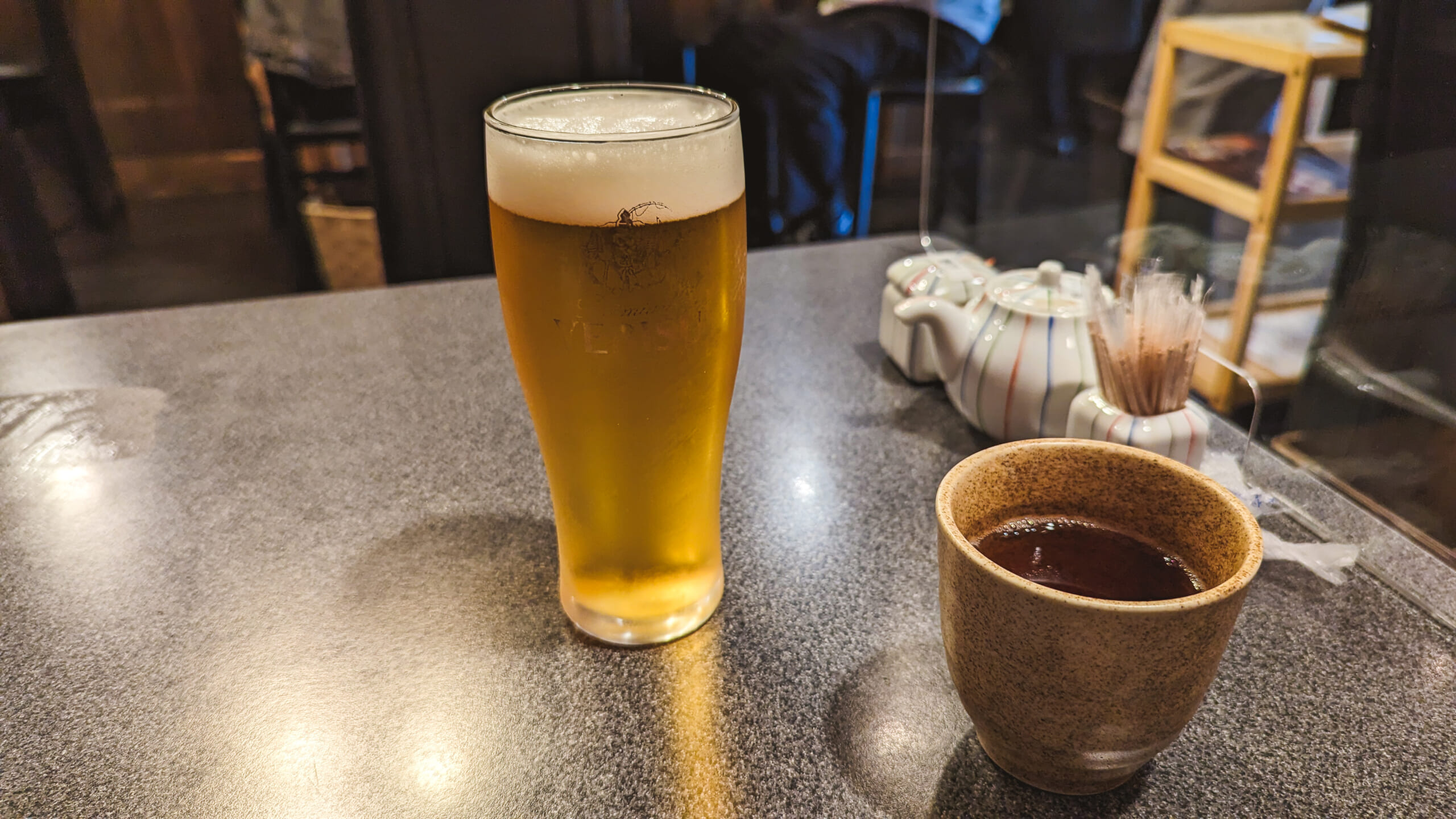
Mm, that hits the spot!
After a short wait, the unaju arrived.


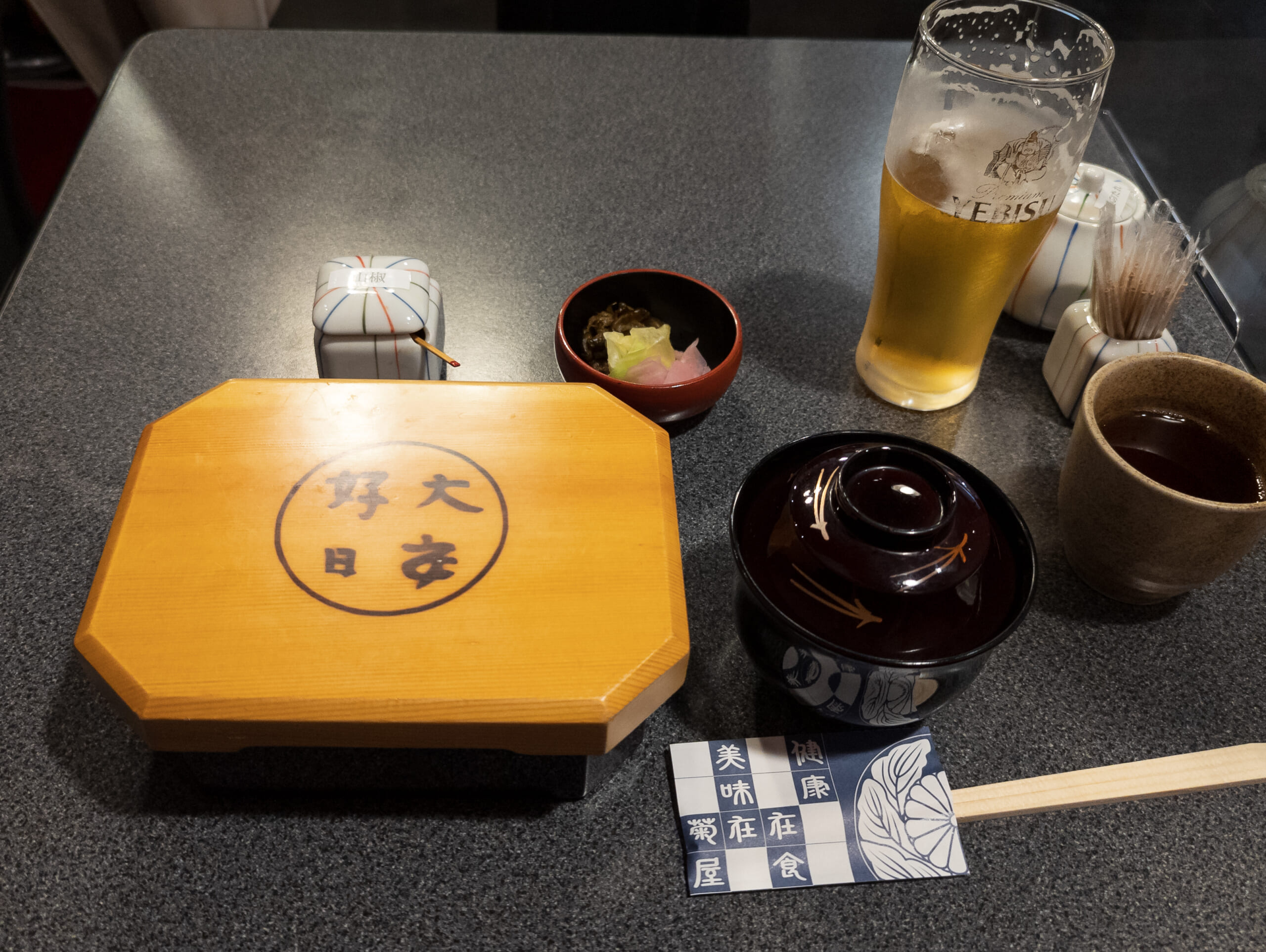
What an interesting lacquered box; this might be the first time I’ve seen this style.
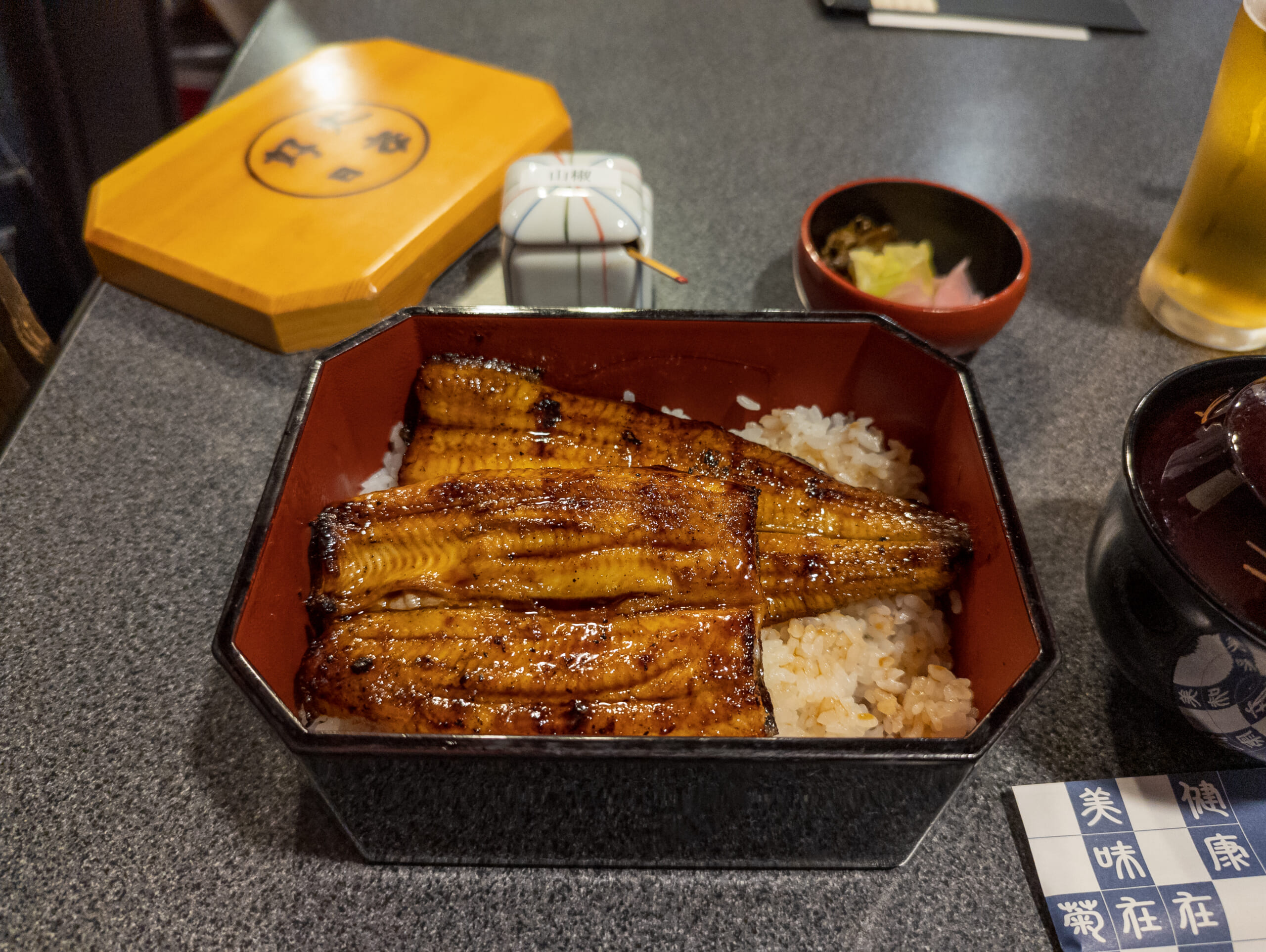
Open! Well now, that looks delicious.
Taking a bite right away… good. The sauce is relatively on the drier, less sweet side, giving it a crisp feel.
It doesn’t push itself forward, leaving almost a refreshing impression. There is extra sauce set out on the table, so you can add more if needed.
Though on the smaller side, the fluffy eel pairs perfectly with the rice. The fragrant, savory aroma passing through the nose is the best!
The kimosui is light on the salt, with the broth from the liver coming through clearly.
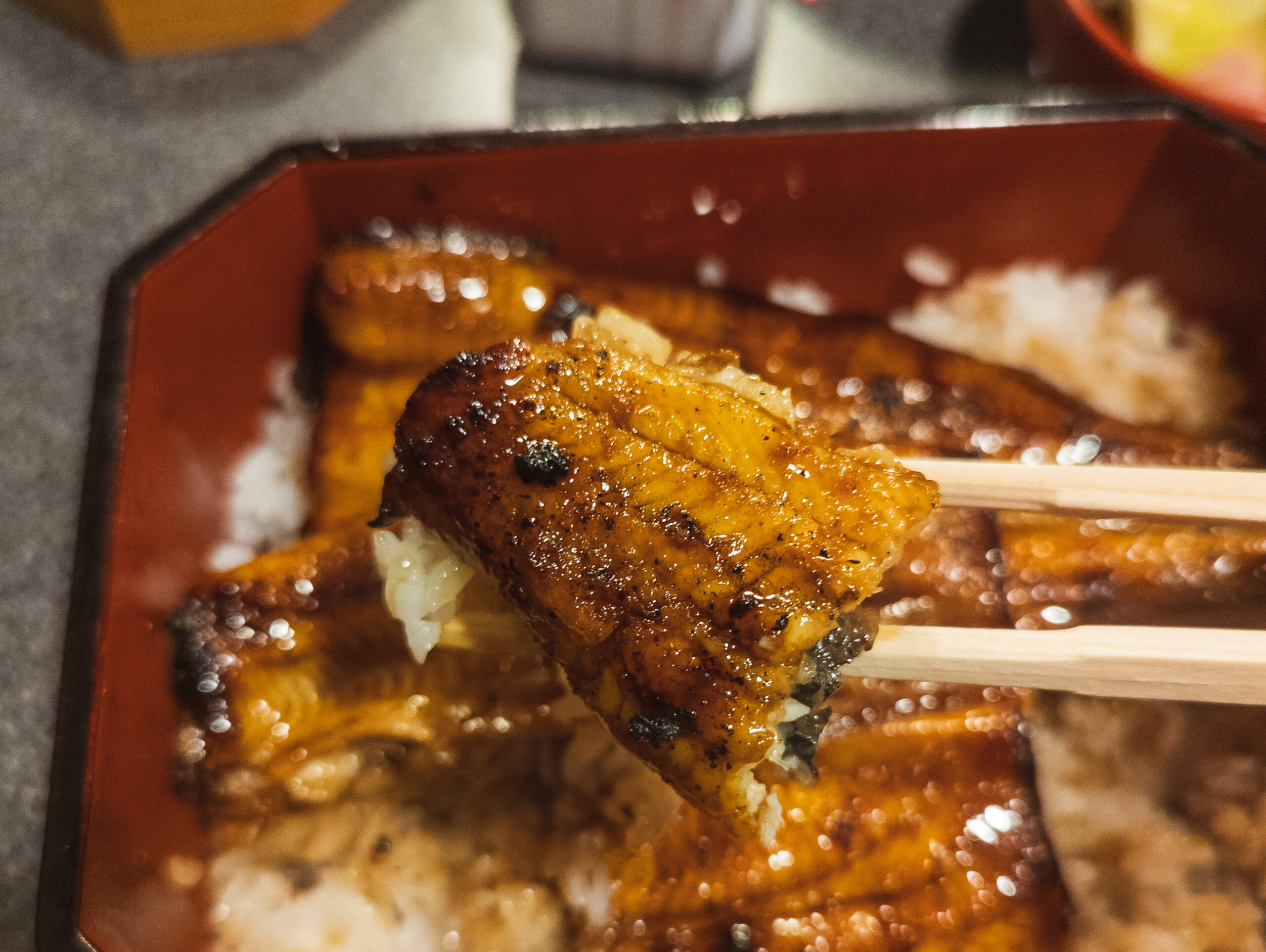
While thinking it could have had a touch more volume, I polished it off in no time.
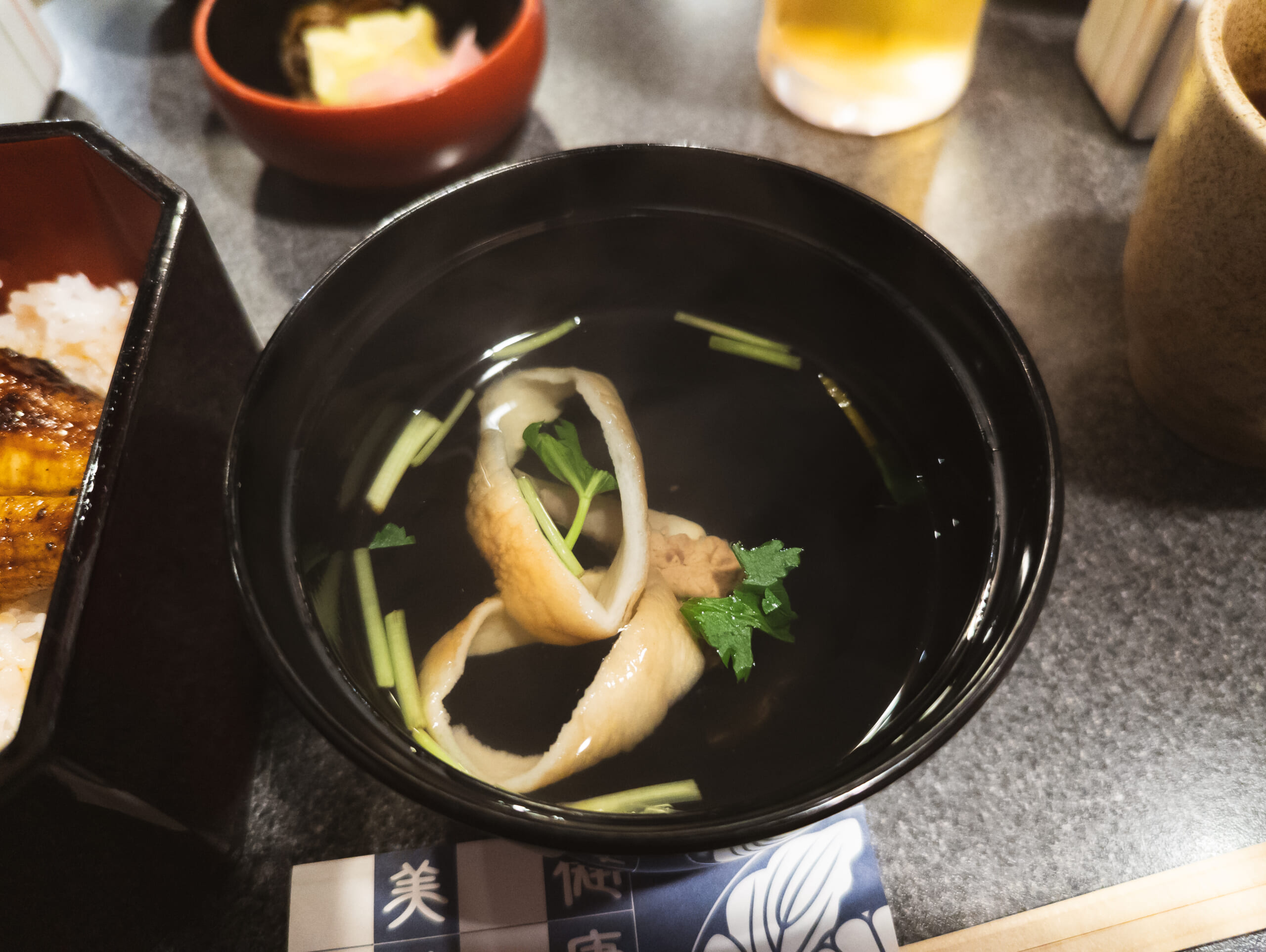
Well, having Naritasan eel for the first time was thoroughly satisfying! It’s a bit of a trek so I can’t come often, but I thought it might be nice to come out here for a walk once in a while. Next time, I think I’ll try heading out early in the morning for that place with the massive line.
Kikuya (Japanese Cuisine / Narita Station, Keisei-Narita Station)
Tabelog lunch rating ★★★☆☆ 3.6
I ate here and paid for it myself. Nothing on this site is a comped meal.
One more for the road?


