


A note on the words: soba are Japanese buckwheat noodles. Aimori refers to a combination platter serving two noodle styles side by side; the writer takes it to mean standard soba alongside the shop’s ultra-thick-cut noodles. Kamojiru is a warm duck dipping broth, and sobayu is the hot cooking water poured into leftover dipping broth at the meal’s end to enjoy as a light soup.
Table of Contents hide
Hokkaido Soba Sakura Purena makuhari ten on Tabelog (English) — opening hours, payment details and the Japanese address are kept up to date there, not here.
Hello, this is Hangover Meshi. Well, when someone says they have business in Kaihimmakuhari at this time of year, I imagine there’s really only one thing they could mean, but off to Makuhari I went. Right around Kaihimmakuhari Station, there are plenty of dining spots inside the commercial complexes in front of the station, but once you wander further away, there aren’t many at all. So I decided to grab lunch first before taking care of my errands, heading to Plena Makuhari right across from the station. The first floor is right away a restaurant mall, packed with places where you can grab a quick bite of ramen, curry, or the like.
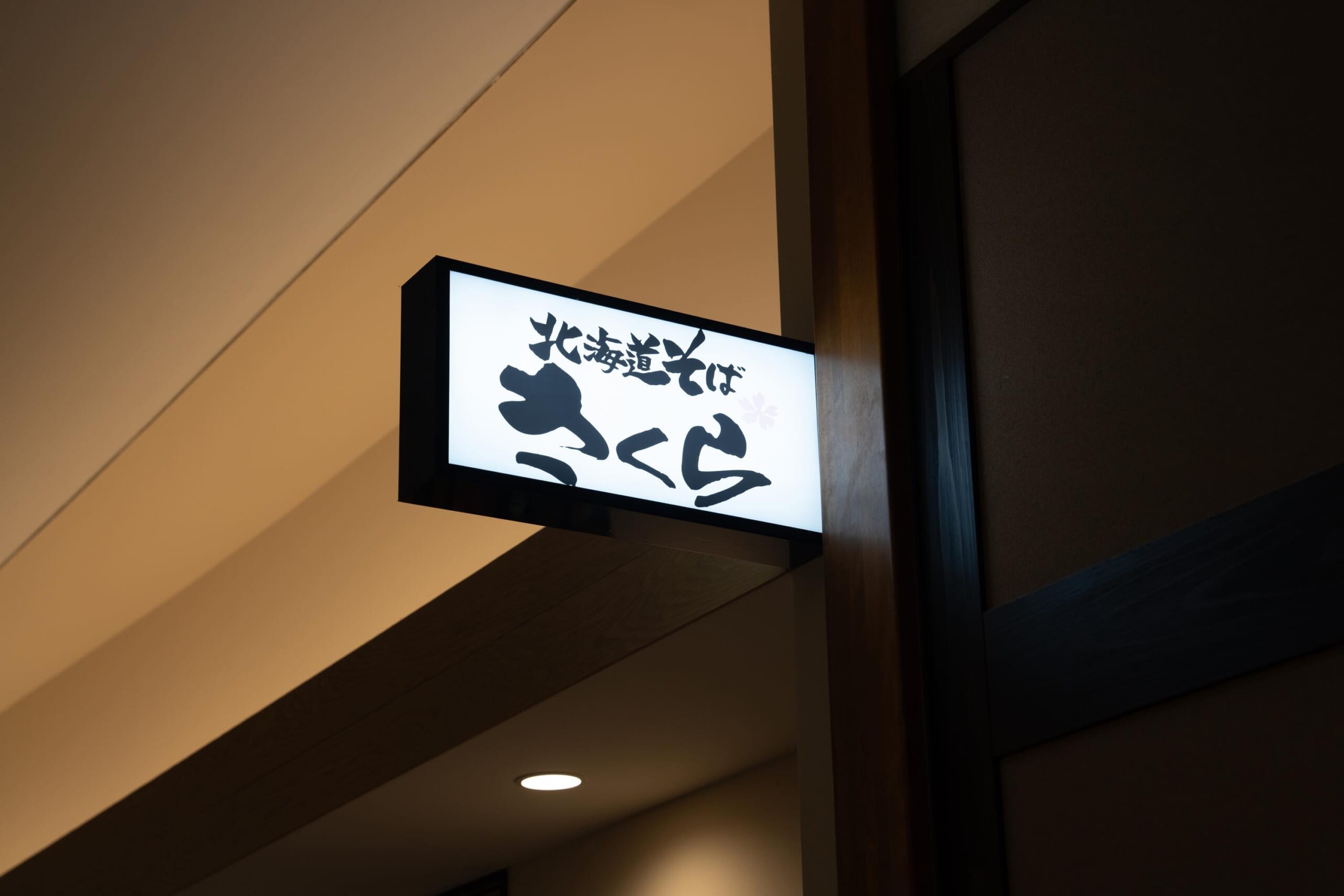
Among them, drawn in by the words “Hokkaido soba,” I decided to check out “Hokkaido Soba Sakura.”
A long time ago I had Hokkaido soba in Yotsuya and it was delicious.
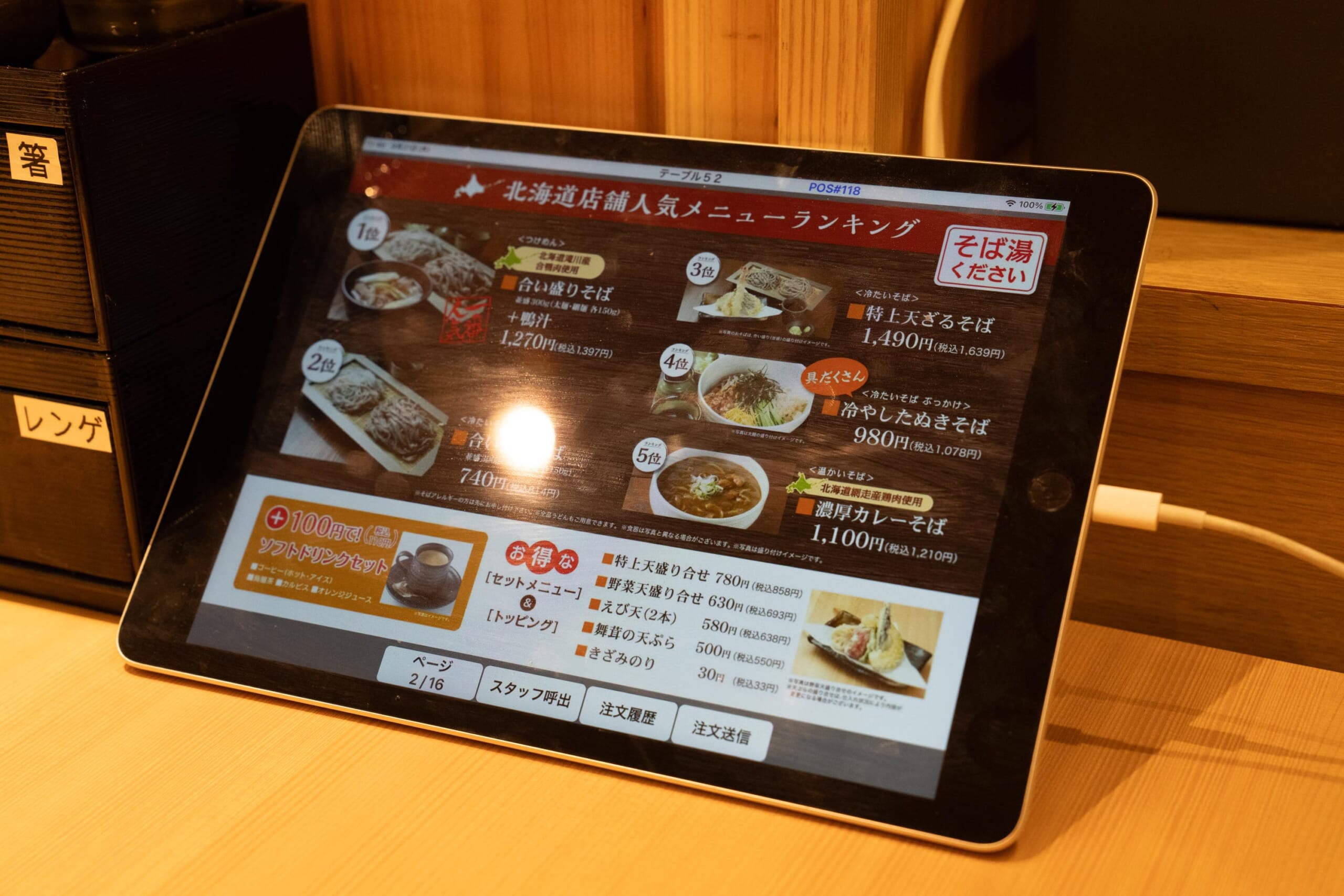
Aimori soba with kamojiru (duck broth) — 1,270 yen
Aimori soba — 740 yen
Special tenzaru soba — 1,490 yen
Chilled tanuki soba — 980 yen
Rich curry soba — 1,100 yen
You order using the tablet at your seat. It’s nice having things automated like this.
There’s even a ‘sobayu, please’ button on the screen, ha, so you can ask for it at just the right moment, which is great.
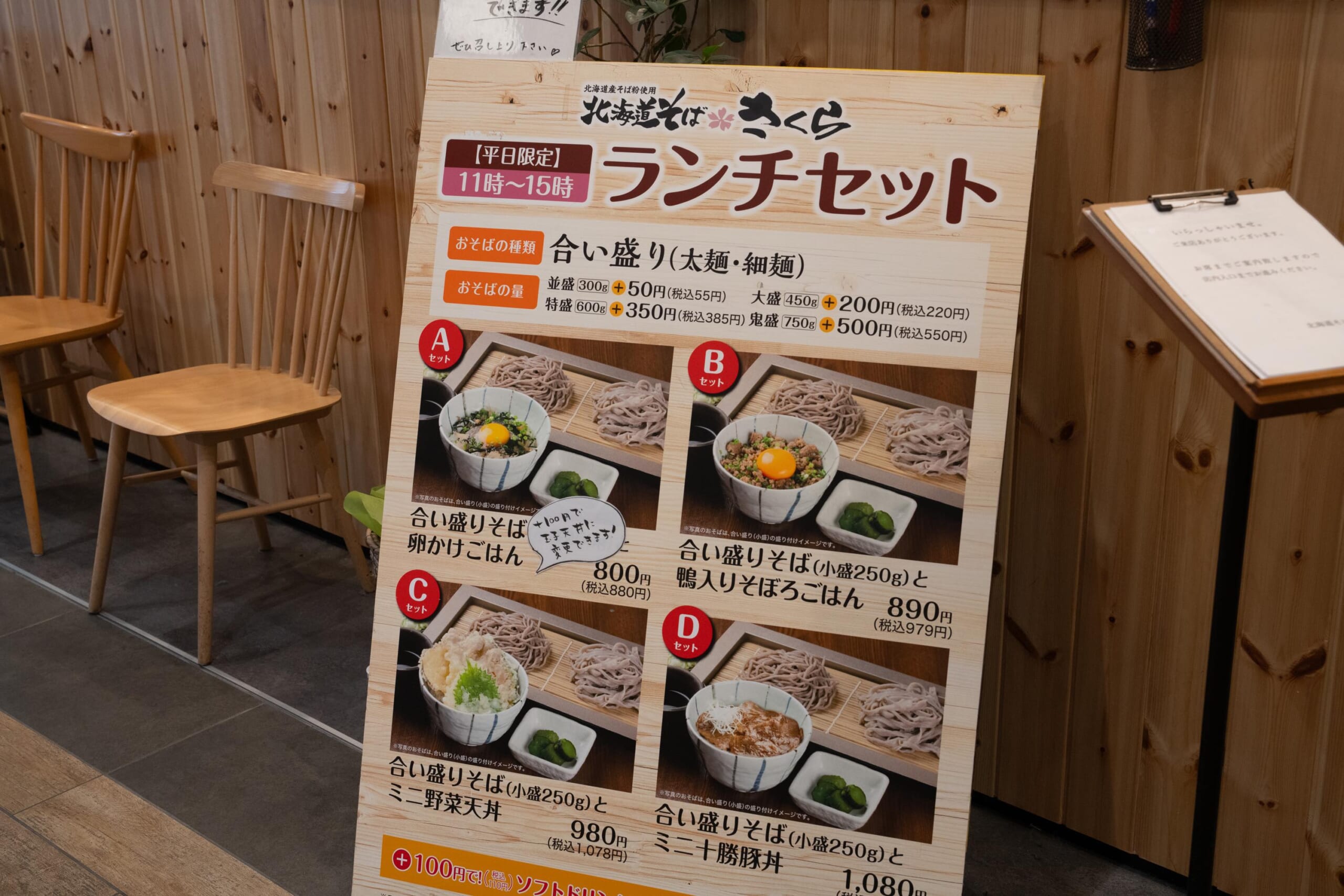
Thinking that the 250g of soba with a mini rice bowl might be a bit too heavy, I decided to go with the 300g aimori soba.
You might wonder what on earth is being combined in this ‘aimori,’ but this soba shop’s specialty, or defining trait, is ultra-thick-cut soba.
So I suppose it must mean a combined serving of ultra-thick-cut soba and regular soba.
After a short wait…


The aimori soba! Thicker than I imagined, ha.
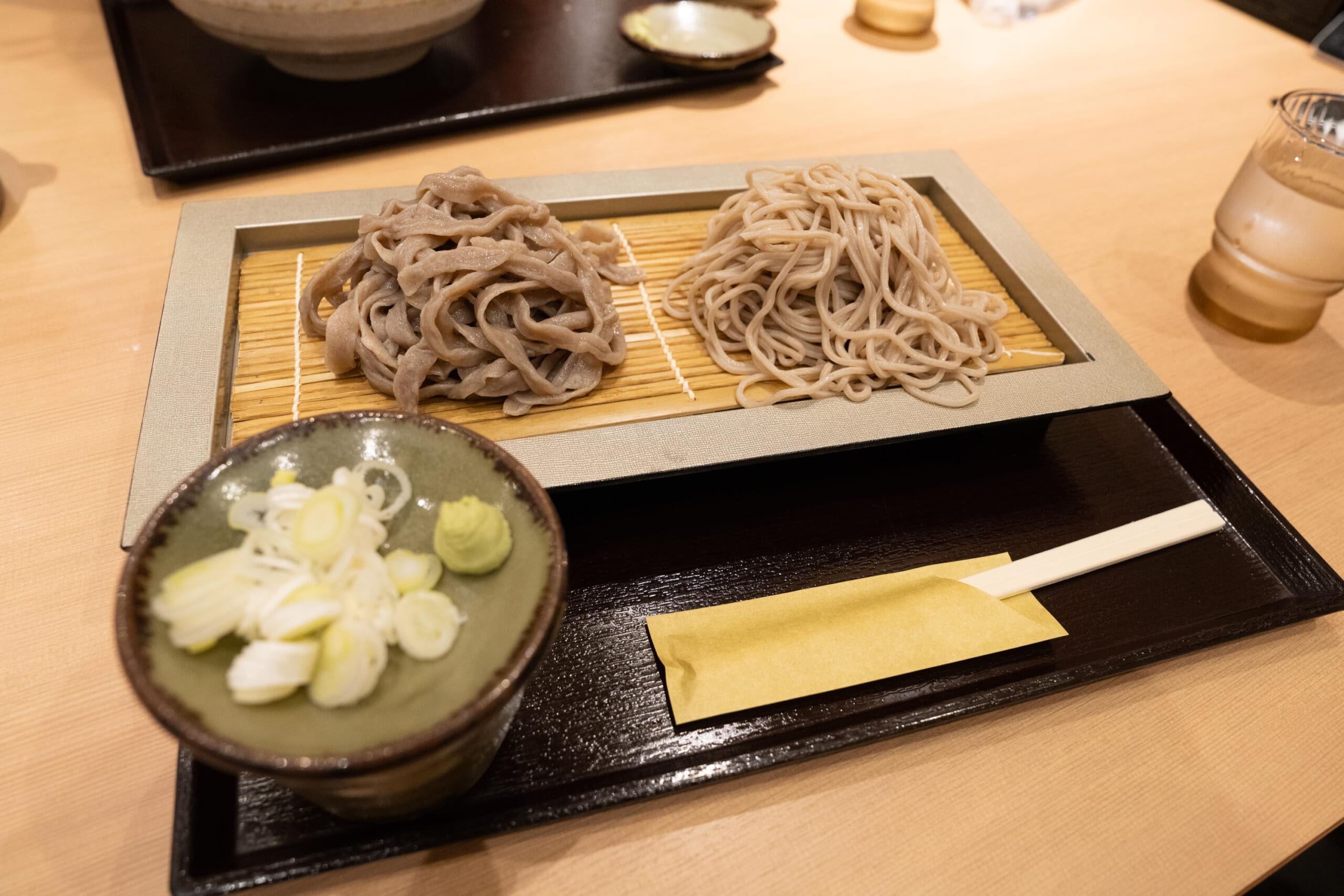
It looks almost like biang biang noodles.
Taking a bite: delicious! This rustic, rugged style of thick-cut soba is really good.
How should I put it, it felt a bit Jiro-style (after the famously heavy Tokyo ramen), but because it’s still soba after all, it’s quite clean and refreshing.
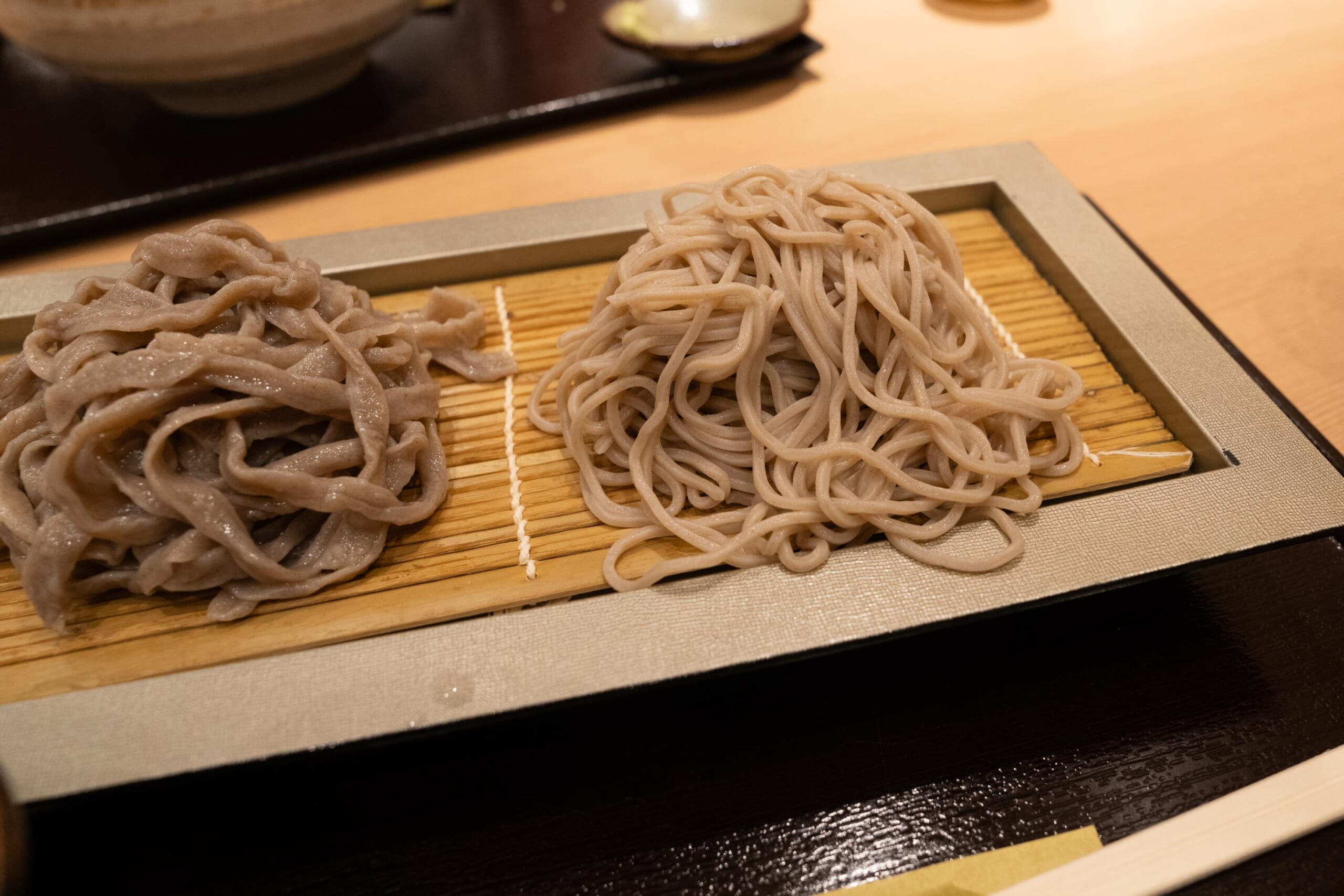
It somehow feels like it might have a high proportion of wheat flour, though I wouldn’t really know, ha.
The standard soba is your typical buckwheat noodle. Still, true to the Hokkaido soba billing, it has more flavor than run-of-the-mill noodles and is chilled thoroughly, making it quite tasty down the throat, I’d say. The dipping broth is bold and clearly defined, with strong dashi and a rich flavor. Well, to stand up to those rugged noodles, it probably needs to be this assertive or it would be overwhelmed.
They said it was 300g, but it somehow felt like even more than that; I was completely satisfied with this.
Ultra-thick-cut soba is definitely a great option. Kamojiru soba was the shop’s number one seller, but dipping it into a hot broth would probably feel like a soba version of Musashino udon — the thick, chewy udon of western Tokyo — ha. I ate while thinking that would be delicious in its own right. I don’t come to Makuhari very often, but it’s a shop I’d be happy to visit again.
Hokkaido Soba Sakura Purena makuhari ten (Soba / Kaihimmakuhari Station)
Tabelog lunch rating ★★★☆☆ 3.4
I ate here and paid for it myself. Nothing on this site is a comped meal.
One more for the road?


