


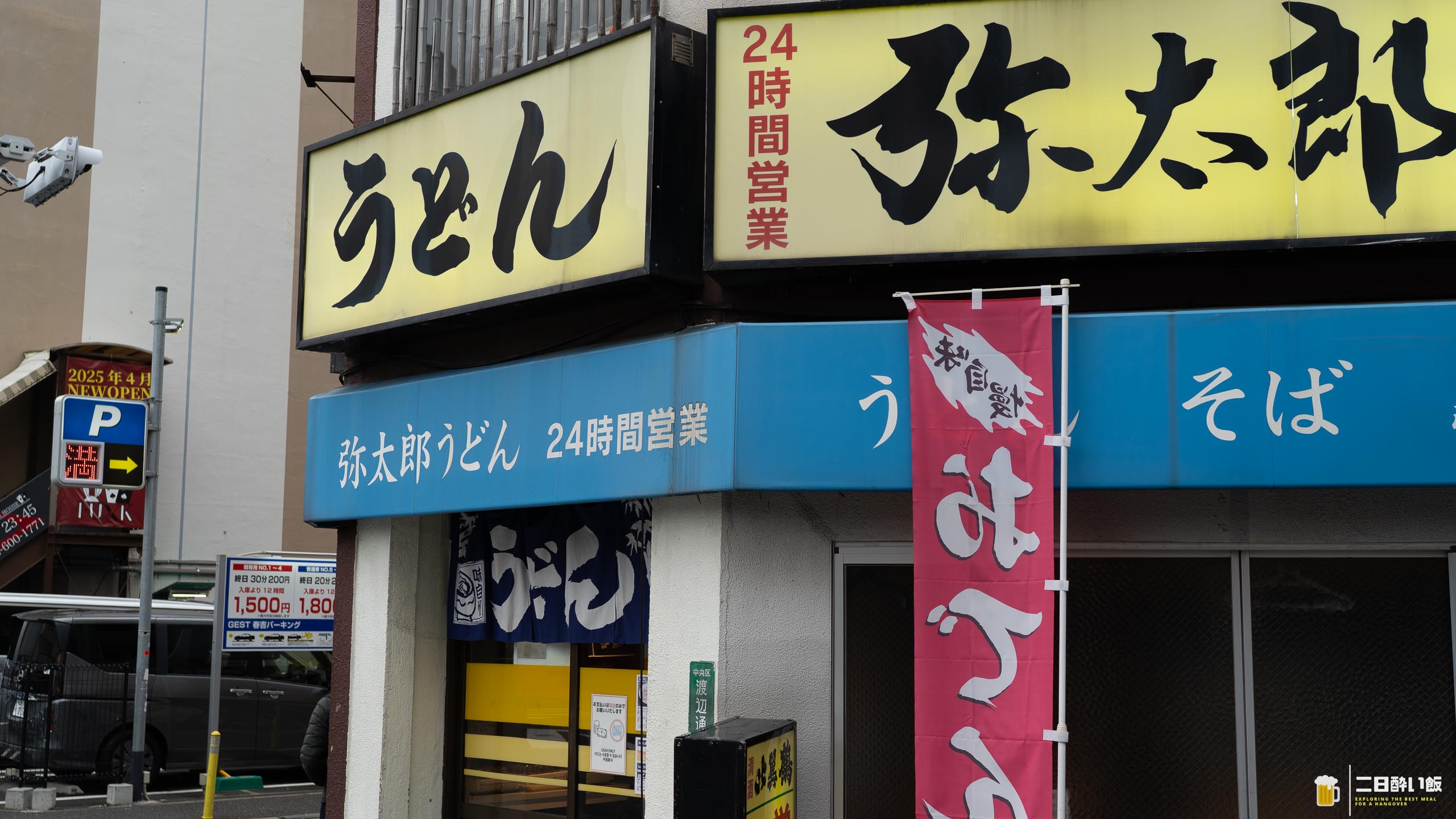
A note on the words: dashi is the stock a bowl of udon is built on, here made with kombu seaweed and iriko, which are small dried sardines. Ebiten is shrimp tempura, gobo-ten is battered and fried burdock root, maruten is a round cake of fried fish paste, and kitsune is the sweet fried tofu topping. Zosui, mentioned in passing, is rice porridge simmered in leftover broth. Hakata is the old name for the eastern half of Fukuoka and is used here interchangeably with the city. Prices are as of this writing (August 2026).
Table of Contents hide
Yataro Udon on Tabelog (English) — opening hours, payment details and the Japanese address are kept up to date there, not here.
I want to eat something good today too. This is Hangover Meshi. Fukuoka has been treating me very well. I drifted out into the morning streets thinking that I had, once again, drunk far too much the night before. There was sightseeing to get through today, so I needed to pull myself together, and right then I spotted an udon shop near the hotel called Yataro Udon. Of course — Fukuoka is famous for its udon too. And udon dashi sounded like exactly the right thing for a battered stomach. So in I went.
Ebiten, 600 yen
Gobo-ten, 600 yen
Beef, 750 yen
Maruten, 600 yen
Kitsune, 600 yen
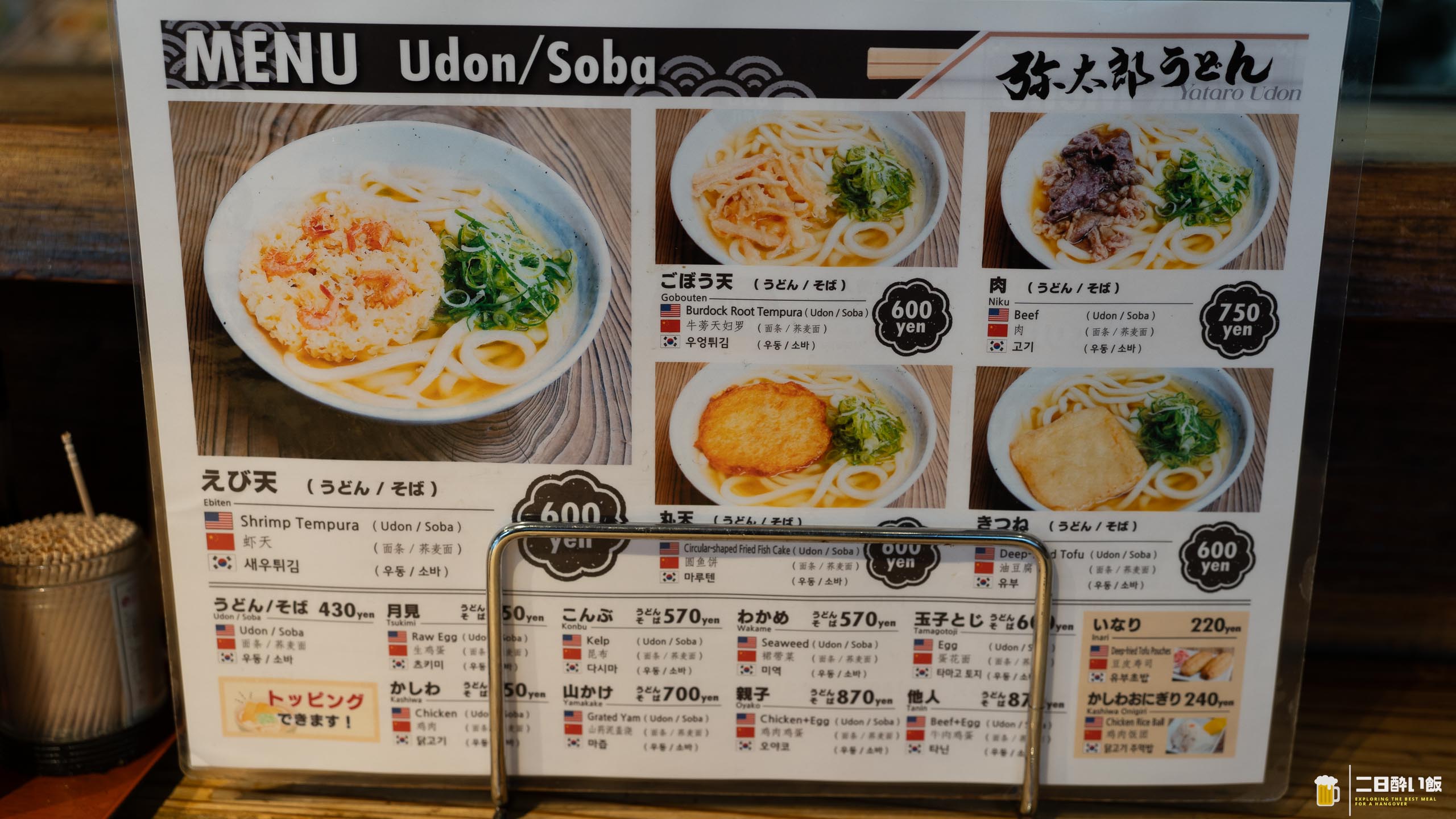
Udon it is. I went back and forth with the gobo-ten right to the end, but for a weak morning stomach, shrimp tempura gone soft in the broth felt like the answer, so ebiten it was.
Ordered, and out it comes without any fuss.
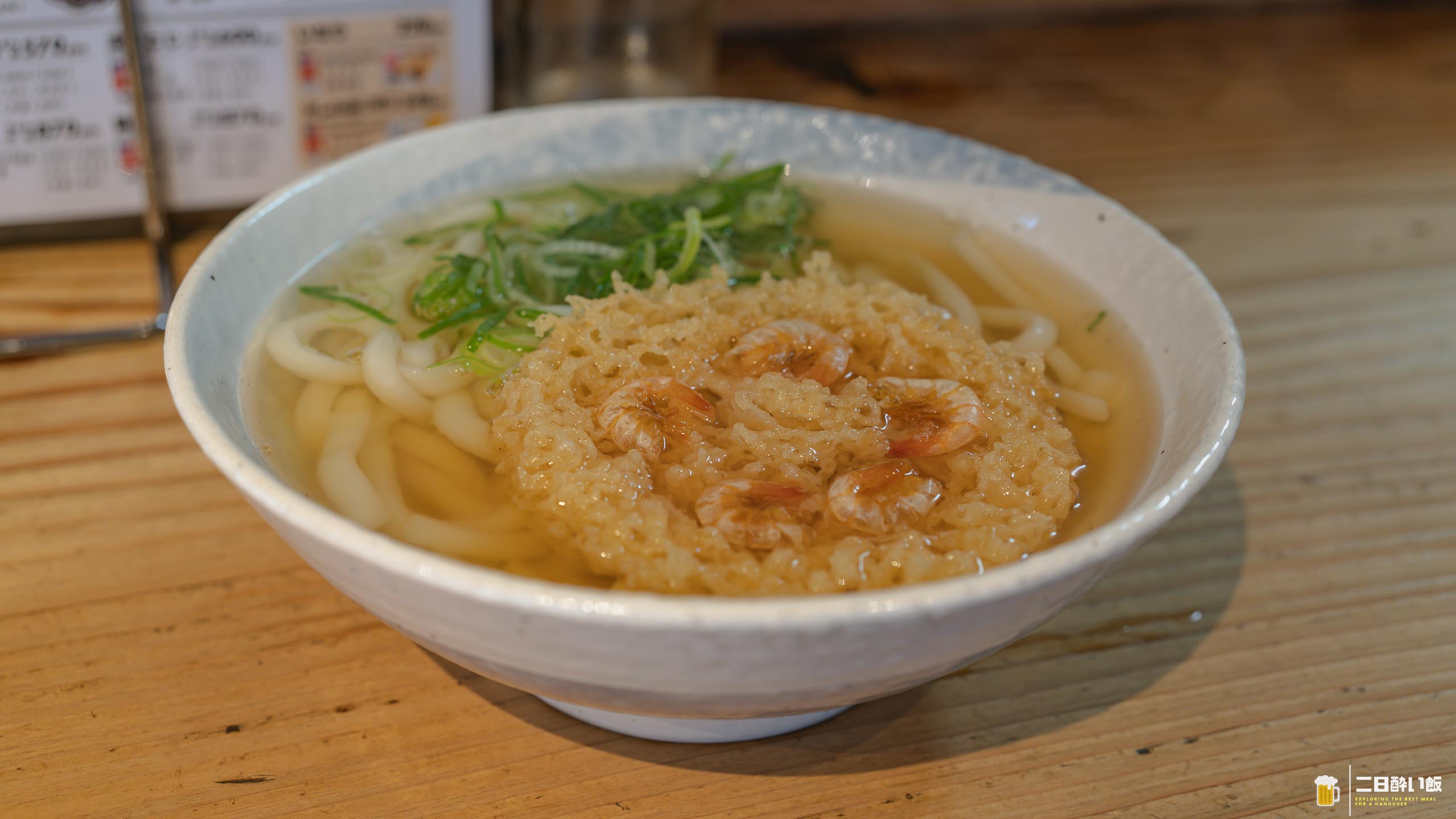
Oh, that is the stuff.
The smell of the dashi is the first good thing. The moment the bowl is set in front of you, it rises up, gentle. The clear broth is Hakata to the core: kombu and iriko with light soy as the base, clean rather than heavy. One sip and your stomach seems to relax with relief. It seeps into a body that drank too much the night before. The finest medicine.
And the star, the ebiten. A large shrimp in a light, crisp batter, with a fine contrast between the parts that have drunk the dashi and gone soft and the parts still crunching. The toasted batter and the savor of the broth come together, and every bite releases a little burst of happiness. The shrimp itself has real spring to it and a clear aroma. It holds its own even after soaking up the dashi, which is what you want.
Hakata udon means, above all, the noodles. These are the soft Hakata type — not chewy so much as yielding, gentle in the mouth. A different genre entirely from the firm udon of Kanto. They merge with the broth and dissolve into you like zosui. Stir in a little grated ginger and the finish tightens up sharply, which is another pleasure. That gentle sort of delicious is hard to beat.
I had been feeling pretty rough, but by the time I finished I was in considerably better shape.
Morning udon in Hakata is made better by everything that came before it. Ramen, chicken skin, sesame mackerel, all of it eaten through, and then morning udon. That is happiness. I am on holiday so a certain amount of excess is allowed, but if I lived in Hakata I suspect no number of bodies would be enough. That is how much good food, and food that goes with drink, this city has.
Yataro Udon (Udon / Tenjin Minami Station, Nishitetsu Fukuoka (Tenjin) Station, Tenjin Station)
Tabelog lunch rating ★★★☆☆ 3.6
I ate here and paid for it myself. Nothing on this site is a comped meal.
One more for the road?


