


A note on the words: chashu is the braised or slow-cooked pork laid over the noodles, and menma is fermented bamboo shoot. Tsukemen is the dipping style, where noodles and broth arrive in separate bowls.
Table of Contents hide
Sansanto on Tabelog (English) — opening hours, payment details and the Japanese address are kept up to date there, not here.
Noodle people, thank you for waiting. It is Hangover Meshi time.
So, I somehow wanted ramen, and went to Higashi-Jujo. From around Roppongi it is a real trek. But the ramen worth going that far for is Sansanto. It is open only from 18:00 to 20:30 — two and a half hours — which makes it a rare and difficult shop to eat at, so I steeled myself and went.
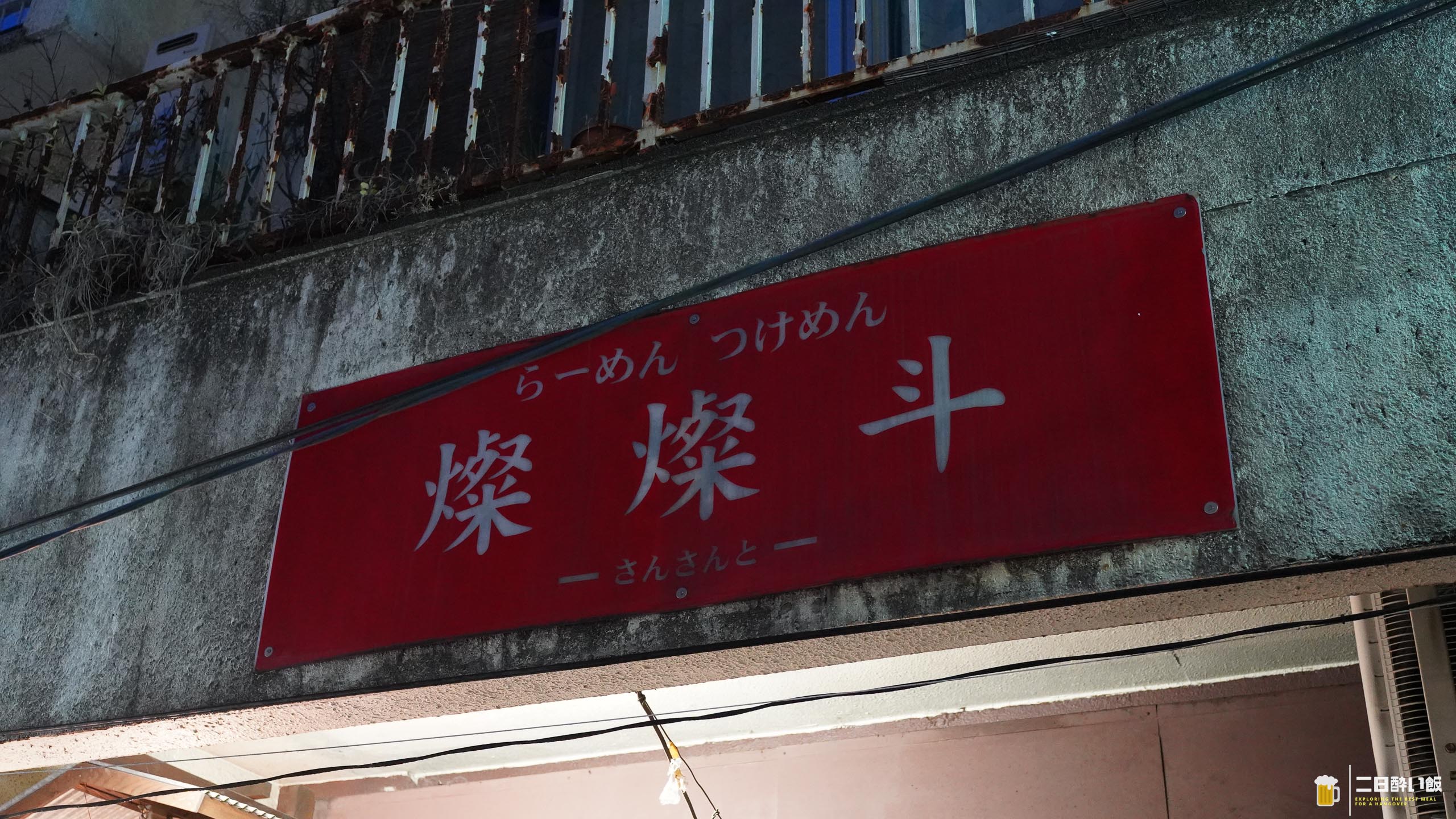
I arrived at about 19:00, I think. Full inside, with one person waiting.
Right, what shall I have? The first visit is ramen rather than tsukemen, that much is certain. The chashu is supposed to be good, so let us put on the extra meat.
I was going to drink as well, so I asked for fewer noodles.
Sit down and they bring you a beer. This moment is the best.

And if you are having a beer, they give you something to go with it.
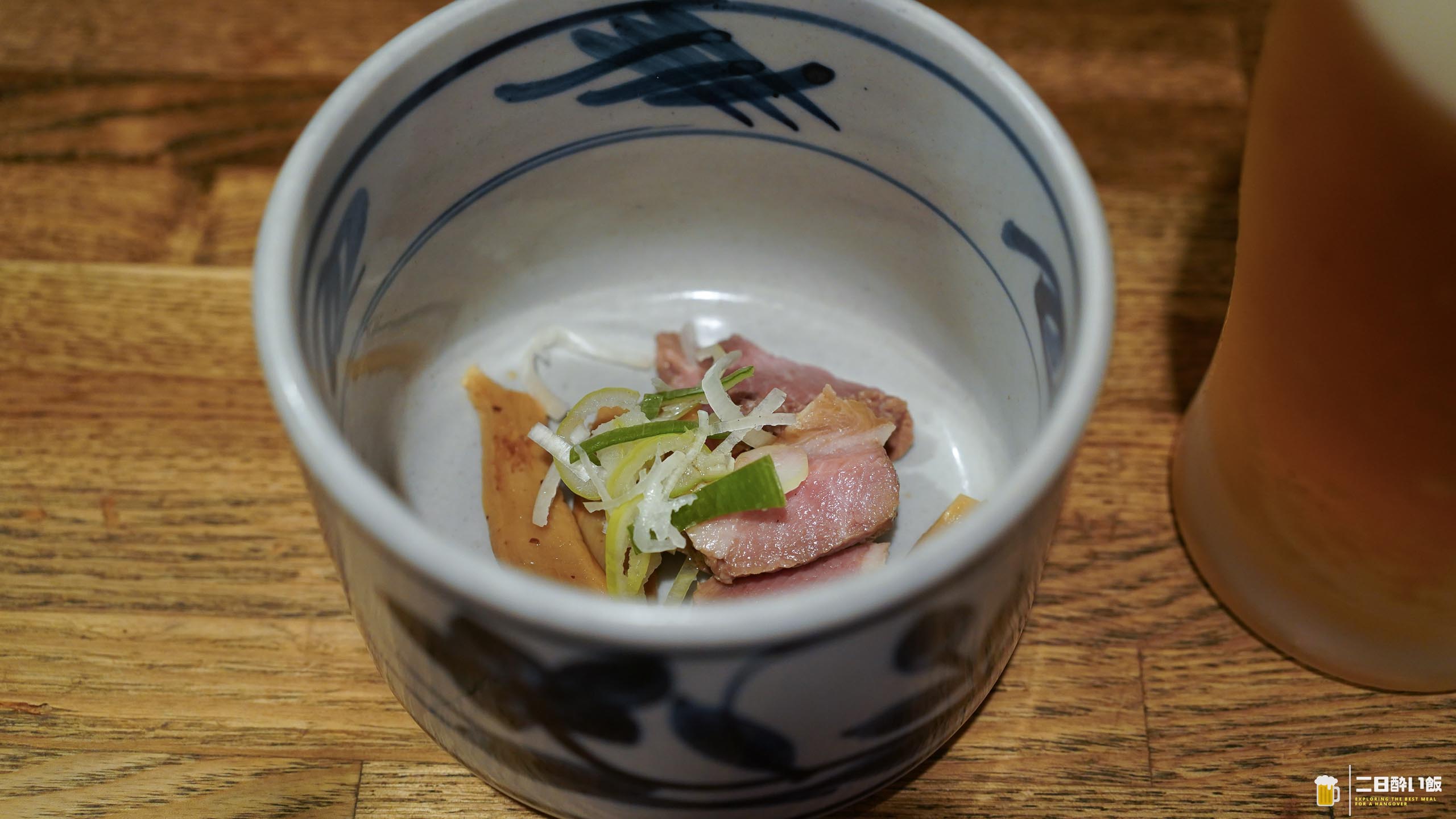
Menma bamboo shoots, spring onion and the end pieces of the chashu. It is this small kindness that pleases. Ah, that is good. With a beer and a snack, even the waiting becomes a happy time.
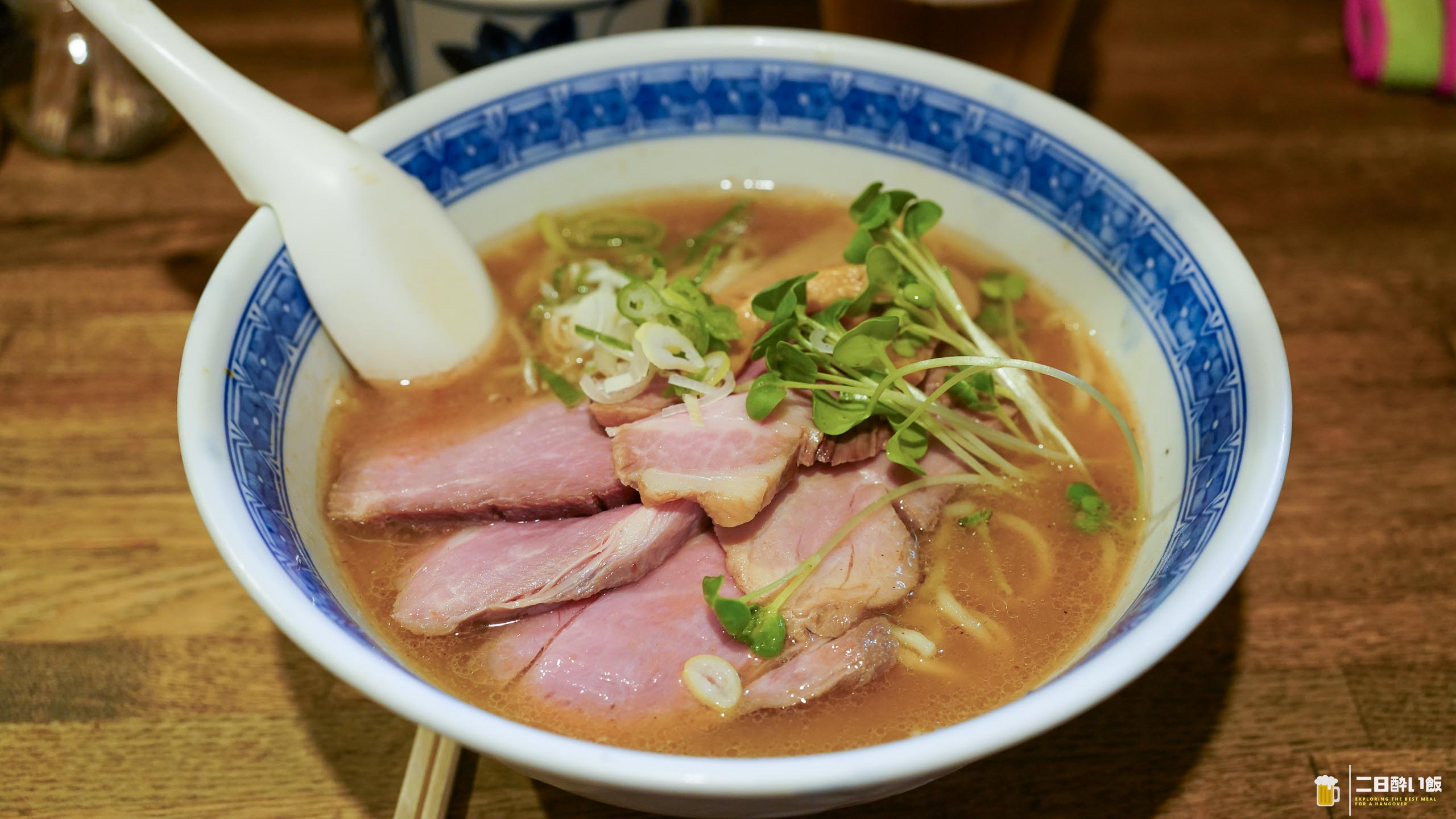
And then the ramen arrives.
That looks good.
A blue and white Chinese-pattern bowl, a clear amber broth, and in the centre slices of chashu cooked to a rose colour, laid overlapping in a fan. I had already tasted the meat as a snack, so I knew it would be good. And that beautiful pink cross-section covering half the bowl is enough on its own to make you hungry.
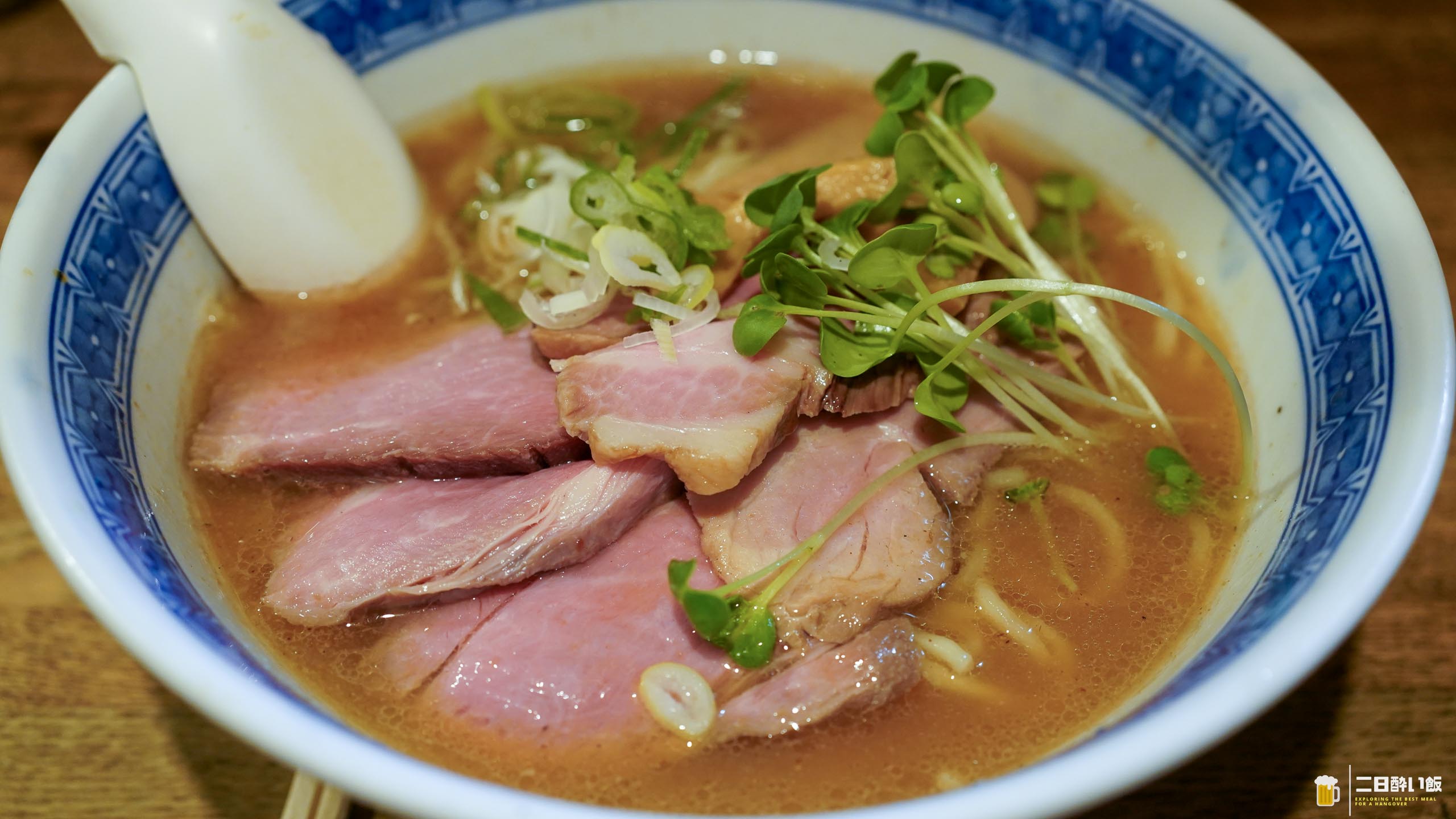
A spoonful of the broth. Against the clarity of its look, what comes first is a seafood fragrance suggesting dried sardine, and a beat later the savour of pork and chicken bone follows on quietly. The soy is restrained: the flavour is built on the savour of the dashi itself. Clear yet dense, and the finish is clean. The sheen of fat on the surface tempts you too.
The star is the piled-up chashu. The lean meat, cooked as though at a low temperature, is moist, and falls apart softly under the tooth as the savour of the meat itself seeps out. It is lean and refined, so even doubled it never turns heavy, and you can eat slice after slice without stinting. Sink one into the broth to warm it and it turns soft in another way again.
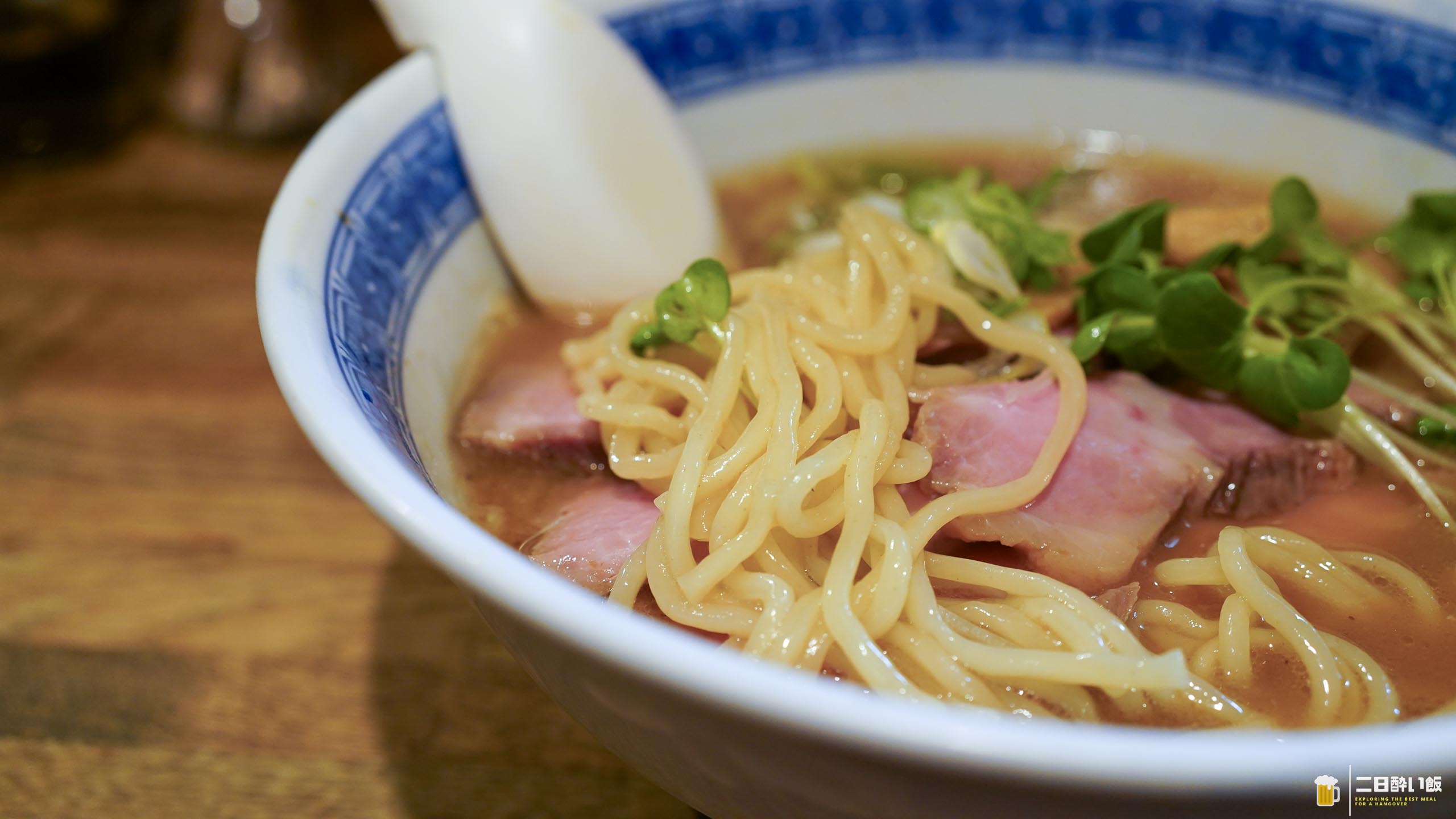
The noodles are medium-thick, chewy and made in the shop. Each loosely wavy strand lifts the broth well, smooth going down with a pleasant spring. The crunch of chopped spring onion at the finish, and the fresh green of the daikon sprouts, give a rest from the strong broth and the meat.
Yes. This is good ramen. Thoroughly satisfied.
Coming all the way to Higashi-Jujo was worth it. It is a rare shop with only two and a half hours of service, but it seems you can eat if you queue, even on a weekday at around seven. A good shop. If it were near my house I would certainly look in on the way home and drop in whenever there was room. I shall steel myself again some time and go for the tsukemen.
May you meet something good to eat today too.
Sansanto (ramen / Higashi-Jujo Station, Jujo Station, Oji-kamiya Station)
Tabelog evening rating ★★★☆☆ 3.8
I ate here and paid for it myself. Nothing on this site is a comped meal.
One more for the road?


