


A note on the words: oden is the pot of things simmered slowly in dashi; soki is Okinawan stewed pork rib; chanpuru is the island stir-fry, usually of tofu and vegetables; sata andagi is the Okinawan doughnut; awamori is the local distilled spirit; Orion is the Okinawan beer; katsuobushi is dried bonito and kombu is kelp, the two pillars of Japanese stock. Prices are as of this writing (August 2026).
Table of Contents hide
Ashibina on Tabelog (English) — opening hours, payment details and the Japanese address are kept up to date there, not here.
I want to eat something good today as well. This is Hangover Meshi.
A short drink at an Okinawan restaurant in front of the station on the Sakura Stage side of Shibuya.
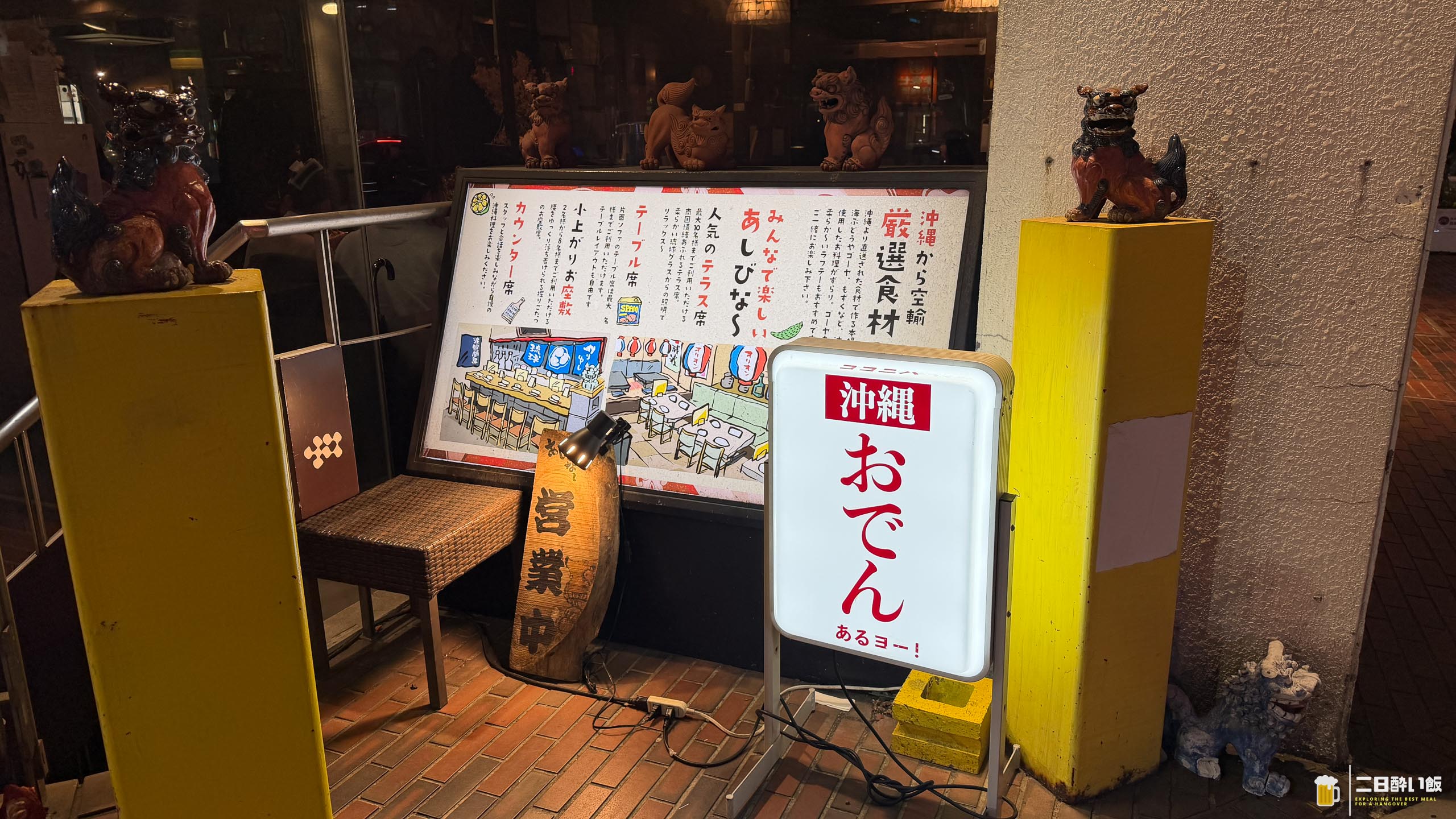
What decided it was this sign: “WE HAVE OKINAWAN ODEN HERE!”
What is Okinawan oden like? One is curious, surely. So down we went to the basement where the place is.
We had not much time, so one or two dishes a la carte.
Inside, at the back and centre, there is a sort of courtyard space. An amusing structure.
First, an Orion beer!
(Second bar of the evening, so I forgot to photograph it.)
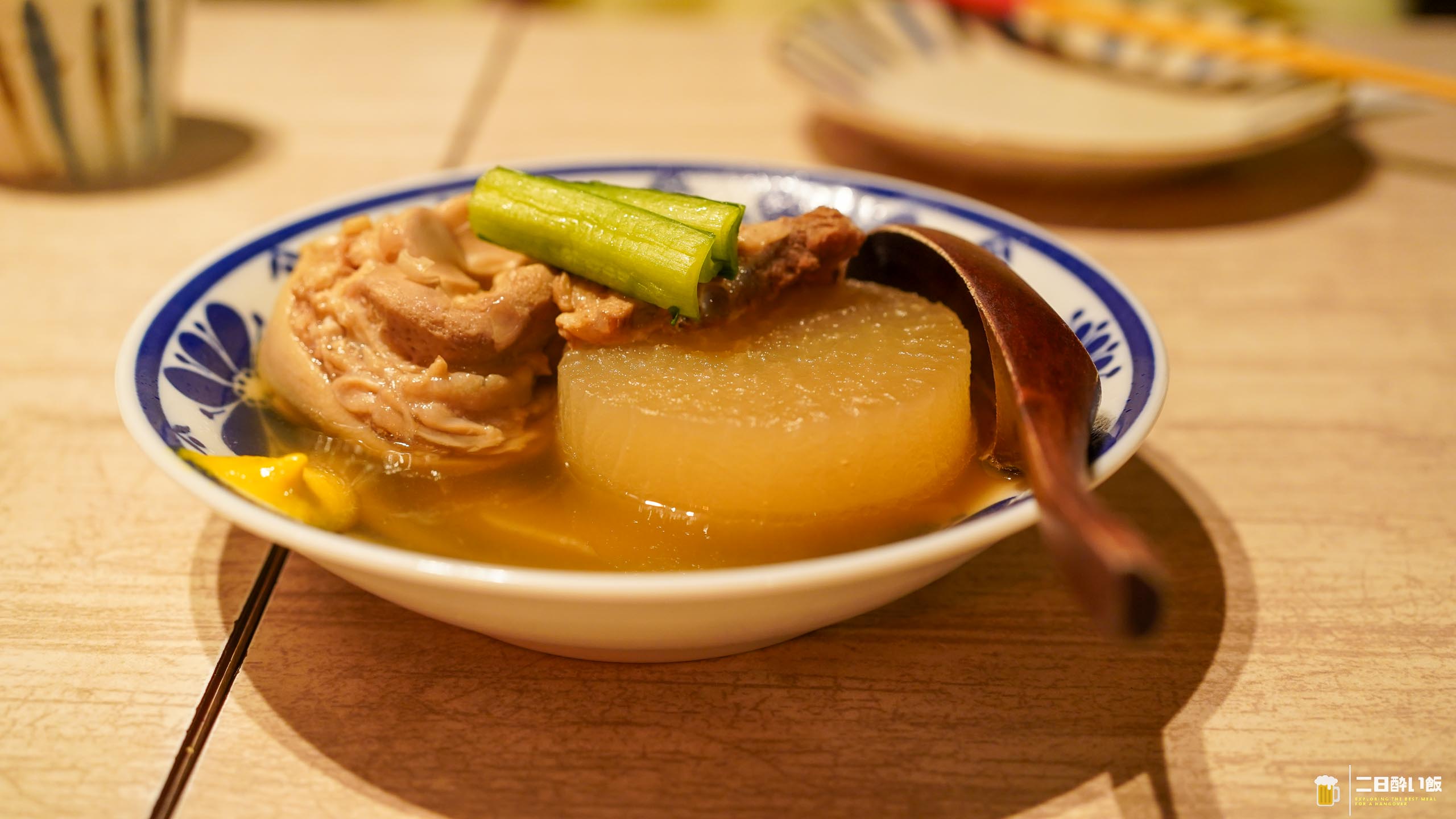
What we ordered first was, of course, the Okinawan oden. I took soki and daikon.
Okinawan oden is indeed a little different. The dashi is built on katsuobushi and kombu, and the seasoning is salt alone — that simple. But savour dissolves out of the soki and the kombu, so it finishes deep and rich. The broth is extremely good.
A hearty sort of oden, perhaps.
Soki is pork rib on the bone — spare rib, in other words. Simmered slowly until even the cartilage is meltingly soft, so that it falls apart at a chopstick. And it is packed with the savour of the pork, so that a simple pairing with salt dashi turns out deep. Highball, highball!
The daikon has drunk in that soki broth thoroughly, coloured right through the cut face. Put it in your mouth and the dashi floods out: exactly the happy mouthful you imagined. Daikon really is good.
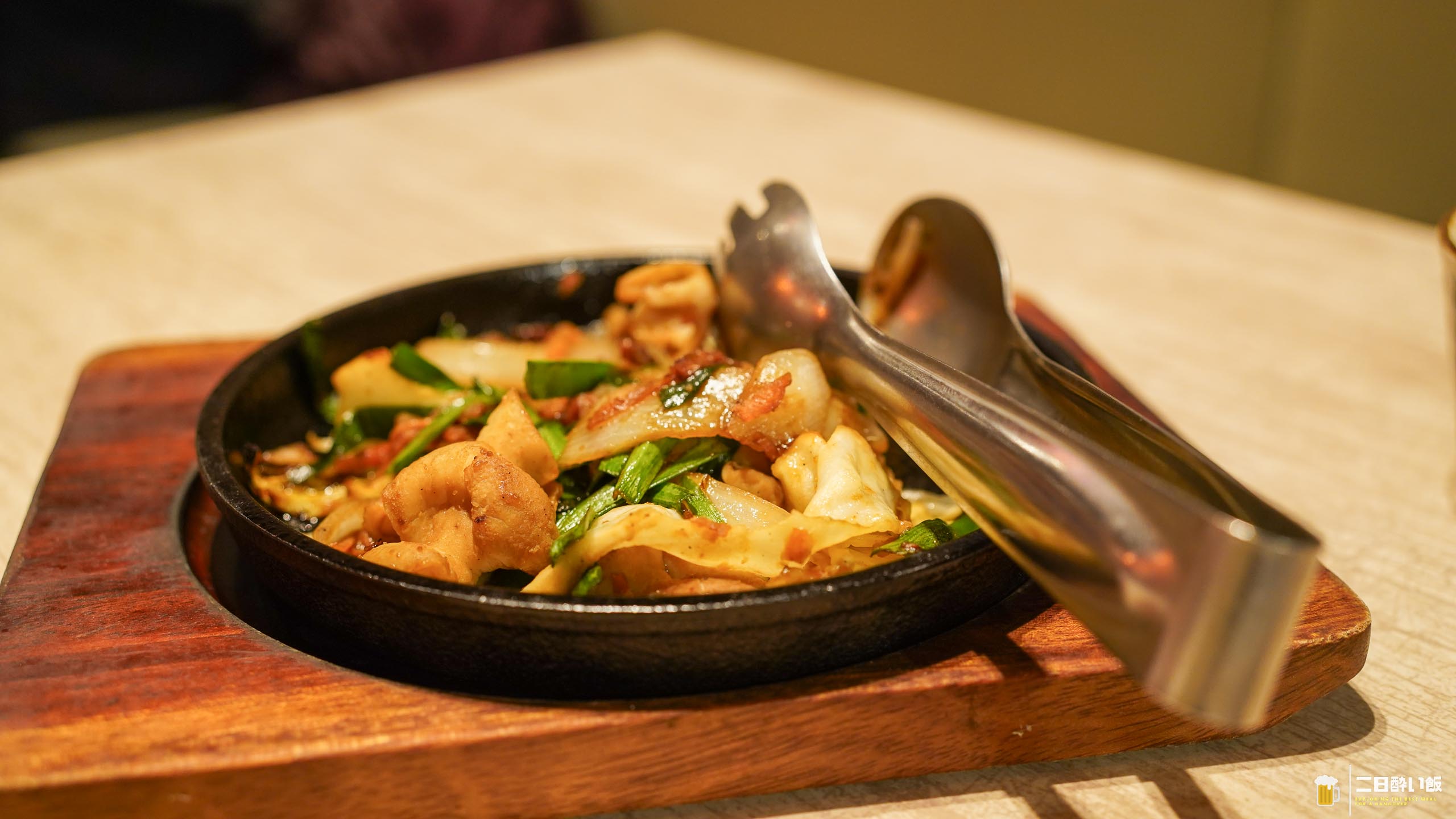
This is the plate I ordered the moment I saw the name.
Now, chanpuru means a stir-fry — and my impression, unfounded, was of goya and tofu and vegetables. But this chanpuru has offal in it. And it is fried with spicy miso from Kumejima, which is very Okinawan, and miso plus offal is obviously going to be good.
Eating it, what comes first is the depth and savour of the spicy miso. Kumejima miso seems to have sweetness and depth inside its saltiness, and it wraps the fat of the offal neatly. The offal is properly cooked, springy, and the fat floods out as you chew. It goes so well with the spicy miso that the highballs would not stop. (It would suit awamori too, I imagine.)
Crisp vegetables, juicy offal and the punch of spicy miso, all on one plate: the exact opposite of the oden just before it. This is extremely good!
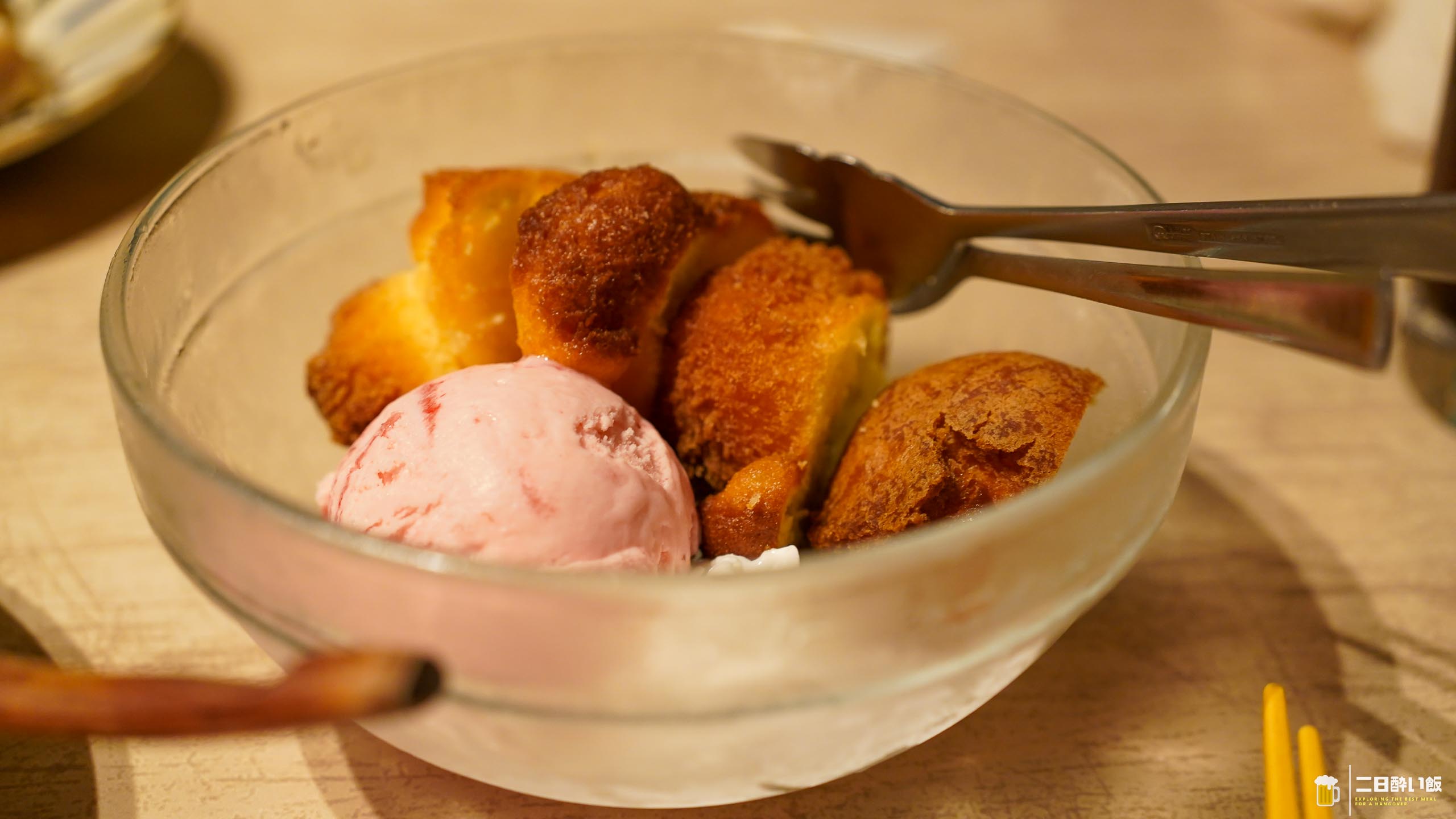
A dessert, and it looks very heavy indeed.
Sata andagi served with ice cream. The best moment is when the ice cream melts a little and coats the sata andagi.
So: we only dropped in for an hour or so, but with snacks of about this weight we drank a fair amount. Everything we ate was good, and the quality made me want to try more of the menu, so next time I want somewhere near the station for a quick drink, I shall remember this place. Recommended.
Okinawan cooking: Ashibina (Okinawan / Shibuya Station, Shinsen Station, Daikanyama Station)
Tabelog dinner rating ★★★☆☆ 3.3
I ate here and paid for it myself. Nothing on this site is a comped meal.
One more for the road?


