


A note on the words: tsukemen is ramen with the noodles and a thick dipping broth served separately; Tsujita made its name with tsukemen before opening Tsujita Miso no Sho for miso ramen. Bari Miso is the extra-rich line, Daruma is the house spicy miso paste you dissolve bit by bit, Kara-Bari Miso is Bari Miso with Daruma, and Tokusei means all the toppings. Chashu is braised pork, menma is seasoned bamboo shoots, ajitama is a seasoned soft-boiled egg, aonori is green laver, and sansho is a numbing Japanese pepper. A Nama Jokki can is Asahi’s draft-style canned beer.
Tsujita Miso no Sho on Tabelog (English) — opening hours, payment details and the Japanese address are kept up to date there, not here.
Miso ramen lovers, thank you for waiting! It’s Hangover Meal time!
I was in the mood for miso ramen today, searched for a miso ramen shop and found this one.
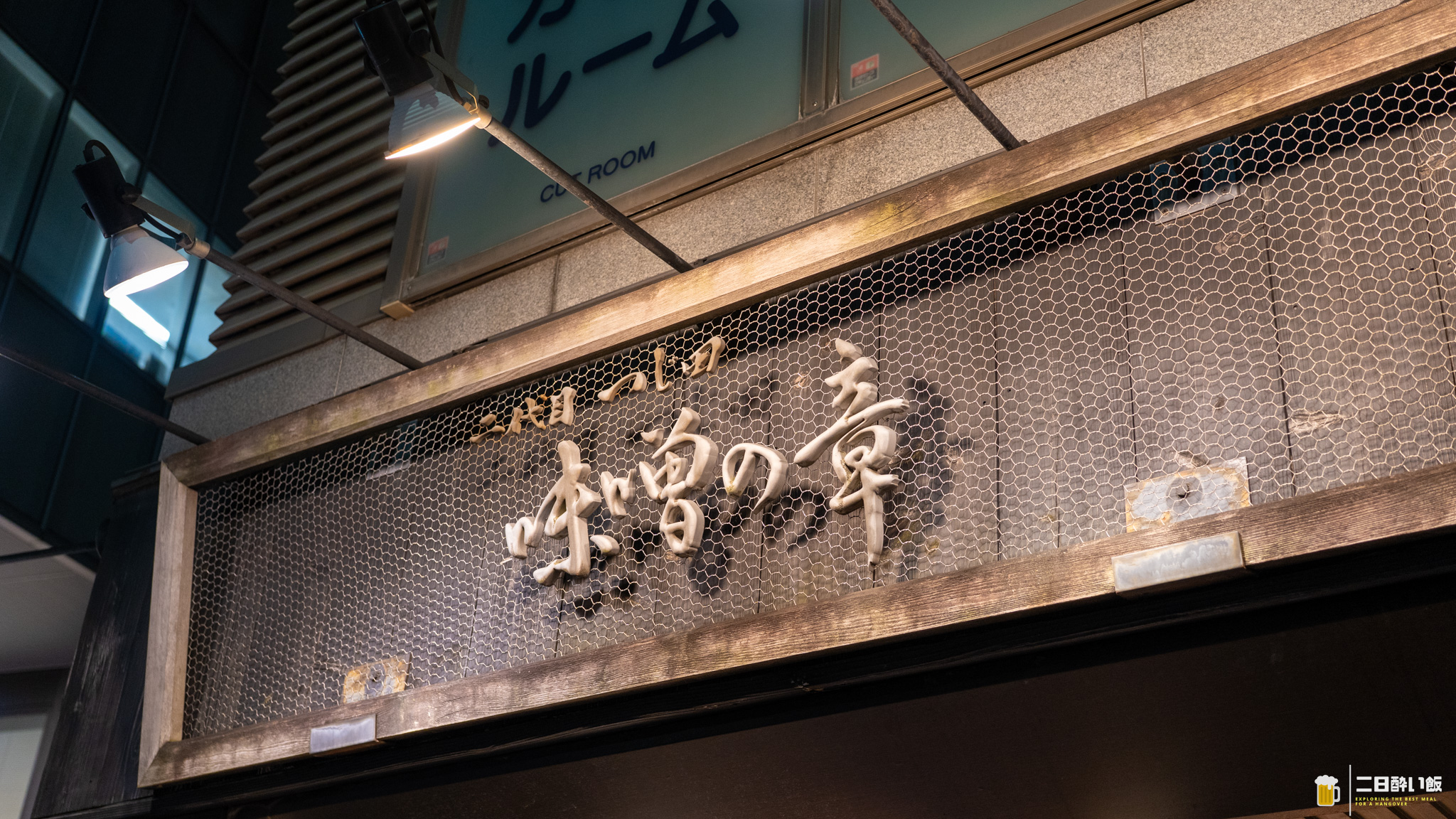
Tsujita, famous for tsukemen (dipping noodles), launched Tsujita Miso no Sho in 2009 to serve only miso ramen. This Ogawamachi shop is reportedly the very first one, just a short walk from Awajicho and Ogawamachi stations. I had no idea it had been around that long — I did not know at all.
You order at a ticket machine, and the menu is built around two lines: a gentle Miso and a rich Bari Miso, each also available with the spicy miso paste called Daruma. Lined up on the counter are aonori (green laver), sansho pepper, grated garlic and ichimi chili powder. Explanations of each ramen are posted on the wall, and reading them while waiting is fun too.
After hesitating a little at the ticket machine, I ordered the Kara-Bari Miso (spicy Bari Miso)!
Plus a beer. At this shop it is canned Asahi, along with a snack set (tsumami set) for 200 yen.
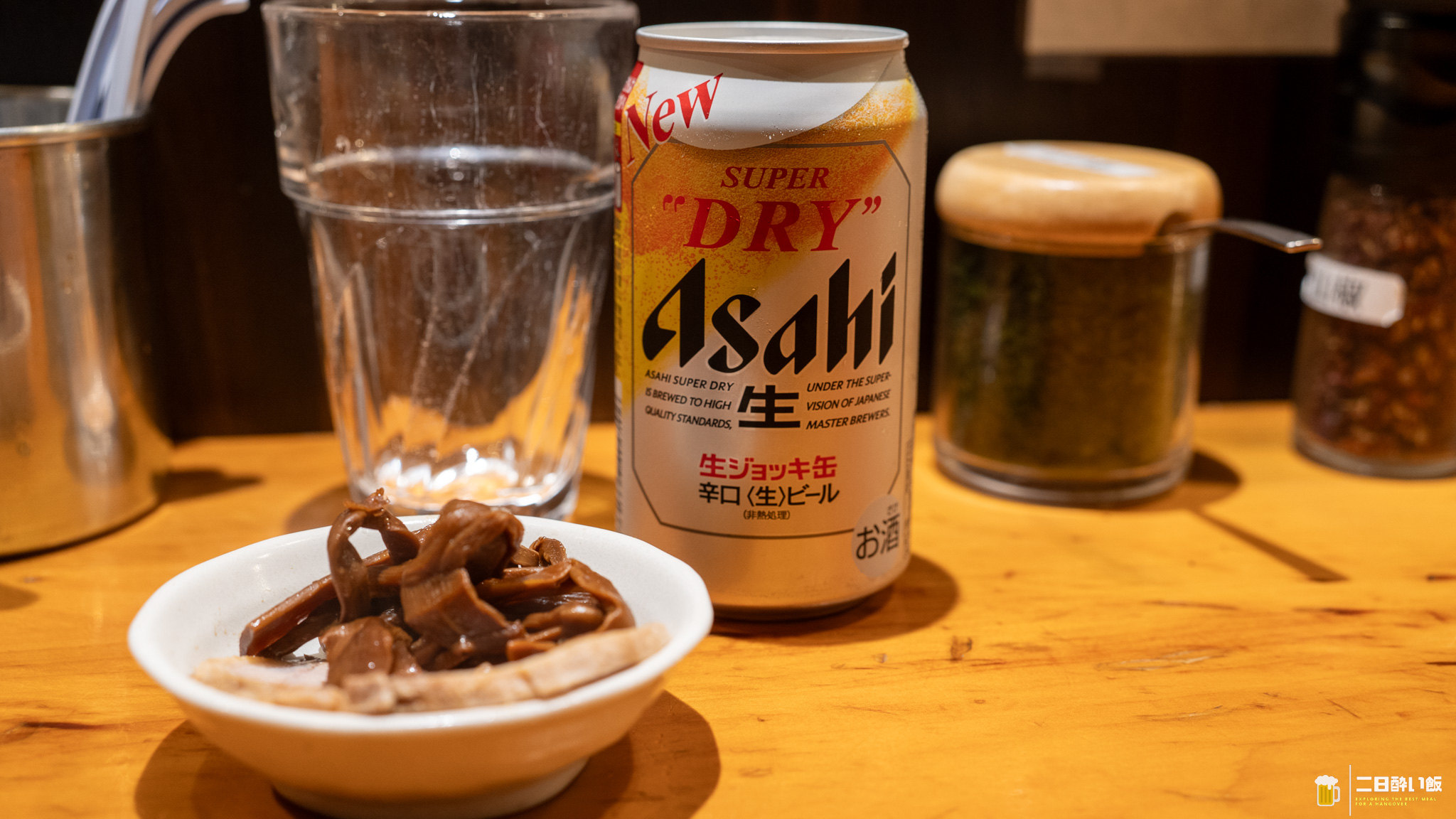
I had brought a glass over, but when I looked closely, it was the Nama Jokki (draft-mug style) can! Rare to see (lol).
Delicious!
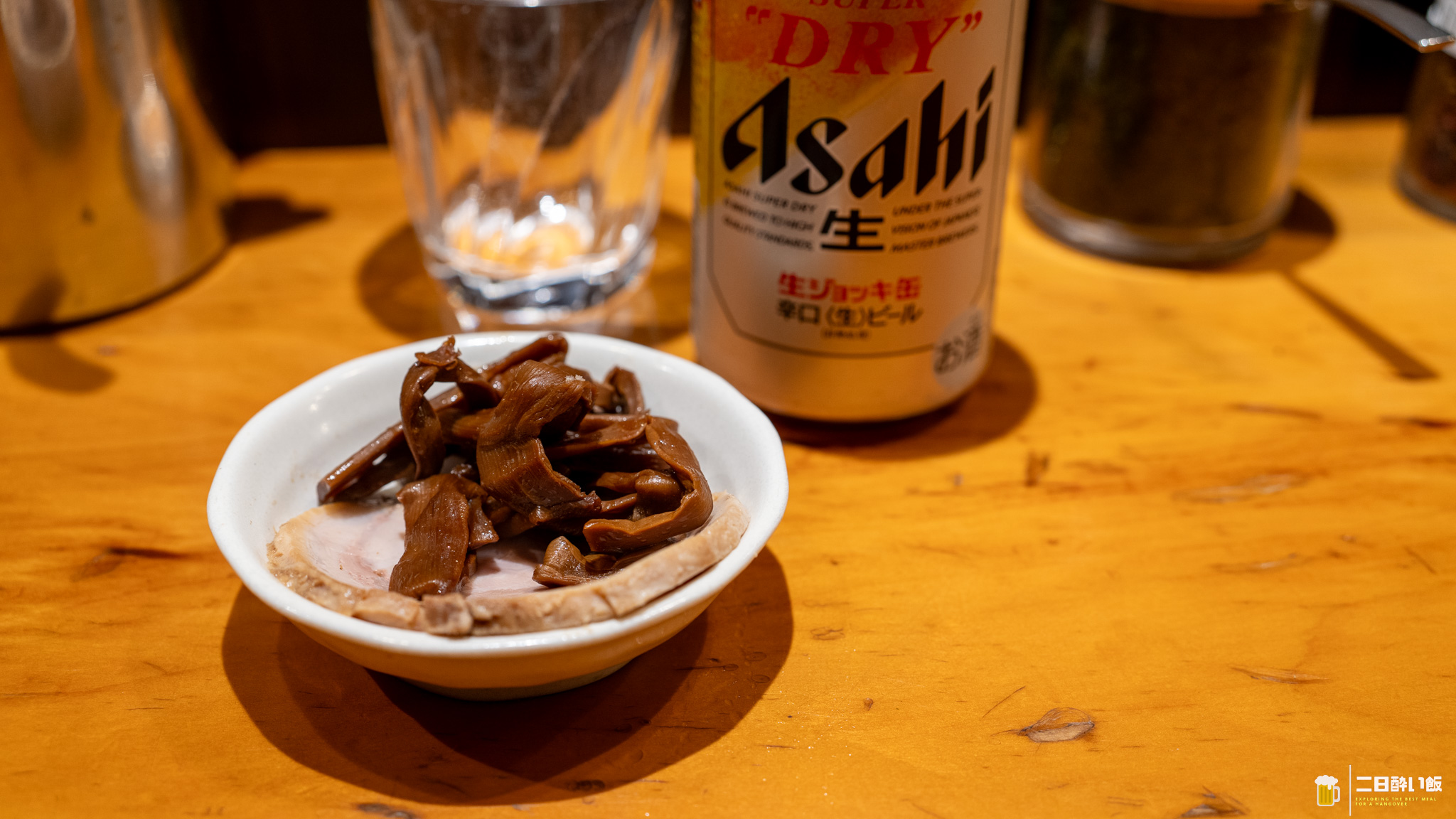
The snack set is chashu (braised pork) and menma (seasoned bamboo shoots). Just a little bit.
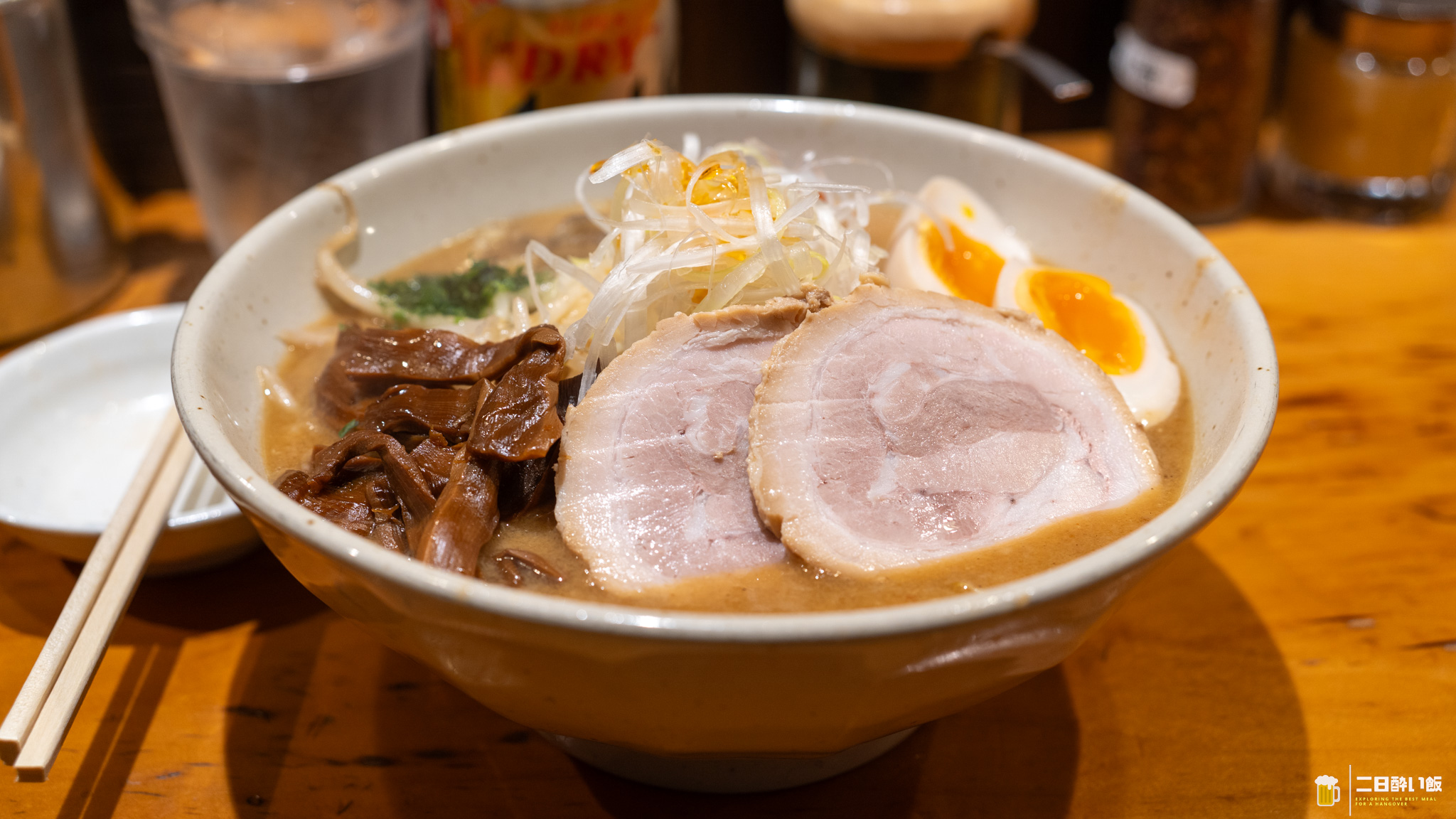
Bari Miso is made richer than regular miso ramen, and adding the spicy miso paste Daruma makes it this Kara-Bari. Tokusei (all toppings) is 1,440 yen!
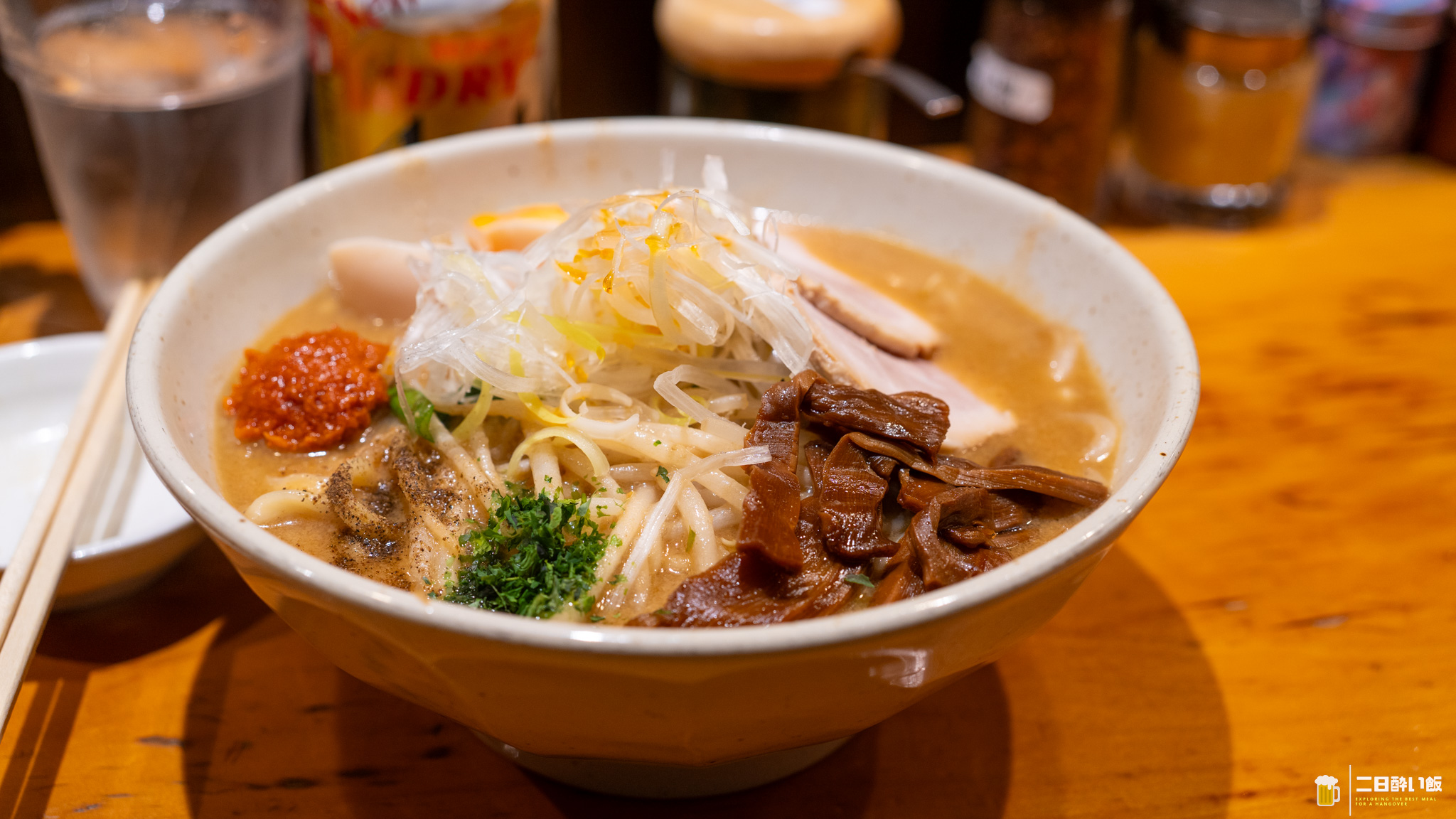
Daruma was reportedly created after being impressed by a ramen in Yamagata, and is a spicy miso paste combining chili pepper with an original blend. The house way is to dissolve it into the soup little by little and enjoy the change in flavor.
First, a sip of the soup without touching the Daruma. The savory aroma of miso passes cleanly through the nose, and although it is thick and rich, it feels mellow on the palate. The richness of sweetish miso spreads out, and half a beat later the umami of garlic and pork comes on strong. Still, it pushes with richness rather than saltiness. The soup is quite thick — what is it, rich like a tsukemen dipping broth. It reminded me of something, and then it clicked: the spicy miso ramen at Otsukaya in Ichigaya.
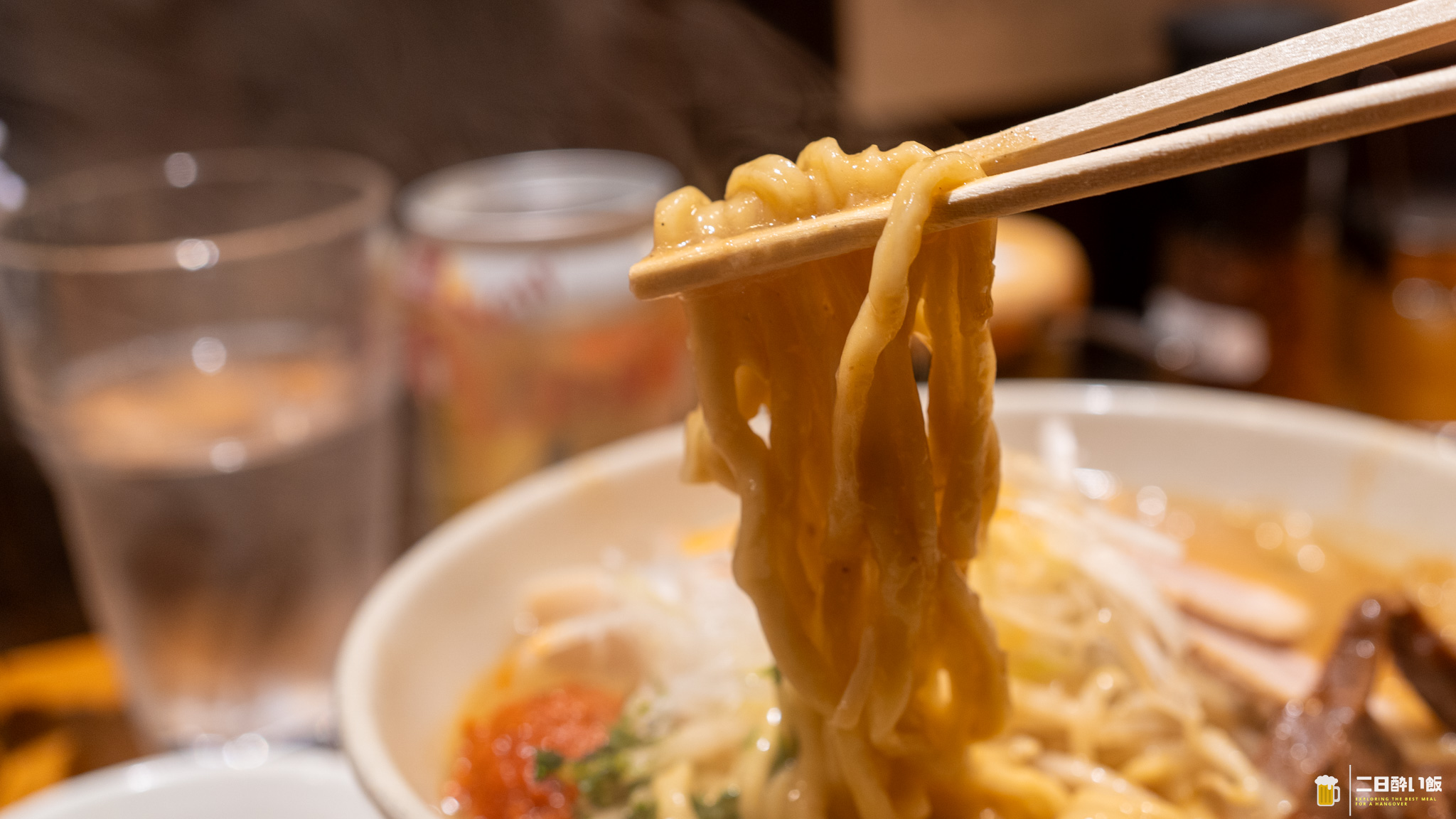
The noodles are flat, wavy chijire noodles. They are chewy, and the waves catch the soup firmly, so every slurp brings the rich miso right into your mouth. Up to here, it is a normal Bari Miso ramen.
From here, I break down the Daruma bit by bit from the edge. Where it dissolves, the aroma of chili pepper rises up, adding a sharp spicy kick on top of the sweet miso. Because the rich miso depth rounds off the edges of the heat, it is not a painful spiciness at all, but the kind that slowly warms your body. Being able to adjust the heat to your liking by how much you dissolve works really nicely.
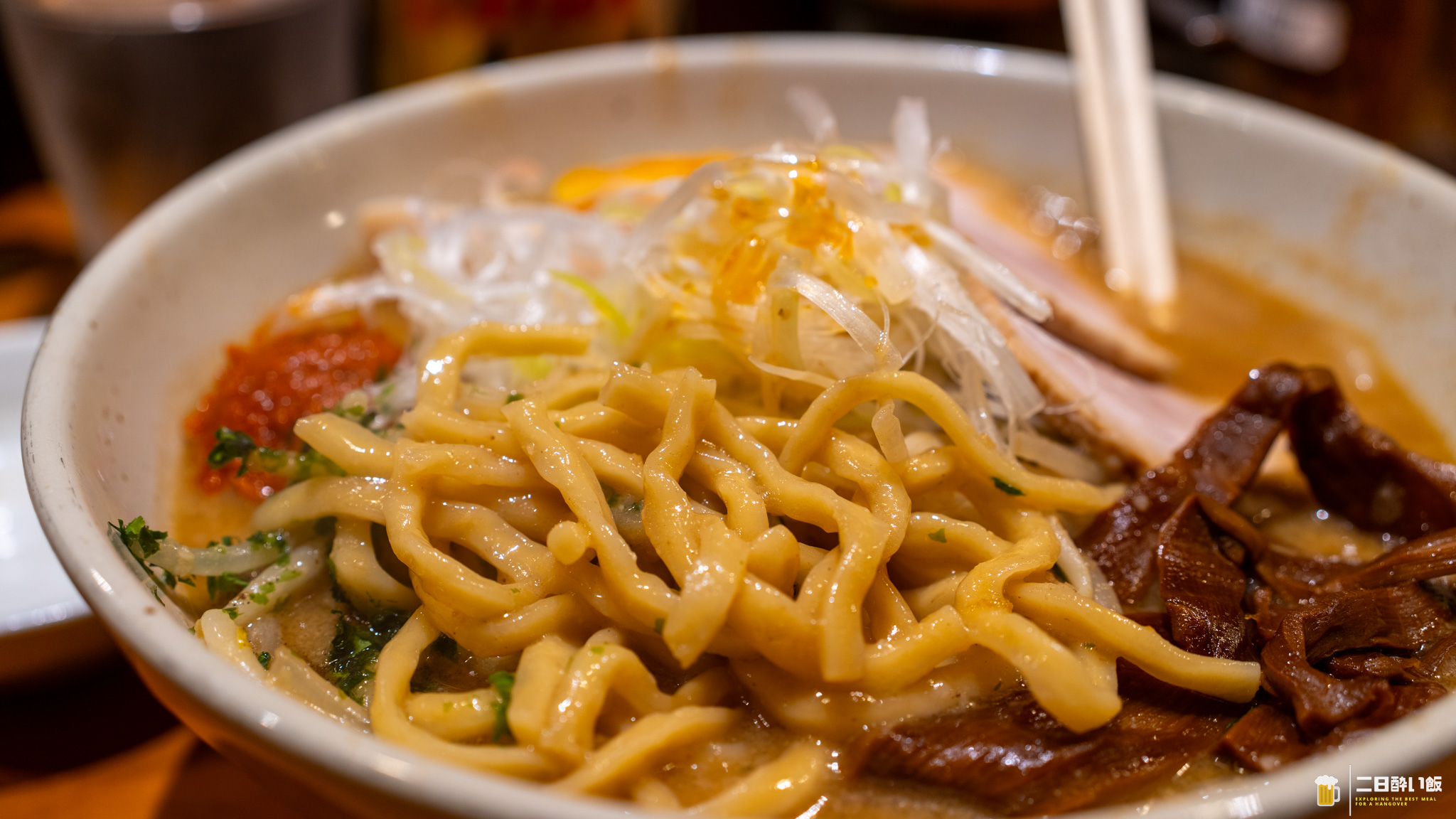
The crisp green onion makes a nice break, and the menma is sweet-savory and chewy. The chashu is tender, and dipping it into the now-spicy soup makes the sweetness of its fat stand out. The ajitama (seasoned egg) has a runny yolk that gently wraps around the heat.
There was aonori in the bowl, and I doubted how that would go — but miso and aonori go together surprisingly well! A shake of sansho pepper adds a numbing tingle and tightens up the finish. Rich and spicy as it is, it is the kind of bowl where you cannot stop lifting the spoon before you know it. Yes, a really hearty miso ramen!
Miso ramen made by a tsukemen master — rich yet mellow, and I was very satisfied!
With the Tokusei Kara-Bari, you dissolve the Daruma little by little to adjust the heat to your liking, so you start normal and add spiciness later — two delicious tastes in one bowl. The flavor shifts with the aonori and sansho too, keeping it interesting to the very end. Being able to start early with a drink over the 200 yen snack set and a canned beer is a welcome touch for drinkers as well! Since it has a gentle, sweat-inducing heat, I think it is good for a hangover day too.
May you meet something delicious today too!
Tsujita Miso no Sho (Ogawamachi) Menu
Ramen
Also available with ajitama (seasoned egg) or as Tokusei (chashu + ajitama). Large noodle portion is 150 yen extra each. Set is Tokusei + kaemeshi (rice for the leftover soup).
With Ajitama 1,180 yen / Tokusei 1,300 yen / Kaemeshi Set 1,350 yen
With Ajitama 1,300 yen / Tokusei 1,420 yen / Kaemeshi Set 1,470 yen
With Ajitama 1,200 yen / Tokusei 1,320 yen / Kaemeshi Set 1,370 yen
With Ajitama 1,320 yen / Tokusei 1,440 yen / Kaemeshi Set 1,490 yen
Toppings & Rice
Drinks & Snacks
Chashu and menma
Aonori, sansho pepper, grated garlic and ichimi chili on the counter. The ticket machine also accepts transit IC cards.
*From the ticket machine display at the time of our October 2026 visit. Prices include tax and items are subject to change. Please check at the shop for the latest information.
Tsujita Miso no Sho (Ramen / Awajicho Station, Ogawamachi Station, Shin-Ochanomizu Station)
Tabelog dinner rating ★★★☆☆ 3.5
I ate here and paid for it myself. Nothing on this site is a comped meal.
One more for the road?


