


A note on the words: som tam is the pounded green papaya salad, gai yang the marinated grilled chicken, pad thai the stir-fried rice noodles, tom yum kung the hot and sour prawn soup, and nam pla the Thai fish sauce. Gapao is the Japanese name for the Thai stir-fry of minced meat with holy basil served over rice. Shumai are steamed Chinese dumplings, menchi katsu a breaded, deep-fried patty of minced meat, and yakisoba the Japanese stir-fried noodles. Bia is the sister restaurant that BIANCHI takes its name from. Tokyo X and Omi beef are Japanese branded pork and beef; jako are tiny dried sardines, yukina a leafy green from Yamagata, and komatsuna another Japanese green. Maou is a well-known brand of imo shochu, the sweet-potato spirit, and a lemon sour is shochu with soda and lemon. Kobako is the female snow crab, in season only in winter. Kanji are the Chinese characters used in Japanese writing and kana the two phonetic syllabaries, which is why one brand name can be written three different ways. Prices are as of this writing (August 2026).
Table of Contents hide
BIANCHI on Tabelog (English) — opening hours, payment details and the Japanese address are kept up to date there, not here.
I want something good to eat today too. This is Hangover Meshi. This time, the Thai restaurant I have had my eye on for ages, the best in Roppongi: BIANCHI. I went to their lunch place, BIANCHI mini me, last time and was moved by the gapao rice, and I had been aiming to come in the evening one day — and rather a lot of time passed. BIANCHI, after all, is the casual restaurant belonging to Bia, the summit of Thai food in Roppongi lately. I am very much looking forward to what comes out.
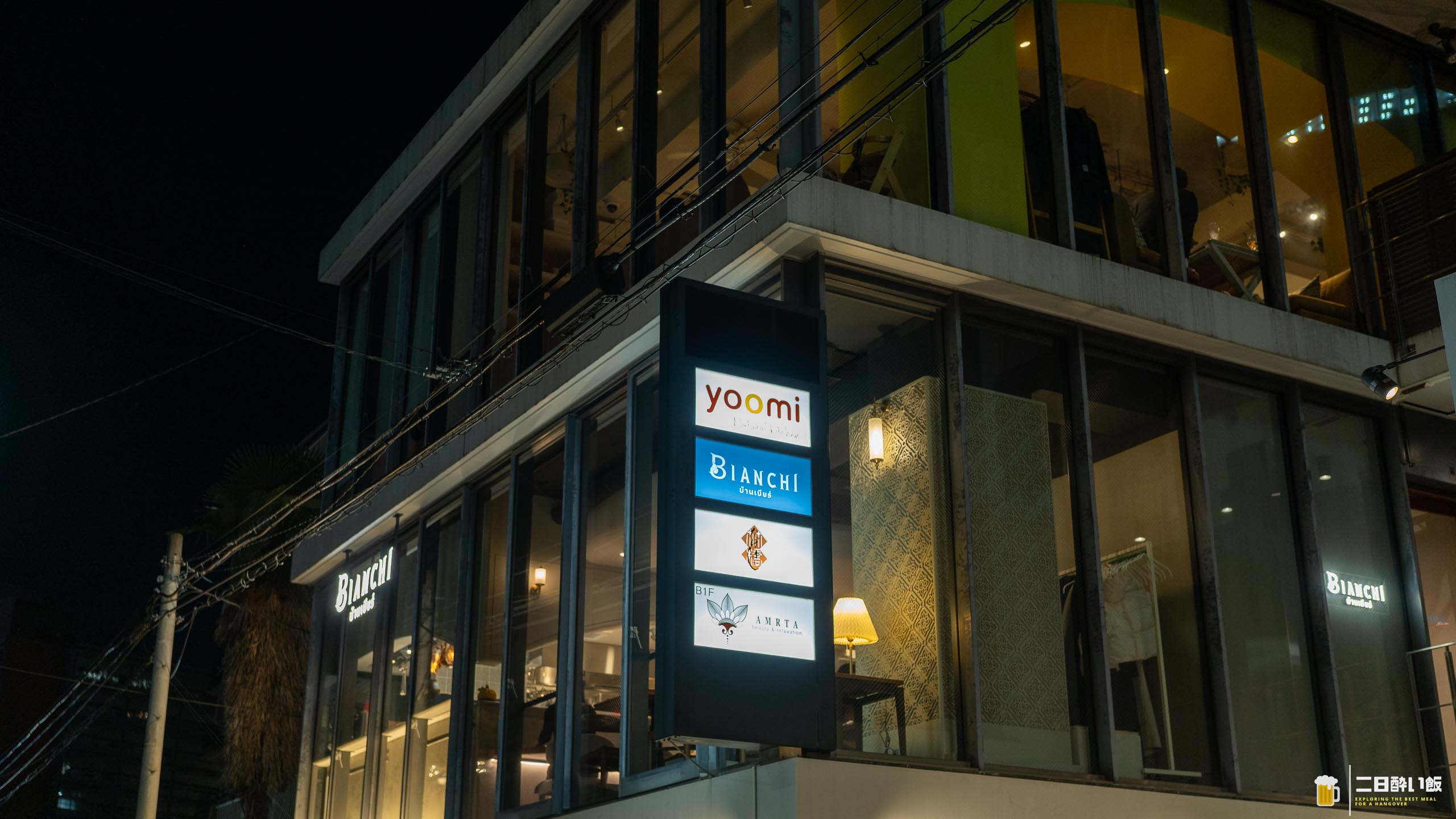
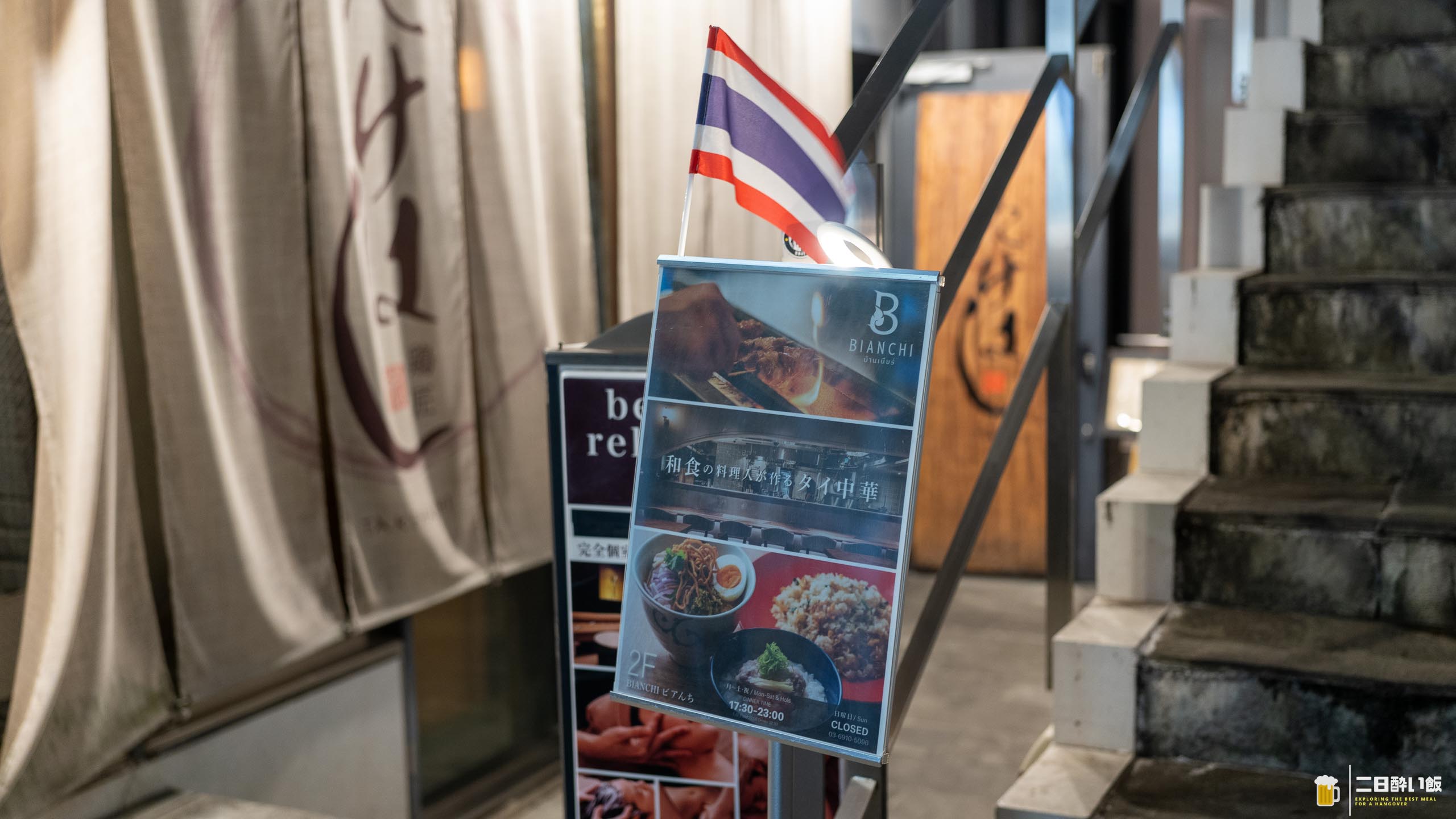
In the evening there is a whole range of a la carte dishes. Looking forward to it.
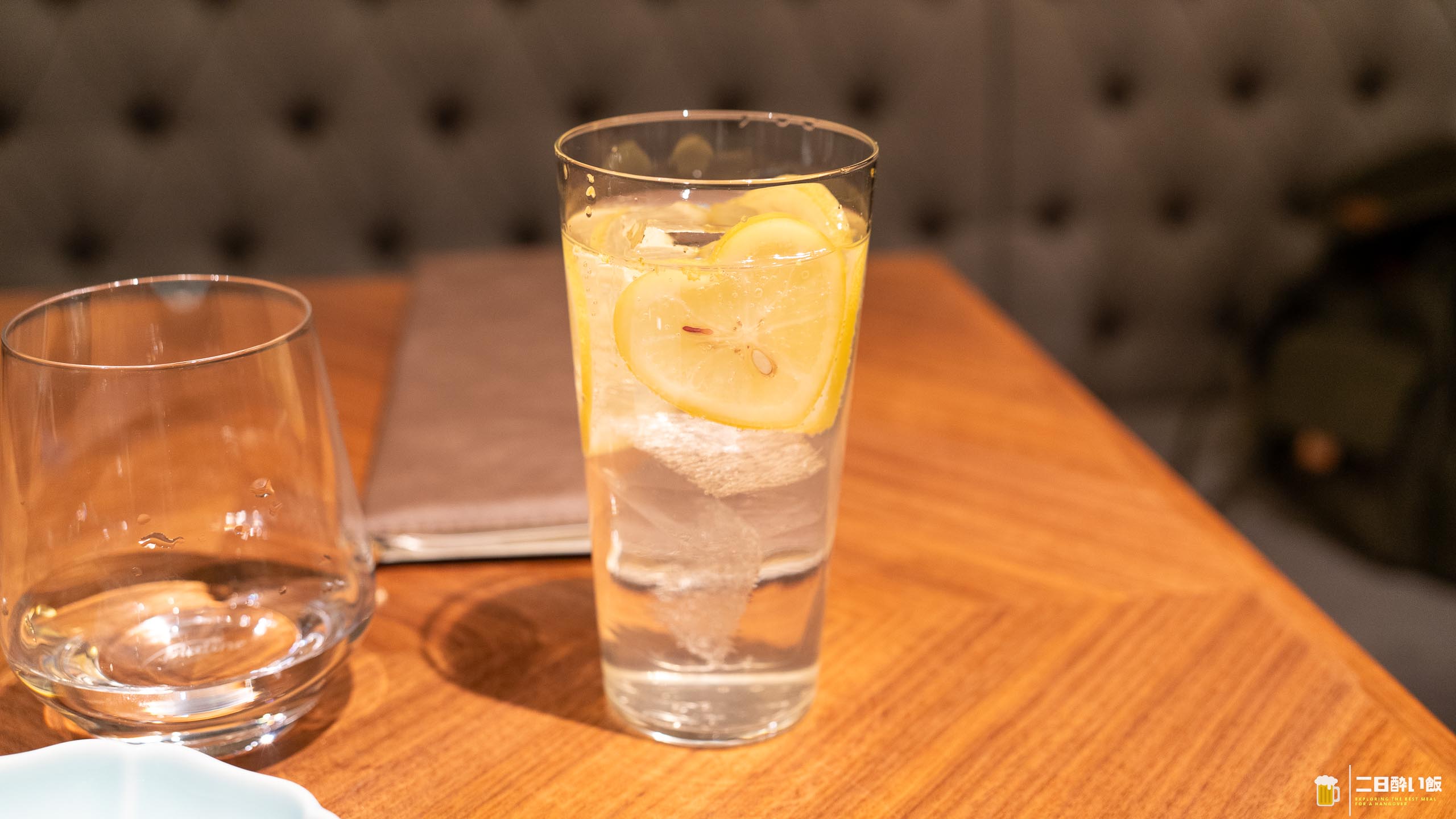
Starting with a lemon sour.
There was something called a Maou lemon sour, and surely not, I thought — but sure enough it is a lemon sour made with the shochu Maou.
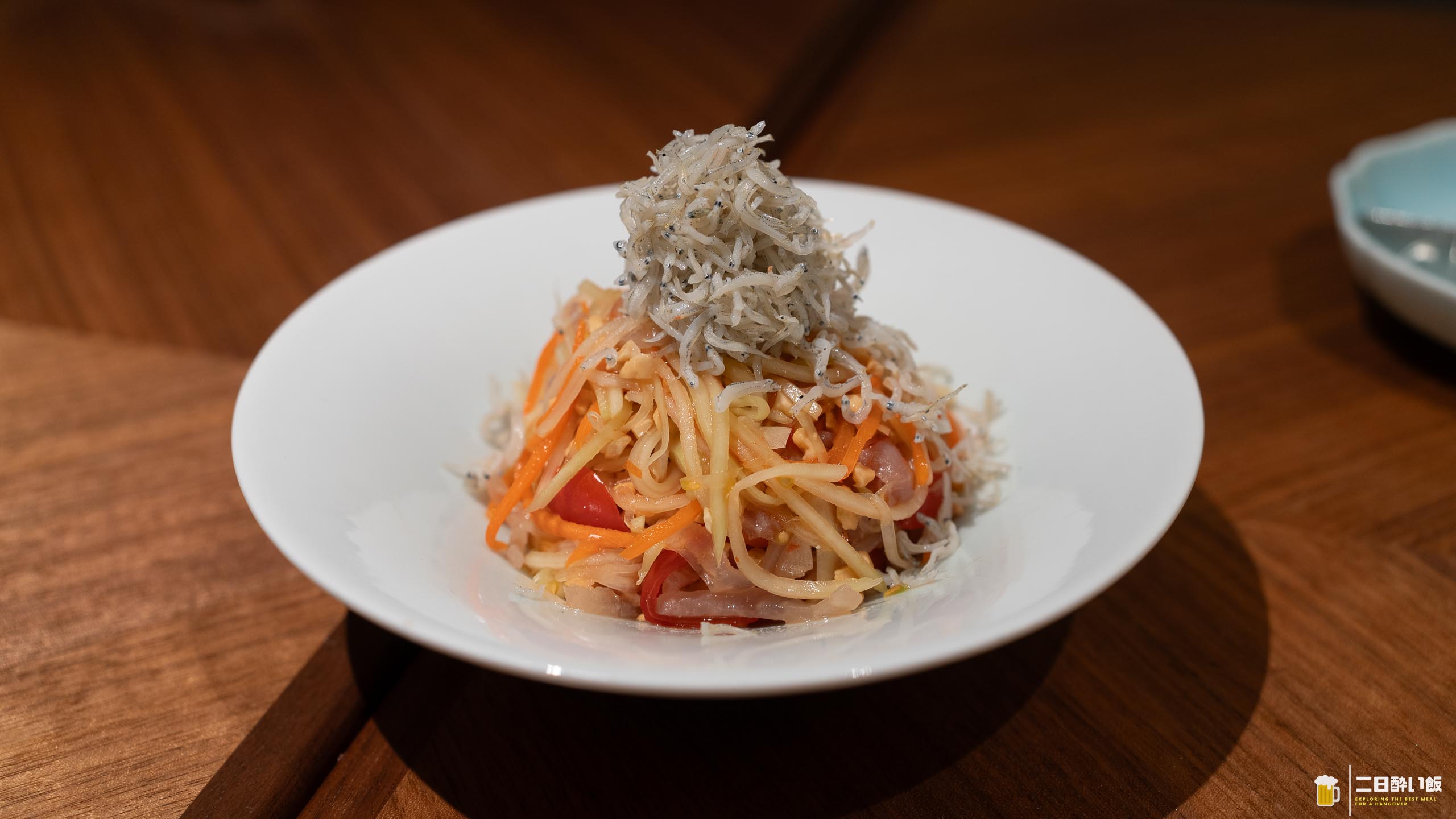
Right, first of all it has to be som tam, the green papaya salad. I order it whenever I go to a Thai restaurant, and I like it enough that if I see green papaya in the supermarket I buy it and make my own. Pairing it with dried baby sardines and a fermented sausage is unusual. It feels like a layer of savor laid over the freshness of green papaya. The shredded papaya has its usual clean bite, and what you notice first is the acidity of lime and the sharpness of chili. But it is not all stimulation — the salt and the concentrated savor of the little dried sardines spread slowly underneath. The fermented sausage has a distinctive acidity and depth, and with every chew the fat and the fermented aroma rise, lifting the whole som tam to something distinctly grown-up. The nam pla is not overused either, and the balance of sweet, sour and salt is very good. This is delicious.

I had meant to order stir-fried water spinach, but they had none today and it would be yukina instead. Well, as a stir-fried green it comes to the same thing, I thought, and asked for it. Yukina is a vegetable Yamagata is known for, I believe. Thai-style, with nam pla and acidity and sweetness. The savor of dried shrimp mixed through it is delicious. It would surely be good with komatsuna or bok choy rather than yukina. This is Thai-Chinese, after all. The stir-fry is superb. The crispness of the vegetables is wonderful.
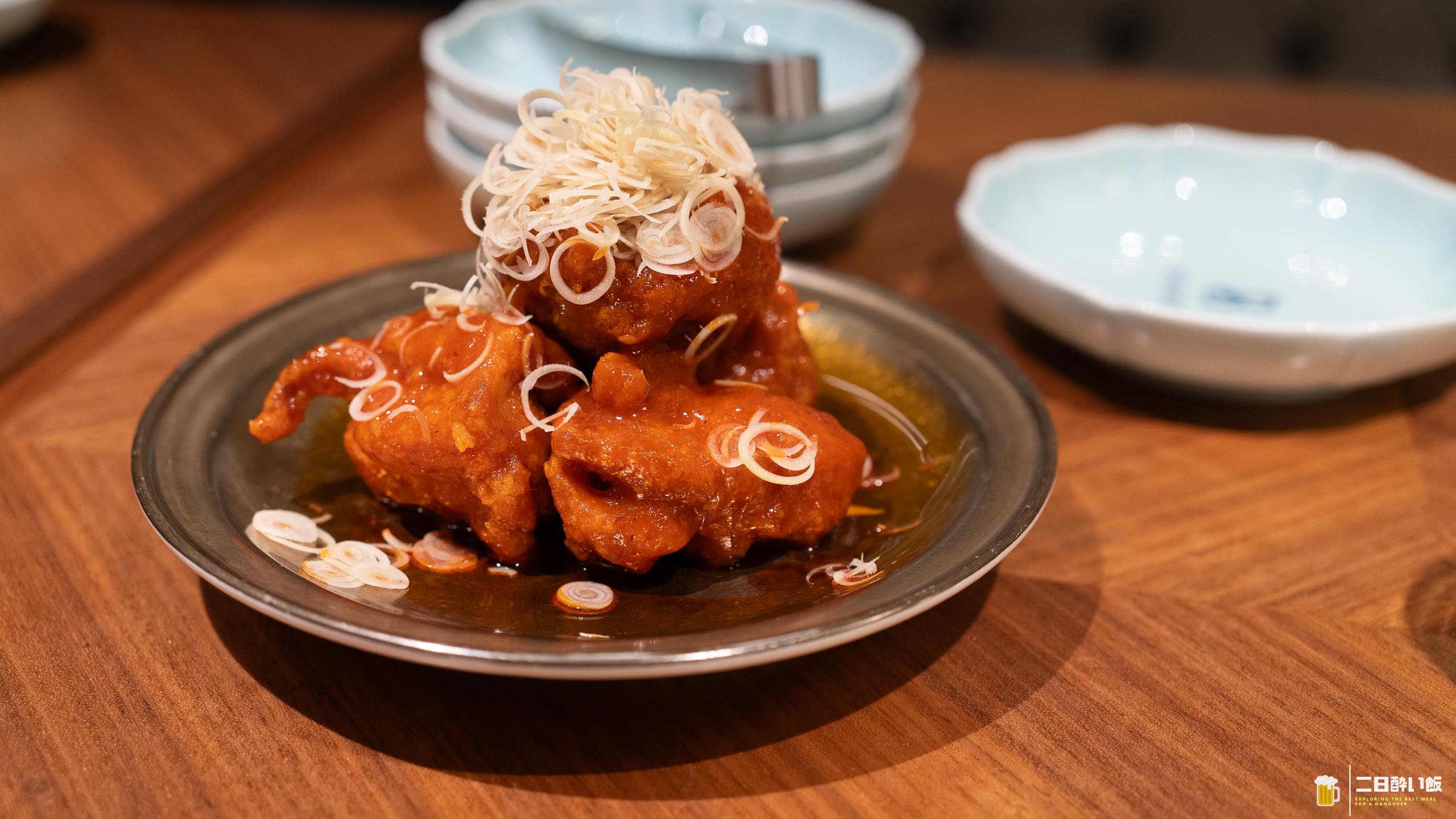
BIANCHI’s own fried chicken. The sauce is sweet and hot and good, but the thing on top that looks like spring onion — is in fact lemongrass. My impression had been that lemongrass is generally not edible, or at least not eaten, but sliced thin into rings you can eat it perfectly well. I had thought of it as very hard, and yet this lemongrass eats easily. Like spring onion. And a fresh aroma spreads out. I wonder whether the lemongrass has been treated somehow, or whether they gather only the tender parts. If I see it for sale I shall try it at home.
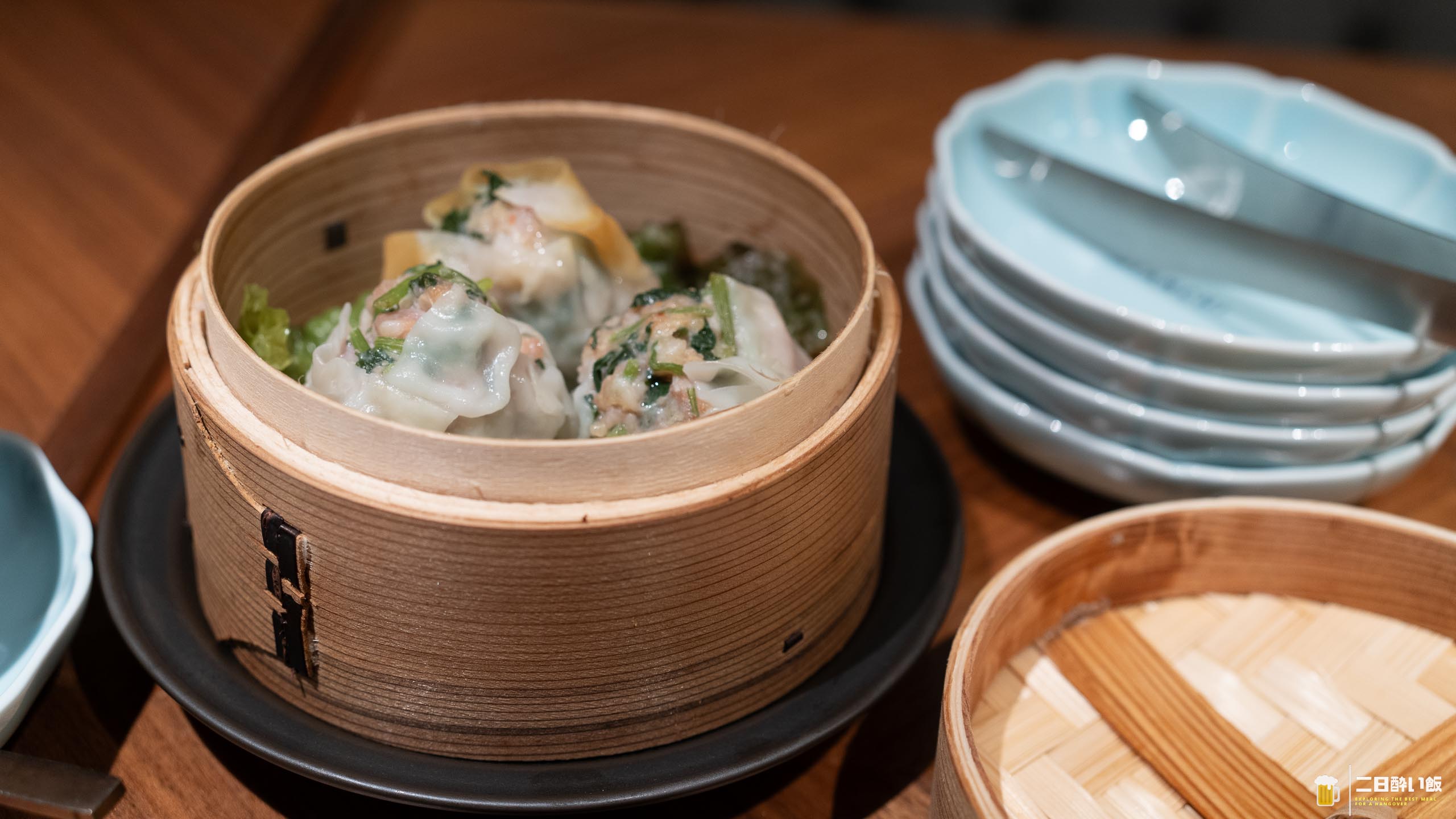
It normally comes as two, but they made it three for us. The savor of the pork (Tokyo X) bursting out and the fresh smell of coriander are superb. Even people who dislike coriander should find it easy since the coriander is cooked, though I am not certain.
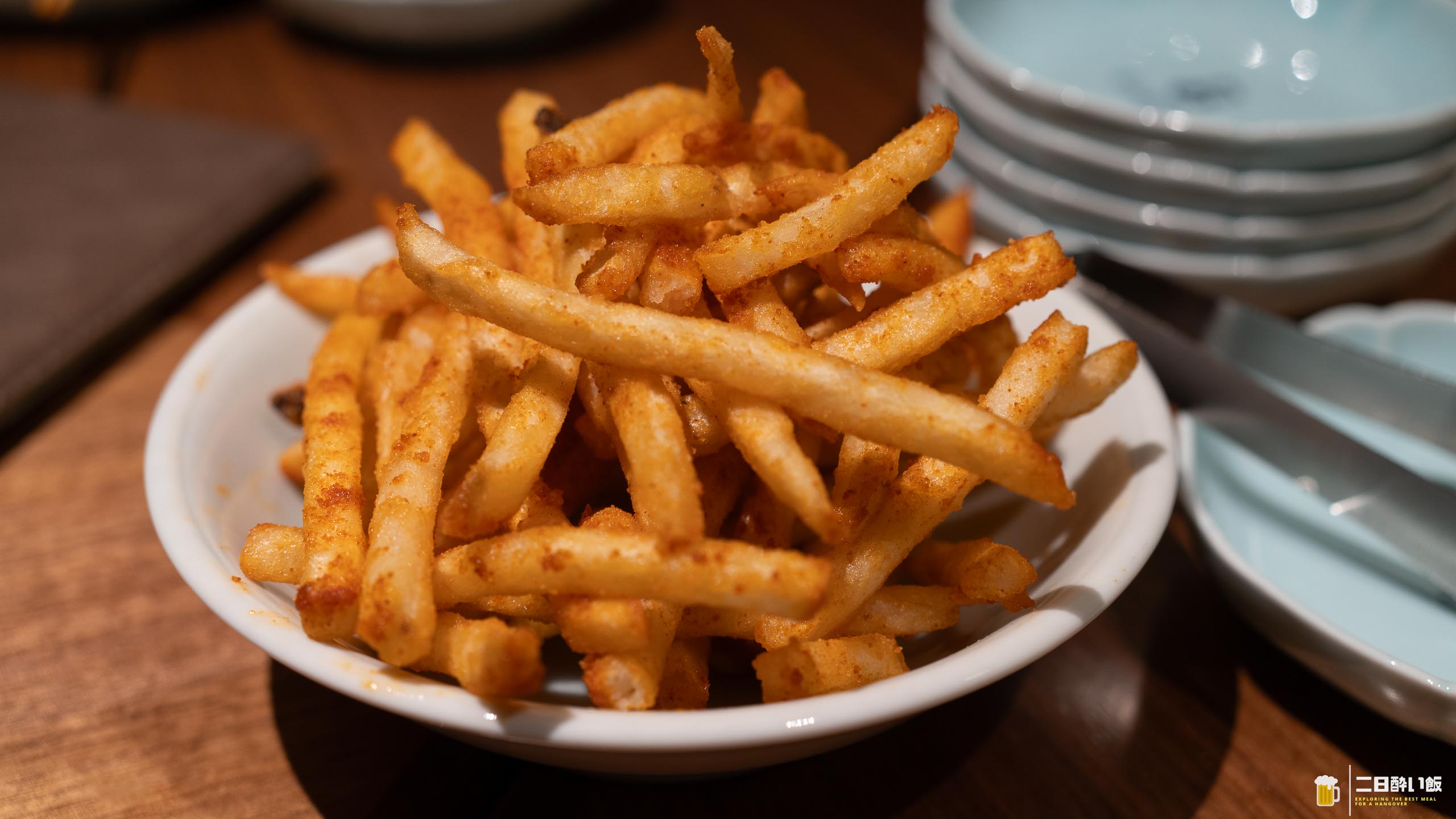
Fries, ordered because I wanted something a little junky alongside. Tom yum kung flavored, with a prickle of heat. Perfect with beer. And yet the Maou lemon sour was so good that I kept going back to lemon sours. Or rather, it is essentially imo shochu with lemon soda.
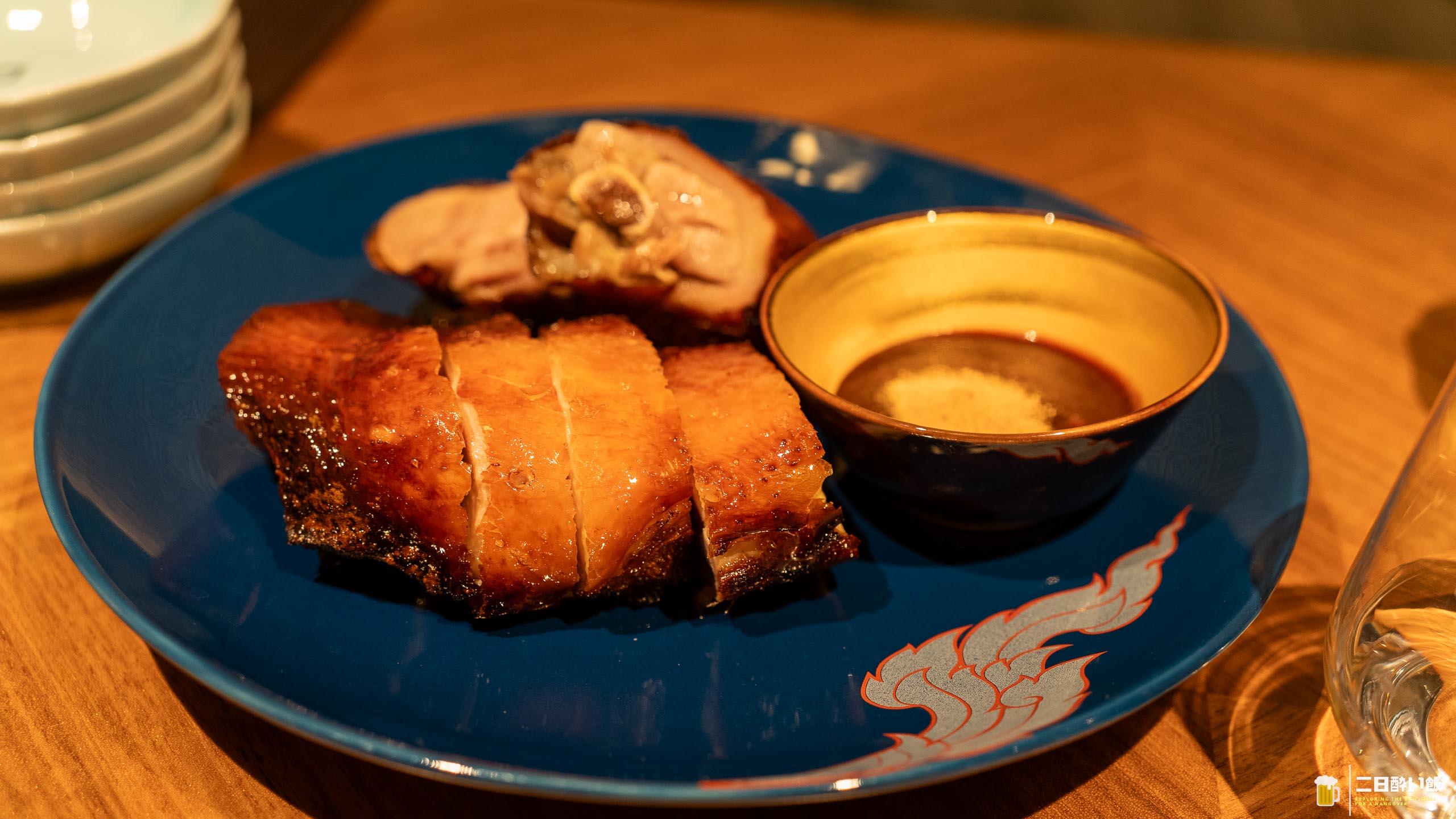
And now the pick of the day: gai yang! BIANCHI’s own version. The menu said it takes time so order early, and I put it in first of all. The moment it appears the smell of the grill hits your appetite directly. The fragrance of charcoal layered with a marinade built on garlic, herbs and nam pla — you can tell how well made it is from the instant it is set down. The skin is grilled crisp through, and yet the meat inside is astonishingly moist. Bite it and the juices spread, and the savor of the chicken itself comes forward. It is good dipped in the sauce, and quite good enough with nothing at all. This really is a different thing from ordinary gai yang. The gapao at lunch, the gai yang, the fried chicken — there is real originality here, and above all it is delicious, which is the remarkable part.
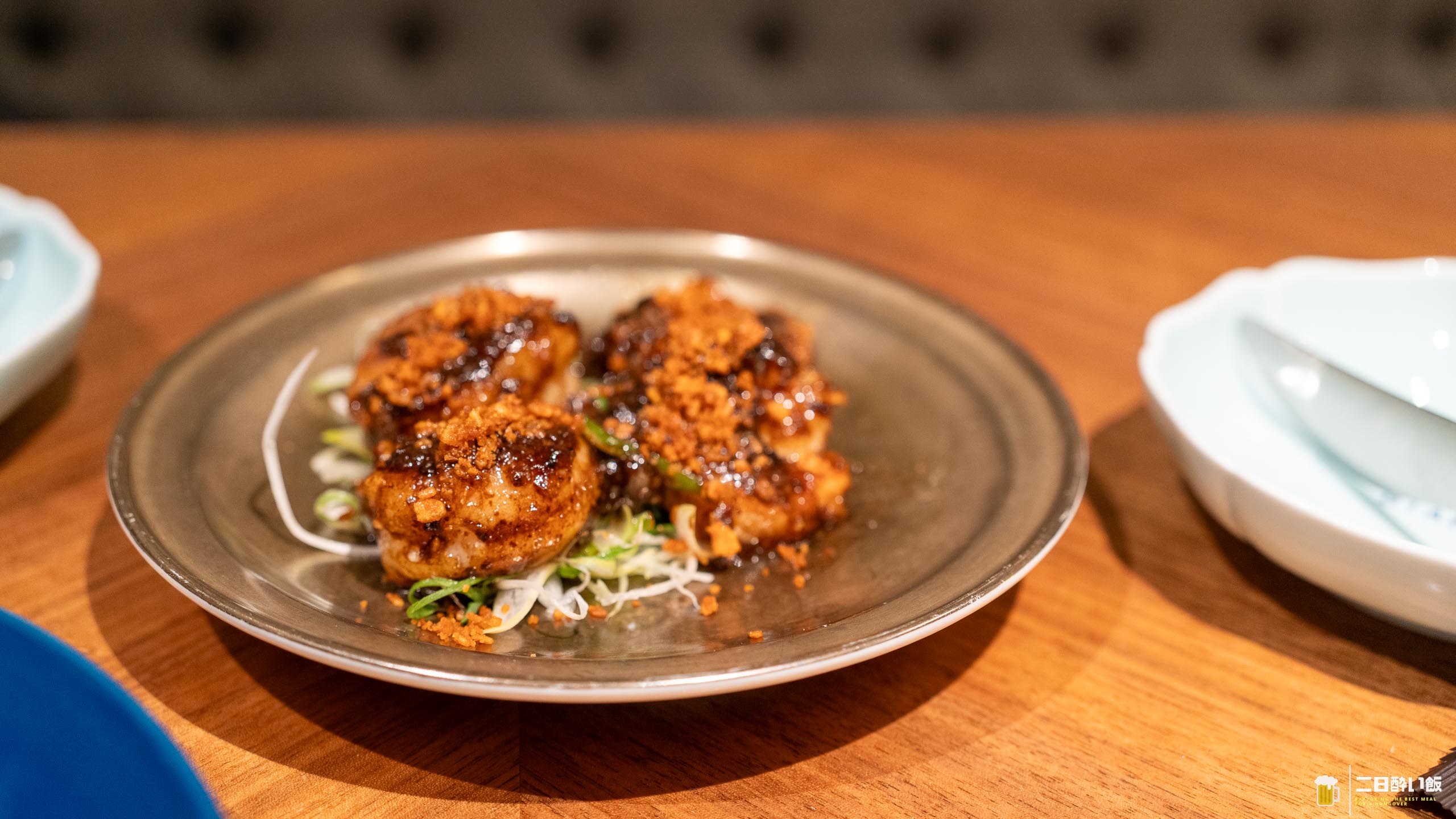
Garlic shrimp. A stir-fry using sweet-sour tamarind. The plump shrimp feel like a treat.
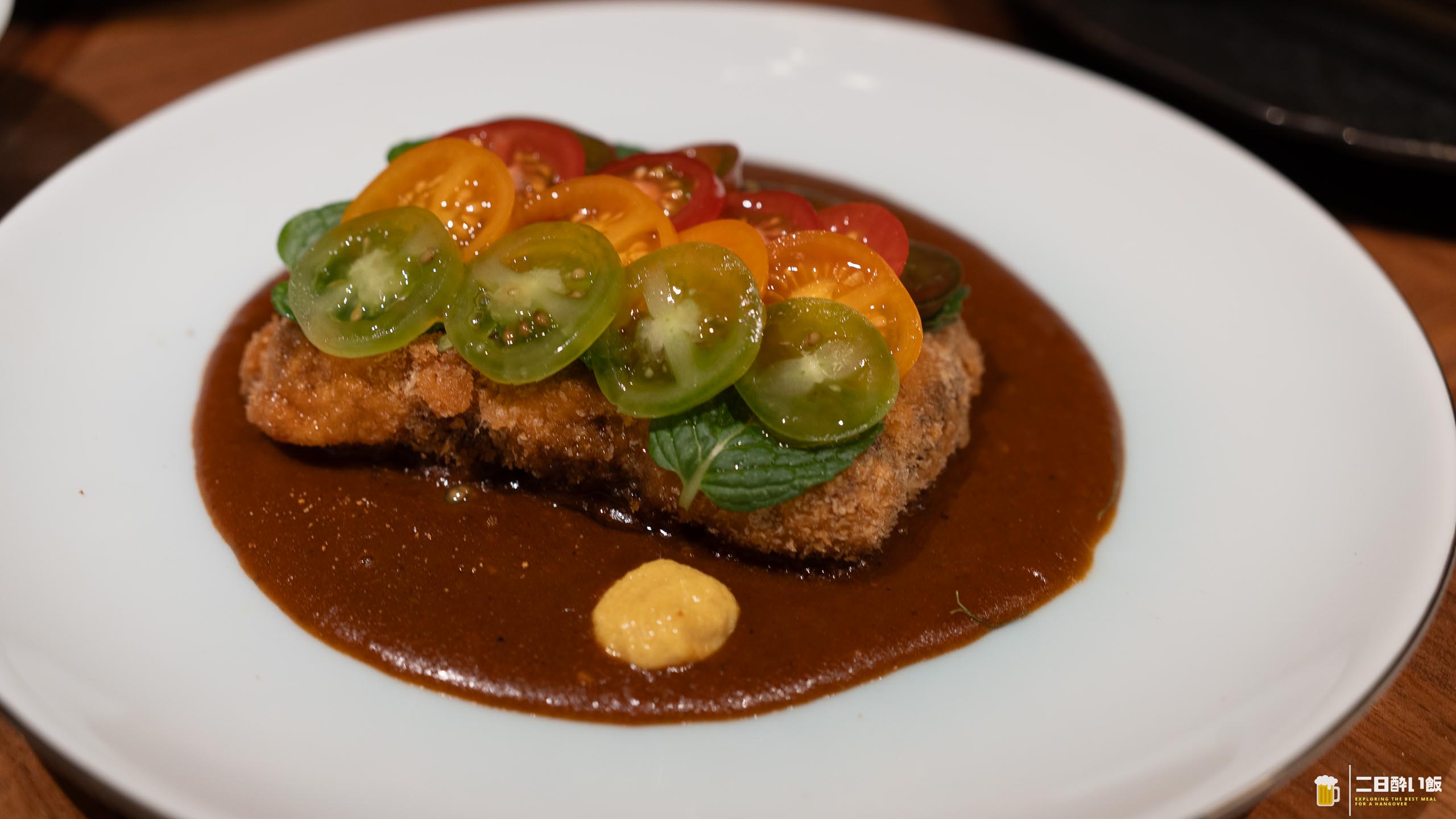
Menchi katsu! Even on the menu the name is written three ways, Tokyo X in kanji, in kana and as TOKYO X. Something like a cutlet, plump and juicy inside. The demi-glace around it is very good and the three-color tomatoes are pretty. No Thai feeling to it, but straightforwardly delicious.
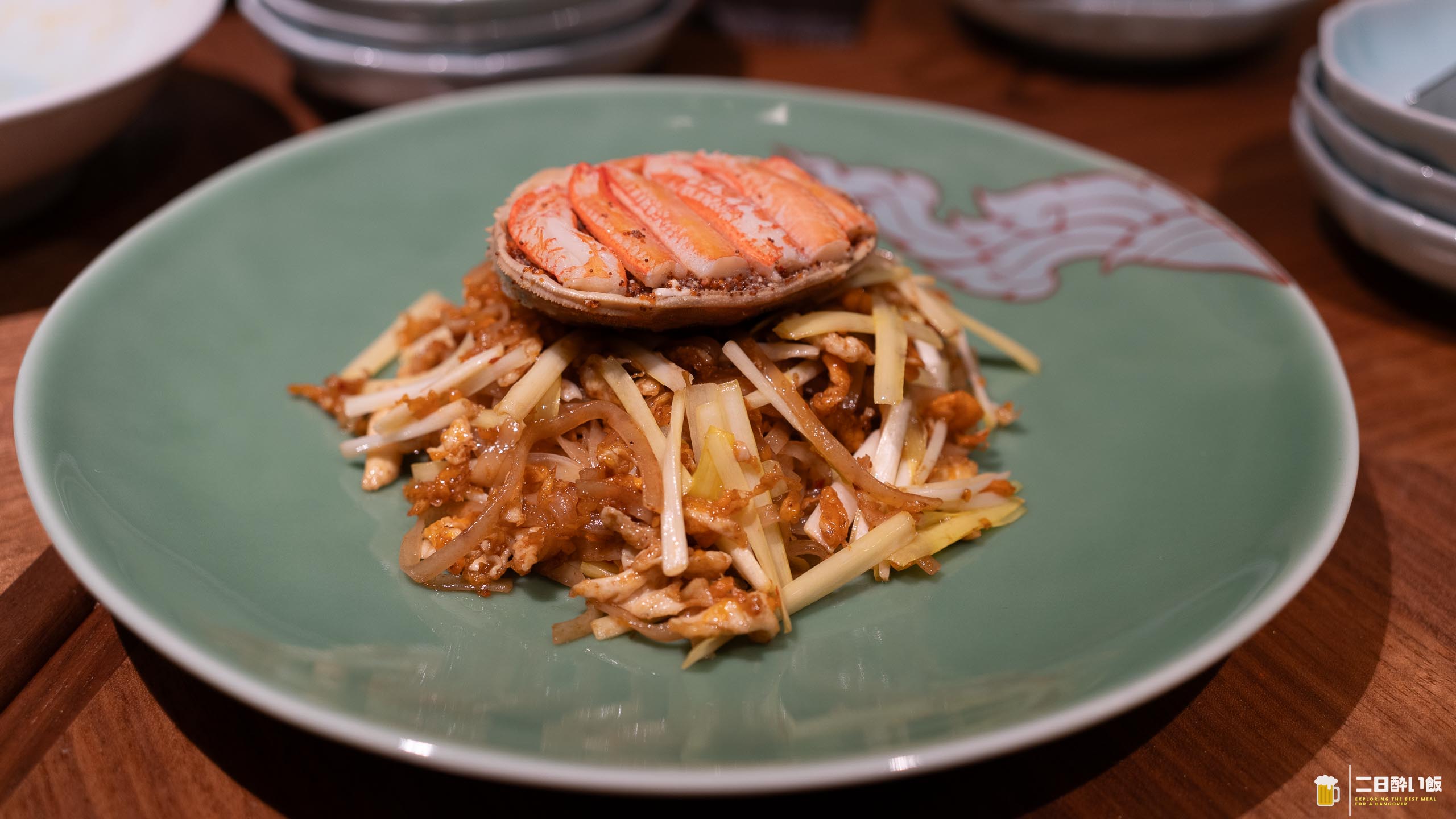
For the last dish, pad thai, I thought — and then there on the day’s recommendations was a kobako crab pad thai. Crab is seasonal, after all. Something a little more interesting than the ordinary pad thai seemed the better idea, so I chose this. The crab is arranged beautifully on top, but we were told to take it all out of the shell and mix it thoroughly through the pad thai before eating.
Well — a pad thai this loaded, with the mellow smell of nam pla, is of course delicious, but the crab is simply good. The scent of crab and its rich savor combine at just the right measure. In Japanese terms it is perhaps like a crab yakisoba. It is not something you can eat ordinarily, and it would be quite good enough without the crab — but this is a luxurious, experiential pad thai possible only in this season.
So: BIANCHI. Everything was delicious, and it really is a Thai restaurant with a stylish room you can use casually. Bia is the top line and I have not managed to go, but I would like to one day. If the food is this good the experience there must be wonderful. Experience BIANCHI’s new reading of Thai food and you will surely want to go to Bia as well. Recommended.
BIANCHI (Thai / Roppongi Station, Nogizaka Station, Azabu-juban Station)
Tabelog dinner rating ★★★★☆ 4.2
I ate here and paid for it myself. Nothing on this site is a comped meal.
One more for the road?


