


A note on the words: meze are the small starter dishes of Turkey and the eastern Mediterranean, and karisik means mixed, so a karisik meze is the assortment; tarama here is a paste bound with yogurt, ezme a chopped, spicy one, and kozleme a paste of vegetables charred first. Ekmek is bread; manti are small filled dumplings served under yogurt; coban salatasi is the shepherd’s salad of chopped raw vegetables. Doner is meat stacked and grilled on a turning spit, sis (shish) is meat on a skewer, tavuk is chicken, and Adana kebab is minced meat pressed onto a flat skewer. Turkish spellings are given without their accents here. Prices are as of this writing (August 2026).
Table of Contents hide
Turkish Restaurant Istanbul GINZA on Tabelog (English) — opening hours, payment details and the Japanese address are kept up to date there, not here.
I want to eat something good today as well. This is Hangover Meshi. I heard that the first Turkish restaurant to open in Japan is in Ginza, so I went. Turkish is one of the three great cuisines of the world alongside French and Chinese, is it not? Kebab is more or less the whole of my impression of it, so I was looking forward to finding out what else there is.
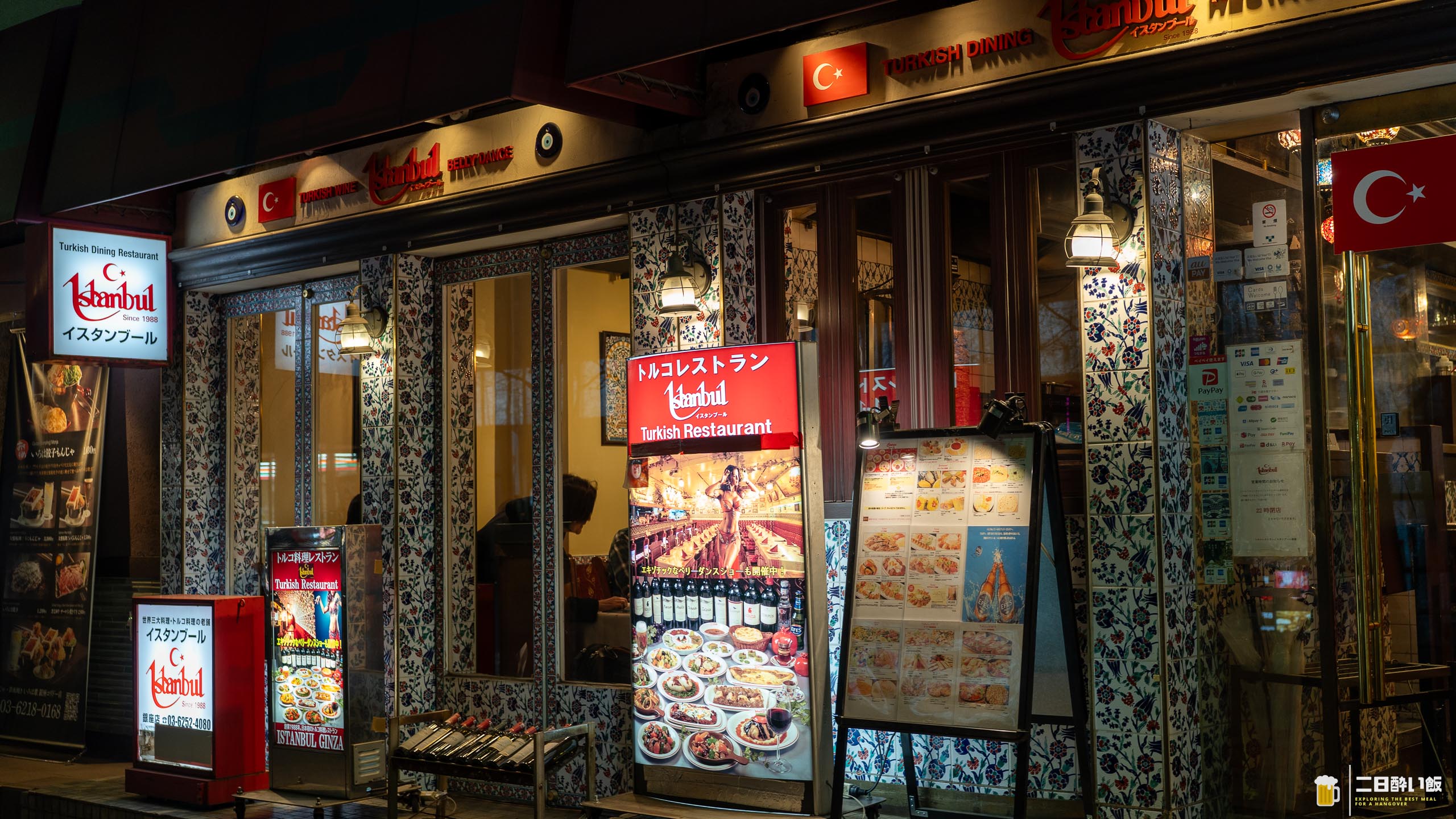
The outside of the shop is covered in fine patterning, a lovely design. Inside is much the same, patterns everywhere.
There were set courses, but I thought eating whatever we fancied would satisfy us more, so we went a la carte.
Into the world of Turkish food.
Beer first. Efes, a proper Turkish beer with its head office in Turkey.
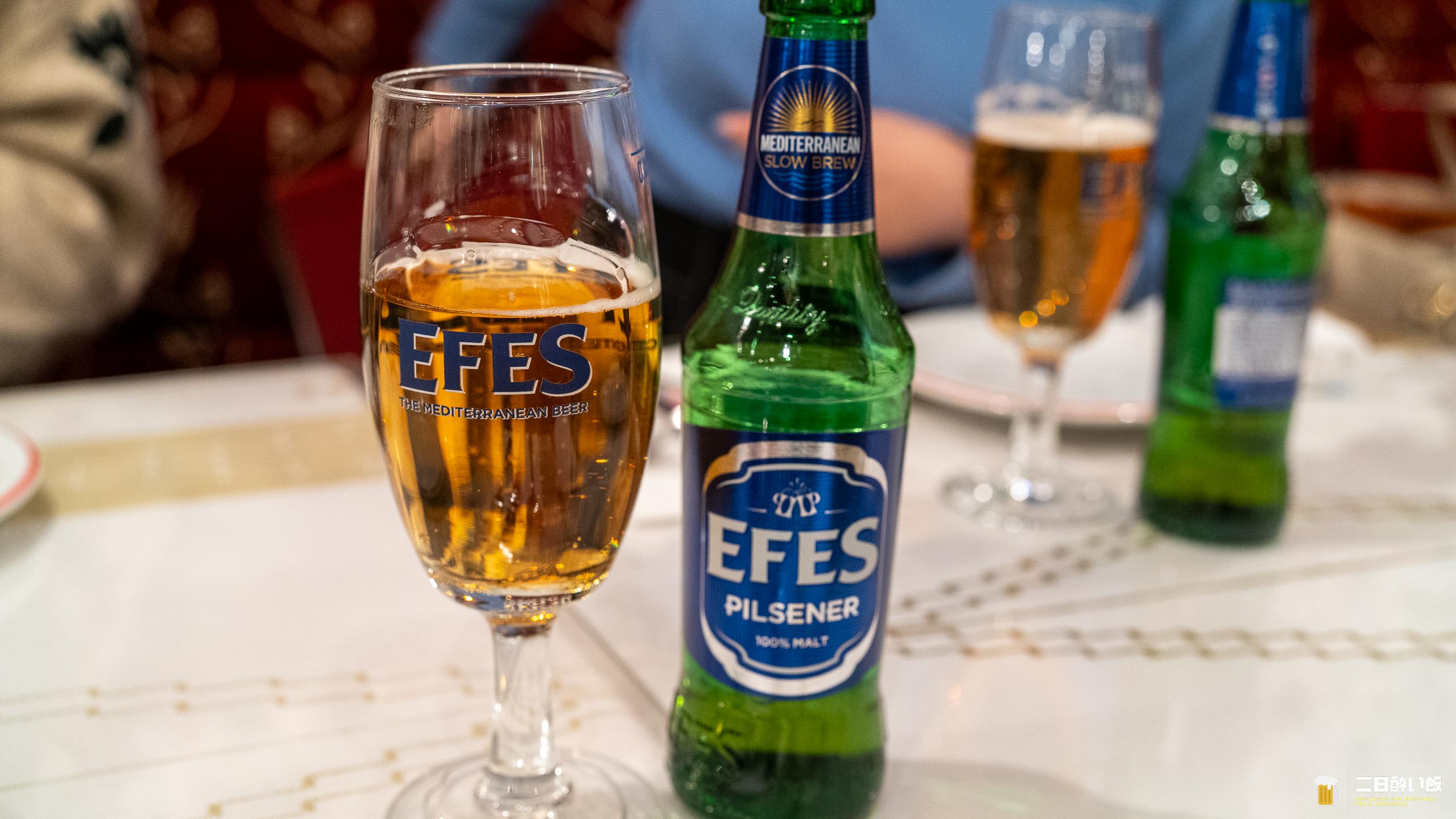
It drinks clean, and yet a faint malt sweetness stays with you. The bitterness is fairly restrained and the mouthfeel is rounded, with the edges taken off. Less a beer that pushes with a sharp finish than one that carries you along on a gentle body. Very easy to drink.
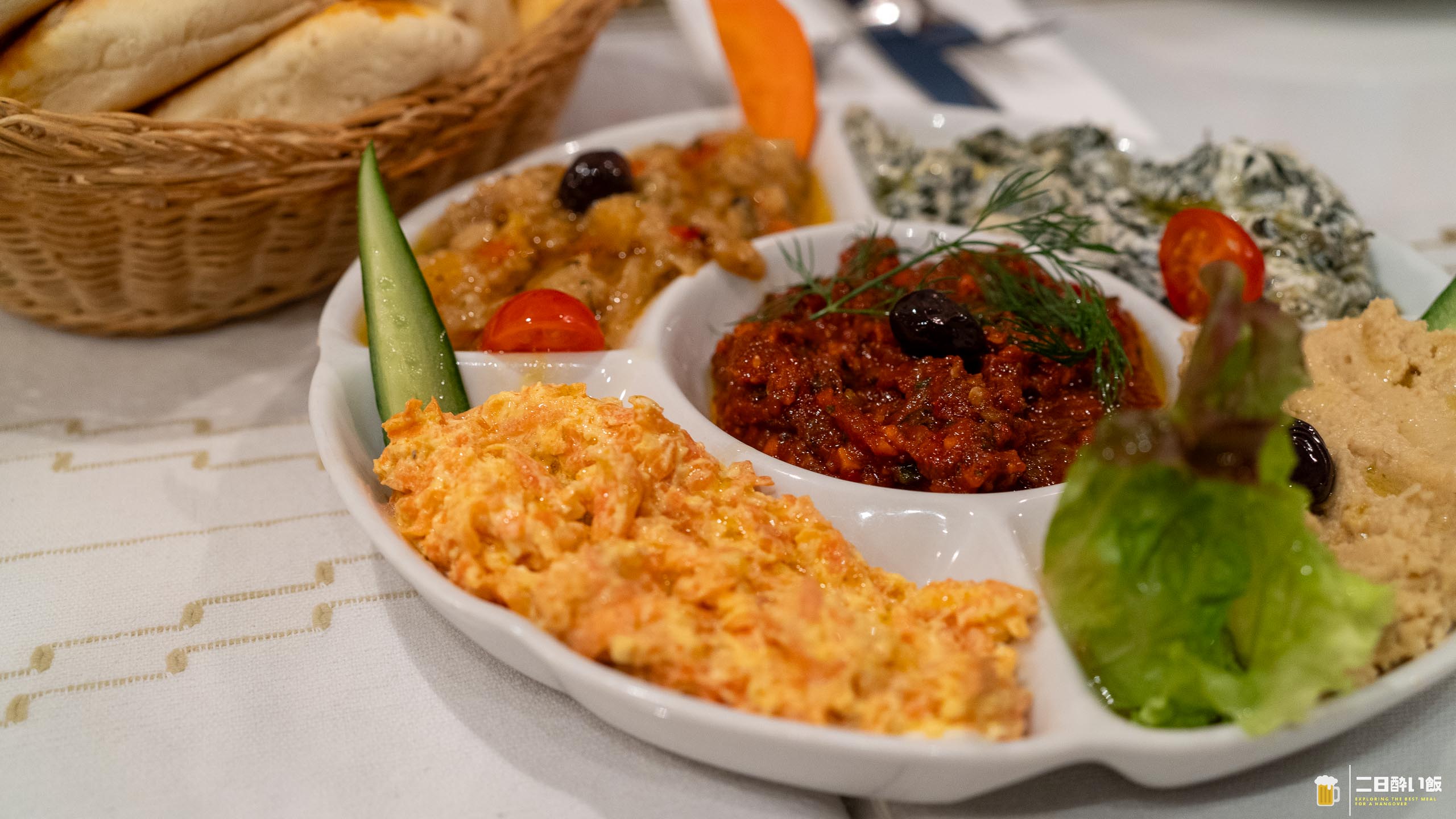
Far too many starters to choose from — a problem solved at a stroke by ordering the lot.
At the front, havuc tarama, a paste of carrot and yogurt. On the right, humus, the famous one, chickpea and sesame paste. In the middle, acili ezme, a spicy paste of tomato and herbs. That was my favorite. At the back, ispanak tarama, spinach and yogurt. Second favorite, that one. And back left, patlican kozleme, a paste of aubergine and pepper.
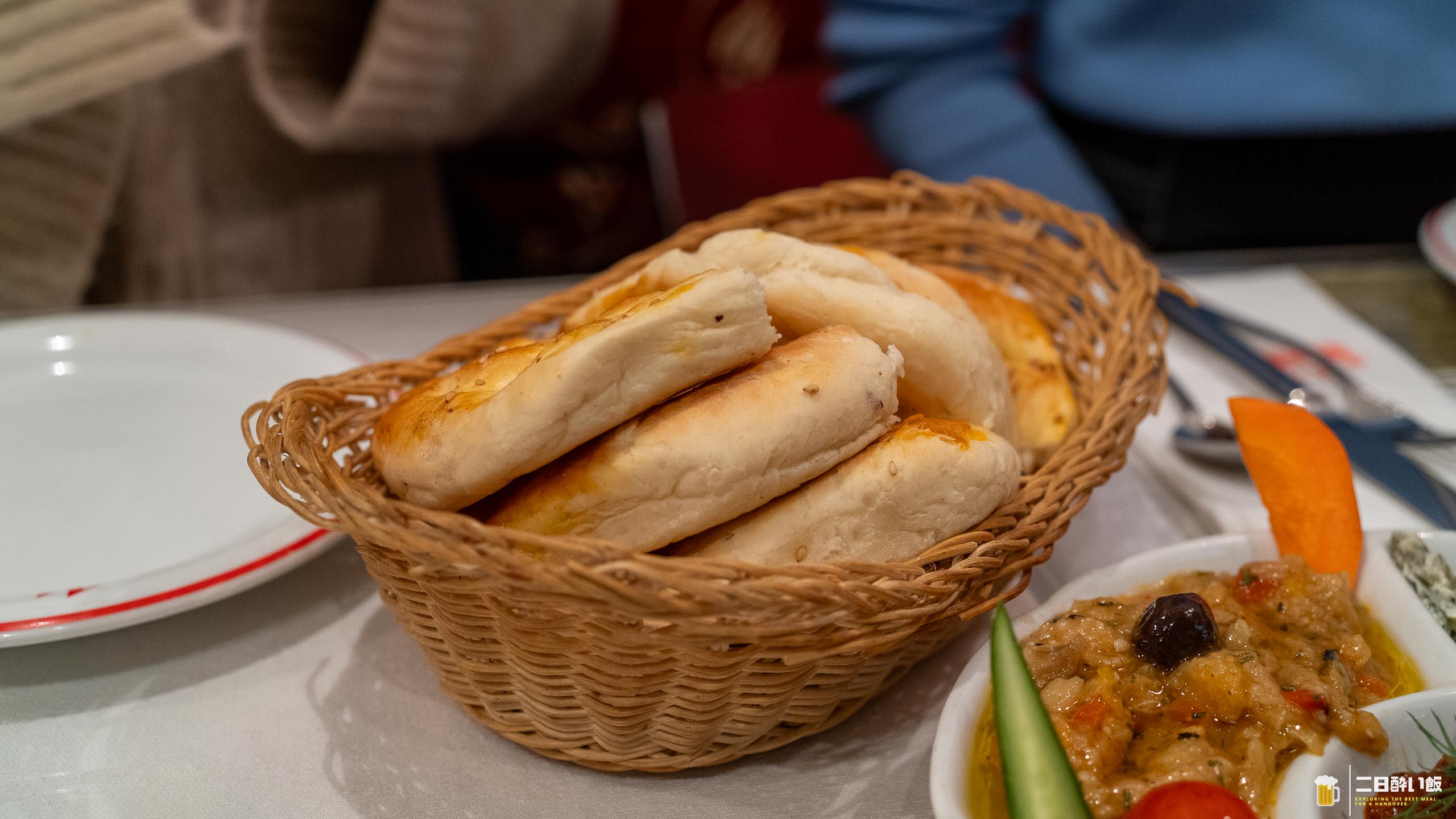
You eat them with a bread called ekmek. They will cut it in half for you, so two pieces might well have been enough.
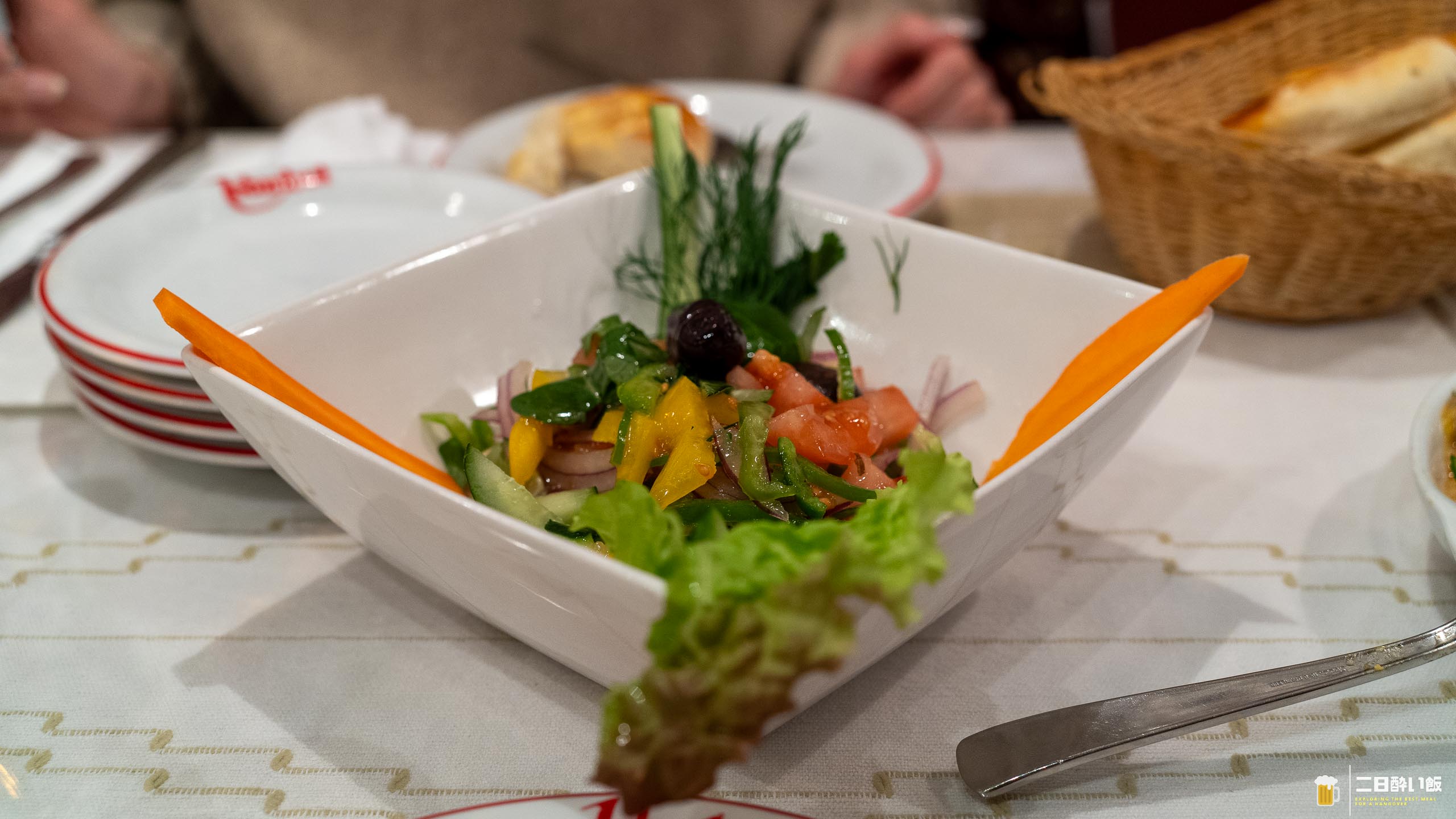
A standard salad in Turkey, made with tomato, cucumber, green pepper, parsley and onion. The cool note of the dill is good too.
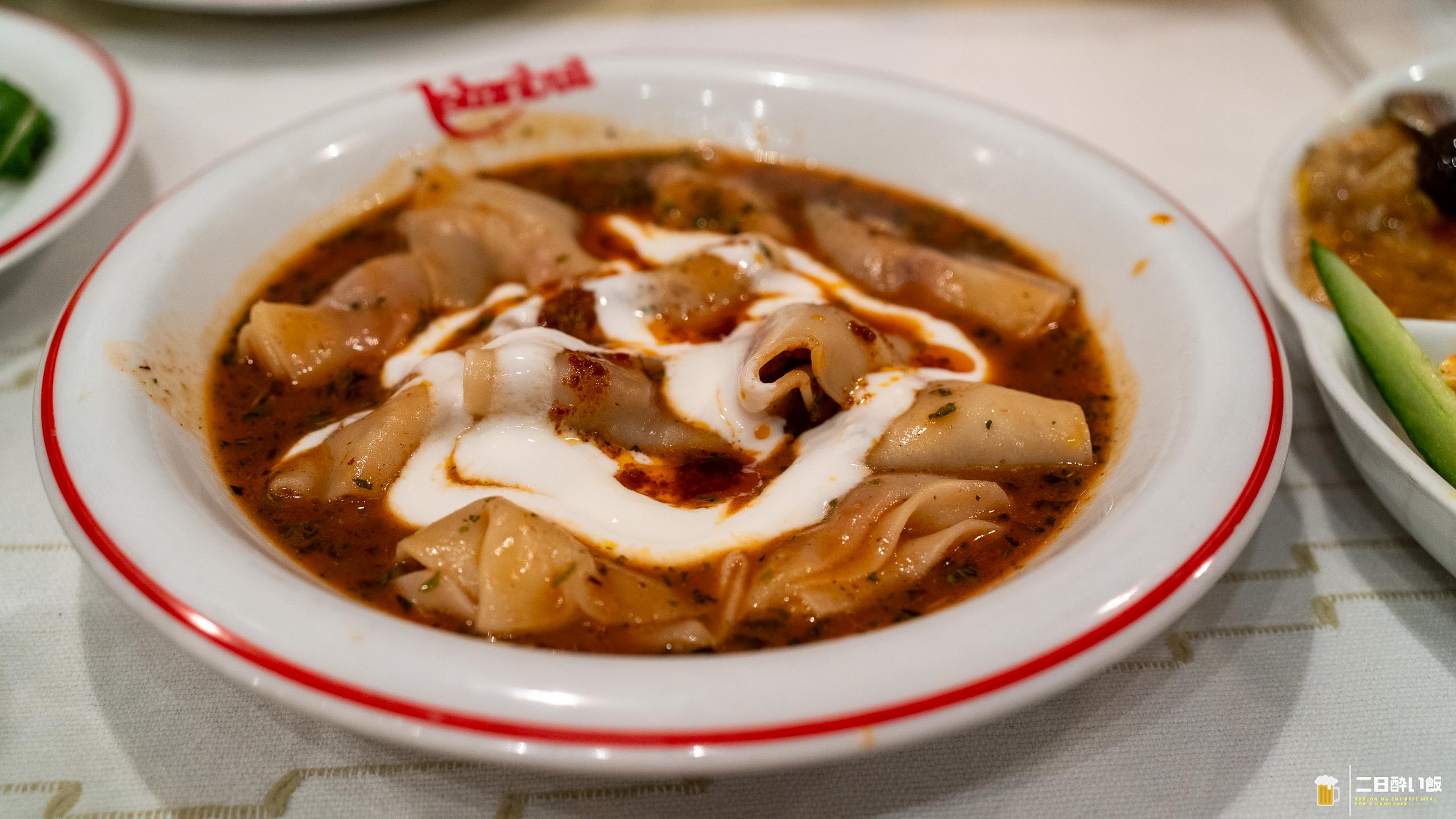
This one I may have heard of as well: manti. Turkish-style boiled dumplings filled with minced beef and lamb, eaten coated in yogurt sauce. And they are extremely good. Inside the small parcels of dough is mince packed with savor, and the balance between the springy skin and the juiciness is very fine indeed. With the yogurt sauce poured over and the spices on top, acidity, body and a toasted note combine into something with real dimension. Good.
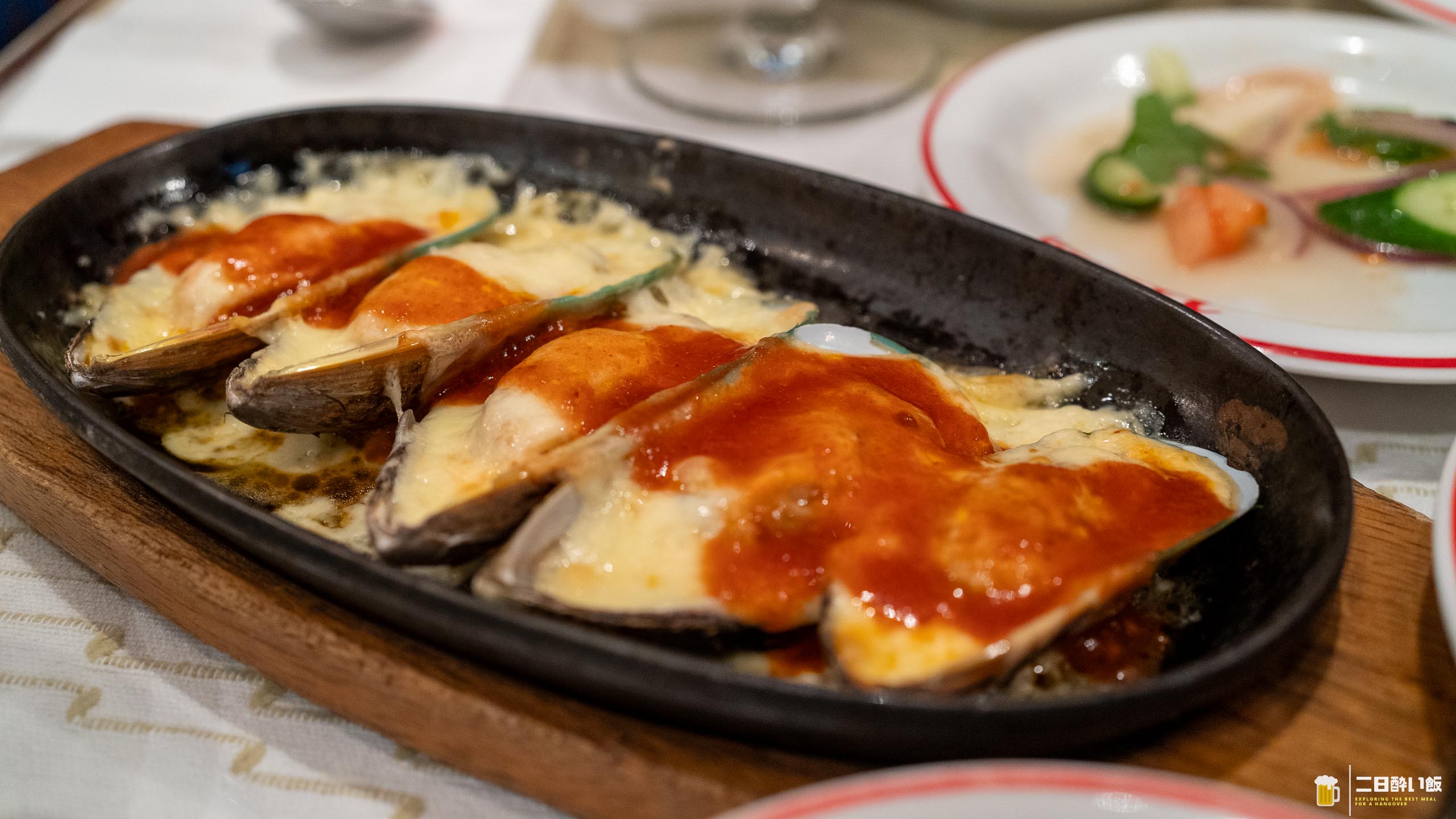
A standard dish whose flavor I could imagine perfectly well, but as a person who loves shellfish I had no choice but to order the mussels baked in the oven. I am no longer sure whether it is even Turkish, but it is extremely good. Cheese and mussels were never going to disagree.
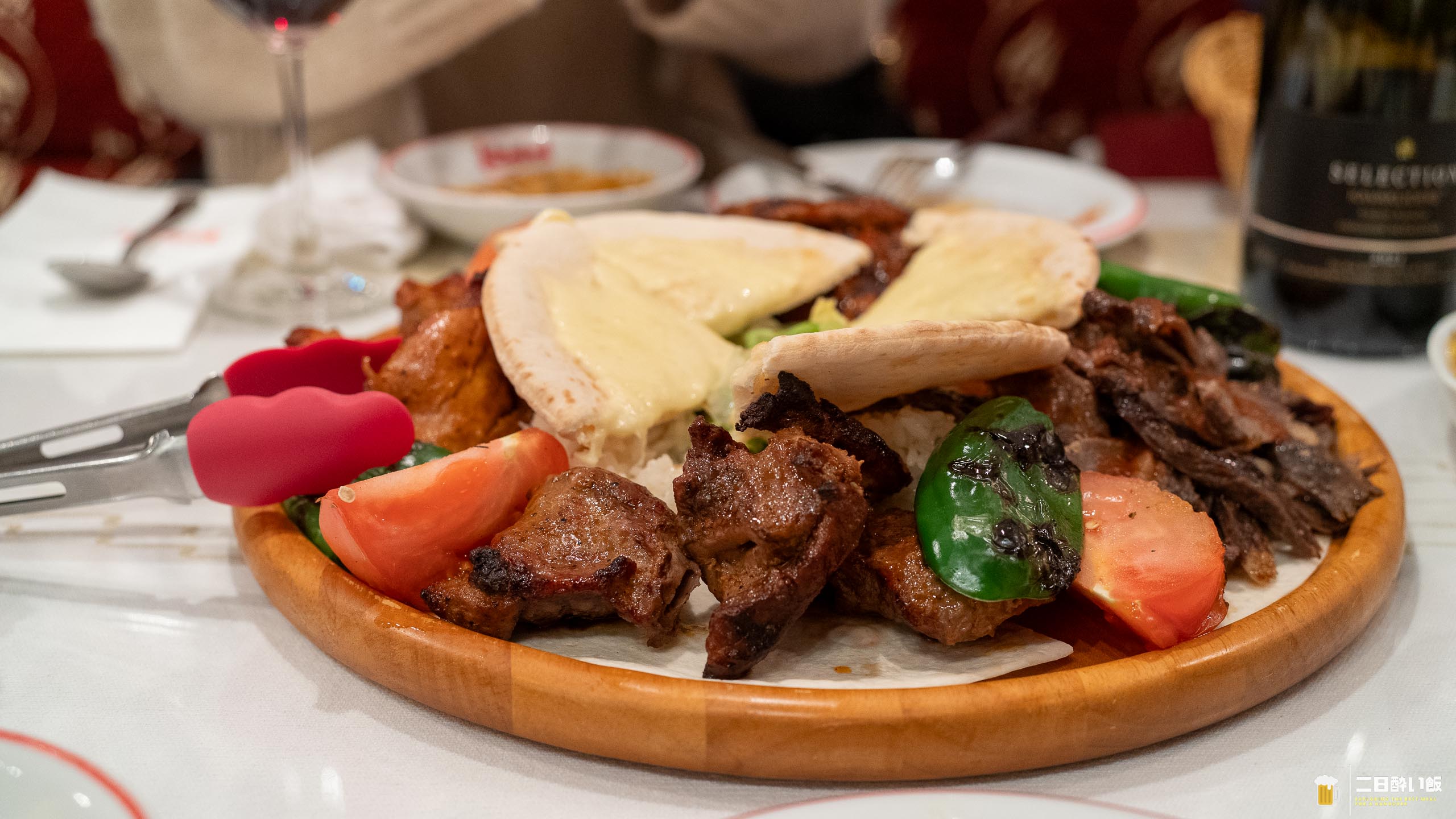
And to finish, the main has to be kebab. What I chose was, once again, the one with everything on it.
“That may be rather a lot,” they said, and indeed the plate came packed solid. There was rice on it and something pizza-like as well, so it was heavy on carbohydrates too. The meats on it were doner kebab (the kebab everyone knows), lamb shish kebab, Adana kebab of spiced minced veal, and tavuk shish, chicken steeped in a sauce and grilled on a skewer.
The meat carries plenty of spice and comes out juicy. Tender and very easy to eat.
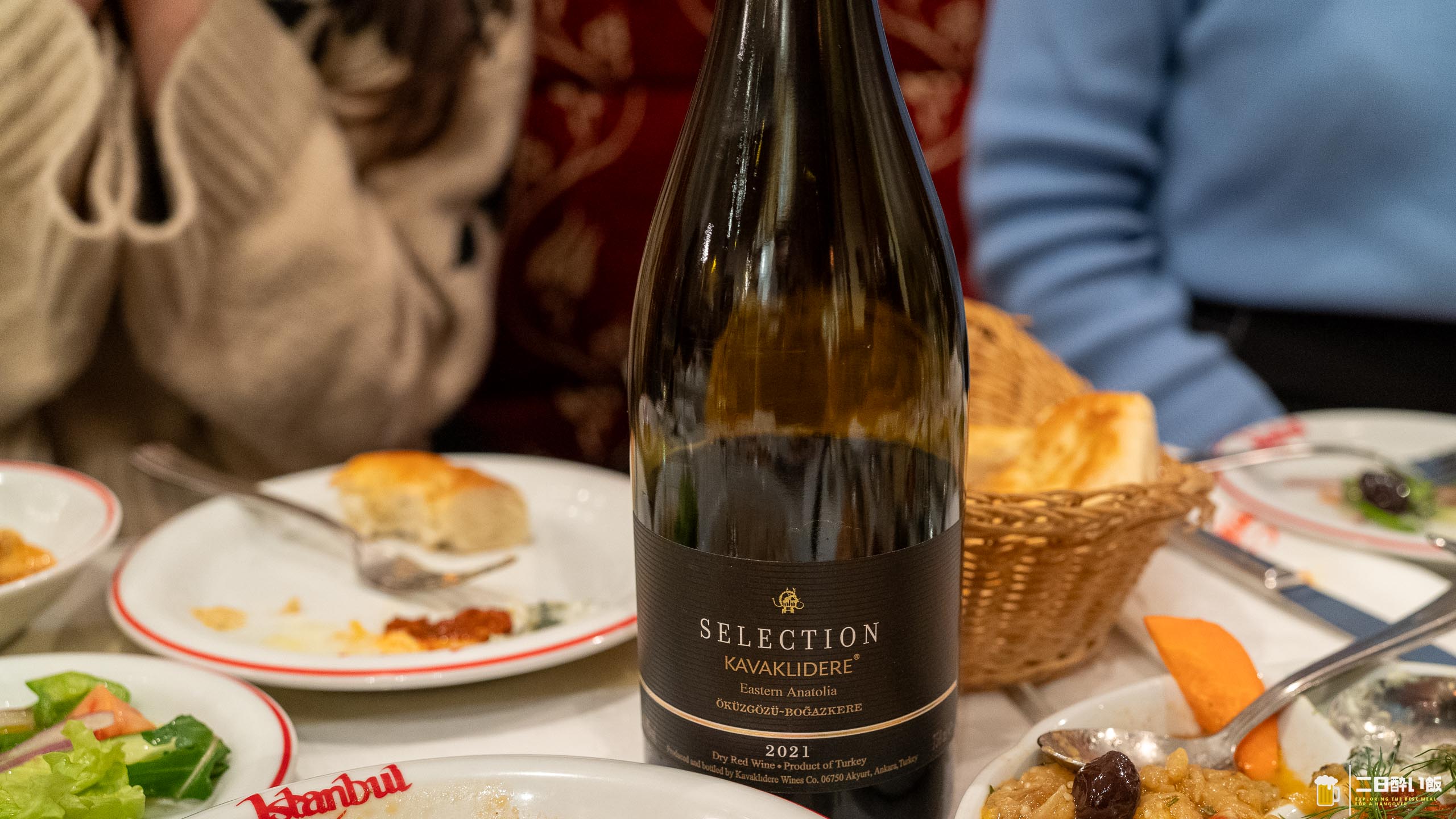
The stall-style kebabs you find around Akihabara are good in their own right, of course, but a proper kebab eaten in a restaurant like this is a feast. All that meat goes with wine, too. A fine night.
Turkish food was good. There seem to be a great many aubergine dishes in Turkey. Come to think of it, Greece, Turkey and the Mediterranean generally do seem to run to aubergine. Kebab is ordinary enough to eat these days, but of the three great cuisines this one feels the least widely spread. Why not enjoy the taste of somewhere far off at a Turkish specialist now and then?
Turkish Restaurant Istanbul GINZA (Turkish / Ginza, Uchisaiwaicho and Hibiya Stations)
Tabelog dinner rating ★★★★☆ 4.0
I ate here and paid for it myself. Nothing on this site is a comped meal.
One more for the road?


