


A note on the words: yakiniku is Japanese-style grilled beef cooked over fire at the table, and tan is thinly sliced beef tongue, served here grilled with a fresh lemon slice. Harami is flavorful outside skirt, rosu is beef loin, and jo-mino is the choice upper cut of the first stomach, prized for its crisp yet chewy bite. Shinshin is a tender lean cut from the round. Namul is Korean seasoned vegetables, nikunabe is a warming beef hotpot, and yukgaejang is a hearty, soothing soup of beef broth and vegetables.
Table of Contents hide
Yakiniku Eiraitei on Tabelog (English) — opening hours, payment details and the Japanese address are kept up to date there, not here.
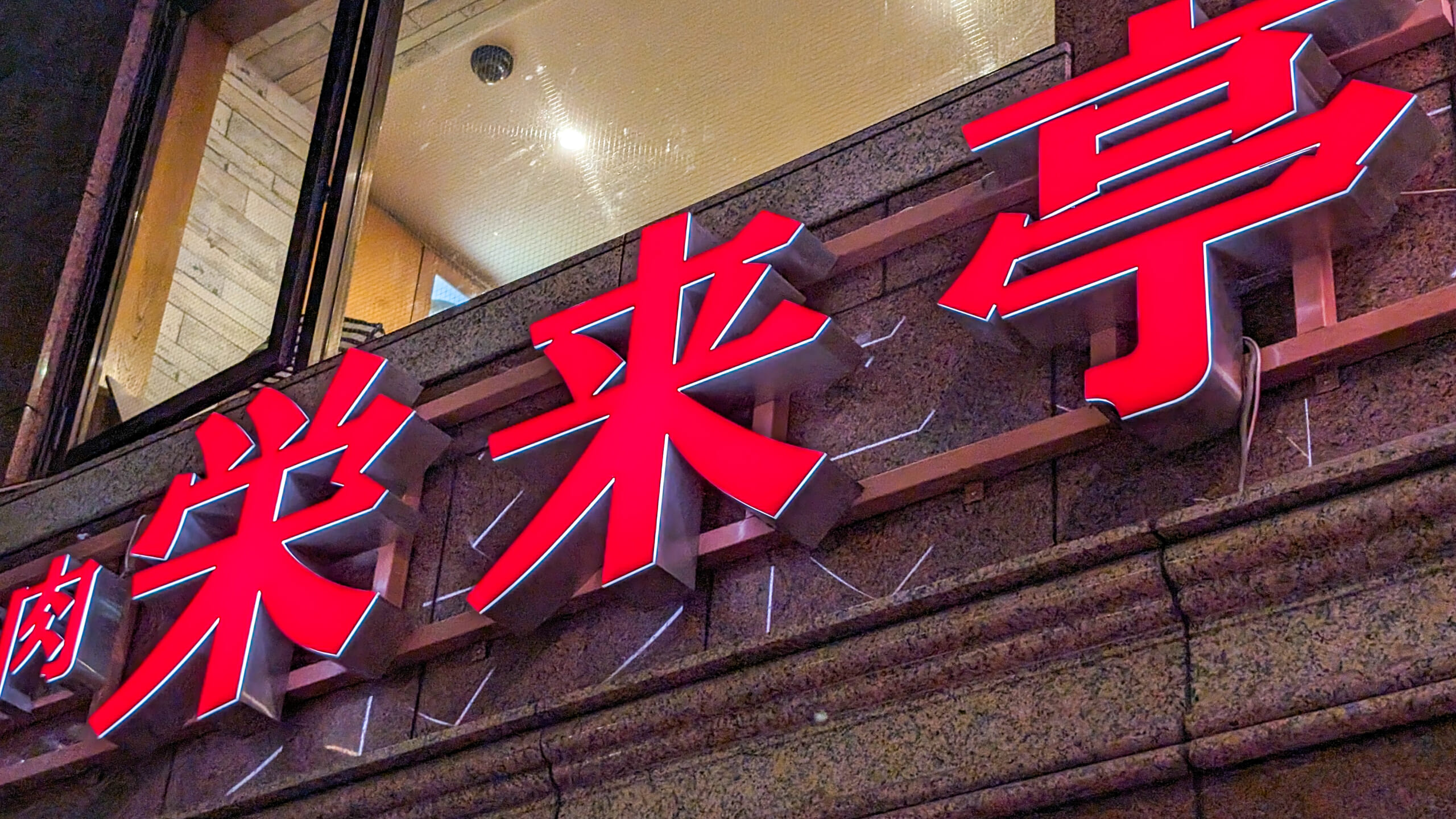
Hello, this is Hangover Meshi. While looking for a place to drink, I came across Yakiniku Eiraitei, an old-school yakiniku restaurant in Azabu-juban. It is said to be the oldest yakiniku spot in Azabu-juban, having opened back in 1965. 1965 is quite something! Location-wise, it sits along the Azabu-juban shopping street, slightly closer to Azabu-juban Station than the midway point, I think. You will spot it right away from the bright red lettering on the sign.
Stepping inside, for a place that has been around about sixty years, it is remarkably clean and neat. It looks like a great spot to enjoy a leisurely meal.
Wagyu harami — 2,980 yen
Special selected wagyu harami — 3,980 yen
Lemon tan — 2,480 yen
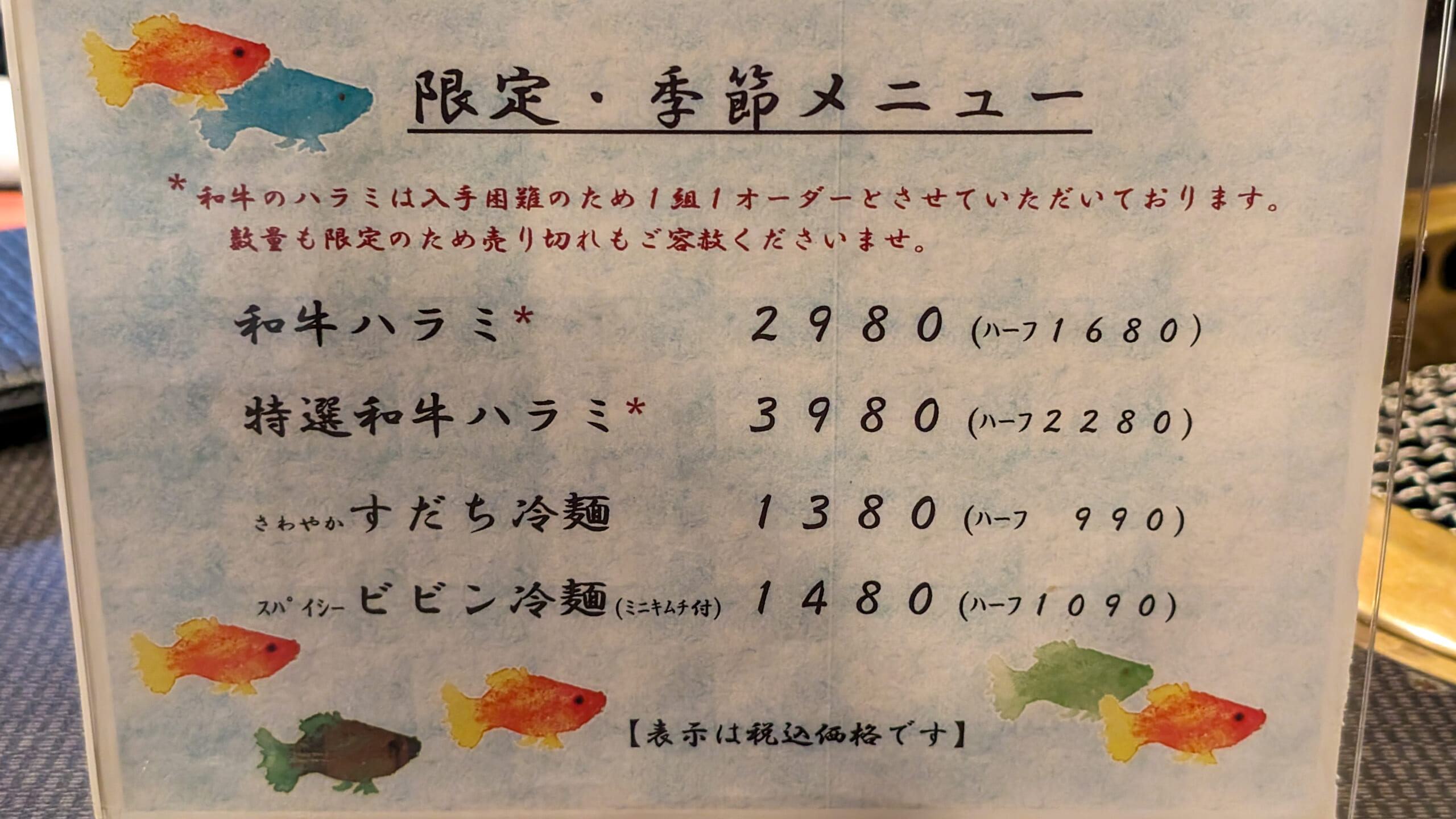
There were various menus, but apparently these were the seasonal specials. I figured I would go with the style of ordering whatever caught my eye off the menu one after another. Incidentally, the house specialties are reportedly lemon tan (beef tongue) and nikunabe (beef hotpot). Nikunabe seemed better saved for when the weather turns colder, but I made sure not to miss out on the lemon tan!
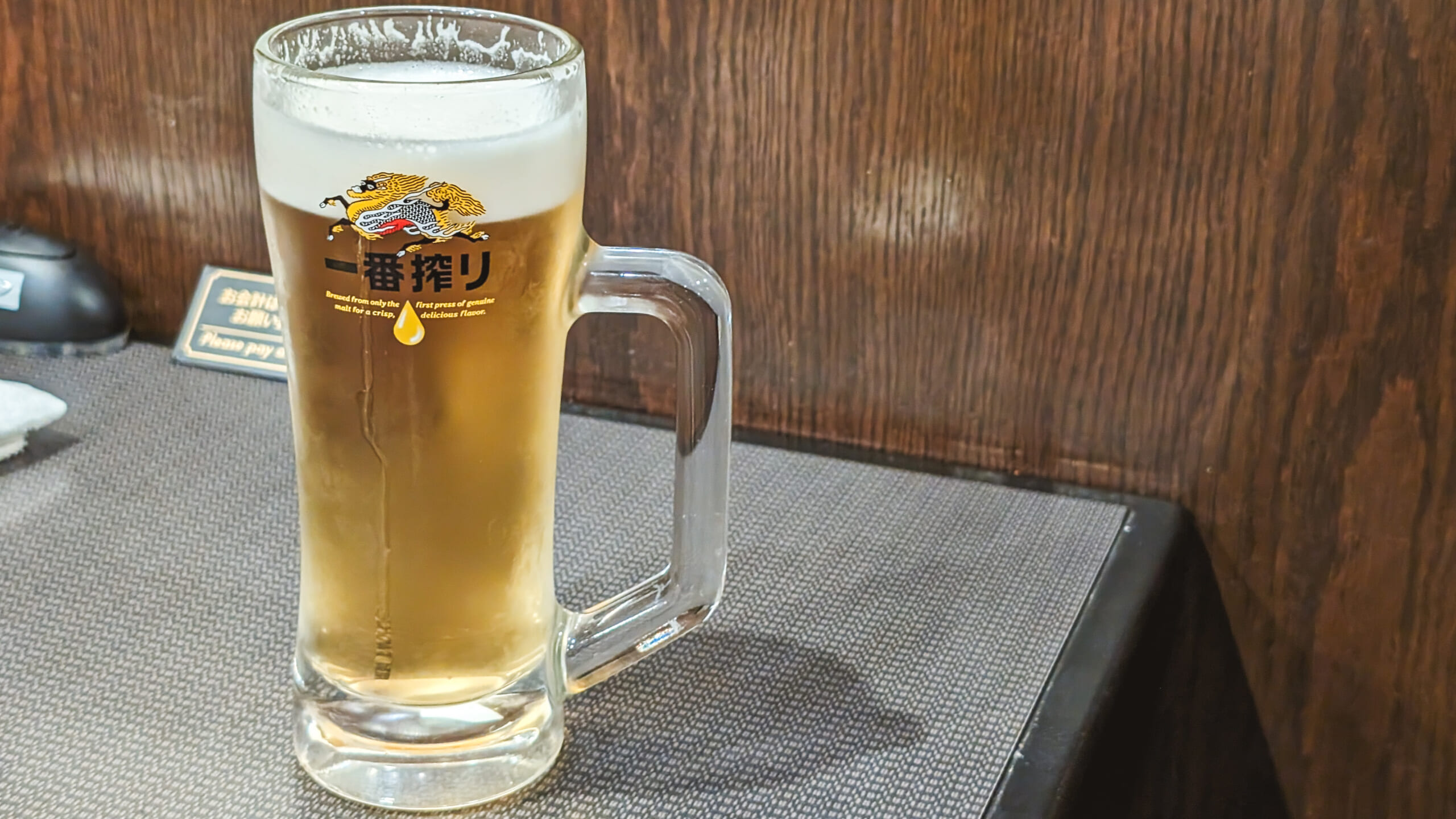
Now then, to start, beer, of course!
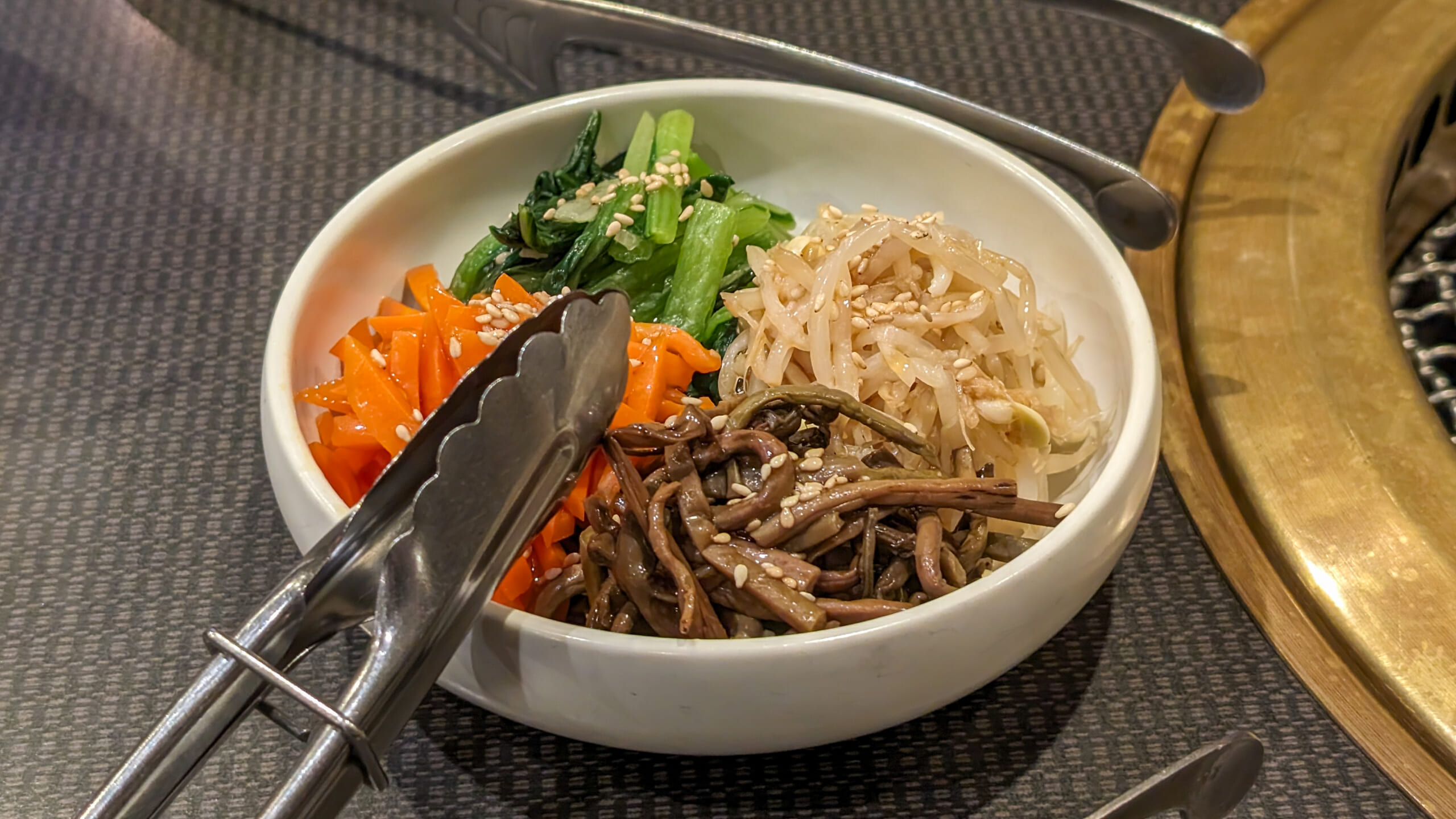
The assorted namul (seasoned vegetables). This is another one of those dishes you just order right away to have on hand.
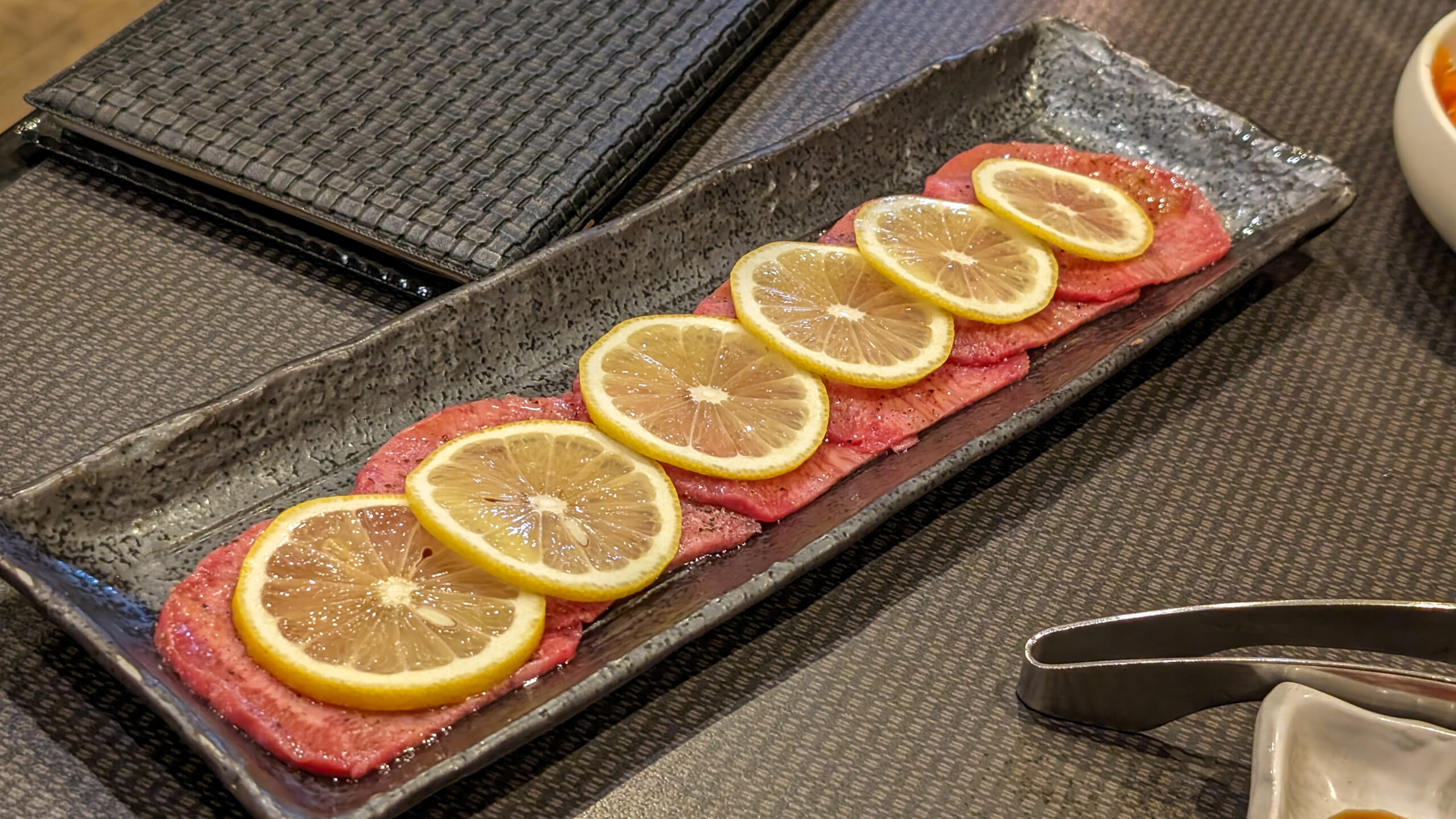
And here is the famous lemon tan. An entire slice of lemon sits right on top of the tongue.
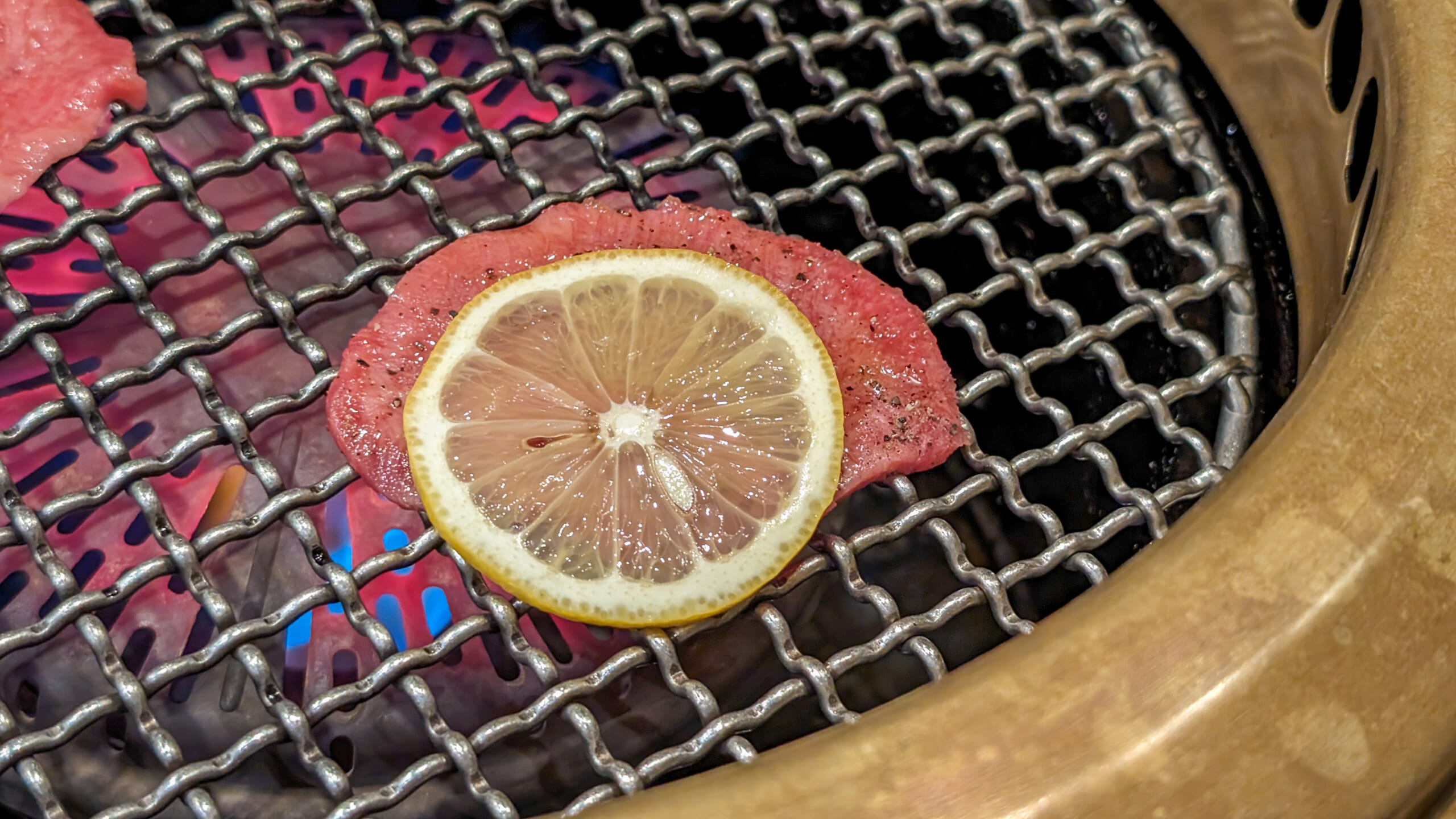
First, grill the underside, lightly sear the top, squeeze the lemon over it, and take a bite.
Mm, tender and delicious. Warming the lemon slice seems to mellow the acidity slightly compared to just dipping it in lemon juice, which is quite nice.
Then a thought struck me: for the next piece of tongue, after grilling the underside and lightly searing the top, I rolled the lemon slice right inside the meat and took a bite. The lemon peel works surprisingly well too, ha. That said, you naturally get the bitterness from the peel, so I think preferences will split here, ha. Squeezing it or wrapping it whole — feel free to eat it whichever way you prefer, ha.
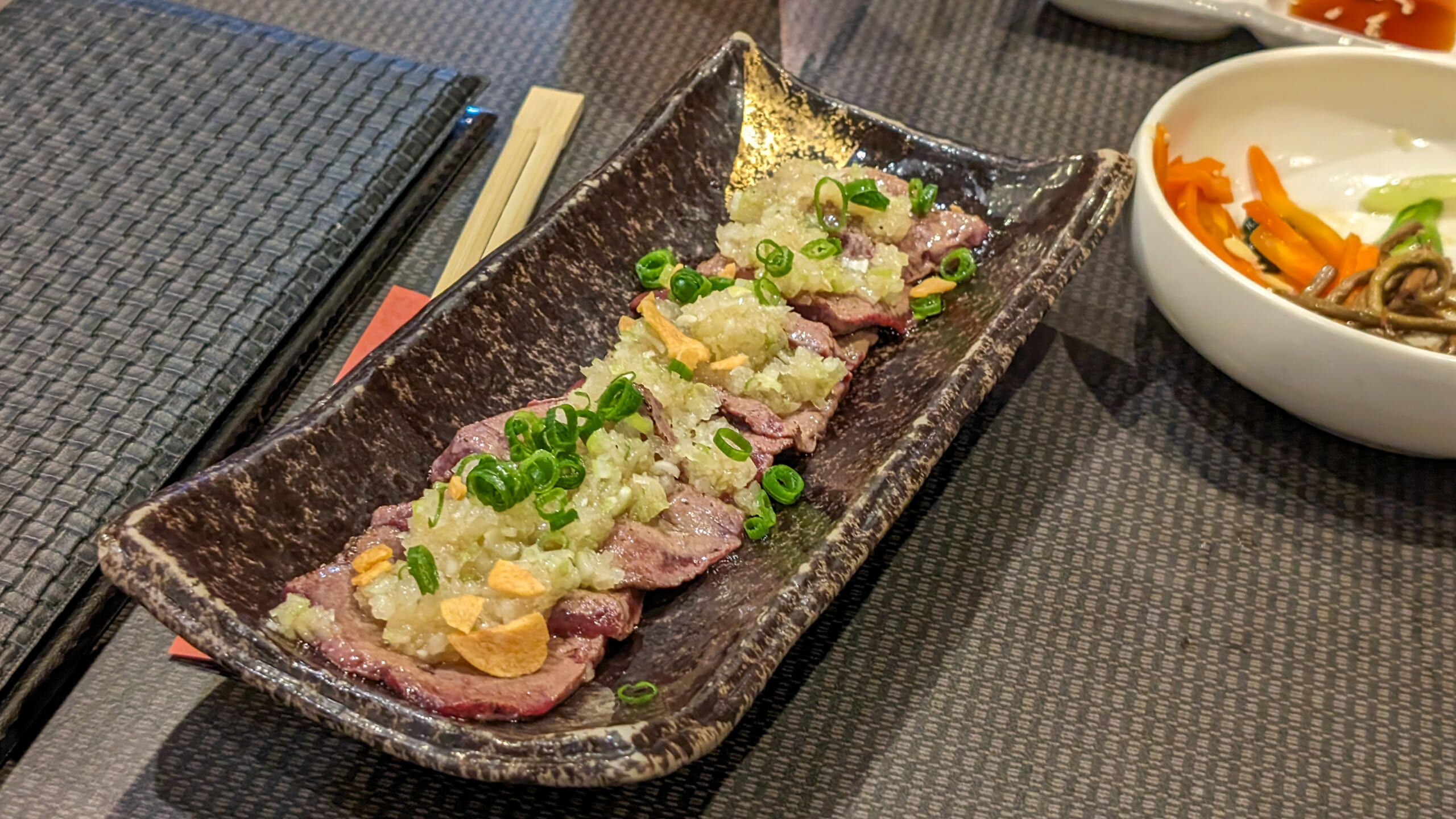
Wagyu liver. That said, it seems they do not sear it very deeply, leaving a raw-like savor inside that is tender and delicious. The heaps of scallions and garlic go with it so well! As something to bridge the gap until the next meat arrives, it performs brilliantly.
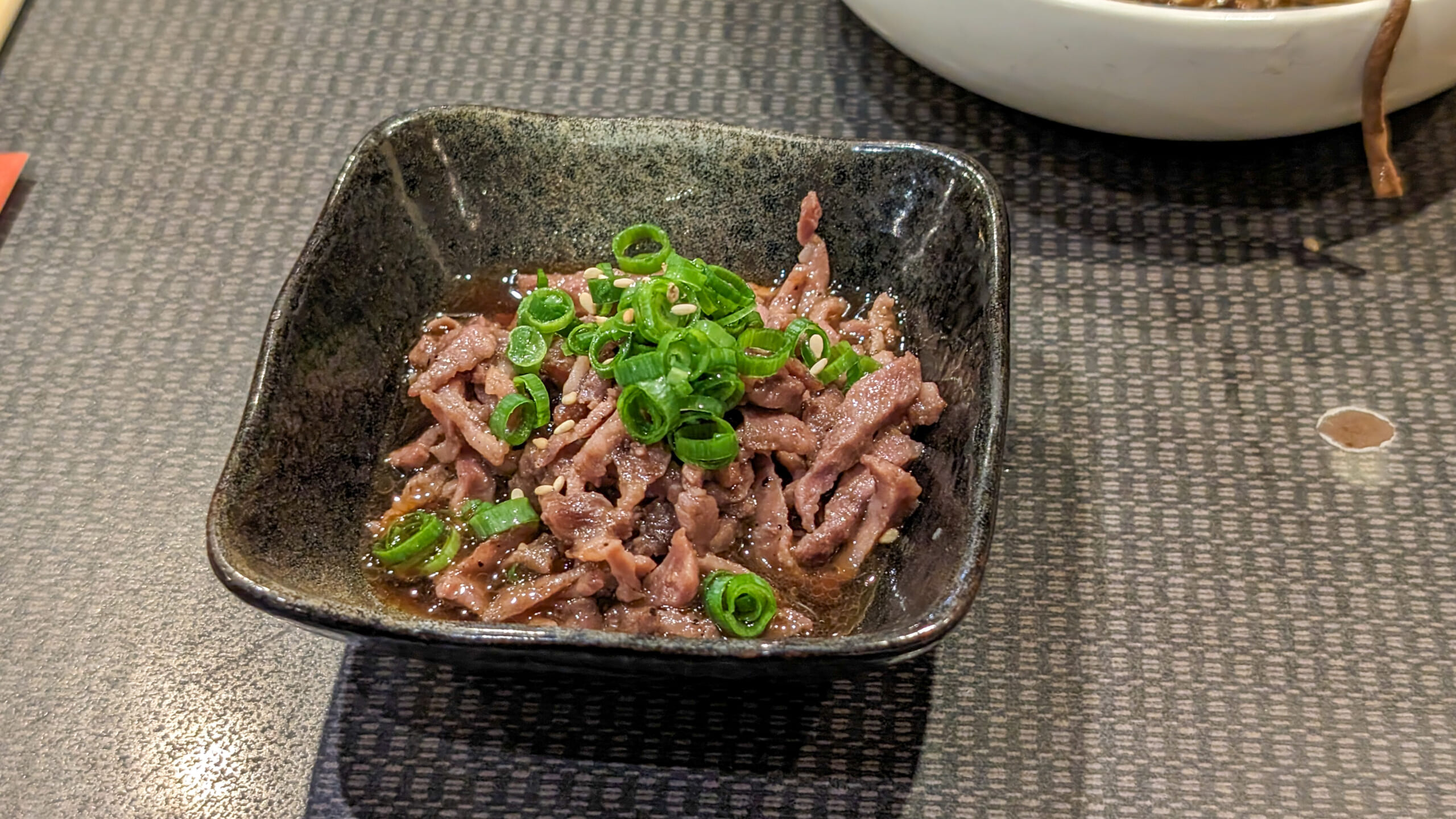
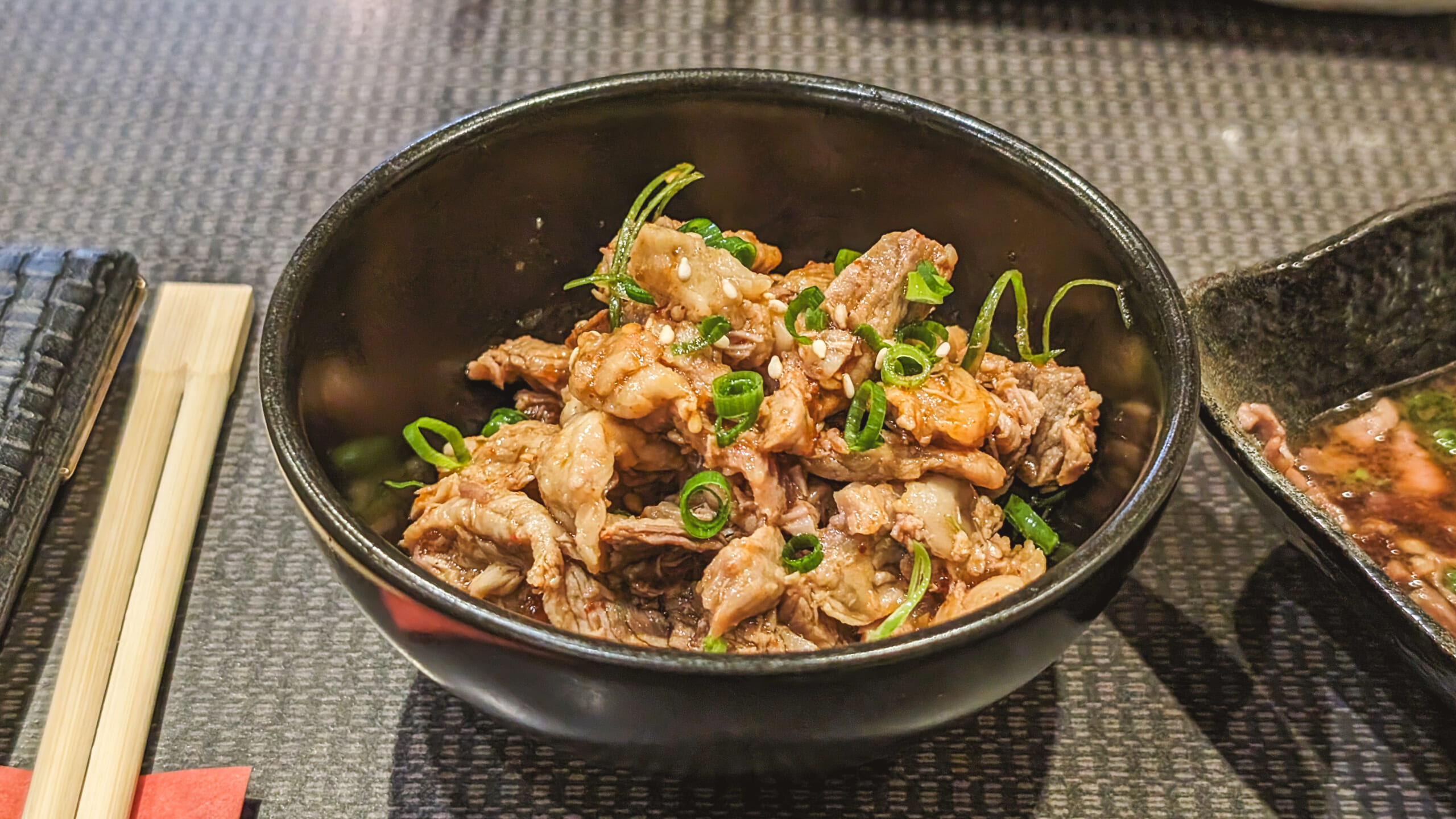
An absolute drinking snack. The beef sinew simmered sweet and savory is delicious. It is cut into small pieces, making it easy and pleasant to eat.


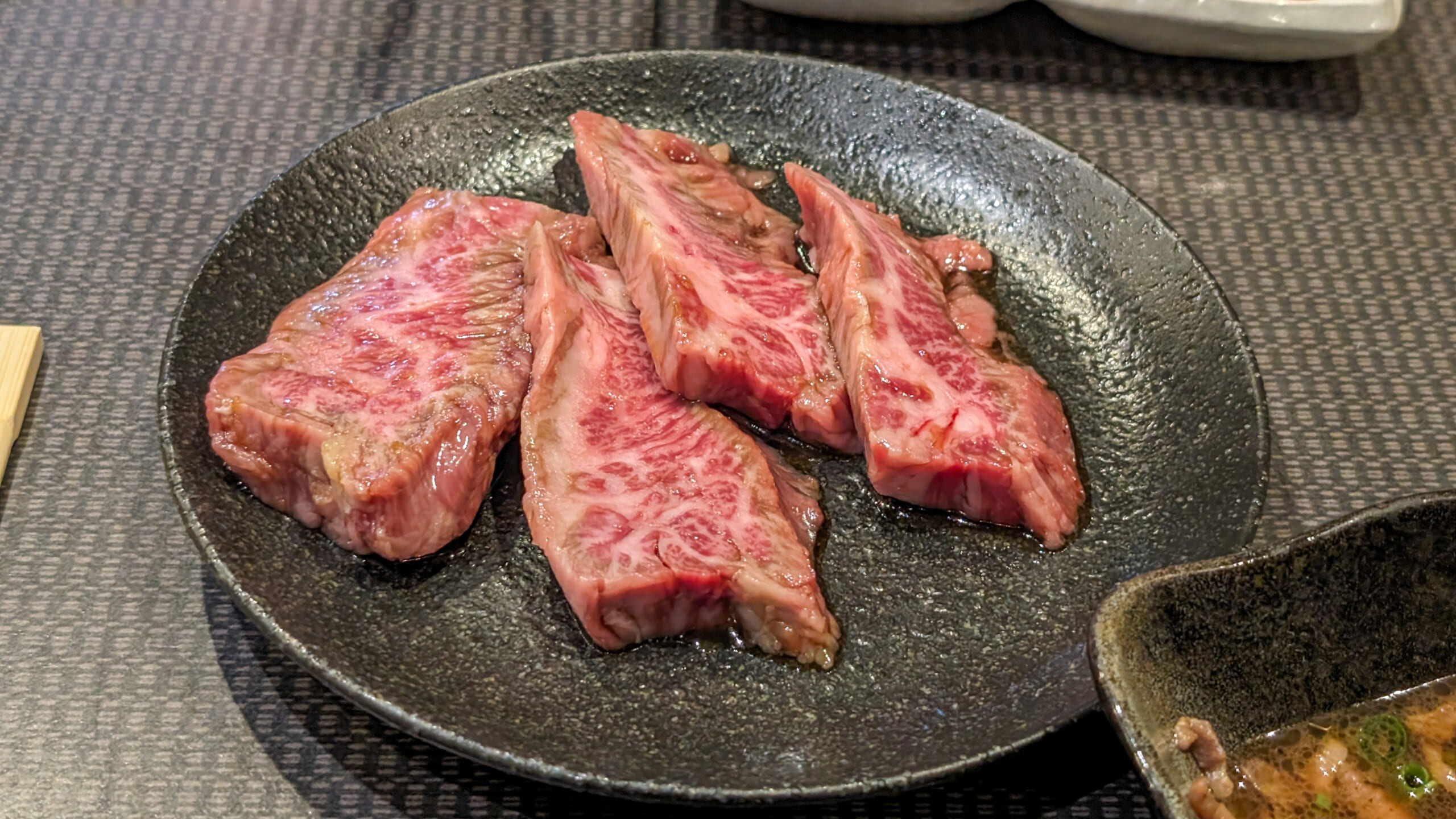
The limited wagyu harami (outside skirt). So much fat on it, even for skirt!
When you grill it, the way the fat comes sizzling out is impressive. Take a bite, and it is tender and savory! The fat pours out, but it is not heavy at all, which is remarkable.
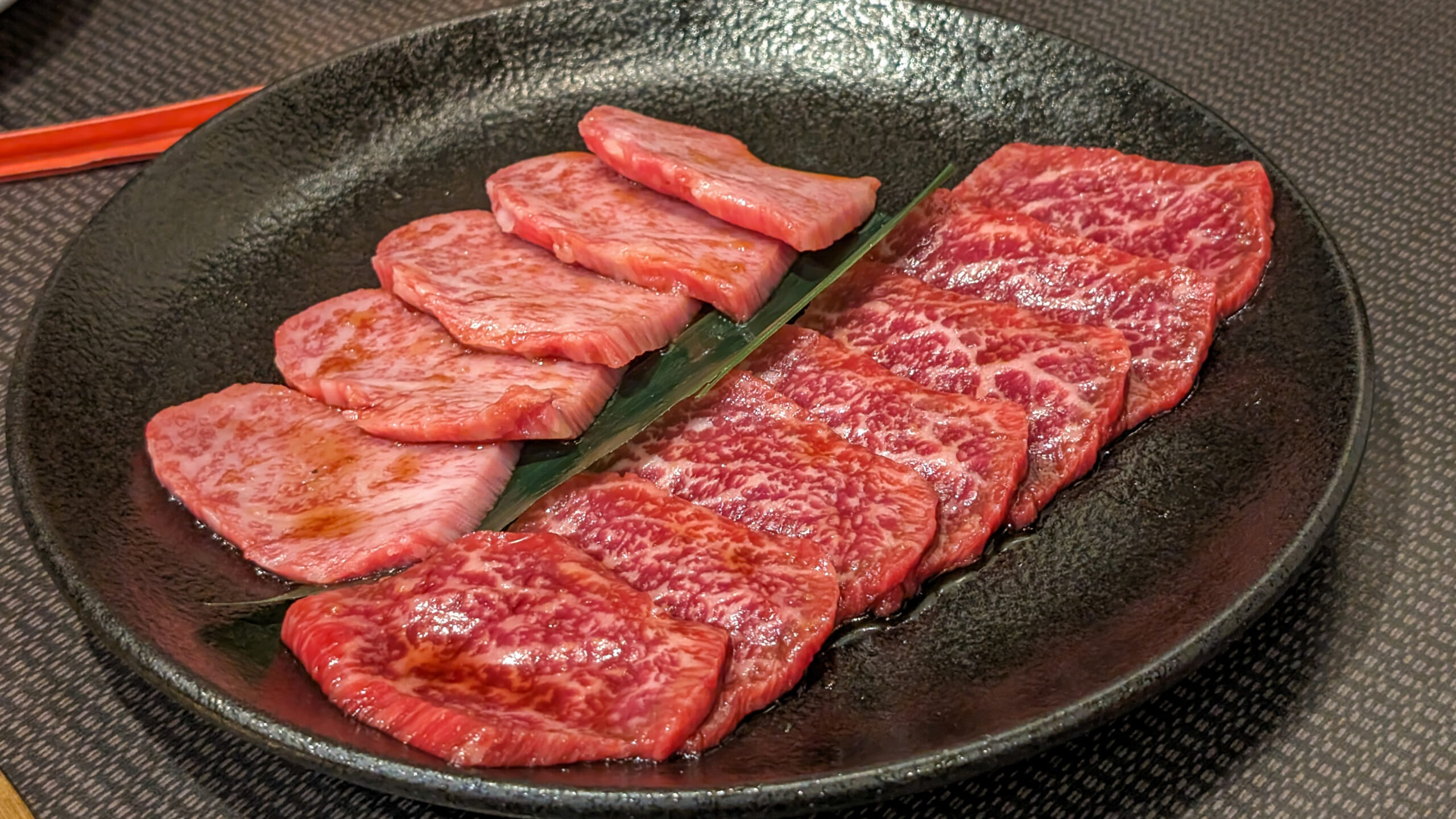
Is this loin and superior loin (jo-rosu)? It looks almost as if to say, “Wait, is this superior loin really a lean cut?” ha.
Tasting it, the superior loin is delicious! And the regular rosu has just the lean meat texture I was craving, which is great. These are practically entirely different things. Jo-rosu is not just an upgrade of rosu but something completely different, so having both on one platter is very welcome.
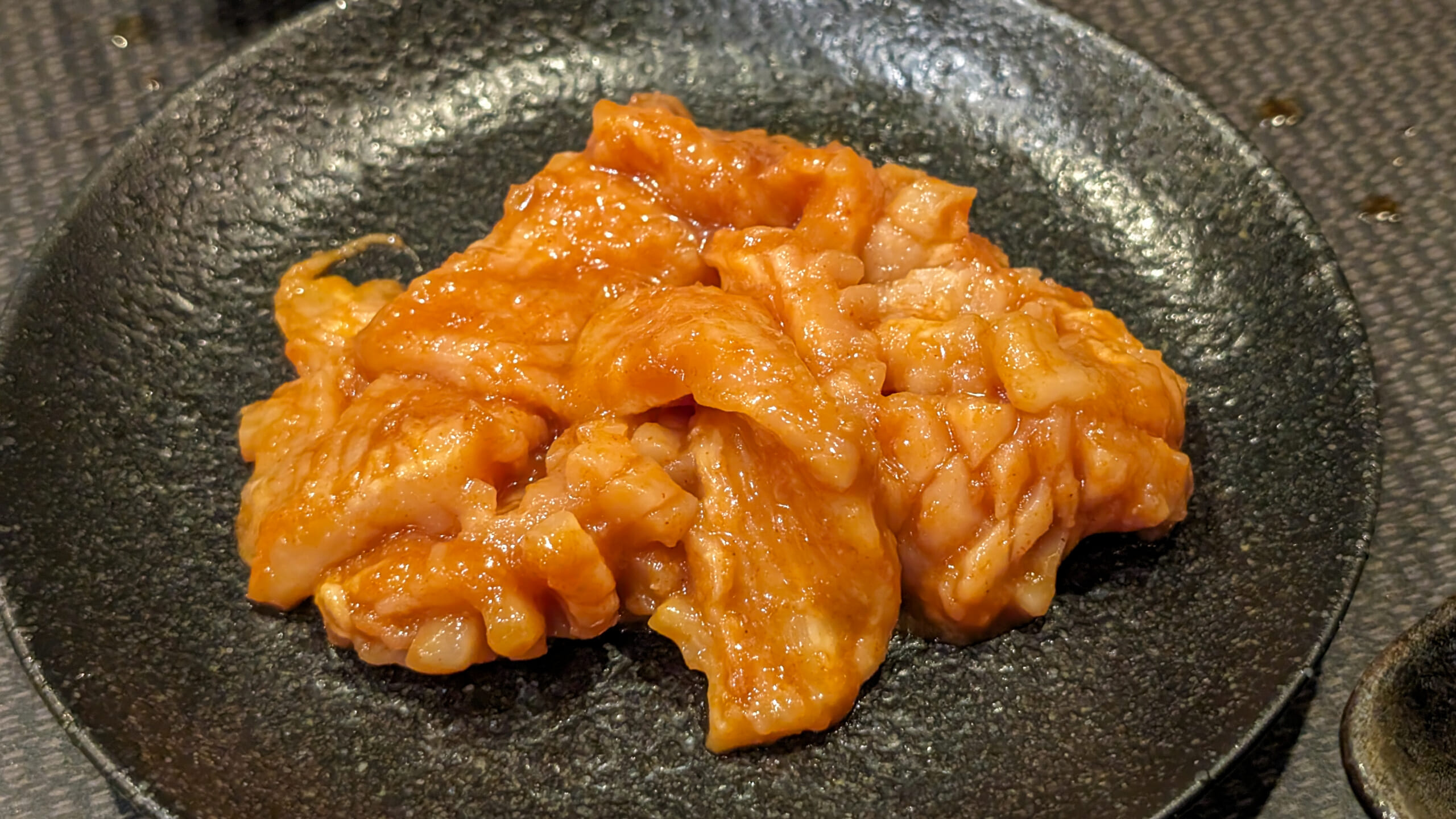
Just when I thought I was satisfied with the meat, here came the star of the second half: jo-mino (upper-grade first stomach).
That texture is so enjoyable. Well-grilled jo-mino, where your teeth sink in with a crisp bite yet there remains a satisfying chewiness, is truly wonderful.
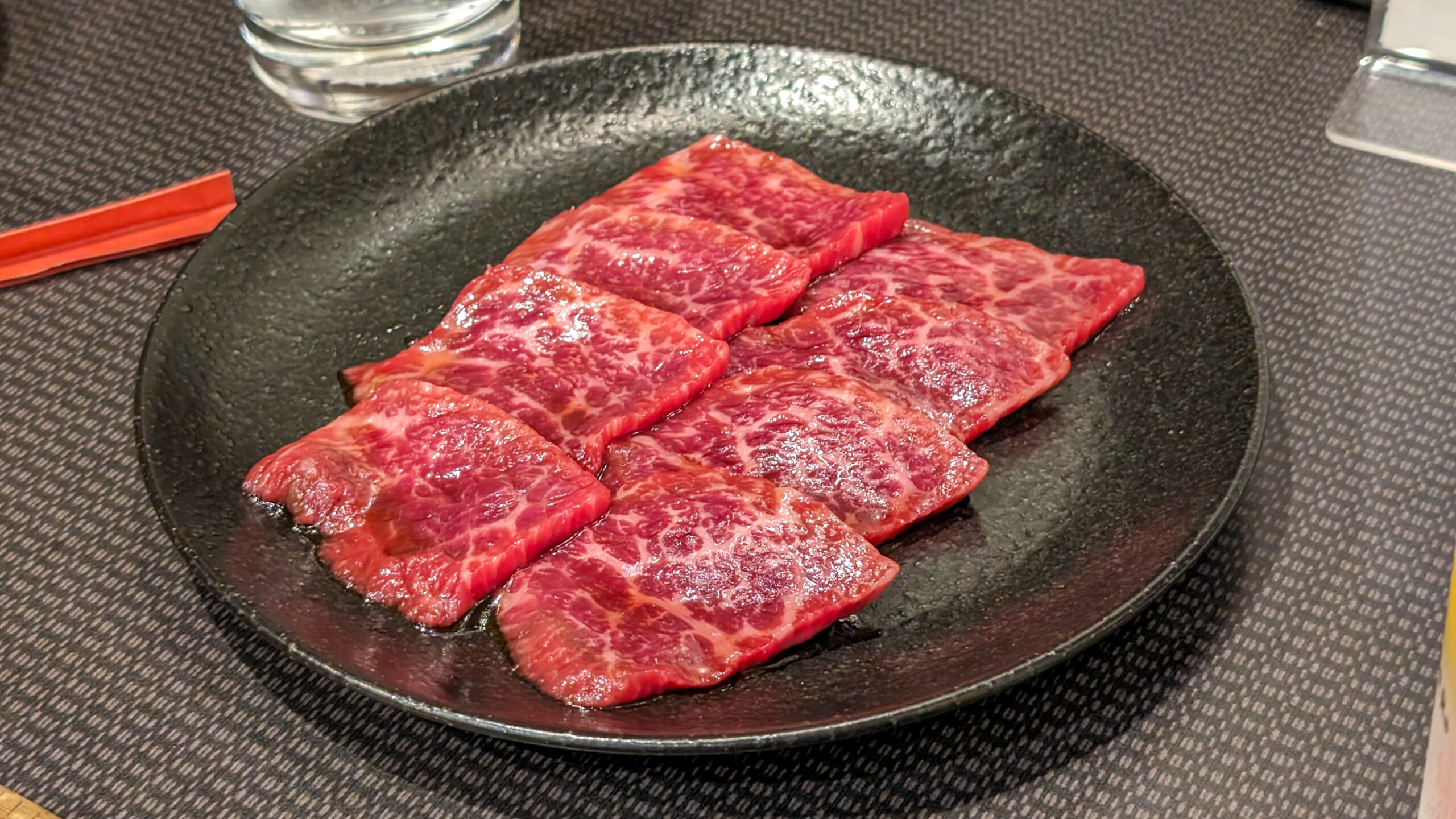
Superb lean meat at its finest. It offers a flavor distinct from rosu, and if anything, the flavor feels richer to me. Delicious.
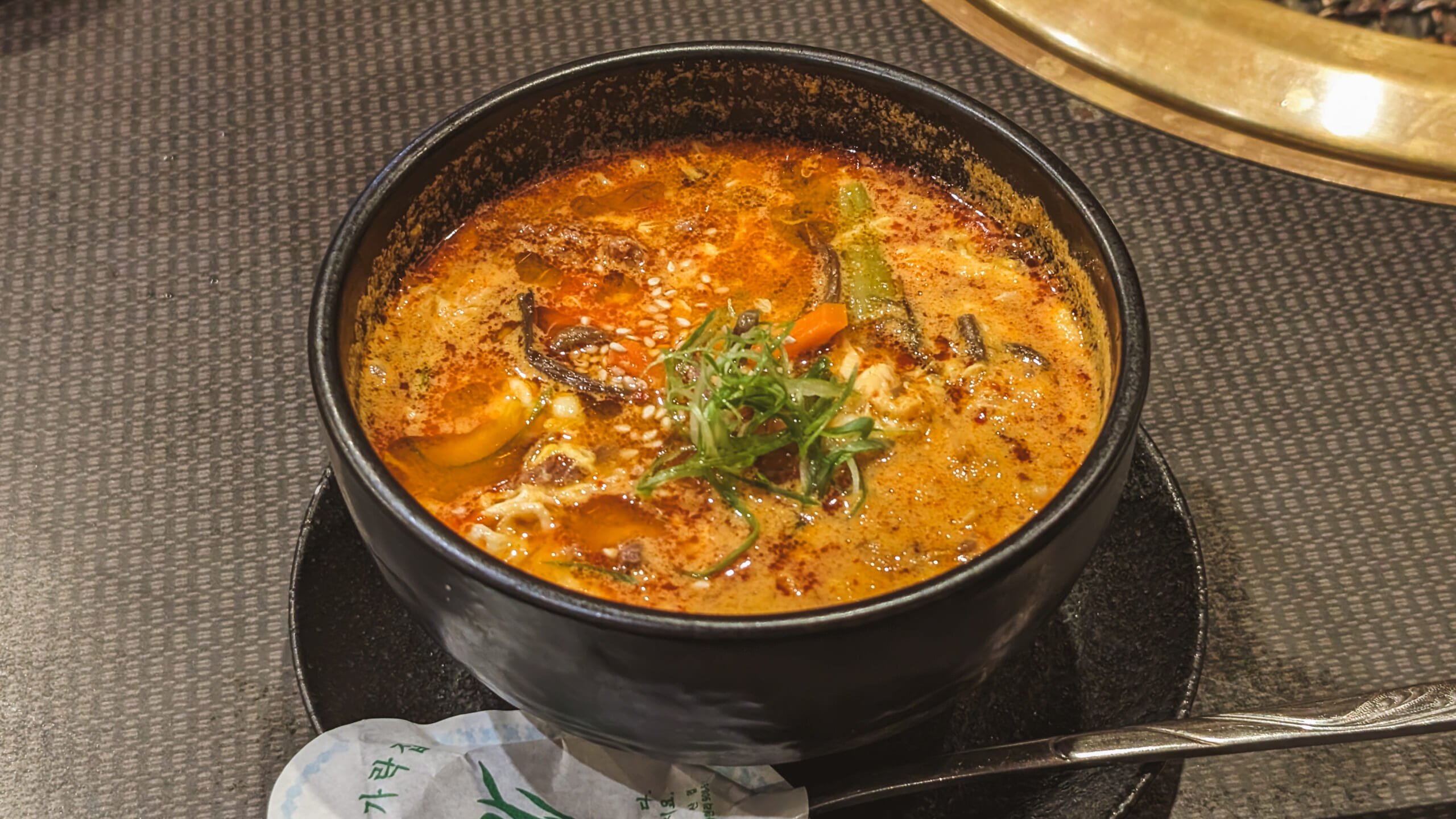
Having eaten quite a lot of meat, I was already full. Still, I wanted something light to close out the meal, so I chose yukgaejang soup. Figuring I certainly could not manage kukpa (rice in soup), I stuck with just the yukgaejang soup. The heat is kept quite mild, and the savory richness of the beef broth soaks right into the stomach! Delicious. Packed with ingredients and very good. The yukgaejang here goes with shredded strips of beef. Doing the hardcore version where all the beef is hand-pulled into shreds is a hassle, after all, ha.
And so, yakiniku at the oldest establishment in Azabu-juban. It was delicious! The prices were not so high — compared to ultra-high-end spots it is thoroughly reasonable, the meat is wonderful, and I was completely satisfied. I feel I can understand why it has lasted this long. When the weather turns colder, I would love to come back for the nikunabe hotpot, so a return visit is definitely in order.
Yakiniku Eiraitei (Yakiniku / Azabu-juban Station, Akabanebashi Station, Roppongi Station)
Tabelog dinner rating ★★★☆☆ 3.5
I ate here and paid for it myself. Nothing on this site is a comped meal.
One more for the road?


