


A note on the words: gachi-chuka is the recent wave of Chinese restaurants in Japan that cook for Chinese customers rather than adapting to Japanese tastes. Hunan is the inland province whose cooking leans on fresh and pickled chilies; sazae, translated here as turban shell, is a large sea snail with a firm, springy bite. Prices are as of this writing (August 2026).
Shiki Kou, Ikebukuro North Exit main building, on Tabelog (English) — opening hours, payment details and the Japanese address are kept up to date there, not here.
I want something good to eat today too. This is Hangover Meshi. I have finally made it to a place I had wondered about for ages: Shiki Kou in Ikebukuro. When people talk about gachi-chuka in Ikebukuro, this is the one — that glittering frontage is hard to forget. I said I had no reservation and they showed me through to the back, where the clientele was something: not a single group speaking Japanese. (It may just have been that day.) Which means, conversely, that the place is loved by people from the country itself. I intend to enjoy myself picking at a few things.
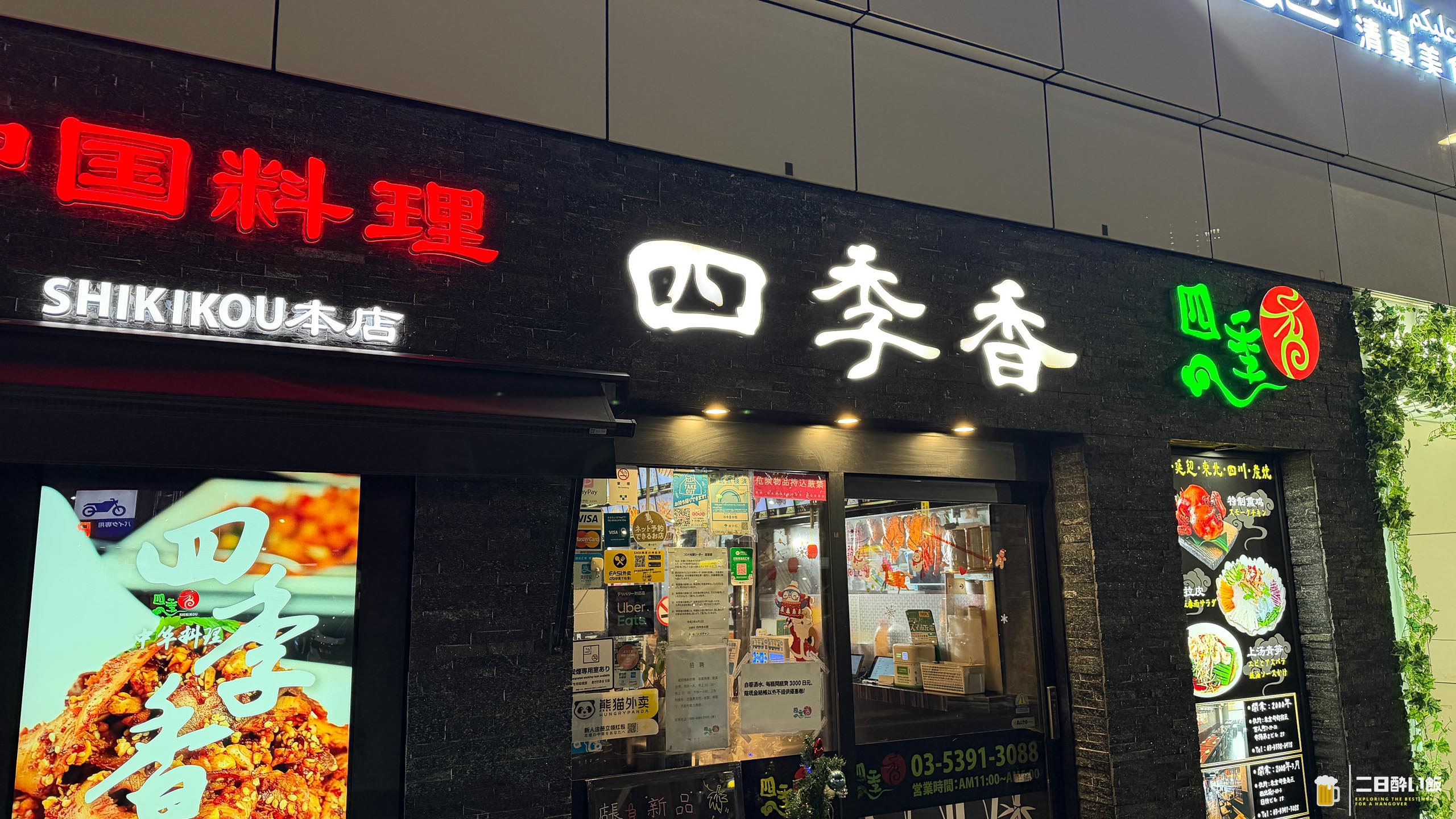
There is quite a range on the menu, but I cannot eat large quantities. Choosing carefully.
Beer and a toast out of the way, and now I want to start ordering.
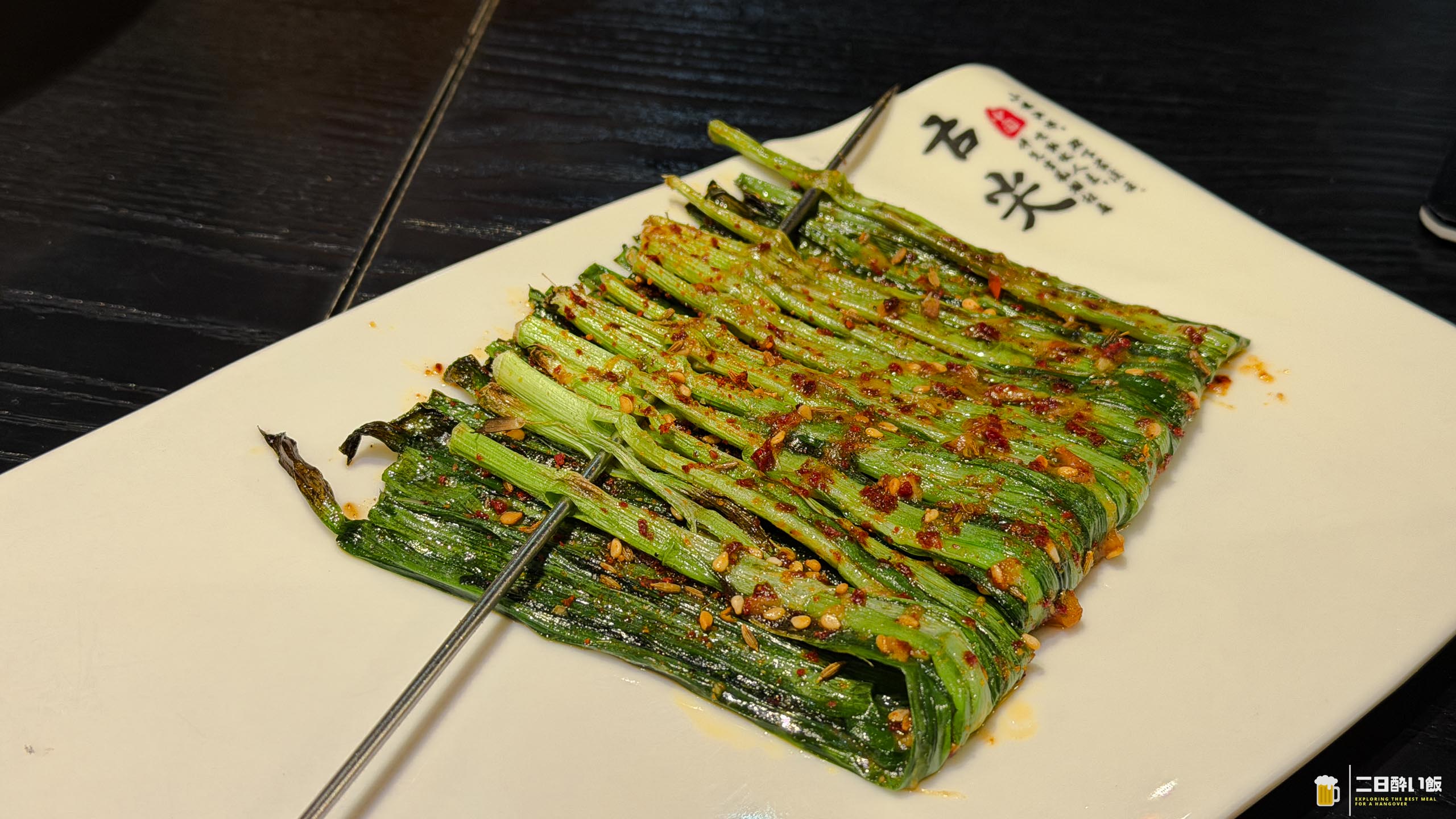
It is nothing more than garlic chives bundled onto a skewer and grilled, but the sauce, or rather the spice on it, is delicious — the same cumin-leaning spice that goes on the lamb skewers. There were two of us and we ordered only one, but the volume is generous enough that a single skewer shared is plenty. Good.
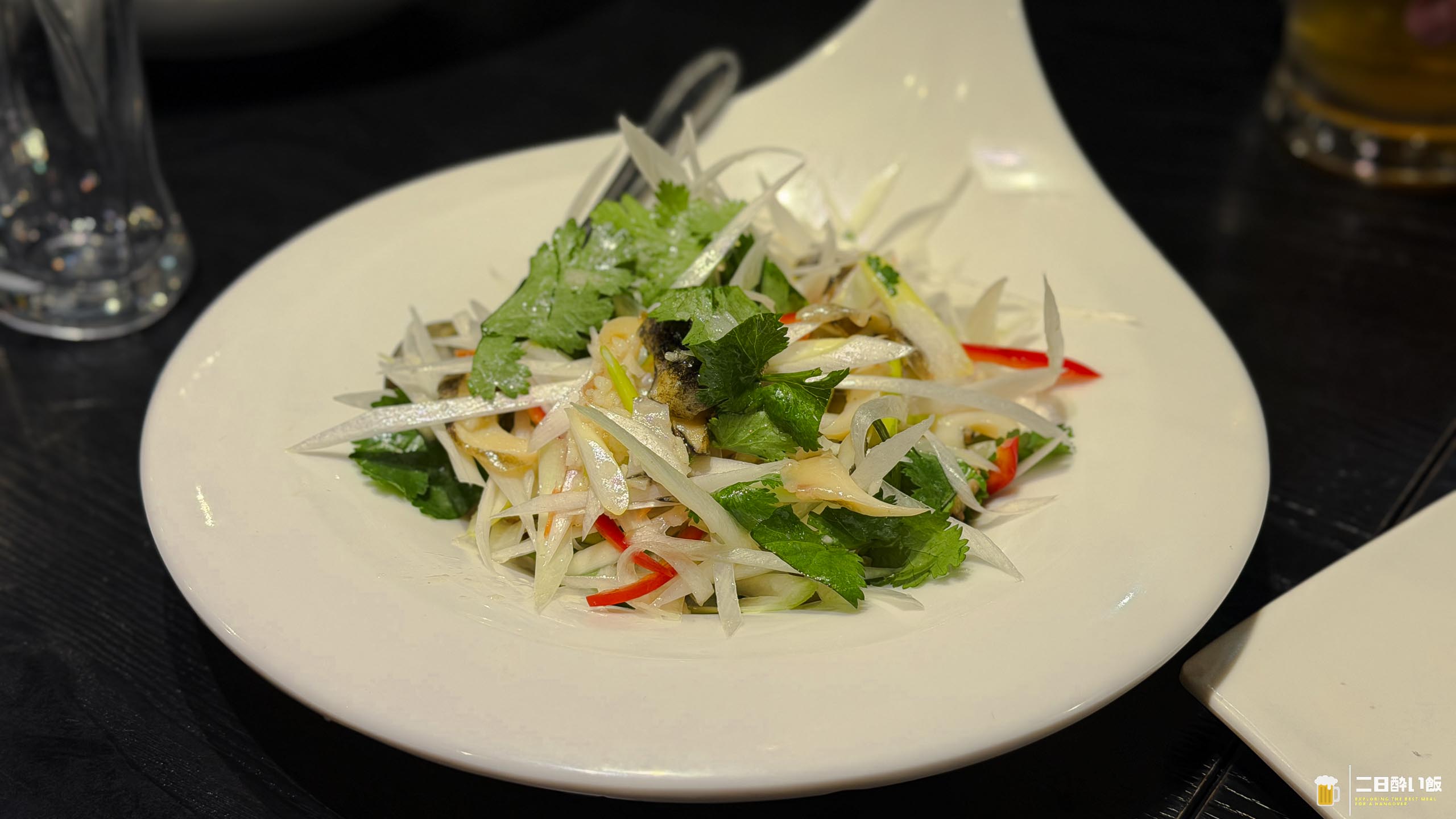
This spring onion salad is extraordinary. Really delicious. The crunch of the spring onion and the coriander, a salt-based sauce holding it together, and then the springy bite of turban shell added on top. Is this really 980 yen? So loaded with ingredients that you could keep eating it forever. A plate that made me resolve to order it again next time, without fail.
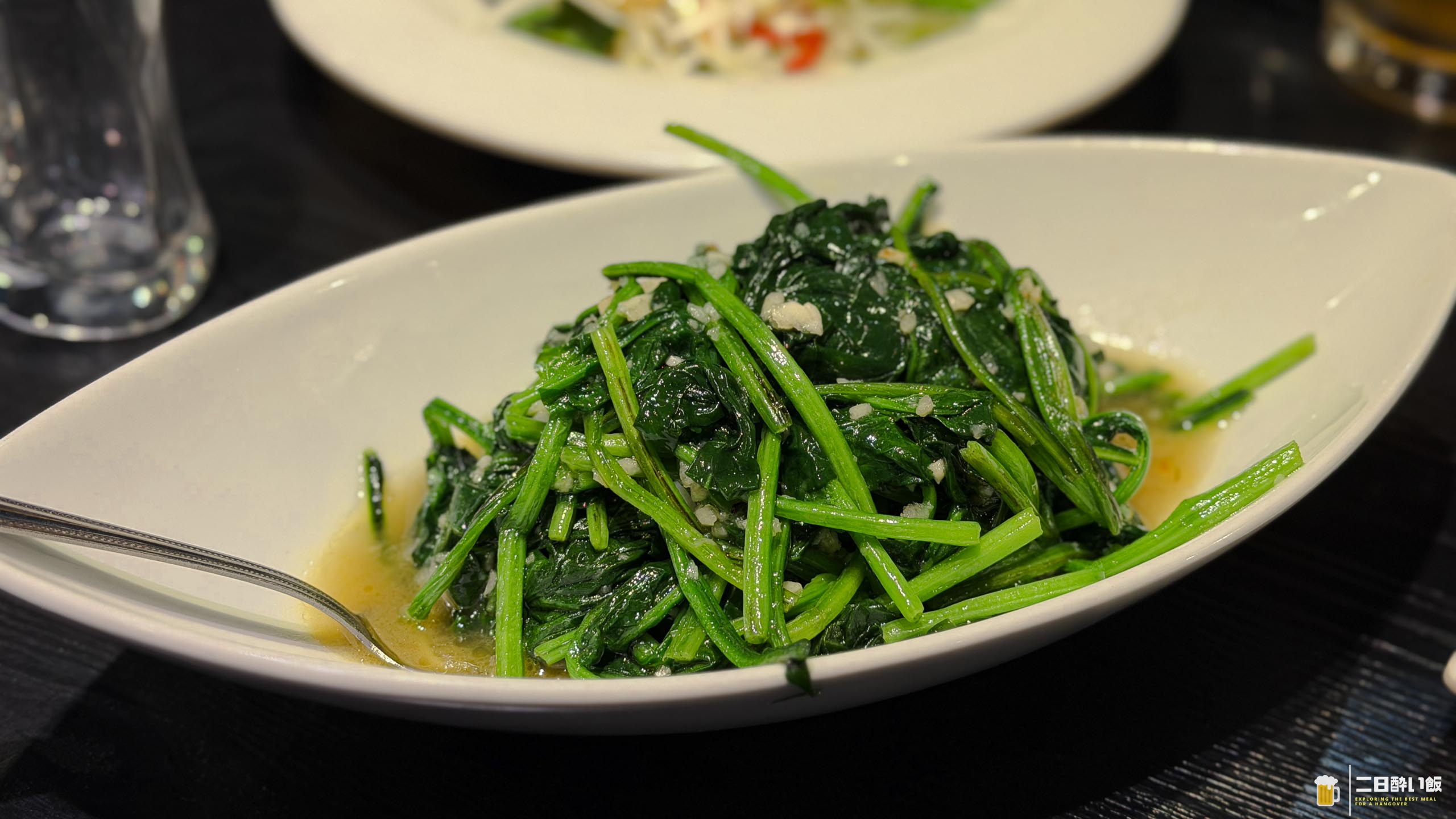
I wanted a stir-fried green and ordered the spinach. That broth of theirs is unfair — anything stir-fried in it is bound to be good. Given a quick pass in the pan, so a little crunch is left, exactly right. The smell of garlic clings to it firmly, and it is far too good a snack with beer. I would like to do this at home. If only I had the broth.
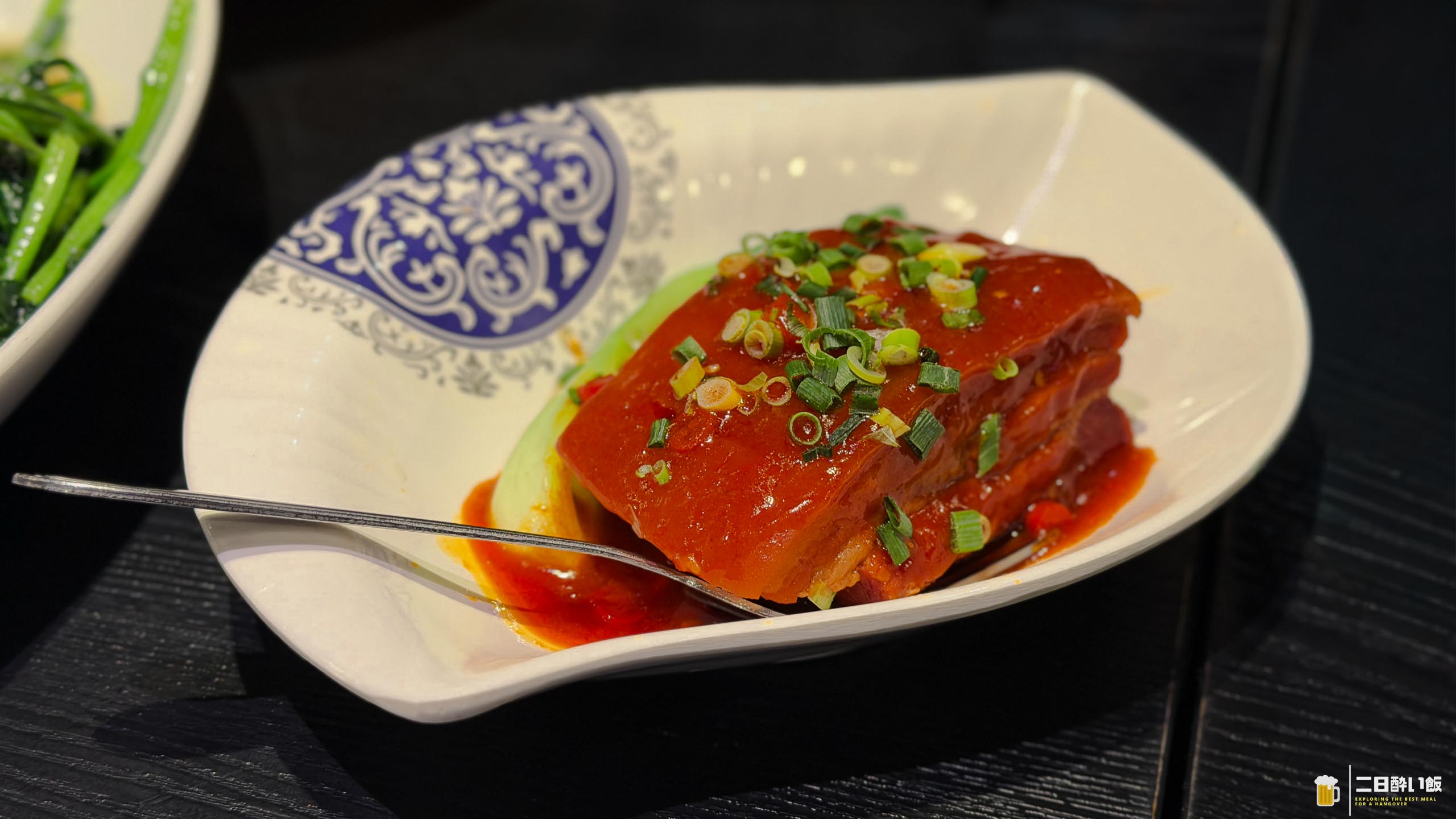
Mao Zedong braised pork. Chinese restaurants sometimes have a Mao Zedong something or other, and I had wondered what it was about, so I looked it up. Whether it is true or not I cannot say, but apparently Mao Zedong’s home region is Hunan, and Mao is used as an easily understood emblem when introducing a Hunan dish. So this would be Hunan-style braised pork? Pork belly seasoned with a faint chili heat. When there is heat the match with beer is perfect. The savor of pork gone falling-apart tender and the sweet-hot sauce are a superb pair.
Having drunk too much beer as well, I am full about here.
I never did hear any Japanese, right to the end. The room is full of the smell of Chinese spice, conversation in Chinese is going on all around you, and there are a great many Chinese families in as well. I found myself imagining that for the Chinese people living around here this is something like the family restaurant taste of home. It has a genuine feel to it and everything was very good, so I think I shall find a gap and come again. Recommended.
Shiki Kou, Ikebukuro North Exit main building (Chinese / Ikebukuro Station, Kita-Ikebukuro Station, Higashi-Ikebukuro Station)
Tabelog dinner rating ★★★☆☆ 3.5
I ate here and paid for it myself. Nothing on this site is a comped meal.
One more for the road?


